

After more than 1000+ nights of sleeping with an inflatable pillow under my head while thru hiking the Triple Crown, Te Araroa and Bike Touring from Alaska to Ecuador, I have a clear view of what backpacking pillow works and what doesn’t. This guide is for ultralight backpackers, thru-hikers, and bikepackers who care about grams and packed size, not casual campers looking for something plush for car camping.
My current pick for most thru-hikers is the Sea to Summit Aeros Ultralight at 2 oz, with the Zpacks Padded Pillowcase for Inflatable Pillow hybrid system as the new benchmark for side sleepers who want real loft without carrying a foam pillow. I have been testing backpacking pillows for over a decade as a triple-crown thru-hiker and former outdoor store manager, and the trade-off you actually care about is weight, loft, neck support and most important comfort. Get that right and the rest sorts itself out.
- Best Overall: Sea to Summit Aeros Ultralight – 2 oz, lima-bean shape, the pillow I trust on long trails and the easiest one-buy answer for most thru-hikers.
- Best Ultralight Backpacking Pillow: Therm-a-Rest Air Head Lite – 2 oz, machine washable, and the lightest inflatable I have done long miles on.
- Most Comfortable Ultralight: NEMO Fillo Elite – synthetic insulated top, great hand feel, but I have had two replaced under warranty so factor that in.
- Most Comfortable Inflatable: Therm-a-Rest Air Head Down – curved shape and down top fit a mummy hood and beat every flat-top inflatable for side-sleeper comfort.
- Best Insulated Pillow: Sea to Summit Aeros Down – down top adds warmth and softness for cold-weather thru-hiking without a real weight penalty.
- Best Hybrid Pillow System (Side Sleepers): Zpacks Padded Pillowcase for Inflatable Pillow – combines an inflatable with a stuffable pillowcase and your down jacket for up to 6 inches of loft at sub-4 oz.
- Best Stuff Sack Pillow: Hyperlite Mountain Gear Stuff Sack Pillow Review – 1.7 oz, fleece topped stuff sack, fully waterproof Dyneema, doubles as your dry bag for spare clothes.
- Best for Back / Rotisserie Sleepers: NEMO Fillo Elite Wide Ultralight – 21″ wide so the pillow stays under your head when you roll, soft synthetic top.
- Most Comfortable Camping Pillow: Therm-a-Rest Compressible Pillow Cinch – 6″ of loft and extreme soft comfort come at the cost in both weight and pack size.
- Best Budget Backpacking Pillow: Trekology ALUFT 2.0 Ultralight Camping Pillow – basic inflatable that delivers 80% of the experience for less than half the price.
How We Tested
The backpacking pillows in this guide are researched and field-tested by an experienced long-distance hiker, bikepacker and former outdoor store manager. Across thru-hikes, shoulder-season trips, and bikepacking expeditions, including the Te Araroa, the hiking triple crown, I judge backpacking pillows on loft and neck support, weight, packed size, comfort against the skin, durability of the shell fabric, valve quality, and how well the pillow stays on a sleeping pad through the night.
Some of the pillows were supplied by the manufacturer and some were purchased by the author for this review. For more on how we research and review gear, see the Review Policy for further details.
Backpacking Pillow Comparison Table
| Brand | Weight | Type | Pad Attachment | Dimensions (Inches) |
|---|---|---|---|---|
| Sea to Summit Aeros Ultralight Pillow | 2 oz | Inflatable | PillowLock (with STS pads) | 13 x 10 x 4 |
| Therm-a-Rest Air Head Lite Pillow | 2.0 oz | Inflatable | None | 15.5 x 11 x 4 |
| Nemo Fillo Elite Pillow | 2.9 oz | Inflatable | None | 15 x 11 x 3 |
| Therm-a-Rest Air Head Down Pillow | 4.9 oz | Inflatable & Down | None | 15.5 x 11 x 4 |
| Sea to Summit Aeros Down Pillow | 2.7 oz | Inflatable & Down | PillowLock (with STS pads) | 13 x 9 x 5 |
| Zpacks Padded Pillowcase for Inflatable Pillow | 2.4 oz | Pillowcase Hybrid | Shock cord around the pad | 15 x 11.5 x 4.5 |
| Hyperlite Mountain Gear Stuff Sack Pillow | 1.7 oz | Stuff Sack | None | 17 x 12 |
| Nemo Fillo Elite Wide Ultralight Pillow | 9.2 oz | Inflatable | None | 21 x 11 x 3 |
| Therm-a-Rest Compressible Pillow Cinch | 11.5 oz | Foam | None | 18 x 13 x 6 |
| Trekology ALUFT 2.0 Ultralight Camping Pillow | 3.9 oz | Inflatable | None | 16 x 12 x 4 |
Best Backpacking Pillows – Reviewed
Best Backpacking Pillow Overall
Sea to Summit Aeros Ultralight Pillow Review
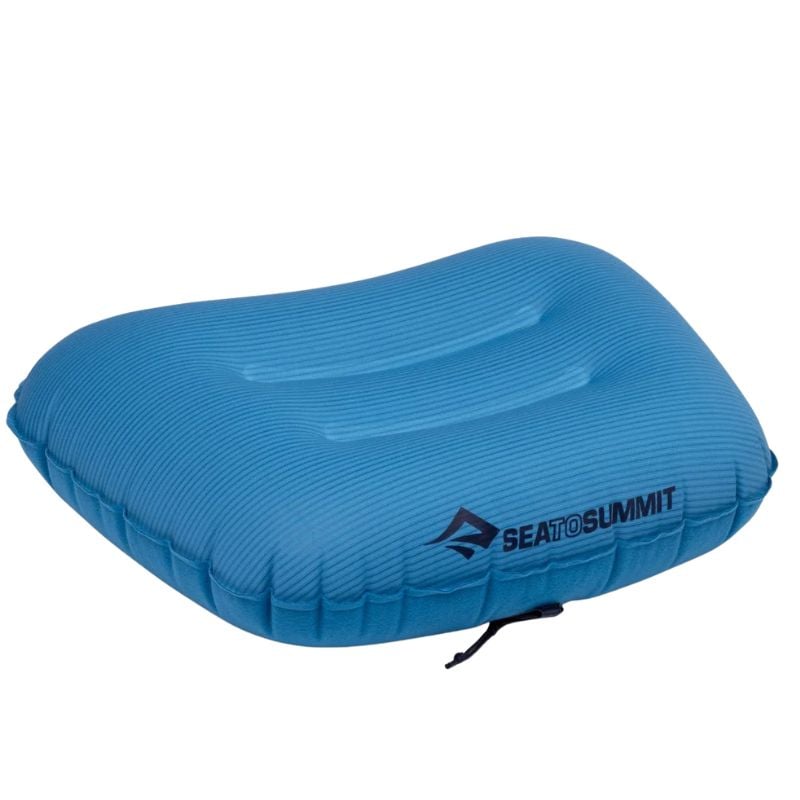
Weight: 2 oz / 57 grams
Dimensions (inches): 13 x 10 x 4
Type: Inflatable
Shell fabric: polyester , TPU bladder
Valve: Xpress valve
Sleeping pad attachment: PillowLock (with Sea to Summit pads)
Pros:
> Several sizes and color options
> Polyester knit fabric and TPU bladder – high-quality materials
> Simple inflation in a couple of breaths
> Includes storage bag
Cons:
> Hand wash and air dry only
For most thru-hikers and ultralight backpackers, the Sea to Summit Aeros Ultralight is still the easiest one-buy answer. I have used this pillow on multiple trips and the more nights I put on it, the more I appreciate the balance it strikes between weight, packed size, and a fabric that does not feel like a pool toy against your face.
The bean shaped profile holds your head in place, the stretch knit cover is soft enough to be quiet against stubble or a beard, and the valve is one of the easiest one out there to use in the dark. The pillow will lock into place if you are using a Sea to Summit Sleeping Pad which removes the issue of your pillow slipping off through the night.
It works for most three-season thru-hikes and shoulder-season trips. For pure cold-weather work I would step up to the Aeros Down. For side sleepers who want more loft, run it inside a Pillow Strap case (see hybrid systems below), the Ultralight is a great base for that build.
Trade-off: at 4″ of loft it is tall for an ultralight pillow but it does not have a real shoulder notch, so dedicated side sleepers may want the Big Agnes Rapide SL or a hybrid system instead.
Best for: ultralight thru-hikers and most three-season backpackers who want a single pillow that just works.
Compare Prices:
Best Ultralight Backpacking Pillow
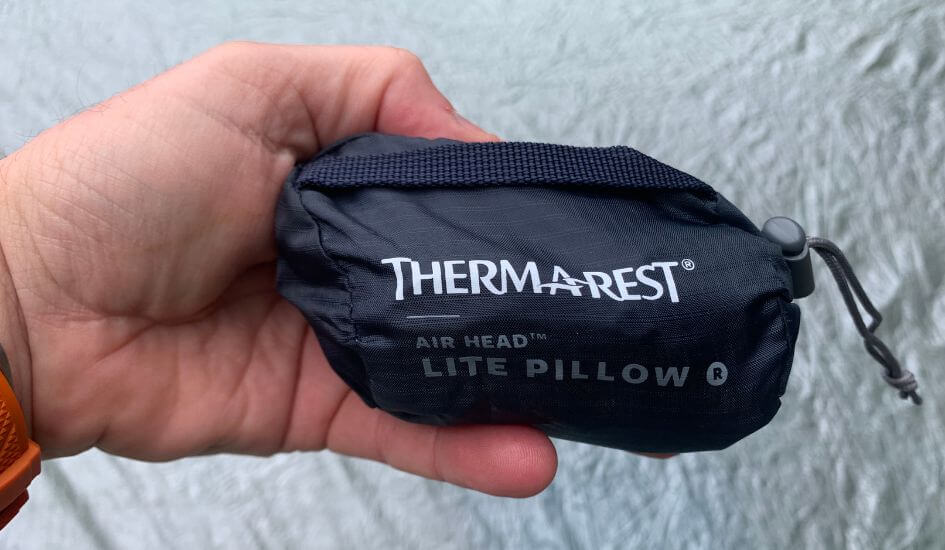
Therm-a-Rest Air Head Lite Pillow Review
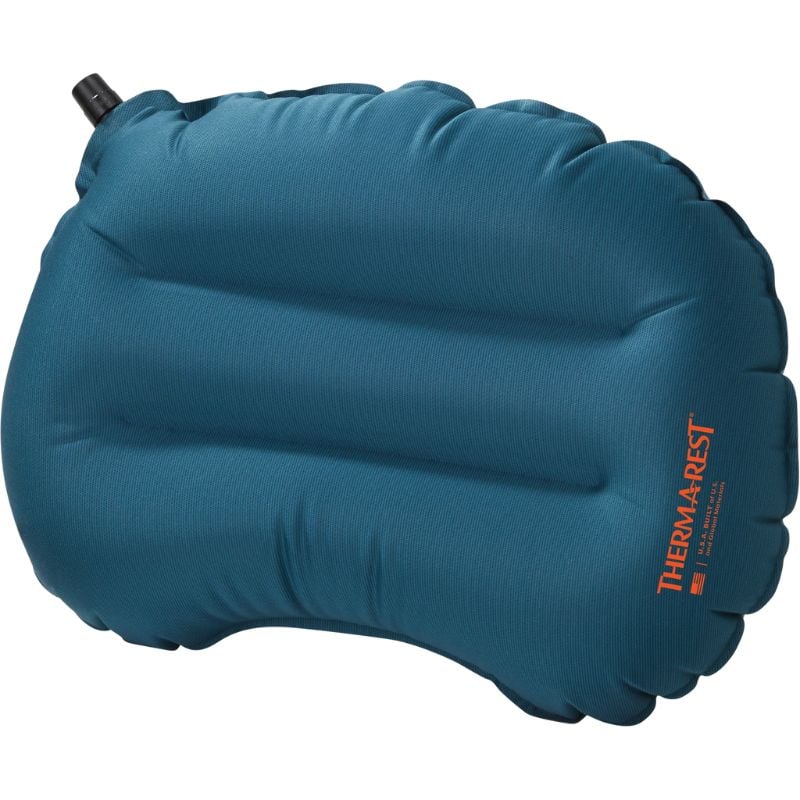
Weight: 2 oz / 58 grams
Dimensions (inches): 15.5 x 11 x 4
Type: Inflatable
Shell: polyester
Valve: twist-style
Sleeping pad attachment: None
Pros:
> Ultralight
> Machine washable
> Very small packed size
> Only a couple of breaths to inflate the pillow
> Soft to the touch and Comfortable
Cons:
> Not as comfortable as some of the other pillows in this review but best for its size and weight
I spent more than three years sleeping on the Therm-a-Rest Air Head Lite. It is one of the few sub-2 oz inflatables that holds up to long miles, machine washable, and packs to about the size of a plum. It is not as soft against the face as the Aeros Ultralight or the Nemo Fillo Elite, and the twist valve takes longer to inflate and deflate than Sea to Summit’s flat valve, but it weighs less than almost everything else on this list.
It suits weight-counters where every gram matters and you are happy to give up a bit of comfort for the lightest possible inflatable.
Trade-off: thinner shell means it is not the pillow to use as a sit pad around camp.
Best for: ultralight thru-hikers chasing absolute minimum pack weight.
Compare Prices:
Most Comfortable Ultralight Pillow
Nemo Fillo Elite

Weight: 2.9 oz / 83 grams
Dimensions (inches): 15 x 11 x 3
Type: Inflatable with Primaloft synthetic top
Shell: Polyester jersey-knit cover, removable and machine washable
Valve: twist-style
Sleeping pad attachment: None
Pros:
> Versatile enough to be used for sleeping anywhere
> Machine washable
> Less than 3 ounces in weight
> Almost as comfortable as your pillow at home
Cons:
> Durability issues. I have had 2 of them replaced under warranty in the last couple of years.
I’ve seen more night sleeping on the Nemo Fillo Elite than any other in this review, well in excess of 500 night. I used it thru hiking the Appalachian Trail and Te Araroa, and 100’s of nights bicycle touring. There is a lot to like. Primaloft synthetic insulation under a soft jersey cover, a small integrated stuff sack, and a hand feel that is genuinely better than the Aeros Ultralight.
The catch is durability. I have had two of them replaced under warranty and that is the only reason it is not at the very top of this list. Nemo’s lifetime warranty has been honest and easy to use, but I would rather not be sending pillows back from trail towns.
Trade-off: best face fabric of any sub-3 oz inflatable, paid for with a thinner bladder than Sea to Summit’s.
Best for: backpackers who prioritise comfort over the last gram and are happy to use Nemo’s warranty if needed.
Compare Prices:
Most Comfortable Inflatable Pillow
Therm-a-Rest Air Head Down Pillow Review
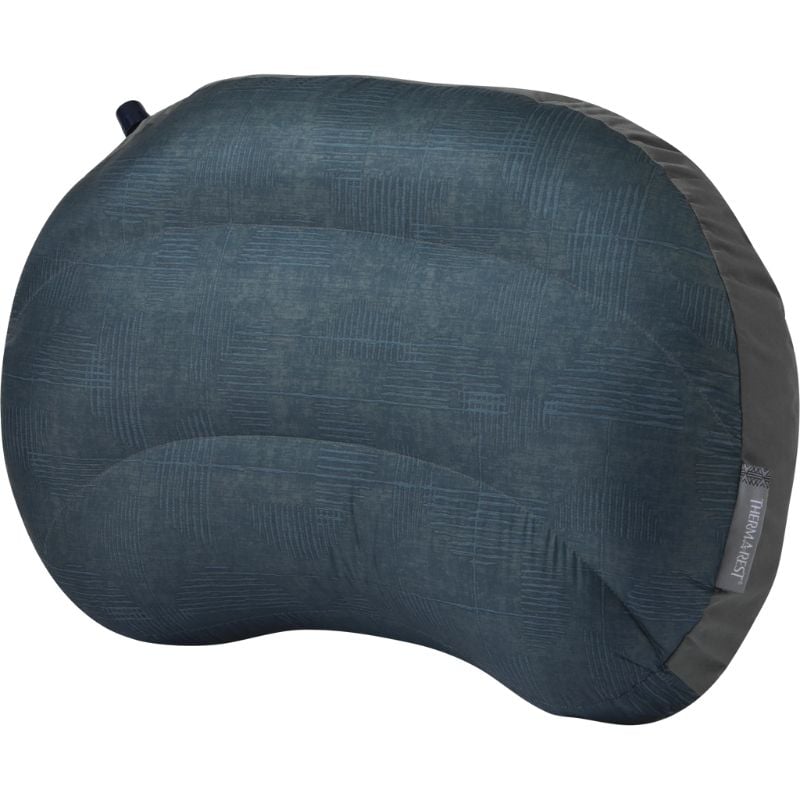
Weight: 4.9 oz / 139 grams
Dimensions (inches): 15.5 x 11 x 4
Type: Inflatable with quilted down top
Shell: Polyester and Down Cover, Urethane Insert
Valve: twist-style
Sleeping pad attachment: None
Pros:
> Very good
> Easy Installation
> Durable
Cons:
> Quite heavy
> Price
> Can be squeaky
The Therm-a-Rest Air Head Down is the inflatable I would pick if comfort matters more to me than the last ounce. The curved crescent-moon shape is purpose-built to wrap your neck and shoulders, and the quilted down top knocks out the bouncy plastic feel that ultralight inflatables can have. It also slides into the hood of a mummy bag better than any rectangular pillow.
It suits side sleepers who do not want to run a hybrid system, cold-weather trips where the down top adds a touch of warmth under the head, and anyone whose neck just does not get along with flat-top inflatables.
Trade-off: at almost 5 oz it is more than double the weight of the Aeros Ultralight, the twist valve is slower than Sea to Summit’s flat valve, and down on top of an inflatable still requires more care than a synthetic top.
Best for: side-sleeping backpackers who will trade 2–3 oz for a real comfort upgrade.
Compare Prices:
Best Insulated Backpacking Pillow
Sea to Summit Aeros Down Pillow Review
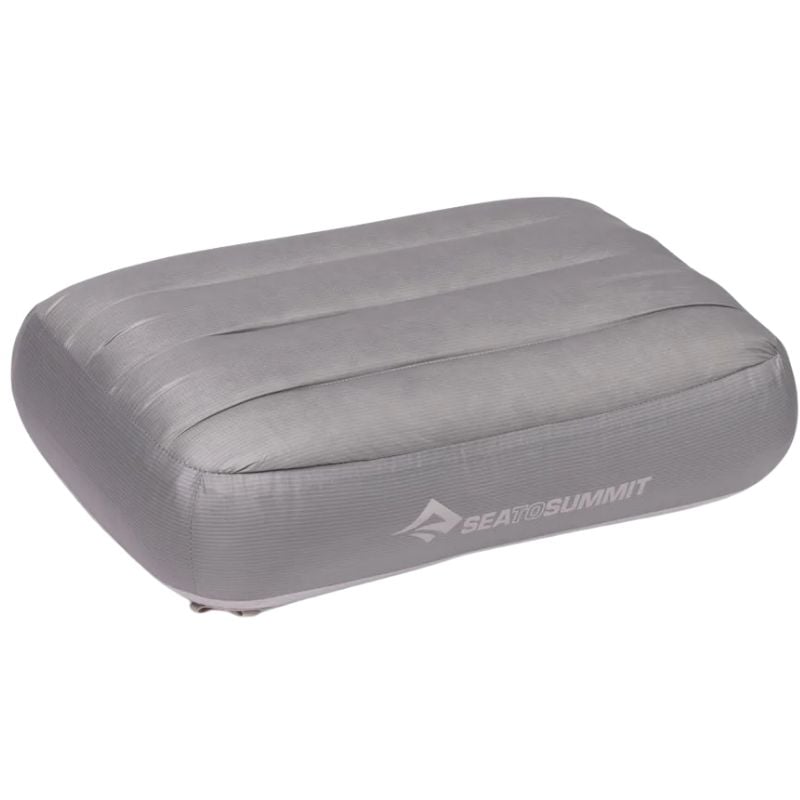
Weight: 2.7 oz / 77 grams
Dimensions (inches): 13 x 9 x 5
Type: Inflatable with down top
Shell: nylon woven top, dual-layer internal bladder
Valve: Multi-Function flat valve
Sleeping pad attachment: PillowLock (with Sea to Summit pads)
Pros:
> Ultra-soft and supple with additional down top
> Small, unobtrusive air valve won’t interrupt sleep
> Larger than other backpacking pillows, but still as small and light
Cons:
> Not the cheapest camping pillow
The Aeros Down combines the Aeros bladder with a real down pillow top. The result is the one of the softest inflatable I have used and the only one that genuinely feels insulated under your head on cold ground. For shoulder-season and winter thru-hikes the down top is worth the very small weight increase over the Ultralight.
Trade-off: smallest sleeping surface of the Aeros line and rectangular rather than lima-bean, so if you are a side sleeper who has struggled with the Aeros Ultralight, this will not solve that problem on its own.
Best for: cold-weather thru-hikers who want softness and a touch of insulation in one piece of gear.
Compare Prices:
Best Hybrid Pillow System for Side Sleepers
Zpacks Padded Pillowcase for Inflatable Pillow Review
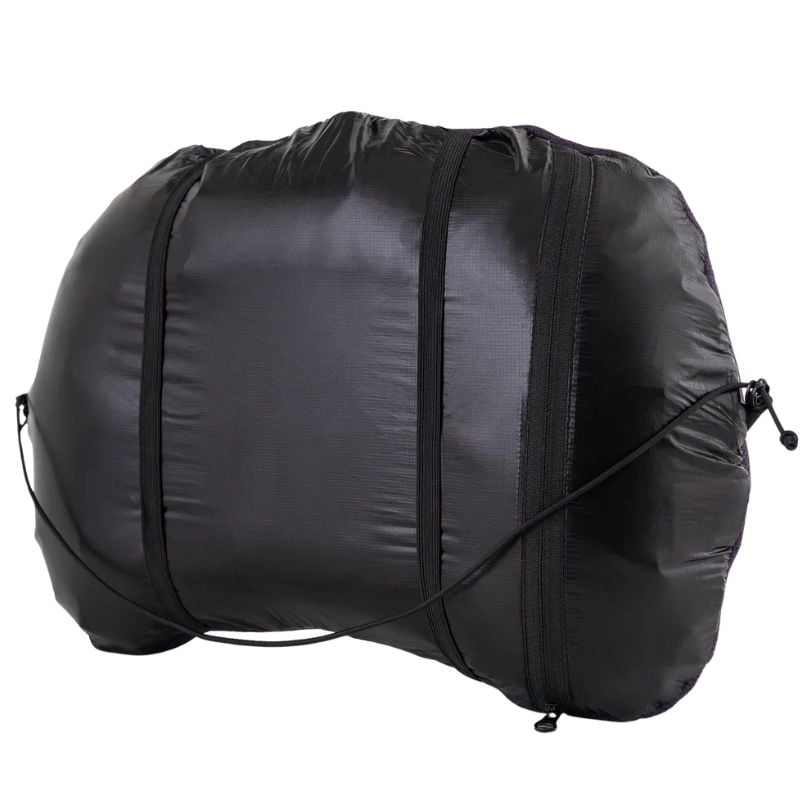
Weight: 2.4 oz / 68 grams
Dimensions (inches): 15 x 11.5 x 4.5
Type: Pillowcase Hybrid (add inflatable pillow and/or down jacket
Shell: nylon with fleece pillow top and synthetic insulation
Valve: N/A
Sleeping pad attachment: Shock cord around the pad
Pros:
> Can add inflatable pillow/down jacket/sit pad to make the pillow as bog or small as you like
> Fleece top is comfortable and quiet
> Durable
Cons:
> Needs a separate inflatable mattress and/or down jacket
> Adds extra weight to your pillow setup
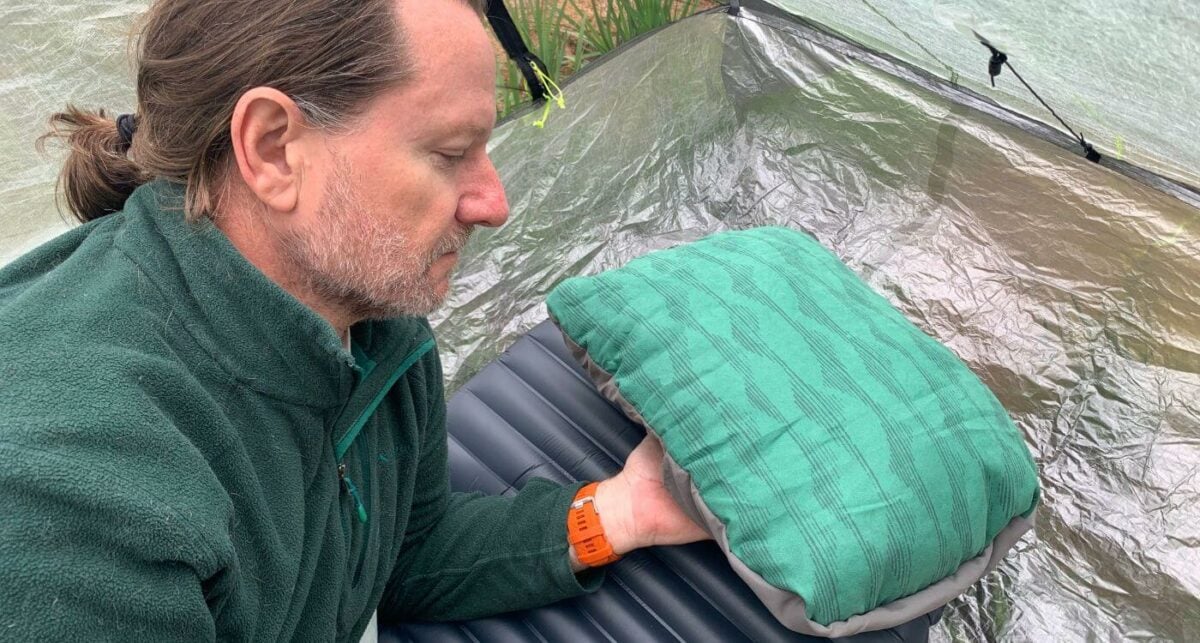
I first started using a hybrid stuff sack more than 10 years ago. The idea is simple, a stuff sack or pillow case system that allows you to your existing inflatable on the bottom and your puffy jacket as a top layer, giving you up to 6″ of loft from gear you are already carrying. The Zpacks Pillow Strap hybrid system is the latest upgrade in that system that adds another layer of comfort with the fleece top, insulation and sleeping pad straps that keeps the pillow in place as you sleep. Simple but genius at the same time.
It suits cold-weather thru-hiking and shoulder-season trips where you are already carrying an ultralight down jacket, and it suits side sleepers who have struggled to get enough loft from a standalone inflatable. It does not suit warm-weather hiking where you have nothing to stuff into the case.
Trade-off: the size small Pillow Strap is the right call for a standard ultralight down jacket, the medium spreads a small jacket too thin. Cost adds up, $35 for the Pillow Strap on top of whatever inflatable and down jacket you pair with it.
Best for: side-sleeping thru-hikers who already carry an inflatable such as the Sea to Summit Aeros UL or Therm-a-Rest Air Head Lite and want maximum loft for minimal added grams.
Compare Prices:
Best Stuff Sack Pillow
Hyperlite Mountain Gear Stuff Sack Pillow Review

Weight: 1.7 oz / 48 grams
Dimensions (inches): 17 x 12 x 4
Type: Stuff sack pillow with reversible fleece lining
Shell: Dyneema composite fabric, fully taped seams, water-resistant YKK zipper
Valve: N/A
Sleeping pad attachment: None
Pros:
> Added comfort from the reversible fleece-lined side
> Fully waterproof
> Doubles as storage for clean clothes or down jackets etc
Cons:
> No interior padding, just fleece and dyneema
The HMG Stuff Sack Pillow does two jobs at once: waterproof dry bag for spare clothes during the day, fleece-lined pillow at night. At 1.7 oz it is one of the lightest pillows you can carry, and on warm-weather trips where you are not sleeping in your puffy it is a reasonable single-pillow setup.
It suits ultralight hikers who already carry spare clothes and a down jacket worth stuffing into a pillow, and bikepackers who want a single dry bag that doubles as a head pillow.
Trade-off: comfort depends entirely on what you stuff inside, so on cold nights when you wear all your clothes, you have nothing left to make a pillow with.
Best for: warm-weather ultralight thru-hikers and bikepackers chasing a multi-use piece of gear.
Compare Prices:
Best for Back / Rotisserie Sleepers
NEMO Fillo Elite Wide Ultralight
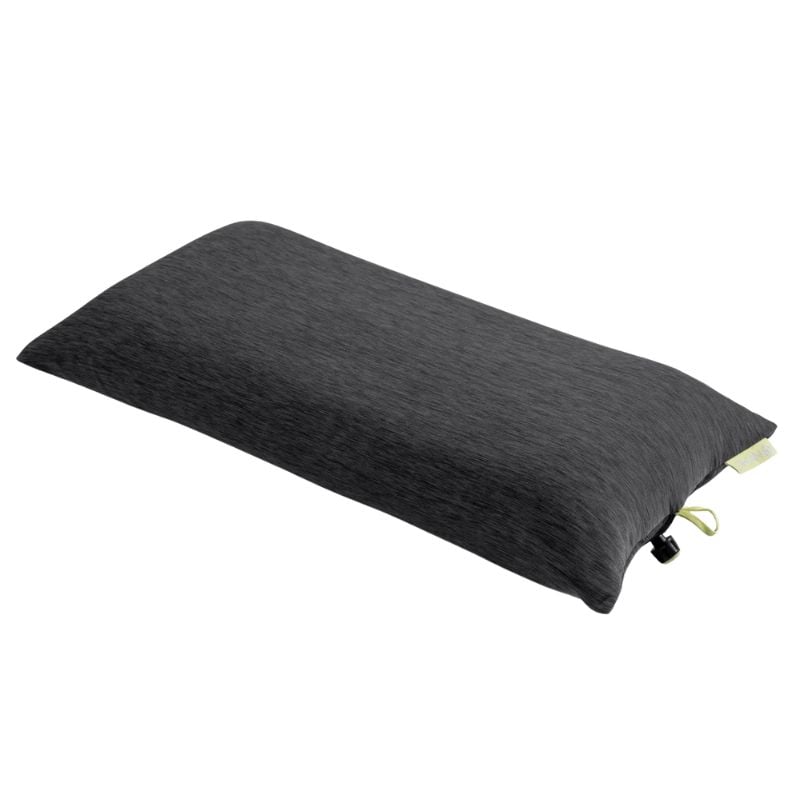
Weight: 4.2 oz / 118 grams
Dimensions (inches): 21 x 11 x 3
Type: Inflatable with Primaloft synthetic top
Shell: Polyester jersey-knit cover, removable and machine washable
Valve: twist-style
Sleeping pad attachment: None
Pros:
> Very comfortable
> Washable external cover
> Great for side sleepers
> Add or reduce to amount of air to adjust the pillow to exactly how you want it
Cons:
> A little heavy for most people to take backpacking
The Fillo Elite Wide Ultralight is the side-sleeper and rotisserie-sleeper answer. At 21″ wide it stretches the full width of a regular sleeping pad, so when you roll over in the night your head stays on the pillow instead of off the side. The synthetic top is the best face fabric on any inflatable I have used, and the cover unzips for easy washing.
It suits restless sleepers, back sleepers who do not want a tall side-sleeper pillow, and anyone who has woken up with their head on bare pad fabric.
Trade-off: at 3″ loft it is too low for dedicated side sleepers, and the underside is slippery on a smooth inflatable mat.
Best for: back sleepers and “rotisserie sleepers” who roll through the night.
Compare Prices:
Most Comfortable Camping Pillow
Therm-a-Rest Compressible Pillow Cinch Review
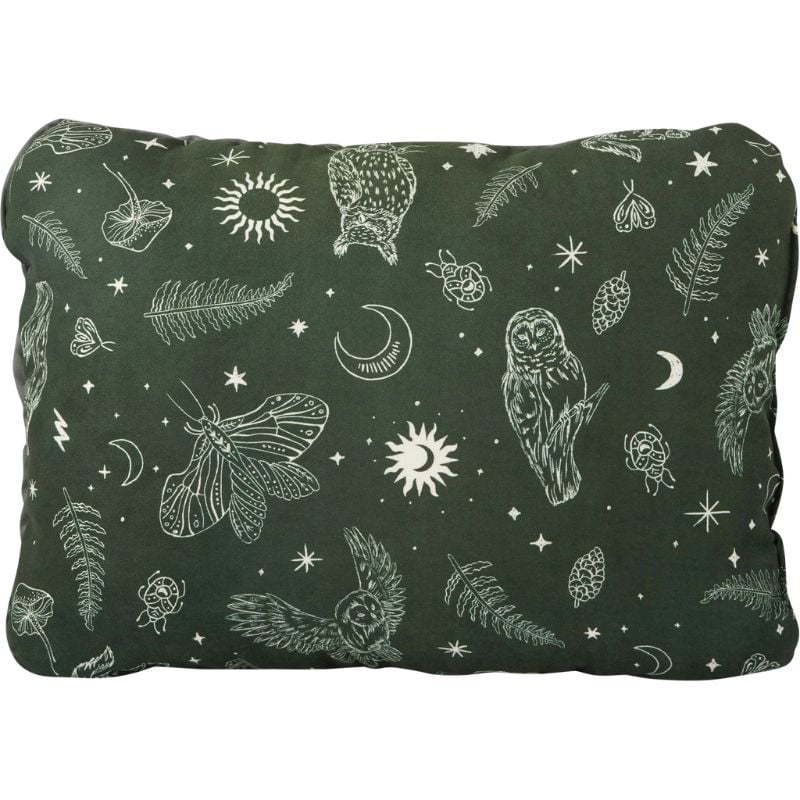
Weight: 11.5 oz / 325 grams
Dimensions (inches): 18 x 13 x 6
Type: Foam (upcycled foam fill)
Shell: Soft recycled polyester
Valve: N/A
Sleeping pad attachment: None
Pros:
> Available in small, medium, and large
> Machine washable
> Uses partially recycled materials
> Made in the USA
Cons:
> Needs regular fluffing
The Therm-a-Rest Compressible Cinch is what I take when comfort is the only metric. Four inches of upcycled foam under a brushed polyester cover, machine washable, made in the USA. The drawstring cord lock keeps it tight in your pack.
I have used this pillow on many car camping, short overnight and multiday hikes where space and weight is not the main issue. For comfort it is the best camping pillow in this whole review.
Trade-off: too heavy and bulky for thru-hiking, takes a few minutes to fully loft after you unpack it.
Best for: car camping, short overnight trips, and camp-style trips where weight is not the constraint.
Compare Prices:
Best Budget Backpacking Pillow
Trekology ALUFT 2.0 Ultralight Camping Pillow Review

Weight: 3.9 oz / 110 grams
Dimensions (inches): 16 x 12 x 4
Type: Inflatable
Shell:
Valve:
Sleeping pad attachment: anti-slip dots, integrated strap
Pros:
> Multiple colorways to choose from
> Inflates and deflates in seconds
> Improved ergonomic design with added neck support
> Ideal for back, side, or stomach sleepers
Cons:
> Inflation only – no added foam or padding
The Trekology ALUFT 2.0 is the answer for backpackers who do not want to spend $50+ on their first pillow. It does most of what an Aeros Ultralight does at a third of the price, with a strap that keeps it on the pad. It is heavier and the shell is not as nice against the face, but it gets the job done.
Best for: budget-conscious backpackers and weekenders.
Compare Prices:
More Pillows for Backpacking and Hiking
Here is a list of some other pillows that either almost made it to the list of pillows or are yet to be tested.
- Sea to Summit Aeros Premium
- Exped Mega Pillow
- Big Agnes Rapide SL
Backpacking Pillow Buyers Guide
Ultralight Backpacking Pillow Buyers Guide

Pillow Type – Inflatable vs Hybrid vs Foam vs Stuff Sack
Inflatable pillows like the Sea to Summit Aeros Ultralight are the lightest and most packable. Hybrid systems like the Zpacks Pillow Strap combine an inflatable with a stuffable pillowcase to add loft without adding much weight. Hybrid inflatables like the Nemo Fillo or Fillo Elite layer foam or synthetic insulation on top of an air bladder for more comfort. Foam pillows like the Therm-a-Rest Compressible Cinch are the most comfortable but the heaviest. Stuff sack pillows like the HMG Stuff Sack are the lightest of all but depend on what you can stuff inside.
For a thru-hike I run an Aeros Ultralight or, on cold trips, an Aeros UL inside a Zpacks Pillow Strap with my puffy on top.


Sleeping Position
Side sleepers need the most loft, at least 4″ of stable height, and benefit from a shoulder notch (Big Agnes Rapide SL) or a hybrid system that stacks loft (Pillow Strap). Back sleepers do not need much loft and are fine with a low pillow like the standard Nemo Fillo Elite. Stomach sleepers should look at flat options or a stuff sack pillow that can be packed loose. “Rotisserie sleepers” who roll through the night benefit from extra-wide pillows like the Fillo Elite Wide Ultralight.

Weight and Packed Size
For thru-hiking I draw a hard line at around 3 oz for a standalone pillow and around 4 oz for a hybrid system. Anything heavier needs to earn its place. Packed size matters more than the spec sheet suggests. An Aeros Ultralight stuffs into a hip-belt pocket; a Therm-a-Rest Compressible takes up a Nalgene’s worth of pack volume.
Loft and Neck Support
Loft is height when inflated. For most ultralight pillows that means 3″ to 4.7″. The right loft depends on how wide your shoulders are and how you sleep — broad-shouldered side sleepers need more, back sleepers need less. Underinflate slightly so the pillow cradles your head rather than bouncing it.
Shell Fabric, Durability and Noise
20D fabrics (Aeros Ultralight, Therm-a-Rest Air Head Lite) save weight at the cost of feeling thin against sharp gear. 50D fabrics (Aeros Premium) feel more durable but add weight. Noise matters more than people expect, especially for males with a beard or who haven’t shaved for a few days. TPU-only shells like the Zpacks Inflatable can be crinkly and unpleasant against skin, which is why a soft outer fabric material or a hybrid systems with a fabric pillowcase are popular.

Inflation Valve and Ease of Use
Sea to Summit’s flat multi-function valve is the easiest to use in the dark and allows micro-adjustment. Therm-a-Rest’s twist valve is reliable but slower. For a thru-hike where you are inflating and deflating a pillow 100+ times, the valve matters more than it sounds.

Keeping the Pillow on Your Sleeping Pad
Standalone inflatables slide. Solutions: PillowLock velcro patches on Sea to Summit pads, generic adhesive velcro on any pad, shock cord on hybrid systems like the Pillow Strap, the hood of a mummy bag, or stuffing the pillow inside a buff to add friction.
Cleaning and Long-Term Care
Removable jersey covers (Nemo Fillo, Fillo Elite Wide UL) are the easiest to keep clean. For the rest, hand-wash with mild soap and let air dry fully. Down-topped pillows (Aeros Down, Air Head Down) need the most care — never machine wash.
Value
The price is one of the many things to consider when purchasing a hiking pillow. The good-quality pillows in this review are affordable and worthy of consideration. Admittedly, some of the pillows are a bit pricey but they are usually ones filled with down or high-quality foam.
Conclusion
Here are the best pillows for backpacking and hiking in 2026:
Another one of the Best Backpacking Gear Reviews from BikeHikeSafari.
Frequently Asked Questions
What is the best ultralight backpacking pillow?
For most thru-hikers and ultralight backpackers, the Sea to Summit Aeros Ultralight at 2.1 oz is still the easiest one-buy answer — light, packable, and durable across long miles. Side sleepers should look at the Big Agnes Rapide SL or a Zpacks Pillow Strap hybrid system.
Are inflatable pillows comfortable for side sleepers?
A standalone flat-top inflatable usually is not. The two ways to fix this are a curved inflatable with a real shoulder notch (Big Agnes Rapide SL, Therm-a-Rest Air Head Down) or a hybrid system that stacks an inflatable, a pillowcase, and your puffy jacket to give you 5–6″ of loft (Zpacks Pillow Strap, Zenbivy Ultralight).
How much should a backpacking pillow weigh?
For a thru-hike, aim for under 3 oz for a standalone pillow or under 4 oz for a hybrid system. Anything over 5 oz starts to feel heavy on your fifth day out. Stuff sack pillows like the Hyperlite Mountain Gear Stuff Sack come in around 1.7 oz and double as your dry bag.
Stuff sack pillow vs inflatable pillow – which is better?
Stuff sack pillows are the lightest option and the most multi-use, but the comfort depends entirely on what you can stuff inside. On a cold night where you are wearing your puffy, you have nothing to stuff. Inflatable pillows are heavier but give a consistent surface every night. For thru-hikes I run an inflatable; for short summer trips a stuff sack is fine.
Do I need a pillow for backpacking?
You do not need one. A stuff sack of clothes or the foot of your sleeping bag works in a pinch. But after 200+ nights on the Appalachian Trail and Te Araroa, I am unwilling to give up 2 oz of pillow weight for the sleep quality I get from one.
How do I keep my pillow on the sleeping pad?
Three options that work: stuff the pillow inside the hood of a mummy bag, use Sea to Summit’s PillowLock velcro patches (or generic loop-side adhesive velcro on any pad), or run a hybrid system with a shock cord that loops under the pad (Zpacks Pillow Strap, Outdoor Vitals Elevated).
How do you clean a backpacking pillow?
Inflatables with removable jersey covers (Nemo Fillo, Fillo Elite Wide UL) are the easiest — pop the cover off and machine wash. For everything else, hand wash with mild soap and air dry fully before storing. Down-topped pillows like the Aeros Down should never go in a washing machine.


BikeHikeSafari Gear Review Process
The author, Brad McCartney from BikeHikeSafari is a small independent adventurer and outdoor gear tester who owns and runs BikeHikeSafari.com.
BikeHikeSafari is not part of a large blog network and is proudly independent. All reviews on this site are independent and honest gear reviews of outdoor products by the author.
The author, Brad McCartney is a very experienced triple crown thru-hiker, adventurer, and bike tourer having spent 1000s of nights sleeping in a tent and sleeping bag (Read more). He was a manager of an outdoor retail store and is very experienced in what is important when using and testing gear for reviews like this.
BikeHikeSafari will never receive any money for reviews and they do not accept sponsored reviews on this website. All the comments about the gear reviews are from the author based on his years of experience. Hope this independent review was helpful for you.

