

I have hiked thousands of trail miles, including long stretches of the Triple Crown, and I ran an outdoor retail store before that, so I have handled and tested more footwear than I can count.
Barefoot shoes, also called minimalist or zero drop shoes, strip away the raised heel and thick midsole to give you ground feel, a wide toe splay, and a more natural stride. Compared to other types of lightweight hiking shoes, lightweight hiking boots and trail running shoes they do take a bit of practice to get used to, but for hikers and backpackers who want to build real foot strength they are hard to beat.
This minimalist shoe and boot guide is written for hikers, thru-hikers and backpackers. My current top pick for the trail is the Xero Scrambler Low EV, with the Altra Lone Peak 9 as the best cushioned zero drop option for long distances. The core trade-off you are choosing is ground feel versus protection, and I explain how to balance it below. Jump to my Quick Picks for the short list, or read on for the full reviews. For how I research and field-test gear, see the Gear Review Policy.
Quick Picks: Barefoot Shoes
- Best Overall Barefoot Trail Shoe: Xero Scrambler Low EV – the most trail-ready barefoot shoe I would reach for, with a Michelin outsole and enough protection for rocky terrain while keeping true zero drop and a wide toe box.
- Best Barefoot Running Shoe: Xero Shoes Speed Force 2 – the lightest performance shoe here at roughly 6.5 oz per shoe, ideal for road running and recovery once your feet are strong.
- Best Zero-Drop Thru-Hiking Shoe (Cushioned): Altra Lone Peak 9 – zero drop with real cushioning, the go-to shoe for PCT, AT and CDT hikers who want a wide toe box without full barefoot ground feel.
- Best Minimalist Hiking Shoe: Merrell Trail Glove 7 – a proven low-stack minimalist trail shoe with a Vibram outsole, available in waterproof and non-waterproof versions.
- Best Barefoot Training / Recovery Shoe: Vibram FiveFingers V-Train 2.0 – maximum ground feel and toe articulation for gym work and foot-strength training on the days you are not hiking.
- Best Barefoot Hiking Boot: Vivobarefoot Tracker Leather AT Boots – a durable leather zero drop boot with real lugs and natural water resistance for wet shoulder-season hikes.
- Best Road-to-Trail Barefoot Shoe: Xero Shoes HFS II – a lean, flexible zero drop shoe that handles pavement and mild trail, a good first barefoot shoe.
How We Tested
The barefoot and minimalist shoes in this guide are researched and, where possible, field-tested by an experienced long-distance hiker and former outdoor store manager. Across thru-hikes, shoulder-season trips and backpacking trips, I judge barefoot shoes on ground feel, toe box width, flexibility, traction, weather resistance, durability and value for serious backpacking. Some items were supplied by the manufacturer and some were purchased by the author for this review. For more on how we research and review gear, see the BikeHikeSafari Gear Review Policy.
Follow along on Social Media
Minimalist Footwear Comparison Table
| Brand | Weight (pair) | Best Use | Waterproof |
|---|---|---|---|
| Xero Scrambler Low EV | 1 lb. 2.4 oz | Walking, Thru Hiking | No |
| Xero Shoes Speed Force 2 | 13 oz | Walking, Running, Recovery | No |
| Altra Lone Peak 9 | 1 lb. 6.4 oz | Thru Hiking, Running | No |
| Merrell Trail Glove 7 Shoes | 1 lb. 1 oz | Walking, Running Recovery | Waterproof & Non-Waterproof options available |
| Vivobarefoot Tracker Leather AT Boots | 1 lb | Walking, Hiking, Recovery | Water Resistant |
| Vibram FiveFingers V-Train 2.0 Training Shoe | 15.6 oz | Walking, Recovery | No |
| Xero Shoes HFS II Running Shoes | 14.8 oz | Walking, Running Recovery | No |
Best Minimalist Shoes for Hiking and Backpacking: Detailed Reviews
Best Minimalist Hiking Shoe – Overall
Xero Scrambler Low EV Review
Pros:
> Ultralight
> Comfortable
> Great for hiking
> Good grip
Cons:
> Like most barefoot shoes it may take a while for your feet to get used to wearing them without feeling fatigued.
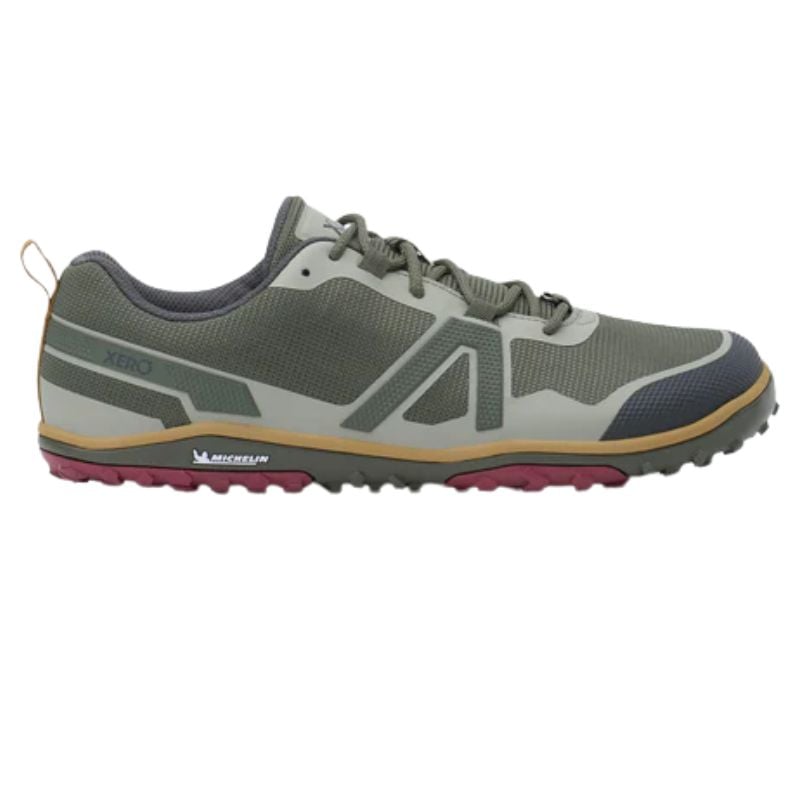
This is the barefoot shoe I would put on for genuine trail hiking rather than the road. The Michelin outsole gives it the kind of grip and puncture protection that most true minimalist shoes lack, and it does that without abandoning zero drop or a wide toe box. On rocky, rooty terrain the small amount of TrailFoam takes the edge off the sharpest rocks so you can cover distance without your feet feeling hammered.
It suits three-season hiking and backpacking on real trails, and it is a sensible step up for someone who has already built foot strength in a lighter minimalist shoe and now wants to take barefoot footwear onto rougher ground. It is not the lightest option here, and that is the trade-off: you are carrying a little more shoe in exchange for grip and durability.
The honest downside is that at around 9 oz per shoe it feels more substantial underfoot than a Speed Force II or HFS II, and dedicated ground-feel purists will notice the extra material. For most hikers moving from cushioned trail runners toward barefoot, that is a feature rather than a fault.
Trade-off: protection and grip versus pure ground feel.
Best for: barefoot hikers who want one shoe for real trails.
Compare Prices:
Best Minimalist Running Shoe
Xero Shoes Speed Force 2
Pros:
> Sock-Like feel
> Comfortable
> Versatile
> Made from vegan products.
Cons:
> Like most barefoot shoes it may take a while for your feet to get used to wearing them without feeling fatigued.
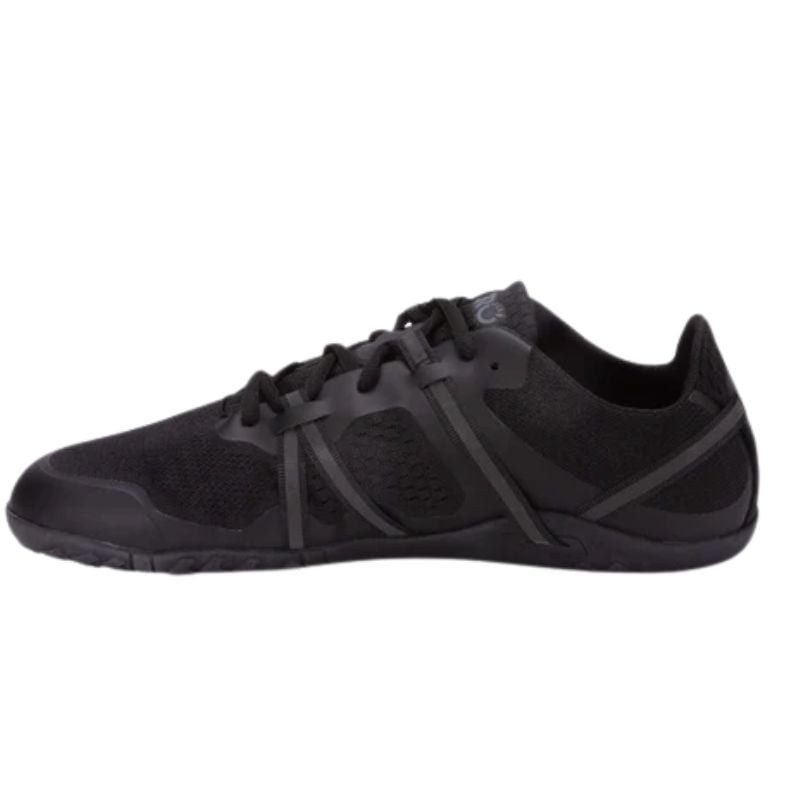
The Speed Force II is the lightest shoe in this guide and it is the one I recommend for barefoot running and recovery once your feet have adapted. At around 6.5 oz per shoe it genuinely disappears on your foot, and the thin FeelTrue outsole gives you the ground feel that is the whole point of going minimalist.
It is built for road running, walking and easy recovery days rather than technical trail. If you are new to barefoot shoes, this is a shoe to build up in slowly. The lack of any real midsole means every step is felt, which is exactly what strengthens your feet over time but will punish you if you rush into long distances.
The trade-off is protection: on gravel or rocky ground you will feel everything, and there is no waterproofing. For its intended job — light, fast, close-to-the-ground running and recovery — it does it better than anything else on this list.
Trade-off: minimal weight versus zero underfoot protection.
Best for: barefoot running and recovery once foot-strong.
Compare Prices:
Best Zero-Drop Thru-Hiking Shoe
Altra Lone Peak 9

Weight per pair: 1 lb. 6.4 oz / 635 grams
Heel Stack Height: 25 mm
Pros:
> Nice wide toebox
> Very comfortable
> Lightweight
> Good traction
> Laser-cut holes for quick drainage
Cons:
> For wider feet
> Zero Drop is not for everyone, while I like them some people do not
The Lone Peak is not a barefoot shoe in the ground-feel sense, but it is the most important zero drop shoe for thru-hikers and it belongs on this page. It gives you the wide toe box and flat platform your feet want on a long trail, with 25 mm of cushioning underneath so you can still put in 20-30 mile days on hard ground. It is the shoe you see more than any other on the PCT, AT and CDT for good reason.
It suits long-distance backpacking and thru-hiking where full barefoot shoes would leave your feet beaten up. If you are transitioning toward zero drop but are not ready to give up cushioning, this is the bridge shoe. The extra-wide option is worth knowing about if standard trail runners cramp your toes.
The honest trade-offs are weight and durability: at around 11 oz per shoe it is one of the heavier shoes here, the mesh upper wears out faster than leather, and the 9th version gained a little weight over the 8. But for covering big miles comfortably in a zero drop shoe, nothing matches its track record.
Trade-off: cushioning and mileage comfort versus true barefoot ground feel and outright weight.
Best for: zero drop thru-hiking and long-distance backpacking.
Compare Prices:
Best Barefoot Hiking Shoe – Runner Up
Merrell Trail Glove 7 Shoes

Pros:
> Breathable mesh lining
> No Midsole
> Wide toe box and a secure heel
> Ultra Lightweight
Cons:
> Grip could better
> Soles do not last long
The Trail Glove 7 is a proven minimalist trail shoe and a sensible pick for hikers who want a mainstream barefoot-style shoe with a real Vibram outsole. It is genuinely zero drop, the low stack keeps you close to the ground, and the Vibram grip is more trustworthy on trail than the thin outsoles on many pure minimalist shoes.
It suits day hiking and shorter backpacking trips on moderate trails, and it works well as a first minimalist hiking shoe because it protects a little more than an ultra-thin option. Merrell offers a waterproof GTX version, which is worth considering for wet trails, though as with most barefoot shoes I usually favour breathability over waterproofing.
The trade-offs are toe box and ground feel: the Trail Glove is narrower than dedicated barefoot brands like Xero or Freet, so wide-footed hikers may feel pinched, and the 14 mm stack means slightly less ground feel than a 7 mm shoe. For a durable, widely available minimalist trail shoe, it remains a strong choice.
Trade-off: durability and grip versus a narrower toe box than true barefoot brands.
Best for: minimalist day hiking on moderate trails.
Compare Prices:
Best Barefoot Hiking Boot
Vivobarefoot Tracker Leather AT Boots

Pros:
> Outsole has lots of grip
> Uses Environmentally Friendly Materials
> Snug Fit
> Reflective Foil keeps feet warm in cool weather
Cons:
> Not as breathability as some other models
The Tracker II is the barefoot hiking boot I trust for wet shoulder-season hikes where a low shoe would leave my ankles and feet cold and soaked. The leather upper gives real natural water resistance and the lugged outsole grips far better than most minimalist shoes, so you get a proper boot feel while keeping zero drop and a wide toe box underneath.
It suits hikers who want ankle coverage and durability for rougher, wetter trails, and it is built to last in a way the mesh options here are not. Vivobarefoot offers different outsoles across the Tracker range (firm ground, soft ground and more rugged Esc versions), so it is worth matching the outsole to your terrain.
The trade-offs are weight and price: at close to 500 g per boot it is the heaviest option here, and it is expensive. It also takes real adjustment time, as a stiff leather barefoot boot asks a lot of feet that are not yet strong. For a durable, water-resistant zero drop boot, it earns its place.
Trade-off: durability and weather protection versus weight and cost.
Best for: wet, rough shoulder-season hiking in a zero drop boot.
Compare Prices:
Best Minimalist Training Shoe
Vibram FiveFingers Men’s V-Train 2.0 Training Shoe

Pros:
> Each toe has its own separate toe pouch
> Good in Wet And Dry Conditions
> Durable
Cons:
> Restrictive Thick Outsole
The V-Train 2.0 is the shoe I recommend for the days you are not hiking — for gym work, foot-strength training and recovery. The individual toe pockets force your foot to work the way it does barefoot, and that is exactly what builds the strength you need before taking minimalist shoes onto long trails.
It suits training, cross-training and short recovery walks rather than trail hiking. Treat it as the tool that prepares your feet, not the shoe you thru-hike in. The 4 mm XS Trek rubber gives enough grip for the gym and casual ground while keeping ground feel high.
The trade-offs are real: toe-pocket shoes take getting used to, sizing can be fiddly, and on rough trails the thin durable outsole can be hard on your toes over distance. For deliberate foot-strength work it is one of the best tools available.
Trade-off: maximum toe articulation versus limited trail practicality.
Best for: foot-strength training and recovery.
Compare Prices:
Best Minimalist Trail Shoe
Xero Shoes HFS II Running Shoes

Pros:
> Flexible material
> Breathable
> Comes with a 5,000-mile sole warranty.
> Contours To Your Feet
Cons:
> These barefoot shoes are slightly heavier than other products on the market.
The HFS II is a lean, flexible zero drop shoe that bridges road and mild trail, and it makes a good first barefoot shoe. It is genuinely flexible, so your foot moves naturally, and the low 9 mm stack keeps you connected to the ground while adding just enough underfoot for pavement.
It suits road running, walking and easy trail once your feet are strong. If you are moving from cushioned trainers toward barefoot, the HFS II is an approachable step because it protects slightly more than the Speed Force II while staying light and close to the ground.
The trade-off is weight: at 8.3 oz per shoe it is heavier than the original HFS and heavier than you might expect for a minimalist shoe, which is the one criticism reviewers consistently raise. It is also not waterproof. For a versatile road-to-trail barefoot shoe, it strikes a good balance.
Trade-off: added protection and structure versus more weight than a pure minimalist shoe.
Best for: road-to-trail running and a first barefoot shoe.
Compare Prices:
Minimalist Footwear Buyers Guide

Barefoot & Minimalist Shoe Buyers Guide (How to Choose)
Choosing a barefoot shoe for hiking is not the same as buying a normal trail runner, and most of the advice online skips over the parts that actually matter once you are out on a long trail. I have hiked thousands of miles in minimalist footwear, including long stretches of the Triple Crown, and I ran an outdoor retail store before that, so this guide is built around what I have learned works and what leaves your feet wrecked. The short version is this: barefoot shoes reward patience and punish shortcuts. Get the fit, the ground feel and the transition right and they are one of the best things you can do for your feet. Get them wrong and you will be nursing sore arches for weeks. Below is everything I weigh up before I recommend a shoe.
What Zero Drop and Minimal Midsole Actually Mean
The heel-to-toe drop is the height difference between where your heel sits and where your toes sit. A traditional hiking shoe might have an 8 to 12 mm drop, which tips you forward and encourages you to land hard on your heel. A barefoot shoe has zero drop, meaning your heel and forefoot sit at the same height, exactly as they do when you stand barefoot on the ground. That flat platform changes how you move. It encourages a midfoot or forefoot landing, it lets your calves and Achilles work through their full range, and over time it builds strength that cushioned shoes let you skip.
Minimal midsole is the second half of the equation. A true barefoot shoe strips out the thick foam slab that sits between your foot and the ground, leaving only a thin, flexible layer. That is what gives you ground feel, the ability to sense the terrain through the sole and adjust your stride to it. The trade-off is honest: less material underfoot means less protection from rocks and roots. Some shoes on my list, like the Xero Speed Force II, go as thin as 7 mm for maximum ground feel. Others, like the Xero Scrambler Low EV, add a little protective foam so you can take barefoot principles onto rougher trails without bruising your feet. Neither approach is wrong. It depends on your terrain and how far your feet have come.
Ground Feel vs Protection: The Central Trade-Off
If you understand only one thing before buying, make it this. Every barefoot and zero drop shoe sits somewhere on a spectrum between pure ground feel and outright protection, and where you want to be depends on the ground under you and the miles you are covering.
At one end you have shoes like the Speed Force II at around 7 mm of stack, or FiveFingers with almost nothing between you and the earth. These are superb for building foot strength and for smooth trails and roads, but they will beat up your feet on sharp, rocky ground over a long day. At the other end sits something like the Altra Lone Peak 9, which keeps the zero drop and wide toe box but stacks 25 mm of cushioning underneath so you can put in thirty kilometre days on hard-packed trail without your feet screaming. It is barely a barefoot shoe in the ground-feel sense, but for thru-hikers it is often the sensible choice. In between are shoes like the Scrambler Low EV and the Merrell Trail Glove 7, which balance a modest amount of protection against a still-connected feel.
My advice is to match the shoe to the hardest terrain you will regularly hit and the longest distance you will regularly cover, not the easiest. A shoe that feels wonderful on a groomed path can leave you limping across a scree field.
Toe Box and Foot Shape
The single most important fit feature on a barefoot shoe is the toe box. Your toes are designed to splay wide when you stand and push off, and a wide, anatomically shaped toe box lets them do that. This is where barefoot shoes genuinely differ from mainstream footwear, and it is also where brands differ most from each other.
Dedicated barefoot brands like Xero tend to run genuinely wide and let your toes spread properly. Vivobarefoot is wide but shaped a little differently, with men’s models generally roomier than women’s. Merrell’s Trail Glove, while zero drop and minimalist in feel, runs narrower than the purpose-built barefoot brands, so hikers with wide feet often find it pinches and may need to size up for toe room. Before you buy, work out whether you have narrow, average, wide or extra-wide feet, and whether you have high or low volume over the arch, because a shoe that is wide enough but too shallow over the top of the foot will still feel wrong. Many barefoot shoes have removable insoles, which is a useful way to reclaim a little volume for a high-instep foot or to fine-tune the fit.
Weight
Weight matters more in barefoot shoes than in almost any other category, because the whole point is a shoe that feels barely there. Typically a pair of barefoot hiking shoes weighs under a pound, and the lighter the shoe the less material your feet have to lift and move with every single step. Over a long day, and certainly over a thru-hike, that adds up to real energy saved.
But do not chase low weight blindly. The lightest shoes here, like the Speed Force II at roughly 6.5 oz per shoe, achieve that number by giving you almost no protection. A Lone Peak 9 at around 11 oz per shoe is far heavier, but those extra grams are cushioning that keeps your feet functional over big mileage. So weight is best read alongside the ground-feel-versus-protection trade-off above. Ask what you are getting for the grams. If a shoe is heavy without offering protection, durability or grip in return, that is a poor deal. If the weight buys you something you need on trail, it can be worth carrying.
Flexibility
A barefoot shoe should move with your foot, not fight it. Good flexibility comes in two directions. Longitudinal flexibility is the ability to fold the shoe along its length, which lets your foot roll naturally through each step. Rotational flexibility is the ability to twist the sole, which lets your foot make the small adjustments it needs when you land on uneven ground, a root or a rock. On trail, that twist is what lets your toes bite into soft dirt to push off and your foot adapt to whatever it lands on.
You will notice that not every shoe on my list is maximally flexible, and that is deliberate. A stiffer, thicker sole, like the one on the Lems Boulder Boot Grip or a moderately cushioned hiker, trades some flexibility for durability and weather protection. That is a reasonable compromise if you are hiking cold, wet or rocky terrain. Just go in knowing that a stiffer barefoot shoe delivers less of the natural movement that drew you to barefoot in the first place.
Outsole, Grip and Durability
The outsole is where a barefoot hiking shoe either earns its keep or lets you down, because thin soles and serious trails are not natural partners. Look at three things: the rubber compound, the lug depth and how the outsole is likely to wear.
The best trail-focused barefoot shoes use proven outsole rubber. The Scrambler Low EV runs a Michelin outsole, the Merrell Trail Glove 7 uses Vibram, and Xero’s own FeelTrue rubber is reliable on its road and light-trail shoes. Lug depth matters for wet and loose ground: deeper lugs bite into mud and dirt, while a shallow, flat outsole is fine for hard-packed trail and road but will slide when things get greasy. Durability is the honest weak point of many barefoot shoes. A thin outsole simply has less rubber to wear through, and lightweight mesh uppers give out faster than leather. If you cover big miles or hike rough ground, favour a more durable outsole and upper even at the cost of a little weight and ground feel, and know that a leather boot like the Vivobarefoot Tracker II or a resoleable option will outlast a mesh runner many times over.
Breathability vs Waterproofing
Here is where I go against a lot of the marketing. For most barefoot hiking, breathability beats waterproofing. Barefoot shoes are thin, so when they get wet they also dry quickly, and a breathable mesh upper keeps your feet cool and comfortable and helps prevent the damp, blister-prone conditions that a sealed waterproof shoe can create. Waterproof membranes also trap heat, and once water does get in over the top of a low shoe, a waterproof lining keeps it in rather than letting it drain and dry. For that reason my default recommendation is a breathable, non-waterproof barefoot shoe.
The exception is cold, wet, shoulder-season hiking, where keeping your feet dry genuinely matters for warmth and comfort. That is when a waterproof zero drop boot like the Lems Boulder Boot Grip, built on a wide natural-shape last with a breathable waterproof membrane, makes sense. The leather Vivobarefoot Tracker II offers natural water resistance without a full membrane, which is a nice middle ground. Decide based on your climate and season, not on a waterproof label that sounds reassuring in the shop.
Transitioning Safely to Barefoot Shoes
This is the section most guides skip, and it is the one that will save your feet. Barefoot shoes ask muscles, tendons and connective tissue in your feet and lower legs to do work that cushioned, high-drop shoes have been doing for you for years. If you go straight from a supportive hiking boot to a full day on trail in minimalist shoes, you are very likely to end up with sore arches, aching calves, a strained Achilles or pain across the top of your foot.
The fix is patience. Start with short walks in your barefoot shoes, a kilometre or two at a time, and build up gradually over weeks. Expect your calves and arches to feel worked, in the way muscles do when they are getting stronger, and back off if you feel sharp or joint pain rather than muscle fatigue. Most people need several weeks to a few months before their feet are ready for longer hikes, and meaningful strength gains often take around six months of regular use. A dedicated foot-strengthening shoe like the Vibram FiveFingers V-Train 2.0 is a genuinely useful tool during this phase, used at the gym and on easy walks rather than on the trail. Do the transition properly and barefoot shoes will reward you. Rush it and you will conclude they do not work, when really you just went too far too soon.
Price and Value
Barefoot hiking shoes span a wide price range, and the number on the tag usually tells you something real about materials and durability. A lightweight mesh minimalist runner sits at the lower to middle end, a technical trail shoe with a branded outsole costs more, and a full-grain leather zero drop boot like the Vivobarefoot Tracker II or Lems Boulder Boot Grip sits at the top because the materials genuinely last longer. Budget barefoot boots exist and can be a reasonable way to try the category, but the cheaper materials and lower durability show up quickly once you take them on serious backpacking trips, which is why I keep those as a starter option rather than a long-haul recommendation.
The best value is not the cheapest shoe, it is the shoe that suits your terrain, fits your foot properly and lasts. A well-matched leather boot that survives several seasons is cheaper per mile than a bargain shoe you replace twice a year, and a shoe that fits your foot shape is the one you will actually keep wearing. Spend where it counts, which is fit, outsole and durability for your conditions, and do not pay for waterproofing or cushioning you will not use.
Conclusion
The best barefoot shoes (minimalist shoes) for 2026:
- Best Overall Barefoot Trail Shoe: Xero Scrambler Low EV
- Best Barefoot Running Shoe: Xero Shoes Speed Force 2
- Best Zero-Drop Thru-Hiking Shoe (Cushioned): Altra Lone Peak 9
- Best Minimalist Hiking Shoe: Merrell Trail Glove 7
- Best Barefoot Training / Recovery Shoe: Vibram FiveFingers V-Train 2.0
- Best Barefoot Hiking Boot: Vivobarefoot Tracker Leather AT Boots
- Best Road-to-Trail Barefoot Shoe: Xero Shoes HFS II
Frequently Asked Questions
Are barefoot shoes good for hiking?
On moderate, non-technical trails they are a great ultralight option, but only once your feet are strong enough. Start with short walks and build up over weeks before attempting a full day hike, or you risk sore arches and calves.
What is the best barefoot shoe for thru-hiking?
For true barefoot ground feel on trail, the Xero Scrambler Low EV is my top pick. If you want zero drop with real cushioning for big mileage on the PCT, AT or CDT, the Altra Lone Peak 9 is the proven choice.
How long does it take to adjust to barefoot shoes?
Most people need several weeks to a few months of regular use before their feet, calves and arches are strong enough for longer distances. Noticeable strength gains often take around six months.
Should barefoot hiking shoes be waterproof?
Usually no. Barefoot shoes are thin, so wet feet dry fast and breathability matters more than waterproofing. The exception is cold, wet shoulder-season hiking, where a waterproof boot like the Lems Boulder Boot Grip is worth it.
Are Altra Lone Peaks considered barefoot shoes?
Not quite. They are zero drop with a wide toe box but have 25 mm of cushioning, so you lose most of the ground feel. Think of them as a zero drop thru-hiking shoe rather than a true barefoot shoe.
What foot problems can barefoot shoes cause if you rush?
Doing too much too soon commonly causes calf strain, arch soreness and top-of-foot pain. The fix is patience: shorter distances first, then gradual increases.
Can you backpack with a full pack in barefoot shoes?
Yes, experienced barefoot hikers do, but carrying pack weight increases the load on your feet, so build up your foot strength and mileage before adding a heavy pack.

BikeHikeSafari Gear Review Process
The author, Brad McCartney from BikeHikeSafari is a small independent adventurer and outdoor gear tester who owns and runs BikeHikeSafari.com.
BikeHikeSafari is not part of a large blog network and is proudly independent. All reviews on this site are independent and honest gear reviews of outdoor products by the author.
The author, Brad McCartney is a very experienced triple crown thru-hiker, adventurer, and bike tourer having spent 1000s of nights sleeping in a tent and sleeping bag (Read more). He was a manager of an outdoor retail store and is very experienced in what is important when using and testing gear for reviews like this.
BikeHikeSafari will never receive any money for reviews and they do not accept sponsored reviews on this website. All the comments about the gear reviews are from the author based on his years of experience. Hope this independent review was helpful for you.

