

I have thru-hiked the Pacific Crest Trail, Appalachian Trail, and Continental Divide Trail, and across every one of those thousands of miles the humble sock did more to keep my feet happy than any lightweight hiking boots, hiking shoe, or ultralight trail runner.
This guide is for thru-hikers, backpackers, and ultralight hikers who want socks that survive months of hard trail miles without blisters or holes, not casual everyday wear. I bought and tested the socks in this review, drawing on years of experience as a triple crown hiker and former outdoor store manager.
My current top pick is the Darn Tough Hiker Micro Crew Midweight for its warmth, durability, and lifetime warranty, with the Smartwool Performance Hike Light Cushion Crew as a close runner up and quality lightweight and summer option. If you jump to my Quick Picks you can see the best hiking socks for every use case. The one trade-off to understand is cushioning versus breathability: more cushion means more warmth and durability but slower drying. For how I research and field-test gear, see the Gear Review Policy.
Quick Picks: Best Thru-Hiking Socks
- Best overall: Darn Tough Hiker Micro Crew Midweight Sock – my go-to for thru-hiking, with the best balance of cushion, durability, and a no-fuss lifetime warranty.
- Runner Up: Smartwool Performance Hike Light Cushion Crew Socks – like the Darn Tough above it has a good balance between comfort and durability but lacks the lifetime warranty that Darn Tough are known for.
- Best lightweight / summer: Darn Tough Light Hiker Micro Crew Light Cushion – thinner and faster-drying for hot deserts and high-output days without giving up durability.
- Best value: REI Co-op Merino Wool Lightweight Hiking Crew Socks – a high-merino sock at a lower price, backed by REI’s one-year satisfaction guarantee.
- Best winter / full cushion: Smartwool Classic Hike Full Cushion – maximum warmth and padding for cold shoulder-season and alpine trips.
- Winter sock runner up: Darn Tough Hiker Boot Full Cushion Socks – not quite as warm or comfortable as the Smarttwool but much more durable.
- Best for preventing blisters: Wrightsock Coolmesh II Crew Anti Blister Socks – a double-layer design that moves friction between the layers instead of against your skin, and it really works.
- Best toe socks: Injinji Toe Socks – individual toe pockets that stop toe-on-toe rubbing on long descents.
- Best synthetic / vegan: Darn Tough Coolmax Hiker Micro Crew – a wool-free version that dries fast and keeps Darn Tough’s durability and warranty.
- Best for Australia and New Zealand: Macpac Merino Hiker Socks – a durable, well-priced merino sock that is easy to buy in the AUS/NZ region.
- Best liner sock: Icebreaker Merino Hike+ Light Cushion Icebreaker Hike+ Light Crew – a thin merino sock that pairs under a thicker sock or works solo in warm weather.
- Farm to Feet Damascus Lightweight Crew Merino Wool Socks
- Macpac Merino Crew Socks
How We Tested
The hiking socks in this guide are researched and field-tested by an experienced long-distance hiker and former outdoor store manager. Across the Pacific Crest Trail, Appalachian Trail, Continental Divide Trail, shoulder-season trips, and backpacking trips, I judge hiking socks on comfort, warmth, breathability and dry time, blister prevention, durability over hundreds of miles, and value for serious backpacking. The socks in this review was purchased by the author. BikeHikeSafari is proudly independent and does not accept sponsored reviews. For more on how we research and review gear, see the BikeHikeSafari Gear Review Policy.
Follow along on Social Media
Hiking Socks Comparison Table
| Brand | Material | Height | Cushioning |
|---|---|---|---|
| Darn Tough Hiker Micro Crew | 61% Merino, 36% nylon, 3% Lycra Spandex | Crew | Medium |
| Smartwool Performance Hike Light Cushion Crew | 56% Merino, 41% Nylon, 3% Elastane | Crew | Light |
| Darn Tough Light Hiker Micro Crew Light Cushion | 54% Nylon, 43% Merino, 3% Lycra Spandex | Crew | Light |
| REI Co-op Merino Wool Lightweight Hiking Crew | 79% Merino, 20% Nylon, 1% Lycra Spandex | Crew | Light |
| Smartwool Classic Hike Full Cushion | 66% Merino, 32% Nylon/1% Elastane | Crew | Full |
| Darn Tough Hiker Boot Full Cushion | 66% Merino, 32% Nylon, Lycra Spandex | Crew | Full |
| Wrightsock Coolmesh II Crew Anti Blister | Inner Layer: 70% Coolmax Polyester, 26% Nylon, 4% Lycra Spandex; Outer Layer: 71% Coolmax Polyester, 24% Nylon, 5% Lycra Spandex | Crew | Medium |
| Injinji Toe Socks | 75% Coolmax Polyester, 21% Nylon, 4% Lycra Spandex | Crew | Light |
| Darn Tough Coolmax Hiker Micro Crew | 37% nylon, 34% COOLMAX polyester, 26% acrylic, 3% Lycra spandex | Crew | Medium |
| Macpac Merino Hiker Socks | 82% Merino, 12% Nylon, 6% Elastane | Crew | Full |
| Icebreaker Merino Hike+ Light Cushion Merino Wool Crew | 61% Merino, 37% Nylon, 2% Lycra | Crew | Light |
| Farm to Feet Damascus Light Crew Merino Wool | 51% Merino, 46% Nylon, 3% Lycra Spandex | Crew | Light |
| Macpac Merino Crew | 74% Merino, 19% Nylon, 7% Elastane | Crew | Medium |
Best Socks for Hiking and Backpacking 2026: Detailed Reviews
Best Socks for Hiking – Overall
Darn Tough Hiker Micro Crew Midweight Sock

Height: Crew
Cushioning: Medium
Pros:
> Great for keeping feet warm
> Moisture-wicking merino wool
> Knitted for mid-level cushioning
> Made in the USA
Cons:
> Not cheap (but worth it)
This is the sock I keep coming back to, and I have used them on every thru-hike I have done. I have hiked thousands of miles in them including the Pacific Crest Trail, Appalachian Trail, and Continental Divide Trail. and they simply keep going. The midweight cushion sits in the sweet spot for me: enough padding under the ball and heel for long days under a heavy pack, but not so thick that I have to size up my shoes.
They suit almost every kind of backpacking trip, from 3-season thru-hikes to cooler shoulder-season walks. The merino blend regulates temperature well, which is why I have used these socks in super hot deserts and cold alpine environments and found them good at holding a steady temperature when needed.
The real-world advantage is durability paired with the warranty. I have used Darn Tough’s warranty to exchange a pair of hiker socks that got a hole for a new pair, no questions asked. That matters on a long trail where a worn-out sock means blisters.
Trade-off: the merino content means they dry slower than a fully synthetic sock, so on very wet trails I carry a second pair to swap.
Best for: thru-hikers and backpackers who want one durable, do-everything sock. Pair them with a good pair of Hiking Boots, Hiking Shoes, or Trail Runners.
Compare Prices:
Best Socks for Hiking – Runner Up
Smartwool Light Hike Cushion Crew Socks

Height: Crew
Cushioning: Light
Pros:
> Merino wool socks are ZQ-certified
> Light cushion along bottom
> Breathable & moisture wicking
> Areas reinforced where needed
> Uses 28% recycled nylon
Cons:
> Not as durable as Darn Tough
When I want a thinner, faster-drying sock for hot weather, this is my pick. I have used and tested these socks in warmer weather and found them to be great summer hiking socks. The lighter cushion breathes better and dries faster than the midweight Hiker, which is what you want on hot desert days or fast-and-light miles.
They work best with trail runners and low-cut hiking shoes rather than heavy boots, where a touch more cushion helps. The higher nylon content also means they shrug off grit and dry quickly after a river crossing.
Trade-off: less cushion means less warmth, so these are not the sock for cold alpine starts.
Best for: summer thru-hiking, desert sections, and anyone who prefers a lower-profile sock.
Compare Prices:
Best Lightweight Summer Hiking Socks
Darn Tough Light Hiker Micro Crew Light Cushion

Height: Crew
Cushioning: Light
Pros:
> Great for summer hiking
> Moisture-wicking merino wool
> Thinner and lighter cushioning
> Lifetime warranty
Cons:
> There aren’t many color options available, and they are all a little dull
When I want a thinner, faster-drying sock for hot weather, this is my pick. I have used and tested these socks in warmer weather and found them to be great summer hiking socks. The lighter cushion breathes better and dries faster than the midweight Hiker, which is what you want on hot desert days or fast-and-light miles.
They work best with trail runners and low-cut hiking shoes rather than heavy boots, where a touch more cushion helps. The higher nylon content also means they shrug off grit and dry quickly after a river crossing.
Trade-off: less cushion means less warmth, so these are not the sock for cold alpine starts.
Best for: summer thru-hiking, desert sections, and anyone who prefers a lower-profile sock.
Compare Prices:
Best Budget Hiking Socks
REI Co-Op Merino Wool Lightweight Hiking Crew Socks

Height: Crew
Cushioning: Light
Pros:
> Certified to Responsible Wool Standard
> Plenty of strategically placed reinforcement
> Light cushioning for long-wearing comfort
> Sweat-wicking properties
> Machine washable
Cons:
> Not so well suited for use in winter
This is the sock I recommend when someone wants proper merino performance without the top-tier price. The high merino content wicks and regulates temperature about as well as socks costing more, and REI’s one-year no-questions-asked guarantee is genuinely useful.
They suit 3-season backpacking and day hiking, and the lighter cushion keeps them breathable in warm weather. Durability is a small step below Darn Tough in my experience, but they are around 30% cheaper, that is a fair trade.
Trade-off: the lighter build and slightly lower durability mean they may not last a full long-distance thru-hike the way a Darn Tough will.
Best for: hikers who want strong value merino socks, especially if they already shop at REI.
Compare Prices:
Best Winter Full Cushion Socks
Smartwool Classic Hike Full Cushion

Height: Crew
Cushioning: Full
Pros:
> Comfortable
> Full Cushion
> Heavy duty
> Best suited for boots in cool weather
Cons:
> Not as much stretch as some of the other socks
When the temperature drops, this is the sock I reach for. I used and tested these socks for several months during winter and found the full-cushion terry loops add real warmth and padding for cold, rocky trails. After more than a year of use and testing, these socks are still comfortable and show minimal wear.
They suit winter hiking, cold shoulder-season trips, and anyone who runs cold at camp. The high merino content holds warmth even when damp. They are also a great option to wear inside the sleeping bag if you get cold feet.
Trade-off: the full cushion is warm and slower to dry, so these are overkill for summer thru-hiking.
Best for: cold sleepers and winter/alpine hikers.
Compare Prices:
Runner up: Best Winter Hiking Socks
Darn Tough Hiker Boot Full Cushion Socks

Height: Crew
Cushioning: Full
Pros:
> Warm in Winter, cool in summer
> High Merino Woll content
> Lifetime warranty
> Good at wicking moisture away from the skin
Cons:
> A little too thick to use as a summer hiking sock
The Darn Tough Hiker Boot Full-Cushion Socks are nice thicker socks that are perfect for winter hikes.
The Darn Tough Hiker Boot Full-Cushion Socks are a nice blend of 66% Merino Wool, 32% Nylon, and 2% Lycra Spandex. Add to that the full cushioning for extra comfort.
They are super comfortable but all that comfort does add to a bit of bulk. So be aware that if your hiking boots or winter hiking boots are a tight fit then these socks will make them even tighter. But they will keep you warm when winter hiking.
Overall, the Darn Tough Hiker Boot Full-Cushion Socks are one of the best winter hiking socks for 2026.
Compare Prices:
Best Socks to Prevent Blisters
Wrightsock Coolmesh II Crew Anti Blister Socks

Height: Crew
Cushioning: Medium
Pros:
> Combined inner and outer layer sock
> Works to prevent blisters
> Made in the USA
> Wrightsock guarantees these socks will prevent blisters
> Very durable and long-lasting
Cons:
> Hikers are reporting that the style has changed recently and they are not as durable as they used to be.
The Wrightsock Coolmesh II Crew Anti Blister Socks are the best hiking socks to prevent blisters. This is not just a claim, it works and they guarantee that they will not give you blisters.
If blisters are your enemy, this double-layer sock is worth trying. I have been long term testing these socks for many years and have never had a blister while wearing these socks, ever. The two layers move against each other so the friction happens between the sock layers rather than against your skin.
They suit hikers prone to hot spots, break-in periods with new footwear, and hot humid conditions where the mesh helps ventilation.
Trade-off: the synthetic build is not as warm or odor-resistant as merino, and two layers can feel warmer in summer.
Best for: blister-prone hikers.
Compare Prices:
Best Toe Socks for Hiking
Injinji Liner Toe Socks

Height: Crew
Cushioning: Light
Pros:
> Good at preventing blisters
> They make good liner socks
> Lightweight Socks
> Comfortable
> Quick Drying
Cons:
> Most people will either love them or hate them.
> Can be uncomfortable for some people
I was a toe-sock skeptic, but these won me over. The first time I tried them on, I noticed that the Injinji toe socks come with specific left and right socks which are molded to fit each toe. That individual toe wrap stops toe-on-toe rubbing, which is a real blister source on long descents. I tested them trail running, overnight backpacking trips and day hiking and wore them for several days at a time without washing them and they performed well.
They suit hikers who get blisters between the toes, and anyone with wide feet who dislikes toes being squashed together. There are thin liner sock versions and mid weight, and they come in crew and ankle versions, my preference is the crew length thin liner versions.
Trade-off: they take longer to put on, and the synthetic build is less warm than merino.
Best for: blister-prone toes and long descents.
Compare Prices:
Best Synthetic / Vegan Hiking Socks
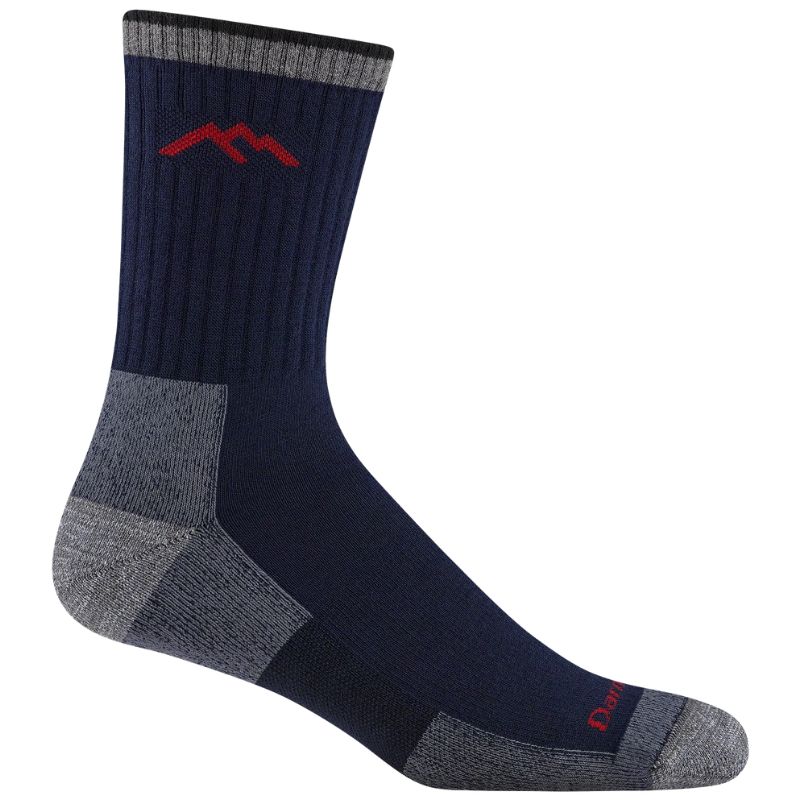
Darn Tough Coolmax Hiker Micro Crew
Height: Crew
Cushioning: Medium
Pros:
> Good in warm weather
> Lightweight Socks
> Durable
> Synthetic and vegan
Cons:
> Not as good in cold weather
This is the sock I point people to when they want Darn Tough durability without any wool, either because they are vegan or because they want the fastest possible dry time. It keeps the same tough knit and lifetime warranty as the merino Hiker, but the Coolmax synthetic build wicks and dries noticeably faster.
They suit hot, wet conditions and river-crossing-heavy trails where a wool sock stays damp too long, as well as anyone avoiding animal fibres.
Trade-off: synthetics hold odour more than merino over multi-day trips, so expect to rinse them more often.
Best for: vegan hikers and fast-drying warm-weather use.
Compare Prices:
Best Hiking Socks for Australia and New Zealand
Macpac Merino Hiker Socks

Height: Crew
Cushioning: Full
Pros:
> Prevents sock riding down
> Moisture-wicking properties
> Thermo-regulating wool
> Breathable mesh paneling
> Full loop pile cushioning
Cons:
> Tight fit around the lower calf area
> Only available in Australia and New Zealand
This is one of my regional picks that the big US sites do not cover. I have been using these socks for more than 5 years and they are still going strong. For hikers in Australia and New Zealand, Macpac is easy to buy locally and priced well, which matters when US brands carry heavy shipping.
They suit general backpacking and hiking in the AUS/NZ region and perform close to the mainstream merino socks.
Trade-off: harder to buy outside Australia and New Zealand.
Best for: AUS/NZ hikers who want a durable local merino option.
Compare Prices:
Best Liner Hiking Socks
Icebreaker Merino Hike+ Light Crew Socks

Height: Crew
Cushioning: Light
Pros:
> Made with 70% merino wool
> Thermo-regulating
> Moisture wicking
> Machine washable
Cons:
> Price goes up with size
I purchased these socks and my first impressions were that these have a soft feel on the inside. The high merino content makes them comfortable and naturally odor-resistant, and the light cushion keeps them breathable.
I used and tested these socks in warmer weather and found them to be great summer hiking socks. The thin sock has been specially sculptured for each foot with a specific left foot and right foot sock. These socks are among some of the best-fitting socks you can find anywhere. And in case you are wondering they come with a generously sized L or R on each sock to help you put them on the correct foot. When testing these socks I tried them on the wrong foot to test their fit and found that the cut around the toes is very specific to each foot.
They suit 3-season hiking and work well as a standalone light sock or under a thicker sock as a liner.
Trade-off: durability is good but not quite at Darn Tough’s level in my experience.
Best for: hikers who prioritise next-to-skin softness.
Compare Prices:
More High Quality Socks
Farm To Feet Damascus Lightweight Crew Merino Wool Socks

Height: Crew
Cushioning: Light
Pros:
> 100% US-grown Merino wool
> Thermo-regulating properties
> Targeted high-density cushioning
> Reinforced for added durability
> Won’t cause any discomfort
Cons:
> Not much
I have been using and testing these socks as part of a long-term sock test, and so far I have been using these socks for more than 4 years and they are still going strong. They are US-made, which appeals if that matters to you, and the merino/nylon blend holds up to long mileage.
They suit long backpacking trips and durability-focused hikers who want a lighter sock.
Trade-off: the lighter cushion is less warm for cold trips.
Best for: durability-focused, sustainability-minded backpackers.
Compare Prices:
Macpac Merino Crew Socks

Height: Crew
Cushioning: Medium
Pros:
> High content of merino wool
> Loop pile cushioning
> Moisture wicking
> Full crew height
Cons:
> Color options are a little dull
> Only available in Australia and New Zealand
Like the other Macpac socks I showed you earlier, again there’s a very high content of merino wool. This is what gives it both its thermo-regulating and moisture-wicking properties.
But that’s not all. There’s also a luxury loop pile cushioning along the base of the sock, which is great for long hikes. I also love that it has a very smooth toe seam that will not chafe.
The Macpac Merino Crew Hiking Socks come in 3 color options, black, navy, and light grey. There are 3 sizes available, small, medium, and large.
I have been using and testing these socks as part of a long-term sock test. So far I have been using these socks for more than 5 years and they are still going strong. They are not as thick as when they were new but after all this time and hundreds of miles of use, there are still no holes. So when it comes to durability I can confirm that these are super strong.
They are one of the most durable hiking socks for Australian and New Zealand hikers due to the company Macpac being so huge in both these countries.
Compare Prices:
Other Quality Hiking Socks
Here are a couple more high-quality hiking socks that have not made the list:
- Sockwell Circulator
- Swiftwick Pursuit Quarter Crew
- Feetures Elite Light Cushion
- Balega Hidden Comfort / Enduro
- Sealskinz Dunton (waterproof)
- Smartwool Mountaineer / Classic Mountaineer Maximum Cushion
- Danish Endurance Merino 3-Pack
Hiking Sock Buyers Guide
Hiking Sock Buyers Guide
Womens Hiking Socks
All of the socks mentioned in this review are unisex and can be used by either men or women. A lot of the sock companies mentioned in the reviews above make women’s specific socks. But overall there is little difference to the unisex socks. Some offer a wider choice of colors and some may go down to smaller sizing.
Women’s Hiking Socks are not much different than men’s socks. If you choose to buy a pair of socks then all of the companies that sell them have a size chart that matches either US Sizing, UK Sizing, or EU sizing. You can be sure to find a sock that fits your feet.
Fitting and Sizing
Getting the size right matters as much as the sock itself. A stretched-out or bunched sock causes hot spots and blisters. Sizing bands are based on shoe size but vary a lot between brands, so always check the manufacturer’s size chart and whether a sock runs true to size.
If you are between sizes, try both: a slightly snug sock with light compression wicks better and stays wrinkle-free, while a sock that is too big bunches inside your shoe. Fit to your feet, not the label. Plenty of women hikers wear men’s socks and men with low-volume feet prefer women’s socks because the fit is simply better.

Sock Height: No-Show, Toe Socks, Quarter, Crew, and Boot
Match sock height to your footwear. The rule I follow is that the sock should be at least as tall as your footwear so the collar does not rub your skin.
Crew Socks
Crew socks rise above the height of Hiking Boots and half way up the calf. They keep out debris, and are the most popular and most featured height. All the socks in this review are crew height.

Quarter Socks
Quarter socks sit lower and pair well with Hiking Shoes and Trail Running Shoes; I use quarter socks for trail running and find them better than ankle socks, and they also work with a pair of ultralight gaiters. I rarely use them for hiking as I find Crew Socks a better option and as a result none are featured in this guide.
Ankle Socks
Ankle Socks are not so common for use as hiking socks as they don’t work with Hiking Boots and are not comfortable with most Hiking Shoes. Ankle socks work well with trail runners but only when running, not when hiking. Wearing a pair of ankle socks while hiking just doesn’t feel as comfortable as Crew Socks. I did test some ankle socks but did not include them in this guide.

Toe Socks
Although not technically related to the height of the sock, a Toe Sock seems to be its style and is worthy of mentioning separately. These socks have individual pouches for each toe. Initially thought of as a gimmick by many (including myself) they have proven to be very capable and comfortable hiking socks that are worth a try, even if you think they are not for you.

Merino Wool vs Synthetic for Thru-Hiking
The core material choice comes down to merino wool versus synthetics like nylon, polyester, and Coolmax. Merino is the material I reach for on most long trails. It wicks moisture, regulates temperature in both heat and cold, resists odour so you can wear a pair for days, and, importantly, keeps some warmth even when wet.
Synthetics dry faster, cost less, and often survive heavy mileage better, but they hold odour and do not stay warm once soaked. In practice, almost every quality hiking sock is a blend: enough merino for comfort and odour control, enough nylon and spandex for durability and stretch.
For multi-day backpacking where you cannot wash socks often, I lean merino. For hot, wet, high-output days with river crossings, a synthetic like the Coolmax Hiker earns its place.

Fill Weight and Cushioning
Cushioning runs from ultralight to heavyweight, and it is one of the most personal choices you will make. I have used both light and midweight hiking socks, and I prefer a light sock for trail runners and shoes and a midweight cushion for boots.
Light cushion breathes and dries fastest and suits hot weather and low-cut shoes.
Midweight is the do-everything choice for 3-season backpacking.
Full and heavyweight cushion add warmth and padding for cold and rocky terrain but run hot and dry slowly, so they are best kept for winter. More cushion is not automatically better; match it to your climate, your footwear volume, and how much padding your feet actually want under a heavy pack.
Blister Prevention
Blisters come from friction, moisture, and heat, and your socks are the front line against all three. Moisture-wicking merino or synthetic keeps skin drier and less prone to rubbing. Double-layer socks like the Wrightsock Coolmesh II shift friction between the two layers instead of against your skin, and toe socks like the Injinji stop toe-on-toe rubbing. Beyond socks, catch hot spots early, keep a dry pair to change into at camp, and make sure your footwear fits. On long trails I carry two pairs and swap them during the day, washing one in a stream when I can.
Brands
As with many other types of products, there are some brands of hiking socks that outperform others. And these brands formed my starting point as I put together my shortlist of the best socks for hiking.
These brands include the likes of Darn Tough Socks, Wrightsocks, Smartwool, REI Co-op, Icebreaker, and Macpac.

Value for Money
Good hiking socks cost far more than regular socks, and that surprises people. You can buy ten regular socks for the price of one quality hiking pair. My advice is to weigh the cost against lifespan and warranty: a Darn Tough that lasts years and gets replaced free when it fails is better value than a cheap sock you replace every season. Check prices as you shop and set a budget, but treat durable, warrantied socks as a long-term investment in blister-free feet.
All the best walking socks for 2026 are high quality and will last for 100s of days of tough backpacking on the trails
Durability and Warranty for Socks
Durability is where good hiking socks earn their price. A worn-through sock on a long trail means blisters, so I test socks hard and note when they develop holes. Some companies back their product and offer an exchange or refund if you are not happy. Darn Tough’s unconditional lifetime guarantee is the benchmark: I have swapped a holed pair for a new one with no questions asked, and over a long thru-hike that saves real money.
REI Co-op backs its socks with a one-year satisfaction guarantee, which is also generous. A strong warranty is a signal the maker trusts the sock, and for thru-hikers it is a genuine buying factor, not a gimmick.
Sock Care
How you wash your socks decides how long they last. Merino wool hates high heat and will shrink, so I line-dry my socks and avoid the tumble dryer, or use low heat only when I must. Wash wool inside-out on a cool, gentle cycle with mild detergent. Synthetics tolerate more heat but still last longer air-dried. On trail, rinsing socks in a stream and letting them dry keeps them fresher and extends their life on a long hike.
Conclusion
Overall, the Best Pair of Socks for Hiking are:
- Best overall: Darn Tough Hiker Micro Crew Midweight Sock
- Runner Up: Smartwool Performance Hike Light Cushion Crew Socks
- Best lightweight / summer: Darn Tough Light Hiker Micro Crew Light Cushion
- Best value: REI Co-op Merino Wool Lightweight Hiking Crew Socks
- Best winter / full cushion: Smartwool Classic Hike Full Cushion
- Winter sock runner up: Darn Tough Hiker Boot Full Cushion Socks
- Best for preventing blisters: Wrightsock Coolmesh II Crew Anti Blister Socks
- Best toe socks: Injinji Toe Socks
- Best synthetic / vegan: Darn Tough Coolmax Hiker Micro Crew
- Best for Australia and New Zealand: Macpac Merino Hiker Socks
- Best liner sock: Icebreaker Merino Hike+ Light Cushion
- Farm to Feet Damascus Lightweight Crew Merino Wool Socks
- Macpac Merino Crew Socks
Follow along on Social Media
Frequently Asked Questions
What are the best hiking socks for backpacking and thru-hiking?
For most thru-hikers I recommend the Darn Tough Hiker Micro Crew Midweight. It has the best mix of cushion, durability, and a lifetime warranty, and I have used it on the PCT, AT, and CDT. For hot weather, drop down to the Darn Tough Light Hiker.
Merino wool vs synthetic hiking socks: which is better?
Merino wins for multi-day backpacking because it controls odour, regulates temperature, and stays warm when wet. Synthetics dry faster, cost less, and often last longer under heavy use. For long trips where you cannot wash socks, I choose merino; for hot, wet, high-output days, a synthetic like the Coolmax Hiker makes sense.
What kind of socks do Thru Hikers wear?
Most thru-hikers use Darn Tough because of the durability, comfort, and lifetime warranty. They cost more up front but get replaced free when they wear out, which saves money over a long hike.
How do I stop blisters with my socks?
Keep your feet dry with a wicking merino or synthetic sock, catch hot spots early, and make sure your footwear fits. If you are blister-prone, try a double-layer sock like the Wrightsock Coolmesh II or a toe sock like the Injinji, and carry a dry pair to change into at camp.
Can you wear two pairs of socks when hiking?
Yes, a thin liner sock under a thicker sock moves friction between the two layers rather than against your skin, which helps prevent blisters. That said, most modern hikers in trail runners get the same benefit from a single good wicking sock, so try both and see what your feet prefer.
Are thick socks better than thin socks for hiking?
Not automatically. Thick socks add warmth and cushioning for cold weather and boots, but they run hot and dry slowly. Most hikers prefer a lighter or midweight sock for 3-season trails and save the thick socks for winter.
Are merino hiking socks any good?
Yes. Merino resists odour naturally, works in both hot and cold conditions, and stays comfortable over multiple days. Most of the best hiking socks combine merino with nylon and spandex for added durability and stretch.


BikeHikeSafari Gear Review Process
The author, Brad McCartney from BikeHikeSafari is a small independent adventurer and outdoor gear tester who owns and runs BikeHikeSafari.com.
BikeHikeSafari is not part of a large blog network and is proudly independent. All reviews on this site are independent and honest gear reviews of outdoor products by the author.
The author, Brad McCartney is a very experienced triple crown thru-hiker, adventurer, and bike tourer having spent 1000s of nights sleeping in a tent and sleeping bag (Read more). He was a manager of an outdoor retail store and is very experienced in what is important when using and testing gear for reviews like this.
BikeHikeSafari will never receive any money for reviews and they do not accept sponsored reviews on this website. All the comments about the gear reviews are from the author based on his years of experience. Hope this independent review was helpful for you.

