

I have spent thousands of nights in a tent across thru-hikes, and the one thing a winter storm always exposes is a shelter that is not strong enough for the conditions. This guide is for backpackers, ski tourers, and mountaineers who need a 4-season tent that will actually stand up to snow loading and high wind, whether that is a below-treeline winter camp or a high-altitude summit push.
My current top pick is the Mountain Hardwear Trango 2 for all-round winter strength, with the Samaya 2.0 as the best single-wall option for fast-and-light alpine trips.
See Quick Picks for the full list. The trade-off in this category is simple: strength and livability come at a real weight cost, and I help you work out where that balance sits for your trips. For how I research and field-test this gear, see the Gear Review Policy.
Quick Picks: Best Winter Tents
- Best Overall: Mountain Hardwear Trango 2 – the most storm-proof and livable tent here; heavy, but it is the one I want for deep winter above the treeline.
- Best Single-Wall Mountaineering Tent: Samaya 2.0 – waterproof, breathable, and under 3 lb for fast-and-light alpine pushes.
- Best Ultralight Shelter: Hyperlite Mountain Gear Ultramid 2 – a Dyneema pyramid that sheds snow and packs down tiny for ski touring and ultralight winter trips.
- Best Mountaineering / Ski Touring: Nemo Chogori – a stiff external-pole frame in a reasonably light, freestanding package.
- Best Treeline / All-Season Tent: Nemo Kunai – solid walls that unzip for shoulder-season versatility.
- Best Lightweight Double-Wall for Ski Touring: MSR Access 2 – a 4 lb, two-door shelter that sheds snow without the weight tax.
- Best Expedition Tent: The North Face Mountain 25 – time-tested basecamp bombproofing I have personally trusted at altitude.
- Best for Australia & New Zealand: Macpac Olympus 2P – a tough tunnel tent built for harsh Southern Hemisphere alpine conditions.
How We Tested
The 4-season tents in this guide are researched and, where possible, field-tested by an experienced long-distance hiker and former outdoor-store manager. Across thru-hikes, high-altitude climbs, and winter trips, I judge 4-season tents on storm-worthiness, weight and packed size, livability and interior space, ventilation and condensation control, ease of setup, durability, and value for serious winter and alpine use. Some of the tents were supplied by the manufacturer and some were purchased by the author for this review. For more on how we research and review gear, see the BikeHikeSafari Gear Review Policy.
Comparison Table: 4 Season Tents
| Brand | Type | Weight (packed) | Weight (min/trail) | Internal Area | Height |
|---|---|---|---|---|---|
| Mountain Hardwear Trango 2 | Mountaineering / Most Winter Sports | 9 lb. 7 oz / 4.3 kg | 8 lb. 7 oz / 3.8 kg | 40 sq feet / 3.7 sqm | 38 in / 96 cm |
| Samaya 2.0 | Single Wall Alpine | 4 lb. 4 oz / 1.93 kg | 3 lb 14 oz / 1.75 kg | 27 sq ft / 2.5 sqm | 39 in / 99 cm |
| Hyperlite Mountain Gear Ultramid 2 | Ultralight 4 Season Shelter | 1 lb. 3 oz / 0.53 kg | 1 lb. 3 oz / 0.53 kg | 63 sq ft / 5.8 sqm | 64 in / 162 cm |
| Nemo Chogori | Mountaineering / Ski Touring | 7 lb. 11 oz / 3.48 kg | 7 lb. 11 oz / 3.48 kg | 36 sq feet 3.3 sqm | 39 in / 99 cm |
| Nemo Kunai 3P | Ski Touring / Winter Camping | 5 lb 10 oz / 2.55 kg | 5 lb 3 oz / 2.35 kg | 43 sq feet / 4 sqm | 45 in / 114 cm |
| MSR Access 2 | Ultralight Alpine Climbing | 4 lbs. 1 oz / 1.84 kg | 3 lbs. 10 oz / 1.64 kg | 29 sq feet / 2.7 sqm | 42 in / 107 cm |
| The North Face Mountain 25 | Expedition Basecamp | 9 lb 13 oz / 4.45 kg | 8 lb 13 oz / 4 kg | 32 sq feet / 2.97 sqm | 41 in / 104 |
| Macpac Olympus 2P Tent | Ski Touring / Winter Camping | 6 lb. 9 oz / 3 kg | 5 lb. 15 oz / 2.7 kg | 26 sq feet / 2.44 sqm | 42 in / 107 cm |
Best Winter Tents for Backpacking 2026
Best 4-Season Tent 2026 – Overall
Mountain Hardwear Trango 2

Weight: 9 lb. 7 oz / 4.3 kg
Pros:
> Made using robust DAC Featherlight NSL poles
> Large vestibule space for extra storage
> Waterproof construction
> Dual canopy and mesh doors for increased ventilation
Cons:
> Not lightweight
The Trango 2 is a genuine bad weather tent. Its four-pole frame, deep bathtub floor, and 70D fly are built to shrug off the kind of wind and snow load that flattens lighter shelters, and the large front vestibule with snow skirt gives you a protected spot to cook or sort gear when you are tent-bound.
This is a basecamp tent in the truest sense. It is the right call for high-altitude basecamps, deep-winter camping, and any trip where you will either drive, fly, or porter your tent in rather than carry it far. It is not a tent for fast-and-light travel as the weight and packed size are not suited for that sort of travel, and ventilation is more limited than on lighter double-wall models.
That said, the trade-off is worth it for changable mountain weather. Forty square feet of floor and near-vertical walls make it one of the more livable two-person shelters here, and the dual doors and vestibules make sharing with a partner far less awkward than a single-wall squeeze. It also comes in three- and four-person versions if you are basecamping with a team.
Trade-off: weight and bulk in exchange for storm-proof strength.
Best for: deep winter, exposed alpine basecamps, expeditions.
Compare Prices:
Best Single Wall Mountaineering Tent
Samaya 2.0
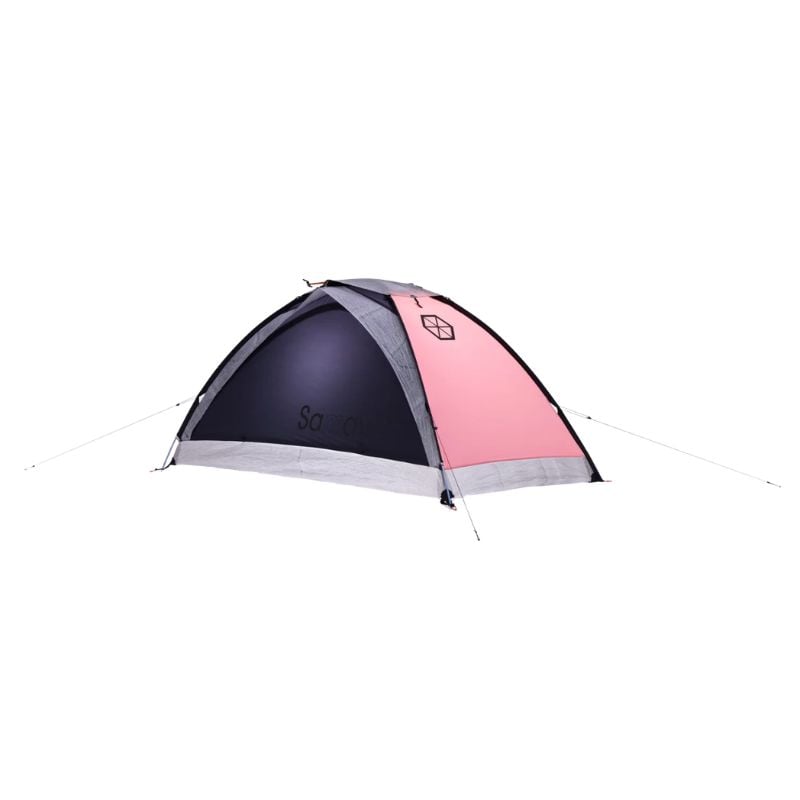
Weight: 4 lb. 4 oz / 1.93 kg
Pros:
> Ultralight
> Good weatherproof material
> Small pack size
Cons:
> Bit of a tight fit for 2 people and their gear
> Not cheap
The Samaya 2.0 is what single-wall tents always wanted to be: actually waterproof. Traditional single-walls were light but soaked through in rain but the Samaya’s Nanovent walls and Dyneema floor change that.
For fast-and-light alpine climbs and ski traverses where every ounce matters and you are mostly moving, this is the pick. It packs smaller than almost anything here, and the condensation management is better than any single-wall I have used. The catch is that it is tight for two, has only one door, and the vestibule is an extra purchase.
This is a specialist’s tent that is an expensive, delicate tool for alpinists who value weight over space.
Trade-off: weight and weatherproofing vs space, durability, and price.
Best for: fast-and-light alpine climbing.
Compare Prices:
Best Ultralight 4 Season Tent
Hyperlite Mountain Gear Ultramid 2 Review

Weight: 1 lb. 3.1 oz / 541 grams
Pros:
> Lightweight 4 seaon backpacking shelter
> Spacious
> Sturdy and Resilient
> Large Vestibule
> Good warranty and service
Cons:
> Premium Product which is not cheap
> Zippers Require Care
The Ultamid 2 is a Dyneema pyramid, not a conventional tent, and that is the point. It weighs barely over a pound, sheds snow and rain about as well as anything here, and does not sag or soak up water when wet — Dyneema’s big advantage over silnylon. For ski touring and ultralight winter trips where you are counting grams, nothing else on this list comes close.
The downsides are real: there is no floor or bug net (both are sold separately and add cost), it takes practice to get a perfect pitch, and it is not freestanding, so you need to anchor it well in wind. With the insert it becomes one of the more expensive setups on this list, and you still need your own trekking poles or the optional carbon pole to pitch it.
This is a niche tool for the fast-and-light crowd — brilliant for the right user, awkward for everyone else. If you want a tent rather than a shelter, see the best ultralight tents guide.
Trade-off: extreme weight savings vs setup effort, floorless design, and added insert cost.
Best for: ultralight ski touring, ultralight winter backpacking.
Compare Prices:
Best Winter Tent for Mountaineering & Ski Touring
Nemo Chogori Mountaineering Tent

Weight: 7 lb. 11 oz / 3.48 kg
Pros:
> A sturdy external pole structure
> Lightweight and easy to carry
> Made from nylon which is a durable material and silicone-treated fabric for added strength and waterproofing
> Great ventilation
> Storage solution
Cons:
> Very lightweight and may not be strong enough for the very worst conditions.
The Chogori is a genuine mountaineering tent that still comes in light enough to ski tour with. Its external pole frame means you can pitch the fly and body as one unit — useful when it is snowing and you do not want a wet inner — and the frame is stiffer and more wind-shedding than a traditional sleeve design at this weight.
For backcountry ski trips and alpine objectives where you want more weather protection than a treeline tent but do not want to carry a Trango, it hits a sweet spot. The vestibule gives you room to stash skis and boots, and the ventilation keeps condensation down when you are cooking or drying gear inside.
The honest trade-off is that the 20D fabric is light, so this is not the tent I would choose for the very worst exposed conditions or extended basecamp stays. I treat it as a three-to-four-season bridge.
Trade-off: light fabric strength vs carry weight.
Best for: mountaineering, backcountry ski touring.
Compare Prices:
Best Treeline All Season Tent
Nemo Kunai 3P

Weight: 5 lb. 3 oz / 2.3 kg
Pros:
> Tapered design for extra protection from harsh weather conditions
> Customisable space
> Storage solution
> Versatile design
> Ultra lightweight
Cons:
> Very lightweight material may not be suitable for high winds
The Kunai is the tent for people who want winter protection without committing fully to a mountaineering shelter. It is a double-wall with a solid body, but portions of the canopy unzip to reveal mesh, so it works in shoulder season and even milder weather in a way a true four-season tent never will.
That versatility is the whole appeal. The tapered profile sheds wind and snow well, and the convertible vestibule gives you flexible storage. The trade-off is that it is not as strong in sustained high wind as the Trango, and the light fabric is not meant for full alpine exposure.
I treat it as a treeline tent first. The two-person version is the long-term value pick in the category, while the three-person version gives you a genuinely roomy floor.
Trade-off: lighter fabric strength vs year-round versatility.
Best for: treeline winter camping, shoulder season, spring mountaineering.
Compare Prices:
Best Lightweight Double-Wall Tent for Ski Touring
MSR Access 2

Weight: 4 lbs. 1 oz / 1.86 kg
Pros:
> Lightweight
> Good Insulation for cold weather camping
> Strong tent and good at shedding snow
Cons:
> With only 2 poles it is not as strong as some of the other 4 season tents
The Access 2 is one of the lightest double-wall four-season tents you can buy, and it is squarely aimed at backcountry skiers and snowshoers. It is strong enough to shed snow if you get caught out, packs down small, and sets up quickly.
The trade-off is strength at the extremes. With only two poles worth of frame (the Syclone pole flexes well before it breaks), it is not as wind-worthy as a Trango, and I would keep it below the treeline rather than pushing it into full alpine exposure. The two doors and two vestibules are a genuine plus for livability at this weight.
It comes in 1P, 2P and 3P versions. For a genuinely bombproof shelter on the same kind of trip, the Mountain Hardwear Trango 2 is the step up in strength (and weight).
Trade-off: ease and low weight vs maximum wind strength.
Best for: backcountry skiing, snowshoeing, light winter backpacking.
Compare Prices:
Best Expedition 4-Season Tent 2026
The North Face Mountain 25

Weight: 8 lb. 13 oz / 4kg – 2P
Pros:
> Accommodates two
> Reflective guylines
> Good ventilation
> Solid Tent
Cons:
> Heavy
I used the previous model of this tent while climbing some high-altitude mountains in South America several years ago, and I found it bombproof, easy to set up, and not too heavy to carry in the thin mountain air. Nothing about the current model changes that verdict.
The Mountain 25 is the basecamp classic for a reason: a strong double-wall build, good ventilation for a tent this sturdy, two vestibules, reflective guylines, and a layout that feels slightly more spacious than most mountaineering tents. The 40D ripstop fly and DAC poles hold up to the wind and snow you will actually encounter on an expedition.
It is heavy and runs warm in milder weather, so it is not versatile — but it is not trying to be. It is the strong, predictable choice when you want a tent that has proven itself on expeditions around the world.
Trade-off: weight and warmth vs proven storm-readiness.
Best for: high-altitude basecamps, expeditions.
Compare Prices:
Best 4-Season Tent for Australia and New Zealand 2026
Macpac Olympus 2P Tent
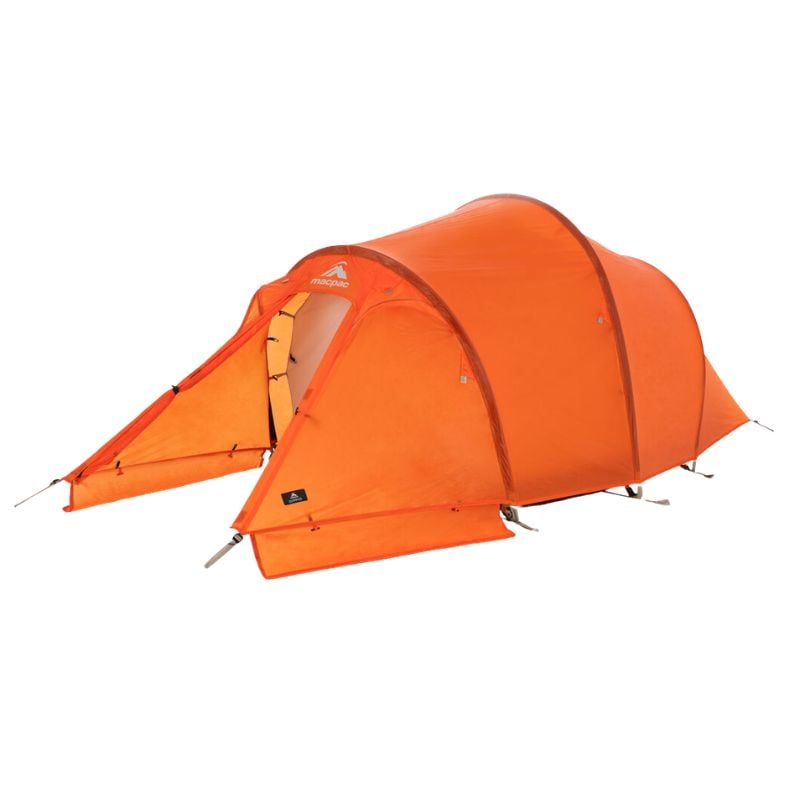
Weight: 6 lb. 9 oz / 3 kg
Pros:
> Unique four-vent air system for increased ventilation
> Strong canopy material
> Robust structure
> Aerodynamic design
Cons:
> Only available in Australia and New Zealand
The Macpac Olympus is the four-season tunnel tent that Australian and New Zealand ski tourers and winter hikers have leaned on for years. I first started using this tent in the snowy mounains of Australia nearly 30 years ago. The design has changed little but improvements in materials and poles have lightened and stregthened the proven design.
Its three-pole tunnel tent design is aerodynamic and sheds high wind, torrential rain, and snow well, and the silicone-coated ripstop canopy plus the toughest floor in this review give it honest all-weather protection. The dual entry, front vestibule, and four-vent air system keep it liveable even when the weather keeps you inside.
The only real drawback is availability. It is an AUS/NZ specialist brand, so if you are buying elsewhere it is harder to get. For anyone in the Southern Hemisphere (or planning an alpine trip there), this is the tent to look at.
Trade-off: regional availability vs proven tunnel-tent weather performance.
Best for: ski touring and winter hiking in Australia, New Zealand, and extreme alpine trips worldwide.
Compare Prices:
4 Season Tents: Buyers Guide
Buyers Guide: How to Choose a 4-Season Tent
The single biggest mistake I see people make with a four-season tent is buying more tent than their trips need, or in some cases less. Before you look at a single model, work out what you will actually be doing with it. These are not like three-season tents where you can grab one good all-rounder and be done.
The Three Types of 4-Season Tents
Four-season tents split into three categories, and the category matters more than the brand.
Mountaineering tents are built for high-alpine environments with weight as the first consideration. Many are single-wall, since that strips out the inner canopy and the bulk that goes with it. Square footage and peak height are low so the tent can squeeze onto small ledges, and almost all are waterproof or seam-sealed. The Samaya 2.0 is a fast-and-light shelters for summit pushes and ski traverses, not places you want to sit out a three-day storm.
Basecamp tents are the opposite: heavy, spacious, and double-wall, designed to live in for days or weeks rather than carry. The Trango 2 or Trango 3 and Mountain 25 are the classic examples. You accept the weight because you are flying, sledding, or portering it in, and in return you get room to cook, sit up, and stay sane while the weather does its worst.
Treeline tents are the trim-down middle ground: double-wall shelters with less mesh than a three-season tent and a more substantial floor, but not built for full alpine exposure. The Nemo Kunai and MSR Access 2 sit here. They are the right call for winter camping below the treeline, spring ski tours, and serious shoulder-season use.
Pick the category based on your activity, then choose within it. A mountaineering tent makes a miserable car-camping tent, and a basecamp tent makes a miserable thing to carry ten miles.
Weight vs Strength
This is the trade-off the whole category is built on. A four-season tent’s strength comes from more poles, more pole crossings, and heavier fabric — and every one of those adds grams.
The range here is stark. The HMG Ultamid 2 weighs 19.1 oz and will shrug off a snowstorm, but it is floorless, needs a perfect pitch, and offers nothing in the way of insulation from cold ground. The Trango 2 weighs almost nine and a half pounds and will laugh at conditions the Ultamid’s owners are stressed out through. Both are valid; they are not interchangeable.
For a self-powered winter trip, keep the total shelter weight as low as your objective genuinely allows. If you are hiking with a partner, split the tent — on the Mountain 25 that brings each person’s load down to around four and a half pounds. Remember that a four-season tent is often carried only into basecamp and then left, in which case the weight matters far less than it would on a thru-hike where you relocate every day. The winter camping tips guide goes into how this changes your whole kit.
Double-Wall vs Single-Wall Tents
A double-wall tent has a separate inner canopy and outer fly; a single-wall tent is one layer of fabric between you and the weather.
Single-wall tents are considerably lighter and pack smaller, and modern fabrics have made them genuinely waterproof rather than just windproof. The trade-off is ventilation and warmth. With only one layer, condensation on the inside is a constant battle, and there is less dead air to hold heat.
Double-wall tents breathe better, insulate better, and are more comfortable to wait out bad weather in — but they weigh and cost more. The rule of thumb: if you are counting ounces and moving fast in mostly fair weather, go single-wall. If you expect to be tent-bound in storms, go double-wall.
Single-Wall Fabrics: Dyneema, Silnylon, and Nanovent
If you do go single-wall, the fabric decides more than the brand.
Dyneema Composite Fabric (DCF) is the premium option. It is waterproof, stronger than silnylon for the weight, and — critically — has no stretch, so it will not sag when wet or snow-loaded. That is why the HMG Ultamid 2 and the floor of the Samaya 2.0 use it. The downside is price and the need to treat it carefully (thin Dyneema punctures more easily than it tears).
Silnylon is the workhorse: silicone-coated nylon that is durable and far cheaper, with the catch that it stretches when wet and needs re-tensioning. Most budget and mid-tier fly sheets are some form of silnylon or sil/PU.
Nanovent (Samaya’s 3-layer laminate) is the newest player — a breathable, waterproof wall membrane that manages condensation better than any traditional single-wall. It is a big part of why the Samaya 2.0 tops the single-wall lists rather than simply being light.
Ventilation and Condensation
Four-season tents frost up by design: they have less mesh and more insulation than a three-season tent, so your breath condenses on the inside. In warm weather it beads and drips; in cold weather it freezes into “frost feathers” that snow back on you when the sun hits the roof.
Double-wall tents handle this better because air can move between the fly and the body. Single-wall tents need deliberate management: leave a vent or door cracked even when it is cold, and pick a tent with a real ventilation system rather than just a treated fabric. The Nemo Kunai’s unzippable mesh panels are a clever middle ground — solid when you need wind protection, mesh when you need airflow.
Whatever you buy, accept that no four-season tent is condensation-free. Some just drip less.
Waterproofing, Denier, and Coatings
“Waterproof” means different things on different panels. The fly and the floor are rated separately, and the floor is almost always the more waterproof of the two because water pools there.
Denier (the “D” number) measures the weight and thickness of the fabric. A 70D floor (Trango, Mountain 25) is far more tear- and abrasion-resistant than the 20D nylon on a lightweight tent. The waterproof coating matters just as much — a floor rated to 5,000mm (Mountain 25) will resist pooled water far better than the 1,200–1,500mm coatings common on lightweight flies.
There is also a real difference between fabric coated with silicone on both sides (sil/sil) and the cheaper silicone-out, PU-in (sil/PU). Sil/sil is more durable and more UV-resistant but slippery and harder to seam-seal; sil/PU is cheaper and easier to work with but the PU layer breaks down faster in wet environments.
Poles, Guylines, and Snow Stakes
Wind resistance in a four-season tent comes down to poles and crossings more than anything else. More full-length poles and more crossing points equal more strength, and bigger-diameter poles flex less. DAC Featherlite NSL poles are the gold standard on the Trango, Mountain 25, and Jannu; Easton’s Syclone composite (used on MSR tents) is the other top choice, flexing further before it snaps.
Guylines are not optional in winter. Reflective guys (like the Mountain 25 uses) help you find the tent after a long day, and pre-attached guy points save you fumbling in the cold.
Finally, do not try to pitch a four-season tent with three-season stakes. Snow needs longer, wider anchors — curved or concave “snow stakes” that bury and hold. I cover the options in the best tent stakes guide, where the MSR Blizzard and the budget REI snow stake are the two I actually carry.
Floor Area, Peak Height, and Wall Slope
Square footage only tells part of the story. You also need peak height (can you sit up?) and wall slope (steep walls make a small tent feel much bigger). The Kunai 3P has a generous 43.4 sq ft but a tapered foot that catches tall campers’ sleeping bags; the Trango’s near-vertical walls are why it feels so much roomier than its 40 sq ft suggests.
As a rough guide, a sleeping pad is about 20 x 72 inches (roughly 10 sq ft), so two pads side by side need at least 28–30 sq ft just to fit without overlapping — which is why the 26.9 sq ft Samaya 2.0 is really a roomy one-person tent, and why a 24–27 sq ft tent “for two” always feels tight with winter gear.
Vestibules and Doors
A vestibule is non-negotiable in winter. It is where you cook, strip wet layers, and store skis, boots, and a wet pack without dragging snow into the sleeping area. Two doors and two vestibules (Trango, Access, Mountain 25) are a real livability upgrade for two people, and worth the weight.
Single-door tents (Samaya 2.0, Kunai) are fine solo but get old fast with a partner, especially at the end of a long day in the cold.
Price and Value
There is a genuinely useful way to think about four-season tent pricing, and it is not “more expensive is better.”
At the budget end, under $300 covers below-treeline winter camping honestly — just do not ask it to do alpine work. In the middle, the Nemo Kunai are the value sweet spot: most of the storm-worthiness, a fraction of the basecamp weight. At the top, the Trango, Mountain 25, and Samaya 2.0 only make financial sense if you will genuinely hit those conditions year after year. A $1,000 tent that comes out twice a year is a worse value than a $600 tent that comes out every month.
When a Stronger Tent Is Worth It
Finally, when do you actually need a four-season tent instead of a tougher three-season shelter? Not as simple as “winter equals four-season.” I have used a four-season tent in July and a three-season tent in December, and the honest answer is that it comes down to the forecast and terrain.
Reach for the four-season tent when the forecast calls for an inch or more of snow, winds of 30 mph or higher, or a region famous for severe wind — Patagonia and the exposed alpine ridges are the obvious ones. If you will be above the treeline, assume the forecast understates the wind and err toward the stronger shelter. If your three-season tent is a fully mesh, freestanding ultralight model, substitute the four-season tent more readily than you would for a burly, storm-flapped backpacking tent.
For the rest of the system that goes with it, my winter setup relies on a winter sleeping bag, a winter sleeping pad, and down jacket for when I am static in camp.
Conclusion
With so many options of great 4-season tents available, making your choice will be no easy task.
However, what this list shows is that there are so many brands offering fantastic features and benefits that will make your adventures more comfortable and enjoyable.
This post has given you all the information and tips you need to help you narrow down your decision and find your perfect 4-season tent. All the tents in this review will do a great job.
- Best Overall: Mountain Hardwear Trango 2
- Best Single-Wall Mountaineering Tent: Samaya 2.0
- Best Ultralight Shelter: Hyperlite Mountain Gear Ultramid 2
- Best Mountaineering / Ski Touring: Nemo Chogori
- Best Treeline / All-Season Tent: Nemo Kunai
- Best Lightweight Double-Wall for Ski Touring: MSR Access 2
- Best Expedition Tent: The North Face Mountain 25
- Best for Australia & New Zealand: Macpac Olympus 2P
Frequently Asked Questions
What’s the difference between a 3-season and a 4-season tent?
A four-season tent uses less mesh, heavier canopies and flies, stronger poles, and more guy-out points than a three-season tent, so it can hold up to snow load and high wind. The trade-off is weight, cost, and reduced ventilation. A three-season tent is fine in mild conditions; a four-season tent is built for winter and exposed alpine use.
What is the best 4-season tent overall?
For most winter backpackers and mountaineers, the Mountain Hardwear Trango 2 is the best all-round pick for genuine storm protection and livability — but it is heavy. If you need to carry it far, the SlingFin CrossBow 2 gives most of the strength at around half the weight.
What is the best lightweight 4-season tent?
The Samaya 2.0 is the best truly lightweight single-wall tent (around 3 lb), and the Hyperlite Mountain Gear Ultamid 2 is the ultralight option at barely over a pound — though its floor and insert are sold separately.
Is a 4-season tent worth it for winter backpacking?
Yes, if you will see snow, wind above roughly 30 mph, or exposed alpine terrain. For below-treeline winter camping in mild forecasts, a treeline tent like the Nemo Kunai or MSR Access 2 is often enough and far lighter.
Do I need a single-wall or double-wall 4-season tent?
Choose single-wall when weight and packed size are the priority (fast-and-light alpine pushes, ski traverses). Choose double-wall when you expect to wait out storms and want better ventilation and warmth — most basecamp and treeline tents are double-wall.
What is the best budget 4-season tent?
The Alps Mountaineering Tasmanian 2 at under $300 is the only genuinely budget option worth recommending, and it is fine for below-treeline winter camping as long as you do not push it into exposed alpine conditions.
Can you use a 4-season tent in summer?
You can, but most four-season tents run warm, ventilate poorly, and weigh far more than a three-season shelter, so it is rarely worth it. Tents with removable or unzippable solid walls (like the Nemo Kunai) are the exception.

BikeHikeSafari Gear Review Process
The author, Brad McCartney from BikeHikeSafari is a small independent adventurer and outdoor gear tester who owns and runs BikeHikeSafari.com.
BikeHikeSafari is not part of a large blog network and is proudly independent. All reviews on this site are independent and honest gear reviews of outdoor products by the author.
The author, Brad McCartney is a very experienced triple crown thru-hiker, adventurer, and bike tourer having spent 1000s of nights sleeping in a tent and sleeping bag (Read more). He was a manager of an outdoor retail store and is very experienced in what is important when using and testing gear for reviews like this.
BikeHikeSafari will never receive any money for reviews and they do not accept sponsored reviews on this website. All the comments about the gear reviews are from the author based on his years of experience. Hope this independent review was helpful for you.

