

If you want the best ultralight down jacket for backpacking, thru-hiking, or bikepacking in 2026, this guide will help you pick one that keeps you warm without carrying extra weight you do not need. For most hikers, the best ultralight down jackets balance warmth, packability, weather resistance, and durability, but the lightest jacket on paper is not always the best one for cold camps, long trails, or wet shoulder seasons
I’ve spent more than 30 years hiking, backpacking, and bike touring in all kinds of weather, and a good puffy jacket has always been one of the most important pieces of gear in my pack. The jackets in this review are ones I trust for real trips: some are ideal for gram-counting thru-hikers, while others are better for backpackers who want more warmth, tougher fabrics, or better value.
If you are looking for an ultralight down jacket in 2026, these are the ones worth taking into the backcountry
Quick Picks – Best Ultralight Down Jackets 2026
How We Tested
All the down jackets in this review have been extensively researched and evaluated by an experienced long‑distance hiker and bike tourer with more than 30 years of time on trail. I have spent thousands of nights camping on thru‑hikes and backpacking trips and I used to manage an outdoor retail store where I fitted and recommended down jackets every day.
Some of the jackets in this guide were purchased, and some were supplied by manufacturers, but every jacket is judged against the same criteria: warmth‑to‑weight, packability, weather resistance, durability, comfort, and value for backpacking and thru‑hiking. Whenever possible, I test jackets on real trips in cold, windy, and sometimes wet conditions to see how they perform at camp and on trail.
Research, field testing, and decades of experience have all gone into selecting the best ultralight and lightweight down jackets for 2026. For more information about how I test and review gear, read the Read the Review Policy for further details.
Down Jacket Comparison Table
| JACKET | WEIGHT | FILL POWER | FILL WEIGHT | OUTER SHELL | PACKABLE |
|---|---|---|---|---|---|
| Zpacks Goose Down Jacket | 7.4 oz | 950+ | 3.8 oz | 7 Denier | Chest Pocket |
| Black Diamond Deploy Down 0.5 | 5.6 oz | 1000+ | Unknown | 4 Denier | |
| Arc’teryx Cerium Hoody | 11.9 oz | 850 | 4.0 oz | 15 Denier | Stuff sack |
| Mountain Hardwear Ghost Whisperer | 10.7 oz | 800 | 3.0 oz | 10 Denier | |
| Feathered Friends Eos Review | 11.8 oz | 900 | 4.0 oz | 12/20 Denier | Stuff Sack |
| Patagonia Down Sweater | 13 oz | 800 | 5.0 oz | 20 Denier | |
| The North Face Summit Series Breithorn Hoodie | 14.7 oz | 800 | Unknown | Unknown | |
| REI 650 Down Jacket 2.0 | 10.9 oz | 650 | Unknown | Unknown | |
| REI 850 Down Jacket | 12.5 oz | 850 | Unknown | Unknown | |
| Macpac Icefall | 10.5 oz | 800 | 3.3 oz | 20 Denier | |
| Montbell Plasma 1000 | 4.9 oz | 1000 | 1.6 oz | 7 Denier | Stuff Sack |
Follow along on Social Media
Best Down Jacket – Detailed Reviews
Best Down Jacket Overall
Zpacks Goose Down Jacket

Weight – 7.4 oz / 211 grams
Down Fill Weight – 3.8 oz / 108 grams
Total Loft – 3610 cubic inches
Down Fill Power – 950+ loft down
Outer fabric – 7D fabric with DWR
Hood – Yes
Pockets – Yes
Stuff sack – stuffs into the chest pocket
Pros:
> Ultralight and best warmth-to-weight
> 950+ Hydrophobic Down
> Very warm
> Good weather-resistant material and DWR
Cons:
> No zips on the pockets
> 7D fabric is not designed for any off-trail hiking
> Not the cheapest
The Zpacks Goose Down Jacket is one of the lightest down jackets on the market and has an outstanding warmth‑to‑weight ratio. The generous baffles are filled with 950+‑fill hydrophobic down, which lofts up quickly and makes this jacket much warmer than most jackets in the same weight class.
To keep the weight so low, Zpacks uses very thin 7‑denier fabric. It does a great job of cutting weight and still provides decent wind and weather resistance when combined with the DWR coating, but it is delicate and best suited to trail use and camp wear rather than pushing through rough scrub or rock chimneys.
On trail I found the fit to be good, with enough room to layer a fleece underneath when needed. The two hand‑warmer pockets are comfortable but do not have zips, which saves weight but makes them less secure for storing small items. The hood and hem both have simple adjustments, and the jacket stuffs neatly into the chest pocket when you are not wearing it.
The main downsides are durability, price, and the lack of pocket zips. This is not the jacket to wear for serious off‑trail bushwhacking, and it is not cheap, but if you are chasing the best warmth‑to‑weight for ultralight backpacking or thru‑hiking it is one of the best options available.
Overall, the Zpacks Goose Down Jacket is my pick for the best ultralight down jacket in 2026. It is incredibly light, impressively warm for the weight, and ideal for hikers who count every gram.
Compare Prices:
Best Ultralight Down Jacket
Black Diamond Deploy Down 0.5
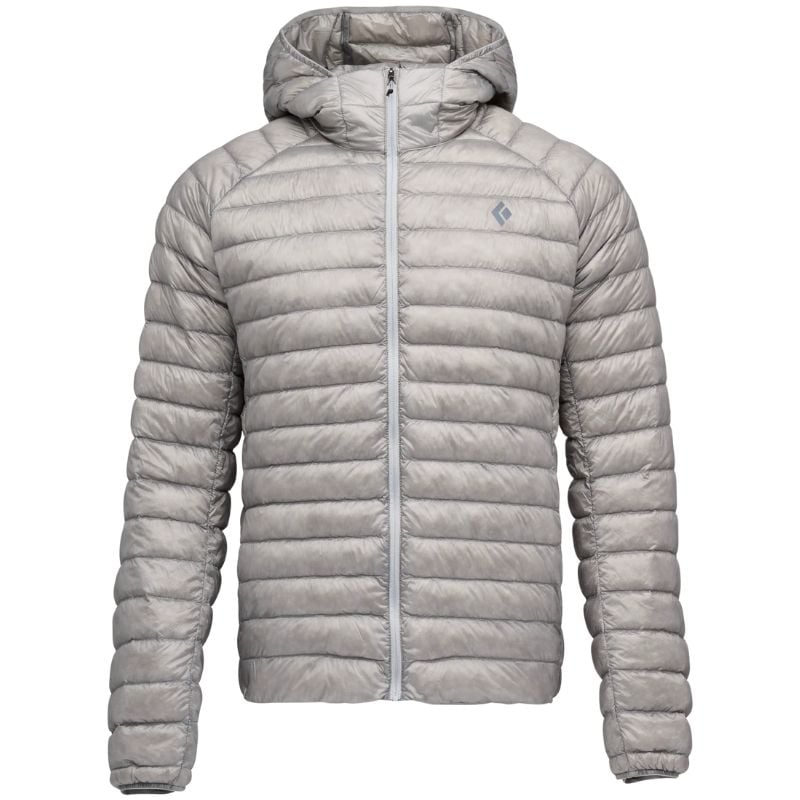
Weight – 5.6 oz / 160 grams
Down Fill Weight – unknown
Total Loft – unknown
Down Fill Power – 1000+ loft down
Outer fabric – 4D fabric with DWR
Hood – Yes
Pockets – Yes
Stuff sack – stuffs into pocket
Pros:
> Very Light
> Small pack size
> 1000 fill power down
Cons:
> 4D fabric is easy to damage
> Not Cheap
The Black Diamond Deploy Down 0.5 is one of the lightest fully featured down jackets available and a very strong choice for hikers who want a truly minimalist layer. It offers real warmth for its weight, a functional hood, and a simple feature set that works well for fast‑and‑light hikes.
It is not as warm overall as heavier jackets like the Zpacks Goose or Feathered Friends Eos, but for hikers who mostly need a light camp layer for three‑season conditions it hits a very nice balance between warmth and weight. The 4 denier shell fabric is light and should be treated with care around sharp rocks and branches.
Best for layering on mild trips or as a backup puffy rather than your only cold‑weather jacket. It is incredibly light and uses premium 1000‑fill down, but the thin fabric, lack of pockets, and lower overall warmth mean it suits experienced ultralighters who know how to layer correctly and treat gear gently.
Overall, the Black Diamond Deploy 0.5 is an excellent ultralight addition for fast‑and‑light backpackers and minimalist hikers who want a full‑featured down jacket without carrying much extra weight.
Compare Prices:
Best thru-Hiking Down Jacket
Mountain Hardwear Ghost Whisperer Hooded

Total Weight – 10.7 oz / 302 grams
Down Fill Weight – 3 oz / 85 grams
Down Fill Power – 800 loft down
Total Loft – 2400 cubic inches
Shell fabric – 10D ripstop fabric with DWR Finish
Hood – Yes
Pockets – Yes
Stuff sack – No, it stuffs into a pocket.
Pros:
> Ultralight
> Very small pack size
> Perfect for the ultralight thru-hiker
Cons:
> No hydrophobic down
> No adjustments in the hood
The Mountain Hardwear Ghost Whisperer has been a favourite among ultralight thru‑hikers for years, and the latest version keeps the same no‑frills, trail‑ready design. It combines very light shell fabrics with 800‑fill down to create a jacket that is extremely packable and light, yet still warm enough for typical three‑season thru‑hikes.
The biggest change from older versions is that the current Ghost Whisperer no longer uses hydrophobic down. That is a step backwards in very wet climates, but it has helped lower the price a little, and the jacket still has a decent DWR finish on the shell. In practice it is fine for normal backpacking use as long as you keep it out of prolonged rain and rely on your rain jacket as your main weather protection.
Mountain Hardwear uses simple elastic on the hood rather than an adjustable drawcord to keep the weight down. It works, but it does not seal quite as well in strong wind as some more heavily featured hoods. The fit is slim but workable over a base layer and light mid‑layer, and the jacket stuffs easily into one of the hand pockets for storage.
Overall, the Mountain Hardwear Ghost Whisperer is one of the best lightweight down jackets for thru‑hiking in 2026. If you want an ultralight, packable jacket that has proven itself on trails like the Pacific Crest Trail, this is a very strong choice.
Compare Prices:
Best Technical Performance Jacket
Arc’teryx Cerium Hoody Review

Weight – 11.9 oz / 337 grams
Down Fill weight – 4 oz / 105 grams
Total Loft – 3400 cubic inches
Down Fill Power – 850 loft down
Outer fabric – Weather-resistant Arato 15D fabric with DWR
Hood – Yes
Pockets – Yes
Stuff sack – Yes
Pros:
> Ultra lightweight.
> 850 fill down.
> More fragile material than the other jackets reviewed
Cons:
> Hydrophobic down is an improvement for this down jacket
Arc’teryx uses high‑quality 850‑fill down in most of the jacket and synthetic insulation in high‑moisture areas such as the shoulders, cuffs, and collar. The Arato 15D shell fabric is windproof, treated with a DWR finish, and offers a good level of weather resistance for an ultralight down jacket.
In real trail use, the Cerium feels warm, comfortable, and refined. It layers easily over a base layer and light fleece, blocks wind well at camp, and still packs down small in your pack. The outer fabric is quite light, so it is best suited to regular hiking trails rather than bush‑bashing through sharp scrub.
The main downsides are price and the lack of hydrophobic down. In wet climates the Cerium will not handle prolonged moisture as well as jackets that combine hydrophobic down with more protective shells, but for most backpackers and thru‑hikers it is still an excellent lightweight option.
Overall, the Arc’teryx Cerium Hoody is one of the best all‑round lightweight down jackets for hiking and backpacking in 2026. It is light, warm, and technical enough to handle serious trips, and would be close to perfect on trails like the Pacific Crest Trail..
Compare Prices:
Best Premium Down Jacket
Feathered Friends Eos Review

Weight – 11.8 oz / 336 grams
Down Fill weight – 4 oz / 104 grams
Down Fill Power – 900+ Fill loft down
Total Loft – 3600 cubic inches
Shell fabric – Pertex fabric 37g/m2 with DWR
Pros:
> Pertex shield shell fabric.
> High quality 900+ down.
> Great warmth to weight.
Cons:
> No Hydrophobic down
The Feathered Friends Eos has been recently updated with a better‑fitting hood and a useful chest pocket, but it remains one of the best warmth‑to‑weight jackets in this review. The combination of 900+‑fill down and around 4 oz of fill weight makes the Eos noticeably warmer than many jackets in the same weight range.
The Pertex outer fabric is light but feels reassuringly solid, and the DWR coating adds a decent level of weather resistance for an ultralight puffy. On trail the Eos feels like a proper camp jacket: warm enough for cold mornings and evenings, and easy to throw on over your hiking clothes when the temperature drops.
The main downside is the lack of hydrophobic down, which means it will not cope with prolonged damp conditions as well as some competitors. In typical three‑season backpacking conditions that is not a deal‑breaker, but if you spend a lot of time in very wet climates it is something to keep in mind.
Overall, the Feathered Friends Eos is one of the best lightweight down jackets on the market. It feels warmer than its weight suggests, is well made, and is an excellent choice for thru‑hikers who want a serious camp jacket without carrying too much extra weight.
Compare Prices:
Best Backpacking Down Jacket
Patagonia Down Sweater Hoody

Weight – 15.1 oz / 428 grams
Down Fill Weight – 5 oz / 142 grams
Total Loft – 4000 cubic inches
Down Fill Power – 800 loft down
Outer fabric – 100% recycled ripstop nylon fabric with DWR
Hood – Yes
Pockets – Yes
Stuff sack – No, jacket stuffs into chest pocket
Pros:
> Reasonably priced, considering it is Patagonia
> Warm
> Environmentally friendly
Cons:
> Not the lightest down jacket
> Bulky pack size
The Patagonia Down Sweater Hoody is one of the most popular down jackets in the world. It is not the lightest option here, but it delivers honest warmth, a comfortable fit, and strong environmental credentials at a reasonable weight for most backpackers.
I used this jacket on the Pacific Crest Trail and the Continental Divide Trail and found that, while it does not win any ultralight awards, it just works. The 800‑fill down, recycled nylon face fabric with DWR, and simple, functional design make it a solid choice for hikers who value reliability over shaving every last gram.
The Down Sweater Hoody has good hand pockets, a useful chest pocket, and a relaxed fit that is easy to layer over other clothing. The pack size is bulkier than more aggressive ultralight options, but still manageable for backpacking and travel.
Overall, the Patagonia Down Sweater Hoody is a good, honest backpacking down jacket with no gimmicks. If you want one jacket that will work for hiking, travel, and everyday use, this is one of the best choices in 2026.
Compare Prices:
Best Water-Resistant Down Jacket
The North Face Summit Series Breithorn Hoodie

Weight – 14.7 oz / 416 grams
Down Fill Weight – unknown
Total Loft – unknown
Down Fill Power – 800 fill loft
Outer fabric – Recycled ripstop fabric with DWR Treatment
Hood – Yes
Pockets – Yes
Stuff sac – No, packs into left-hand pocket
Pros:
> Hydrophobic Down.
> Recycled shell fabric with DWR
> Very warm.
> One of the best lightweight weather-resistant jackets.
Cons:
> Heavier than the other jackets
> Not very compact.
The North Face Summit Breithorn Hoodie is one of the better weather‑resistant down jackets in this review. The recycled shell fabric is treated with a PFC‑free DWR, and the 800‑fill hydrophobic down resists moisture better than untreated down, making this jacket more forgiving if you get caught in bad weather.
It is warmer and a little heavier than many of the ultralight options here, which makes it a good choice for hikers who feel the cold or expect to spend time below freezing. The Breithorn also packs up slightly larger than some competitors, but still fits easily into a pack when stored in its left hand pocket.
The jacket has a generous chest pocket and two large hand pockets, plus a well‑shaped hood that works nicely in wind and light rain. It is available in both men’s and women’s versions.
Overall, The North Face Summit Breithorn Hoodie is one of the best water‑resistant down jackets for cold, wet trails, early‑season starts, and trips where you want more warmth than a true ultralight puffy can provide. The extra warmth and weather protection come at the cost of more weight and bulk.
Compare Prices:
Best Budget Down Jacket
REI Co-Op 650 Down Jacket

Total Weight – 10.9 oz / 310 grams
Down Fill Weight – not specified
Down Fill Power – 650 fill down
Total Loft – not known
Outer fabric – Recycled Nylon
Hood – No
Pockets – Yes
Stuff Sack – No packs into the left pocket
Pros:
> Reasonably priced
> Will keep you warm enough, did I mention it is cheap!
Cons:
> Heavy for the warmth
The REI Co‑op 650 Down Jacket 2.0 is a solid budget option for hikers who want the benefits of down without spending too much. It uses 650‑fill RDS‑certified down and a recycled nylon shell to deliver decent warmth at a fair price.
The 650‑fill RDS down does not loft as impressively as higher fill‑power options, but it is still warm enough for most mild to cool conditions. The recycled nylon shell feels durable, and the overall weight is acceptable for a budget jacket.
The downside is that it is relatively heavy for the warmth it provides, and it does not pack down as small as the more premium jackets in this review. For serious ultralight trips and long thru‑hikes there are better options, but for new hikers, occasional backpackers, or anyone on a tight budget, the REI 650 is hard to beat for value.
Overall, the REI Co‑op 650 Down Jacket 2.0 is one of the best budget down jackets available and a great starting point for hikers who want real down warmth without paying premium prices.
Compare Prices:
Best Value Ultralight Down Jacket
REI Magma 850 Hoody
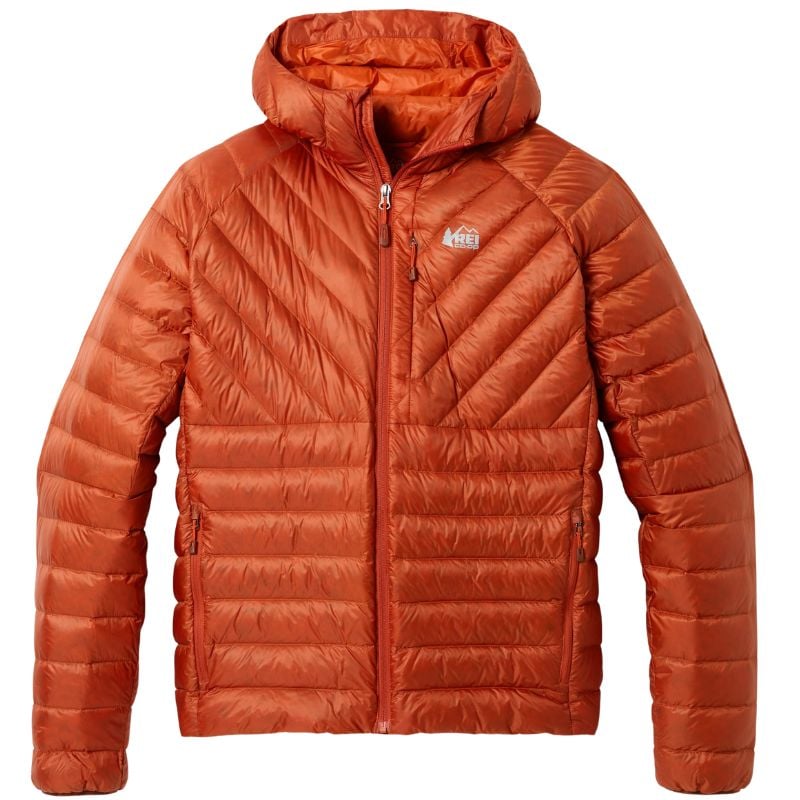
Total Weight – 12.5 oz / 354 grams
Down Fill Weight – not specified
Down Fill Power – 850 fill down
Total Loft – not known
Outer fabric – Recycled Nylon
Hood – Yes
Pockets – Yes
Stuff Sack – No packs into the pocket
Pros:
> Very good price
> Good warmth for the weight
> Nice colors
Cons:
> A bit heavier than competitors
The REI Magma 850 sits between budget jackets and the true top‑tier ultralight options. It uses higher fill‑power down than the REI 650 and a lighter shell fabric, which makes it warmer and lighter overall while still offering good value for money.
For hikers who are ready to upgrade from a basic down jacket but do not want to pay boutique prices, the Magma 850 is a very appealing option. It is warm enough for most three‑season trips, fairly light, and has a thoughtful feature set that works nicely on trail.
Overall, the REI Magma 850 is one of the better value ultralight down jackets on the market and a great step up if you want more performance than the REI 650 can offer.
Compare Prices:
Best Down Jacket for Australia and New Zealand
Macpac Icefall Review

Weight – 10.5 oz / 300 grams
Down Fill Weight – 3.3 oz / 95 grams
Down Fill Power – 800 loft Down
Total loft – 2640 cubic inches of down fill
Shell fabric – Pertex Quantum Y Fuse 100% recycled Ripstop with DWR
Hooded Jacket – Yes
Pockets – Yes
Stuff sack – No, packs into one of the two zippered hand pockets
Pros:
> Ultra lightweight
> The most water-resistant jacket in this review
> Highest quality everything
Cons:
> Only available in Australia and New Zealand
The Macpac Icefall was fully updated in 2022 and has become one of my favourite down jackets. It combines a high‑quality Pertex Quantum Y‑Fuse ripstop shell with 800‑fill hydrophobic down and synthetic insulation in the shoulders and cuffs to create a jacket that is tough, warm, and impressively weather‑resistant for its weight.
I have used and tested the Icefall for several years in all kinds of climates. The shell fabric feels strong for such a lightweight jacket, and the DWR treatment helps it shrug off light rain and wet snow better than most ultralight puffies. On one trip I even got caught in a heavy rainstorm without a rain jacket and the Icefall kept me surprisingly dry and warm.
The fit is now a slim‑to‑regular cut that works well for most hikers, with enough room to layer underneath. It comes in both men’s and women’s versions, and I know a few men who have happily worn the women’s jacket because they preferred the fit.
The main downside is availability. At the moment the Macpac Icefall is only available in Australia and New Zealand, which makes it hard to recommend globally. If you can get your hands on one, it is one of the best lightweight down jackets for wet, windy trails such as the Te Araroa.
Compare Prices:
Lightest Down Jacket
Montbell Plasma 1000 Down Jacket Review

Total Weight – 4.8 oz / 135 grams
Down Fill Weight – 1.6 oz / 45 grams
Down Fill Power – 1000 fill ex down
Total Loft – 1600 cubic inches
Outer fabric – 21g/m2 7 denier with DWR
Hood – No
Pockets – No
Stuff Sack – Yes
Pros:
> Ultralight
> Best warmth-to-weight ratio
Cons:
> Not using hydrophobic down
> Non responsibly sourced down
> No Pockets or Hood
At just 135 g, the Montbell Plasma 1000 is one of the lightest down jackets on the market. It uses extremely high fill‑power 1000‑fill down and very light 7D fabric to deliver a jacket with an excellent warmth‑to‑weight ratio, but with some compromises.
The Plasma 1000 is warm for its weight, but it is not as warm overall as heavier jackets with more total down, such as the Zpacks Goose Down Jacket. The very light shell fabric and lack of hood or extra features keep the weight incredibly low, but they also make the jacket less versatile and more fragile than most other options in this review.
This is a true specialist piece for hikers who want the absolute lightest possible down jacket and are willing to accept less warmth, no hood, and less durability. If you are careful with your gear and mostly hike on maintained trails, the Plasma 1000 can work well. If you are rough on gear or often camp in sub‑freezing temperatures, you may be better off with a slightly heavier, warmer jacket.
Overall, the Montbell Plasma 1000 is the best choice for gram‑counting ultralight hikers who want a tiny, extremely light puffy and understand its limitations. For most backpackers, a slightly heavier jacket with more down and a hood will be a better all‑round option.
Compare Prices:
Down Jacket Buyers Guide
Choosing the right ultralight down jacket is mostly about finding the right balance between warmth, weight, durability, and weather resistance for the way you hike. A good backpacking down jacket should be light enough that you do not mind carrying it every day, but warm enough that you actually look forward to putting it on at camp
Popular Jackets not Included (and Why)
There are several excellent down jackets that do not appear in my main list, not because they are bad, but because they are not true ultralight backpacking jackets. Models like the Rab Neutrino Pro and Macpac Arrowsmith (which I own and use is very cold conditions) are heavier winter parkas, and some ski‑focused puffies offer more warmth and protection, but they add a lot of extra weight and bulk that most backpackers and thru‑hikers simply do not need.
If you spend most of your time in very cold winter conditions or want a jacket mainly for everyday use in town, those heavier jackets might suit you better. But for most hikers and bikepackers who want to keep their base weight low and still stay warm at camp, the jackets in this review strike a better balance between warmth, weight, and packability.
Buying Guide
Guide to the Best Down Jackets
Ultralight Down Jacket for Thru-Hiking
Most thru‑hikers only wear a down jacket at night or first thing in the morning until the body warms up. Hiking in a down jacket is not common unless the weather turns cold and nasty, so you want something that is light, packable, and warm enough for typical three‑season nights.
The best ultralight down jackets for thru‑hikers are the Zpacks Goose Down Jacket, Black Diamond Deploy Down 0.5, Feathered Friends Eos, Arc’teryx Cerium, Mountain Hardwear Ghost Whisperer, Macpac Icefall, and Montbell Plasma. Each of these jackets comes in under roughly 300 g and has proven itself on long trails. The Montbell Plasma is the lightest of the lot, but it is not as warm as the Zpacks Goose Down or some of the other options
If you are hiking wet trails such as the Appalachian Trail or Te Araroa, jackets with better weather resistance like the Zpacks Goose Down Jacket, The North Face Summit Breithorn Hoodie, Macpac Icefall, and Outdoor Research Helium Down Hoodie are worth a close look.
Best Down Jackets for Rainy Weather
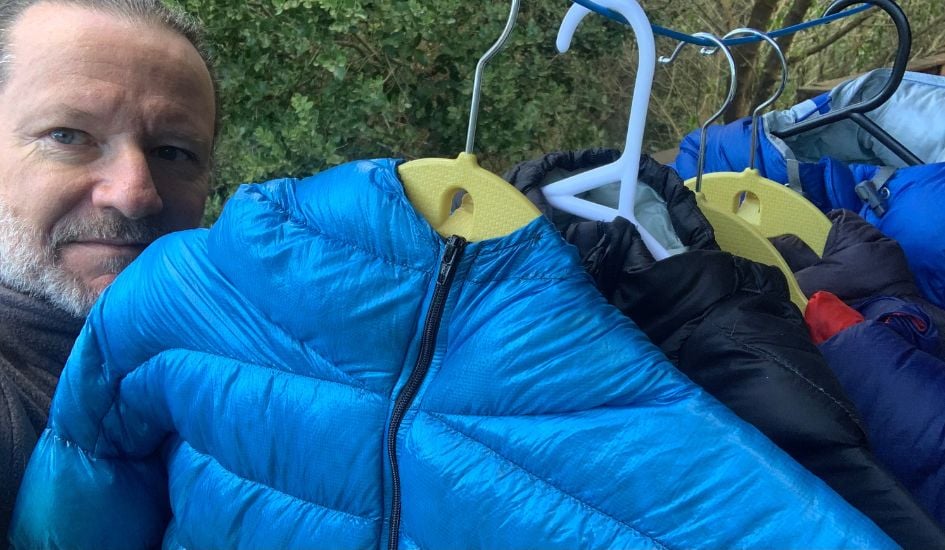
Down does not like getting wet, so rainy conditions are where shell fabrics, DWR coatings, and hydrophobic down really matter. Jackets like the Zpacks Goose Down Jacket, Macpac Icefall, The North Face Summit Breithorn Hoodie, Rab Microlight Alpine, and Outdoor Research Helium Down Hoodie use good face fabrics and water‑resistant treatments to keep you warmer and drier when the weather turns.
Some jackets, including the Macpac Icefall and Arc’teryx Cerium, also add synthetic insulation in high‑moisture areas such as the shoulders, cuffs, and hood, which helps keep the jacket working even if those panels get damp.
Best Overall Ultralight Down Jackets
Every jacket in this review could be the best choice for someone. For most ultralight hikers, the Zpacks Goose Down Jacket sits at the top thanks to its very high loft, quality hydrophobic down, and low weight. The Feathered Friends Eos, Black Diamond and Arc’teryx Cerium are also outstanding, and would be even better if they used hydrophobic down throughout.
The North Face Summit Breithorn Hoodie and Rab Microlight Alpine offer excellent weather resistance and warmth, but they are heavier than many of the other options. The Montbell Plasma 1000 is incredibly light, but it sacrifices some warmth and features to get there. The Macpac Icefall comes very close to the ideal mix of weather resistance, quality, weight, and warmth, but its limited availability outside Australia and New Zealand holds it back for many hikers.
Best Value Down Jackets
If the best quality jacket costs so much that you can’t afford to spend time outdoors or are too scared to take the jacket somewhere for fear of damaging it, then we have a problem. Some of the jackets reviewed are very well-priced, and the lack of some features makes them worthy of consideration.
A quality down jacket will last many years, and if well cared for, it is worth spending a little more now for something that will last many years in the great outdoors.
How to Choose a Down Jacket
The are several factors you need to take into consideration when looking at down jackets.
They should be lightweight, have a good quality fill power and fill weight of down, and some form of weather resistance is good in the form of Hydrophobic down, water-resistant face fabric, and a DWR finish.
Another important consideration when buying a down jacket is that the down is responsibly sourced. The Responsible Down Standard ensures the down is traceable and sourced from animals that comply with animal welfare standards.
Key Features in a Lightweight Down Jacket
Hood
A hood is one of the easiest ways to stay warm in camp. Most hikers will be happier with a hooded jacket, even if it adds a little weight. Look for a hood that cinches down well in wind without getting in the way

Pockets and Storage
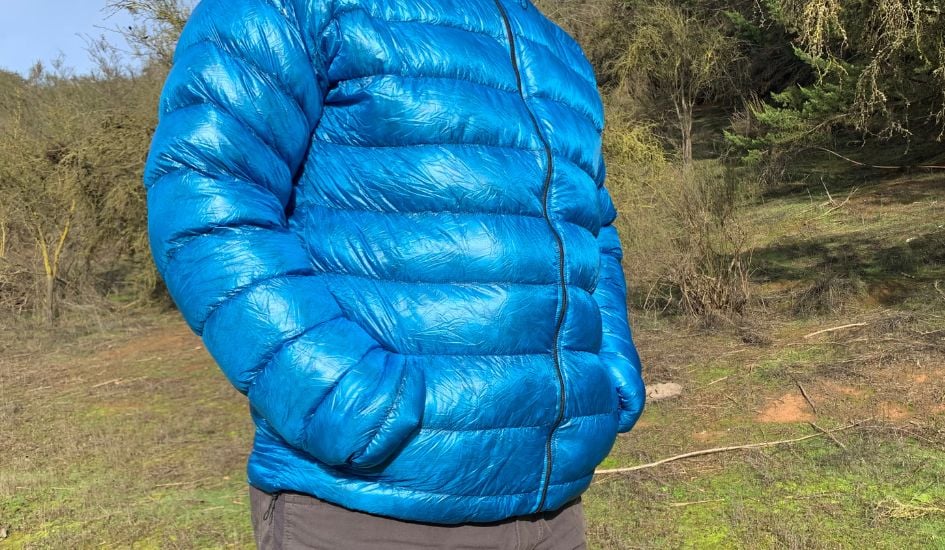
Hand pockets are great for warming cold fingers, and chest pockets are useful for keeping a phone or snacks handy. Many jackets pack into a hand pocket or chest pocket; others come with a separate stuff sack. All the jackets in this review have some way to pack themselves away when you are not wearing them.
Cinch Cords and Fit
Cinch cords at the hood and hem help keep cold air out and improve the fit. Some jackets use simple elastic instead; that saves a few grams but is less adjustable. Make sure you can comfortably layer your jacket over your base layers and mid‑layer without it feeling tight or restricting movement.

Warmth and Weight
For three‑season backpacking, most hikers want a jacket that is warm enough around freezing when paired with a hat and other layers. All the jackets in this review are compact and light enough for most backpackers, but if you regularly see very cold temperatures you may want a slightly heavier jacket with more down fill and a better hood.
Fill Power, Fill Weight, and Loft
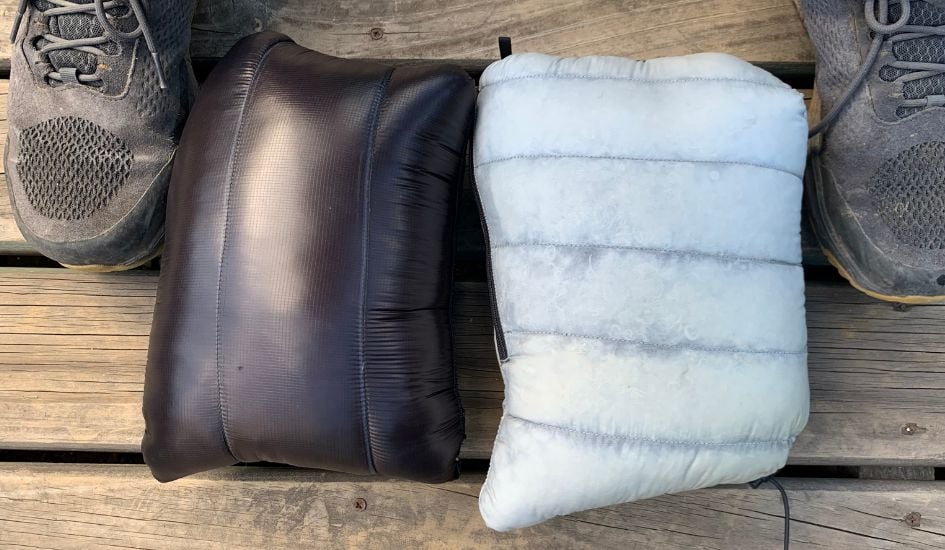
The best ultralight down jackets typically use 800‑fill or higher down. Fill power tells you how much space one ounce of down can loft up to, and higher numbers mean you get more warmth for less weight. If you take 1 ounce of down it will expand or loft to 800 cubic inches. But fill power alone does not tell the whole story—you also need enough total down fill and a design with good baffles to keep the down from shifting.
The video below does a great job of explaining everything to do with Fill Power.
Water Resistance: Shell Fabric, Hydrophobic Down, and DWR
Down clumps and loses loft when it gets wet, so most good jackets use tightly woven shell fabrics, a DWR coating, and sometimes hydrophobic down or synthetic panels in high‑moisture areas. Pertex fabrics are among the best known, but many brands have their own equivalent materials. Jackets like the Macpac Icefall and Arc’teryx Cerium combine down with synthetic insulation in the shoulders and cuffs to help the jacket keep working even when the weather turns nasty.
Hydrophobic down treatments help down resist moisture for longer and dry faster. If you often hike in wet climates, jackets with hydrophobic down or more protective outer fabrics are worth prioritising.
What is Hydrophobic Down? And why you should use it in a down jacket
In recent years, Nikwax has developed a hydrophobic down that resists the vast majority of contact with water, hence it can stay nicely lofted if in contact with water.
Jackets with hydrophobic down should be considered of higher quality than those without. I have a preference to use a jacket with hydrophobic down, but it hasn’t always been that way. It provides a safer option if I am wearing a jacket in bad weather.
If heading out into bad weather, as I experienced on the Appalachian Trail and Te Araroa Trail in New Zealand, the following jackets would be perfect. The jackets below use hydrophobic down:
Watch the crazy video below, which demonstrates how good hydrophobic down is.
What is a DWR Coating, and why do I need it?
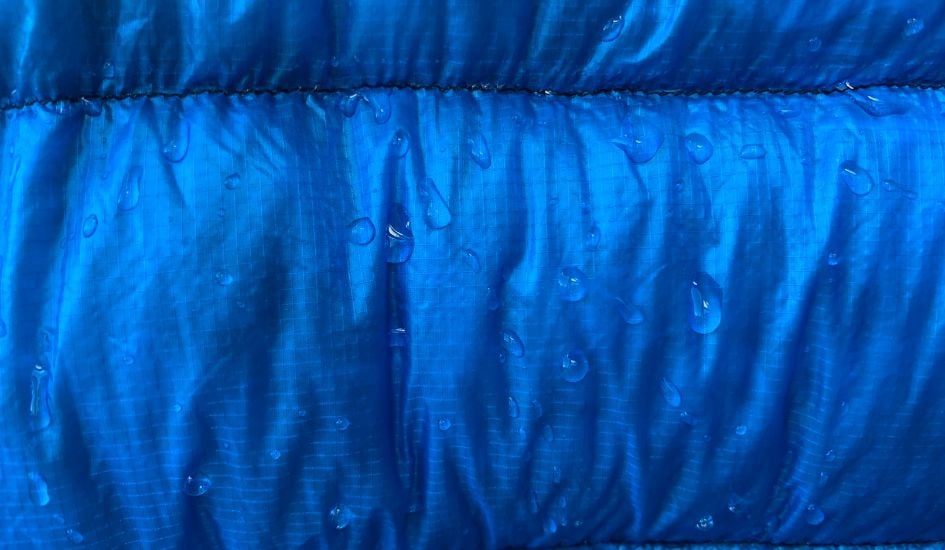
Think of the DWR finish as being like putting a layer of wax on the car. It allows the water to bead and runs off the fabric. And like a layer of wax on a car, it does not last forever, and eventually, the DWR will wear off and the fabric will wet out.
All of the companies except Outdoor Research use a DWR on the outside of the jacket. DWR stands for Durable Water Repellent.
Retreating the outer fabric with Nikwax TX Direct or similar will make the fabric resistant to water again.
Down Jackets vs Synthetic Jackets
Synthetic jackets are slowly but surely catching up to down jackets with their warmth to weight to packability ratio. Fabrics like Polartec Alpha and Primaloft Gold are some of the best available at the moment, but they are still not as good as down.
Down also has a beautiful ability to be compressed and lofted without damaging the down. The same can’t be said for all synthetics just yet. I suspect in the next 10 years a synthetic product will come along that will make down obsolete. Watch this space.
Eventually, synthetics will surpass down but the time is not here yet.
How to repair Down Jackets
Down Jackets are not the most durable of outdoor gear. The use of lightweight fabrics combined with sharp sticks and branches, a spark from a campfire, or a fall in rough terrain can easily damage a down jacket.
A small rip or tear in the fabric will occur if used for a prolonged time outdoors. There are two ways to repair the outer fabric.
The first and easiest way is to cover the hole with some Tenacious Tape. Think of this tape as the superglue of fabric tapes. Cut to size a cover the hole. Tenacious tape on a down jacket is a sign of a well-used jacket that has spent quality time outdoors.
The second way is to sew a patch over the damaged layer of fabric. I prefer the first method of using Tenacious Tape as it is cheap and it works. I have used it many times over the years to patch small holes.

Conclusion
With so many Down Jackets on the market, here are the best ones:
Ultralight Down Jacket FAQ
What is the best ultralight down jacket for backpacking?
For most backpackers, the best ultralight down jacket is one that keeps you warm on your coldest likely nights without adding unnecessary weight or bulk. In this review, jackets like the Zpacks Goose Down Jacket, Montbell Plasma 1000, Mountain Hardwear Ghost Whisperer, and Feathered Friends Eos stand out as top picks for backpacking and thru‑hiking.
What is the warmest ultralight down jacket?
The warmest options in this guide use high fill‑power down and generous fill weight, but they are also heavier. If you often camp in below‑freezing conditions, look for a jacket with more total down fill and a good hood, and accept a small weight penalty for the extra warmth.
Are ultralight down jackets worth it?
For all backpackers and thru‑hikers, yes. A good ultralight down jacket gives you real warmth and comfort at camp for very little weight and pack space, and with basic care it should last for many seasons of use.
Should I choose down or synthetic for thru‑hiking?
Down still offers the best warmth‑to‑weight and packability, which is why most experienced thru‑hikers carry down jackets. Synthetic insulation handles moisture better but is usually heavier and bulkier for the same warmth. If you manage moisture well and protect your down jacket with a good rain shell, down is usually the better choice for long trails.
What fill power is best for an ultralight down jacket?
For an ultralight down jacket, 800‑fill or higher is ideal because it allows the jacket to be warm and light at the same time. Higher fill power on its own is not everything though—you also need enough total down fill and a design that keeps the down evenly distributed.
Can I use an ultralight down jacket in wet weather?
Down performs best when it stays dry. Jackets with hydrophobic down, quality shell fabrics, and a good DWR finish cope better with light rain and damp conditions, but you should still pair them with a good rain jacket. If you hike in very wet climates, a more weather‑resistant model like the Zpacks, Macpac Icefall or The North Face Summit Breithorn Hoodie is a safer choice.
Follow along on Social Media


BikeHikeSafari Gear Review Process
The author, Brad McCartney, from BikeHikeSafari is a small independent adventurer and outdoor gear tester who owns and runs BikeHikeSafari.com.
BikeHikeSafari is not part of a large blog network and is proudly independent. All reviews on this site are independent and honest gear reviews of outdoor products by the author.
The author, Brad McCartney, is a very experienced triple crown thru-hiker, adventurer, and bike tourer, having spent 1000s of nights sleeping in a tent and sleeping bag (Read more). He was a manager of an outdoor retail store and is very experienced in what is important when using and testing gear for reviews like this.
BikeHikeSafari will never receive any money for reviews, and they do not accept sponsored reviews on this website. All the comments about the gear reviews are from the author based on his years of experience. Hope this independent review was helpful for you.

