

Cold weather doesn’t end my hiking season; it changes what I wear. After thru-hiking the Appalachian Trail, Pacific Crest Trail, and Continental Divide Trail, and spending thousands of nights in a tent, I reach for insulated softshell pants for my winter kit. They breathe when I’m grinding uphill in snow, block wind on exposed ridges, and dry faster than anything fully waterproof.
This guide is written for backpackers and snowshoers who want one dependable pair of winter pants rather than three pairs that each only half-work. My current overall pick is the Outdoor Research Cirque III Pants which are the one winter pants that can do everything, with the REI Co-op Activator Pants as the best budget option and the ultralight Enlightened Equipment Torrid Pants for camp when I stop moving. If you only remember one thing: winter pants are a trade-off between weather protection, insulation, and breathability, and most people over-buy the first at the expense of the others.
For the full rundown, jump to the Quick Picks below. For how I research and field-test gear, see the Gear Review Policy.
Quick Picks: Winter Hiking Pants
- Best Winter Hiking Pants: Outdoor Research Cirque III Pants – one pair that spans winter hiking, snowshoeing, and ski touring.
- Best Lightweight Waterproof Winter Hiking Pants: Outdoor Research SkyTour LT Pants – a fully seam-taped, lighter waterproof shell that undercuts the Skyward II without giving up real weather protection.
- Best Insulated Ski-Touring Pant: Patagonia Stormstride Pants – insulated and waterproof with thigh vents, built for high-output backcountry days.
- Best Technical Alpine Softshell: Arc’teryx Gamma MX Pants – durable four-way-stretch softshell that takes a climbing harness or a hipbelt without complaint.
- Best Budget Softshell: REI Co-op Activator Pants – the value pick I’d hand an experienced winter hiker first: breathable, well-pocketed, and cheap enough to not baby.
- Best Warm Resort/Winter Pant: Patagonia Powder Town Pants – a lightweight H2No shell/Gaitered pant for cold, wet days out.
- Best Ultralight Insulated Layer: Enlightened Equipment Torrid Pants – a sub-baselayer-weight Apex-insulated camp pant for thru-hikers who stop hard.
- Best for AUS/NZ: Macpac Fitzroy Pants – NZ Alpine Team-tested softshell with a flared boot cut and internal ankle seal
How We Tested
The winter hiking pants in this guide are researched and, where possible, field-tested by an experienced long-distance hiker and former outdoor store manager. Across thru-hikes, shoulder-season trips, and bikepacking trips, I judge winter pants on weather protection per gram, breathability, durability, warmth, comfort, and value for serious backpacking and snowshoeing. Some of the items were supplied by the manufacturer and some items were purchased by the author for this review. For more on how we research and review gear, see the BikeHikeSafari Gear Review Policy.
Follow along on Social Media
Winter Hiking Pants: Comparison Table
| Brand | Weight | Material |
|---|---|---|
| Outdoor Research Cirque III Pants | 1 lb 8.7 oz | Softshell |
| Outdoor Research SkyTour LT Pants | 1 lb 0.9 oz | Sofshell |
| Patagonia Stormstride Pants | 1 lb. 0.8 oz | Pertex Shield |
| Arc’teryx Gamma MX Pants | 1 lb 0.4 oz | Softshell |
| REI Co-op Activator Pants | 15.1 oz | Softshell |
| Patagonia Powder Town Pants | 19.3 oz | H2-No |
| Enlightened Equipment Torrid Pants | 6.2 oz | 10D Nylon with Synthetic Insulation |
| Macpac Fitzroy Pants | 18.7 oz | Softshell |
| Columbia Bugaboo Pants | Not Specified | Softshell |
Best Winter Snow Pants 2026
Best Winter Hike Pants for Backpacking 2026
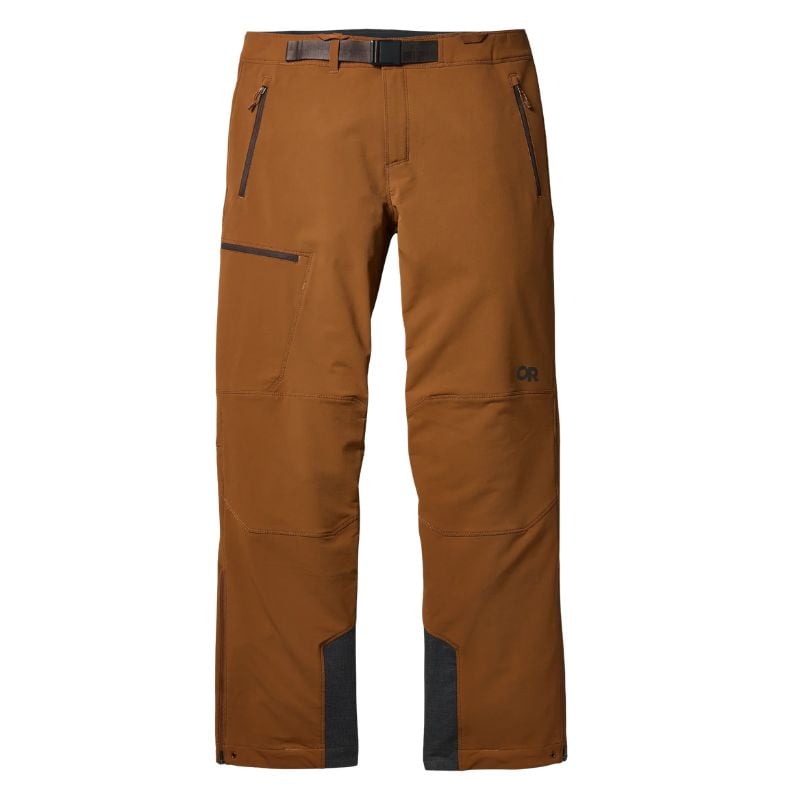
Outdoor Research Cirque III Pants
Pros:
> Made of recycled materials and are sewn in Fair Trade certified conditions.
> Water resistant and Breathable
> Reasonably Priced
> Side Zips to vent heat if needed
Cons:
> Not completely waterproof but good enough for snow and to keep the wind out.
The Cirque III is the heavily-updated successor to the Cirque 2 this page used to list, and the updates include a better fit, more stretch, and a tougher face fabric, all aimed at the “one pant for hiking, snowshoeing, and ski touring” crowd. It’s a weather-resistant, stretchy, abrasion-resistant softshell that’s genuinely at home in more than one season.
What I like most is the crossover flexibility. The roomy cut layers over a baselayer without feeling baggy, the double-weave fabric sheds moderate snow, and the stretch means it moves on everything from a steep snowshoe climb to a long skin track. It’s the rare pant that doesn’t feel like a specialist tool for a single sport.
The trade-off is the same as any softshell: it’s not completely waterproof. In driving wet snow or rain you’ll wet out eventually, and it leans toward the heavier end of softshells. If you only want one winter pant and you split your time across sports, that weight is well spent.
Best for: hikers and skiers who want a single multi-sport backcountry pant that are reasonably priced.
Compare Prices:
Best Lightweight Waterproof Winter Hiking Pants
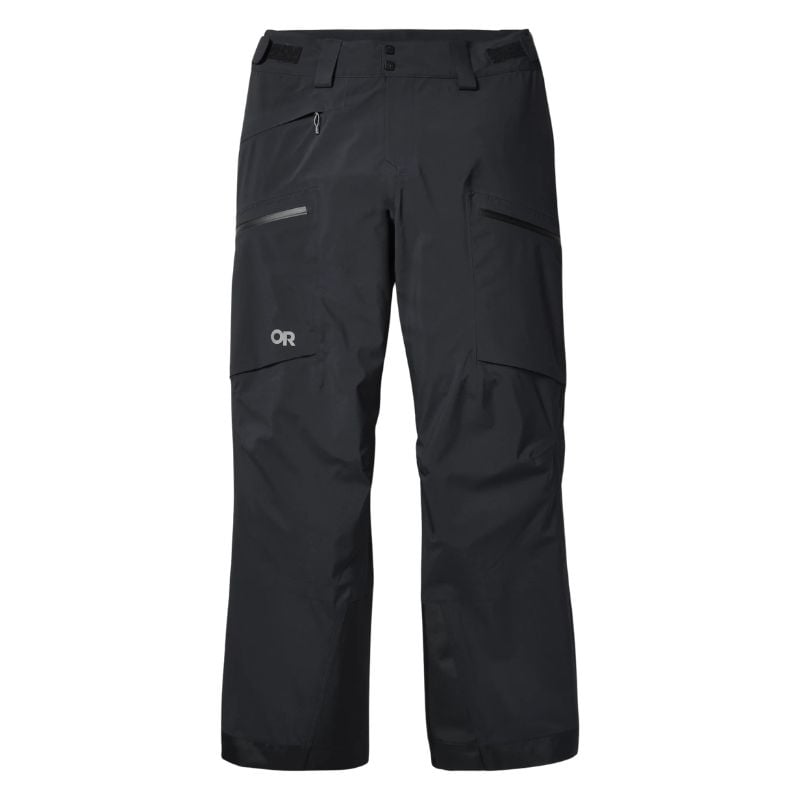
Outdoor Research SkyTour LT Pants
Pros:
> Lightweight
> Waterproof and Breathable
> Best suited to snowshoeing, ski touring but still great for cold winter hikes
Cons:
> Not as much warmth built into these pants as some others in this review
> Not cheap
The Skytour LT is the newest addition to Outdoor Research’s touring line and the lighter, cheaper waterproof sibling to the Skyward II. If the Skyward II is the all-round winter hardshell, the Skytour LT is the one built to win on weight for long skin tracks and big days where every gram you’re not carrying uphill matters.
The headline is that it’s genuinely waterproof, not softshell-adjacent. A 3-layer recycled polyester ripstop with a fully seam-taped PU membrane and a soft jersey backer keeps wet snow and rain out, which is exactly what you want when a storm rolls in mid-tour. The 420D Oxford scuff guards shrug off ski edges and crampons better than the thinner shells that only save a few more ounces.
For high-output touring, the outer-thigh vents are the feature that matters. They let you dump heat on kick turns and transitions without stripping a layer, which is where most waterproof pants quietly fail you. The dedicated avalanche beacon pocket and articulated knees confirm this is a touring pant first, not a resort shell stretched thin.
The trade-off is breathability and warmth. The PU membrane doesn’t move moisture as freely as the AscentShell in the heavier Skyward II, and there’s no insulation in here, so it leans entirely on your base layers for warmth and you’ll feel muggy on a real grind. That’s the honest cost of saving the weight.
Best for: backcountry ski touring and wet-weather winter hiking where low weight and real waterproofing matter more than maximum breathability.
Compare Prices:
Best Insulated Ski-Touring Pant 2026
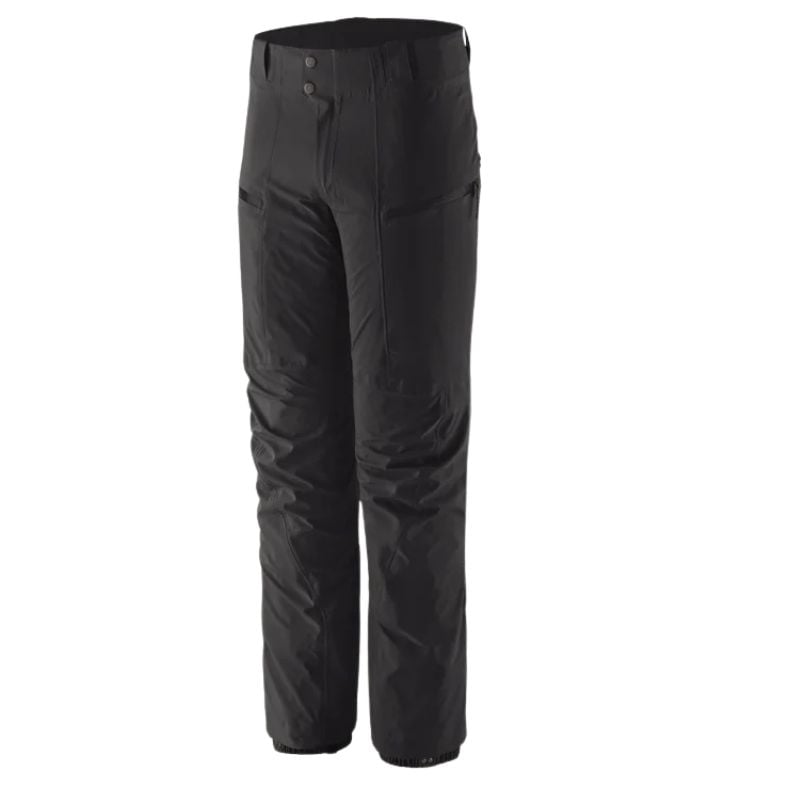
Patagonia Stormstride Pants
Pros:
> Made of recycled materials and are sewn in Fair Trade certified conditions.
> Waterproof and Breathable
> The waistband is a lower-rise than other winter hiking pants and is easily adjustable and made with belt loops.
> Side Zips to vent heat if needed
> Built-in Gaiters
Cons:
> The two cargo style front-thigh pockets are not easily accessed.
The Patagonia Stormstride is Patagonia’s answer to the “one pant for winter, everywhere” problem. It’s a waterproof-breathable Pertex Shield shell — not insulated, despite what older copy on this page said — with side thigh vents, so it works hard during high-output winter hiking and backcountry ski touring without cooking you.
The outer-thigh vents are the detail that matters. Insulated waterproof pants overheat you the moment you climb; the Stormstride lets you dump that heat fast, which is exactly why it doubles so well as a backcountry ski pant. Built-in gaiters seal snow out and kept cold drafts off my ankles better than any separate gaiter I’ve used.
The trade-offs are fit, warmth, and cost. Because it’s an uninsulated shell, it leans on your base layers for actual warmth, so pair it accordingly. The lower-rise waist and cargo-thigh pockets are a love-it-or-leave-it design, and the zippered cargo pockets trade quick access for security. It’s also a premium-priced pant.
Best for: backcountry ski touring and cold, high-output winter hiking where you need waterproofing plus venting.
Compare Prices:
Best Technical Alpine Softshell 2026
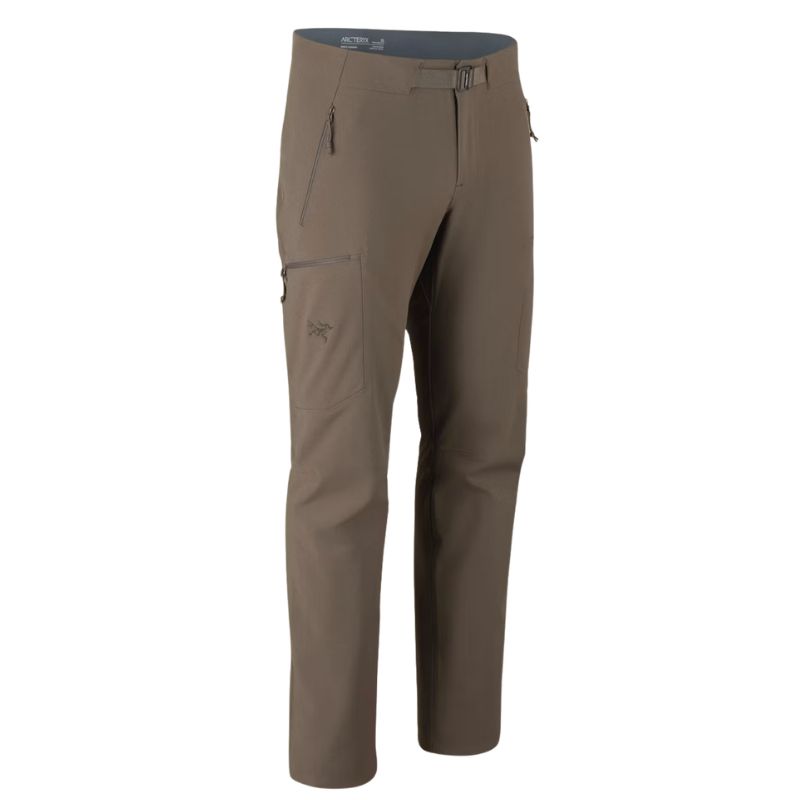
Arc’teryx Gamma MX Pants
Pros:
> Bottom of the pants are seamless to stop irritating snagging while you hike.
> Comfortable
> Adjustable webbing belt means that these pants will fit no matter how many layers you wear.
> Top quality
Cons:
> Not Cheap
The Gamma MX is a burly, midweight softshell with a brushed interior that adds a touch of warmth without turning into a lined winter pant.
Four-way stretch is the headline feature. These move with you on steep, awkward terrain, and the fabric shrugs off brush and rock far better than a featherweight shell. A buried, integrated belt means a backpack hipbelt or a climbing harness sits over it cleanly, which is why serious alpine hikers and climbers keep reaching for the Gamma.
The trade-offs are price and breathability. This is a premium pant at a premium price, and the denser face is less breezy than a thinner softshell like the Activator — noticeable on a long, hot uphill. If your winters are wet rather than dry-cold, you’ll still want to layer a shell over it.
Best for: technical alpine hiking, climbing, and dry-cold winter travel where durability and stretch come first. If the Gamma MX is out of stock in your market, the lighter Arc’teryx Gamma Softshell Pant is the unlined alternative worth a mention.
Compare Prices:
Best Warm Resort/Winter Pant 2026
Patagonia Powder Town Pants
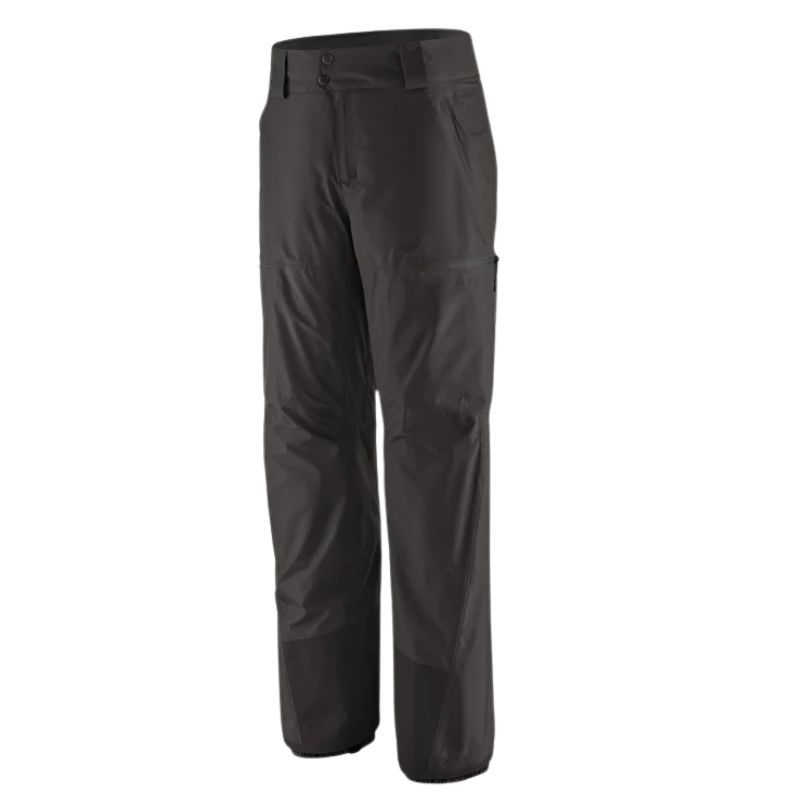
Pros:
> Made of recycled materials and are sewn in Fair Trade certified conditions.
> Built-in gaiters seal out snow and rain.
> Waterproof and Breathable H2-No.
Cons:
> Three pockets are all zippered which will make quick and easy access difficult.
The Patagonia Powder Town is the warm, wet-weather option on this list. It’s a 2-layer H2No waterproof-breathable shell with built-in gaiters and watertight zips, built first for cold, wet resort and sidecountry days but perfectly capable as a serious winter hiking pant when things get sloppy.
The clever part is the weight-to-protection balance. For a waterproof, gaitered pant it packs down easily and doesn’t feel like you’re wearing a ski-suit. The H2No outer and watertight slim-zip zippers keep you dry, and the minimalist design keeps bulk down — which is why I’d reach for it on a wet, icy backpacking day over a heavier resort pant.
The trade-off is breathability and pocket access. Fully zippered pockets are secure but slow to open with gloves, and a waterproof fabric is never as breathable as a softshell on a hard climb. Note that this is the shell version — Patagonia also sells a 60 g “Insulated Powder Town” for cold, slow days or chairlift laps.
Best for: cold, wet winter hiking, ice climbing, and lighter backcountry ski days where waterproofing trumps breathability.
Compare Prices:
Best Budget Softshell Pants
REI Co-op Activator Pants
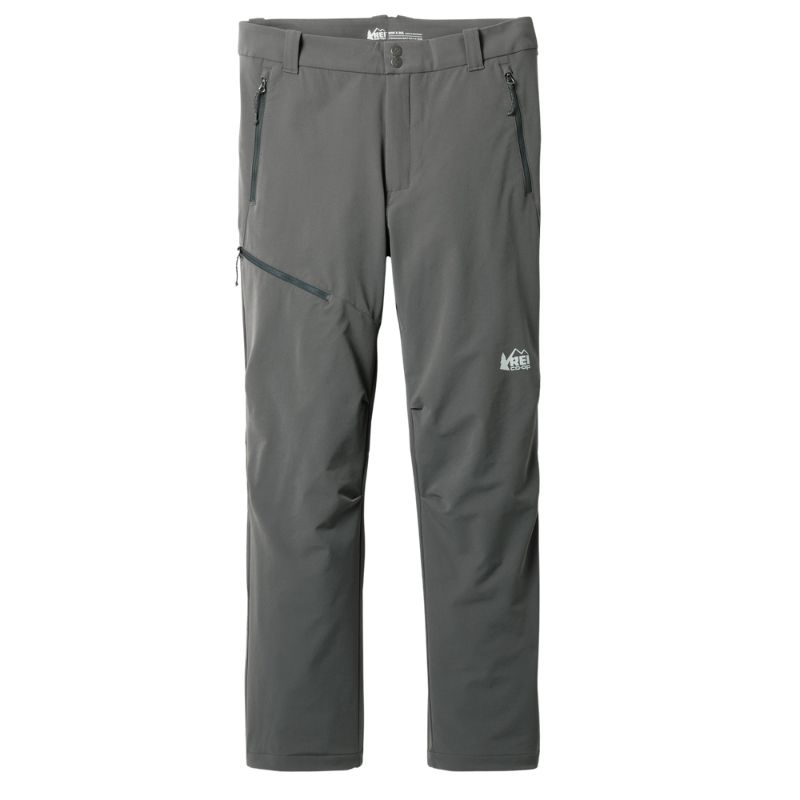
Pros:
> Stretch Softshell pants material
> Wind resistant
> Reasonably priced
> Comfortable
> Water Resistant
Cons:
> Not as waterproof as hard shell pants
The REI Co-op Activator is the winter hiking pant I’d hand to someone who wants one dependable pair and doesn’t want to overthink it. It’s an uninsulated stretch softshell, which sounds underwhelming until you realise that is exactly what winter hiking wants — warm enough when moving, wind-resistant, and breathable enough that you don’t soak your base layers on the climb.
The PFAS-free DWR finish shrugs off light snow and the fabric blocks wind up to about 30 mph. Where it earns its keep is fit and pockets. They have a relaxed but not baggy cut that layers over a baselayer without binding, and zippered pockets that keep a map or phone secure on slippery ground.
The trade-off is weather protection. In sustained wet snow or rain-on-snow, this softshell will eventually wet through, so carry lightweight rain pants to layer over it. That’s a fair compromise for the price, which is roughly half what a technical name-brand softshell costs.
Best for: active winter hiking and snowshoeing where breathability and value matter more than full waterproofing. They would be perfect for early or late season Appalachian Trail during the times when there is still snow or temps are well below freezing between November and March. Or early season for the first couple of section of the Continental Divide Trail in late May, early June.
Compare Prices:
Best Ultralight Insulated Camp Pants
Enlightened Equipment Torrid Pants
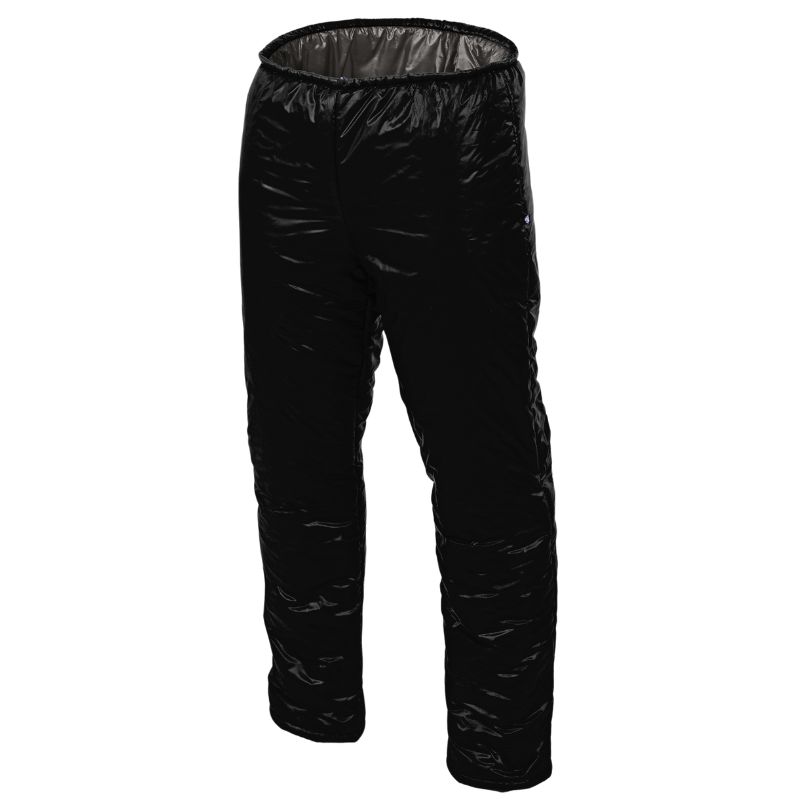
Pros:
> Good Synthetic Insulation
> Custom colors can be ordered if you are prepared to wait
> Reasonably Priced
Cons:
> Not durable enough for winter hiking best suited as camp pants
The Enlightened Equipment Torrid Pant fills a gap this page never had: the ultralight insulated layer you pull on the moment you stop. On a cold thru-hike or snowy camp the biggest chill isn’t the walk — it’s the hour you stand still cooking dinner, and that’s where a six-ounce Apex-insulated pant earns its pack space.
Apex is the appeal. It’s synthetic, so unlike down it keeps warming you if it gets damp from snow or condensation, and it’s light enough that I’ll genuinely carry it as a camp layer rather than leaving it home. The fit is cut to move, though it can gap at the back when you squat — something to watch if you’re between the men’s and women’s cuts.
The trade-off is fragility and warmth-to-weight honesty. The thin shell won’t take bushwhacking abuse, and while Apex is warm for its weight it is not an expedition pant. That’s the point: it’s a camp layer, not a bush-pant.
Best for: ultralight backpackers and thru-hikers who want maximum camp warmth for minimum carried weight.
Compare Prices:
Best Softshell Pants for Australia and New Zealand
Macpac Fitzroy Pants

Pros:
> The slightly flared design of the pants makes them boot-compatible and come with hooks and loops to fully attach your boots and trousers, perfect for snowy hikes.
> The pants are designed with an adjustable webbing belt to guarantee the perfect fit with every wear.
Cons:
> Waterproof material but not seam sealed
> Only available in Australia and New Zealand.
If you’re reading this in Australia or New Zealand, the Macpac Fitzroy is the local answer to the same question the rest of this list asks. Designed with the New Zealand Alpine Team, it’s a fleece-lined softshell that punches above its price for cold, harsh, wet-a-bit-of-everything mountains.
Two details stand out. The boot-compatible flared lower leg with hooks and loops seals trousers to boots properly for snowy hikes, and the internal grip band above the ankle traps warm air and blocks drafts — small touches that make a real difference at the toe of a cold climb. The stretchy outer with a fleece inner keeps you warm without killing movement.
The trade-off is the waterproofing promise. The fabric is waterproof but the seams aren’t sealed, so in sustained wet it upgrades to “highly water-resistant” rather than truly waterproof — fine for snow, less so for all-day rain. And it’s only realistically available in the AU/NZ market, so everyone else can skip this pick.
Best for: cold-weather hiking, ski touring, and mountain days in Australia and New Zealand. The Fitzroy is still designed and tested in partnership with the New Zealand Alpine Team.
Compare Prices:
Best of the Rest
Here are some great Hiking Pants for Winter Backpacking that have just missed the list or are yet to be reviewed and added.
- Heavy resort ski pants with thick insulation and full-length side zips – great on a chairlift, dead weight and sweatboxes on a winter hike.
- Lifestyle fleece-lined “commuter” pants – toasty walking the dog, but no shell protection and no backpack bandwidth.
- Down-insulated puffy pants – unmatched warmth-to-weight for static belay/camp use, but too fragile and too warm for active hiking (the EE Torrid covers the sensible camp-layer version of this instead). Read the full review of the Best Down-insulated puffy pants.
These aren’t bad products; they’re built for a different job than winter backpacking and snowshoeing, so they don’t belong in the main picks.
Winter Hiking Pants Buyers Guide
Winter Hiking Pants Buyers Guide
Softshell vs Hardshell vs Insulated
The single biggest decision is what kind of winter pant you actually need, and most buyers skip straight past it.
Softshell pants are the workhorses of winter hiking: woven nylon or polyester with a DWR coating, highly breathable, wind-resistant but not waterproof. They’re what I reach for on moving days because they let sweat escape while you climb and dry fast if they get damp.
Hardshell pants, often called Rain Pants, are the waterproof-breathable opposite — fully sealed, ideal for wet snow and rain-on-snow, but they trap heat and get muggy on a hard uphill.
Insulated pants add a layer of synthetic or fleece warmth to either of the above and are built for colder stops, resort days, or people who simply run cold. For active winter backpacking, I’ll take a breathable softshell as my daily driver and carry a light hardshell to layer over it for the wet days — two thin layers beat one waterproof-insulated brick almost every time.
Insulation
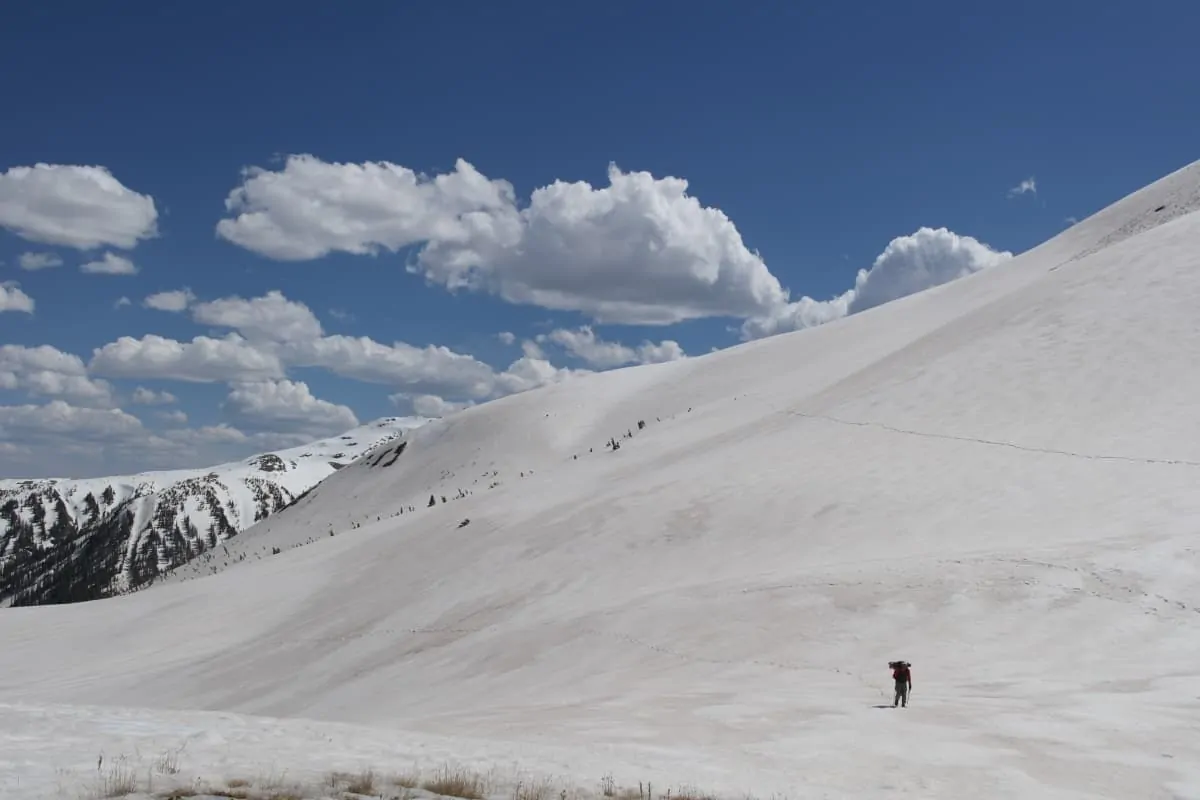
Insulation is what keeps you warm, and it dictates your whole layering system. A lighter-insulated or uninsulated pant means you’ll lean on base layers and movement to stay warm — the right call for high-output hikers who value range of motion and hate bulk.
A heavier-insulated pant means you lighten the base layers underneath, because trapping too much warm air just makes you overheat and sweat, and sweat is what steals your warmth once you stop.
Fleece lining is the sensible middle ground for winter hiking: it traps warm air, wicks moisture close to the skin, and doesn’t balloon up like a full synthetic fill. Think of insulation as a dial you set against your own metabolism and your conditions, not a number you buy blindly.

Waterproofing and DWR
Waterproofing is what separates an enjoyable winter day from a miserable — and occasionally dangerous — one. A pant labelled “water-resistant” is only shedding water because of a DWR finish on the surface; the fabric itself often isn’t waterproof, and once that DWR wears off it will wet through. That matters more than people realise, because wet clothing is how you lose heat fastest in the cold. Genuine waterproof pants use either a membrane (GORE-TEX, Pertex, AscentShell, H2No) or a sealed shell, and it’s worth knowing the difference. A great example of the trap is a pant whose fabric is waterproof but whose seams aren’t sealed — water finds the stitches, and “waterproof” quietly becomes “mostly water-resistant.” Check for seam sealing if you hike in real wet.
DWR Coating
DWR stands for durable water repellent — a liquid coating applied to the outside of a garment to make water bead and roll off. It’s the first line of defence on softshells and the thing that keeps a hardshell’s face fabric from wetting out. It is not permanent. It wears off with abrasion and washing, and when water stops beading and starts soaking in, it’s time to reapply a wash-in or spray-on DWR. Keep an eye out for membrane-backed pants (GORE-TEX, Pertex, or an air-permeable membrane) if you want true waterproof breathability, because the membrane does the sealing work the DWR can only assist.
Breathability and Venting
Breathability is the reason softshell winter pants exist, and the thing most first-time buyers optimise away by chasing “waterproof.” When you hike or snowshoe uphill you generate an enormous amount of heat, and if your pants can’t let moisture escape you’ll sweat, soak your base layer, and freeze the moment you stop. Vents are the workaround: side zips or outer-thigh vents let you dump heat fast without stripping a layer. If you run hot and climb hard, favour breathable fabric and vents over maximum insulation and waterproofing. If you run cold and travel slow, you can afford to bias toward warmth.

Weight and Packability
Weight matters as much below the waist as it does everywhere else on a backpacking trip. Winter pants can range from a sub-200-gram ultralight insulated camp layer to a 700-gram insulated ski pant, and you feel every gram on a long approach. The lighter, more compressible options earn their place in a pack for layered systems and cold camps; the heavier, more structured ones are better for resort days and snow shoveling where you aren’t carrying them far. Match the weight to how you move — a thru-hiker stopping moving at dusk wants the lightest insulated layer that still keeps them warm, while a day-hiker can afford the burly option.
Fit and Sizing
Fit is where winter pants either work or quietly fail. The majority are cut tighter through the top of the leg and flare at the bottom to make room for a boot, and most bake elastane or spandex into the fabric for stretch. The practical rule: buy with your hiking base layer on. If you’ll wear merino or fleece underneath, measure over it, because your outer layer is very often a size up from your summer size. You want the waist snug enough not to fall down or restrict breathing, and room enough that you aren’t swamped. If a pant fits well around the house for a couple of hours and doesn’t pinch or slide, it’s a good bet on trail.
Pockets and Gaiters
Pockets and gaiters are the details that turn a good winter pant into a great one. Attached gaiters seal snow out at the cuff and stop cold air sneaking onto your ankles — and they spare you fumbling with a separate gaiter over your boot. Zippered pockets keep a phone, map, or headlamp secure when you fall or slide in snow; the trade-off is that zippers are slower to open with gloves than open hand pockets. A buried or integrated belt is worth knowing about too: it sits flat under a backpack hipbelt or a climbing harness, which matters a lot if your winter day turns into a climbing day.
Price and Value
You can spend anywhere from a budget double-digit price to several hundred dollars on winter pants, and the honest answer is that the expensive ones aren’t always the warmest — they’re usually the lightest, most breathable, or most durable. Value means matching the pant to how you’ll actually use it. If you winter hike once a month, a well-built softshell at a fair price delivers 90% of the performance of a top-end technical pant. If you live in the mountains and go out every weekend through the season, the premium stretch, half the weight, and better venting justify the cost over years. Buy for your real usage, not the epic you plan to take once.
Conclusion
The Best Winter Hike Pants for Backpacking in 2026 are:
- Best Winter Hiking Pants: Outdoor Research Cirque III Pants
- Best Lightweight Waterproof Winter Hiking Pants: Outdoor Research SkyTour LT Pants
- Best Insulated Ski-Touring Pant: Patagonia Stormstride Pants
- Best Technical Alpine Softshell: Arc’teryx Gamma MX Pants
- Best Budget Softshell: REI Co-op Activator Pants
- Best Warm Resort/Winter Pant: Patagonia Powder Town Pants
- Best Ultralight Insulated Layer: Enlightened Equipment Torrid Pants
- Best for AUS/NZ: Macpac Fitzroy Pants
Follow along on Social Media
Frequently Asked Questions
What are the best winter hiking pants for backpacking?
For active winter backpacking, a breathable softshell pant is the best all-round choice: it keeps you warm while you move, blocks wind, and dries fast if it gets damp, without making you sweat. My overall pick here is the Outdoor Research Cirque III Pants, with the REI Co-op Activator Pant as the best budget option and the Enlightened Equipment Torrid Pant as the ultralight camp layer.
Are softshell pants waterproof?
No. Softshell pants have a DWR coating that sheds light snow and rain, but they are not waterproof and will wet through in sustained wet conditions. If your winter hiking means rain-on-snow or maritime sleet, pair a softshell with a waterproof hardshell layered over it, or choose a waterproof-breathable pant.
Should I wear a baselayer under winter hiking pants?
On very cold days or when you run cold, yes — but often you won’t need to, because softshell pants are warmer than three-season hiking pants and are enough on their own while you’re moving. The catch is that if you over-layer an uninsulated pant and start overheating, it’s a pain to delayer mid-hike without taking off your boots. Buy your pants with your baselayer on so the fit works either way.
What’s the difference between softshell winter pants and ski pants?
Ski pants are usually heavier, warmer, and bulkier, built for the stop-start rhythm of a chairlift, and they often have hot, awkward internal gaiters. Winter hiking and snowshoeing pants are softer, more breathable, and cut to move continuously, letting you vent heat as you climb instead of baking in it.
What insulation do I actually need in winter pants?
Match it to your activity and your metabolism. For high-output hiking where you generate heat, a lighter-insulated or uninsulated pant plus a baselayer usually beats thick insulation, because too much warmth makes you sweat and soak your layers. For slower days, cold stops, or if you run cold, a fleece-lined or lightly insulated pant is the safer bet.
Do I need different pants for winter hiking and cross-country or backcountry skiing?
Not always — the categories overlap heavily. Ski pants tend to be tighter for mobility and often add gaiters and a boot-compatible cuff; hiking pants are looser but still cut not to restrict movement. If you split your time, a crossover softshell like the Outdoor Research Cirque III deliberately spans hiking, snowshoeing, and ski touring so you don’t need three pairs.

BikeHikeSafari Gear Review Process
The author, Brad McCartney from BikeHikeSafari is a small independent adventurer and outdoor gear tester who owns and runs BikeHikeSafari.com.
BikeHikeSafari is not part of a large blog network and is proudly independent. All reviews on this site are independent and honest gear reviews of outdoor products by the author.
The author, Brad McCartney is a very experienced triple crown thru-hiker, adventurer, and bike tourer having spent 1000s of nights sleeping in a tent and sleeping bag (Read more). He was a manager of an outdoor retail store and is very experienced in what is important when using and testing gear for reviews like this.
BikeHikeSafari will never receive any money for reviews and they do not accept sponsored reviews on this website. All the comments about the gear reviews are from the author based on his years of experience. Hope this independent review was helpful for you.

