

Choosing a hiking shoe is a trade-off between weight, durability, and protection, and getting it wrong means blisters and black toenails a long way from the trailhead. I have spent more than 30 years on the trail, hiked the Triple Crown (PCT, AT and CDT), I also thru-hiked the Te Araroa across New Zealand, and I managed an outdoor store where I fitted hiking footwear for years. As a long-distance hiker and gear tester, I’ve spent thousands of miles putting different shoes through their paces in real-world conditions, from rugged mountain tracks to hot desert paths.
This guide is for backpackers and thru-hikers who want a lightweight shoe that still lasts, not a casual town sneaker. Whether you need all-day comfort, reliable waterproofing, a wide fit, or the lightest possible shoe for fast miles, you’ll find a top pick here. I focus on shoes that balance durability, grip, breathability, and support, so you can hike farther with less fatigue and fewer blisters. My current top pick is the Salomon X Ultra 5 GTX for its mix of support, grip and durability, with the Merrell Moab Speed 2 as the best lightweight option.
This guide is about lightweight hiking shoes, you might also be interested in looking at the Best Lightweight Hiking Boots or the Best Ultralight Trail Runners for Thru Hiking.
Quick Picks – Best Lightweight Hiking Shoes
- Best Lightweight Waterproof Shoe Overall: Salomon X Ultra 5 GTX – the shoe that is good at everything, with good support, grippy Contagrip soles and a durable upper for all day comfort. Best for narrow feet.
- Best Classic All-Rounder: Merrell Men’s Moab 3 Vent Hiking Shoe – the comfortable, do-everything shoe with a wide-friendly fit and a tough leather upper that lasts, it used to be the top pick but it is no longer the value favourite as prices increase. Best for medium/wide feet.
- Best Lightweight Hiker: Merrell Moab Speed 2 – Moab DNA in a lighter, more breathable package, ideal for hot trails and fast day hikes.
- Most Durable / Boot-Shoe Hybrid: La Sportiva Spire GTX – the closest a shoe gets to a boot, with class winning downhill traction and breathable/waterproof Gore-Tex.
- Best Hiking Shoes for Wide Feet: Keen Targhee IV Waterproof Shoes – if you have a wide foot you already know this is the best shoe for you, with a roomy toe box, durable leather and a proven fit for hikers who find most shoes too narrow.
- Best for Cold & Damp Conditions: On Cloudrock Low Waterproof – plush, supportive and reliably dry, a favourite for shoulder-season and wet trails.
- Best Crossover for Thru Hiking: Altra Lone Peak 9 – my long-time zero-drop choice with a roomy FootShape toe box; a trail runner I cover in full in my hiking trail runner guide.
- Best Cushioned Crossover: HOKA Speedgoat 7 – maximal cushioning and Vibram Megagrip for comfort on long, smooth miles (also a trail runner).
- Also worth considering: Adidas Terrex Free Hiker Gore-Tex 2.0 Low
- Also worth considering: Salomon Men’s Xa Pro 3D V9 GTX
- Also worth considering: Oboz Katabatic LT Low GTX
- Also worth considering: Vasque Breeze LT NTX Low Shoes
How We Tested
The hiking shoes in this guide are researched and, where possible, field-tested by an experienced long-distance hiker and former outdoor store manager who personally fitted countless customers with hiking footwear and taught staff how to fit hiking shoes. Across thru-hikes, shoulder-season trips, and bikepacking trips, I judge hiking shoes on weather protection per gram, packability, traction, durability, comfort, and value for serious hiking, backpacking and thru-hiking. Some of the items where supplied by the manufacturer and some items were purchased by the author for this review. For more on how we research and review gear, see the BikeHikeSafari Gear Review Policy.
Hiking Shoe Comparison Table
| Brand | Weight | Type | Material | Drop | Waterproof |
|---|---|---|---|---|---|
| Salomon X Ultra 5 GTX | 1 lb. 11 oz | Hiking Shoe | Synthetic | 11mm | Yes |
| Merrell Men’s Moab 3 | 2 lb. 1 oz | Hiking Shoe | Leather/mesh | 11.5mm | Waterproof and Non-Waterproof Models |
| Merrell Moab Speed 2 | 1 lb. 8 oz | Hiking Shoe | Mesh / Synthetic | 10mm | Waterproof and Non-Waterproof Models |
| La Sportiva Spire GTX | 1 lb. 15 oz | Hiking Shoe | Synthetic | N/A | Yes |
| Keen Targhee IV Waterproof Shoes | 2 lb. 6 oz | Hiking Shoe | Leather | 12mm | Yes |
| On Cloudrock Low Waterproof | 1 lb. 14 oz | Hiking Shoe | Synthetic | 8mm | Yes |
| Altra Lone Peak 9 | 1 lb. 6 oz | Trail Runner | Mesh | 0mm | No |
| Hoka Speedgoat 7 | 1 lb. 3 oz | Trail Runner | Synthetic | 5mm | No |
| Adidas Terrex Free Hiker GTX 2.0 Low | 2 lb. 1 oz | Hiking Shoe | Synthetic | 10mm | Yes |
| Salomon Men’s XA Pro 3D V9 GTX | 1 lb. 10 oz | Hiking Shoe | Synthetic | 11mm | Yes |
| Oboz Katabatic LT Low GTX | 1 lb. 8 oz | Hiking Shoe | Synthetic | 8mm | Yes |
| Vasque Breeze LT NTX Low Shoes | 1 lb. 9 oz | Hiking Shoe | Synthetic | N/A | Yes |
Source: Manufacturers
Follow along on Social Media
Best Light Hiking Shoes for Backpacking 2026 – Detailed Reviews
Best Lightweight Waterproof Hiking Shoe – Overall
Salomon X Ultra 5 GTX
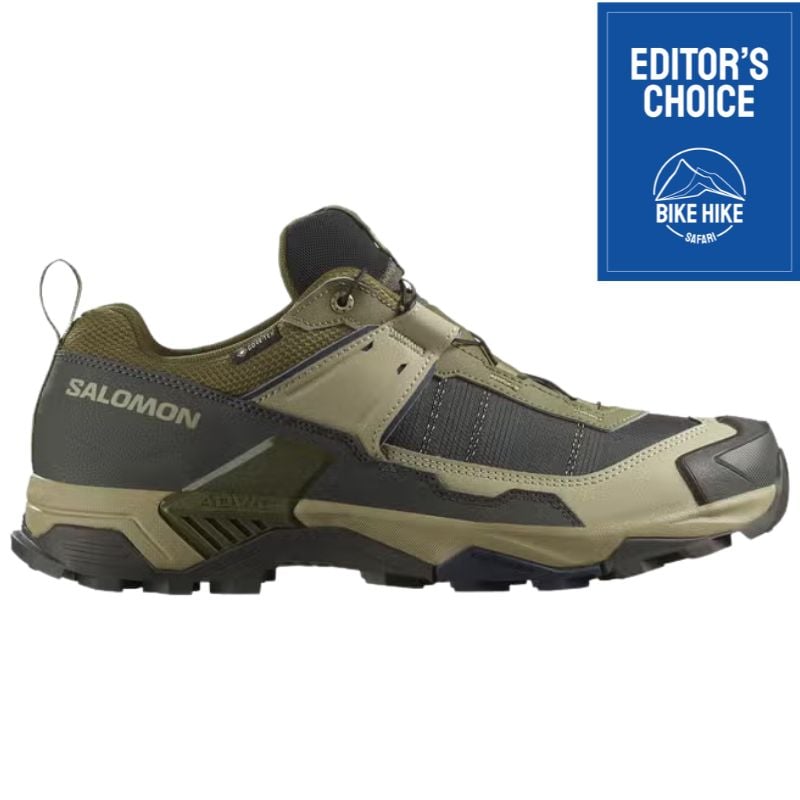
Weight per pair: 1 lb. 11 oz / 765 grams
Pros:
> Breathable mesh panels wick moisture
> Comfortable
> Outsoles feature strategic lines for better flexibility
> Good traction in all conditions
Cons:
> For people with narrow feet only
> Quicklace system can take a bit to get used to
This is the shoe I reach for when I want one pair to handle most of a trip. The X Ultra 5 keeps everything that made the v4 good and adds a tougher Matryx upper, so it holds up to scree and abrasion better than most shoes in this weight class. On steep, technical ground the Contagrip outsole and the supportive chassis give real confidence, especially on loose descents.
It suits day hikes and lighter backpacking trips where you want support and grip over the lightest possible weight. The Gore-Tex version is the one to choose for shoulder season and wet trails; in hot, dry country I’d take the non-waterproof model for breathability.
The honest trade-offs: it runs to the narrow-to-medium side, so wide-footed hikers should look at the Moab 3 or Keen Targhee IV instead. The Quicklace system is fast but takes some getting used to if you like fine-tuning tension, and it’s a heavier shoe than the trail-runner crossovers further down this list.
Trade-off: support and durability over outright weight savings.
Best for: hikers who want one capable, supportive do-everything shoe.
Compare Prices:
Best Classic All-Round Hiking Shoe
Merrell Men’s Moab 3 Hiking Shoe

Weight per pair: 2 lb. 1 oz / 935 grams
Pros:
> Durable leather and suede construction
> Upgraded rubber outsole for improved traction
> Very comfortable
> Webbing, mesh, and laces are made with 100% recycled material
Cons:
> These shoes have a higher arch than some other shoes.
The Merrell Moab 3 is the updated replacement for the hugely popular Moab 2, which was one of the leading budget hiking shoes for over a decade. It provides out-of-the-box comfort and improved features, including recycled materials and a newly designed sole, so anyone who liked the previous model will be at home in this one. After fitting hundreds of pairs of these behind the counter and watching them go out the door more than any other hiker, I can tell you the Moab’s appeal is simple: it just works for most feet, most of the time.
It suits day hikers, weekend backpackers and anyone who wants a comfortable, durable all-rounder that doesn’t need breaking in. The leather-and-mesh upper shrugs off scree and brush, the Vibram TC5+ outsole grips confidently on mixed terrain, and the Air Cushion heel takes the sting out of long descents. The Moab 3 comes in waterproof and non-waterproof ventilated versions, and the Vent model offers significantly improved airflow over the waterproof one, making it a strong choice for hot, dry climates where breathability reduces blisters and discomfort. It stands out for desert hiking thanks to that breathable mesh upper and robust construction that withstands abrasive terrain.
The honest trade-offs are weight and, increasingly, price. At just over 2 pounds per pair these are heavier than most shoes in this guide, and recent price rises in 2026 have pushed the Moab close to premium models, so it’s no longer the budget bargain it once was. The footbed also has a higher arch than some shoes, which a few hikers love and others don’t. They run medium to wide, and there’s a dedicated wide version for very wide feet.
Trade-off: comfort and durability over weight and a low price.
Best for: day hikers and weekend backpackers who want a proven, comfortable all-rounder, especially in hot, dry conditions.
Compare Prices:
Best Lightweight Hiking Shoes
Merrell Moab Speed 2 Review
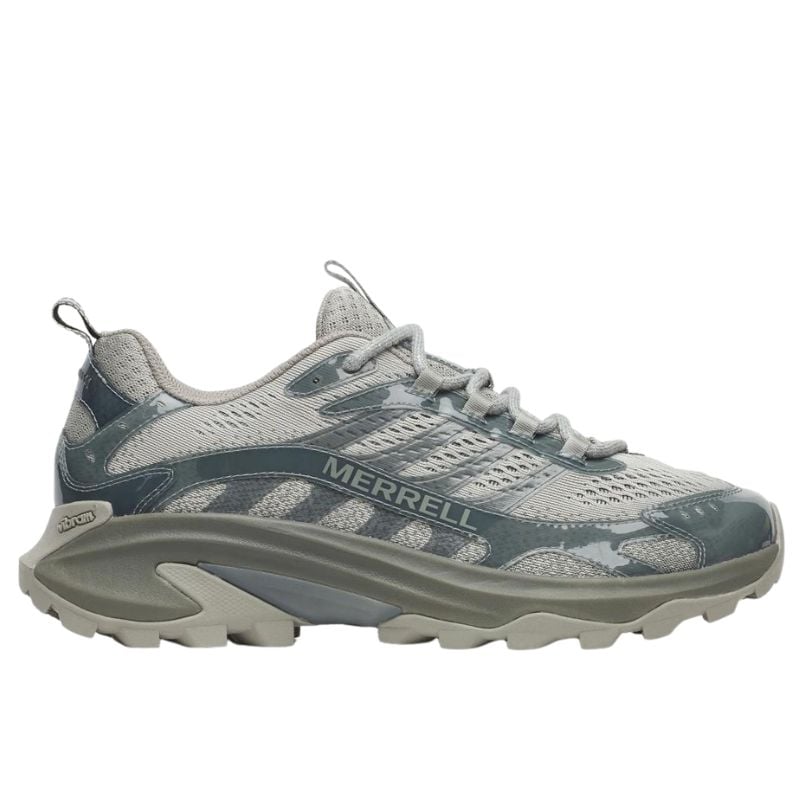
Weight: 1 lb. 8 oz / 680 grams
Pros:
> Reasonably priced
> Comfortable
> Waterproof and non-waterproof models available
Cons:
> Not as durable as some other models in this review
The Moab Speed 2 is the lightweight, agile cousin of the Moab 3, and it’s the shoe I’d point most hikers to when they want Moab comfort without Moab weight. The extra FloatPro foam makes for a soft but stable ride, and the FlexPlate adds enough torsional stiffness that it doesn’t feel sloppy on uneven ground the way a pure trail runner can.
It’s at its best on light-to-moderate trails, long warm-weather day hikes, and fast-and-light overnights. The mesh upper breathes well and dries quicker than the leather Moab 3, which makes the non-waterproof version a strong desert choice.
The trade-off is durability and protection: this is not the shoe for sustained off-trail rock or heavy multi-week loads, where the Spire GTX or Moab 3 hold up better. It also runs roomy, so most hikers can take their normal size. It comes in a waterproof GTX version and a breathable non waterproof version, I prefer the non waterproof option.
Trade-off: weight and breathability over rugged durability.
Best for: fast day hikes and lightweight backpacking on established trails.
Compare Prices:
Most Durable / Boot-Shoe Hybrid
La Sportiva Spire GTX

Weight per pair: 1 lb. 15 oz / 878 grams
Pros:
> Cross between a boot and a shoe
> Gore-tex surround aeration channels for breathable protection
> STB Control System integrates ventilation with stability
> Vibram XS Trek and Impact Brake System provides excellent traction
Cons:
> A little heavier than other options
The La Sportiva Spire GTX is the closest a shoe gets to a hiking boot, and it’s the one I reach for when the terrain turns rough. It sits at a great midpoint between a boot and a trail shoe, with abrasion-resistant mesh uppers and Gore-Tex Surround aeration channels that deliver real durability alongside breathable waterproof protection. That Surround system, working with the Nano Cell 2.0 structure, vents through the footbed and midsole rather than just the upper, so your feet stay drier inside than in most membrane-lined shoes I’ve worn.
It’s built for hikers who want boot-level stability and protection without committing to a full boot: rocky, off-trail and above-treeline terrain, shoulder-season trips, and any route where you’d rather have too much shoe than too little. The STB Control System integrates the ventilation outlets into the midsole while adding torsional stability for a snug, supportive fit, and the Vibram XS Trek outsole with Impact Brake System bites hard on descents and grips confidently on the most rugged ground. Downhill traction in particular is a standout.
The trade-off is weight: the Spire is a little heavier than most shoes in this guide. But it’s surprisingly light for how much support and protection it gives, and that’s the whole point. You’re buying boot-like stability, grip and confidence in a package that still feels and moves like a shoe. If you want to trim ounces, you’ll give up exactly the protection that makes this shoe worth owning.
Trade-off: stability, durability and protection over light weight.
Best for: rugged, rocky and off-trail hiking where you want boot-level support in a shoe.
Compare Prices:
Best Hiking Shoe for Wide Feet
Keen Targhee IV Waterproof Shoes

Weight per pair: 2 lb 6 oz / 1060 grams
Pros:
> KEEN.DRY waterproof breathable membrane
> ECO natural odor control
> Dual-density EVA footbeds for comfort
> TPU heel-capture system for stability
> Best Shoes for Wide Feet
Cons:
> Heavy
> Flat footbed with little arch support (but that could be a good thing for some)
The Keen Targhee IV Waterproof is an industry favourite and my go-to recommendation for hikers with wide feet. Crafted from environmental leather with KEEN’s own KEEN.DRY waterproof breathable membrane, it keeps feet dry while letting perspiration escape, and the dual-density EVA footbed gives a genuinely comfortable underfoot feel straight out of the box. The TPU heel-capture system locks the rearfoot in place, which is part of why these feel stable despite the roomy fit.
This is the shoe for hikers who find most brands too narrow. The generous toe box and wide sizing options prevent toe crowding and bruised nails on long descents, and they’re a frequent recommendation for anyone whose feet swell over a long day. That said, fit is personal, so it’s still worth trying multiple brands against your own foot shape before committing. The outsole tread gives enough traction in all but the slipperiest terrain, and the leather upper is durable enough to last a long time on mixed trails.
The honest trade-offs: these are heavy, among the heaviest shoes in this guide, and the footbed is fairly flat with little arch support, which suits some hikers and frustrates others. Keen treats the lining for natural odour control, and while that’s good in theory, in my experience they’ll get just as stinky as any other shoe on this list. One more note: KEEN.DRY is a capable in-house membrane, but it’s not Gore-Tex, so for sustained wet, cold conditions a Gore-Tex shoe may breathe and recover slightly better.
Trade-off: roomy comfort and durability over weight and arch support.
Best for: hikers with wide feet or swelling-prone feet who want a durable, waterproof, comfortable shoe.
Compare Prices:
Best Hiking Shoes for Cold & Damp Conditions
On Cloudrock Low Waterproof Review
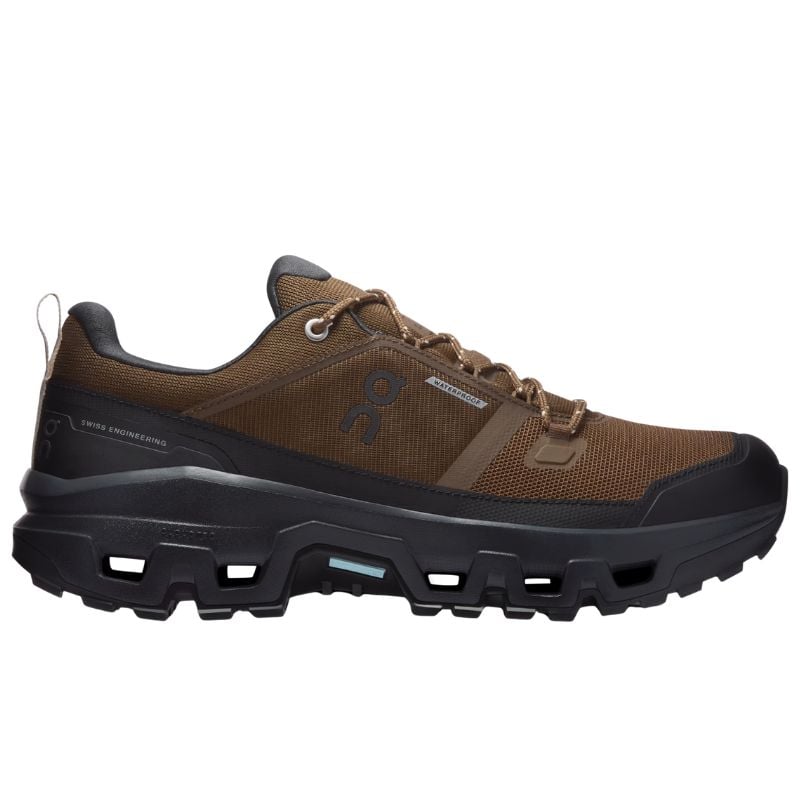
Weight: 1 lb. 14 oz / 860 grams
Pros:
> Good waterproofing for cold weather
> Comfortable
> Durable
Cons:
> Not cheap
> A bit heavy
The Cloudrock Low is the plush, supportive option for cold and damp conditions. It feels more like a low boot than a shoe, with reliable waterproofing and a stable, cushioned ride that suits shoulder-season hikers who want protection over grams.
It’s well suited to wet, cool trails and day hikes where dry feet matter more than fast miles. The trade-offs are weight and price — it’s one of the heavier and pricier shoes here — and the styling leans urban, which won’t bother most trail users.
Trade-off: support and weather protection over weight and value.
Best for: cold, damp, shoulder-season hiking.
Compare Prices:
Best Hiking Shoe for Thru Hiking
Altra Lone Peak 9

Weight per pair: 1 lb. 6.4 oz / 635 grams
Pros:
> Rock plate for underfoot protection
> Updated MaxTrac outsoles with multidirectional lug pattern
> Super lightweight feel
> FootShape toe boxes for comfort and stability
> Laser-cut holes for quick drainage
Cons:
> For wider feet
The Altra Lone Peak 9 has been updated this season with a couple of improvements to this very popular lightweight trail runner. It’s a trail runner rather than a true hiking shoe, but it has earned a cult following among ultralight thru-hikers, so it belongs here as a crossover. It is currently listed as one of the best trail running shoes for thru-hiking in my trail runners review. The MaxTrac outsole has been updated with slightly better traction and wear than the previous model, with the trademark foot-and-toe shape underneath replaced by a more skeletal look. Either way, the traction is slightly improved. There’s a StoneGuard that adds protection from rocks underfoot without killing the feel of being on the trail, and the EGO midsole still delivers the famously soft ride that made these so popular with the thru-hiking community.
I have been using the Altra Lone Peak trail runners for several years, including thru-hiking the Te Araroa Trail in New Zealand. I loved the lightweight feel. They are one of the best trail running shoes for thru-hiking, and they’re my current ultralight hiking shoes of choice for ultralight trips. The Lone Peak 9 keeps the same oversized FootShape toe box that lets the toes relax and spread naturally and keeps the big toe in a straight position, which is a big part of why long-distance hikers swear by them.
The trade-offs are real and worth understanding. If you want a trail-runner-style shoe for ultralight hiking, it has to be tough, and these are tough enough for most trails, but on very muddy ground or off-trail trips a trail runner isn’t the right tool. The zero-drop platform can cause some people to develop Archilles Tendon issues as they are not used to zero drop shoes. The wide fit is not for everyone, and for many people they’re a good transition shoe before moving to fully minimalist footwear. Durability is the other limit: based on typical use, most hikers can expect around 400–600 miles, with rocky or muddy trails and heavier packs wearing them faster than smooth, maintained paths.
Trade-off: lightweight, roomy, zero-drop comfort over durability and rough-terrain protection.
Best for: ultralight thru-hikers and backpackers on established trails who want a roomy toe box and a soft, fast ride.
Compare Prices:
Best Cushioned Ultralight Hiking Shoe
Hoka Speedgoat 7
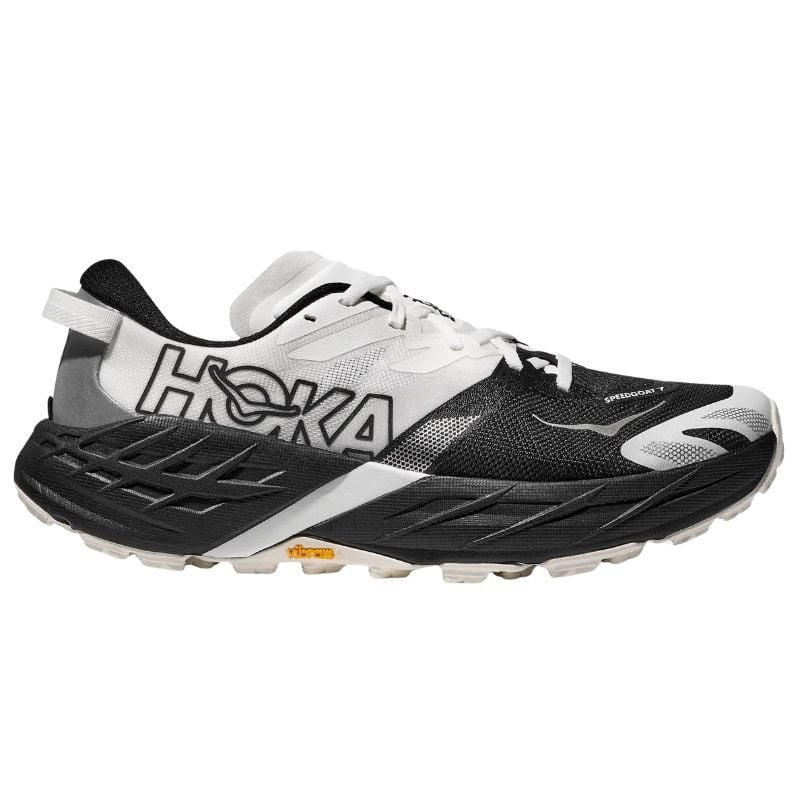
Weight per pair: 1 lb. 3.6 oz / 555 grams
Pros:
> Lightweight Foam cushioning
> Vibram Megagrip rubber outsoles with good traction
> Spacious toe boxes
> Enhanced midfoot support and stability
Cons:
> Not durable enough for hiking off-trail.
If it’s ultralight weight, cushioning and comfort you’re after, the Hoka Speedgoat 7 is hard to beat. Like the Lone Peak, it’s a trail runner first, but it has earned a real place with thru-hikers and fast-and-light backpackers, so I cover it here as a crossover. The supercritical foam midsole delivers maximum cushioning and excellent impact absorption, which is exactly what tired legs want at the end of a long day. The updated toe box and wider forefoot give a more accommodating fit than older Speedgoats, and the gusseted tongue with strategic cutouts adds breathability while keeping grit out.
It’s at its best on day hikes, trail running, and thru-hiking or backpacking on trails that are in good condition. Despite all that plush cushioning, traction is genuinely good: the Vibram Megagrip outsole grips confidently in both wet and dry conditions, including on rock and wet roots. For hikers who want to float over long, smooth miles rather than feel every stone, this is one of the best light trail runners for thru-hiking.
The trade-offs are the usual trail-runner limits. This isn’t a shoe for rough terrain, sustained off-trail travel or muddy conditions, where a stronger hiking shoe like the X Ultra 5 or Spire is the better shoe. Durability is finite too: like many shoes in this guide, most hikers will get around 500 miles out of these when thru-hiking. Compared with the Altra Lone Peak 9, the Speedgoat runs on a 5 mm drop for a more traditional running-shoe feel, and the fit is slightly narrower, so it suits slimmer feet or hikers who prefer a snugger hold, where the Altra’s wider toe box favours broader or swelling-prone feet.
Trade-off: maximal cushioning and low weight over support, durability and rough-terrain protection.
Best for: high-mileage hikers and thru-hikers on good trails who want a soft, cushioned, fast ride
Compare Prices:
Also Worth Considering
Adidas Terrex Free Hiker Gore-Tex 2.0 Low

Weight per pair: 2 lb. 0.6 oz / 924 grams
Pros:
> Durable
> Comfortable
> Good traction
Cons:
> Heavy
The Adidas Terrex Free Hiker Gore-Tex 2.0 Low is a solid option for hikers who want a tough, protective shoe for mixed terrain and wet conditions. The Continental rubber outsole offers excellent grip on everything from muddy trails to rocky ascents, and the reinforced synthetic upper stands up well to abrasion and rough use. The Gore-Tex lining keeps your feet dry in rain, puddles and shallow creek crossings, which makes these a strong choice for all-weather hiking. The Boost midsole is the signature feature here, giving a springy, energetic ride that few hiking shoes can match.
In terms of fit, the Free Hiker 2.0 Low is roomy in the forefoot with secure lockdown through the midfoot and heel. The lacing system is straightforward and holds well, and the shoe feels comfortable right out of the box for most people. These are ideal for hikers who need a reliable, waterproof shoe for rough trails, backpacking trips and long days when durability matters most.
The honest trade-off is weight and agility. The Free Hiker 2.0 Low feels noticeably heavier than many lightweight shoes in this guide, and the stiff construction means it doesn’t feel as nimble as a Hoka Speedgoat 7 or Altra Lone Peak 9. For hikers who prioritise stability and protection over speed, the extra weight is a fair trade. If you want to move fast and light, there are better options, but for rugged comfort and grip, the Free Hiker delivers.
Trade-off: protection, durability and a cushioned Boost ride over light weight and agility.
Best for: hikers who want a tough, waterproof, protective shoe for rough trails and wet conditions.
Compare Prices:
Also Worth Considering
Salomon Men’s XA Pro 3D V9 GTX
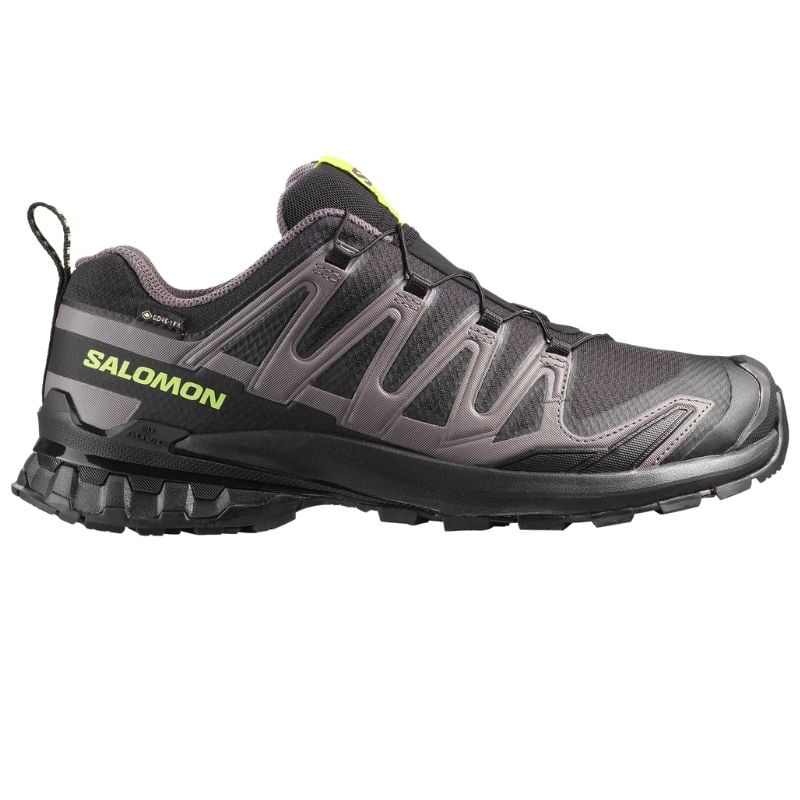
Weight per pair: 1 lb. 10.1 oz / 740 grams
Pros:
> Lightweight
> Good cushioned stability
> Molded OrthoLite footbeds
> Wet-traction outsoles
Cons:
> Runs large, I recommend sizing down ½ size
It’s no surprise to see Salomon on this list again with another quality trail shoe, and the XA Pro 3D V9 is the latest version of a long-running favourite. It’s designed with SensiFit uppers and molded OrthoLite footbeds for comfort without unnecessary weight, and the EnergyCell midsole with Salomon’s 3D Advanced Chassis gives a stable, cushioned, locked-in feel that’s a step more supportive than a pure trail runner. The premium Contagrip outsole provides wet-traction grip even in the worst conditions, and the Gore-Tex membrane means you can stop worrying about what’s underfoot and focus on the trail ahead.
This is a true crossover shoe, more supportive and protective than a trail runner but lighter and nimbler than a classic hiking shoe like the Moab 3. It suits fast day hikes, lighter backpacking trips and mixed terrain where you want stability and waterproofing in one package. The Quicklace system cinches the fit in one quick pull, and the rubber toe cap and chassis add protection on rocky ground that most trail runners lack. The Salomon XA Pro is one of the best hiking shoes for narrow-to-medium-width feet.
The trade-offs: it runs large, so I recommend sizing down half a size, and the narrower last won’t suit wide feet, who are better served by the Moab 3 or Keen Targhee IV. The Quicklace is fast but harder to fine-tune zone by zone than traditional laces, and the 11 mm drop is high if you’ve adapted to lower-drop shoes. As with most waterproof shoes, the Gore-Tex version breathes less and recovers slower than the non-waterproof model, so choose the non-WP version for hot, dry hiking.
Trade-off: support, protection and waterproofing over breathability and a wide fit.
Best for: hikers with narrow-to-medium feet who want a supportive, waterproof crossover shoe for mixed terrain.
Compare Prices:
Also Worth Considering
Oboz Katabatic LT Low GTX
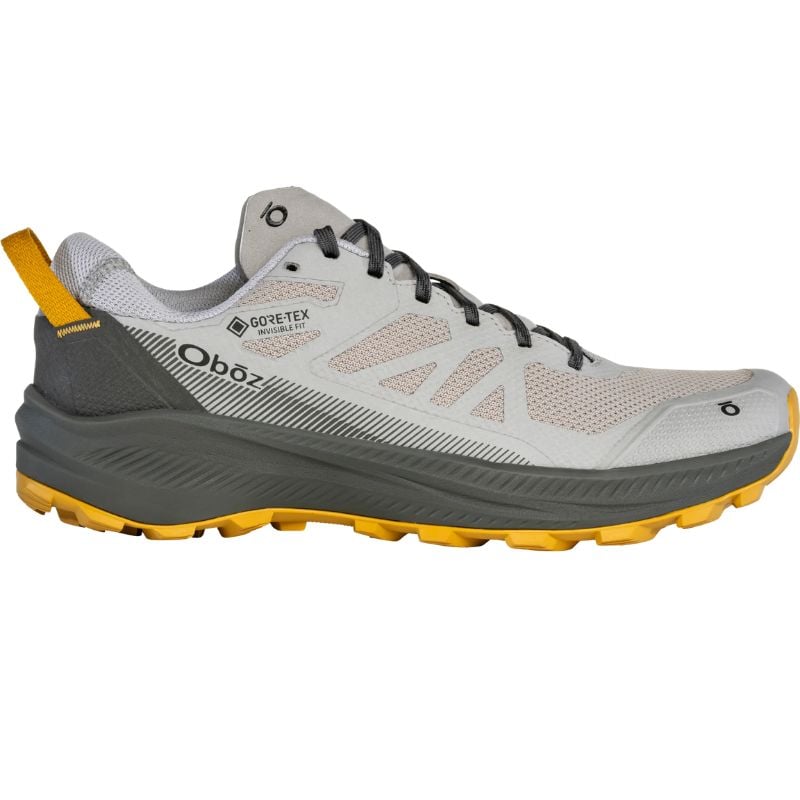
Weight: 1 lb. 8 oz / 670 grams
Pros:
> Comfortable
> Lightweight feel
> Durable
Cons:
> Wide feet need to find the wide version as it runs slim
> Price
The Oboz Katabatic LT Low GTX is a hiking brand’s take on a fast, trail-runner-feeling shoe that refuses to give up the support, protection and waterproofing you’d want on a real trail.
This is the shoe for hikers who want to move fast and light but still want dry feet and a protective build underneath them: speedy day hikes, fast-and-light overnights and fastpacking on mixed terrain. The 5 mm Trail Tread lugs bite confidently on rock, dirt, roots and loose ground, and the ESS rock plate plus reinforced toe cap give real underfoot and toe protection that most lightweight trail runners lack, so you can boulder-hop and step over deadfall without feeling every edge. I particularly like the 8 mm drop here. It’s about 20% lower than the 10–11 mm you’ll find on a Salomon X Ultra 5 or XA Pro, which makes the Katabatic feel noticeably more surefooted and planted on uneven ground, without going all the way to the zero-drop platform of an Altra that doesn’t suit everyone.
The honest trade-offs are real and worth understanding before you buy. The heel and toe box run slim, so this is not the shoe for wide feet, who are far better served by a Merrell Moab 3 or Keen Targhee IV (Oboz does offer a wide version, so seek that out if you’re between widths). The cushioning is responsive but leaner than a plush hiker, so under a heavy multi-week pack, or at the end of a very long day, your feet will feel more of the trail than they would in a maximally cushioned shoe. As a low-cut shoe it gives no ankle support, and water will come in over the collar if you step deep enough, just like any low waterproof shoe. It’s also a premium-priced shoe, and as a synthetic build it won’t outlast a full-leather hiker on sustained off-trail rock.
Trade-off: a low, fast, waterproof and protective build over plush cushioning, ankle support and a wide fit.
Best for: fast-moving day hikers, fastpackers and light overnighters with narrow-to-medium feet who want dry feet and trail protection in a genuinely light package.
Compare Prices:
Also Worth Considering
Vasque Breeze LT NTX Low Shoes
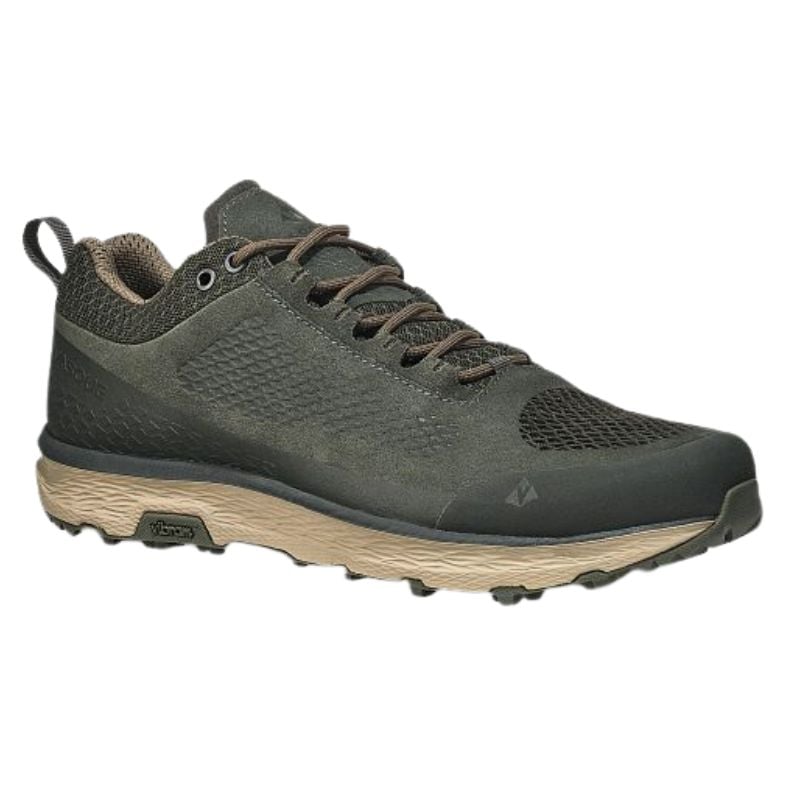
Weight: 1 lb. 9 oz / 716 grams per pair
Pros:
> Lightweight
> Waterproof
> Very good traction on the sole
> Good level of cushioning
Cons:
> The suede leather can be hard to clean when it gets dirty
Although the Vasque Breeze LT NTX Low has been discontinued, it remains available at discounted prices from some retailers. If you’re seeking a lightweight, comfortable hiking shoe and can find your size, this model still offers excellent traction and value for its price.
The Vasque Breeze LT NTX Low Shoes are one of the lightest hiking shoes for 2026. When I tried these shoes for the first time I was impressed by their comfort and light feel. They feel more like a stiff-soled pair of trail running shoes.
They feel comfortable right out of the box but over time the suede leather will shape itself to fit your feet perfectly, making these shoes very comfortable.
These shoes also provide the best traction of any shoe in this review. The traction is provided by large lugs that provide a good grip. But that grip will come at the cost of durability. The sole will not last as long as some of the other light hiking shoes in this review.
The Vasque Breeze LT NTX Low Shoes are super comfortable, lightweight, and provide the best traction of any of the shoes in this review.
Compare Prices:

Other Hiking Shoes
These are good shoes, but they don’t fit this guide’s focus on lightweight footwear for backpacking and thru-hiking:
- Heavy full-leather hiking boots (e.g. mid-height backpacking boots) — covered in my separate hiking boots guide; this page is shoes only.
- Dedicated trail running shoes ridden hard as runners — I cover these in detail in my thru-hiking trail runner guide. A few crossover models appear above where hikers genuinely use them, but the page stays shoe-focused.
- Lifestyle and “barefoot” town sneakers marketed as outdoor shoes — fine for casual wear, but they lack the traction, protection and durability serious backpacking demands, I have a dedicated review of Barefoot Shoes.

Lightweight Hiking Shoe Buyers Guide
How to Choose Lightweight Hiking Shoes
After more than 30 years on the trail and years spent fitting hiking footwear in an outdoor store, I’ve learned that the “best” hiking shoe is the one that fits your feet, your terrain and your mileage, not the one with the highest rating. Below is everything I weigh up before I recommend a shoe, in the order it actually matters on trail.
Waterproof vs Breathable: The First Decision
This is the choice that trips up most hikers, so make it first. A Gore-Tex or membrane-lined shoe keeps light rain, dew, mud and shallow puddles out, which is genuinely useful for cold and shoulder-season hiking where wet feet mean cold feet. The catch is that no waterproof membrane breathes well once the outer mesh is soaked or caked in mud, and the moment water comes in over the collar, a waterproof shoe holds the water in and takes days to dry.
My own preference for warm-weather and long-distance hiking is the most breathable non-waterproof shoe I can find. On a thru-hike I’d rather have wet feet that dry in an hour than dry feet that turn into a swamp by lunchtime. But I won’t pretend that suits everyone: if you mostly hike in cold, damp climates, cross a lot of streams in spring melt, or simply hate the feeling of wet socks, a waterproof shoe like the Salomon X Ultra 5 GTX or the On Cloudrock Low is the right call. The rule of thumb I give people: choose waterproof for cold and wet, choose breathable for hot and dry, and if you can only own one pair and hike in genuinely mixed conditions, lean waterproof and manage breathability with good socks.

Materials and Uppers
The upper is where weight, durability and break-in all collide. Leather and suede uppers, like those on the Merrell Moab 3 and Keen Targhee IV, are the most durable and abrasion-resistant, shrug off scree and brush, and soften into a glove-like fit once broken in. The trade-off is weight and a slower break-in.
Synthetic and engineered-mesh uppers, like the Matryx on the Salomon X Ultra 5 or the ripstop mesh on the Merrell Moab Speed 2, are lighter, breathe far better and dry quickly, which is exactly what you want for fast miles and hot trails. Modern synthetics have closed most of the old durability gap, but they still won’t outlast a good leather upper on sustained off-trail rock. Look for sensible reinforcement where it counts: a proper rubber toe cap, TPU overlays through the midfoot, and a bellows or gusseted tongue to keep grit and trail debris out. Those small details are the difference between a shoe that lasts a season and one that lasts three.
Traction and Outsoles
Traction is non-negotiable, and it’s the spec I trust least from marketing copy because you only learn the truth on a wet descent. The two outsole compounds I look for first are Vibram Megagrip and Salomon’s Contagrip, both of which grip confidently on wet rock, loose dirt and slick roots. Beyond the rubber, look at lug depth and spacing: deeper, well-spaced lugs (4–5 mm) bite into mud and soft ground and shed it between steps, while shallower lugs roll better on hardpack and rock but slide in the wet.
Durability matters as much as grip. A quality hiking-shoe outsole should give you roughly 800–1000 miles, and on a well-made shoe the tread wears out at about the same rate as the rest of the shoe, so nothing is wasted. The crossover trail runners on this list grip beautifully but wear faster, often 400–600 miles when thru-hiking, so factor replacement cost into the decision if you cover big mileage.


Weight
Weight is the headline spec hikers obsess over, and it does matter, because every ounce on your feet costs far more energy than an ounce in your pack. Less weight means less fatigue over a long day. But weight is always bought with something, and that something is usually durability, protection or support. The lightest options here are the crossover trail runners like the Hoka Speedgoat 7 and Altra Lone Peak 9; the most protective, like the La Sportiva Spire GTX, are heavier for good reason.
My advice is to match weight to mileage and terrain rather than chasing the lowest number. For fast day hikes and smooth-trail thru-hikes, go light. For rough, off-trail or heavily loaded trips, accept a few extra ounces for a shoe that protects your feet and survives the abuse.

Comfort, Support and Cushioning
Comfort isn’t one thing, it’s the sum of cushioning, support and how the shoe matches your foot. Cushioning needs depend on your arch and your load: high arches generally want more cushioning to absorb shock, while flat or low arches usually need stability that locks the foot in place and stops it rolling. Heavier packs and harder surfaces call for more underfoot protection, which is where a rock plate or a stiffer midsole earns its keep on rocky trails.
Support comes from the midsole, the shank or plate, and the heel counter working together. A full-length plate, like the FlexPlate in the Moab Speed 2, adds torsional stiffness so the shoe doesn’t twist on uneven ground, which is the difference between a stable hiker and a sloppy one. For long descents, pay particular attention to heel shock absorption, because that’s where tired feet and black toenails come from. Don’t confuse “soft” with “supportive”: a maximally cushioned shoe can still feel unstable under a heavy pack, so test both together if you can.

Toe Box and Foot Shape
The shape of the toe box decides comfort more than almost any spec on the box. Over a long day your feet swell and your toes need room to splay, and a cramped toe box is the fastest route to blisters and bruised toenails on descents. Wide-footed hikers, or anyone prone to swelling, should look at the roomy Merrell Moab 3 and Keen Targhee IV, or the zero-drop Altra Lone Peak 9, which has the most generous foot-shaped toe box of anything here.
Narrow-footed hikers have the opposite problem: too much volume lets the foot slide, which causes heel lift and blisters. If that’s you, look at a snugger last like the Salomon X Ultra 5 or the Scarpa Ribelle. Always check whether a model is known to run wide or narrow before you buy, and remember that many of the best shoes here come in dedicated wide sizes if the standard fit is too tight.
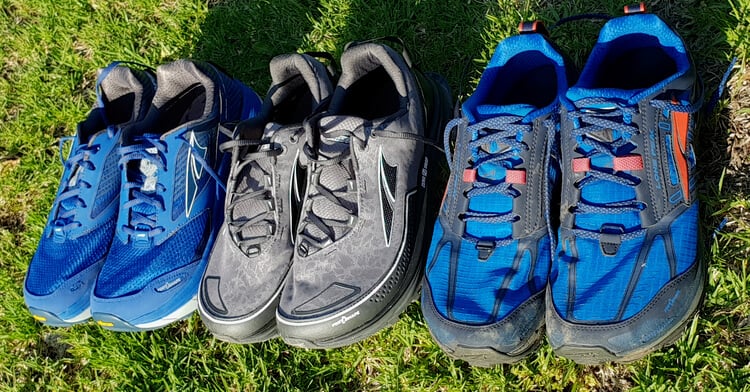
Sizing and Fit
Getting the size right is the single most important thing you can do, and it’s where my old retail experience comes in most. Feet swell after hours of walking, especially in heat or on long descents, so almost everyone should size up from their everyday shoes, often by a half size and sometimes a full size. Always fit hiking shoes wearing the actual socks you’ll hike in, because a thicker hiking sock changes the fit noticeably.
To check fit properly, loosen the laces, slide your foot forward until your toes just touch the front of the toe box, and see if you can fit an index finger between your heel and the back of the shoe. If it fits comfortably, you have enough room for swelling and for steep descents where your foot drives forward. If you’re between sizes, go up: a shoe that’s slightly too big can be dialled in with thicker socks or a better insole, but a shoe that’s too small will give you nothing but pain and blisters. Fit late in the day if you can, when your feet are already a little swollen.

Lacing Systems
Lacing is easy to overlook, but it controls how well the shoe holds your foot. Traditional eyelet-and-lace systems let you fine-tune tension across the foot, easing pressure over a high instep or locking down the heel with a runner’s loop, and that adjustability is hard to beat. Speed-lacing systems, like Salomon’s Quicklace, trade some of that fine control for a single quick pull that stays put with a toggle, which is fast, light and convenient but harder to fine-tune zone by zone.
Neither is right or wrong, it comes down to your foot and your preference. If you have an awkward instep or need precise heel lock-down, stick with traditional laces. If you value speed and simplicity and your foot suits the last, the Quicklace system works well. Whatever the system, the shoe should feel firm but not tight, with no internal foot movement once laced.
Break-In Period
The good news is that most modern lightweight hiking shoes need little to no break-in, especially the mesh-uppered models, which are designed for comfort straight out of the box. Leather shoes like the Targhee IV and Moab 3 still benefit from some wearing-in time so the upper can soften and mould to your foot.
Either way, never take brand-new shoes straight onto a long trip. Buy them at least a few weeks ahead and wear them on shorter walks first, because a shoe that feels fine in the store can reveal a hot spot after a few thousand steps. The flip side is just as important: if a shoe is genuinely uncomfortable on the first try-on, it almost never improves with use, so don’t talk yourself into the wrong shoe hoping it’ll break in.

Socks and Insoles
Your shoe is only half the system. Good hiking socks matter as much as the footwear itself: they need to be comfortable, durable and able to manage moisture over long days and many trail miles without washing. Merino-blend socks are my go-to for cushioning and odour control, and there are waterproof hiking socks worth considering if you spend a lot of time in wet ground or shallow crossings.
Stock insoles used to be an afterthought but have improved a lot, and for most hikers they’re perfectly fine as supplied. If you have a history of foot, knee, hip or back discomfort, or need extra arch support, a quality aftermarket footbed can noticeably reduce fatigue on long hikes, and anyone with genuine biomechanical issues should see a podiatrist about custom orthotics rather than guessing. Treat socks and insoles as part of the fit decision, not an extra, because the right combination can make a borderline shoe feel perfect, and the wrong one can ruin a great shoe.
Read the in-depth reviews:
Best Hiking Shoe Insoles
Best Hiking Socks
Waterproof Hiking Socks
Price and Value
A good pair of lightweight hiking shoes is not cheap, and prices have crept up noticeably in 2026 to the point where even old budget favourites like the Merrell Moab 3 now sit close to premium models. That makes value, rather than sticker price, the thing to judge.
Work out your real cost per mile. A cheaper trail-runner crossover might cost less up front but wear out in 400–600 miles, while a durable hiking shoe lasting 800–1000 miles can be better value over a season even at a higher price. Spend the money where it matters, on fit, traction and durability, and don’t pay a premium for a brand name or a colourway that adds nothing on trail. The most expensive shoe is rarely the best one for your feet, and the cheapest is rarely worth the blisters.

Conclusion
The Best Light Hiking Shoe for 2026 is in the list below:
- Best Lightweight Waterproof Shoe Overall: Salomon X Ultra 5 GTX
- Best Classic All-Rounder: Merrell Men’s Moab 3 Vent Hiking Shoe
- Best Lightweight Hiker: Merrell Moab Speed 2
- Most Durable / Boot-Shoe Hybrid: La Sportiva Spire GTX
- Best Hiking Shoes for Wide Feet: Keen Targhee IV Waterproof Shoes
- Best for Cold & Damp Conditions: On Cloudrock Low Waterproof
- Best Crossover for Thru Hiking: Altra Lone Peak 9
- Best Cushioned Crossover: HOKA Speedgoat 7
- Also worth considering: Adidas Terrex Free Hiker Gore-Tex 2.0 Low
- Also worth considering: Salomon Men’s Xa Pro 3D V9 GTX
- Also worth considering: Oboz Katabatic LT Low GTX
- Also worth considering: Vasque Breeze LT NTX Low Shoes
Another one of the Best Hiking Footwear Reviews from BikeHikeSafari.

Frequently Asked Questions
What is the difference between trail running shoes and hiking shoes?
Trail running shoes are shoes designed specifically for running off-road – from forests, bridleways, and beaches, to grassy fields. They’re usually lightweight but still offer decent traction and durability compared to regular running shoes. Hiking shoes are similar to hiking boots but have a lower cut that resembles a sneaker. They usually have thick lugs and a rubber sole to offer excellent traction, as well as durable and breathable Gore-Tex protection. trail runners are lighter and dry faster but wear out sooner (often under 500 miles), while hiking shoes trade some weight for durability and protection.
Are hiking shoes worth it?
You should wear shoes specifically designed for hiking when exploring the great outdoors. These hiking shoes offer greater traction and durability and usually have built-in cushioning and stability features, too. They’re also far more durable as they’re designed to last longer (about 800 to 1000 miles or 1 to 3 years for most folks) than a trail running shoe, which usually uses more lightweight materials. Hiking shoes are a little heavier because of the extra protection, however, many hikers opt for a shoe as they offer great durability, less weight than a hiking boot, and better protection than a trail runner.
Are hiking shoes or hiking boots better?
It depends on what you’re hoping to get out of your shoes/boots, as both offer separate benefits. Hiking boots offer better ankle support and protection from the elements, and these are the two main reasons why hikers choose a boot over a shoe. They also provide better warmth and are likely to be more durable than shoes. Lightweight Hiking Shoes take less time to break in and will dry quicker when wet.
What is the best lightweight hiking shoe for backpacking?
For most backpackers my top pick is the Salomon X Ultra 5 GTX for its balance of support, grip and durability. If you want lighter and more breathable, the Merrell Moab Speed 2 is the better choice on established trails.
How long do hiking shoes last?
Most quality hiking shoes last 800–1000 miles before the outsole and cushioning wear out. Crossover trail runners like the Speedgoat or Lone Peak typically give 400–600 miles when thru-hiking.
Do I need waterproof hiking shoes?
Only if you regularly hike in cold, wet or muddy conditions. Waterproof membranes keep light water out but breathe poorly and stay wet once flooded over the collar. In hot, dry country I prefer non-waterproof shoes that drain and dry fast.
What are the best hiking shoes for wide feet?
The Keen Targhee IV and Merrell Moab 3 both run roomy and come in dedicated wide sizes. For a zero-drop wide option, the Altra Lone Peak 9 has the most generous toe box of all.


BikeHikeSafari Gear Review Process
The author, Brad McCartney from BikeHikeSafari is a small independent adventurer and outdoor gear tester who owns and runs BikeHikeSafari.com.
BikeHikeSafari is not part of a large blog network and is proudly independent. All reviews on this site are independent and honest gear reviews of outdoor products by the author.
The author, Brad McCartney is a very experienced triple crown thru-hiker, adventurer, and bike tourer having spent 1000s of nights sleeping in a tent and sleeping bag (Read more About Me). He was a manager of an outdoor retail store and is very experienced in what is important when using and testing gear for reviews like this.
BikeHikeSafari will never receive any money for reviews and they do not accept sponsored reviews on this website. All the comments about the gear reviews are from the author based on his years of experience. Read the BikeHikeSafari Review Policy.

