

On the Pacific Crest Trail I watched some people burn through their phone battery by lunchtime just tracking their day, and that is the problem a proper hiking watch solves.
This guide is for hikers, backpackers and thru hikers who want a watch that has built-in maps, GPS navigation, a barometer, an altimeter, and more. A watch that can not only tell you where you are but track your movements, alert you to the changing weather, tell you your altitude, and lastly tell you the time, not a fitness tracker that counts steps. Every hiking watch here is judged on battery life over multiple days, GPS accuracy under tree cover and whether it can show you an offline topo map when there is no signal.
I have hiked the triple crown, walked the Te Araroa, toured long distances by bike and managed an outdoor retail store, and I have spent hundreds of hours testing and researching GPS watches on trail since.
My current top pick is the Garmin Enduro 3 for its 80 hour multi band GPS and preloaded maps, and the Garmin Fenix 9 Pro Solar with its InReach two ways messeging and emergency SOS features, with the Coros Apex 4 as the best value and the Coros Nomad as the budget pick that still carries real maps. The trade off to understand before you spend anything is battery life against screen and smartwatch features. Jump to the Quick Picks below, or read how I test in the Gear Review Policy.
Quick Picks: Best Hiking Watches 2026
- Best hiking watch overall: Garmin Enduro 3 – 80 hours of all satellite GPS, preloaded topo maps and only 63 g on the nylon strap. Nothing else combines that battery life with full mapping at this weight.
- Best Premium Hiking Watch: Garmin Fenix 9 Pro Solar – all the bells and whistles with a price to match. With the addition of inReach and solar this watch could replace your PLB or dedicated satellite messenger.
- Best value: Coros Apex 4 (46 mm) – titanium bezel, sapphire glass, free global topo maps and 41 hours of dual frequency GPS for $479. It does the important parts of a $900 watch for half the money.
- Best budget watch with maps: Coros Nomad – $349 buys real offline topo maps, 50 hours of all systems GPS and 22 days of daily use. This is the one I would put on a first thru hike.
- Best screen and mapping: Suunto Vertical 2 (titanium) – 1.5 inch AMOLED at 2,000 nits, free high detail offline maps and 65 hours of multi band GPS at 74 g. Note that Suunto dropped solar for this generation.
- Best value premium Garmin Smartwatch: Garmin Fenix 8 Solar – 48 days of solar smartwatch use, 68 hours of all satellite GPS, dive rated and loaded with every sport metric Garmin makes. Heavy at 95 g and priced accordingly.
- Best hiking smartwatch: Apple Watch Ultra 3 – the best interface and the best everyday watch here, with offline maps and US park topo maps, but 20 hours of workout tracking means it needs a battery bank on any multi day trip.
- Best simple rugged solar watch: Garmin Instinct 3 Solar – unlimited solar battery in smartwatch mode and 40 days without sun, in a tough 58 g case. No colour maps, so it is breadcrumb navigation only.
- Best Coros for long expeditions: Coros Vertix 2s – 118 hours of full GPS, 36 days of daily use, sapphire and titanium, 10 ATM. Still the battery king in the Coros range and now often discounted.
- Best trail running watch: Garmin Forerunner 970 – 56 g, bright AMOLED, full colour maps and 21 hours of multi band GPS. Excellent for training, thin on battery for backpacking.
- Best lightweight running watch: Coros Pace 4 – 40 g, $249, 41 hours of all systems GPS and 19 days of daily use. Breadcrumb navigation only, so treat it as a running watch you can hike in.
- Also worth considering: Suunto Race 2 – 65 hours of single band GPS, offline maps and an AMOLED screen for $499 in steel. Sits between the Vertical 2 and the Apex 4 on price and features
How We Tested
The hiking watches in this guide are researched and, where possible, field tested by an experienced long distance hiker and former outdoor store manager. Across thru hikes, shoulder season trips, and bikepacking trips, I judge hiking watches on GPS accuracy under tree cover and in steep terrain, real battery life in multi band and expedition modes, offline map quality and on watch navigation, screen readability in sunlight, comfort under a jacket cuff, durability, and value for serious backpacking. Some of the items where supplied by the manufacturer and some items were purchased by the author for this review. For more on how we research and review gear, see the BikeHikeSafari Gear Review Policy.
Follow along on Social Media
GPS Hiking Watch Comparison Table
| Brand | Battery: Smartwatch / Daily | Battery: Standard GPS | Battery: Multi-Band GPS | Weight | Face Size | Maps | Release Date | US MSRP |
|---|---|---|---|---|---|---|---|---|
| Garmin Enduro 3 | 36 days (90 days solar); battery saver 92 days / unlimited solar | GPS-only 120 h (320 h solar); all-satellite 80 h (144 h solar) | 60 h (90 h solar) | 2.22 oz | 51mm | Yes – free preloaded TopoActive maps w/ relief shading | 2024 | $899.99 |
| Garmin Fenix 9 Pro Solar | 30 days (57 with solar) | 75 h (124 h solar) | 54 h (75 h solar) | 3.6 oz | 51mm, 47mm, 43mm | Yes – free preloaded TopoActive maps with inReach tracking and messaging | 2026 | $1299.99 |
| Coros Apex 4 | 46 mm 24 days; 42 mm 15 days | All-systems 46 mm 53 h; 42 mm 34 h. Endurance mode 65 h / 41 h. | 46 mm 41 h; 42 mm 26 h | 2.26 oz | 46mm, 42mm | Yes – free downloadable global Landscape + Topo maps | 2025 | $479 (46 mm) / $429 (42 mm) |
| Coros Nomad | 22 days | All-systems 50 h; endurance 56 h. | 34 h | 2.15 oz | 47.8mm | Yes – free downloadable global Landscape + Topo maps | 2025 | $349 |
| Suunto Vertical 2 (titanium) | Up to 20 days daily use | All-systems + single-band 75 h (70 h AOD); power-saving modes to 250 h | All-systems + multi-band 65 h (60 h AOD) | 2.61 oz | 48.6mm | Yes – free high-detail offline topo/terrain + satellite maps on watch | 2025 | $699 |
| Garmin Fenix 8 Solar | 30 days (48 days solar); battery saver 48 / 107 days | GPS-only 95 h (149 h solar); all-satellite 68 h (92 h solar) | 52 h (65 h solar) | 3.17 oz | 51mm | Yes – free preloaded TopoActive | 2024 | $949.99 |
| Apple Watch Ultra 3 | Up to 42 h; 72 h Low Power Mode | Up to 20 h continuous outdoor workout with full GPS + HR (Low Power Mode) | n/a | 2.17 oz | 49mm | Yes – free offline maps with route creation; topographic maps for thousands of US parks (US-focused) | 2025 | $799 |
| Garmin Instinct 3 Solar | 40 days / unlimited solar; battery saver 100 days / unlimited | GPS-only 60 h (260 h solar); all-satellite 40 h (80 h solar) | 34 h (60 h solar) | 2.05 oz | 50mm, 43mm | No onboard colour topo maps (breadcrumb/track navigation only | 2025 | $399.99 |
| Coros Vertix 2s | 36 days | 118 h full GPS (single system); all-systems 73 h | 43 hours | 3.06 oz | 50.3mm | Yes – free downloadable global Landscape + Topo maps | 2024 | $699 |
| Garmin Forerunner 970 | 15 days | GPS-only 26 h; SatIQ/AutoSelect 23 h | All-systems + multi-band 21 h | 1.98 oz | 47mm | Yes – free preloaded full-colour road/trail maps + 43,000 golf courses + ski maps | 2025 | $749.99 |
| Coros Pace 4 | 19 days (6 days always-on) | All-systems 41 h | 31 h | 1.41 oz | 43.4mm | No – breadcrumb navigation only | 2025 | $249 |
| Suunto Race 2 | 18 days smartwatch; 30 days time-only | All-systems + single-band 65 h (60 h AOD); power-saving GNSS to 200 h | All-systems + multi-band 55 h (50 h AOD) | 2.29 oz | 49mm | Yes – free offline maps on watch | 2025 | $599 |
Best GPS Watches for Hiking 2026
Best Hiking Watch – Overall
Garmin Enduro 3

Weight: 2.22 oz / 63 grams
Pros:
> Battery lasts up to 36 days (90 days solar) in Smartwatch mode
> Perfect for Hiking, Backpacking, Thru Hiking, Trail Running, or any outdoor activity
> Color maps included
> Altitude, Barometer, Compass
Cons:
> Not cheap
The Enduro 3 is the watch I now put at the top of this guide. It is the only watch here that gives you full colour topo maps, 80 hours of all satellite GPS tracking and a 63 g weight on the wrist at the same time. Garmin achieved that by using a nylon strap and a transflective MIP screen instead of AMOLED, which is exactly the right set of compromises for a multi day trip.
For thru hiking and backpacking that battery figure changes how you pack. Eighty hours of all satellite recording, or 144 hours with decent sun on the solar lens, means a week between town stops without touching a power bank, and expedition mode stretches that much further. The maps are preloaded, so there is nothing to buy and nothing to download before a trip.
The trade offs are the MIP screen looks dull next to a Suunto Vertical 2 or an Apple Watch Ultra 3 indoors, and it needs the backlight at night. The 51 mm case is large on a slim wrist, and there is no smaller size. At $899.99 it is also expensive, although it undercuts the Fenix 9 Pro inReach by Solar 51 mm by $400 while beating it on both battery and weight.
Trade off: a dull screen and a large case in exchange for the best hiking battery life with maps.
Best for: thru hikers, long distance backpackers and anyone who navigates from the wrist for days at a time.
Compare Prices:
Best Premium GPS Watch with InReach Messaging and SOS
Garmin Fenix 9 Pro Solar Review
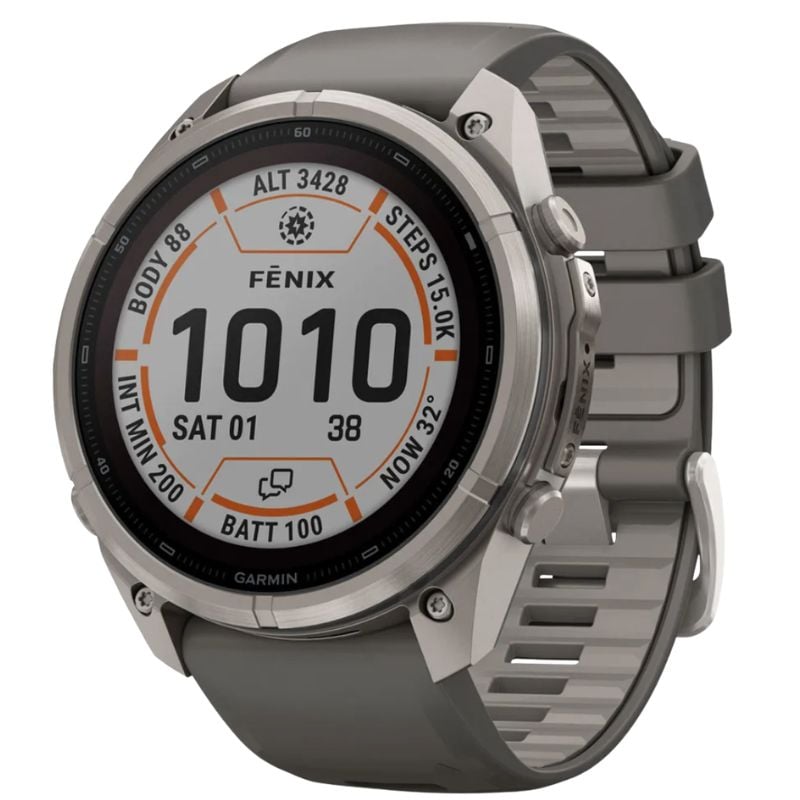
Weight: 3.6 oz / 102 grams
Pros:
> Battery lasts up to 30 days (57 with solar) in smartwatch mode
> Very accurate GPS
> There is an inReach model with 2 -way communication and SOS function
> Good offline color maps
Cons:
> Not cheap
> Not everyone will like the very large watch face and heavier weight
Garmin launched the fenix 9 and fenix 9 Pro on 25 August 2026 and the version that matters most for hiking and backpacking is the fenix 9 Pro Solar. Instead of the AMOLED screen the Pro line moved to last year, this one uses a transflective MIP display with solar cells built into the lens, which is the combination that has always given Garmin its best trail battery life. The all titanium case is the other real change, and it feels like a proper flagship.
The numbers back that up. In smartwatch mode the 51 mm runs 30 days without sun and 57 days with it, and in activity mode you get 75 hours of normal recording, or 124 hours with solar. Even in max accuracy mode with multi band GNSS running you have 54 hours, which is more than the Enduro 3 manages in the same mode. Expedition mode at 42 days, or 124 days with solar, is enough for a full thru hike season of daily tracking. Garmin also fixed the mapping which now has 64 GB, pans up to 30 percent faster, and the new perspective view makes it much quicker to read what is ahead on trail.
The best feature in my opinion is the optional built in inReach. It is what will interest thru hikers most, because for $100 more plus a subscription you get satellite SOS, texting and Garmin rescue without carrying a separate satellite messenger. That could save you a lot of money as you may not need to buy a Garmin InReach mini 3 or similar. For me, that makes the extra cost viable.
The catch is weight and price. At 102 g on the silicone band the 51 mm is the heaviest watch in this guide, and at $1,199.99, or $1,299.99 with inReach, it costs $300 more than an Enduro 3 that weighs 39 g less. The MIP screen is also lower resolution than the AMOLED version at 280 by 280, so it looks plain indoors, and the solar figures assume three hours a day outside in bright sun.
Trade off: the most features and battery in the Garmin range, in the heaviest and most expensive case here.
Best for: expedition trips, thru hikers who want satellite messaging built in, and anyone who wants one premium watch for every activity.
Compare Prices:
Best Value Hiking Watch
Coros Apex 4 Review
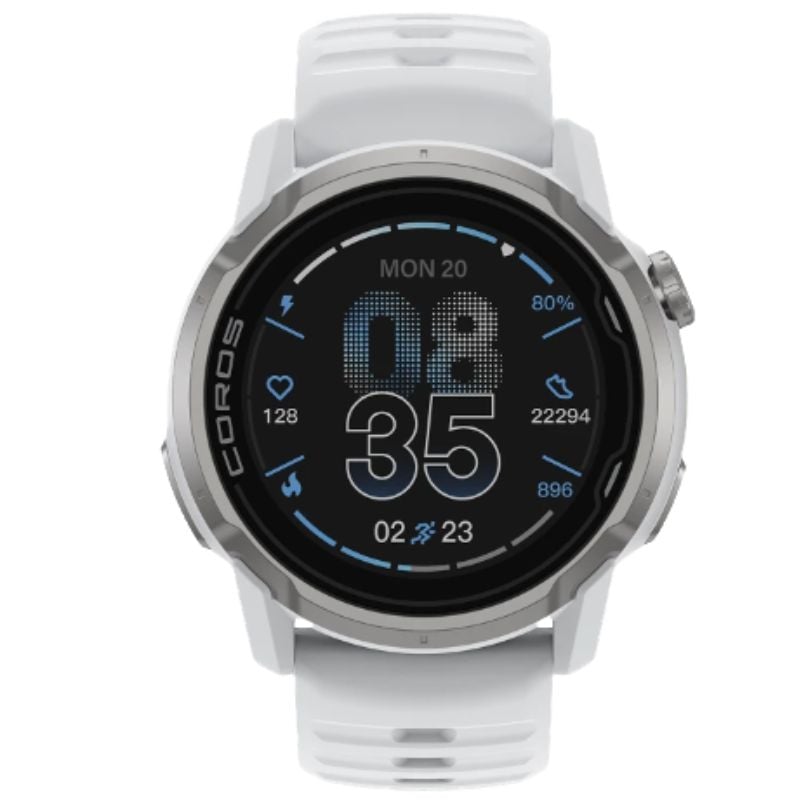
Weight: 2.24 oz / 64 grams
Pros:
> 24 day battery life for smartphone use and 41 hours with multi-band GPS
> Improved GPS accuracy
> Changable watch face
> Lightweight
> Very good price
Cons:
> Screen could be brighter
The Apex 4 is the value story of 2026, and I’ve been a fan of Coros since they started. Coros put sapphire glass, a grade 5 titanium bezel, free global topo maps, 41 hours of dual frequency GPS and 24 days of daily use into a $479 watch. Spec for spec that is close to what Garmin charges $900 or more for.
For hiking and backpacking the useful detail is the endurance mode at 65 hours, because it keeps recording accurately while stretching a trip out to a long weekend and beyond. Maps are genuinely good now. You download regional topo and landscape tiles through the Coros app, they cost nothing, and route following on watch is clear. The 42 mm version is worth knowing about because it drops to 44 g on the nylon strap, which is the lightest way to get real maps on your wrist.
What you give up is Garmin’s ecosystem depth and some polish. Coros training analysis is strong but the sports catalogue is narrower, there is no solar option, and the MIP screen is functional rather than beautiful. The 5 ATM water rating is also lower than the 10 ATM on the Enduro 3 and Vertix 2S, so it is fine in rain and rivers but I would not dive with it.
Trade off: fewer smartwatch extras and a lower water rating for roughly half the price of a flagship.
Best for: hikers and backpackers who want maps, titanium and long battery without paying flagship money.
Compare Prices:
Best Budget Watch with hiking maps
Coros Nomad Review
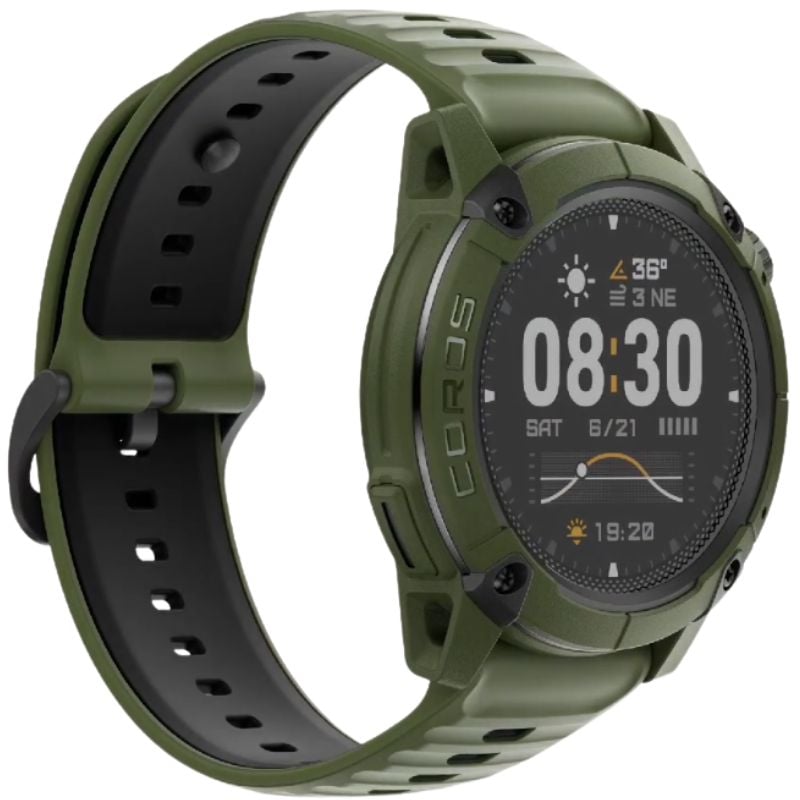
Weight: 2.15 oz / 61 grams
Pros:
> 22 day battery life for smartphone use and 34 hours with multi-band GPS
> Very accurate GPS
> Large watch face
> Great features for a budget price
> Good offline color maps
Cons:
> Screen not as scratch proof as some other watches
The Nomad is the watch I would hand to someone heading out on a first long trail. At $349 it carries the same free global topo maps as the Apex 4, records for 34 hours using multiband satellite systems and runs 22 days as an everyday watch. Nothing else near this price gives you real maps on the wrist.
Coros built it around adventure sports rather than racing, so the interface leans on navigation, offline maps and route following instead of lab metrics. On trail that is the right emphasis. 34 hours covers most week long resupply cycles, but you can stretch it to 50 hour if you record in standard GPS mode, and the endurance setting adds another six hours to 56 hours of GPS tracking if you need it.
The savings show up in the materials. Mineral glass instead of sapphire will pick up scratches faster on rock scrambles, and the polymer and aluminium bezel does not have the heft of the titanium on the Apex 4. Water resistance is 5 ATM, and the 47.8 mm case is chunky for smaller wrists with no second size offered. Dual frequency GPS also drops to 34 hours, so if you want maximum accuracy for a long day you will watch the battery more closely than on an Apex 4.
Trade off: mineral glass and a plainer build in return for maps and 50 hour tracking at $349.
Best for: first thru hikes, budget conscious backpackers and anyone who wants offline maps without spending $500.
Compare Prices:
Best Watch Screen and Mapping
Suunto Vertical 2 (titanium) Review
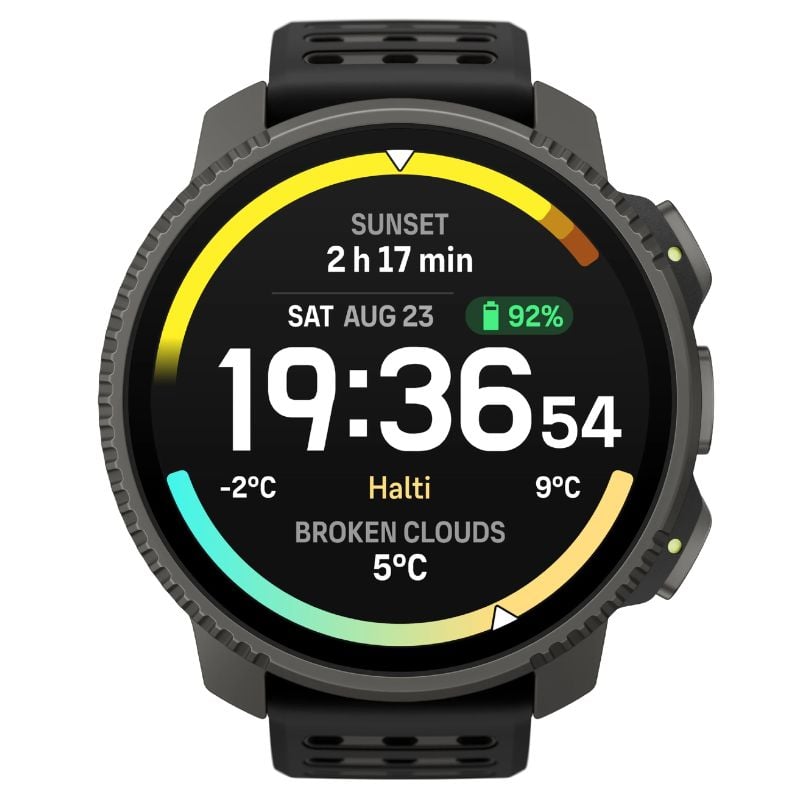
Weight: 2.61 oz / 74 grams
Pros:
> 20 day battery life for smartphone use and 65 hours with multi-band GPS
> Very accurate GPS with long battery life
> Nice watch face and screen
> Great offline maps
Cons:
> Not cheap compared to Coros
The original Suunto Vertical Titanium Solar was one of my favourite watches of recent years, and the Vertical 2 changes the deal. Suunto swapped the transflective screen for a 2,000 nit AMOLED and gave it the best free map experience in this guide, including satellite imagery on the wrist. In exchange, the solar panel and the headline one year battery figure are gone.
Twenty days of daily use and 65 hours of multi band GPS is still strong, and it is more accuracy per hour than most watches here deliver. Maps are the reason to buy it. Suunto charges nothing for high detail offline topo maps, downloads are quick and the screen makes them properly readable, which is not something I can say about MIP based watches. At 74 g in titanium with a 100 m rating it also handles alpine days and river crossings without complaint.
The loss of solar matters if you are out for weeks, because the old Vertical could effectively run indefinitely with sun. If Suunto bring out a solar version before I get to test and write about it here in this review, then surely you should upgrade to that, let’s see if it happens. The AMOLED also invites you to leave the screen always on, which costs 5 to 10 hours of GPS runtime. Suunto’s ecosystem is smaller than Garmin’s for third party apps, and at $699 for titanium it is priced against the Enduro 3, which lasts far longer.
Trade off: a much better screen and free maps in place of solar charging and multi week battery life.
Best for: hikers who want the best map display, alpine day trips and shorter backpacking trips.
Compare Prices:
Best Value Premium Garmin Smartwatch
Garmin Fenix 8 Solar

Weight: 3.35 oz / 93 grams
Pros:
> 30 days (57 with solar) battery life for everyday use and 52 h (65 h solar) with multi-band GPS
> Perfect for Hiking, Backpacking, Thru Hiking, Trail Running, or any outdoor activity
> Store and play music
> Altitude, Barometer, Compass
> Google Pay
Cons:
> Not cheap, but it is still top of the line.
The Fenix 8 Solar has been replaced with the new Fenix 9 but this watch can do almost everything at a discounted price that is around $350 cheaper. It has the full Garmin feature set, a leak proof design with a built in speaker and microphone, a dive rating to 40 m, offline music, contactless payment, preloaded TopoActive maps and 48 days of solar smartwatch battery. If you want a watch that hikes, dives, plays golf and takes calls, this is it.
For backpacking it is very capable without being the smart choice. Sixty eight hours of all satellite recording, or 92 hours with sun, is plenty for most trips, and Garmin’s navigation tools remain the best in the business for building and following routes on watch. Sapphire glass and a titanium bezel survive scrambling.
The problem is the Enduro 3 exists. It is $250 cheaper, 32 g lighter and lasts longer on GPS, and for pure hiking those three facts settle the argument. The Fenix 8 Solar earns its place only if you want the extra sports, the dive computer or the speaker.
Trade off: every feature Garmin makes, at a weight and price the Enduro 3 undercuts for hiking.
Best for: multisport hikers, divers and anyone who wants one premium watch for all activities.
Compare Prices:
Best Hiking Smartwatch
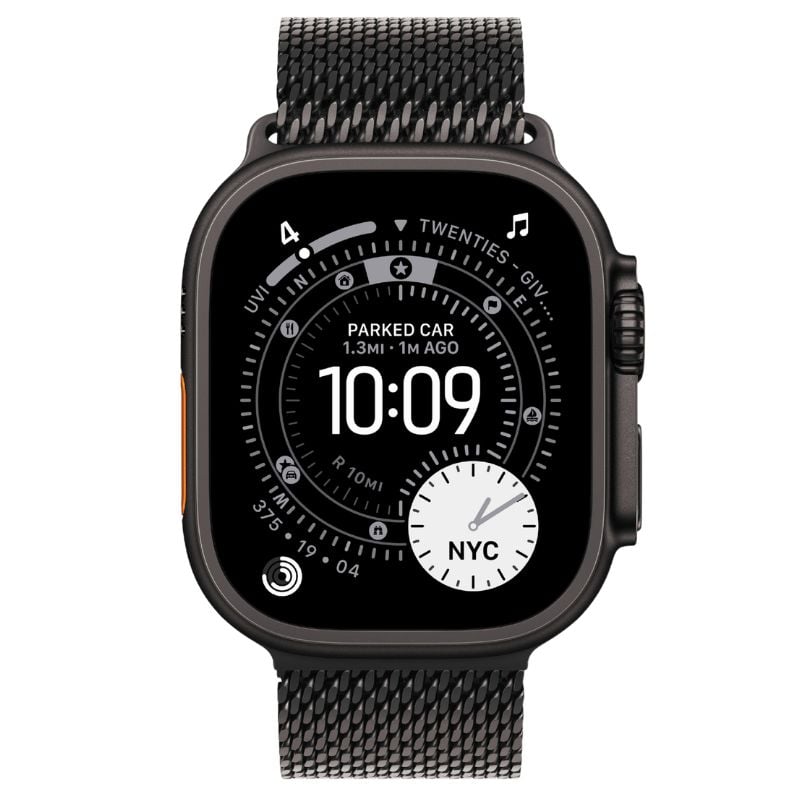
Apple Watch Ultra 3
Weight: 2.17 oz / 61 grams
Pros:
> 72 hour battery life for everyday use and up to 20 hours with multi-band GPS
> Very High Quality
> Altimeter, barometer & compass
> Superior fitness tracker functionality
> Receive and make calls with the phone
> Enables contactless payment
> Great user interface
Cons:
> Only works with iPhone
> Poor battery life
The Apple Watch Ultra 3 is the best everyday watch in this guide and it is now a credible hiking watch, which was not true of the original Ultra. Offline maps, route creation, US park topo maps, and satellite messaging make for a great package. The screen and the interface are better than anything Garmin, Coros or Suunto ship.
For day hikes and hut to hut trips it works well. Forty two hours of general use and 72 hours in Low Power Mode covers a weekend, and the health tracking, fall detection and emergency features are the most polished here. If you already carry an iPhone, the setup and data handling are effortless. It only pairs with iPhone, the 49 mm case is wide, and the topo mapping strength is US focused.
For multi day backpacking the maths still does not work. Twenty hours of continuous GPS and heart rate recording means one long day, then a recharge, so you are carrying a power bank and a proprietary charger for a week on trail. The battery life is simply good enough. If Apple can offer improved battery life or tweek that software to improve the Smartphone only mode then Garmin, Coros and Suunto will have something to worry about, until then they are better for hiking than Apple.
Trade off: the best screen, interface and daily wear experience, in exchange for poor battery life that cannot cover a thru hike.
Best for: iPhone users, day hikers, weekend trips and anyone who wants one watch for town and trail.
Compare Prices:
Best Simple Rugged GPS Watch
Garmin Instinct 3 Solar
Weight: 2.05 oz / 58 grams
Pros:
> 40 days (unlimited with solar) battery life for everyday use and 34 h (60 h solar) with multi-band GPS
> Great if you don’t need maps but want accurate GPS tracking
> Reasonably priced
> Accurate GPS
> Altitude, Barometer, Compass and more
Cons:
> No maps
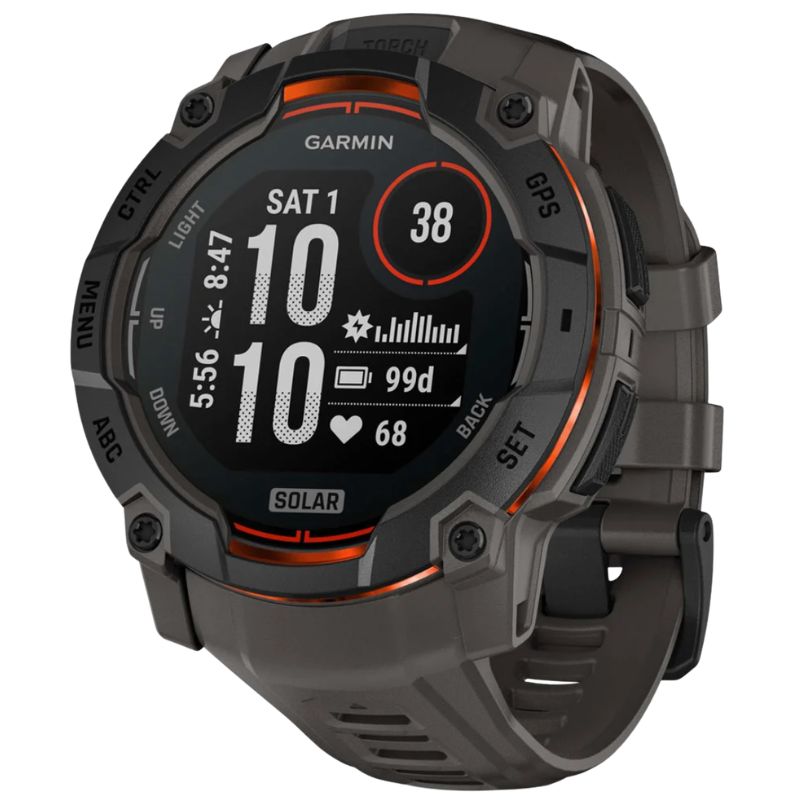
The Instinct 3 is a tough, simple, effectively endless battery watch for hikers who do not want maps on their wrist. In smartwatch mode with reasonable sun it runs indefinitely, and 260 hours of GPS only recording with solar in low power mode is a figure no mapping watch here comes close to.
The Instinct 3 is a good match for experienced hikers who can navigate with a phone app or paper map and compass for route finding, and use the watch for time, altitude, weather trends and a track log. The monochrome MIP screen is easy to read in bright sun, the case shrugs off abuse, and at 58 g it disappears on the wrist. Three case sizes down to 40 mm also make it the best option here for small wrists.
The obvious limitation is the lack of colour topo maps. You get breadcrumbs and track back, which will get you off a wrong turn but will not show you the valley you are standing in. The monochrome display looks dated next to AMOLED, and at $399.99 it costs more than a Coros Nomad that does have maps.
Trade off: no maps and a plain screen for the best solar battery life and toughness at the price.
Best for: hikers who navigate with a phone or paper map, desert and high sun trips, and small wrists.
Compare Prices:
Best Coros for Battery Life
Coros Vertix 2s Review

Weight: 3.06 oz / 87 grams
Pros:
> 36 day battery life for normal use and 43 hours with multi-band GPS
> Very accurate GPS
> Large watch face
> Heart Rate monitor and ECG
> 100-meter water resistance
> Good offline color maps
Cons:
> Not cheap
> Not everyone will like the very large watch face
I picked the Vertix 2S as the top watch on the previous version of this guide and I still like it, but the market has moved. It stays here as the Coros to buy for genuinely long trips, because 118 hours of full GPS recording and 36 days of daily use is the deepest battery in the Coros range, and the offline colour maps, sapphire glass, titanium bezel and 10 ATM case are all still current standard.
On trail the appeal has not changed. The large 1.4 inch face is easy to read for older eyes like mine, the internal antenna is accurate under canopy, and dual frequency at 43 hours is enough for a hard multi day push. Offline music and the ECG sensor are still there, and Coros firmware updates have kept adding features for free.
Two things have changed around it. The Apex 4 arrived at $479 with a newer platform, a brighter third generation screen and only slightly less battery, which makes the $699 Vertix 2S harder to justify unless you find it discounted. It is also a big heavy watch at 87 g on the silicone strap, and it launched in 2024, so a replacement is plausible before long.
Trade off: 2024 hardware and a high list price in exchange for the longest single system GPS recording here.
Best for: expedition trips, ultra distance events and anyone who finds it on sale.
Compare Prices:
Best Trail running watch
Garmin Forerunner 970
Weight: 1.98 oz / 56 grams
Pros:
> 15 day battery life for normal use and 21 hours with multi-band GPS
> Good training features
> Great look and design
> Bright screen display
> Altitude, Barometer, Compass
Cons:
> Battery life is not as good as some other models
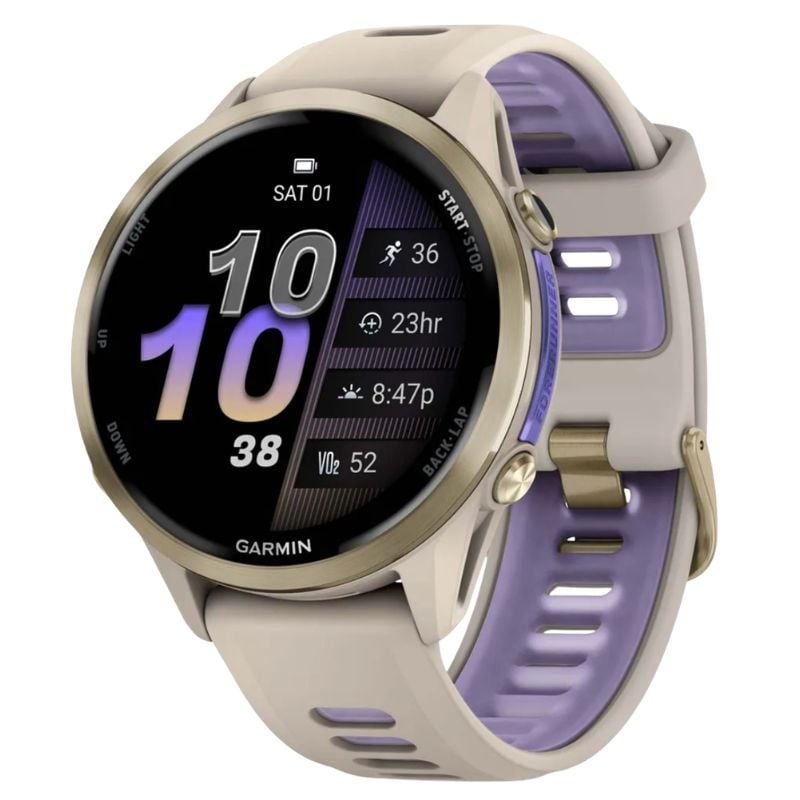
The Forerunner 970 replaces the 965 and the older 945 on this page, and it is the running watch I would point trail runners towards. It is 56 g with a sapphire lens and a titanium bezel, the AMOLED screen is the brightest Garmin makes on a running watch, and it carries full colour maps, which the Forerunner 165 and Vivoactive 6 do not.
For trail running and fast days it is close to ideal. 21 hours of all systems multi band GPS covers a mountain marathon or a very long day out, the training metrics are the best in this guide, and the running economy and step speed loss data will interest anyone doing structured work. Maps are preloaded so navigation on unfamiliar trails is easy.
For backpacking there are better options. 26 hours of GPS only recording is a fraction of what the Enduro 3, Vertix 2S or Apex 4 deliver, and the 5 ATM rating is lower than the 10 ATM outdoor models. Fifteen days of smartwatch battery also means charging on any trip longer than a weekend. At $749.99 it costs more than the Apex 4 and lasts a third as long.
Trade off: superb training data and screen quality against battery life that rules out multi day trips.
Best for: trail runners, fast packers and hikers whose trips are mostly single days.
Compare Prices:
Best Lightweight Trail Running Watch
Coros Pace 4
Weight: 1.41 oz / 40 grams
Pros:
> 19 day battery life for normal use and 31 hours with multi-band GPS
> High level of water resistance
> Altimeter, barometer & compass
> Great value for money
Cons:
> No maps just breadcrumb tracking
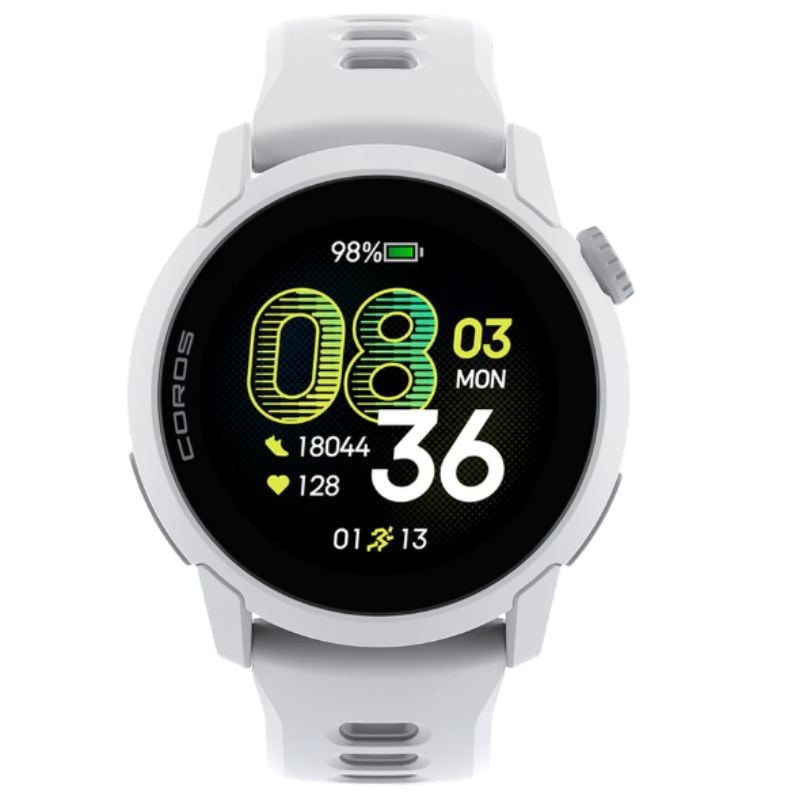
The Pace 3 has been my daily watch and the Pace 4 is the upgrade, so this is the one I have been most interested in. Coros moved to an AMOLED screen, kept the weight at 40 g on silicone or 32 g on nylon, and lifted all systems GPS recording to 41 hours and 31 hours with multi-band GPS. For a watch this small and cheap at only $249, 41 hours is a remarkable GPS tracking number.
For hikers it works the way the Pace 3 did. You get accurate tracking, the full ABC sensor set, a screen that is now much easier to read, and enough battery for a long weekend without a charger. 19 days of daily use holds up if you leave the always on display switched off, which you should on trail.
The limitation is the same as before. There are no offline maps, only breadcrumb navigation, so you can see where you have been and retrace it but you cannot read the terrain ahead. Mineral glass rather than sapphire will scratch, water resistance is 5 ATM, and always on mode cuts daily battery from 19 days to 6. If maps matter, the extra $100 for a Coros Nomad is money well spent.
Trade off: no maps and softer glass in exchange for 40 g, an AMOLED screen and 41 hour tracking at $249.
Best for: trail runners, light and fast hikers and anyone who navigates with a phone app.
Compare Prices:
Also worth Considering
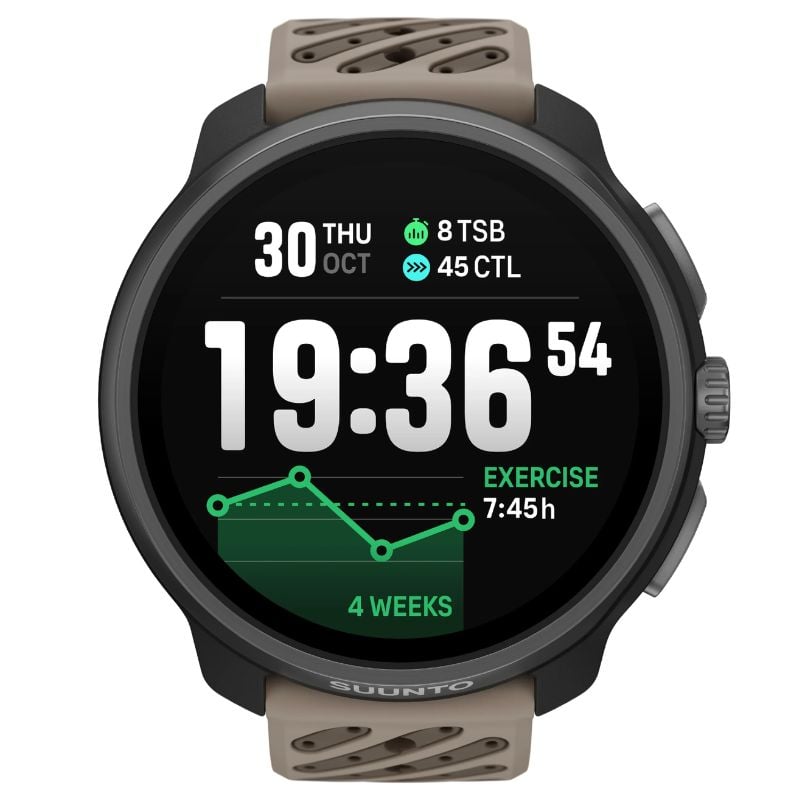
Suunto Race 2
Weight: 2.29 oz / 65 grams
Pros:
> 18 day battery life for normal use and 55 hours with multi-band GPS
> GPS with route navigation maps
> Altimeter, barometer, & compass
> 24-hour-long battery life in GPS mode
> Designed to withstand the rain
Cons:
> Focused on running and racing more than hiking
The Race 2 is the value entry point into Suunto’s map capable AMOLED watches and it deserves a mention on this page even though it is sold as a racing watch. At $499 you get free offline maps, a 100 m case, 65 hours of single band GPS and 55 with multiband recording, and the same bright screen technology as the Vertical 2.
For hiking it does most of what the Vertical 2 does. Maps download at no cost, the display is readable in full sun, and 18 days of smartwatch use is respectable. The 12.5 mm case is slim for a watch with these numbers, which makes it more comfortable under a jacket cuff than the chunkier outdoor models here.
The gaps are worth knowing. It has less rugged sensor protection than the Vertical 2, the strap and bezel materials are lighter duty, and Suunto has trimmed some outdoor specific features to keep it focused on running and triathlon. Multi band drops to 55 hours, and there is no solar. Against the Coros Apex 4 at $479 it wins on screen and loses on bezel materials and endurance mode.
Trade off: a slimmer running focused build in return for AMOLED maps at a lower price than the Vertical 2.
Best for: hikers who also race, and anyone who wants Suunto maps and a bright screen for under $500.
Compare Prices:
GPS Hiking Watch Buyers Guide
GPS Hiking Watch Buyers Guide
Offline Maps or Breadcrumb Tracking
This is the first decision and it splits the whole category in two. Some watches store colour topographic maps on the watch itself, so you can see contours, trails, water sources and your position with no phone and no signal. Others only record a breadcrumb of where you have walked, which lets you retrace your steps but tells you nothing about the terrain ahead. The Garmin Enduro 3, Fenix 9 Pro Solar, Fenix 8 Solar, Coros Apex 4, Coros Nomad, Coros Vertix 2S, Suunto Vertical 2, Suunto Race 2, Amazfit T Rex 3 and Apple Watch Ultra 3 all carry real maps. The Garmin Instinct 3 Solar and Coros Pace 4 do not.
Neither choice is wrong. If you navigate with a phone app and use the watch for data and a track log, a breadcrumb watch saves money and battery, and an Instinct 3 Solar will outlast anything with maps. If you want to leave the phone in the pack in bad weather, or you hike where the phone dies in the cold, maps on the wrist are worth paying for. What has changed is the price of entry. Maps used to mean a $700 watch. A Coros Nomad now does it for $349, so most hikers should default to a mapping watch unless battery life is the only priority.
Check whether the maps cost extra and how they get onto the watch. Garmin preloads TopoActive on its outdoor models. Coros and Suunto both let you download global topo tiles at no charge through their apps. Apple’s on watch topo maps are strongest in US parks, which matters if you hike outside North America.
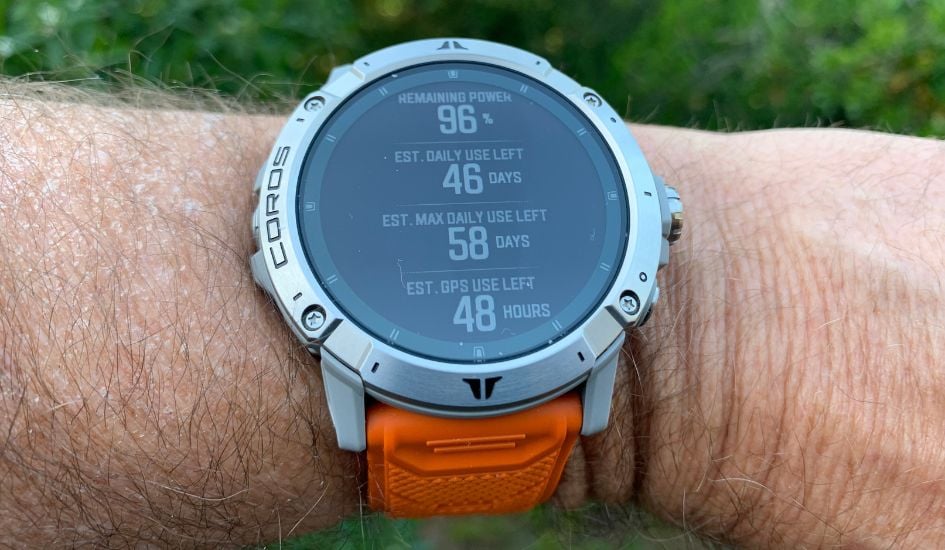
Battery Life That Survives a Multi Day Trip
Manufacturers quote several battery figures and they are not interchangeable. Smartwatch or daily use is the watch worn all day with the GPS off. GPS only means recording a track using a single satellite system. All systems or all satellite uses multiple constellations for better accuracy. Multi band or dual frequency adds a second frequency from each satellite, which is the most accurate mode and the hungriest. Expedition and power saving modes record a point every few minutes instead of every second.
For hiking, the number that matters is all satellite recording, because that is how most people will use it. On that measure the Enduro 3 leads at 80 hours, or 144 hours with sun on the solar lens. The Vertix 2S manages 73 hours, the Suunto Vertical 2 does 75 hours in single band, the Apex 4 53 hours and the Nomad 50 hours. The Apple Watch Ultra 3 gives about 20 hours of continuous workout recording, and the Forerunner 970 about 23 hours.
Work backwards from your trips. A weekend of 8 hour days needs about 20 hours of recording. A week between resupply needs 50 hours or more, or a portable battery bank or Portable Backpacking Solar Charger. A thru hike where you record every day and charge in town every five or six days needs 60 to 80 hours or an expedition mode you are willing to use. Also remember that always on AMOLED screens cost 5 to 10 hours of GPS runtime, cold drains lithium batteries faster than the spec sheet suggests, and a two year old watch will not hit its original numbers.
Keep in mind that no watch will have a battery last as long as a proper Handheld Hiking GPS which in many situations will be a better option.
GPS Accuracy, Multi Band and Where It Actually Matters
Accuracy has improved so much that most current watches record within a few percent of true distance in open terrain. The differences show up in the places hikers actually go: under dense canopy, in steep sided valleys, in narrow canyons and on slopes where the sky is half blocked. Multi band or dual frequency GNSS is the feature that helps most in those conditions, because the second frequency lets the watch reject signals that have bounced off rock and trees.
That accuracy costs battery, which is why the sensible approach is to run all satellite mode most of the time and switch to multi band for the days that matter, such as off trail navigation, alpine traverses or route recording you plan to publish.
One thing no watch fixes is a poor position lock at the start. Give any watch 30 to 60 seconds standing still with a clear view of the sky before you start recording. It makes more difference to your track quality than the model you bought.
Solar Charging: Useful or Marketing
Solar has become a real point of difference rather than a gimmick, mostly because two manufacturers went in opposite directions. Garmin has expanded it, and the Instinct 3 Solar runs indefinitely in smartwatch mode with a few hours of daily sun while the Enduro 3 stretches all satellite recording from 80 to 144 hours. Suunto dropped solar for the Vertical 2, and Coros has never offered it.
Solar works best in the conditions that also make it least necessary, which is bright open country. Under forest canopy, on short winter days or in constant cloud it adds very little. It also depends on the watch being exposed, so it charges better on your wrist above a sleeve than under a jacket cuff or a pack strap.
The honest summary is that solar is worth paying for if you hike long, open, sunny trails such as the PCT desert sections or Australian and New Zealand summer trips, and worth ignoring if you mostly hike in temperate forest or winter. For everyone else it is a useful buffer rather than a reason to choose one watch over another.
MIP (Memory-In-Pixel) or AMOLED Screens for Trail Use
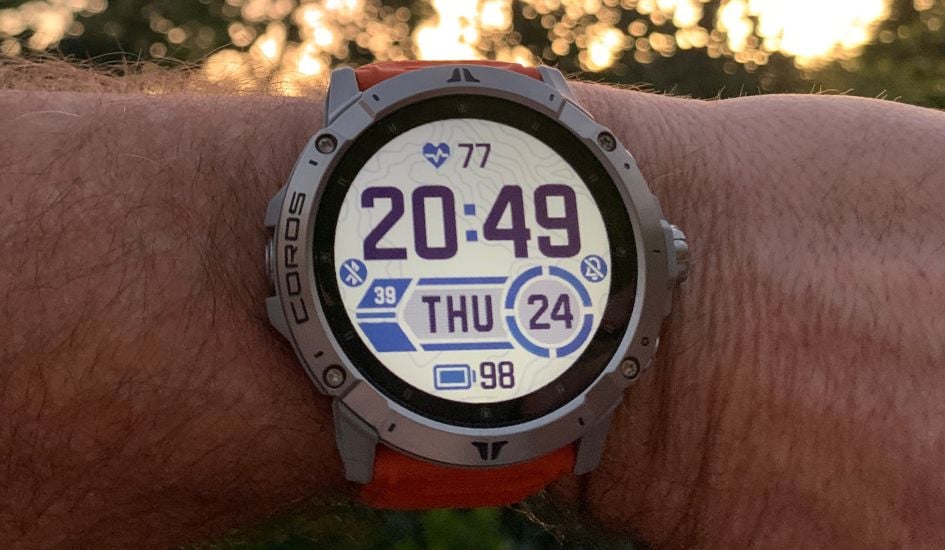
Transflective memory in pixel screens, used on the Enduro 3, Fenix 9 Pro Solar, Fenix 8 Solar, Instinct 3 Solar, Apex 4, Nomad and Vertix 2S, are always on, sip power and get more readable as sunlight gets brighter. They look dull indoors and need a backlight at night, and colour maps are less crisp.
AMOLED screens, used on the Suunto Vertical 2, Suunto Race 2, Apple Watch Ultra 3, Forerunner 970, and Pace 4, are bright, sharp and much better for reading maps. The cost is battery, particularly if you leave always on enabled, and in very bright sun a MIP screen is still easier to glance at without raising your wrist.
For hiking my order of preference is simple. If maximum battery life is the goal, then choose MIP. If you plan to navigate from on watch maps regularly, take AMOLED and accept the shorter runtime. If you want both, the Enduro 3 with MIP and preloaded maps is the compromise that works, and it is why it tops this guide.
Altimeter, Barometer and Compass
The ABC sensor set is what separates a hiking watch from a running watch, and every pick in this guide has it except the pure fitness models called out in the not included section.
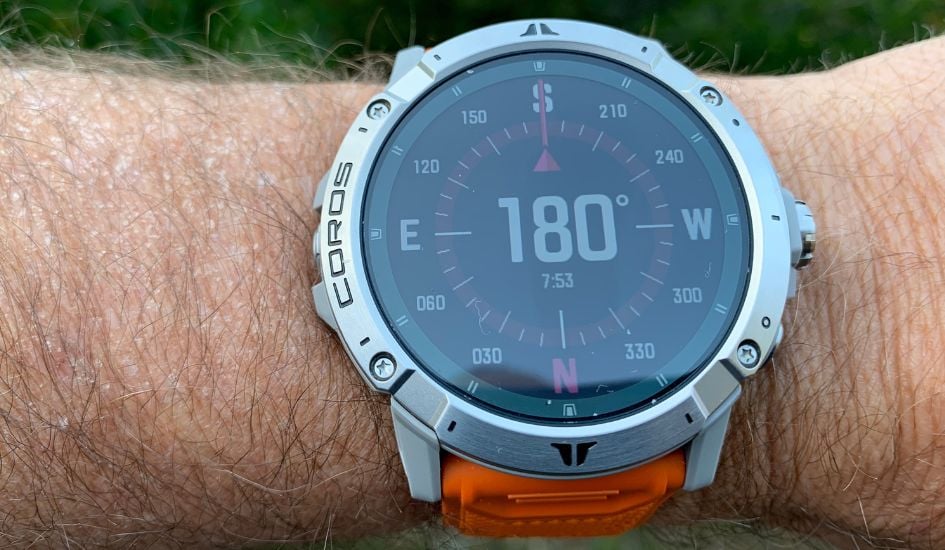
A barometric altimeter gives you altitude that updates continuously and responds faster than GPS elevation, which is what you want when you are counting switchbacks to a pass or watching your climb rate on a long ascent. It needs calibrating at a known elevation to stay accurate, and it drifts as weather systems move through.
The barometer earns its place on multi day trips. A rapid pressure drop is a genuine warning of an incoming front, and most watches will alert you to it. That single feature has changed my decisions on exposed ridges more than once. A digital compass is useful for orienting yourself quickly and for following a bearing on watch, but it is not a replacement for a proper baseplate hiking compass and a paper map, which weigh almost nothing and never run out of battery.
Size, Weight and Fit Under a Jacket Cuff
Case sizes now range from 40 mm to 51 mm and weights from 32 g to 95 g. The lightest way to get maps and long battery is a nylon or fabric strap, which is why the Enduro 3 comes in at 63 g and the Apex 4 at 51 g on nylon while the Fenix 9 Pro Solar is 102 g.
Thickness matters more than most buyers expect. A 16 mm case snags on a jacket cuff, sits awkwardly under a pack strap when you check the time, and presses into the wrist when you sleep with it for heart rate data. The Suunto Vertical 2 at 13.5 mm and the Race 2 at 12.5 mm are noticeably easier to live with than the 16 mm Vertix 2S.
If you have small wrists, the Garmin Instinct 3 in 40 mm or 45 mm and the Coros Apex 4 in 42 mm are the two options I would look at first. Nylon straps also breathe better than silicone in hot weather and dry faster after river crossings, which is a small thing that matters on a long trail.
Durability, Glass and Water Resistance
Look at three things: the lens, the bezel and the water rating. Sapphire glass, on the Enduro 3, Fenix 8 Solar, Fenix 9 Pro Solar, Apex 4 and Vertix 2S, resists scratches from rock and scree far better than the mineral glass on the Nomad and Pace 4. A titanium or steel bezel takes knocks that mark a polymer one.
For water, 5 ATM is fine for rain, sweat and river crossings. Ten ATM, on the Enduro 3, Fenix 9 Pro Solar, Fenix 8 Solar, Instinct 3 Solar, Vertix 2S, Amazfit T Rex 3 and Apple Watch Ultra 3, covers swimming and snorkelling. I learned the hard way that ratings matter when I destroyed an older Suunto hiking watch when diving in a cenote in Mexico, so if you swim with your watch or dive at all, go for 10 ATM or a proper dive rating.
Also consider how the watch charges. Proprietary magnetic cables are easy to lose and impossible to replace on trail, so pack a spare on a long trip and check that the watch can charge from a standard power bank at low output. Peronally I hate the charging systems on all phones, I would prefer some sort of standarized system like a USB-C type charger, but that is unlikely in the near term.
Smartwatch Features Worth Paying For
Notifications, contactless payment, offline music, voice calls, sleep tracking and satellite messaging are all available now, and they are the main reason the premium watches cost what they do. On trail, few of them matter. Music is genuinely useful on long road walks and monotonous days. Payment is convenient in town. Notifications are mostly noise, and most hikers turn them off within a week.
The features I would pay for are sleep and recovery tracking, because they tell you something real about how you are coping with consecutive big days, and any form of emergency communication. The Apple Watch Ultra 3 leads on the smartwatch side with the Fenix 9 Pro Solar and Fenix 8 Solar leads on breadth of features, but a Coros Nomad at $349 with no payment, no music and no calls does the hiking part just as well.
InReach and SOS on Hiking Phones
With the Fenix 9 Pro Solar comes the new dawn of smartwatch hiking phones. They are now able to link up to the Garmin InReach messaging system to allow two way messaging and SOS rescue. There is an added subscription cost to this but it now allows you to make a choice between taking a dedicated PLB and Satellite messenger or just use your watch. This watch technology is new and in my view it a good thing. So much so that I would now consider not taking a Satellite Messenger on trail anymore.
When you take the high cost of this watch and substract the cost of a Satellite Messenger such as the Garmin InReach mini 3, the cost of the Garmin 9 Pro Solar starts to look cheaper considering all the features!
Price and Value
The useful bands right now are under $300, $300 to $600 and over $600. Under $300 the Amazfit T Rex 3 at $279.99 and the Coros Pace 4 at $249 are both real hiking options, with the T Rex 3 carrying maps and the Pace 4 not. Between $300 and $600 the Coros Nomad at $349, the Instinct 3 Solar at $399.99, the Coros Apex 4 at $429 to $479 and the Suunto Race 2 at $499 cover almost every need, and the Apex 4 is the best value watch in this guide by a clear margin. Over $600 you are paying for battery depth, materials and ecosystem: the Suunto Vertical 2 at $599 to $699, the Vertix 2S at $699, the Apple Watch Ultra 3 at $799, the Enduro 3 at $900, the Fenix 8 Solar at $950, and the Fenix 9 Pro Solar at $1300.

Conclusion
Overall, the Best GPS Hiking Watches in 2026 are:
- Best hiking watch overall: Garmin Enduro 3
- Best Premium Hiking Watch: Garmin Fenix 9 Pro Solar
- Best value: Coros Apex 4 (46 mm)
- Best budget watch with maps: Coros Nomad
- Best screen and mapping: Suunto Vertical 2 (titanium)
- Best value premium Garmin Smartwatch: Garmin Fenix 8 Solar
- Best hiking smartwatch: Apple Watch Ultra 3
- Best simple rugged solar watch: Garmin Instinct 3 Solar
- Best Coros for long expeditions: Coros Vertix 2s
- Best trail running watch: Garmin Forerunner 970
- Best lightweight running watch: Coros Pace 4
- Also worth considering: Suunto Race 2
Another one of the Best GPS and Electronics Gear Reviews from BikeHikeSafari.
Follow along on Social Media
Frequently Asked Questions
What is the best hiking watch?
The Garmin Enduro 3 is the best hiking watch at the moment because it combines 80 hours of all satellite GPS recording, or 144 hours with solar, with preloaded colour topo maps at just 63 g on the nylon strap. If that is more watch than you need, the Coros Apex 4 at $479 delivers most of the same capability for half the price.
What is the best budget GPS watch for hiking and backpacking?
The Coros Nomad at $349 is the best budget choice because it is the cheapest watch I would trust with real offline topo maps, and it still records for 50 hours on all satellite systems. Below that, the Amazfit T Rex 3 at $279.99 also has free offline maps and a 10 ATM case, but the navigation software is clumsier.
Do I need offline maps on a hiking watch?
You do if you want to navigate without pulling out your phone, especially in bad weather or cold that kills phone batteries. If you already navigate with a phone app or paper map and compass, a breadcrumb watch such as the Garmin Instinct 3 Solar or Coros Pace 4 will do everything you need and last much longer between charges.
Is a hiking watch better than a phone app or a handheld GPS?
For battery life and glanceable data a watch wins, and for detailed map reading a phone or a handheld unit still wins on screen size. The best setup for most backpackers is a watch for navigation confirmation, altitude and track recording, with a phone app as the main map and a paper map as the backup that never fails.
What watch do thru hikers use?
Thru hikers split between cheap watches that just tell the time and long battery GPS watches like the Garmin Enduro 3, Instinct 3 Solar and Coros Apex 4. The trend has moved towards GPS watches as battery life improved, because a watch that records 50 to 80 hours between charges no longer forces you to carry extra power just for the wrist. With the New Garmin Fenix 9 Pro Solar having InReach for two way messenging and SOS rescue that could be a viable option for many.
Is solar charging worth it on a hiking watch?
t is worth it on long open trails with high sun, where a Garmin Instinct 3 Solar can effectively run indefinitely and the Enduro 3 nearly doubles its GPS runtime. Under forest canopy or in winter it adds very little, and Suunto dropped solar from the Vertical 2 entirely, so do not choose a watch on solar alone.
Do I need multi band GPS for hiking?
Multi band helps in dense forest, steep valleys and canyons where reflected signals confuse a single frequency receiver, so it is worth having. Because it drains the battery fastest of any mode, most hikers should record in all satellite mode day to day and switch to multi band only for off trail days or routes they want recorded accurately.


BikeHikeSafari Gear Review Process
The author, Brad McCartney from BikeHikeSafari is a small independent adventurer and outdoor gear tester who owns and runs BikeHikeSafari.com.
BikeHikeSafari is not part of a large blog network and is proudly independent. All reviews on this site are independent and honest gear reviews of outdoor products by the author.
The author, Brad McCartney is a very experienced triple crown thru-hiker, adventurer, and bike tourer having spent 1000s of nights sleeping in a tent and sleeping bag (Read more). He was a manager of an outdoor retail store and is very experienced in what is important when using and testing gear for reviews like this.
BikeHikeSafari will never receive any money for reviews and they do not accept sponsored reviews on this website. All the comments about the gear reviews are from the author based on his years of experience. Hope this independent review was helpful for you.

