

Most of the photos on this site came out of a compact camera I carried in a hipbelt pocket on the Appalachian Trail and while bike touring through North, Central, and South America. This taught me the best camera for hiking and backpacking is the one you will actually carry up the next climb.
This guide is written for thru-hikers, backpackers, and bike tourers who want real image quality without hauling a DSLR-sized setup. After years on the trail and a stint managing an outdoor store, I have narrowed everything down to a handful of cameras I would genuinely pack myself.
My current top picks are the pocket-sized Sony RX 100 VII for stills to the DJI Osmo Action 6 for rugged video. The whole decision really comes down to one trade-off: how many grams are you willing to carry for better low-light performance and zoom.
Jump straight to my Quick Picks, or read on for the full reviews. For how I research and field-test gear, see the BikeHikeSafari Gear Review Policy.
Quick Picks: Best Hiking Camera 2026
- Best overall: Sony RX 100 VII – a genuinely pocketable 1-inch camera with a 24–200mm zoom; it has shot most of this site’s AT and bike-touring photos.
- Best vlogging: Sony ZV-1 ii – the one-handed grip, flip screen, and wind-sock mic make it the pick if you film yourself talking on trail.
- Best weatherproof / rugged: OM System Tough TG-7 – genuinely waterproof, shockproof, freezeproof, and GPS-equipped; the camera I would hand someone headed into rain and river crossings.
- Best action camera: DJI Osmo Action 6 – better low-light image quality than a GoPro, with a bigger sensor and an adjustable aperture.
- Best lightweight action camera: GoPro Hero 13 – the toughest, most stable action cam around; a touch heavy on battery drain in the cold.
- Best mirrorless (APS-C): Sony Alpha 6700 – the performance sweet spot: 26MP, in-body stabilisation, and a huge lens library in a weather-sealed body.
- Best full-frame low light: Sony A7 S3 – the camera I would reach for at dawn on an alpine start when light is everything.
- Best smartphone: Apple iPhone 17 Pro – if you already carry a phone, this triple 48MP camera is close enough to a dedicated camera that many hikers can stop at one device.
How We Tested
Follow along on Social Media
Hiking Camera Comparison Table
| Brand | Weight | Sensor | Dust Proof | Lenses |
|---|---|---|---|---|
| Sony RX 100 VII | 10.6 oz / 300 g | 1 inch, 20MP | No | 28-200 mm |
| Sony ZV-1 ii | 10.3 oz / 292 g | 1 inch, 20MP | No | 18-50 mm |
| OM System Tough TG-7 | 8.8 oz / 249 g | Micro 4/3, 12MP | Yes | 25-100 mm |
| DJI Osmo Action 6 | 5.3 oz / 149 g | 1.1 inch, 38MP | Yes | Ultra Wide, 2x zoom |
| Sony Alpha 6700 | 1 lb. 1.4 oz / 493 g | APS-C, 26MP | Yes | Interchangeable, Sony E-Mount |
| Sony A7 S3 | 1 lb. 8.5 oz / 699 g | Full Frame, 12.1MP | Yes | Interchangeable, Sony E-Mount |
| GoPro Hero 13 | 5.6 oz / 159 g | 1 1/9 inch, 27MP | Yes | Wide Angle, Interchangeable |
| Apple iPhone 17 Pro | 8 oz / 227 g | 48MP | Yes | Wide, Ultra Wide, Telephoto 8x |
Best Camera for Hiking And Backpacking 2026
Best Hiking Camera for Backpacking – Overall
Sony RX 100 VII
Pros:
> 4K Videos
> Compact – This camera is small enough to fit in a pocket or side pocket on your backpack.
> High-Speed Shooting
> Top Image Quality
Cons:
> Slippery Finish
> Sony user interface makes it slow to change features
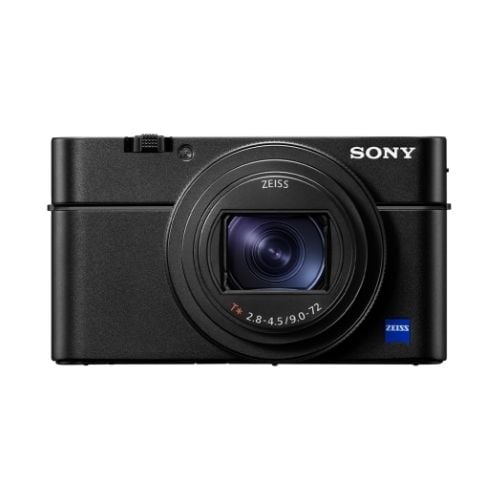
This is still the best compact camera for backpacking, years after release, and it has not been replaced, there is no RX100 VIII, only rumours. The reason I keep coming back to it is the 24–200mm zoom range in a body you can drop into a hipbelt pocket means you get a landscape, a wildlife reach, and everything between without carrying a single extra lens. Most of the photos on this site from the Appalachian Trail and bike touring in Central America were taken on an earlier model of this camera, and it has earned its place here.
The trade-offs are real. The interface is slow to change features, the body has a slippery finish, and weather sealing is nowhere near what the TG-7 or a GoPro offers. It has no optical viewfinder, just a very average electronic one that pops up, and I much preferred framing on the screen. For serious rain, put it in a dry bag and be honest with yourself about where the weather sealing ends.
It is not a specialist’s camera. If you only shoot video, get the ZV-1 II or an action cam. If you want one camera that does great stills, some video, and a long zoom at pocket weight, this is the one.
Trade off: Image quality and zoom vs weather sealing and interface speed.
Best for: Thru-hikers and backpackers who want one versatile stills-first camera that stays out of the way.
Compare Prices:
Best Vlogging Camera for Hiking and Backpacking
Sony ZV-1 II

Pros:
> 4K videos
> Lightweight
> Hotshoe mount for an external mic, flash, or more
> Compact
> Good ergonomics for photo and video
> Good screen
Cons:
> No interchangeable lenses
If your trail footage is mostly you talking to camera, the ZV-1 II is the compact to beat. Everything about the grip and screen is built for holding it at arm’s length and pointing it back at your face: the screen swivels a full 360 degrees, and the autofocus locks onto your eyes while the auto-exposure tracks your face so you stay lit even backlit on a summit.
Two features set it apart from a phone. The wind sock over the mic kills most of the wind noise you get on a ridgeline, and the hotshoe plus external mic mount means you can add a Rode or lapel mic when you get serious. Stills shoot in RAW, so it is not video-only.
The zoom is modest with a 35mm equivalent of 18–50mm, and there are no interchangeable lenses, so this is not a landscape workhorse. Battery life runs roughly 290 stills or 45 to 75 minutes of video, which is enough for a vlogging day but not a documentary. If you film yourself more than you photograph your surroundings, this is the one.
Trade off: Vlogging ergonomics and clean audio vs zoom range and stills versatility.
Best for: Hikers and bike tourers who vlog or shoot selfie-style trail video
Compare Prices:
Best weatherproof Camera for Hiking
OM System Tough TG-7

Pros:
> Built-in sensors like GPS and thermometer
> This camera is water, dust, shock, and freezeproof
> Great macro lens feature
> Reasonably priced budget camera compared to others on our list today.
Cons:
> Some people don’t like the image quality when using the zoom function
OM System is the new name for Olympus’s camera division after the 2021 sale, and the TG-7 is the camera I would hand to someone headed into rain, river crossings, dust, and drops. It is waterproof to 15 metres, shockproof from a two-metre drop, crushproof, and freezeproof, and it packs a GPS, compass, altimeter, thermometer, and manometer. You can see exactly where every shot was taken on a map, which is quietly brilliant on a multi-day route.
The image quality is the honest trade-off. A 12MP small sensor and a modest 4x zoom mean this will not match the RX100 VII on detail or low light, and some people dislike the zoomed image quality. The macro mode is genuinely impressive for extreme close-ups, and 20fps Pro Capture saves frames before and after the shutter so you do not miss a moment.
It is not the camera for sweeping alpine landscapes, but it is the one that will keep working when the weather turns ugly and the pack takes a beating.
Trade off: Indestructible build and GPS vs image quality and zoom.
Best for: Wet, rough, or expedition conditions where durability beats pixel quality.
Compare Prices:
Other Camera for Hiking And Backpacking
DJI Osmo Action 6
Pros:
> Ultralight and compact
> Good image stabilization with the In Body Stabilization
> 4K and 8K Videos
Cons:
> No zoom lens like most other cameras in this review
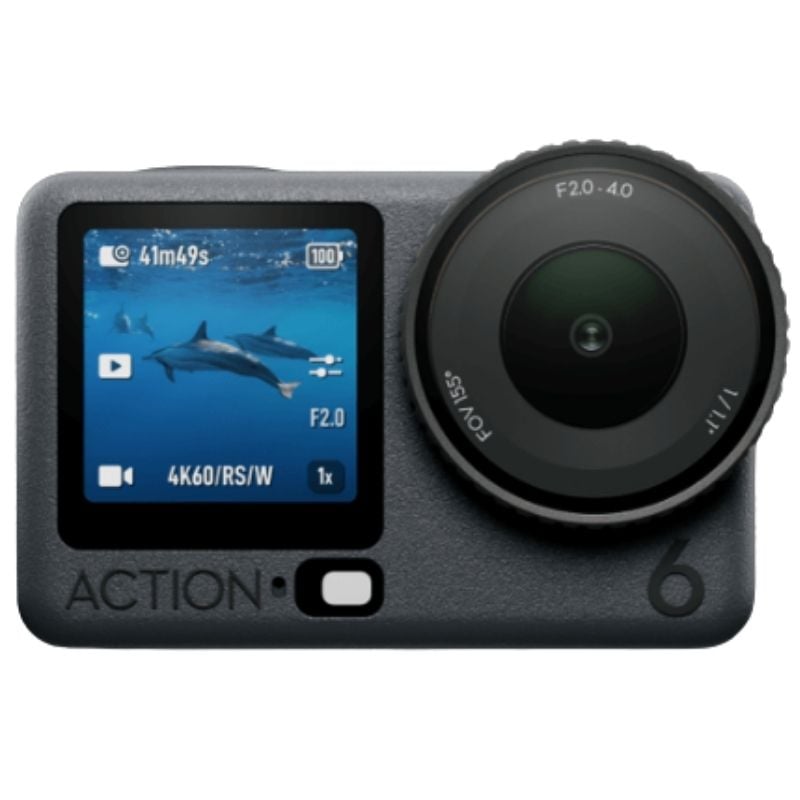
DJI has quietly overtaken GoPro for many hikers, and the Osmo Action 6 is the camera that tipped me. The headline is the sensor: a 1/1.1-inch chip with roughly 38MP that beats the GoPro on low-light image quality, plus an adjustable aperture (f/2.0 to f/4.0) that almost no other action camera has. That creative control, combined with being able to crop without losing resolution, is what makes this my action-camera pick over the Hero 13 for most people.
For real-world use it is waterproof to 20 metres without a case, rated to work down to -20°C, and it has subject tracking plus built-in stabilisation and gesture and voice controls. The magnetic quick-release mount is faster in and out of a pocket than GoPro’s system. The trade-off is that it is slightly larger than the Hero 13, and the companion app is not the most polished.
If you shoot a lot of action and adventure video and want the best low-light performance in this size, the Osmo Action 6 is the one to reach for.
Trade off: Bigger sensor and better low light vs slightly larger body and fussier app.
Best for: Backpackers who want the best action-cam image quality, especially at dawn and dusk.
Compare Prices:
Other Camera for Hiking And Backpacking
Sony Alpha 6700

Pros:
> Long battery life that will survive the length of your hiking or backpacking trip easily.
> Good image stabilization with the In Body Stabilization
> 4K Videos
Cons:
> Some people, myself included have noted that they found the manual to this camera a bit confusing to understand.
> This camera is on the higher end of the compact non-full-frame camera market
The a6700 is the mirrorless sweet spot for backpacking: near-full-frame quality in a body you can actually justify carrying. The 26MP APS-C sensor, in-body image stabilisation, and AI-driven autofocus produce clean stills and genuinely good 4K video, while the huge Sony E-mount lens library means you can build exactly the kit your trips need, from a 16mm prime to a telephoto zoom. This is the camera most of your favorite hiking YouTubers are using, at least those that film the trail and landscapes rather than have the camera pointed at their face all day.
Battery life is the standout for the trail with roughly 550 shots or 95 to 100 minutes of video on a single charge. This means you are carrying fewer spare batteries than a full-frame body. It is weather-sealed and dust-sealed, so light rain and trail dust are not a worry for this hiking camera.
The trade-offs are cost, weight, and complexity. It is the most expensive and heaviest non-full-frame option here, and more than one person (myself included) found the manual confusing to learn. It is not a camera you toss in a pocket; it is one you make room for because you want real image quality and interchangeable lenses.
Trade off: Image quality, lenses, and battery life vs weight, cost, and learning curve.
Best for: Backpackers who want a serious, upgradeable camera and will trade grams for glass.
Compare Prices:
Best Full Frame Mirrorless Hiking Camera
Sony A7 S3
Pros:
> Best Camera for Low Light
> High image quality
> You can change the position of the monitor. Great for video and selfies.
> Weather Sealed
Cons:
> This camera is great for videos and photos but professionals want higher megapixels.
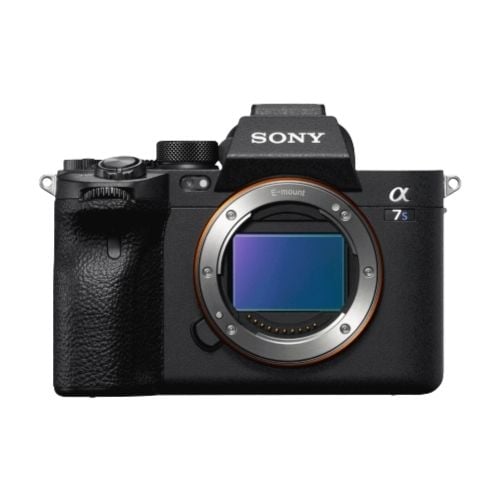
If low light is your whole brief such as alpine starts, dawn summits, shooting under tree cover, then the A7S III is the answer. Its 12.1MP back-illuminated full-frame sensor is deliberately low in resolution so it can gather light better than almost anything else, producing clean 4K footage better than any other camera on the market. Autofocus with eye tracking across humans and animals keeps things sharp in the dark.
The low megapixel count is a feature, not a flaw, but it does cap how much you can crop, and professionals wanting huge stills would look to a higher-resolution body. It is a video-first camera, and if you do not need the extreme low-light performance, the A7C II or a6700 give you more of everything else in a lighter, cheaper package.
The build is strong and weather-sealed, and the body feels a good size in hand. It is not too big, not too small. Ports on the side make offloading footage after a trip painless. It is heavier and more expensive than most hikers need, but for the low-light specialist nothing here touches it.
Trade off: Unmatched low-light video vs resolution, weight, and price.
Best for: Photographers and video creators chasing the best possible footage at dawn and dusk.
Compare Prices:
Best Lightweight Camera for Hiking And Backpacking
GoPro Hero 13

Pros:
> Ultralight
> Waterproof, weather sealed, and Shockproof
> Good quality for a very compact camera meant for action sports
> The best built-in image stabilization on the market
Cons:
> The Gopro struggles a little when it comes to low light performance.
The Hero 13 Black is still the toughest, most stable action camera you can mount almost anywhere and forget about. HyperSmooth 6.0 stabilisation is the best in the business, and the improved processor and interchangeable lens system including ultrawide and macro, plus optional ND filters, make it more flexible than the Hero 12 it replaced. I have used an earlier Hero underwater for diving photography, and the toughness and ultra-wide coverage are why GoPro is still the default for so many hikers.
The honest downsides are low light and sound. It still struggles at dusk compared to the DJI Osmo Action 6 with its bigger sensor, and the built-in audio is average. If you care about sound you will want the Media Mod case and a Rode mic on the hotshoe.
One note: GoPro has since launched its MISSION 1 series, a newer flagship built on a 50MP 1-inch sensor rather than a direct “Hero 14.” The Hero 13 Black is still a superb action cam and much cheaper, but if you want GoPro’s current best image quality, the MISSION 1 is the direction the brand has moved.
Trade off: Toughness and class-leading stabilisation vs low-light performance and audio.
Best for: Hikers and bikers who want an indestructible, mount-anywhere video camera.
Compare Prices:
Best Smartphone Camera for Hiking And Backpacking
Apple iPhone 17 Pro

Pros:
> The iPhone 17 Pro will produce high-quality images that give you the same quality as other cameras in this review.
> Compact so you may not need another camera
> Great autofocusing
Cons:
> The zoom is a bit average which can limit how close you can zoom in.
It might feel odd to rank a phone on a camera list, but the iPhone 17 Pro has reached the point where many hikers genuinely do not need a separate camera. The triple 48MP Fusion system includes Main, Ultra Wide, and an improved Telephoto with the longest optical-quality zoom Apple has put in an iPhone (8x, about 200mm equivalent). In-body image stabilisation is excellent but not as good as GoPro, autofocus is fast but not as fast as Sony, and the built-in editing tools can now remove objects and people in a way that used to need Photoshop.
The biggest argument for the iPhone is that you are already carrying it. You get a GPS, maps, navigation, and a very good camera in one weather-resistant device, which is exactly the kind of weight savings a thru-hiker should love. The zoom, while better than before, is still not the RX100 VII’s 24–200mm reach, and low-light stills trail a full-frame sensor.
If you only want to carry one device and you already own this phone, stop here. If photography is the point of the trip, a dedicated camera still wins.
Trade off: All-in-one convenience and weight savings vs reach, sensor size, and dedicated controls.
Best for: Ultralight hikers who want the least possible kit and already carry an iPhone.
Compare Prices:
Hiking Camera Buyers Guide
Hiking Camera Buyers Guide
What Kind of Camera Fits Hiking
There are four realistic types: compact point-and-shoots, action cameras, mirrorless interchangeable-lens cameras, and smartphones. DSLRs have largely lost the trail argument because modern mirrorless bodies match their output at less weight and bulk. The right choice depends entirely on how much weight you will carry for image quality. A compact like the RX100 VII gives you a real zoom and a 1-inch sensor in a pocket. An action camera gives you waterproof, hands-free video. A mirrorless body gives you interchangeable glass and the best image quality at the cost of the heaviest, most expensive kit. A phone gives you a very good camera you already own. Decide which of those trade-offs you care about before you spend anything.

Sensor Size vs Megapixels
Megapixels are the most over-hyped number on a spec sheet. What matters more is sensor size, because a bigger sensor gathers more light, which gives you better low-light performance, more dynamic range, and cleaner files. A full-frame sensor (36mm × 24mm) beats an APS-C (around 23.6mm × 15.6mm), which beats a 1-inch sensor, which beats the tiny 1/2.3-inch sensors in rugged compacts. More megapixels within a given sensor size simply gives you more room to crop. For backpacking, a 1-inch or APS-C sensor is the sweet spot — full-frame quality is real, but you pay for it in grams and dollars.

Zoom Range and Focal Length
For hiking, the wide end matters more than the long end. You will take far more sweeping landscapes and ridgeline shots than distant wildlife, so look for a lens that starts at 24mm or wider. The RX100 VII’s 24–200mm equivalent covers the rare animals and the everyday panoramas. Action cameras fix you at a single ultra-wide lens, which is fine for immersion but useless for reach. Smartphones have steadily added telephoto length, but even the iPhone 17 Pro’s 8x zoom cannot match a dedicated camera’s optical range. Ask whether you need reach at all before paying for it.
Weather Sealing and Durability
There is weather sealing, and then there is waterproof. “Weather sealing” means rubber gaskets that shrug off light rain and dust — good for a mirrorless body, but not a dunking. Fully waterproof cameras like the OM System TG-7 (15m) and action cameras (10–20m) can be submerged, dropped, and frozen. The honest question is where you hike. If your trips involve river crossings and downpours, buy waterproof. If you hike fair-weather trails and keep your camera in a dry bag when it pours, weather sealing and a bit of care are enough.

Video Capabilities
If you plan to make trail videos, think beyond resolution. 4K is now standard, so look at frame rate (60fps or higher lets you slow footage down), bit depth, and stabilisation. Action cameras like the DJI Osmo Action 6 and GoPro Hero 13 lead on stabilisation; the ZV-1 II leads on vlogging ergonomics and audio; the A7S III leads on low-light video. Also budget for the accessories video quietly demands: an external mic, spare batteries, and a fast memory card.
Battery Life and Power on Trail
No one wants a dead camera halfway through a multi-day trip. Mirrorless bodies like the a6700 (around 550 shots) outlast compact action cameras, while action cameras and phones drain fast in the cold. On a thru-hike I carry a battery bank to top everything up, a portable solar charger is popular on longer trips, and spare camera batteries to swap out. Assume cold weather will cut every stated battery number, and plan your power around that.
Storage Capacity
Storage capacity is also an important factor when buying a camera. If you want to store lots of photos and videos, then you want to choose a camera with a large storage capacity.
You don’t want to be limited on how many pictures or videos you can take before you have even started, especially if you are going on a long backpacking trip or a hiking holiday.
Carrying and Protecting Your Camera
Accessibility decides whether you use the camera or leave it buried in your pack. A compact in a hipbelt pocket or side pocket gets shot; a mirrorless buried in the pack does not. For bigger kits, a padded camera cube or a dry bag inside the pack protects against rain and crushing, and a Peak Design-style capture clip on a shoulder strap keeps a mirrorless instantly reachable. Whatever you choose, the test is simple: if you have to stop and dig for it, you will take fewer photos.
Easy To Use
A good camera should be easy to use. This means that you shouldn’t have to spend too much time learning how to operate the camera.
The more time you spend learning how to use the camera, the less time you will have to actually enjoy yourself. Some cameras like Sony cameras have an annoying user interface that takes a while to get used to. Compare that to a point-and-shoot smartphone which is super simple to use.
When you are out hiking, you want to enjoy yourself, and not worry about whether you got the right settings or how to change the settings.
Price and Value
Spending more buys you sensor size, low-light performance, and build quality, but it does not buy you better photos if you shoot in good light on fair days. Set your budget around what you actually shoot. A budget action camera like the Akaso Brave 8 covers waterproof video cheaply, while a fully loaded full-frame kit costs several times more for gains most hikers will never see. The best camera for hiking is the one you can afford to carry and use without worrying about it.
Conclusion
The Best Camera for Backpacking and Hiking in 2026 are:
- Best overall: Sony RX 100 VII
- Best vlogging: Sony ZV-1 ii
- Best weatherproof / rugged: OM System Tough TG-7
- Best action camera: DJI Osmo Action 6
- Best lightweight action camera: GoPro Hero 13
- Best mirrorless (APS-C): Sony Alpha 6700
- Best full-frame low light: Sony A7 S3
- Best smartphone: Apple iPhone 17 Pro
Follow along on Social Media
Frequently Asked Questions
What is the best camera for hiking and backpacking overall?
For most hikers the Sony RX100 VII is still the best overall pick — a pocket-sized 1-inch camera with a 24–200mm zoom, 20fps shooting, and image quality that punches well above its weight. If you shoot mostly video or want a waterproof body, the DJI Osmo Action 6 or OM System Tough TG-7 are better fits.
Can my phone replace a dedicated camera for hiking?
For many ultralight hikers, yes. The iPhone 17 Pro’s triple 48MP camera system, 8x optical-quality zoom, and built-in editing now close most of the gap, and you are already carrying the phone. A dedicated camera still wins on optical zoom reach, sensor size, and low-light performance.
Do I need a waterproof camera, or is weather sealing enough?
It depends where you hike. Weather-sealed mirrorless bodies shrug off light rain and dust but will not survive a dunking. If you cross rivers, hike in serious rain, or drop gear, a genuinely waterproof camera like the OM System TG-7 or an action camera is worth the image-quality trade-off.
What is the best budget camera for hiking?
The Akaso Brave 8 is the best budget action camera — waterproof 4K/60 footage for a fraction of GoPro or DJI money. For a cheap point-and-shoot, a budget compact like the Kodak Pixpro FZ55 covers basic 1080p video and a 5x zoom for very little. Or even better, just use your phone as a camera.
Is a DSLR still worth taking hiking?
Almost never. Modern mirrorless cameras match DSLR image quality in lighter, smaller bodies, and the weight saving matters over miles. Unless you already own specific DSLR glass you cannot live without, a compact, action camera, or mirrorless body is the better call for the trail.
Where should I carry my camera while backpacking?
Keep it accessible — a hipbelt pocket, side pocket, or shoulder-strap clip for a compact, and a padded cube or dry bag inside the pack for a mirrorless. If you have to stop and dig it out, you will take fewer photos.
BikeHikeSafari Gear Review Process
The author, Brad McCartney from BikeHikeSafari is a small independent adventurer and outdoor gear tester who owns and runs BikeHikeSafari.com.
BikeHikeSafari is not part of a large blog network and is proudly independent. All reviews on this site are independent and honest gear reviews of outdoor products by the author.
The author, Brad McCartney is a very experienced triple crown thru-hiker, adventurer, and bike tourer having spent 1000s of nights sleeping in a tent and sleeping bag (Read more). He was a manager of an outdoor retail store and is very experienced in what is important when using and testing gear for reviews like this.
BikeHikeSafari will never receive any money for reviews and they do not accept sponsored reviews on this website. All the comments about the gear reviews are from the author based on his years of experience. Hope this independent review was helpful for you.

