

I have thru-hiked the Triple Crown, walked the Te Araroa end to end, and spent thousands of nights living out of a backpack, and in all that time the one layer I never think about until it fails is my underwear.
This guide is for backpackers, thru-hikers and day hikers who want a pair of hiking underwear that breathes, dries fast after a backcountry hand wash, and does not chafe over big mile days. As a former outdoor retail store manager who buys and field-tests this gear myself, I have narrowed the field to the merino and synthetic pairs actually worth carrying.
My current top pick for 2026 is the Smartwool Merino Boxer Briefs for its warmth-to-weight and odor control, with the REI Co-op Boxers as the best budget option.
See the Quick Picks below for the fast answers. The core trade-off is simple: merino resists odor and regulates temperature but dries slower, while synthetics dry faster and last longer. For how I research and field-test gear, see the Gear Review Policy.
Quick Picks: Best Hiking Underwear for Men
- Best overall: Smartwool Merino Boxer Briefs – the best all-round balance of odor control, warmth-to-weight and comfort for multi-day trips.
- Best merino: Icebreaker Anatomica Boxer Briefs – soft, stretchy and durable merino, once you get past the tabs.
- Best for travel and durability: ExOfficio Give-N-Go 2.0 – synthetic that survives years of daily wear and hundreds of wash cycles.
- Most comfortable: Patagonia Essential Boxer Briefs – best for lighter hikes, travel and general wear; I prefer the 3-inch version.
- Best for Australia and New Zealand: Macpac 180 Merino Boxers – my daily-driver merino for nearly five years, with excellent odor resistance.
- Best budget: REI Co-op Boxers – reasonably priced, genuinely breathable, and proven over long-trail miles.
- Best value merino: REI Co-op Men’s Merino Boxers – solid merino at a lower price point.
How We Tested
The hiking underwear in this guide is researched and, where possible, field-tested by an experienced long-distance hiker and former outdoor store manager. Across thru-hikes, shoulder-season trips, and backpacking trips, I judge hiking underwear on breathability and moisture wicking, drying speed after a backcountry hand wash, odor resistance over multiple days between washes, chafe-free comfort over big mile days, fit, durability, and value for serious backpacking. Some of the items were supplied by the manufacturer and some were purchased by the author for this review. For more on how we research and review gear, see the BikeHikeSafari Gear Review Policy.
Follow along on Social Media
Backpacking Underwear Comparison Table
| Brand | Material | Length |
|---|---|---|
| Smartwool Merino Boxer Briefs | 88% merino wool, 12% nylon | 4.75 inches |
| Icebreaker Anatomica Boxer Briefs | 83% merino wool, 12% nylon, 5% lycra | 4.5 inches |
| ExOfficio Give-n-Go Sport Mesh Boxer Briefs | 89% nylon, 11% elastane | Not Specified |
| Patagonia Essential Boxer Briefs | 95% tencel lyocell, 5% spandex | 3, 6 inches |
| Macpac 180 Merino Boxers | 95% merino wool, 5% elastane | Not Specified |
| REI Co-op Boxers | 94% polyester, 6% spandex | 6 inches |
| REI Co-op Men’s Merino Boxers | 49% merino wool, 30% tencel lyocell, 15% nylon, 6% lycra spandex | 4.5 inches |
Best Men’s Underwear for Backpacking 2026: Detailed Reviews
Best Men’s Underwear for Hiking 2026
Smartwool Merino Boxer Briefs
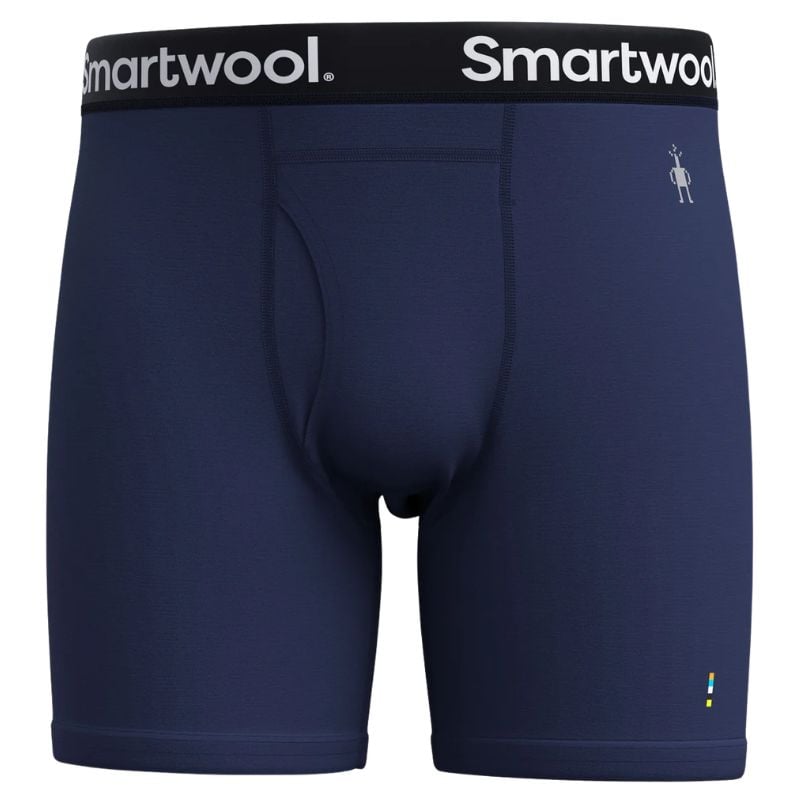
Material: Merino Wool and Nylon
Pros:
> These Merino wool boxer briefs are moisture-wicking
> Soft and flexible fabric
> Odor neutralizing
> Thermoregulating technology
Cons:
> Only two colors to choose from
> Loose fit style might not sit well under tight hiking clothes
> Expensive
The Smartwool Merino Boxers are my pick for best overall because it hits the sweet spot most backpackers actually need: enough merino for genuine odor control and temperature regulation, blended with nylon so it survives repeated trail use better than pure wool. On multi-day trips this is the pair I reach for when I know I will be wearing the same underwear for several days between washes.
The lightweight fabric is light enough for three-season hiking without feeling flimsy. It breathes well on hot climbs and still holds a little warmth on cold alpine mornings, which is exactly what you want from a single do-everything pair.
Where it earns its keep is odor resistance. After several days on trail the merino simply does not stink the way synthetics do, so you can stretch the gap between hand washes. The flatlock seams sit flat against the skin and I have not had chafing issues over long days.
The trade-off is drying time. Like all merino it dries slower than a mesh synthetic, so if you wash in camp expect it to still be a little damp by morning in humid conditions. Durability is good for merino but you still treat it more gently than an ExOfficio.
Trade-off: slower drying and a higher price than synthetics in exchange for far better odor control.
Best for: thru-hikers and backpackers who want one dependable merino pair for multi-day trips in mixed conditions.
Compare Prices:
Best Men’s Merino Underwear
Icebreaker Anatomica Boxer Briefs

Material: Merino wool, Nylon, and Lycra spandex
Pros:
> Soft and stretchy fabric
> Thermoregulating technology
> Good odor control
> Choice of 4 colors
Cons:
> Sizing can run small
I purchased a pair of the Icebreaker Anatomica boxer briefs to test them out, and the material itself is excellent. I like the soft, stretchy and durable feel, and the anatomical cut moves well without riding up on climbs. For a merino brief they are among the more comfortable I have worn.
The first thing I noticed when I used the Icebreaker Anatomica was just how thin they are. That is a plus for hot-weather breathability and packability, but it does mean they feel less substantial than a heavier merino like the Ortovox.
The second thing I noticed was the 9 annoying tabs on the underwear written in 23 languages telling you about the care instructions, materials and VAT numbers! Come on Icebreaker, find a better way.
One tip from experience: if you wash them before you wear them for the first time it helps soften the wool, which is what I did. Straight out of the packet they can feel a touch stiff.
As merino, odor control is strong and they wick well, with the usual merino trade-off of slower drying than a synthetic.
Trade-off: thin fabric and fiddly tabs in exchange for a soft, stretchy, breathable merino brief.
Best for: hikers who want a comfortable merino brief for warm to mixed conditions.
Compare Prices:
Best Travel Underwear – Most Durable
ExOfficio Give-N-Go 2.0 Boxer Briefs
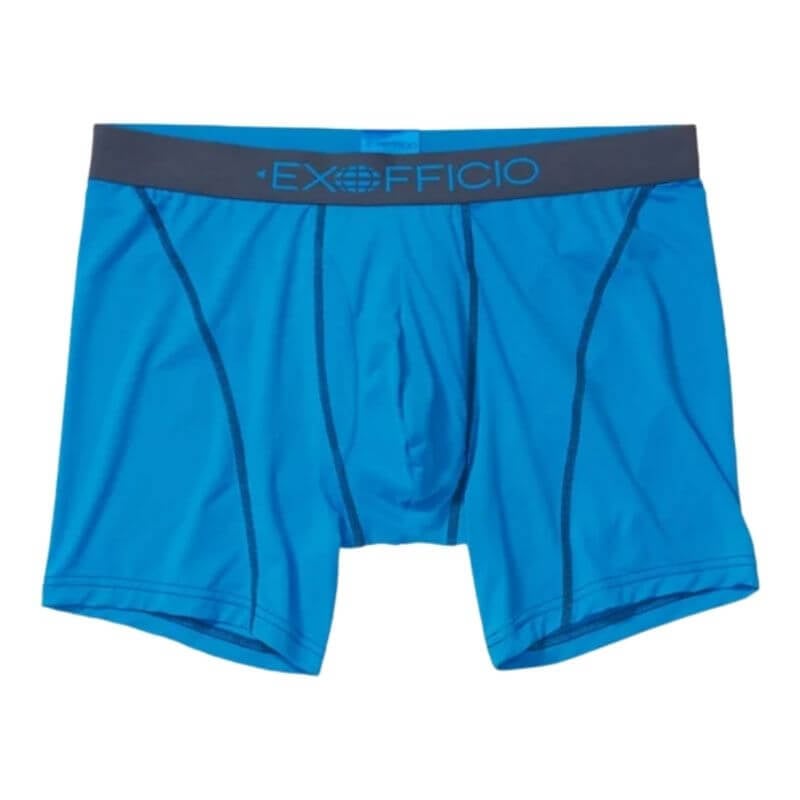
Material: Nylon and Lycra Spandex
Pros:
> Breathable and quick-dry
> Moisture-wicking technology
> Lots of color choices
> Good price
Cons:
> Not thermoregulating
> Will not keep you warm
I used the ExOfficio Give-N-Go boxer briefs for several years, and durability is where they shine. I wore this synthetic underwear for travel, work, backpacking trips and general wear, and after several years of daily use and hundreds of times through the washing machine they kept performing.
The mesh construction breathes well and dries fast, which makes them a strong choice for long-distance hiking where you wash in camp and want them dry by morning. This is the classic thru-hiker and traveler synthetic for good reason.
They are a looser cut than the other hiking underwear in this review so don’t expect a skin tight fit. If you find slimmer boxer briefs ride up, these are worth a look.
The trade-off versus merino is odor. Synthetics harbor odor-causing bacteria more than wool, so on a multi-day trip without washing they will smell sooner than a merino pair. For a wash-every-day thru-hike routine that matters less.
Trade-off: faster drying and outstanding durability in exchange for weaker odor control than merino.
Best for: travelers and thru-hikers who wash frequently and want a synthetic pair that lasts years.
Compare Prices:
Most Comfortable Hiking underwear
Patagonia Essential Boxer Briefs
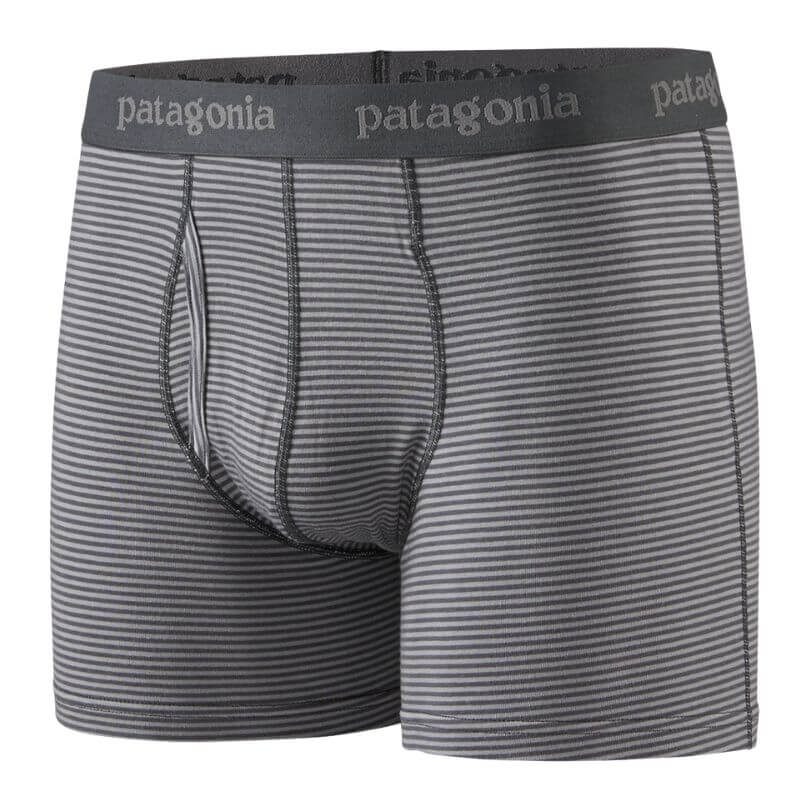
Material: Tensel Lyocel / Spandex blend
Pros:
> They come in a 3-inch and 6-inch leg version (I prefer the 3-inch)
> Good choice of colors
> Moisture wicking
> Comfortable
Cons:
> More expensive than some of the others in this review
I tested the 3-inch version, which I think is a better option than the longer inseam for warm-weather hiking and general use. The fabric is soft and comfortable next to the skin, which is why these land as my most comfortable pick.
They breathe well and dry quickly like most synthetics, so they handle sweaty days and quick washes fine. Patagonia’s build quality and repair support are also a genuine plus over cheaper synthetics.
Where I draw the line is multi-day use. I prefer to use these for light hiking, travel and general use rather than long multiday hikes, mostly because as a synthetic they pick up odor faster than merino over several days without washing.
Trade-off: excellent comfort and brand support, but better suited to shorter trips than multi-day thru-hikes.
Best for: day hikers, travelers and anyone prioritizing comfort on shorter outings.
Compare Prices:
Best Hiking Underwear for Australia and New Zealand
Macpac 180 Merino Boxers
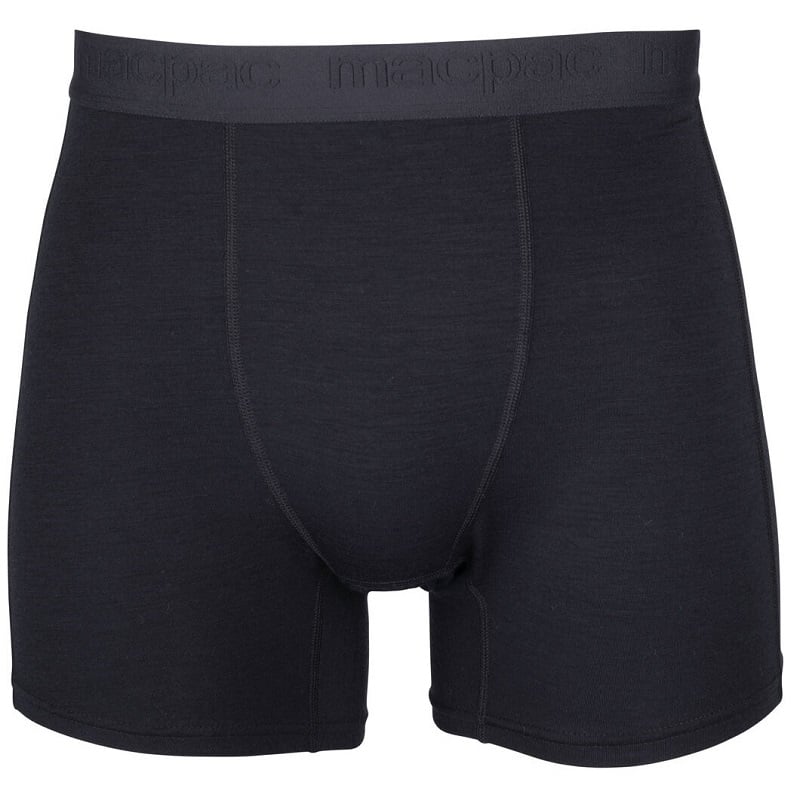
Material: 95% Merino wool blended with 5% elastane
Pros:
> Soft and flexible fabric
> Thermoregulating technology
> Odor resistant
> Flatlock seams
Cons:
> Only 3 color choices
> No fly
I have used and tested these Merino wool boxer briefs for almost 5 years, and still they are keep going. These are the most durable merino underwear in this review and the most thoroughly tested pair on this list for me personally. That kind of daily use tells you far more than a short field test.
During testing they proved to have great odor resistance, which is the whole point of merino, and the 180 weight fabric is a touch more substantial than a 150, so they hold up well and add a little warmth in cooler conditions.
For hikers in Australia and New Zealand, Macpac is easy to find locally and priced sensibly, which is why this is my regional pick. Overseas readers may find them harder to source.
The trade-off is the usual merino story: slower drying than a synthetic and a little more care needed than a tough nylon pair.
Trade-off: heavier and slower-drying than a synthetic, but excellent odor control and proven long-term durability.
Best for: AUS/NZ hikers wanting a daily-driver merino boxer that lasts.
Compare Prices:
Best Budget underwear for hiking
REI Co-op Everyday Boxers

Material: 94% polyester and 6% spandex
Pros:
> Soft waistband
> Moisture wicking
> Breathable
Cons:
> Synthetic material
> Classic fit might not go well under tight clothing
> Only one color choice
> Not thermoregulating
The REI Co-op Everyday Boxer Brief is the sensible, no-nonsense synthetic pick for hikers who already shop at REI. It does not try to be the most technical pair on this list, but it nails the basics: it breathes well, dries fast and costs little, which is exactly what most people want from a hiking synthetic.
The recycled nylon fabric wicks moisture efficiently and dries quickly after a backcountry hand wash, so it slots neatly into a wash-in-camp routine on longer trips. It is light and packs down small, which matters when you carry two or three pairs.
The cut is a standard boxer-brief with a mid-length inseam that sits fine under hiking shorts and does not ride up on climbs. Comfort is good for the price, with flat seams that keep chafing in check over big mile days.
The trade-off is the usual synthetic story: it will hold odor faster than merino, so on a multi-day stretch without washing it will smell sooner than the Macpac or Smartwool. For day hikes, shorter trips and general wear that matters far less.
Trade-off: synthetic odor control in exchange for low cost, fast drying and dependable everyday performance.
Best for: value-focused day hikers and backpackers who want a cheap, quick-drying synthetic to rotate.
Compare Prices:
Best Budget Merino underwear
REI Co-op Men’s Merino Boxers
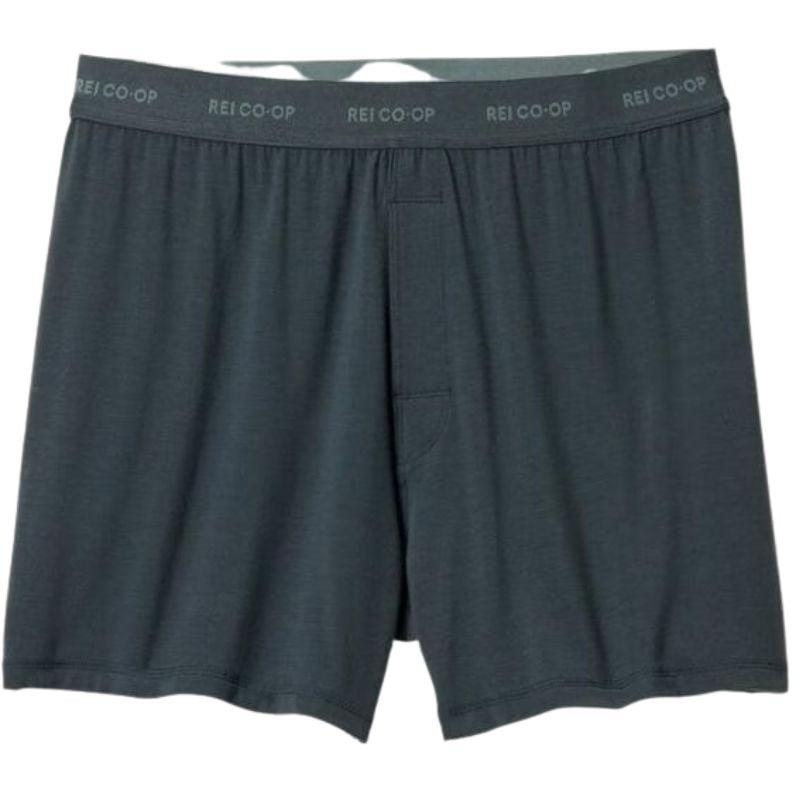
Material: 49% merino wool / 30% TENCEL lyocell / 15% nylon / 6% LYCRA spandex
Pros:
> Soft feel
> Choice of 2 colors
> Lightweight and breathable
Cons:
> Low amount of Merino
> Not as durable as some other brands of merino underwear
The REI Co-op Merino Boxer Brief is the value merino play, and it delivers most of the benefits of pricier wool at a lower price. Strong value for anyone who wants merino without paying Smartwool or Icebreaker money.
The merino blend brings the odor resistance that makes wool worth carrying, so you can wear it several days between washes without it turning rank. Blending nylon into the wool adds durability, which addresses merino’s usual weak point.
It regulates temperature well across three-season conditions, breathing on hot climbs and holding a little warmth on cool mornings. The fit is comfortable with flat seams, and it sits well under hiking shorts.
The trade-off is refinement rather than performance. It is not quite as soft or as polished as the Icebreaker Anatomica, and like all merino it dries slower than a synthetic. But for the price, that is easy to forgive.
Trade-off: slightly less refined than premium merino and slower drying than synthetics, in exchange for excellent value and genuine merino odor control.
Best for: value-focused hikers who want a dependable merino boxer for multi-day trips without the premium price.
Compare Prices:
Popular Hiking Underwear Not Included (And Why)
These are decent products that I left out of the main picks because they do not fit this guide’s focus on ultralight backpacking and thru-hiking or I am yet to test them:
- Cotton underwear of any kind – it holds moisture, dries slowly and causes chafing. The worst choice for hiking.
- Everyday fashion and “performance” boxer briefs from mainstream apparel brands – fine for the gym or town, but heavier, slower-drying and not built for multi-day trail use.
- Heavy lifestyle merino – comfortable but often too warm and too heavy for three-season thru-hiking.
The following are yet to be tested and may be added later:
- Fruit of the Loom Micro Mesh Boxer Briefs
- Ortovox 185 Rock’N’Wool Boxer
- SAXX Quest Quick-Dry Mesh Boxer Briefs
- Arms of Andes Alpaca Wool Boxer Briefs
- Free Fly Bamboo Motion Boxer Briefs
- Ridge Merino Performance Fit
- Uniqlo AIRism Boxer Briefs
Hiking Underwear Buyers Guide
Hiking Underwear Buyers Guide

Material: Merino, Synthetic, Blends, Alpaca and Bamboo
For backpacking and hiking the real choice is merino wool versus synthetic, with a couple of newer natural fibers now worth knowing about. Merino wool regulates body temperature well in both hot and cold weather and is best in cooler, drier conditions rather than hot, humid jungle environments. Its standout quality is odor resistance thanks to natural antimicrobial properties, so you can wear it for several days between washes without it turning rank. It wicks well but generally not as fast as synthetics, and it dries more slowly. Because pure merino is less durable, most hiking-specific merino is blended with nylon for strength.
Synthetics, usually nylon or polyester, are stronger, last longer and dry faster, which makes them ideal for the thru-hiker habit of a quick daily wash on trail. They wick moisture efficiently, moving sweat to the surface to evaporate. Their weakness is odor: synthetics harbor odor-causing bacteria more readily than wool, so they smell sooner between washes.
Two newer natural fibers are appearing on competitor lists. Alpaca wool (Arms of Andes, Paka) behaves like a warmer, hollow-fiber cousin of merino and is worth a look for backpacking in cool conditions. Bamboo-based fabrics (Free Fly) are soft and breathable and can be a good hot-weather option. And to be clear: forget cotton underwear. It is the worst choice for hiking, slow to dry and a chafing risk.

Weight
Underwear is a tiny fraction of your pack weight, but lighter, thinner fabrics dry faster and pack smaller, which matters when you carry two or three pairs. A 150-weight merino or a mesh synthetic is a sensible three-season default; save heavier 185-weight merino for cold trips.
Durability
Merino is a little less durable than synthetics, so treat it more gently. I have ripped holes in merino just by catching a sharp toenail in the wrong place when pulling them on. Synthetics like the ExOfficio Give-N-Go tolerate years of daily wear and hundreds of wash cycles, and even the cheap Fruit of the Loom mesh has a reputation for lasting a surprising number of trail miles.
Fit and Inseam Length
Fit is one of the most important features. Underwear should be snug but not tight, flexible enough to move with you rather than restrict you. Stretchy waistbands and flexible fabrics are best. Most hiking underwear has settled on a boxer-brief cut with a 5 to 6 inch inseam. A longer inseam helps prevent thigh chafing, and looser cuts like the ExOfficio suit more muscular thighs, while slimmer cuts suit leaner builds.
Comfort and Flatlock Seams
Flat, flatlock seams reduce chafing and are essential in good hiking underwear. Material and cut matter too: merino blended with nylon for strength, sometimes with a soft fiber like Lyocell added, feels great next to the skin. Tagless designs and soft, non-scratchy waistbands round out an all-day-comfortable pair.

Moisture Wicking and Quick Drying
The ability to wick moisture and dry quickly keeps a hike chafe-free, because wet underwear is the leading cause of chafing. All that salty sweat acts like sandpaper on your inner thighs. Both merino and most synthetics wick well; synthetics dry faster. Quick drying also enables the classic thru-hiking hack of washing underwear in town and wearing it to dry.
Odor Control
If you go days between washes, odor control decides your comfort and everyone else’s. Merino and alpaca resist odor naturally and are the clear winners here. Synthetics smell faster, which is fine if you wash daily but a real drawback on stretches without water.
Fly or No Fly
Many performance styles have dropped the traditional fly, using the elastic waistband for access instead, which some find more comfortable and secure. If you are attached to a fly, check whether your chosen pair offers a fly version before buying.
Value and Price
Underwear is one of the cheapest pieces of gear you will buy, and even the top-rated pairs here cost well under $30. Merino drives the price up; a three-pack of synthetic mesh can cost less than one premium pair. Cheap does not mean bad, so match the spend to how you hike.
How to Choose by Use Case
- Best for hot, humid trails: light mesh synthetics or bamboo that dry fast and breathe.
- Best for cold and alpine: heavier 185-weight merino like the Ortovox for warmth and odor control.
- Best for multi-day without washing: merino or alpaca for odor resistance.
- Best for wash-every-day thru-hiking: fast-drying synthetics.
- Best for tight budgets: rotate cheap mesh synthetics and wash often.
- Best for muscular thighs: looser cuts with a longer inseam.
Washing and Care
You can machine wash underwear with the rest of your hiking gear, but the delicate pairs, especially merino, should go inside a mesh or bra bag for protection. All of these can be hand-washed, and one of the best things about good hiking underwear is that it hand-washes in the backcountry and dries fast enough to wear soon after.

Conclusion
Overall, here is the best underwear for hiking and backpacking 2026:
- Best overall: Smartwool Merino Boxer Briefs
- Best merino: Icebreaker Anatomica Boxer Briefs
- Best for travel and durability: ExOfficio Give-N-Go 2.0
- Most comfortable: Patagonia Essential Boxer Briefs
- Best for Australia and New Zealand: Macpac 180 Merino Boxers
- Best budget: REI Co-op Boxers
- Best value merino: REI Co-op Men’s Merino Boxers
Follow along on Social Media
Frequently Asked Questions
What is the best hiking underwear for men?
For most backpackers I recommend a merino or merino-blend boxer brief like the Smartwool Merino 150 for the best balance of odor control, comfort and warmth-to-weight. If budget is the priority, the Fruit of the Loom Micro Mesh is hard to beat, and for travel and durability the ExOfficio Give-N-Go 2.0 is the long-standing favorite.
Is merino or synthetic underwear better for hiking?
It depends on your routine. Merino resists odor and regulates temperature best, so it wins for multi-day trips where you cannot wash often. Synthetics dry faster and last longer, which suits thru-hikers who rinse their underwear every day. Many hikers carry one of each.
How do I stop chafing when hiking?
Keep the area dry with moisture-wicking fabric, choose a boxer brief with a longer inseam and flat, flatlock seams, and avoid cotton entirely. Wet underwear is the main cause of chafing, so quick-drying fabric and staying clean go a long way.
How many pairs of underwear do I need for a thru-hike?
Two or three is plenty for most long trips. Wear one, wash one, and let the third rotate through drying. Quick-drying synthetics make a two-pair system realistic; merino lets you stretch longer between washes.
Can I wear boxer briefs under hiking shorts with a liner?
You can, but many hikers skip separate underwear when their shorts have a built-in liner to save weight and reduce chafing points. If your shorts have no liner, a good boxer brief with a longer inseam is the way to go.
What fabric weight of merino should I choose?
A 150 g/m² merino is the versatile three-season default. Step up to 185 g/m² like the Ortovox only for cold-weather and alpine trips where you want extra warmth and durability.
Why is cotton bad for hiking underwear?
Cotton absorbs and holds moisture, dries very slowly and breathes poorly, which leads directly to chafing and cold, clammy discomfort. It is the one material to avoid for hiking and backpacking.


BikeHikeSafari Gear Review Process
The author, Brad McCartney from BikeHikeSafari is a small independent adventurer and outdoor gear tester who owns and runs BikeHikeSafari.com.
BikeHikeSafari is not part of a large blog network and is proudly independent. All reviews on this site are independent and honest gear reviews of outdoor products by the author.
The author, Brad McCartney is a very experienced triple crown thru-hiker, adventurer, and bike tourer having spent 1000s of nights sleeping in a tent and sleeping bag (Read more). He was a manager of an outdoor retail store and is very experienced in what is important when using and testing gear for reviews like this.
BikeHikeSafari will never receive any money for reviews and they do not accept sponsored reviews on this website. All the comments about the gear reviews are from the author based on his years of experience. Hope this independent review was helpful for you.

