

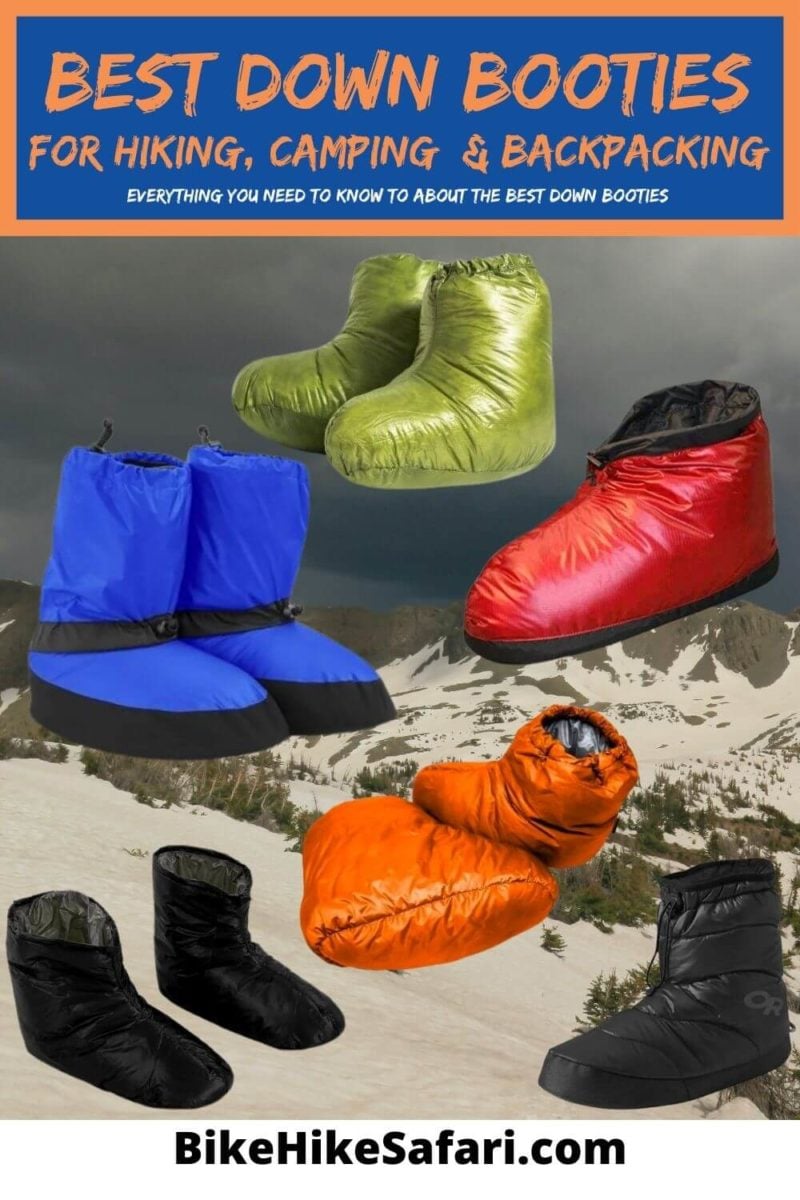
Cold feet have cut short more good winter trips for me than bad weather ever has. After hiking the Triple Crown trails and spending thousands of nights in a tent, I rate a pair of down booties as one of the smartest small items you can carry once temperatures drop below freezing.
This guide covers the best down booties for hiking and backpacking in 2026, with the focus on lightweight options that a thru-hiker or ultralight backpacker will actually carry, not heavy hut slippers better left at home.
My current top pick is the Feathered Friends Down Booties, with the Zpacks Down Booties as the best ultralight down socks for cold sleepers. The main trade-off to understand is warmth and walkability versus weight: soled booties let you walk around camp, while pure down socks are lighter and better inside a sleeping bag. Jump straight to the Quick Picks to see which ones I rank best. For how I research and field-test gear, see the Gear Review Policy.
Quick Picks: Best Down Booties
- Best Overall Down Booties: Feathered Friends Down Booties – a two-piece down sock and weather-resistant shell system that is warm, well made, and covers sleeping bag, hut, and camp use in one package.
- Best Ultralight Down Socks: Zpacks Down Booties – around 1.6 oz a pair with 900-fill down; there is no excuse for leaving these at home if you sleep cold.
- Best Synthetic Camp Booties: Enlightened Equipment Torrid Booties – the lightest option on the market and they keep working when damp, unlike down.
- Best Ultralight Soled Booties: Western Mountaineering Flash Down Booties – 3 oz a pair with a foam sole you can actually walk on.
- Best Modular System: Goosefeet Gear Down Socks + Waterproof Over-Booties – down socks for the sleeping bag, waterproof shells for camp, one system for everything.
- Best Budget Camp Booties: Outdoor Vitals LoftTek Booties – hybrid insulation, warm when damp, and roughly half the price of most down options.
- Best for Huts and Basecamp: Outdoor Research Tundra Aerogel Booties – thick soled, weather-resistant, and just as good at home as in a ski lodge.
How We Tested
The down booties and down socks in this guide are researched and, where possible, field-tested by an experienced long-distance hiker and former outdoor store manager. Across thru-hikes, shoulder-season trips, and backpacking trips, I judge down booties on warmth-to-weight, packability, weather resistance, durability, comfort, and value for serious backpacking. Some of the items were supplied by the manufacturer and some items were purchased by the author for this review. For more on how we research and review gear, see the BikeHikeSafari Gear Review Policy.
Follow along on Social Media
Down Booties: Comparison Table
| Brand | Type | Insulation | Weight | Sole |
|---|---|---|---|---|
| Feathered Friends Down Booties | Bootie | Down | 9.3 oz (pair) | Yes |
| Zpacks Down Booties | Sock | Down | 1.6 oz (pair) | No |
| Enlightened Equipment Torrid Booties | Sock | Synthetic | 2 oz (pair) | No |
| Western Mountaineering Flash Down Booties | Bootie | Down | 3 oz (pair) | Yes |
| Outdoor Vitals LoftTek Booties | Socks | Down Blend | 3.5 oz (pair) | No |
| Outdoor Research Tundra Aerogel Booties | Bootie | Synthetic | 9.3 oz (pair) | Yes |
| Goosefeet Gear Socks and Booties | Socks and Booties | Down | 4 oz (pair) | Yes |
Best Down Booties for Camping 2026
Best Down Booties – Overall
Feathered Friends Down Booties

Pros:
> Two drawcords for more effective insulation
> They’re filled with 800+ goose down
> Weather-resistant outer shell
> Thick, durable, and waterproof soles outer and a separate lightweight down sock inner
> Available in a range of sizes and colors
Cons:
> It’s not as lightweight as some of the others in this review but does include down socks and a durable outer slipper for walking around camp.
These are the best down booties in this guide, and they are really two items in one: an ultralight down sock for the sleeping bag and a separate water-resistant shell with a sole tough enough for walking around mountain huts, ski lodges, snow, or the campsite. That modular design is what wins it the top spot.
Warmth comes from 800+ fill goose down, and there is a lot of it — these are the warmest one-piece-system booties here. Two drawcords seal the heat in: one high on the calf so you can tuck your baselayer in, and one above the ankle. Your feet stay snug even when you are moving around.
The shells have thick, durable, waterproof soles, so a midnight trip out of the tent is no drama. Back in the tent or sleeping bag, you leave the shells by the door and sleep in just the down socks.
The trade-off is weight and bulk. At 9.3 oz they are the heaviest pick in this guide, and ultralight hikers may prefer separate down socks at a fraction of the weight.
Best for: cold-weather backpacking, winter camping, huts, and anyone who wants one warm system that does everything.
Compare Prices:
Best Ultralight Down Socks
Zpacks Down Booties

Pros:
> Uses ethically sourced down
> High 950-fill level of insulation
> Outer material is water repellant
> Ultralight at 1.6 ounces
> Soft ventum breathable nylon fabric
> They are made in the USA
> Backed by a 2-year limited warranty
Cons:
> There no sole on these down socks
If you suffer from cold feet at night, or know someone who does, these are the mini sleeping bags for your feet that you need. They are the best ultralight down socks on the market, and the pair weighs about the same as a single energy bar.
The 950-fill down is ethically sourced and wrapped in a soft Ventum ripstop nylon that is water-repellent and tougher than it feels. They are made in the USA and backed by a 2-year limited warranty.
There is no sole and no walkability, these live inside your tent and sleeping bag. Treat them roughly and the ultralight fabric will eventually pay the price, so they are not for everyone.
Best for: ultralight backpackers, thru-hikers, and cold sleepers who want warm feet inside a sleeping bag for the least possible weight.
Compare Prices:
Best Synthetic Camp Booties
Enlightened Equipment Torrid Booties

Pros:
> Excellent all-weather performance
> Effective synthetic insulation
> Ultralight, weighing 2 oz
> Available in a range of sizes
> You can order a customized pair!
Cons:
> No sole – not designed for use outside your tent
The Torrid Booties are not down at all, they use synthetic Climashield APEX insulation, and that is exactly why they earn a place here. Synthetic keeps insulating when damp, dries fast, and costs less than down, which makes these the smart pick for wet climates and worry-free use.
They are among the lightest camp booties you can buy, with a simple drawcord at the ankle to trap heat. They are handmade in Minnesota, come in black or high-visibility orange, and can be ordered in custom sizes and fabrics. Sizes run about half a size large for a loose, comfortable fit.
The trade-off is walkability: there is no sole and no reinforcement, so these are strictly for inside the tent and sleeping bag. I would not wear them outside in cold wet snow or rain. If you need to step out of the tent at night, pair them with over-booties or look at a soled option like the WM Flash.
Best for: ultralight hikers in damp climates, and anyone who wants synthetic insurance against wet feet at the lowest weight.
Compare Prices:
Best Ultralight Soled Down Booties
Western Mountaineering Flash Down Booties

Pros:
> High level of insulation 850-fill
> Durable and built to really last
> Features a 1/4-inch thick sole
> It’s easy to put on and take off
> It’s made in the USA
Cons:
> Not always available in all sizes
The Flash Booties hit a sweet spot nothing else in this guide matches: a genuine sole you can walk on, at just 3 oz a pair. They are light enough to blow away on a windy day if you leave them out, as Western Mountaineering puts it.
They are built around high-loft goose down with an ultralight 12D ripstop upper, a 1/4-inch foam insole, and a 70D coated nylon rand and outsole. That sole is enough for a comfortable trip out of the tent in the night, though I would not take them far on rough ground.
They are made in the USA and built to last, but be realistic: 12D fabric and a foam sole are not expedition durable, and the lower mid-top cuff holds less heat than taller booties. Stock can also be patchy — they are not always available in every size, so click the link below to check stock levels.
Best for: ultralight backpackers who want one bootie that works both in the sleeping bag and for short walks around camp.
Compare Prices:
Best Down Booties for Huts and Basecamp
Outdoor Research Tundra Aerogel Booties

Pros:
> Very thick sole along the bottom
> It features a synthetic insulation
> Insert acts as a thermal barrier
> Weather-resistant exterior shell
> Available in a range of five sizes
Cons:
> Some retailers of this bootie do not provide a size chart
Unlike most booties in this guide, the Tundra Aerogels are built around walking in huts or basecamp, not sleeping. The thick sole and compression-resistant PrimaLoft Aerogel insert put a real thermal barrier between your feet and a frozen hut floor or snowy ground, and the weather-resistant shell shrugs off melting snow.
The synthetic VerticalX insulation keeps working when wet, which is exactly what you want in a damp ski lodge or basecamp. They come in five sizes from XS to XL and two understated colors, and they double nicely as warm slippers at home.
For backpacking they are heavy at 9.3 oz, and the thick sole makes them awkward inside a sleeping bag — they are hut and camp booties, not sleep socks. Note that OR also sells the newer, heavier Tundra Trax for pure winter camping; for most readers here the Aerogel is the better-balanced option.
Best for: mountain huts, ski lodges, basecamps, and home use — not ultralight packs.
Compare Prices:
Best Budget Down Booties
Outdoor Vitals LoftTek Booties

Pros:
> Lightweight
> Very reasonable price
> Dryloft down and synthetic insulation for added water resistance
> Elasticated ankle rather than drawcord
Cons:
> No sole, so not for camp or hut use
At around $50, the LoftTek Booties are roughly half the price of most down options here, and they are the pair I suggest to anyone baulking at the cost of down socks. The hybrid insulation, synthetic LoftTek blended with down, aims to give you down-like loft with synthetic’s wet-weather security, and in damp conditions that trade makes sense.
They are warm for the weight, pack small, and cost little enough that you will not cry when you eventually wear them out. There is no sole, so they are tent and sleeping bag only, and the ultralight shell fabric will not take abuse.
Durability is the honest concern at this price, treat them gently and they will treat your feet well.
Best for: budget-conscious hikers and damp-climate backpackers who want warm feet without spending down money.
Compare Prices:
Best Modular Down Socks and Booties
Goosefeet Gear Down Socks and Overbooties

Pros:
> You can really customize colors & fabrics
> The standard insulation is a cozy 850-fill
> The lightweight overbooties and down socks make a great modular system
> Elasticated ankle rather than drawcord
Cons:
> The weight of each bootie goes up with size, and with the thickness of the fabrics
This is the most versatile system in the guide, and the one I would pick for a long trip where conditions vary. The down socks are superb on their own as they are light, warm, and customizable in fabric weight, color, and down overfill for genuinely cold temperatures. The elasticated ankle suits people who dislike drawcords.
Add the waterproof over-booties and the system covers everything: socks in the sleeping bag, shells over the top for cooking dinner or a trip to the privy, even mountain huts and basecamp. Choose the ToughTek outsole, it costs a little weight and is worth it for the grip and durability.
The downsides are cost and fuss. The combined system runs to around $135, the shells are not breathable, and they need seam-sealing to be fully waterproof.
Best for: thru-hikers and winter backpackers who want one modular system for sleeping bag, tent, and camp.
Compare Prices:
Down Booties: Buyers Guide
Down Booties: Buyers Guide
Down Socks vs Down Booties vs Over-Booties
This is the first decision, and it matters more than any brand choice.
Down socks are soft, soleless, insulated socks made to be worn inside a sleeping bag. If the rest of you sleeps warm but your feet freeze, down socks fix that for as little as 1.5 to 2 oz — they are the lightest, cheapest, and most packable option, and for pure three-season backpacking they are usually all you need. Perfect for hikers that suffer from cold feet, even inside their sleeping bag.
Down booties add a reinforced sole and often a tougher shell, so you can walk around a hut, tent platform, or campsite. The cost is weight, bulk, and a sole that feels awkward inside a sleeping bag.
Down socks with separate over-booties split the difference: a modular system where the waterproof shell slips over the sock when you leave the tent. It is the most versatile setup and the one I favor for long or mixed trips, but it is also the most expensive and the fiddliest at 2 am.
Weight and Packability
For backpacking, every item has to earn its place, and booties are a comfort item — so weight discipline matters.
Ultralight down socks run 1.5 to 2.5 oz a pair and compress to the size of a small apple. Soled lightweight booties like the Western Mountaineering Flash manage 3 oz, which is still easy to justify. Once you pass 8 to 10 oz a pair you are carrying the weight of a warm layer for something you only wear at camp, and past 12 oz you are firmly in car camping and hut trip territory regardless of what the marketing says.
As a rule: under 4 oz for three-season backpacking, under 8 oz for winter trips, and leave anything heavier for basecamps, huts, and home.
Warmth: Fill Power and Fill Weight
Fill power measures the loft quality of down, but fill weight — how many ounces of down are actually in the bootie — determines most of the warmth. A 900-fill sock with less than an ounce of down (like the Zpacks) is remarkably warm for its weight but will never match a bootie carrying four ounces of 800-fill (like the Feathered Friends).
For three-season use, high fill power and low fill weight is the efficient combination. For winter camping and expeditions, look for generous fill weight, a taller cuff, and a windproof shell. Be skeptical of temperature claims on camp booties — none are standardized, and your sleeping bag, pad, and metabolism matter more than any number on a hang tag.
Down vs Synthetic Insulation
Down offers the best warmth-to-weight ratio and the smallest packed size, which is why most of this guide is down. Its weakness is moisture: wet down collapses and loses most of its insulation, and it dries slowly.
Modern synthetic insulations like Climashield APEX and PrimaLoft keep most of their warmth when damp, dry fast, and cost less. The trade-off is weight and bulk for equivalent warmth, and less loft per gram over the long term.
My rule: down for dry cold and weight-critical trips, synthetic for wet climates, hut trips where condensation is constant, and anyone who wants cheap insurance against damp feet. Hybrid options like the Outdoor Vitals LoftTek split the difference sensibly at a low price.
Shell Fabrics and Durability
Ultralight bootie shells range from 7D to 20D nylon, and these fabrics are fragile by design — they save weight, not withstand abuse. Treat 7D to 10D shells as sleeping-bag-only gear and keep them away from tent zips, sharp floors, and campfire sparks.
If you are hard on gear, look for tougher shells. For wet conditions, a weather-resistant or waterproof shell matters: Pertex Endurance and sil-nylon over-booties keep melting snow off the insulation, while Gore Windstopper on the WM Expedition adds genuine windproofing for winter camps. DWR coatings help with condensation but are not waterproofing.
Soles and Walking Around Camp
A sole changes what a bootie is for. Foam insoles with coated nylon or ToughTek outsoles (Western Mountaineering, GooseFeet over-booties) handle hut floors, tent platforms, and short trips across packed snow. Thick rubber soles (Outdoor Research, Exped) cope with gravel and rough ground but add real weight. No sole at all means sleeping bag only — full stop.
Be honest about your trips: if you mostly need warm feet in the bag, skip the sole and save the weight. If you winter camp, hut hop, or know you will be cooking and melting snow outside the tent every evening, a walkable sole or a modular over-bootie system is worth every gram.
Cuff Height and Closures
Low ankle cuffs are lightest and fine for mild conditions. Mid and tall cuffs hold far more heat around the lower leg and keep spindrift and snow out — worth it for winter. Closures come in two types. Drawcords seal best and let you tuck a baselayer in, but add a small fiddle factor; the best designs use two (ankle and calf), like the Feathered Friends. Elastic closures are simpler and some people find them more comfortable, but they seal less tightly and can sag with use.
Sizing and Fit
Down booties should fit loose. A bootie that compresses the down around your foot is a cold bootie, and a little extra room lets you wear a thick hiking sock or liner underneath. Most brands convert US shoe sizes into XS through XL bands — check each manufacturer’s chart, because the bands differ, and note that some run large (EE Torrid runs about half a size big by design). Size ranges are a real limitation at the ultralight end: Zpacks offers small, medium and large only, so smaller feet should look to GooseFeet or EE, which offer full size runs and even custom sizing. If you plan to wear booties over thick socks, size up.
Price and Value
Expect to pay roughly $50 to $170. The value sweet spots: around $50 for the Outdoor Vitals LoftTek (budget synthetic hybrid), $70 to $90 for quality down socks (Zpacks, GooseFeet, EE), and $115 to $170 for premium soled booties (Western Mountaineering, Feathered Friends). Custom options from GooseFeet cost more and carry a real lead time. Cheaper is not always better value — a well-made down bootie from a specialist brand should last hundreds of nights, and cost per night is the honest way to judge these. Buy once, buy the right tool for your trips, and look after it: store your booties uncompressed, keep them dry, and they will likely outlast several pairs of trail runners.
Conclusion
Overall, the best down booties, down socks, down slippers and insulated socks are the following:
- Best Overall Down Booties: Feathered Friends Down Booties
- Best Ultralight Down Socks: Zpacks Down Booties
- Best Synthetic Camp Booties: Enlightened Equipment Torrid Booties
- Best Ultralight Soled Booties: Western Mountaineering Flash Down Booties
- Best Modular System: Goosefeet Gear Down Socks + Waterproof Over-Booties
- Best Budget Camp Booties: Outdoor Vitals LoftTek Booties
- Best for Huts and Basecamp: Outdoor Research Tundra Aerogel Booties
Follow along on Social Media
Frequently Asked Questions
What are the best down booties for backpacking?
For most backpackers the Feathered Friends Down Booties are the best overall: a warm two-piece system that works in the sleeping bag, tent, hut, and around camp. If you count every ounce, the Zpacks Down Booties (about 1.6 oz a pair) are the best ultralight down socks, and the Western Mountaineering Flash Booties are the lightest option with a walkable sole.
Are down booties worth it for backpacking?
Yes, if you camp in near or below-freezing temperatures or sleep with cold feet. At 2 to 3 ounces for ultralight down socks, they are one of the cheapest warmth-per-gram upgrades you can carry. For warm three-season summer trips they are unnecessary — leave them home when nighttime temperatures stay mild.
Down vs synthetic booties — which is better?
Down wins on warmth-to-weight and packability, and it is the right choice for dry cold and weight-critical trips. Synthetic (Climashield APEX, PrimaLoft, LoftTek) keeps insulating when damp, dries faster, and costs less — the better pick for wet climates and condensation-prone huts. I carry down for most trips and synthetic when persistent damp is likely.
Can you wear down booties in a sleeping bag?
Yes — that is exactly what soleless down socks like the Zpacks, GooseFeet, and EE Torrid are designed for. Soled booties can go in a bag too, but the sole feels bulky and can drag moisture in; if your booties have removable shells or over-booties, leave those outside the bag and sleep in just the socks.
Can you walk outside in down booties?
Only if they have a reinforced sole. Booties like the Feathered Friends, Western Mountaineering Flash and Standard, and OR Tundra Aerogel handle hut floors and short walks around camp. Soleless down socks will shred on ground contact — pair them with waterproof over-booties like the GooseFeet if you want to step outside.
What fill power do I need in down booties?
Anything from 700-fill up works well. Ultralight socks use 850 to 900-fill down because every gram matters; bigger soled booties use 800-fill with more fill weight for raw warmth. Fill weight and cuff height affect warmth more than fill power alone — do not pay extra for 900-fill in a bootie you will only wear in huts.
How should down booties fit?
Loose. The down needs room to loft, and a tight bootie is a cold bootie. Check each brand’s size chart carefully — most convert shoe sizes into XS to XL bands, some run large by design, and ultralight models like the Zpacks come in limited sizes. Size up if you plan to wear them over thick socks.
BikeHikeSafari Gear Review Process
The author, Brad McCartney from BikeHikeSafari is a small independent adventurer and outdoor gear tester who owns and runs BikeHikeSafari.com.
BikeHikeSafari is not part of a large blog network and is proudly independent. All reviews on this site are independent and honest gear reviews of outdoor products by the author.
The author, Brad McCartney is a very experienced triple crown thru-hiker, adventurer, and bike tourer having spent 1000s of nights sleeping in a tent and sleeping bag (Read more). He was a manager of an outdoor retail store and is very experienced in what is important when using and testing gear for reviews like this.
BikeHikeSafari will never receive any money for reviews and they do not accept sponsored reviews on this website. All the comments about the gear reviews are from the author based on his years of experience. Hope this independent review was helpful for you.

