

After thru hiking the Pacific Crest Trail, the Continental Divide Trail, the Appalachian Trail and the Te Araroa, and after thousands of nights in the field I am convinced a quality ultralight quilt is the best three-season sleep system most thru-hikers can carry. This guide is written for ultralight backpackers and long-distance thru-hikers who care about warmth-to-weight, real packed size and honest temperature ratings, not lifestyle camping comfort.
As a former outdoor store manager and Triple Crown thru-hiker, I have researched and where possible tested the quilts in this review. I also asked for feedback from expert thru-hikers I trust. My current top pick is the Katabatic Sawatch 15F, just ahead of the Enlightened Equipment Revelation 20F as the best ultralight thru-hiking quilt and the REI Magma 30F Trail Quilt as the best budget pick. Honestly, any of the quilts in this review is worthy of the top spot and a place in your pack, it has been one of the hardest reviews for me to do. The core trade-off across this category is warmth versus weight: more down fill means more grams, and self-rated temperatures vary wildly between brands.
Quick Picks – Ultralight Backpacking Quilts
- Best Overall: Katabatic Sawatch 15F – best pad attachment system on the market and the warmth-to-weight ratio I trust on cold thru-hike nights.
- Best Custom Ultralight Thru-Hiking Quilt: Enlightened Equipment Revelation 20F – the most popular quilt on the AT and PCT for good reason, and fully customisable.
- Best Stock Ultralight Cottage Quilt: Zpacks Solo Quilt – 900 fill power, around 18 oz, comes with a Dyneema dry bag.
- Warmest Ultralight Quilt: Hyperlite Mountain Gear 20F Quilt – 1000 fill power down and a sewn footbox, the warmest quilt under 21 oz.
- Best Sleeping Bag / Quilt Hybrid: Zpacks 20F Zip Around Sleeping Bag Quilt – full zip lets you run it as a sleeping bag in the cold or a quilt when it warms up.
- Best Zippered Quilt: Feathered Friends Flicker UL 20F Quilt – full-length zip, 950+ down, the most versatile down quilt on the list.
- Lightest Mainstream Down Quilt: Therm-a-Rest Vesper 20F Quilt – ultralight backpacking quilt that is readily available from one of the best brands.
- Best Stock Quilt You Can Buy Today: Sea to Summit Ember 30F Quilt – no custom wait, redesigned attachment straps, very small pack size.
- Best Budget Quilt: REI Magma 30F Trail Quilt – the cheapest serious quilt I would put on a thru-hike.
Backpacking Quilt Comparison Table
| Brand | Weight | Down Fill Power | Fill Weight | Temp Rating | Shell Weight | Stuff Sack Size |
|---|---|---|---|---|---|---|
| Katabatic Sawatch 15F | 1 lb. 8.7 oz | 900+ | 16.6 oz | 15F | 8.1 oz | 7L |
| Enlightened Equipment Revelation 20F | 1 lb. 4.9 oz | 950+ | 14.4 oz | 20F | 6.5 oz | 7L |
| Zpacks Solo Quilt | 1 lb. 2.3 oz | 900 | 13.7 oz | 20F | 4.6 oz | Not Specified |
| Hyperlite Mountain Gear 20F Quilt | 1 lb. 4.1 oz | 1000 | 14 oz | 20F | 6.1 oz | 8L |
| Zpacks 20F Zip Around Sleeping Bag Quilt | 1lb. 5.6 oz | 900 | 14.5 oz | 20F | 7.1 oz | 8L |
| Feathered Friends Flicker UL 20F Quilt | 1 lb. 9.3 oz | 950+ | 14.7 oz | 20F | 10.6 oz | 8L |
| Therm-a-Rest Vesper 20F Quilt | 1lb. 3 oz | 900 | 12.5 oz | 20F | 6.5 oz | Not Specified |
| Sea to Summit Ember 30F Quilt | 1 lb. 5.5 oz | 850+ | N/A | 30F | N/A | 5L |
| REI Magma 30F Trail Quilt | 1lb. 4.3 oz | 850 | 11.6 oz | 30F | 8.7 oz | 3L |
How we tested
The backpacking quilts in this guide are researched and, where possible, field-tested by an experienced long-distance hiker, Triple Crown thru-hiker and former outdoor store manager. Across thru-hikes, shoulder-season trips and bikepacking expeditions, I judge backpacking quilts on warmth-to-weight, packability, weather resistance, durability, comfort and value for serious backpacking. Some of the items were supplied by the manufacturer and some were purchased by the author for this review. For more on how we research and review gear, see the BikeHikeSafari Gear Review Policy.
Follow along on Social Media
Best Backpacking Quilt Reviews
Best Quilt for Backpacking – Overall
Katabatic Sawatch 15F Review
Weight: 1 lb.8.7oz / 700 grams
Down Fill Power: 900+ Down
Fill Weight: 16.6 oz / 470 grams
Shell Weight: 8.1 oz / 230 grams
Footbox: Sewn
Packsize: 7L
Temperature rating: 15 F / -9 C
Pros:
> Ultralight
> Roomy
> Well made
> Comes in many sizes and widths
Cons:
> Not cheap
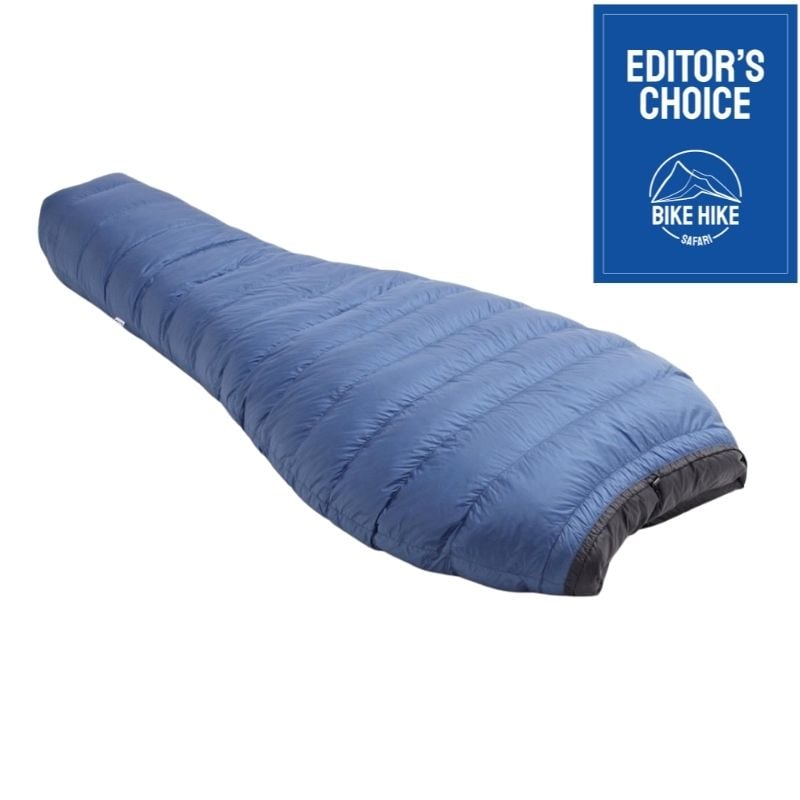
The battle for the top ranking has always been about the Katabatic Sawatch and the Enlightened Equipment Revelation. The Sawatch is slightly heavier but arguably has a better pad attachment system. I keep coming back to for cold mountain nights on long trails. With 16.6 oz of high-fill-power down and a sewn footbox, the warmth-to-weight ratio is outstanding for a 15 F rated quilt that still packs to 7 L.
The trade-off across the category is warmth versus weight, and Katabatic plays this honestly. You can spec it with 850+ or 900+ Hyperdry down and add 1–2 oz of overfill, which I is something to consider for shoulder-season trips or damp cold.
Where the Sawatch really pulls ahead is the pad attachment system. It is the best on the market, full stop. The straps stay where you put them, the cordlocks adjust easily in the dark, and side drafts stop being an issue.
Ultra-light hiker Michael ‘Grizzly’ Ivey has used this quilt on the Colorado Trail (three times), the Pacific Crest Trail and the Superior Hiking Trail and loves the quality and the fact that he has never had a cold spot. Follow him on Instagram @grizzly_hikes.
Trade-off: Custom build means a wait of weeks to months. No hood, so pair with a beanie or down hood on cold nights.
Best for: Ultralight thru-hikers and shoulder-season backpackers who want the best pad attachment system on the market.
Compare Prices:
Best Custom Thru Hiking Quilt
Enlightened Equipment Revelation 20F Review

Weight: 1 lb. 4.9 oz / 592 grams
Down Fill Power: 950+ down
Fill Weight: 14.4 oz / 408 grams
Shell Weight: 6.5 oz / 184 grams
Footbox: Zippered with drawcord
Packsize: 7L
Temperature rating: 20 F / -7 C (also 30 F, 10 F and 0 F option)
Pros:
> Uber Lightweight
> High quality
> Reasonably priced
> The best custom options of any quilt on the market
Cons:
> No Hood
The Revelation has been one of the most popular quilt on the AT and PCT for many years and the reasons are simple: customisable down to the colour, cuttable to your body, with a warmth-to-weight ratio that holds its own against more expensive cottage quilts.
The full-length zipper down the foot lets you run it as a flat blanket on warm desert nights and cinch it shut when temps drop. The Revelation comfort-rated to about freezing rather than the stated 20 F, so cold sleepers should size up to the 10 F.
EE’s pad attachment straps and wafer clips are easy to use one-handed in the dark, which matters more than people admit. The 7D shell is my preference even though it is more delicate but there is a tougher and slightly heavier 10D and 20D shell option available for thru-hike abuse.
Trade-off: Custom lead times are commonly 4 weeks. The zipper can create a small cold spot vs the sewn-foot Enigma.
Best for: Thru-hikers who want a versatile, customisable, well-priced UL quilt that works from desert to alpine.
Compare Prices:
Best Cottage Ultralight Quilt
Zpacks Solo Quilt Review
Weight: 1 lb. 2.3 oz / 520 grams
Down Fill Power: 900 down
Fill Weight: 13.7 oz / 388 grams
Shell Weight: 4.6 oz / 132 grams
Footbox: Sewn
Packsize: Not Specified
Temperature rating: 20 F / -7 C (also 30 F and 10 F option)
Pros:
> Ultralight
> Good color and size options
> Best in class stuff sack
Cons:
> Price
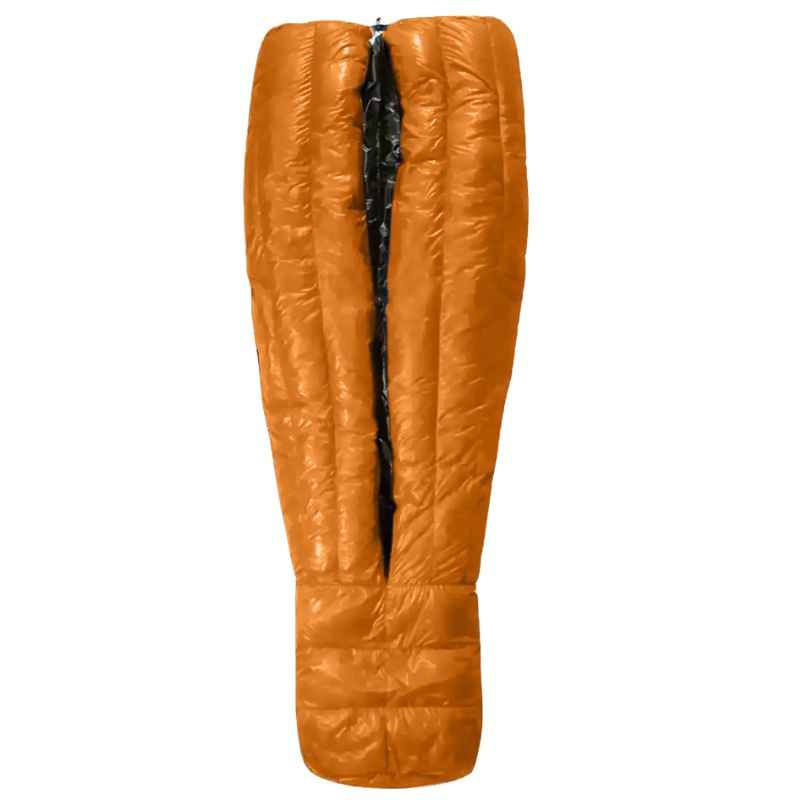
The Zpacks Solo is one of the lightest stock 20 F quilts you can buy, sitting alongside the EE Revelation and HMG 20 in the elite warmth-to-weight tier. The minimalist design includes a 7D shell, horizontal torso baffles to prevent down drift and a neck snap which is everything you need and nothing you don’t.
Zpacks throws in a high quality waterproof Dyneema dry bag, which is the right way to carry a quilt on a wet thru-hike.
The trade-offs are the same as every premium ultralight quilt: delicate fabric and a price tag in the high $400s. If you want overfill or a custom shell, look at Katabatic or EE instead.
Trade-off: No customisation, delicate 7D shell.
Best for: Stock buyers who want EE Revelation-tier weight without the custom wait.
Compare Prices:
Warmest Ultralight quilt
Hyperlite Mountain Gear 20F Quilt Review
Weight: 1 lb. 4.1 oz / 570 grams
Down Fill Power: 1000 down
Fill Weight: 14 oz / 398 grams
Shell Weight: 6.1 oz / 172 grams
Footbox: Sewn
Packsize: 8L
Temperature rating: 20 F / -7 C (also 40 F)
Pros:
> Best in class 1000 fill power down
> Comfortable width
> Great warmth to weight
Cons:
> Not cheap
> Price
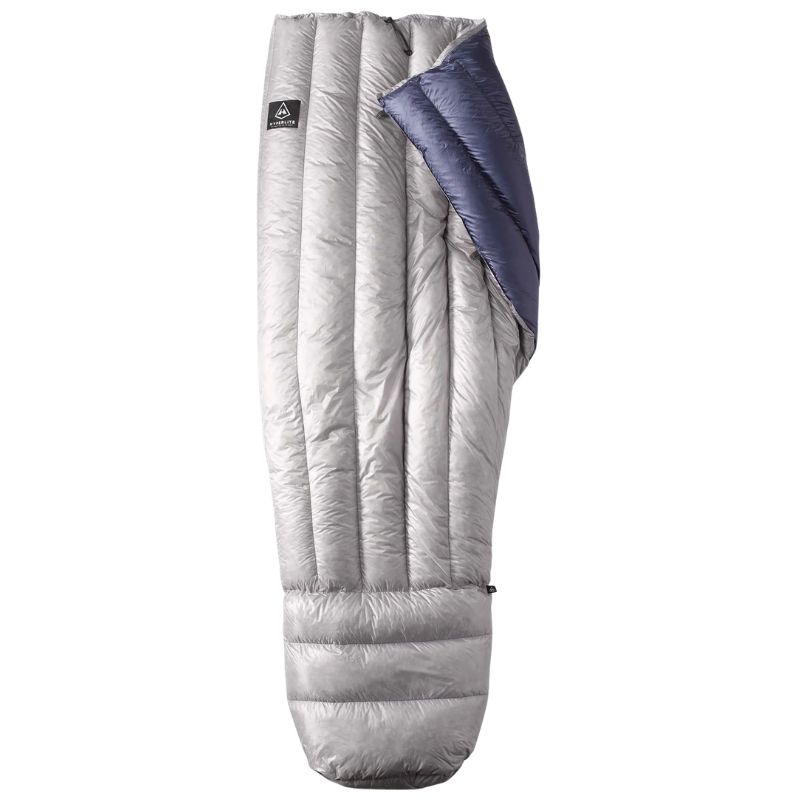
The Hyperlite Mountain Gear 20F Quilt is one of the warmest ultralight quilts per gram. The combination of best in class 1000 fill power DWR-treated down and a sewn footbox gives you fewer cold spots than zippered quilts and more loft per ounce than 850 fill.
The cut runs slightly wider than the Zpacks Solo or EE Revelation, which is good news for a side sleeper who doesn’t want to fight drafts at the shoulders. Pad straps are simple and effective.
The trade-off is price and shell durability just like all the other ultralight quilts. The 7D fabric is delicate and you have to be careful pitching on rough ground. There is no customisation, so what you see is what you get.
Trade-off: Premium price, no custom options, delicate shell.
Best for: Ultralight thru-hikers who want maximum warmth-to-weight in a stock quilt, no custom wait.
Compare Prices:
Best Sleeping Bag Quilt Hybrid
Zpacks 20F Zip Around Sleeping Bag Review
Overall Weight: 1 lb. 5.6 oz / 612 grams
Down Fill Power: 900 down
Down Fill Weight: 14.5 oz / 412 grams
Shell Weight: 7.1 oz / 200 grams
Footbox: Full-length zip (converts to quilt)
Packsize: Unknown
Temperature rating: 20 F (also 10 F and 30 F options)
Pros:
> Ultralight
> Can be unzipped and used as a quilt
> Small pack size
> High-quality 900 Fill Power Water Down
> Overstuffed baffle with 30% more down
> Come with a waterproof stuff sack
Cons:
> Not cheap
> No Lofting Bag
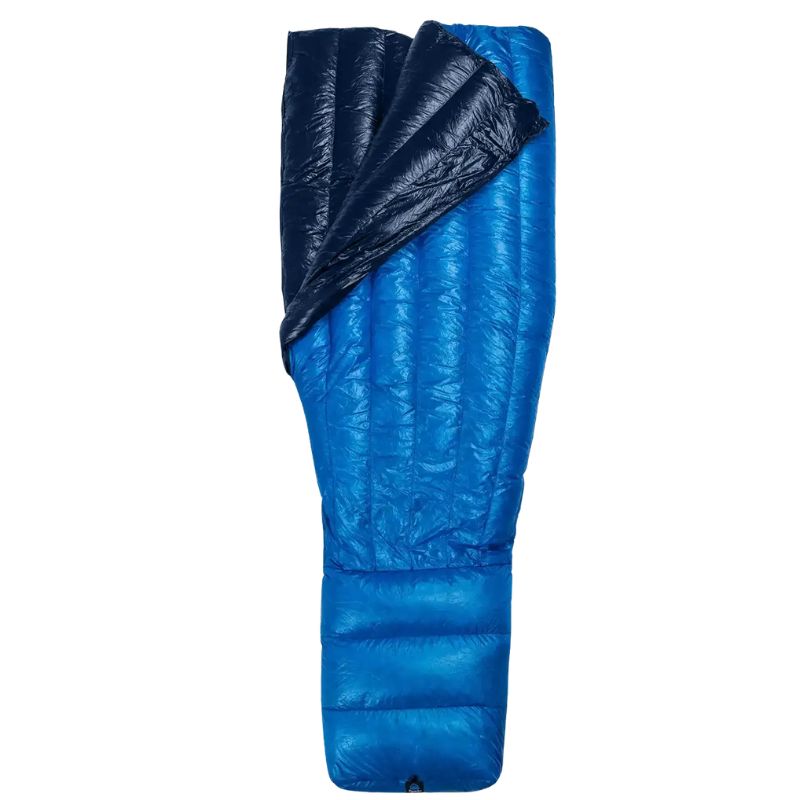
Part hoodless sleeping bag, part quilt. The Zpacks Zip Around is one of the most versatile sleep piece I have tested. The full-length zip lets you fully open it as a blanket on warm nights or zip it shut as a hoodless mummy on cold nights, which makes it the right choice for a single bag that can handle a thru-hike’s full temperature range.
I tested the Zip Around in warm weather and the anti-snag webbing strip on the zip worked exactly as Zpacks claims. The neck draft tube does its job once you cinch it.
It comes in 4 colours, 2 widths and 10 F / 20 F / 30 F options, and the Dyneema waterproof stuff sack is included.
Trade-off: A little heavier than a pure quilt because of the zip. No lofting bag included.
Best for: Hikers who want one bag that flips between desert summer and alpine cold without buying two.
Compare Prices:
Best Zippered Backpacking Quilt
Feathered Friends Flicker UL 20 Review
Weight: 1 lb. 9.3 oz / 723 grams
Down Fill Power: 950+ goose down
Fill Weight: 14.7 oz / 417 grams
Shell Weight: 10.6 oz / 306 grams
Footbox: Full-length centre zip with drawcord
Packsize: 8L
Temperature rating: 20 F / -7 C
Pros:
> Lightweight
> 950+ down,
> Can be used on warm and cold nights
> Comes in wide and tall versions.
Cons:
> Not the cheapest
> Slightly heavier than most Quilts in this review
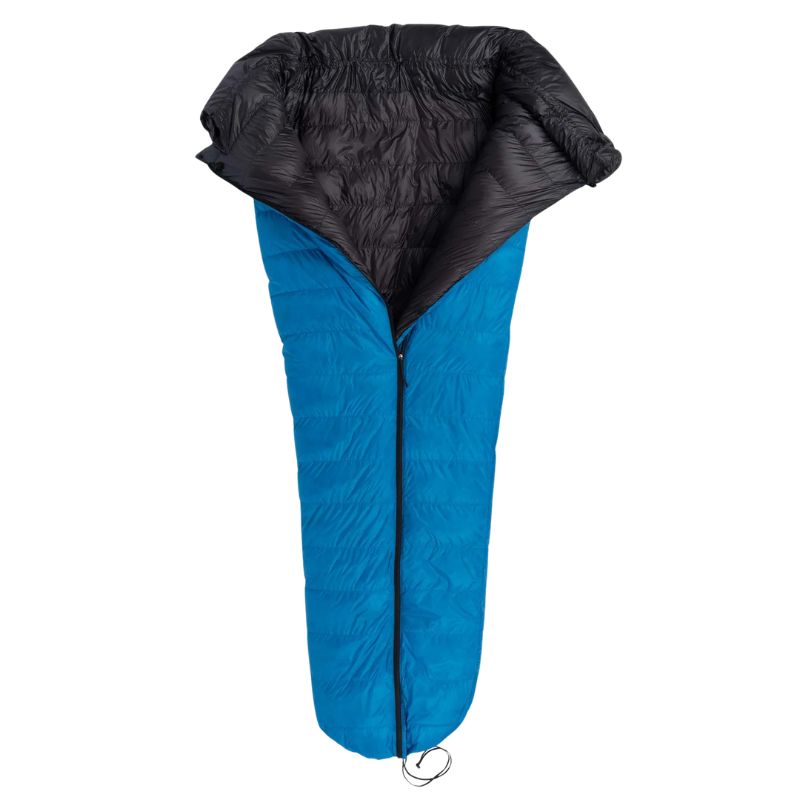
The Flicker UL is a 950+ down quilt with a full-length centre zip and has been updated with one of my favourite fabrics, Pertex Quantum Pro. This is the most versatile down bag Feathered Friends makes. Like the Zpacks Zip Around bag (which is lighter), you can open it flat on a warm desert night, zip it up as a mummy on a cold alpine morning.
It is slightly heavier than the Revelation or HMG 20, but the trade-off is the build quality. Feathered Friends has the best fit and finish in the industry, and the wide and tall sizes are genuinely sized for big bodies, not just marketing.
Trade-off: Heavier than pure UL quilts. Premium price.
Best for: Big-bodied or tall hikers who want a Feathered Friends-quality bag that flips between cold and warm conditions.
Compare Prices:
Lightest Mainstream Backpacking Quilt
Therm-a-Rest Vesper 20F Quilt Review
Weight: 1 lb. 3 oz / 550 grams
Down fill power: 900 hydrophobic goose down
Fill weight: 12.5 oz / 360 grams
Shell weight: 6.5 oz / 190 grams
Footbox: Sewn-through
Pack size: Not specified
Temperature rating: 20 F / -7 C (sleeps closer to 25 F)
Pros:
> Very Lightweight
> Small Pack Size
> Good pad attachment system with the sleeping pad
Cons:
> Not as warm as some of the other quilts
> More like a 25F quilt
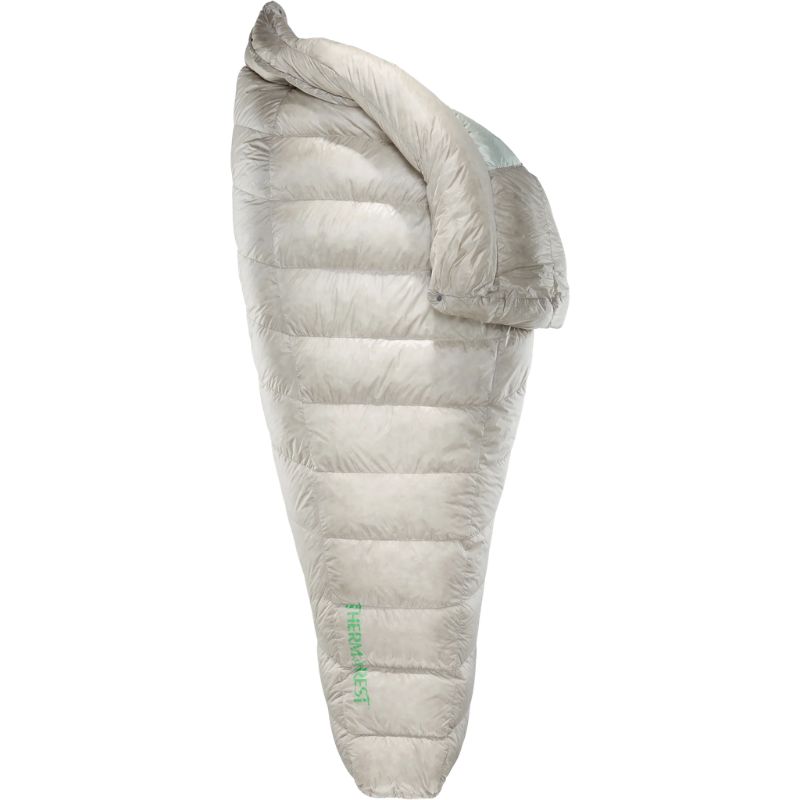
The Therm-a-Rest Vesper is the lightest mainstream quilt you can buy and still get serious 900 fill power hydrophobic down. It is genuinely ultralight and packs very small, so it gets a place on this list.
In real use it sleeps closer to 25 F than the 20 F on the label, and the cut is snug, back sleepers fit fine, side sleepers and bigger builds will feel cramped. Pair it with a high R-value pad and don’t expect comfort below freezing.
Trade-off: Closer rated to 25F/32F, narrow cut.
Best for: Smaller-build summer backpackers who want the lightest mainstream-brand quilt available at REI.
Compare Prices:
Best Stock Backpacking Quilt 2026
Sea to Summit Ember 30F Quilt Review

Weight: 1 lb. 5.5 oz / 609 grams
Down Fill Power: 850+ ultradry down
Fill Weight: Not available
Shell Weight: Not available
Footbox: Drawcord
Pac Size: 5.1L
Temperature rating: 30 F / -1 C (45 F also available)
Pros:
> Lightweight
> Very small pack size
> Highest fill weight of all the quilts.
Cons:
> No Hood
> Would be nice with a higher fill power
The Sea to Summit Ember is the quilt I recommend to anyone who needs a quality stock quilt on the shelf today. The latest version uses responsibly sourced 850+ down with ULTRA-DRY treatment and one of the lightest shells of any mainstream quilt.
What sets it apart from cottage quilts is the built-in attachment system, called QuiltLock, that lets you clip the Ember quilt to a Sea to Summit sleeping bag for very cold trips, you carry one bag in summer and combine the two for shoulder seasons or winter. I tested both the ember and STS spark sleeping bag like this and it combines to make a Winter and Cold Weather Sleeping Bag.
For the price and the immediate availability, this is an easy recommendation for a hiker who does not want to wait 1-2 months for a custom build.
Trade-off: Only 30 F so not a true cold-weather option. More down fill and higher fill power would make it lighter still.
Best for: Backpackers who want a high-quality quilt available now, and Sea to Summit sleeping bag owners who want a modular sleep system.
Compare Prices:
Best Budget Backpacking Quilt
REI Co-Op Magma 30 Down Trail Quilt

Weight: 1 lb 4.3 oz / 575 grams
Down Fill Power: 850 down hydrophobic
Fill Weight: 11.6 oz / 329 grams
Shell Weight: 8.7 oz / 246 grams
Footbox: Zippered with drawcord (current version)
Packsize: 3L
Temperature rating: 30 F / -1 C
Pros:
> Reasonable price
> Lightweight backpacking quilt
> Small compressed pack size
> Quality 850 loft down
Cons:
> Only rated to 30 F so not as warm as some of the others
If you want a real backpacking quilt for the lowest reasonable price, the REI Magma 30 is it. 850 fill water-resistant down, ripstop nylon shell with DWR, a workable pad attachment system, and a 3 L pack size, all for materially less money than any cottage quilt.
The current version has a zippered drawcord footbox, which is an improvement on the older sewn version because it lets you vent on warm desert nights.
The trade-off is the 30 F rating which is quite accurate. This is a summer quilt for most thru-hikers. For shoulder seasons and the Sierra you will want one of the 20 F quilts above.
Trade-off: Only one temperature rating. Not as durable as premium cottage quilts.
Best for: New thru-hikers, summer backpackers, and anyone who wants a serious quilt under the cottage-builder price.
Compare Prices:
Read More:
- Ultralight Sleeping Bag for Backpacking
- Zpacks Zip Around Sleeping Bag Quilt Review
- Sea to Summit Ember Quilt Review
- Cold Weather Winter Sleeping Bag
- Sleeping Bag Liner for Backpacking
- Ultralight Backpacking Pillows
- Ultralight Down Booties
- Ultralight Backpacking Sleeping Mats
- Ultralight Backpacking Backpacks
- Ultralight Down Jackets for Hiking
- Ultralight Down Pants
Backpacking Quilt Buyers Guide
Buyers Guide – Backpacking Quilts
Quilts vs Sleeping Bags for Thru-Hiking
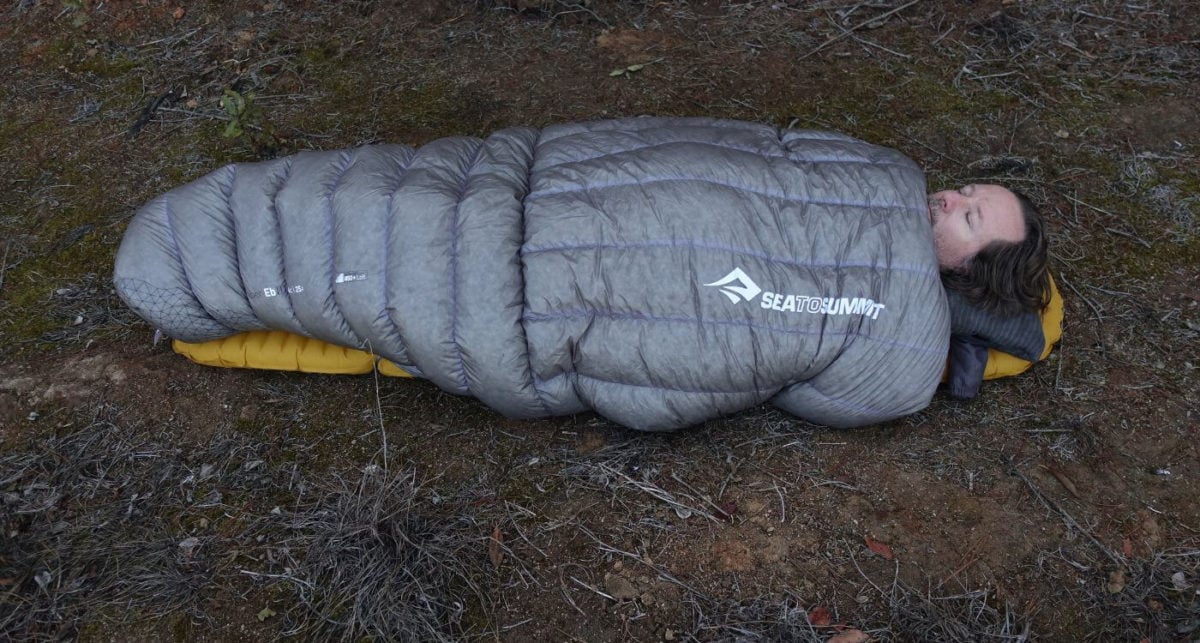
A backpacking quilt is essentially the top half of a sleeping bag with a footbox. The reasoning is simple: the down underneath you in a sleeping bag is compressed by your body weight and adds little to no warmth, so you can cut it out and let your ultralight sleeping pad do the insulating from below. The result is a lighter, smaller, cheaper sleep system that breathes better on warm nights.
I have a love / hate relationship with backpacking quilts. Quilts win above 30 F when it comes to warmth to weight. Below that I prefer one of the best ultralight sleeping bags because the full enclosure beats drafts more reliably than any pad attachment system. When it gets really cold you need the warmth of a 4 Season Winter Sleeping Bag for winter camping. The mummy-style sleeping bag of winter bag is better suited to the cold.
Temperature Ratings
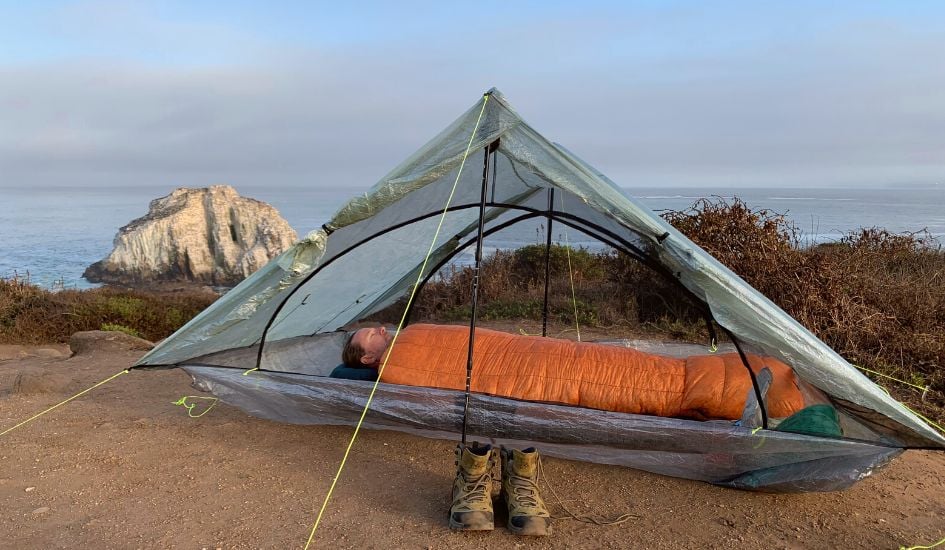
There is no ISO 23537-1 standard for quilts. Manufacturers self-rate, and ratings vary between brands. The rule of thumb is to buy a quilt rated 10 F and never use it in temperatures below 20F. Below 20F a sleeping bag will always be better.
Women generally sleep colder than men because of lower body mass and tend to suffer cold feet first. Cold sleepers and women should size down by 10–15 F: a 10 F quilt is a better default than a 20 F.

Down Fill Power and Fill Weight
Fill power measures the loft in cubic inches per one ounce of down. 800 fill puffs up to 800 cubic inches; 950 fill lofts up to 950 cubic inches. Higher fill power gives more warmth per gram. Fill weight is how many ounces of down are inside the quilt, this is one of the important numbers that actually controls warmth.
Two 20 F quilts can have very different fill weights as you have seen in the backpacking quilt comparison table earlier in this review. For thru-hiking, look for fill power 850+ and fill weight at least 12 oz for a 30 F quilt and 14 oz for a 20 F quilt.
Down vs Synthetic for Wet Trails
Down still wins on warmth-to-weight, packed size and longevity. A quality down quilt is good for 1000+ nights or for most hikers, a decade of use. Synthetic insulation is worth considering for very wet trails (think Te Araroa or sustained AT spring rain) where you can’t dry your gear. The Enlightened Equipment Revelation Apex is the synthetic version of the most popular thru-hike quilt in the world.
Treated down (Hyperdry, ExpeDry, DownTek, Nikwax) gives a small wet-weather buffer at the cost of slightly less loft than untreated down. Most cottage builders let you choose.
Shell Fabric and Denier
Most ultralight quilts use 7D, 10D or 20D ripstop nylon. 7D is the lightest and the most fragile, fine for tent sleeping but easier to snag. 10D is the sweet spot for most thru-hikers. 20D is the most durable and the choice if you cowboy camp regularly or have an enthusiastic dog.
DWR-treated shells help with condensation and incidental rain inside a tent but are not waterproof, keep the quilt in a dry bag when hiking.

Footbox Design
- Sewn-through footbox is the warmest, lightest and what I prefer for serious cold (Katabatic Sawatch, HMG 20°, EE Enigma, Zpacks Solo).
- Zippered footbox with a drawcord (EE Revelation, REI Magma) lets you vent on warm summer nights at the cost of a small cold spot.
- Drawcord-only footbox is a middle ground, less venting than a zip, less warm than sewn.
Pad Attachment Systems and Draft Collars
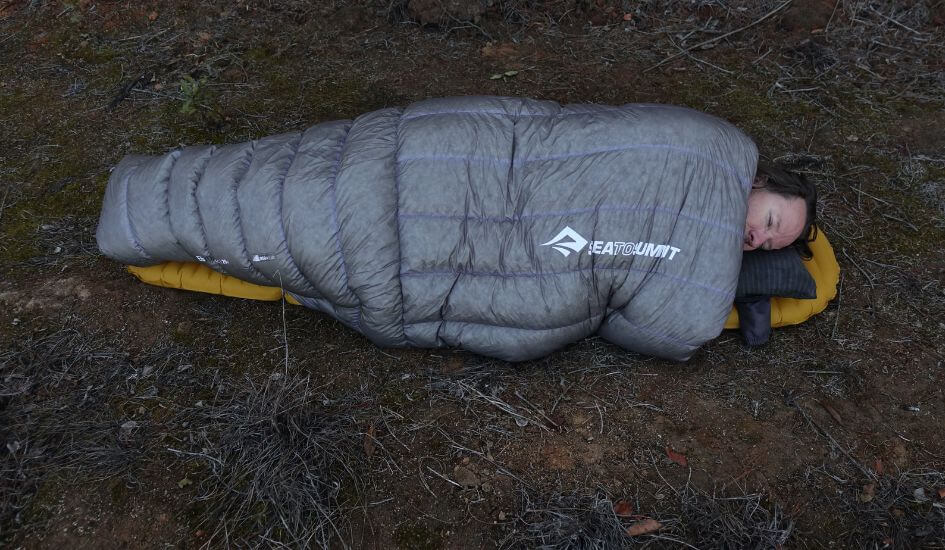
A pad attachment system is what makes a quilt actually work in cold weather. The Katabatic strap-and-cordlock system is the best I have used. Enlightened Equipment’s wafer clips are the easiest to operate one-handed in the dark. UGQ’s dynamic tension control hides elastic inside the quilt edges and seals drafts when you roll.
Full length Zip quilts such as the Zpacks and Feathered Friends do not need any pad attachment as they can be zipped all the way up and will not let in draft as you toss and turn.
A draft collar is a tube of down that wraps your shoulders. On a 20 F quilt the draft collar is the difference between sleeping warm and waking up cold; cottage builders usually charge a small upcharge for it and it is worth every gram.
Width, Length and Sizing
Buy a quilt that is wide enough to drape and pool on the ground on both sides of you. Most “regular” quilts are 50–55 inches wide; if you toss and turn or sleep on your side, size up. For length, your quilt should reach around your face when you stretch out flat, measure from your shoulders to the bottom of your feet, not your full height.
Stomach sleepers should size up because pointed toes eat several inches of footbox.
Sleeping Pad R-Value for Quilt Users
Quilts have no insulation underneath you, so the sleeping pad does all the underbody insulating. Use a pad with R-value 4.0 or higher for three-season backpacking, R-5+ for cold shoulder seasons, R-6+ for winter. The Therm-a-Rest NeoAir XLite NXT (R 4.5) and XTherm NXT (R 7.3) are the standards.
A high R-value pad matters more with a quilt than it does with a sleeping bag. Skip this and you will be cold no matter how good the quilt is.
Stock vs Custom Quilts
Stock quilts (Sea to Summit Ember, REI Magma, HMG 20°, Therm-a-Rest Vesper, Western Mountaineering AstraLite) ship today, have a fixed feature set, and use slightly heavier shell fabrics. They are the right choice if your trip is next week.
Custom quilts (Katabatic, Enlightened Equipment, Zpacks, UGQ, Hammock Gear) let you spec fill power, length, width, footbox, shell fabric, draft collar and overfill. Lead times vary but can run from 2 weeks to 8+ weeks. Plan months ahead.
Stuff Sacks for Quilts
Keeping a sleeping bag dry while hiking is critically important. Heavy rain, a leaking backpack, or a fall when crossing a river can make for an uncomfortable night’s sleep at best and a life-threatening situation at worst.
Over the years I have used a Thermarest fleece stuff sack, which doubled as a pillow, and the Sea to Summit dry bag. Both have worked well and served their purpose.
Recent years have seen many ultralight hikers make the switch to Dyneema stuff sacks such as those from Hyperlite Mountain Gear. These Uber lightweight, strong, and waterproof stuff sacks come in multiple sizes and shapes to fit any sleeping bag and are a good investment to keep your down bag dry. The Hyperlite Mountain Gear is the preferred choice of Backpacking Quilt stuff sack.
Pack Size
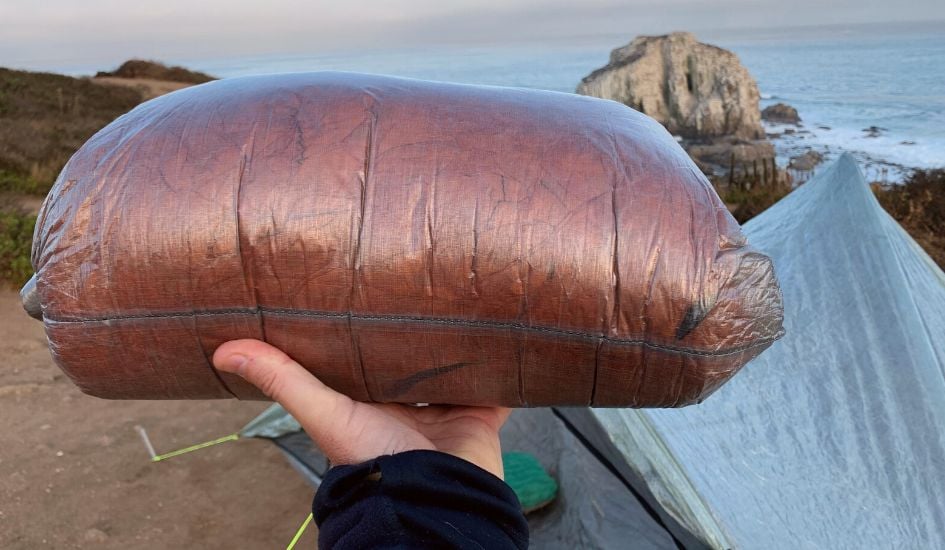
Ultra-light Quilts are more packable in both size and weight compared to sleeping bags. In fact, if you are reading this you probably want to upgrade to a quilt for backpacking trips because you want something not only lighter but with a smaller pack size than your sleeping bag.
All the best hiking quilts in this review pack to a very small size in either the stuff sack supplied or into your aftermarket stuff sack. I have tried to list the packing size in liters when available.

Care, Storage and Washing
Carry your quilt in a Dyneema dry bag. You can keep it clean and even increase the warmth of the quilt by using a Sleeping Bag Liner. But I prefer to use a Merino Base Layer instead. At home, store it uncompressed in the large mesh bag the manufacturer ships with the quilt. Wash it with down-specific soap (Nikwax Down Wash) once a year, never a regular detergent. See my full guide to washing a down sleeping bag for the full process.
Quilt Price
The Best Lightweight Hiking Quilts can cost a lot of money but it is money well spent. It is not unusual to keep a quality quilt for 10 years. I kept a quality winter sleeping bag for 20 years before I decided to sell it. It was still in near-perfect condition.
In most cases, it is not only money well spent, but one of the best investments you can make. All of the bags listed should last at least 10 years or well over 1000 nights of use.
The highest cost in these quilts is the fill power rating of the down. 950+ loft will cost a lot more than 800 loft.
Warranty and Return Policy
Before purchasing an Ultralight Backpacking Quilt be sure to check the return policy. Make sure you can return it if you ordered the wrong size or it just doesn’t work for you. Be aware that you will not be able to return or exchange a used Backpacking Quilt unless there is some sort or manufacturing issue.
Conclusion
The backpacking quilts that I rate the highest are the following:
- Best Overall: Katabatic Sawatch 15F
- Best Custom Ultralight Thru-Hiking Quilt: Enlightened Equipment Revelation 20F
- Best Stock Ultralight Cottage Quilt: Zpacks Solo Quilt
- Warmest Ultralight Quilt: Hyperlite Mountain Gear 20F Quilt
- Best Sleeping Bag / Quilt Hybrid: Zpacks 20F Zip Around Sleeping Bag Quilt
- Best Zippered Quilt: Feathered Friends Flicker UL 20F Quilt
- Lightest Mainstream Down Quilt: Therm-a-Rest Vesper 20F Quilt
- Best Stock Quilt You Can Buy Today: Sea to Summit Ember 30F Quilt
- Best Budget Quilt: REI Magma 30F Trail Quilt
Read More:
- Ultralight Sleeping Bag for Backpacking
- Zpacks Zip Around Sleeping Bag Quilt Review
- Sea to Summit Ember Quilt Review
- Cold Weather Winter Sleeping Bag
- Sleeping Bag Liner for Backpacking
- Ultralight Backpacking Pillows
- Ultralight Down Booties
- Ultralight Backpacking Sleeping Mats
- Ultralight Backpacking Backpacks
- Ultralight Down Jackets for Hiking
- Ultralight Down Pants
Follow along on Social Media
Frequently Asked Question
What is the best ultralight backpacking quilt for thru-hiking?
For most thru-hikers, the Katabatic Sawatch and Enlightened Equipment Revelation 20F is the best balance of weight, warmth, customisation and price. If you want maximum warmth-to-weight in a stock quilt, the Hyperlite Mountain Gear 20° Quilt with 1000 fill power down is the warmest ultralight option I have used. For the best pad attachment system on a cold thru-hike, the Katabatic Sawatch 15F is my top overall pick.
Are backpacking quilts warm enough for cold weather?
Quilts work well down to about 20F/-6C when paired with a high R-value sleeping pad and a beanie or down hood. Below 20F/-6C a draft collar becomes essential and below 10 F I would switch to a 4-season sleeping bag with a hood.
What temperature rating should I get?
For a Triple Crown thru-hike (PCT, AT, CDT), a 20 F quilt is the most versatile single rating. Cold sleepers, women, early season hikers and high-altitude hikers should size down to 10 F Quilt or even better consider a sleeping bag. Summer-only desert hikers can get away with a 30 F quilt.
Down vs synthetic for thru-hiking – which is better?
Down wins on warmth-to-weight, packed size and longevity. Synthetic is worth considering for very wet trails like the Te Araroa or AT in spring where you cannot reliably dry gear. For the Triple Crown trails I carry down every time and protect it with a Dyneema dry bag.
Do I need a pad attachment system?
Yes if you sleep below 40 F. Without it, side drafts will sneak under the edges of the quilt every time you roll. The best systems are Katabatic’s strap-and-cordlock setup and UGQ’s dynamic tension control. EE’s wafer clips are the easiest to use in the dark.
Are quilts good for side sleepers?
Yes, often better than sleeping bags. A wider quilt (Katabatic Flex, EE Revelation in wide) plus a working pad attachment system handles the rolling and tossing of side sleepers better than a mummy bag does.
How wide should a backpacking quilt be?
55 inches is a reasonable default for ground sleepers. Side sleepers, big builds and cold sleepers should size up to 58–60 inches. The quilt needs to drape and pool on the ground on both sides of you to seal out drafts.
Can I use a backpacking quilt in a hammock?
Yes, every quilt on this page works as a top quilt in a backpacking hammock. You will also need an underquilt for back insulation – a sleeping pad inside a hammock is a poor substitute.
Read More:
- Ultralight Sleeping Bag for Backpacking
- Zpacks Zip Around Sleeping Bag Quilt Review
- Sea to Summit Ember Quilt Review
- Cold Weather Winter Sleeping Bag
- Sleeping Bag Liner for Backpacking
- Ultralight Backpacking Pillows
- Ultralight Down Booties
- Ultralight Backpacking Sleeping Mats
- Ultralight Backpacking Backpacks
- Ultralight Down Jackets for Hiking
- Ultralight Down Pants


BikeHikeSafari Gear Review Process
The author, Brad McCartney from BikeHikeSafari is a small independent adventurer and outdoor gear tester who owns and runs BikeHikeSafari.com.
BikeHikeSafari is not part of a large blog network and is proudly independent. All reviews on this site are independent and honest gear reviews of outdoor products by the author.
The author, Brad McCartney is a very experienced triple crown thru-hiker, adventurer, and bike tourer having spent 1000s of nights sleeping in a tent and sleeping bag (Read more). He was a manager of an outdoor retail store and is very experienced in what is important when using and testing gear for reviews like this.
BikeHikeSafari will never receive any money for reviews and they do not accept sponsored reviews on this website. All the comments about the gear reviews are from the author based on his years of experience. Hope this independent review was helpful for you.

