

After thousands nights in a sleeping bag, across the Triple Crown trails, the Te Araroa, and several long-distance bike tours, I’ve learned that when the temperature drops well below freezing a winter bag is the one piece of gear you can’t get wrong.
This guide is for cold weather backpackers, thru-hikers and mountaineers heading out when the mercury drops to 0°F / -18°C and below, where a genuine 4-season bag matters. My current top pick is the Feathered Friends Snowbunting Light 0, and the Sea to Summit Spark 0F is the best warmth-to-weight option if you’re counting grams for a winter thru-hike, check out the Quick Picks below for more info or keep reading. The trade-off you need to understand is warmth-to-weight versus weather resistance, a lighter 900-fill bag saves your back, but a heavier Pertex-shelled bag stays drier and lofts longer when your tent ices up. For how I research and field-test winter gear, see the BikeHikeSafari Gear Review Policy.
Quick Pick: Best Winter Sleeping Bags
- Best overall: Feathered Friends Snowbunting Light 0 – 900+ fill Pertex Quantum Pro bag, the warmest, most weather-capable 0°F picks for serious winter treks.
- Best warmth-to-weight: Sea to Summit Spark 0F – 850+ fill Hydrodown UL bag that cuts grams without dropping below 0°F.
- Best for Australia & New Zealand: Macpac Serac 1000 – Pertex Quantum shell and HyperDRY duck down, the local pick if you’re down under.
- Best for variable conditions: Nemo Sonic 0F – Thermo Gills thermoregulation lets one bag swing from 0°F to mild shoulder-season nights.
- Best lightweight 4-season: The North Face Inferno 0 – 800-fill ProDown and recycled shell at a feathery weight.
- Best value: Mountain Hardwear Bishop Pass 0F – 650-fill down, 0°F rating, and a price that undercuts the field.
- Best synthetic: Mountain Hardwear Lamina 0 – the pick for wet, low-snow winters where down struggles.
- Best wide / roomy fit: Western Mountaineering Kodiak – 66″ shoulder girth for side and stomach sleepers.
- More Quality Winter Sleeping Bags:
- Marmot Lithium 0F
- Mountain Hardwear Phantom 0F
- RAB Ascent 0F
- RAB Neutrino 0F
How We Tested
The winter sleeping bags in this guide are researched and, where possible, field-tested by an experienced long-distance hiker and former outdoor store manager. Across thru-hikes, shoulder-season trips and bikepacking trips, I judge winter sleeping bags on warmth-to-weight, weather resistance, packability, durability, comfort, and value for serious backpacking. Some of the items were supplied by the manufacturer and some were purchased by the author for this review. For more on how we research and review gear, see the BikeHikeSafari Gear Review Policy.
Winter Sleeping Bag Comparison Table
| Brand | Weight | Temp rating | Down Fill |
|---|---|---|---|
| Feathered Friends Snowbunting Light 0 | 2 lb. 9.8 oz / 1185 g | 0 F / -18C | 900+ |
| Sea to Summit Spark 0F | 2 lbs. 10.6 oz / 1208 g | 0 F / -18C | 850 |
| Macpac Serac 1000 | 3 lbs / 1370 g | 1 F / -17C | 800 |
| Nemo Sonic 0F | 3 lbs. 4 oz / 1470 g | 0 F / -17C | 800 |
| The North Face Inferno 0 | 2 lbs. 10 oz / 1190 g | 0 F / -17C | 800 |
| Mountain Hardwear Bishop Pass 0F | 3 lbs. 2 oz / 1420 g | 0 F / -17C | 650 |
| Mountain Hardwear Lamina 0 | 4 lbs. 2 oz / 1871 g | 0 F / -17C | Synthetic |
| Western Mountaineering Kodiak MF | 2 lbs. 12 oz | 0 F / -17C | 850 |
| Marmot Lithium 0F | 3 lbs. 0.9 oz / 1378 g | 0 F / -17C | 800 |
| Mountain Hardwear Phantom 0F | 2 lbs. 10.4 oz | 0 F / -17C | 850 |
| RAB Ascent 0F | 3 lbs. 12 oz | 0 F / -17C | 650 |
| RAB Neutrino 0F | 2 lbs. 13 oz | 0 F / -17C | 800 |
Best Winter Sleeping Bags for Backpacking & Mountaineering 2026
Best Sleeping Bag for Winter 2026 – Overall
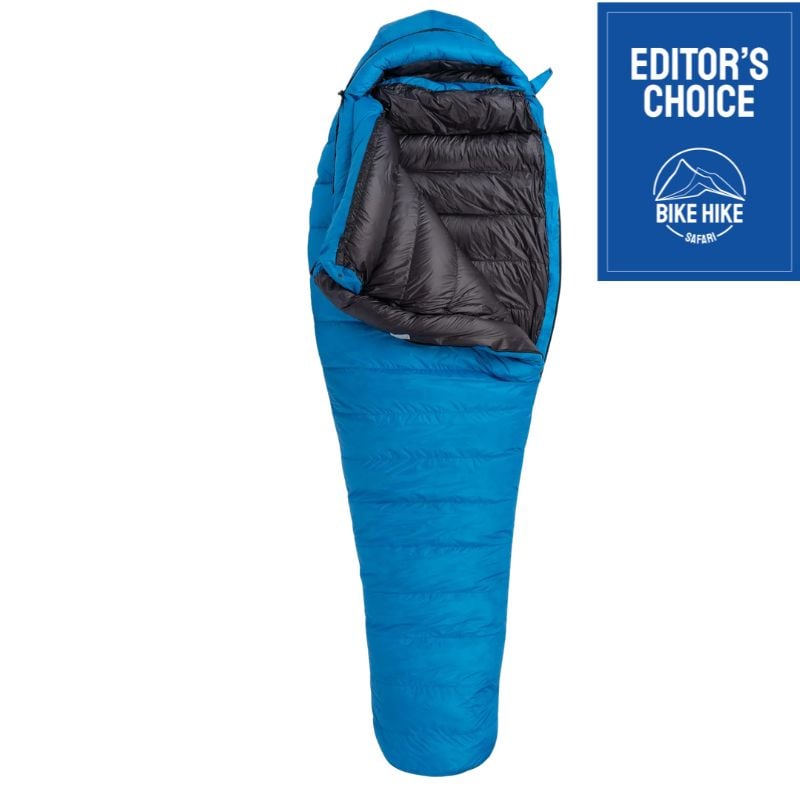
Feathered Friends Snowbunting Light 0
Pros:
> 900 FP Down
> 100% Responsible Down Standard (RDS) Certified
> Pertex Quantum Pro Outer Fabric is water resistant, breathable, and Durable Water Repellent (DWR) treated
> Draft tube, hood, and draft collar with continuous baffles
Cons:
> Not much, can be a bit of a tight fit for some people
The Snowbunting Light 0 is the one bag in this review I’d trust first when the forecast genuinely turns hostile. Feathered Friends builds it in Seattle with 900+ fill power goose down, and that top-tier fill does what cheaper down can’t: it lofts fast, traps a huge volume of air, and still packs down impressively small for a zero-degree bag.
The standout feature is the shell. The Pertex Quantum Pro fabric is my favorite fabric for winter sleeping bags. It is water resistant, breathable, and DWR treated, which matters most at 3am when your breath has frosted the inside of the tent and started to fall back onto your bag. There’s also a breathable and heat retaining 10D lining fabric called FlyTi, which has titanium film added to assist in reflecting and retaining heat.
For winter thru-hikers and mountaineers the warmth-to-weight is genuinely excellent, but be honest about the fit. This is a true mummy, 57 inches at the shoulders, and 53 inches at the hips can feel a bit tight for some, especially side sleepers. There’s a small internal stash pocket.
That narrow cut is the trade-off, it’s thermally efficient and light, but it is not the most roomy bag in this review.
Best for: winter thru-hikers, mountaineers, and anyone who wants maximum warmth per gram without compromising weather resistance.
Compare Prices:
Best Warmth to Weight 4-Season Sleeping Bag 2026
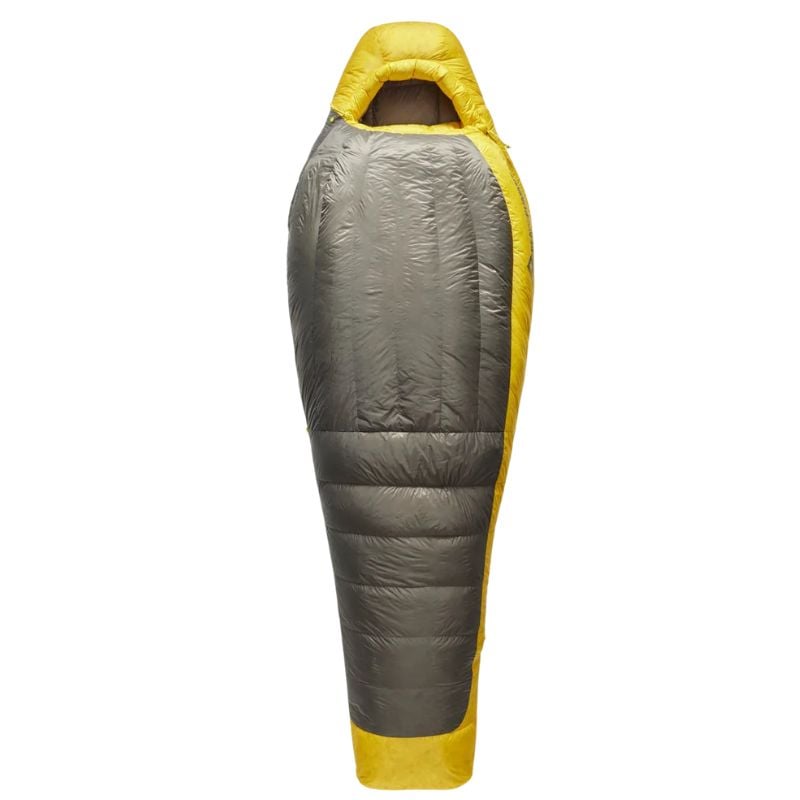
Sea to Summit Spark 0F
Pros:
> 850 FP of RDS Loft Goose Ultra-Dry down
> Small compressed size of less than 10L
>
> 100% Responsible Down Standard (RDS) Certified
> Lightweight
Cons:
> Zipper prone to snagging
The STS Spark is the same 850+ Ultra-Dry Down used in the Spark Sleeping Bags that feature in the review of the best ultralight 3-season sleeping bags. It is a leaner, more compressible package than the warmer expedition quality Sea to Summit Alpine Sleeping Bag. The result is a very small compressed pack size and class leading warmtth to weight.
The double draft collar you don’t get on lighter 3-season bags makes a real difference here; it seals the neck and shoulders so body heat doesn’t leak out the top. The lightweight 10D shell sheds light snow and light damp, and the Ultra-Dry hydrophobic treatment is the reason it stays lofted when a wet snow night leaves frost on the bag by morning.
The trade-off is the same ultralight shell. The 10-denier face fabric demands a little care. And the footbox insulation is thinner than the torso, so cold sleepers should plan on down booties. This is a bag for someone counting grams, not someone looking to sprawl.
Best for: winter thru-hikers and fast-and-light backpackers who want 0°F warmth at the lowest practical weight.
Compare Prices:
Best Winter Sleeping Bag for Australia and New Zealand 2026
Macpac Serac 1000

Pros:
> 800 FP of HyperDRY RDS goose down
> Pertex Quantum Shell
> 100% Responsible Down Standard (RDS) Certified
> Cool zips to allow only your arms to come out of the bag, great for inside the tent
Cons:
> Only Available in Australia and New Zealand
If you’re based in Australia or New Zealand, the Macpac Serac 1000 is still the default answer for sub-zero camping, and it’s the regional pick most American and European competition sites completely ignore. The 800 fill power HyperDRY goose down keeps moisture off the feathers, and the Pertex Quantum shell is light, windproof, and weather resistant.
The feature I value most is the twin-chamber directional draft tube, which seals the zipper far better than a single tube, and the draw-cord collar that keeps heat in at your head. The “cool zips” that let your arms out while you stay in the bag are a small touch that makes camp tasks in the snow far less painful.
I used the previous model, the Macpac Epic 1000 for many years, and the Serac 1000 is a meaningful step up. It is lighter, uses better material, and a better fit. The one real limitation is availability: it’s only sold in Australia and New Zealand, so this pick is for a specific reader.
The trade-off is weight against value. At around three pounds it isn’t ultralight, but the ISO ratings (limit -17°C, extreme -40°C) mean you’re getting real expedition-class warmth.
Best for: Australian and New Zealand winter campers, ski tourers, and anyone heading to Everest Base Camp or Kilimanjaro from down under.
Compare Prices:
Best Winter Sleeping Bag for Variable Temperatures
Nemo Sonic 0F

Pros:
> 800 FP down
> 100% Responsible Down Standard (RDS) Certified
> Waterproof resistant, spacious, and breathable
Cons:
> Exterior Pocket not big enough for most larger phone models
Nemo gave the Sonic a significant rework several years ago, and it’s the pick if your winters swing between genuinely cold nights and mild, damp ones. The Thermo Gills which is two zippered vents running down the top half of the sleeping bag now have independent inner and outer zippers, so you can fine-tune ventilation far more precisely than any other bag here.
The redesigned chevron baffles hold the 800-fill hydrophobic down in place and even out loft, and Nemo added a layer of synthetic insulation in the footbox, which is exactly where condensation and moisture collect first.
The knock against it is value on weight: at 3 lb 4 oz it’s neither the lightest nor the warmest, and the exterior pocket is too small for anything but the slimmest phone. But that Thermo Gills versatility is genuinely unique, and it’s why Backpacker and Outdoor Gear Lab both rate it.
The trade-off here is carrying a little extra weight in exchange for one bag that covers a huge temperature range.
Best for: shoulder-season backpackers and winter campers whose nights swing from single digits up into the 30s.
Compare Prices:
Best Lightweight Winter Sleeping Bag
The North Face Inferno 0

Pros:
> Lightweight
> 100% recycled shell
> Water resistant 800 loft down
Cons:
> Zipper snags a little bit more than some of the other bags on this review
The Inferno 0 is a qualiy lightweight bag that is a truly warm bag for gram counting winter hikers. The 800-fill ProDown gives a high warmth-to-weight ratio, and the 100% recycled 15-denier shell keeps the whole thing under two pounds.
There’s an honesty worth stating up front: the 0°F is the temperature rating, but the comfort rating sits around 15°F, so a cold sleeper should treat this as a “teens and warmer” bag. That’s standard across this category — most 0°F bags only comfort-rate in the teens — but The North Face is clearer about it than most.
The high-quality down is treated to resist moisture, and the design is a clean, no-frills alpine mummy. The trade-off is durability: a 15-denier shell needs care, and the zipper snags a little more than pricier options.
Best for: lightweight winter backpackers and mountaineers who want a packable, genuinely light 0°F-rated bag.
Compare Prices:
Best Budget Winter Sleeping Bag
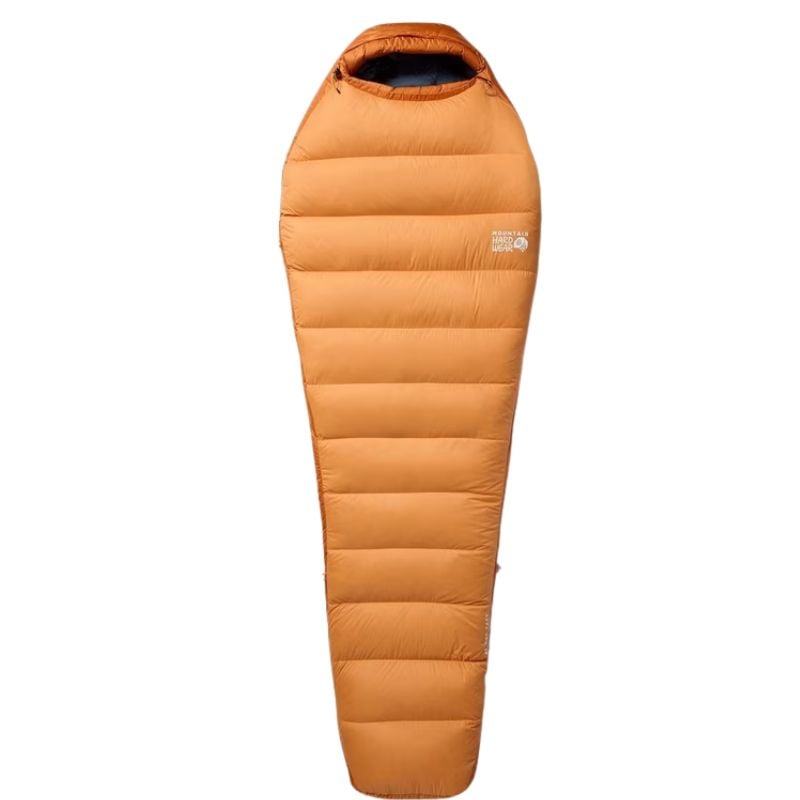
Mountain Hardwear Bishop Pass 0F
Pros:
> 650 FP down
> Reasonably priced
> Still keeps you warm for a budget price
Cons:
> A bit heavier and bulkier than some of the higher quality bags
The Mountain Hardwear Bishop Pass 0F sits comfortably under $400 while most of the competition north of $600. It’s a genuine cold-weather down bag, not a cut-down three-season bag wearing a winter label.
What you’re buying is honest rather than flashy. The 650-fill RDS-certified duck down won’t win any warmth-to-weight awards next to 900-fill goose down, but Mountain Hardwear stuffs a generous amount of it into the regular size, which is how it still earns a legitimate 0°F lower-limit rating. The roomier Performance Plus mummy cut gives you space at the shoulders, hips, and legs that race-cut alpine bags don’t — and that’s exactly where budget bags usually punish you.
The feature set is more complete than the price suggests. A shaped draft collar and adjustable down-filled face gasket seal the neck and head, there’s a full-length down draft tube along the anti-snag two-way zipper, and the contoured footbox follows a natural foot position. You even get an internal stash pocket, glow-in-the-dark zipper pull, and both a compression sack and mesh storage bag in the box.
The trade-offs are where you’d expect them. It’s one of the heavier bags in this guide at over three pounds, the 650-fill down means it doesn’t pack as small as a premium bag, and that 0°F rating is a lower-limit figure — the comfort rating is 13°F, so a cold sleeper should treat it as a mid-teens bag.
Best for: budget-conscious winter backpackers and first-time cold-weather campers who want genuine 0°F warmth and a roomier fit without the premium price tag.
Compare Prices:
Best Synthetic Winter Sleeping Bag
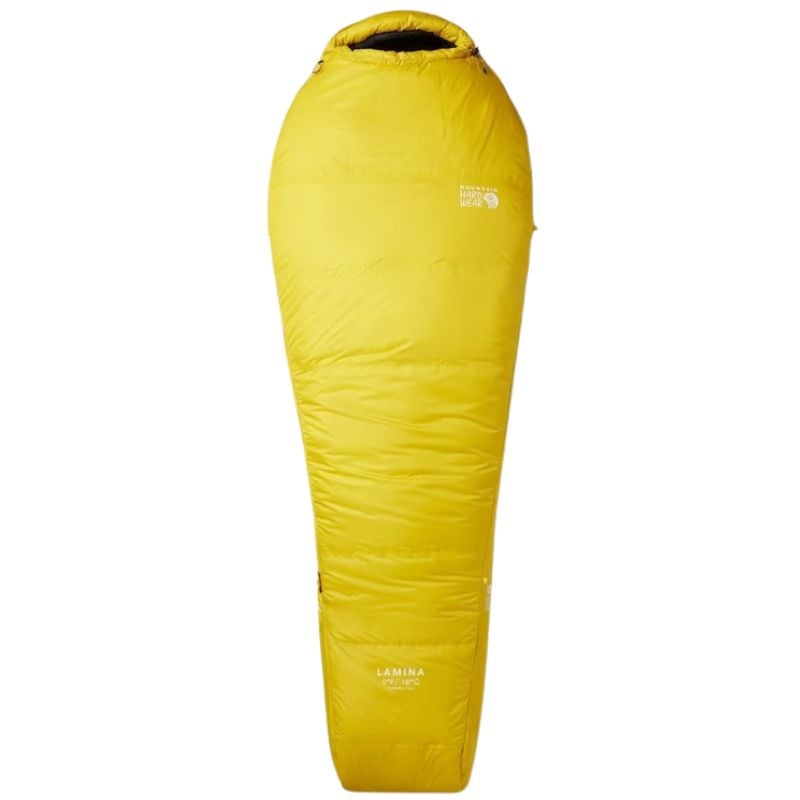
Mountain Hardwear Lamina 0
Pros:
> Quality synthetic fill
> Reasonably priced
> Still keeps you warm if it gets wet
Cons:
> Not as compact as down sleeping bags
Every down bag in this guide has the same weakness which is keeping you warm when it’s wet, the Lamina 0 is the one option that doesn’t have that issue. Mountain Hardwear’s synthetic fill won’t match down for warmth-per-gram, but it retains loft and insulation through the damp conditions where down collapses.
It is also reasonably prices and could be a good winter bag for the Pacific Northwest, the UK, or any low-snow wet winter where moisture is the enemy more often than deep cold.
The cost is packability and weight. It doesn’t compress like down and it’s heavier for the warmth, so this isn’t a thru-hiking bag. It’s a car-camping, basecamp, and wet-weather backpacking bag.
Best for: wet-climate winter campers who need a bag that shrugs off moisture.
Compare Prices:
Best Lightweight Roomy Fit Winter Sleeping Bag
Western Mountaineering Kodiak

Pros:
> 850 FP down
> A massive 66 inches of shoulder width and 41 inches of foot girth
> 4-season bag with draft collar, full down collar, secure hood, and continuous baffles
Cons:
> Not Cheap
The Kodiak MF (the “MF” denotes the microfiber shell) is one of the roomiest genuinely warm 0°F bag anyone makes. Sixty-six inches of shoulder girth and 41 inches of foot girth mean side, stomach, and starfish sleepers can actually move.
The 850-fill goose down and 3D draft tubes make it radiate heat. The snag-resistant zipper and easy hood make it feel more refined than the spec sheet suggests.
Three honest caveats. The down is not hydrophobic, so this is a bag to keep dry. And all that room can create pockets of cold air unless you stuff a few layers into the spare space. Be aware this is the most expensive winter sleeping bag in his review.
Best for: side and stomach sleepers, big-and-tall hikers, and anyone prioritising comfort who can keep their bag dry. The extra internal space makes it possible to wear extra layers like a down jacket or down pants when needed without too much issue.
Compare Prices:
More Quality Winter Sleeping Bags
Marmot Lithium 0F

Pros:
> 800 FP goose down
> Pertex Microlight shell and lining
> Down Defender – Improved water resistance, loft, and drying time
Cons:
> Stuff Sack is small considering the size and loft of the sleeping bag
The Marmot Lithium treats the 800-fill goose down with ExpeDRY, their own quick-dry hydrophobic finish, on top of the existing Down Defender treatment. The Pertex Microlight shell keeps it light and DWR protected.
The Nautilus multi-baffle hood and smooth-curved baffles do a good job of reducing down shift and holding heat, and the two-way anti-snag zipper with draft tube is dependable. It packs to a compact size for a bag this warm.
The trade-offs: the 0°F rating is optimistic, and it doesn’t keep you as dry as some other bags in this review. The included stuff sack is also small for the loft.
Best for: budget-conscious mountaineers and winter backpackers who want down warmth and can keep their bag dry.
Compare Prices:
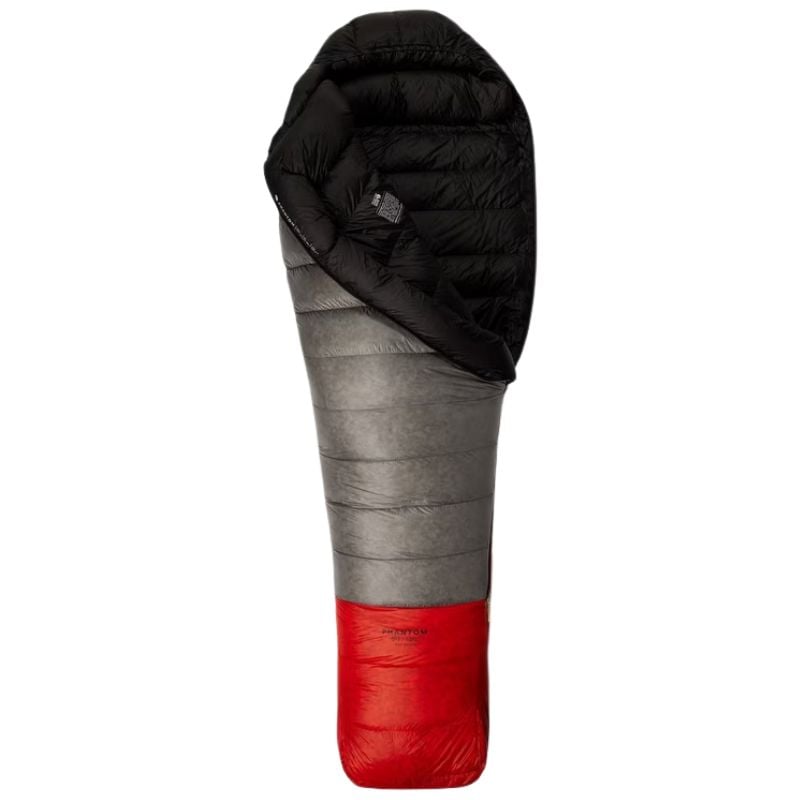
Mountain Hardwear Phantom 0F
Pros:
> 850 Fill Power goose down
> Durable, water-repellent, and lightweight
> Ease of access and use of hands outside the bag
> 100% Responsible Down Standard (RDS) Certified
Cons:
> Incredibly snug fit could feel rather restrictive for some users
The 0°F Phantom is insulated with 800-fill goose down in a durable, water-repellent shell. It’s a clean, contour-hugging mummy with dual-sided anti-snag zippers and glow-in-the-dark pulls, and an anatomically contoured footbox that follows a natural foot position. The thin shell keeps weight down, and it compresses easily for a 0°F bag. Despite being lower down the list, it could quite easily be ranked as one of the best ultralight winter sleeping bags.
The trade-off is fit and fabric. The cut is snug enough to feel restrictive for side sleepers, and Outdoor Gear Lab found the remarkably thin shell let the down shift and create cold spots, noting they wouldn’t trust it below 20°F.
Best for: alpine climbers and mountaineers who want a light, compressible down bag and sleep mostly on their back.
Compare Prices:
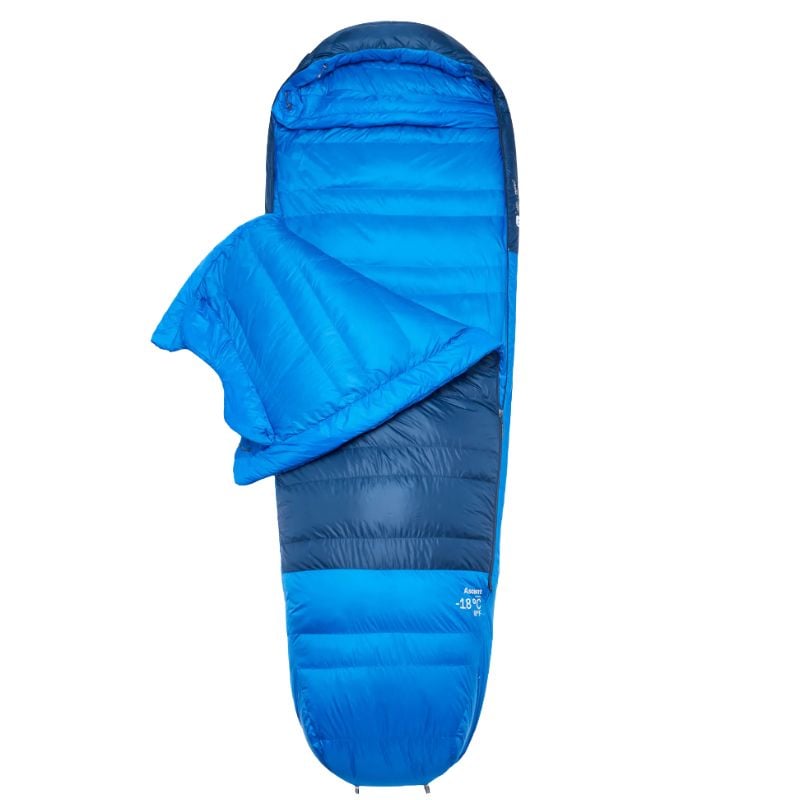
RAB Ascent 0F
Pros:
> Budget price winter sleeping bag option
> Pertex Quantum Fabric which is water-resistant and durable
> Semi-rectangular foot area for improved movement and comfort
> 100% Responsible Down Standard (RDS) Certified
Cons:
> Not suitable for taller individuals
> 650FP down
The Rab Ascent 0F is the warmest, most forgiving budget-tier winter bag you can still buy, with 2lb of 650 fill power hydrophobic duck down in a wide mummy cut.
That wide fit is the point. Unlike the trim alpine cuts above, the Ascent gives you room to wear extra layers and move around, and the semi-rectangular footbox means no pinched toes. The recycled Pertex Quantum shell is light and durable with a DWR finish, and trapezoid boxwall baffles stack neatly to loft the duck down evenly.
The trade-off is obvious from the spec sheet: 650 fill power duck down is heavier for the warmth than the 850+ goose down in the premium bags, so you’re hauling more than 3 pounds. But that’s exactly why the price stays low.
Best for: winter campers on a budget who want serious warmth and a roomy fit, and don’t mind the extra weight.
Compare Prices:
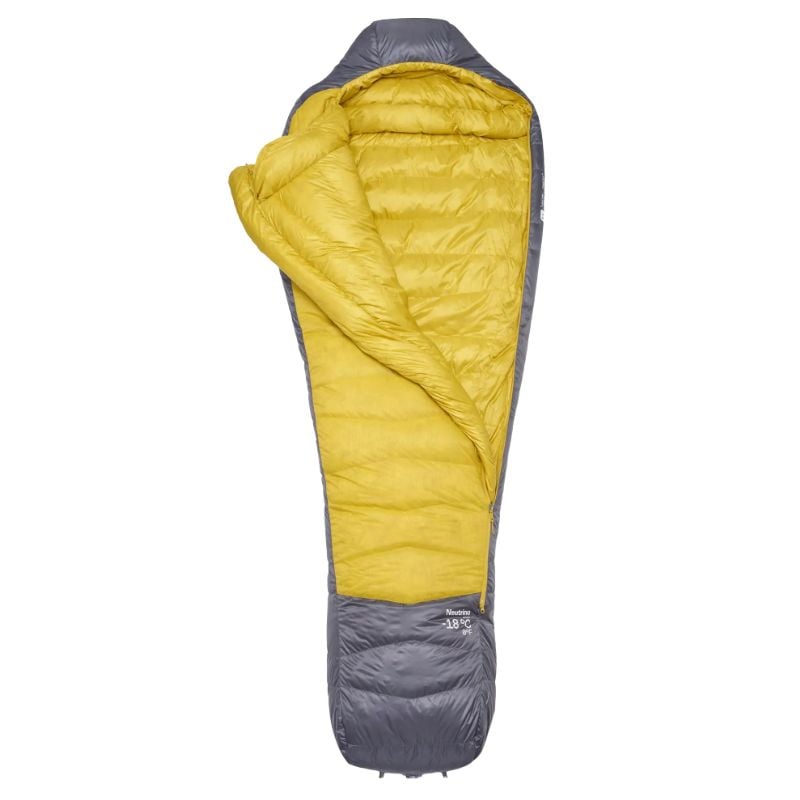
RAB Neutrino 0F
Pros:
> 800 FP of hydrophobic goose down
> 100% Responsible Down Standard (RDS) Certified
> Pertex Quantum – High-quality, lightweight, and weather-resistant fabric
Cons:
> It’s only available in one size, so for the taller adventurer it could be limiting
The Neutrino remains Rab’s highest-specification lightweight winter trekking bag, and it trades the Ascent’s roomy budget build for a leaner, warmer, more compressible package. The 800 fill power hydrophobic goose down is traceable under the European Down & Feather Codex.
Chaeron-shaped baffles keep the down over the chest and kill cold spots, and the Pertex Quantum shell is light and weather resistant with an insulated draft tube along the zip. It packs down genuinely small for a bag rated to around 0F, which is what makes it worth the step up in price from the Ascent.
The trade-offs are the single size and the tapered fit, taller hikers will find it limiting, and it’s not a roomy bag by any stretch.
Best for: thru-hikers and backpackers who want a high warmth-to-weight down bag for genuinely cold nights.
Compare Prices:
4 Season Sleeping Bag Buyers Guide
4 Season Sleeping Bag Buyers Guide
Intended Use and Environment
Before you look at a single spec, decide when and where you’ll actually sleep. A bag for winter ski touring in Colorado is a different tool than one for a wet UK winter or a car-camping basecamp. Winter camping means freezing temperatures, wind, rain, and dumps of snow, and your bag has to hold its warmth through all of it.
Be realistic about what “winter” means for you. Ask yourself whether you’ll be sleeping out in single digits and below, or whether “winter” mostly means damp nights around freezing. A wet, 30°F winter is the one scenario where a synthetic bag genuinely beats a down one. Everywhere else, down wins on warmth for weight. Some people already have a warm sleeping bag and could get by using an insulated sleeping bag liner to add just enough warmth to their current sleeping bag.

Down vs Synthetic
Down — the soft plumage under a bird’s outer feathers — is the best insulation ever found for warmth-to-weight and compressibility, which is why every top pick here uses it. The higher fill power means loftier down that traps more air for its weight.
Synthetic fill can’t match down on warmth-per-gram or packability, but it has one decisive advantage: it keeps insulating when wet. If you camp in damp, low-snow conditions where condensation and rain are constant threats, a synthetic bag is the safer call.
For cold, dry winter backpacking and thru-hiking, down is simply better. But every few years synthetic insulation takes a quantum leap and I suspect that within 10 years it will equal down.
Fill Power vs Fill Weight
These two numbers are easily confused and it matters. Fill power (the 800 or 900 number) measures down quality, the number represents how many cubic inches ounce of down will expand. Eg, one ounce of 900 fill down will expand to 900 cubic inches of loft. Fill weight is the actual amount of down in the bag. A bag can have 900-fill down but too little of it, and it’ll sleep colder than a bag full of 650-fill down.
The takeaway: don’t buy a fill power number, buy the combination. A winter bag should pair high fill power with a generous fill weight. Good down is 600–700 fill power, 800–900 is excellent, and 900+ is the ceiling you’ll find in the Feathered Friends bags.
Temperature Ratings (EN / ISO)
All modern bags carry EN or ISO ratings, standardised independent tests, but here’s the trap most people miss: many manufacturers advertise the lower “limit” rating, which is survival — not comfort. A 0°F bag often only comfort-rates in the teens, meaning you’ll survive 0°F but you may shiver all night.
The rule of thumb is to buy a bag rated about 20°F colder than the temperatures you’ll actually experience. If you plan to camp in 15°F, buy a 0°F or lower bag, not a 20°F one. Also know that ISO stops rating below -4°F, so a true -20°F bag is harder to verify — test it before a serious expedition.
Another important thing to consider is the sleeping pad which should be rated to the temperatures you will be sleeping in. A winter sleeping bag will not keep you as warm as promised if using a summer rated sleeping mat.
Shape: Mummy vs Rectangular
For winter, a mummy bag is the right shape almost every time. It minimises dead air space so your body heat isn’t wasted warming the void, and the hood keeps your head — where you lose the most heat — covered. The trade-off is that the tapered cut feels restrictive to side sleepers.
Rectangular bags are roomier and far more comfortable, but that extra volume is exactly what makes them cold; your body can’t warm it.
Shell Fabric and DWR
The shell is your bag’s first line of defence against moisture. Pertex fabrics (Quantum, Pro) are the gold standard for winter bags, balancing light weight, wind resistance, and durability. Ripstop weaves add tear resistance without much weight.
DWR — durable water repellent — is the coating that makes snow bead off instead of soaking in. It wears off with use and washing, but you can reapply it with a spray. Hydrophobic down goes a step further, treating the insulation itself so it absorbs less water and dries faster. For a wet winter, one or both matters; for dry cold, they’re insurance.
Hood, Draft Collar, and Draft Tube
The hood is where warmth leaks. A good winter bag has a 3D contoured hood with a draw-cord, and ideally a draft collar — an insulated tube that seals the neck and shoulders so heat can’t escape out the top.
The draft tube is the insulated strip running the length of the zipper to stop cold air seeping in. Look for anti-snag zips too; a snagged zipper on a frosty night is the kind of small thing that ruins a trip. Two-way zips add ventilation, and some bags add arm zips so you can use your hands without leaving the warmth.
Footbox and Fit
Cold feet end more winter trips than anything else. A good footbox is roomy enough that your toes don’t compress the down — compressed down doesn’t insulate — and some bags add extra insulation there because condensation and moisture collect at the foot end first. Several bags here add a layer of synthetic fill in the footbox for exactly this reason. I have a preference for taking Down Booties to keep my feet warm in cold conditions, I hate cold feet.
Fit matters more than most buyers realise. A bag too tight means compressed insulation and cold spots; a bag too roomy means pockets of cold air you’ll be warming all night. Side sleepers should look at wider cuts like the Kodiak MF; back sleepers can tolerate a trimmer alpine mummy.
Weight vs Warmth — the Winter Trade-off
This is the single most important decision in this guide, so treat it honestly. A 900-fill ultralight bag saves you a pound and a half in the pack but uses a 10–15 denier shell that needs care and often skimps on the footbox. A heavier bag with a tougher shell and more fill weighs more but stays lofted longer and shrugs off moisture.
For a thru-hike or fast-and-light traverse, cut weight and accept the care. For basecamps, ski tours with a sled, or any trip where you’re not hauling it far, take the warmer, tougher, heavier bag. There is no one right answer, only the bag that matches how you’ll use it.
Price and Value
Winter bags are expensive, and the price doesn’t always track performance. The Feathered Friends and Western Mountaineering bags command a premium because of top-tier down and build quality that lasts decades. The Mountain Hardwear bags prove you don’t have to pay that premium for genuine warmth, and the Rab Ascent 0F is the budget route to real cold-weather comfort.
Think about how many nights you’ll actually sleep in it. A $900 bag used 40 nights a year for a decade costs under $2.50 a night. A $300 bag bought for a single weekend trip is the worse value. Buy the warmest bag you can realistically afford, rated below the temperatures you’ll actually see.
Conclusion
The Best Winter Sleeping Bags for Backpacking in 2026 are:
- Best overall: Feathered Friends Snowbunting Light 0
- Best warmth-to-weight: Sea to Summit Spark 0F
- Best for Australia & New Zealand: Macpac Serac 1000
- Best for variable conditions: Nemo Sonic 0F
- Best lightweight 4-season: The North Face Inferno 0
- Best value: Mountain Hardwear Bishop Pass 0F
- Best synthetic: Mountain Hardwear Lamina 0
- Best wide / roomy fit: Western Mountaineering Kodiak
- More Quality Winter Sleeping Bags:
- Marmot Lithium 0F
- Mountain Hardwear Phantom 0F
- RAB Ascent 0F
- RAB Neutrino 0F
Frequently Asked Questions
What is the best winter sleeping bag for backpacking?
For most backpackers the Feathered Friends Snowbunting EX 0 is the best overall winter bag — 900+ fill down and a weather-resistant Pertex Shield EX shell in a genuinely light package. If weight is the priority, the Sea to Summit Spark 0F is the best warmth-to-weight option.
How cold is a 0°F sleeping bag actually good for?
In practice, a 0°F bag comfort-rates around 15–20°F, because the advertised rating is usually the survival “limit” rather than the comfort temperature. Buy a bag rated about 20°F colder than the coldest temperature you expect, so a 0°F bag is the right call for nights down to roughly the low teens.
Down vs synthetic for winter — which is better?
Down wins on warmth-to-weight and packability, which is why it’s the default for winter backpacking and thru-hiking. Synthetic wins in one specific case: wet, low-snow conditions where moisture is constant, because it keeps insulating when damp.
What fill power do I actually need for winter?
Look for 800 fill power or higher in a winter bag — anything lower means you’re carrying extra fill weight to get the same warmth. But fill power is only half the story; a generous fill weight of high-quality down matters just as much.
Are winter down sleeping bags any good in wet weather?
Only if they’re built for it. A bag with a water-resistant Pertex shell, DWR coating, and hydrophobic (treated) down will hold its loft through light snow and condensation, but no down bag survives being soaked. In consistently wet winters, a synthetic bag is the safer choice.
How do I know the temperature rating of my sleeping bag?
Every modern bag carries an EN or ISO rating printed on the tag or the manufacturer’s spec sheet. Remember it’s the lower “limit” rating that’s usually advertised, not the comfort rating, and ISO stops testing below about -4°F.
Do I need a special sleeping pad in winter?
Yes. A winter bag loses most of its warmth to the ground without a well-insulated sleeping pad underneath. Look for a pad with a high R-value, and see the guide to the best insulated sleeping pads for what to put under a winter bag.

BikeHikeSafari Gear Review Process
The author, Brad McCartney from BikeHikeSafari is a small independent adventurer and outdoor gear tester who owns and runs BikeHikeSafari.com.
BikeHikeSafari is not part of a large blog network and is proudly independent. All reviews on this site are independent and honest gear reviews of outdoor products by the author.
The author, Brad McCartney is a very experienced triple crown thru-hiker, adventurer, and bike tourer having spent 1000s of nights sleeping in a tent and sleeping bag (Read more). He was a manager of an outdoor retail store and is very experienced in what is important when using and testing gear for reviews like this.
BikeHikeSafari will never receive any money for reviews and they do not accept sponsored reviews on this website. All the comments about the gear reviews are from the author based on his years of experience. Hope this independent review was helpful for you.

