

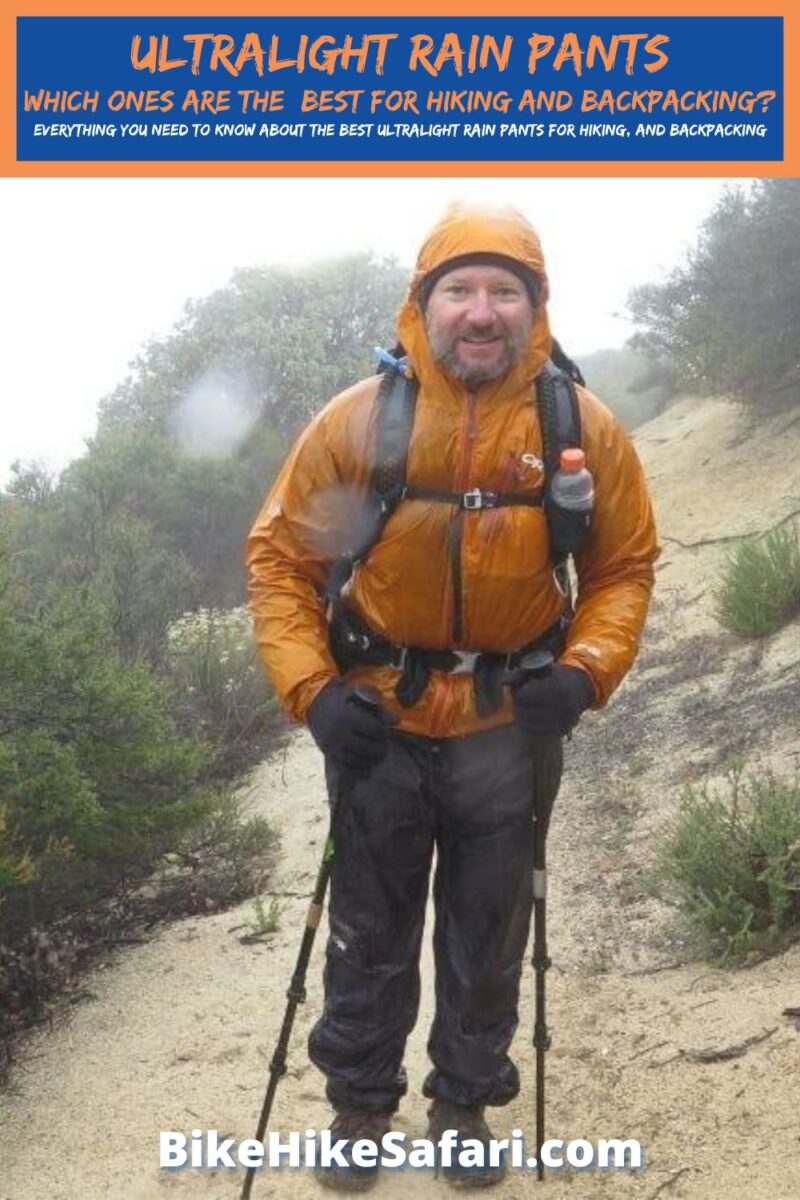
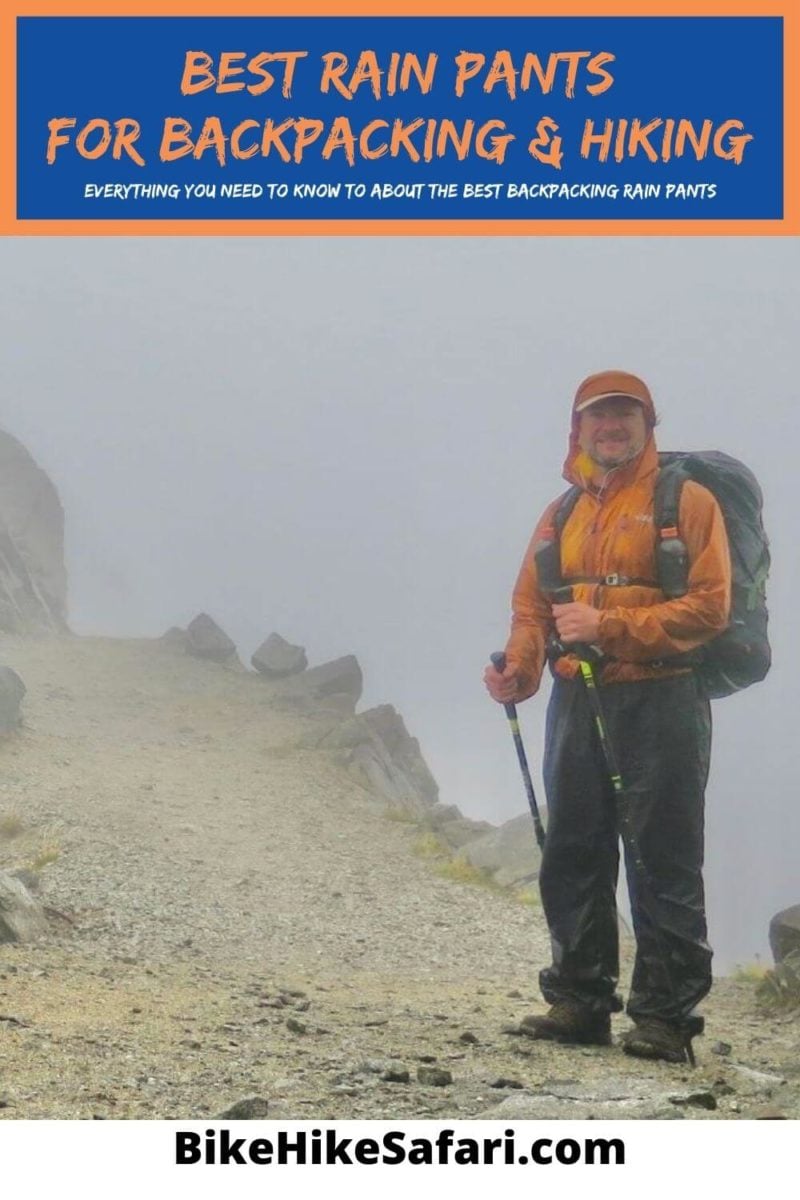
Ultralight rain pants live in the bottom of my pack 95% of the time and save the day the other 5%, which is exactly why I take them seriously. I’ve carried rain pants on the PCT, AT, CDT, Te Araroa, and a stack of bikepacking trips. After years of managing an outdoor store and all the rainy days hiking on trail, I have a pretty firm opinion on which pairs are worth their weight for thru-hikers and ultralight backpackers, and which ones are just heavy frontcountry gear in disguise. When combined with an Ultralight Rain Jacket and a Backpacking Umbrella you will be safe and dry in the backcountry.
This guide is built around backpacking and thru-hiking use, not lifestyle wear. My current top pick is the Outdoor Research Helium UL for its balance of weight, durability and price, and the Zpacks Vertice is the best truly ultralight option I’ve used. The core trade-off in this category is weather protection versus breathability and pack weight, get that right and the rest sorts itself out.
Quick Picks: Best Ultralight Rain Pants
- Best Overall: Outdoor Research Helium UL – My go-to ultralight pair for most thru-hikes. The new 15D fabric is the best balance of weight, durability and price on this list.
- Best Ultralight Thru-Hiking: Zpacks Vertice – My pick for keeping pack weight as low as possible on marked trails. Wide-leg cut, 3L fabric, and one of the most breathable ultralight pants you can buy. No pockets, no zips, no apologies.
- Best Lightweight Waterproof Pants: Rab Phantom Waterproof Pants – At around 3 oz / 85 g these are the lightest non-kilt option in the category. 2.5L Pertex Shield, so you give up durability and long-term feel against skin.
- Best Ultralight Rain Pants – Runner Up: Montbell Super Dry-Tec UL – Half-zip ankle access, 3L fabric, and one of the better breathability stats on the market. Sits between the Vertice and the Helium in weight and price.
- Best Zip Rain Pants: Arc’Teryx Beta Waterproof Pants – The pair I’d take if I expected sustained heavy rain, alpine starts, or bushwhacking. Full-length waterproof zips and 3L Gore-Tex. Heavy and expensive, overkill for most thru-hikers.
- Best Stretch Rain Pants: Mountain Hardwear Stretch Ozonic – The most comfortable pants on this list and the quietest material. A bit heavy for a pure ultralight kit, but excellent if comfort matters more than grams.
- Most Durable: Patagonia Torrentshell 3L – The pair I’d hand someone who wants one pair to last years. Heavier and stiffer than the ultralight options, but the durability and pockets are real. PFAS-free 3L H2No fabric.
- Best Rain Kilt Alternative: Zpacks Vertice Rain Kilt – Around 2.4 oz / 68 g. Not pants, but for hot, humid thru-hiking it’s the lightest, most breathable rain bottom you can carry.
Rain Pants Comparison Table
| Brand | Weight | Breathability (g/m2/24-hour) | Waterproof Level (mm) | Storage |
|---|---|---|---|---|
| Outdoor Research Helium UL | 5.8 oz | 20,000 | 20,000 | |
| Zpacks Vertice Rain Pants | 2.5 oz | 56,000 | 20,000 | No |
| Rab Phantom Waterproof Pants | 3 oz | 20,000 | 20,000 | Internal Pocket |
| Montbell Super Dry-Tec UL | 4.4 oz | 50,000 | 20,000 | Stuff Sack |
| Arc’Teryx Beta Waterproof Pants | 10.9 oz | Not Specified | Not Specified | No |
| Mountain Hardwear Stretch Ozonic | 9.3 oz | Not Specified | Not Specified | |
| Patagonia Torrentshell 3L | 11.8 oz | Not Specified | Not Specified | |
| Zpacks Vertice Rain Kilt | 2.4 oz | 56,000 | 20,000 | Draw Cord |
How We Tested
The rain pants in this guide are researched and, where possible, field-tested by an experienced long-distance hiker and former outdoor store manager. Across the PCT, AT, CDT, Te Araroa, shoulder-season trips, and bikepacking expeditions, I judge rain pants on weather protection per gram, breathability and ventilation, packability, durability against brush and pack wear, ankle and waist fit over hiking boots, and value for serious backpacking. Some of the pants in this review were supplied by the manufacturer and some were purchased by the author. For more on how we research and review gear, see the Review Policy.
Follow along on Social Media
Best Lightweight Waterproof Rain Pants – Detailed Reviews
Best Rain Pants – Overall
Outdoor Research Helium UL Review

Weight: 5.8 oz / 163 grams
Fabric: 15D , Toray Dermizax, 2.75L
Side zips: Short ankle zips
Pockets: 1 rear pocket (doubles as stuff sack)
Pros:
> Ultralight
> Packs into it’s own back pocket
> Reasonable Price
Cons:
> Zippers are not long enough – making it hard to get into and out of
> Limited ventilation
I’ve hiked the PCT, CDT and AT in the older version of the Outdoor Research Helium. The newly upgraded and even lighter pants are the pair I reach for first on long trails where weight matters but I still want some real-world durability. The new 15D 2.75 layer fabric is not as abrasion-resistant as some other models but they are tougher than the other 7D ripstops I’ve used on this list. This makes a difference once you’ve been on trail for weeks and have brushed past plenty of scrub.
These suit 3-season thru-hiking, shoulder-season trips, and any backpacking trip where rain is possible but not constant. They are not the right pick for sustained alpine storms or bushwhacking, that’s what the Beta and Torrentshell are for.
In the field they pack to a very small size into their own back pocket, the elastic waistband with velcro tab actually holds, and the DWR sheds light rain well from new. The short ankle zips are suitable for an ultralight pair of rain pants, but they’re not long enough to get on over most hiking boots without a sit-down on a wet rock. That shouldn’t be a problem for most thru hikers who are using trail running shoes or lightweight hiking shoes.
Trade-off: ultralight weight comes at the cost of long side zips and easy on/off over boots.
Best for: thru-hikers and ultralight backpackers who want one pair of rain pants to cover most trips.
Compare Prices:
Best Ultralight Rain Pants
Zpacks Vertice Rain Pants Review

Weight: 2.5oz / 70 grams
Fabric: 7D Vertice 3L
Side zips: None
Pockets: None
Pros:
> Ultralight
> Small pack size
> Large leg fit
Cons:
> No Pockets
> Not as durable as other pants on this list
If you want pants that are as light as possible without giving up 3L fabric, the Zpacks Vertice is what I take. When I tested these, I was struck by how light they are in the hand and how generous the leg cut is, that extra airflow when you walk is half the reason they breathe so well.
Best on marked trails, not bushwhacking. The Vertice fabric is thin and the pants will scuff and snag if you treat them like overpants for off-trail work. The snap-lock buttons at the cuff are enough to keep the legs closed while walking, and you can put them on and take them off without removing your shoes if you’re patient.
They pack down so small they’ll sit inside the pocket of the Zpacks Vertice Rain Jacket. For thru-hikers chasing pack weight, these are the lightest “real” rain pants I’d recommend.
Trade-off: extreme low weight in exchange for zero pockets and limited durability.
Best for: thru-hikers and ultralight backpackers on marked trails who want the lightest serious rain pants on the market.
Compare Prices:
Best Lightweight Waterproof Pants
Rab Phantom Waterproof Pants Review
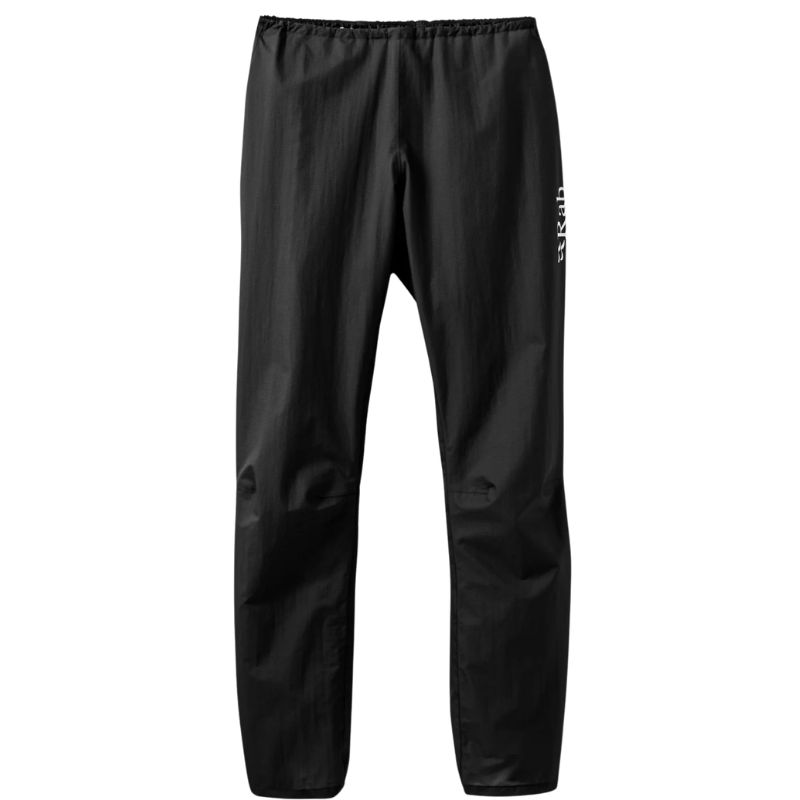
Weight: 3.0 oz / 85 grams
Fabric: 2.5L 7D Pertex Shield+
Side zips: None
Pockets: None
Pros:
> Ultralight
> Small pack size
> Comfortable
Cons:
> No Pockets
> Not as durable as some others on the list
The Rab Phantom Waterproof Pants are about as light as a non-kilt rain pant gets. The face fabric is the same 7D ripstop you find on the very lightest ultralight rain jackets, with 2.5L Pertex Shield+ for waterproofing.
They suit 3-season thru-hikes where you want a true ultralight layer and not much more. The 2.5L construction has the usual plasticky feel against skin that comes with this kind of fabric, and durability is modest, these will not love bushwhacking.
In the field the drawcord waistband is the main weak point. Treat them as protection for sustained rain on a graded trail and they earn their place in the pack.
Trade-off: lowest weight in the category in exchange for low durability and a fussy waistband.
Best for: gram-counting thru-hikers who want ultralight rainwear, not daily wear.
Compare Prices:
Best Ultralight Rain Pants – Runner Up
Montbell Super Dry-Tec UL Rain Pants Review
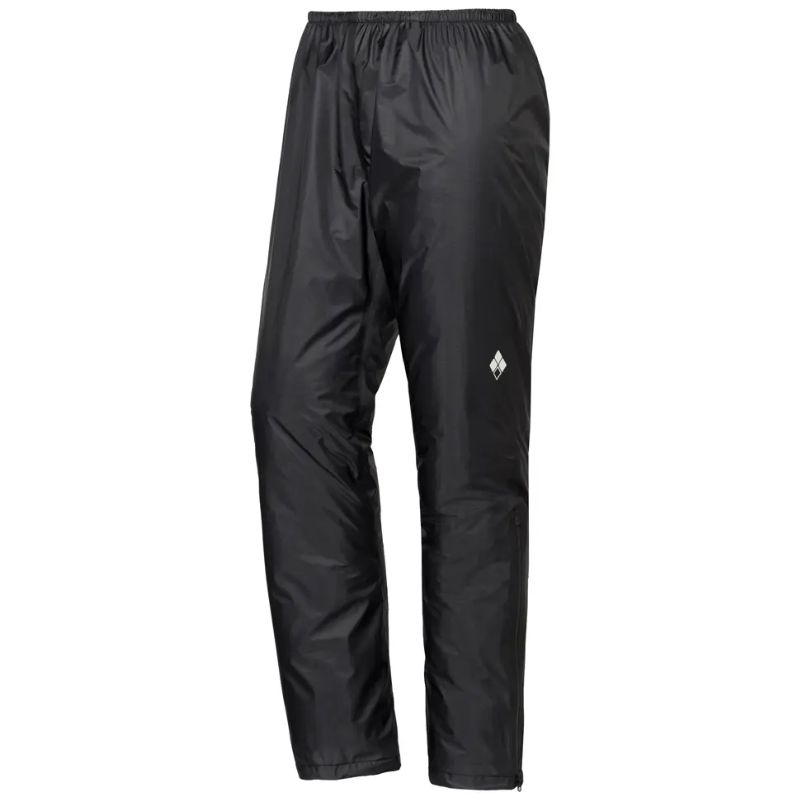
Weight: 4.4 oz / 125 grams
Fabric: 3L Super Dry-Tec
Side zips: Knee-length
Pockets: None
Pros:
> Very good
> Easy Installation
> Durable
Cons:
> Quite heavy
> Price
> Can be squeaky
The Montbell Super Dry-Tec UL sits in the gap between the Vertice and the Helium. You get 3L fabric, knee-length side zips for easy on/off over boots, and Montbell’s reliably honest waterproof / breathability numbers.
These suit 3-season backpacking and thru-hiking where you want the option to put rain pants on without taking your shoes off, and you don’t want to give up 3L performance for a sub-4 oz weight.
In the field the cut runs trim, the side zips work as advertised, and breathability is genuinely good for a fully waterproof pant. The price is high for what you get, but for a 3L pant under 5 oz with real ankle zips, the competition is thin.
Trade-off: lowest-weight 3L pant with side zips in exchange for a trim cut and a steep price.
Best for: thru-hikers who want one ultralight pair that handles cold, wet shoulder-season conditions and is easy to get on over boots.
Compare Prices:
Best Zip Rain Pants
Arc’Teryx Beta Waterproof Pants
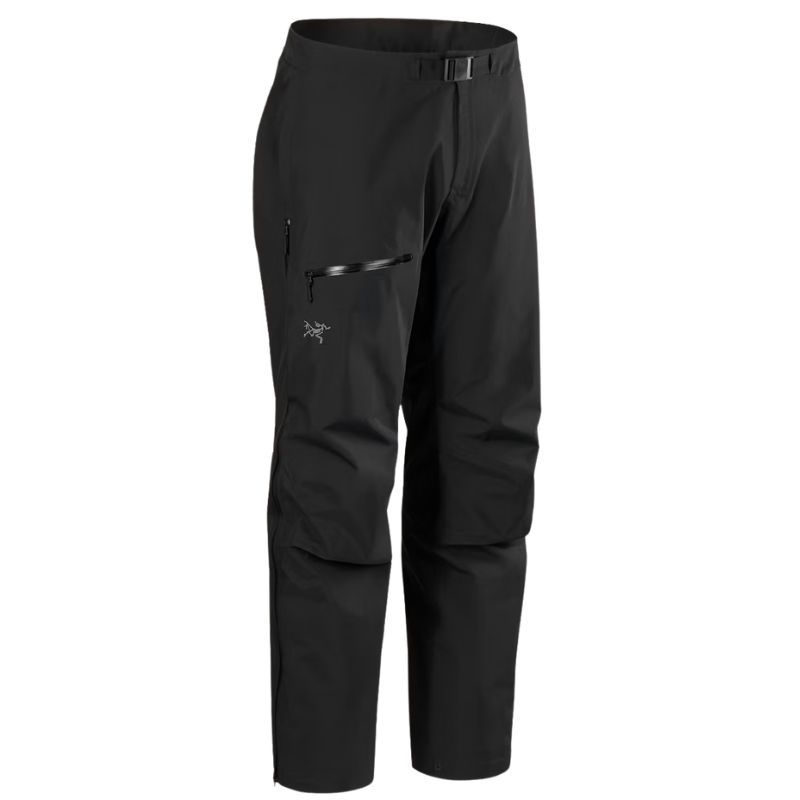
Weight: 10.9 oz / 309 grams
Fabric: 3L 80D Gore-Tex ePE
Side zips: 3/4 length zip
Pockets: 1 thigh pocket
DWR: PFAS-free
Pros:
> Very waterproof.
> Very durable material.
> Can be used as ski pants, mountaineering pants, or snowshoeing pants.
> Great full length zip.
Cons:
> Not Cheap
> A little heavier than some other pants
The Arc’teryx Beta is the pair I’d take if I spend a lot of time backpacking in the rain, alpine starts, or any trip where the rain pants might double as light ski or mountaineering pants. The Gore-Tex ePE fabric is the most weather-resistant in this guide and the 3/4 length waterproof zips both vent heat and make on/off over boots effortless.
These suit cold, wet, technical backcountry trips, not 3-season thru-hiking, where they’re heavier and more pant than you need.
In the field the trade-off is breathability, the 80D Gore-Tex is thick and you’ll vent often. The price tag is real but so is the lifespan: it’s one of the few pairs on this list with a realistic 7–10 year service life.
Trade-off: maximum protection and durability in exchange for weight, breathability and price.
Best for: backpackers and mountaineers spending serious time off marked trails in cold, wet conditions.
Compare Prices:
Best Stretch Rain Pants
Mountain Hardwear Stretch Ozonic Review
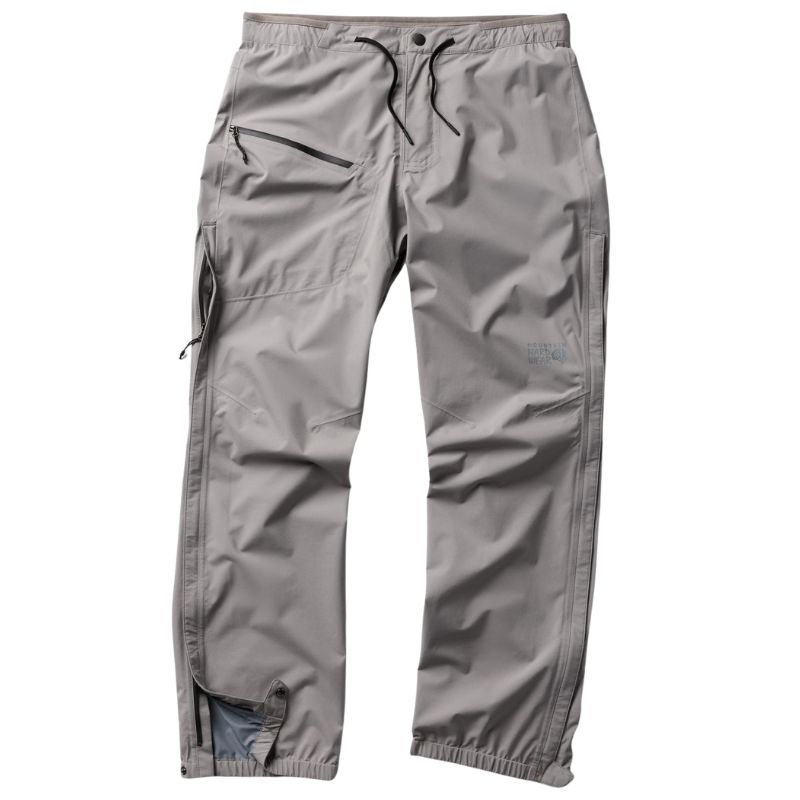
Weight: 9.3 oz / 264 grams
Fabric: Stretch 50D ripstop, 2.5L
Side zips: Thigh length
Pockets: 1 thigh zip pocket
DWR: PFAS-free
Pros:
> Comfortable
> Quiet
> 3/4 Length Zip
> Compact, Packs into own pocket
Cons:
> A bit Heavy
> Average Pocket
Comfort is the headline here. The Stretch Ozonic is the softest, quietest pair of rain pants on this list, and the only one I’d consider for trips where I expected to live in the pants for hours at a time rather than throw them on for storms.
These suit shoulder-season hikes, alpine starts where you’ll keep moving, and trips where comfort and mobility outrank gram-counting. They are not the right pick for a pure ultralight thru-hike, at around 9 oz they’re noticeably heavier than the Helium.
In the field the stretch fabric moves with you in a way no other rain pant on this list does, the full thigh zips dump heat effectively, and the pants pack into their own pocket. The single thigh pocket is small but useful.
Trade-off: best-in-class comfort and quiet fabric in exchange for ultralight weight.
Best for: hikers and shoulder-season backpackers who prioritise comfort and mobility over grams.
Compare Prices:
Most Durable Rain Pants
Patagonia Torrentshell 3L

Weight: 11.8 oz / 335 grams
Fabric: H2No 3L
Side zips: Thigh length
Pockets: 2 zippered hand pockets
DWR: PFC-free
Pros:
> Durable
> Long Zips make them easy to get on and off
> Reasonably Priced
Cons:
> Heavy
> Large pack size
The Torrentshell 3L is the most durable pair on this list and the one I’d hand a friend who wants one pair of rain pants for the next five years rather than the next thru-hike. 3L H2No fabric, PFAS-free DWR, two-way thigh zips for venting and easy on/off, and proper handwarmer pockets. All this for a reasonable price under $150.
These suit shoulder-season backpacking, frontcountry use, and anyone splitting trips between thru-hiking and everyday rain wear. They are too heavy and stiff to be a serious ultralight pick.
In the field the fabric is noticeably crinkly and stiffer than the Stretch Ozonic, but it shrugs off brush and pack-strap wear better than anything else on this list short of the Beta.
Trade-off: durability and proper features in exchange for weight and a stiffer feel.
Best for: backpackers who’d rather have one pair of rain pants for years than the lightest pair for one thru-hike.
Compare Prices:
Best – Overall
Zpacks Vertice Rain Kilt Review
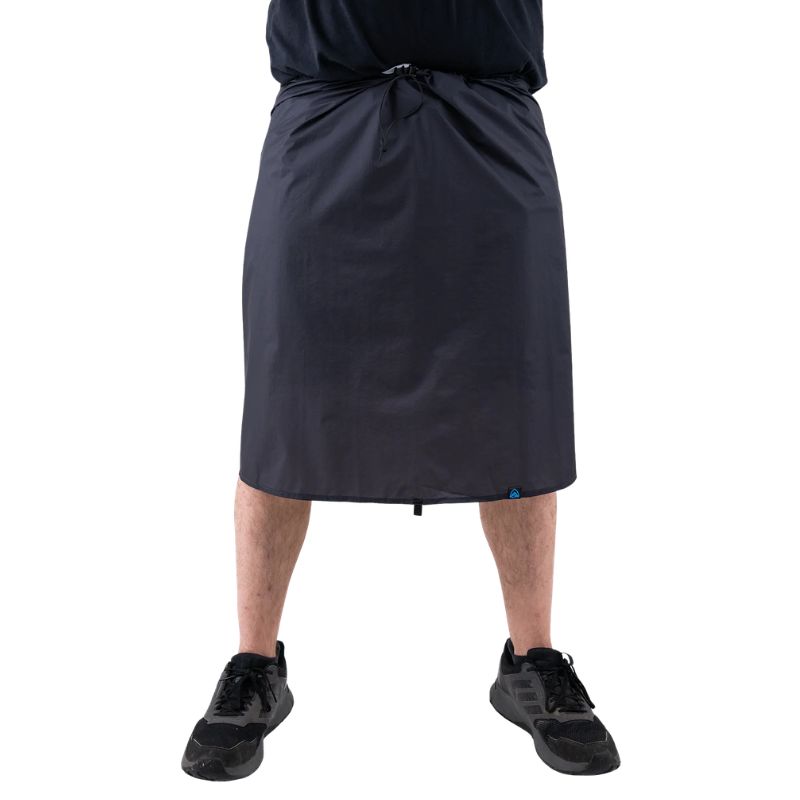
Weight: 2.4 oz / 68 grams
Fabric: Vertice 3L with 7D ripstop face
Side zips: Full-length side zip
Pockets: None
Pros:
> Ultralight
> Very breathable
> Very waterproof
Cons:
> Kilt is not for everyone
> Not good in alpine conditions
For 3-season thru-hiking in hot, humid weather, the Zpacks Vertice Rain Kilt is the lightest, most breathable rain bottom I’d carry. At around 2.4 oz it’s lighter than every rain pant on this list and most rain skirts, and the inherent ventilation of a kilt is hard to beat in warm summer rain.
These suit hot-weather thru-hikes, AT-style humid sections, and anyone who runs hot enough to overheat in rain pants. They are not a substitute for rain pants in cold, windy or alpine conditions, your lower legs are exposed.
In the field the zip vents to whatever length you want, the fabric is quiet for an ultralight rain piece, and the kilt clips out of the way for stream crossings or breaks.
Trade-off: lowest weight and best breathability in exchange for partial leg coverage.
Best for: warm-weather thru-hikers who already own wind pants or fleece bottoms for the cold sections.
Compare Prices:
Lightweight Rain Pants
Ultralight Rain Pants – Buyers Guide
Weight vs Weather Protection
For thru-hiking and ultralight backpacking, I keep a 10 oz / 285 g ceiling in mind. Above that you’re carrying frontcountry weight in your ultralight pack. Below 5 oz you’re in true ultralight territory and durability and features drop sharply. Most well-balanced backpacking picks live in the 5–9 oz band, Helium, Stretch Ozonic, Trailmade.

2L vs 2.5L vs 3L Fabric
- 2L: A DWR-coated outer with a separate mesh-style liner. Affordable and durable but rarely ultralight.
- 2.5L: The same outer plus a printed or sprayed-on polyurethane inner skin instead of a real liner. Lightest, most packable, and what you’ll find on most sub-7 oz pants (Helium, Phantom). The trade-off is the plastic-y feel against skin and a shorter service life.
- 3L: Outer, membrane and a bonded inner fabric all laminated together. Most durable and most breathable, but heavier (Versalite, Vertice, Torrentshell, Foray 3L, Beta).
For a thru-hike, 2.5L is the usual sweet spot for weight, with 3L the upgrade for cold or sustained-rain trips.
Side Zips: None, Ankle, Knee, Full
Side zips do two jobs: ventilation, and getting the pants on over your shoes.
- No zips (Vertice, Phantom): lightest, fewest failure points, but you sit down to put them on.
- Ankle zips (Helium, Trailmade): a fair compromise, but rarely long enough to clear a real hiking boot.
- Knee-length zips (Montbell Super Dry-Tec UL): the practical ultralight upgrade, long enough to clear most boots.
- Full-length zips (Beta, Torrentshell): best ventilation and easiest on/off, but heaviest. Plan for zips eventually failing — I’ve broken zips on every pair of full-zip rain pants I’ve owned past about 100 days of use.
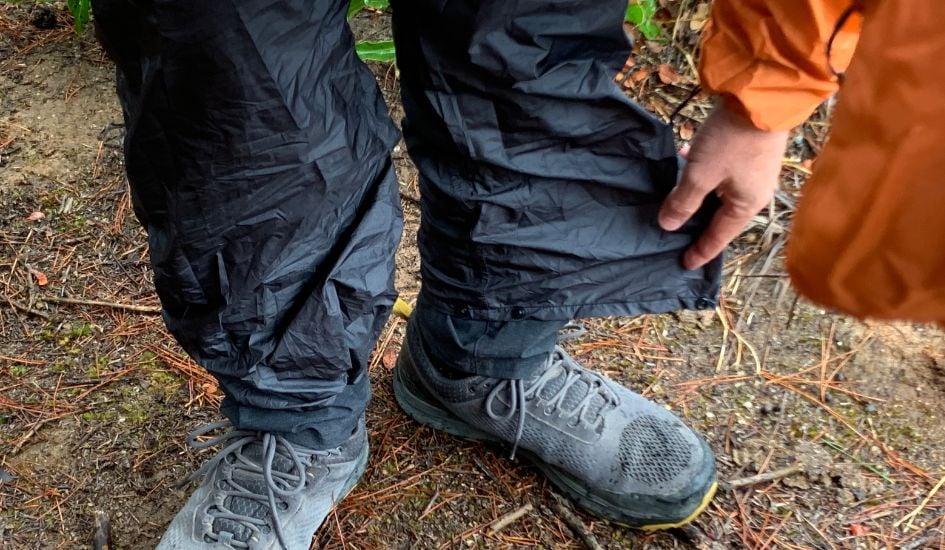
Fit, Layering, and Hip-Belt Compatibility
For backpacking the most important fit considerations are: room to layer over hiking pants or wind pants, a waistband that sits flat under a hip belt (no buckles, no chunky toggles digging into your hipbone), and ankle openings wide enough to clear your hiking boots without snagging. Trim “performance” cuts (Helium, Trailmade) layer worse than the wide-leg cuts (Vertice, Foray).
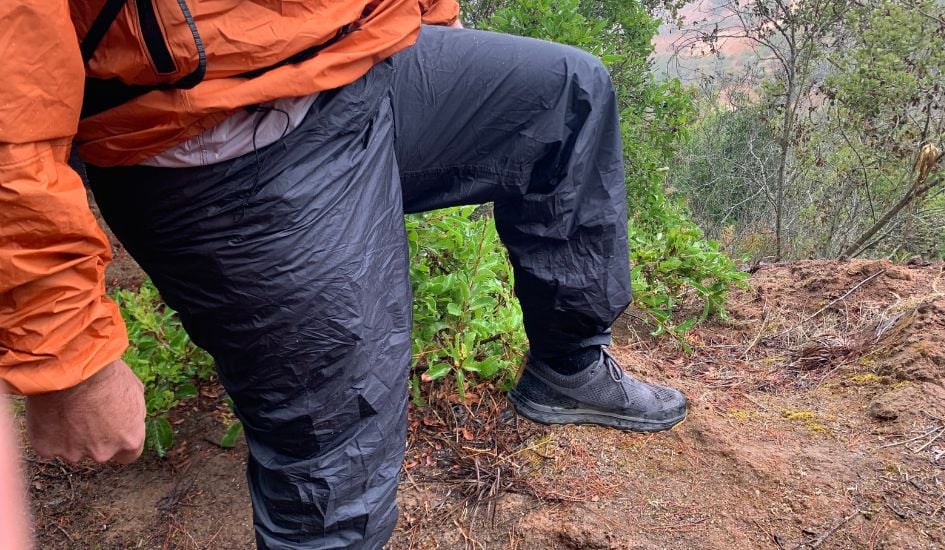
Durability and DWR Care
All these pants use a Durable Water Repellent coating that wears off with use. Once water stops beading and starts soaking in, the pants feel wetter even if the membrane is still working. A yearly wash and re-treatment with a Nikwax-style cleaner and DWR top-up keeps them performing, and patch kits with Tenacious Tape live in my backpacking repair kit for everything from rain pants to tent floors.
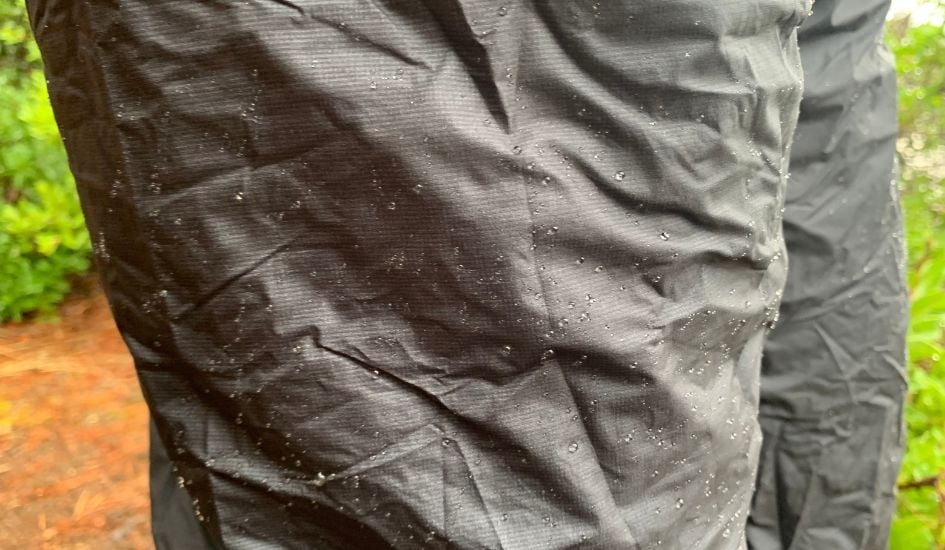
PFAS-Free Rain Pants
The whole category is moving away from per- and polyfluoroalkyl substances (PFAS / PFCs) in the DWR. As of 2026 the safer picks here are the Patagonia Torrentshell 3L, Arc’teryx Beta (FC0 DWR), and the latest Outdoor Research Foray II / Aspire II. If you care about this, check the product page for the year you’re buying — older inventory will still be PFAS-treated.
Rain Pants vs Rain Kilts for Thru-Hiking
For a warm-weather thru-hike (AT in summer, southern PCT, low-elevation Te Araroa sections), a rain kilt like the Zpacks Vertice Rain Kilt is lighter, more breathable, and quicker to put on than any rain pant. The trade-off is exposed lower legs in cold rain and wind. For cool or alpine trips, rain pants win.
Ventilation and Breathability
You can never have too much airflow, or at least, the option of having more airflow. Zippers along the sides of rain gear mean you can let excess heat out if you get too warm. But they come at the cost of weight and durability. Zips are a weak point on the best rain pants, just as they are on a rain jacket.
However, some ultralight rain pants zippers (especially those with a roomier fit) breathe almost as well with pants featuring zips because they’re normally made of thinner materials.

Price
A good pair of waterproof pants is reasonably priced compared to many other items of outdoor clothing. Many of the backpacking waterproof pants on this list are priced between $100 to $200, with the high-end rain pants coming in at almost $500. You would only spend that amount of money if you lived in a wet area and went to the backcountry A LOT.
Conclusion
Here is a list of all the best backpacking rain pants in 2026:
- Best Overall: Outdoor Research Helium UL
- Best Ultralight Thru-Hiking: Zpacks Vertice
- Best Lightweight Waterproof Pants: Rab Phantom Waterproof Pants
- Best Ultralight Rain Pants – Runner Up: Montbell Super Dry-Tec UL
- Best Zip Rain Pants: Arc’Teryx Beta Waterproof Pants
- Best Stretch Rain Pants: Mountain Hardwear Stretch Ozonic
- Most Durable: Patagonia Torrentshell 3L
- Best Rain Kilt Alternative: Zpacks Vertice Rain Kilt
Frequently Asked Questions
What is the best ultralight rain pant for thru-hiking?
For most thru-hikes I take the Outdoor Research Helium for its balance of weight, durability and price. If I’m cutting every gram, the Zpacks Vertice or Montbell Drytech UL are lighter and breathe better but trade off durability and ease of use.
How light should rain pants be for ultralight backpacking?
I aim for under 10 oz / 285 g and ideally under 7 oz / 200 g for a 3-season thru-hike. Below 5 oz you’re in cottage-brand ultralight territory and giving up pockets, side zips, and long-term durability.
Do I need full-zip rain pants?
For most thru-hikes, no. Full-length zips are heavier, more expensive, and the zip is the first thing to fail. They’re worth it if you’ll be doing alpine starts in heavy weather, or if you expect to put rain pants on and off over chunky boots multiple times a day. For everything else, ankle or knee zips are enough.
Are rain kilts better than rain pants?
In hot, humid weather a rain kilt like the Zpacks Vertice is lighter and far more breathable. In cold rain, wind, or anywhere your lower legs need protection from brush, rain pants win. Many thru-hikers carry the kilt in summer sections and switch to rain pants for shoulder-season weather.
Why do my rain pants feel wet inside?
That’s almost always condensation, not a failure of the pants. A waterproof membrane can only vent so much sweat, when you’re working hard, body heat condenses on the inside of the fabric and feels like a leak. Wear wicking layers underneath, vent the side zips when you can, and accept that no rain pant is going to keep you bone-dry on a long uphill in steady rain.
How long do rain pants last on a thru-hike?
The 2.5L ultralight options typically last several thru-hikes if you treat them well. 3L options will go much loner and last several seasons. Zippers fail before fabric in my experience, every full-zip pair I’ve owned past about 100 days of actual use in the rain has had a zipper problem.
Are rain pants worth carrying on a thru-hike?
For me, always. They live in the bottom of the pack and earn their weight on the days the forecast turns. They double as a wind layer, mosquito barrier, and emergency insulation if you have to bail off a ridge in cold rain.
Follow along on Social Media
BikeHikeSafari Gear Review Process
The author, Brad McCartney from BikeHikeSafari is a small independent adventurer and outdoor gear tester who owns and runs BikeHikeSafari.com.
BikeHikeSafari is not part of a large blog network and is proudly independent. All reviews on this site are independent and honest gear reviews of outdoor products by the author.
The author, Brad McCartney is a very experienced triple crown thru-hiker, adventurer, and bike tourer having spent 1000s of nights sleeping in a tent and sleeping bag (Read more). He was a manager of an outdoor retail store and is very experienced in what is important when using and testing gear for reviews like this.
BikeHikeSafari will never receive any money for reviews and they do not accept sponsored reviews on this website. All the comments about the gear reviews are from the author based on his years of experience. Hope this independent review was helpful for you.

