

I have filtered water from silted glacial rivers in Denali, beaver ponds, and streams with cow muck floating on the surface, and I have picked up both Giardia and Cryptosporidium the hard way when I got it wrong. Over more than 30 years of thru-hiking, backpacking, and a stint managing an outdoor retail store, I have used just about every water filter made.
This guide is written for ultralight backpackers and thru-hikers who want a thru hiking and backpacking water filter that is light, reliable, and proven in the field, not a town-friendly gadget. My current top pick is the Sawyer Squeeze for its bombproof reliability and huge filter life, with the Platypus Quickdraw as the best ultralight option for fast-and-light trips. The trade-off to understand before you buy is simple: flow rate and weight versus durability and what the filter can actually remove, since most filters stop bacteria and protozoa but not viruses.
See the Quick Picks below for my pick in every category. For how I research and field-test gear, see the Review Policy for further details.
Quick Picks: Backpacking Water Filters
- Best Overall: Sawyer Squeeze – Bombproof hollow-fiber filter with a near-unlimited filter life. It is what I reach for on most thru-hikes, and it screws straight onto a Smart Water bottle.
- Best Ultralight: Platypus Quickdraw 1L System – Excellent flow rate, very light, and the threads fit most bottles and bladders. My pick when grams matter most.
- Best Lightweight All-Rounder: Lifestraw Peak – Versatile across soft flask, standard bottle, and gravity setups. A strong do-everything choice for solo hikers.
- Best for Taste / Activated Carbon: Katadyn BeFree AC – The activated carbon version cuts chemical taste and smell, which earns it a place when water sources are sketchy.
- Best Gravity Filter for Groups: Platypus GravityWorks – Fast, hands-off, and weight-efficient once you split it across a group. My go-to for group trips and base camps.
- Best Pump Filter: Katadyn Hiker Pro Transparent – Reliable pump with activated carbon and a transparent housing so you can see it working.
- Best Pump for Expeditions: Katadyn Vario – Heavier and pricier, but rebuildable and built for long remote trips. I used an early Katadyn filter across Alaska and South America in the 1990s.
- Best Straw Filter: LifeStraw Personal – The simplest emergency and solo option. Drink straight from the source, no setup.
- Best Bottle Filter for Travel: GRAYL Ultrapress – Removes viruses and many chemicals in one press. My pick for international travel over wilderness use.
- Best Purification Tablets: Katadyn Micropur MP1 Purification Tablets – The backup I have carried since I started hiking. Light, cheap, and reliable when a filter fails or freezes.
- Best UV Filter for Backpacking: Katadyn Steripen Ultra UV Filter – Kills everything with UV light in only 90 seconds. Last for 50L, rechargeable, lightweight but doesn’t remove sediment.
- Best Budget Filter: Sawyer Mini – Cheap, tiny, and long-lasting. It clogs faster than the full Squeeze, but hard to beat for the price.
How We Tested
The water filters in this guide are researched and, where possible, field-tested by an experienced long-distance hiker and former outdoor store manager with more than 30 years of thru-hiking and backpacking. Across thru-hikes, shoulder-season trips, and bikepacking trips, I judge water filters on weather and freeze resistance per gram, flow rate, what each unit actually removes (bacteria, protozoa, viruses, microplastics, chemicals), filter life, ease of cleaning in the field, packability, and value for serious backpacking. I have filtered water from silted glacial rivers, beaver ponds, chlorinated pools, and dubious sources in the developing world, and I have learned the hard way what happens when a filter fails. Some items were supplied by the manufacturer and some were purchased by the author for this review. For more on how we research and review gear, see the Review Policy for further details.
Water Filter Comparison Table
| Brand | Weight | Filter Type | Filtration Rate | Filter Life | Water Bladder |
|---|---|---|---|---|---|
| Sawyer Squeeze | 3 oz | Squeeze | 1.7L / min | N/A | 2 x 1L |
| Platypus Quickdraw 1L System | 2.4 oz | Squeeze | 3L / min | 1000L | 1L and 2L |
| Lifestraw Peak | 3.8 oz | Squeeze | 1L / min | 2000L | 1L |
| Katadyn BeFree AC | 2.7 oz | Squeeze | 2L / min | 1000L (200L carbon) | 1L |
| Platypus GravityWorks Water Filter | 11.5 oz | Gravity | 1.75L / min | 1,500L | 2L, 4L, 6L |
| Katadyn Hiker Pro Transparent | 8.2 oz | Pump | 48 strokes per L | 1100L | N/A |
| Katadyn Vario | 15 oz | Pump | 2L / min | 2,000L | N/A |
| LifeStraw Personal | 2 oz | Straw | N/A | 4000L | N/A |
| GRAYL Ultrapress Water Purifier Review | 12.5 oz | Water Bottle | 3L / Min | 150L | 0.5 L |
| Katadyn Micropur MP1 Purification Tablets | 0.9 oz | Chemical Tablets | 30-240 mins | 5 Years | N/A |
| Katadyn Steripen Ultra UV Filter | 4.9 oz | UV Light | 1L / 1.5 mins | 50L per charge | N/A |
| Sawyer Mini | 1.4 oz | Squeeze | N/A | N/A | N/A |
Follow along on Social Media
Best Ultralight Water Filters – Detailed Reviews
Best Backpacking Water Filter – Overall
Sawyer Squeeze Review

Weight: 3 oz / 85 grams
Filter Type: Squeeze, Hollow fiber, 0.1 micron
Filter life: Up to 100,000 gallons (manufacturer)
Flow rate: 1.7 L/min when new
Threading: Fits Smart Water bottles, soda bottles, most bladders including Cnoc and Platypus
Pros:
> Lightweight
> Very popular with thru-hikers
> Very effective as a backpacking water filter
> Works as an inline filter and can screw onto many water bladders and soft water bottles
Cons:
> Water bladder that is supplied with the filter is weak and will break easily
> Filter will crack if frozen
I have used the Sawyer Squeeze for more than 1000 days on several thru-hikes such as the PCT, CDT, AT and many bikepacking trips. I have never been sick when using this filter. The hollow-fiber 0.1 micron filter is more reliable than almost anything else at this weight, and the filter life is effectively unlimited for most hikers.
It suits 3-season thru-hikes and section hikes where reliability matters more than the last few grams. It works inline, screwed onto a Smart Water bottle, or as part of a gravity setup.
In real use this is the most popular backpacking filter on thru-hiking trails for a reason. It provides bombproof filtering, a good flow rate and easy field backflushing with the supplied syringe. The trade-offs are the weak supplied bladder (most people swap it for a Smart Water bottle or a Cnoc reservoir) and the fact that, like all hollow-fiber filters, it will crack if it freezes. Sawyer claim the filter will last 100,000 litres but in real world use it lasts about 1000-2000 litres.
Trade-off: slightly slower flow rate over time and a bulkier unit than a BeFree, in exchange for durability and lifespan.
Best for: thru-hikers and section hikers who want one filter to trust for thousands of miles.
Compare Prices:
Best Ultralight Water Filter
Platypus Quickdraw 1L System
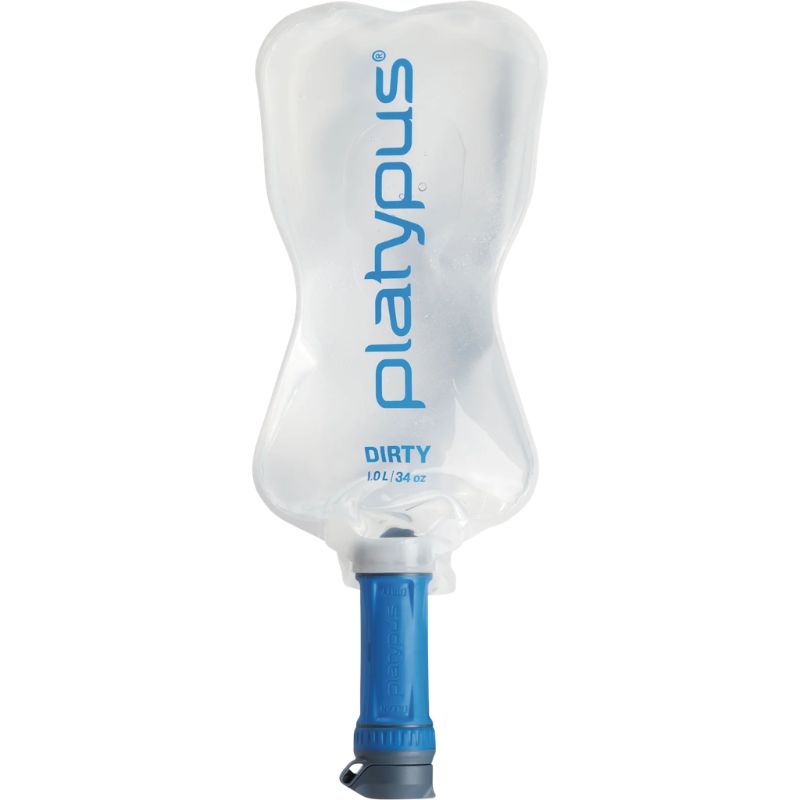
Weight: 2.4 oz / 69 grams (3.3 oz / 95 grams with 1L water bladder)
Filter Type: Squeeze, Hollow fiber, 0.2 micron
Filter life: 1,000 L
Flow rate: Up to 3 L/min (fast)
Threading: Fits Smart Water bottles, soda bottles, most bladders including Cnoc and Platypus
Pros:
> Ultralight
> Very compact size
> Very efficient filter
> Thread of the filter will fit most water bottles including Smart Waterbottles, soda bottles and all other Platypus bladders
> Very good flow rate
Cons:
> Filter will crack if subjected to temperatures below freezing just like all similar filters
I have been long term testing the Platypus QuickDraw for almost 2 years to see if it is better than the Sawyer. It is certainly lighter, smaller and has a faster flow rate, lasts longer between backflushing and in many ways it is the perfect thru-hiking water filter.
It suits fast-and-light trips and ultralight thru-hikes where you want to drink on the move or filter quickly into a bottle.
In use, the wide thread compatibility is a real plus, and the supplied reservoir is much better quality than Sawyer’s. Like all these filters, it must not be allowed to freeze.
Trade-off: shorter filter life than the Sawyer (1,000 L), in exchange for faster flow and lower weight.
Best for: ultralight hikers who prioritise flow and weight over maximum filter lifespan.
Compare Prices:
Best Lightweight water filter for backpacking
Lifestraw Peak Squeeze

Weight: 1.7 oz / 48 grams (3.8oz / 108 grams inc 1L bottle)
Filter Type: Squeeze, Hollow fiber, 0.2 micron
Filter life: 2,000 L
Flow Rate: 1L / per min
Threading: Fits both 28 mm and 42 mm bottle mouths
Pros:
> Ultralight
> Can be attached to a standard water bottle or use the flexible squeeze bag
> Compact Size
Cons:
> Needs to be backflushed quite often
> Slower flow rate than stated by the company
The Peak Squeeze is the most versatile filter here. It runs off a soft flask, a standard bottle, or as a gravity setup. I used the previous model, the Lifestraw Flex and found it was awesome but during long term testing it lacked the durability that I needed. I am yet to long term test the Peak Squeeze, but so far so good.
It suits solo hikers who want one filter that adapts to whatever vessel they are carrying.
In use, the dual 28/42 mm compatibility is genuinely useful and at 3.8 oz including a quality squeeze bottle it is lightweight. The downside is that it needs backflushing more often and the real flow rate is slower than the company claims.
Trade-off: a slightly slower real-world flow rate in exchange for flexibility and a long 2,000 L filter life.
Best for: solo backpackers who want a do-everything squeeze filter.
Compare Prices:
Best for Taste / Activated Carbon
Katadyn BeFree AC Review
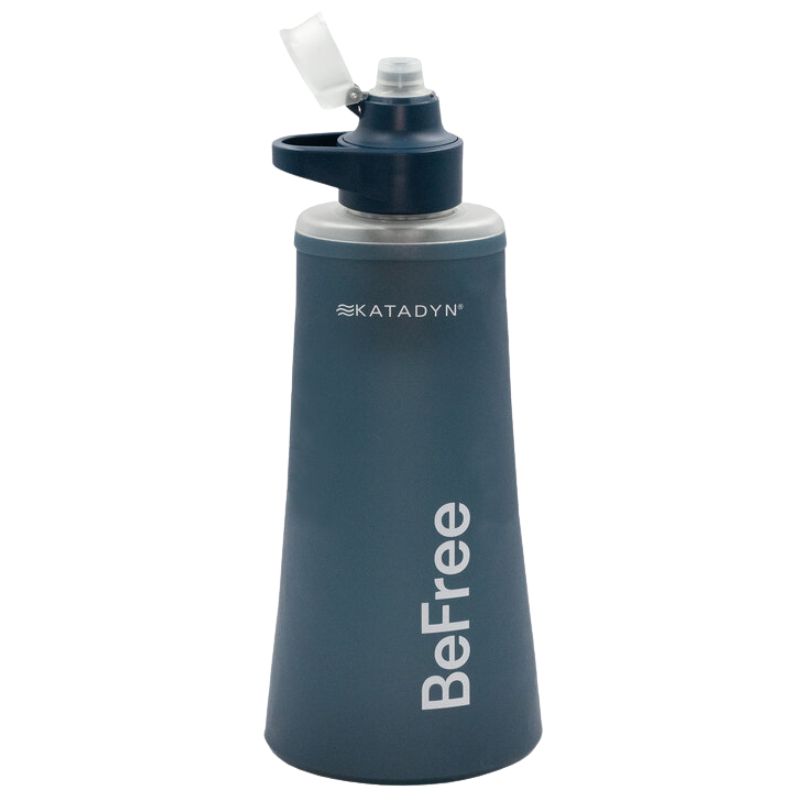
Weight: 2.7 oz / 79 g (inc 1L bottle)
Filter type: Squeeze, Hollow fiber, 0.1 micron, with activated carbon layer
Filter life: 1,000 L (activated carbon 200L)
Flow Rate: 2L / min
Threading: 42 mm (fits HydraPak-style soft flasks; will not screw onto a Smart Water bottle)
Pros:
> Good filter and carbon filter
> Ultralight
> Durable
Cons:
> Need to replace the carbon filter every 200L
The BeFree AC is the backpacking water filter I wish I had for my CDT thru-hike. Look at the photos below of me drinking cattle water, if I had this filter I would not have tasted cow poo and urine! If you are thru-hiking the CDT or Arizona Trail buy this filter and stop reading the other reviews. The added activated carbon layer to the standard BeFree, which cuts the chemical taste and smell from sketchy water sources. It is fast, light, and easy to clean by swishing rather than backflushing.
It suits hikers crossing areas with agricultural runoff, chlorinated water, or other taste issues, as well as fast-and-light trips. Perfect for the Arizona Trail and to add to your CDT gear list.
In use, the carbon layer makes a real difference to flavour, and the swish-to-clean design is simpler than a syringe. The trade-offs are the 42 mm threading (it will not fit a standard Smart Water bottle) and a shorter carbon-effective life.
Trade-off: better taste and easy cleaning, in exchange for bottle compatibility and a shorter effective carbon lifespan.
Best for: hikers who want clean-tasting water from questionable sources without carrying a separate carbon stage.
Compare Prices:
best Gravity water filter for backpacking
Platypus GravityWorks Water Filter System

Weight: 11.4 oz / 330 grams
Filter Type: Gravity, Hollow fiber, 0.2 micron
Filter life: 1,500 L
Flow rate: 1.75 L/min
Capacity: 4L or 6L systems
Pros:
> Portable
> 2 Water Reservoirs with either clean water or dirty water
> The clean water bladder can be used as a water bottle when hiking
> Durable
> Filters the water very quickly
> Can filter water without being hung from a tree or similar
Cons:
> Not always gather water from shallow sources
> Doesn’t remove Viruses
I have been using and long term testing the Platypus GravityWorks for more than 2 years. It is one of the best group filters made and took out the top spot on my dedicated Backpacking Gravity Filter Review.
You fill the dirty bag, hang it, and walk away while gravity does the work into the clean bag. It suits group trips and base camps. I have used it both solo and split across several people, it is very weight-efficient compared with everyone carrying their own filter. And the large bags allow you to carry a lot of water if needed during dry sections of trail.
In use, the clean bag doubles as a water carrier, and you can rest it on a rock or hold it if there is no tree. The downsides are that it struggles to gather from very shallow sources and, like all filters, it does not remove viruses.
Trade-off: more bulk and weight, in exchange for fast hands-free filtering for a group.
Best for: groups, families, and base camps.
Compare Prices:
best pump water filter for backpacking
Katadyn Hiker Pro Transparent

Weight: 8.2 oz / 233 grams
Filter Type: Pump with activated carbon
Filter life: 1,100 L
Flow rate: 48 strokes per litre
Pros:
> Compact for a pump style filter
> Transparent – see the filtration process in action.
> Effective – proven to get rid of harmful bacteria and protozoan cysts.
Cons:
> Heavy.
> Not cheap
The Hiker Pro is a reliable, easy-to-use pump with an activated carbon stage and a transparent housing so you can see the filtration happening.
It suits one or two people who prefer pumping from shallow or awkward sources where a squeeze or gravity bag struggles.
In use, it removes bacteria and protozoan cysts well and the carbon reduces chemicals. The trade-offs are the weight and the need to rinse it before first use.
Trade-off: more weight and effort than a squeeze filter, in exchange for the ability to draw from shallow or difficult sources.
Best for: hikers who want a dependable pump and don’t mind the extra grams.
Compare Prices:
best Expedition water Pump filter
Katadyn Vario

Weight: 15 oz / 425 grams
Filter Type: Pump, ceramic + glass fiber, optional carbon
Filter life: 2,000 L
Flow rate: Up to 2 L/min
Pros:
> Can be used with a water bottle or adapter hose for larger containers.
> Good flow rate
> Replaceable filters
Cons:
> Heavy.
> Not cheap
The Vario is a heavier, rebuildable expedition pump. I used one of the early Katadyn filters back in the 1990s while hiking around Alaska and South America, and the rebuildable design is its biggest strength.
It suits long, remote trips where you need to service or replace internal components in the field rather than throw the unit away.
In use, the dual-speed mode lets you trade flow rate for filter life, and the ceramic pre-filter handles dirtier water. The trade-offs are weight and price.
Trade-off: heavy and expensive, in exchange for durability and field-serviceability on long expeditions.
Best for: expedition hikers and anyone heading somewhere a disposable filter won’t cut it.
Compare Prices:
Best Water Filter Straw
LifeStraw Personal Review

Weight: 1.6 oz / 46 grams
Filter Type: Straw, fiber straw, 0.2 micron
Filter life: 4,000 L
Pros:
> Ultralight
> Cheap
> Filters everything except viruses
> Easy to use – filters as you drink the water
Cons:
> Best for emergency us not hiking or general travel
> Does not attach to water bottles
The LifeStraw Personal has been around for a very long time and is the simplest filter here. You place it in the water or a wide-mouth bottle and drink through it like a straw, with nothing to set up.
It suits emergency kits, solo hikers, and day trips where simplicity beats versatility.
In use, it is featherweight and removes the vast majority of bacteria, parasites, and microplastics. The downside is that it does not attach to bottles for carrying treated water, so it is best for wilderness use rather than travel.
Trade-off: no way to store filtered water, in exchange for the lightest, simplest option.
Best for: emergency backup and minimalist solo drinking on the move.
Compare Prices:
Best Water Bottle Filter for Travel
GRAYL Ultrapress Water Purifier Review

Weight: 12.5 oz / 354 grams
Filter Type: Water Bottle Filter
Capacity: 0.5 L
Removes: Bacteria, protozoa, parasites, viruses, many chemicals)
Pros:
> Lightweight filter that you can add to your backpack.
> Removes the majority of bacteria and protozoa, parasites, and even many chemicals.
> Perfect for international travel.
Cons:
> You will need to wait for the water to filter before it’s safe to drink.
> Sediment blocks the filter quickly
The UltraPress (the updated GeoPress) purifies by pressing water down through the cartridge, removing viruses and many chemicals in one go. It took out the top spot on my review of the best water bottle filters for travel and backpacking.
It suits international travel far more than wilderness backpacking, where its weight and small capacity count against it.
In use, it is the best option I have used for sketchy hotel-room and city water overseas. The trade-offs are that you wait for each press and it clogs quickly in sediment-heavy water.
Trade-off: heavy with limited capacity, in exchange for virus and chemical removal for travel.
Best for: international travel and questionable municipal water.
Compare Prices:
Best Water Purification Tablets
Katadyn Micropur MP1 Purification Tablets

Weight: 0.9 oz / 22 grams
Filter Type: Chemical
Treatment time: 30 min (up to 4 hours for cold/dirty water or Cryptosporidium)
Shelf life: 5 years
Pros:
> Effective against bacteria, viruses, giardia and cryptosporidium
> Ready to use in 30 to 240 minutes
> Has a 5-year shelf life
> Not much aftertaste
Cons:
> The time it takes to purify water depends on how cold & dirty it is
Micropur tablets are the backup I have carried since I first started hiking. One tablet per litre, no moving parts, nothing to freeze or clog. They took out the top spot in the dedicated review of best water purification tablets.
They suit every backpacker as a backup, and as a primary method on short trips or where you want the lightest possible option. Just buy some and take them on every trip as a backup.
In use, they leave no aftertaste compared with iodine and have a long shelf life. The downside is the wait time, which stretches out in cold or dirty water.
Trade-off: slow treatment time, in exchange for near-zero weight and total reliability.
Best for: a backup that lives permanently in your backpack.
Compare Prices:
Best Backpacking UV Water Filter
Katadyn Steripen Ultra UV Filter

Weight: 4.9 oz / 140 grams
Filter Type: UV Filter
Battery: Rechargeable, 50 L per charge
Treatment time: 90 seconds per litre
Pros:
> Quick
> Easy to Use
> Good battery life for about 50L
Cons:
> If the battery runs out you can’t use it
> Does not filter the water so not so good in dirty water
> Not cheap
I have used the Steripen Ultra for more than 10 years. Katadyn recently bought Stripen and rebranded it as the Katadyn Stripen Ultra. The UV light kills bacteria, protozoa, and viruses, which most filters cannot do. Having said that, I got sick using this filter, probably due to untreated water sitting near the lid of the water bottle I was using, hence why it is so far down this list.
It suits travel and clear backcountry water where virus risk exists but sediment does not.
In use, it is quick and easy. The trade-offs are real: it does not remove sediment or particulates, it is useless if the battery dies, and it is not very waterproof so it cannot be used in heavy rain.
Trade-off: depends on batteries and clear water, in exchange for fast virus-capable treatment there is no ability to filter sediment from the water.
Best for: travellers and hikers in clear-water areas who want virus protection without chemicals.
Compare Prices:
Best Budget Backpacking Water Filter
Sawyer Mini Review

Weight: 1.4 oz / 40 grams
Filter Type: Squeeze, Hollow fiber, 0.1 micron
Filter life: 1,500 L
Threading: Attaches to the end of a bottle
Pros:
> Removes the vast majority of bacteria and parasites, as well as 100% of microplastics.
> Small size
> Lightweight
Cons:
> Clogs way too easily
The Sawyer Mini is a budget pick. It is tiny, cheap, and removes bacteria, parasites, and microplastics just like the full Squeeze.
It suits hikers on a budget and short trips where flow rate matters less.
In use, it is genuinely pocketable and long-lasting, and it backflushes with the supplied syringe. This is the filter I have used a lot while thru hiking. I want to love it more but the downside is that the small filter clogs with silt faster than any other filter in this review. The full sized Squeeze is a much better option.
Trade-off: slower flow and quicker clogging, in exchange for the lowest price and weight.
Best for: budget-conscious hikers and short trips.
Compare Prices:

More Great Water Filters
Here are some great hiking water filters that are not on the main list. Most have not been tested yet:
- MSR Miniworks EX: The MSR Miniworks EX is a great filter for remote areas and expedition travel but the Katadyn filters are also great.
- MSR Guardian: The MSR Guardian is just too expensive for anyone other than a Guiding Company looking for a top-quality hollow fiber gravity filter and water purifier.
Ultralight Water Filter Buyers Guide
Ultralight Water Filter Buyers Guide
Types of Filtration Systems
There are 8 main types of water filtration systems:
- Pump Filters
- Chemical Treatments
- Gravity Filters
- Straw Filters
- Squeeze Filters
- Filtered Water Bottles
- UV Light Filters
- Boiling Water

Pump Filters
Most Pump Filters use a hand pump and are generally heavier than all the other filters and best suited to expedition-style trips into the backcountry or large groups. It takes a lot more effort to use these filters but they have the advantage of usually having the best filters that can also act as water purifiers.
Usually, they use a ceramic filter instead of hollow fiber filters which makes them heavier but more reliable and for the most part, they will be easier to clean.
Chemical Treatments
Chemical treatment generally uses chemicals to kill the bacteria, protozoa, viruses, and other nasty things in the water. Chemicals such as chlorine dioxide tablets, iodine, and odorless bleach are among the best and should be a part of any purification system. Chlorine Dioxide is the most common chemical treatment and this system should be in every backpacker’s rucksack.
The main downside of this method is the wait time, which is usually 30 minutes. While I prefer squeeze filters as my primary treatment method I always carry these with me as a backup. Take a look at the review of the Best Water Purification Tablets for a better understanding of why you need to carry these with you on every backpacking trip.
Gravity Filters
A Backpacking Gravity Filter is one of the best backpacking water filters and a water purifier for backpacking in large groups. Gravity filters are able to filter large quantities of water very quickly due to the fast flow rate. When hiking in a large group it is often very weight efficient compared to each group member carrying their own filters.
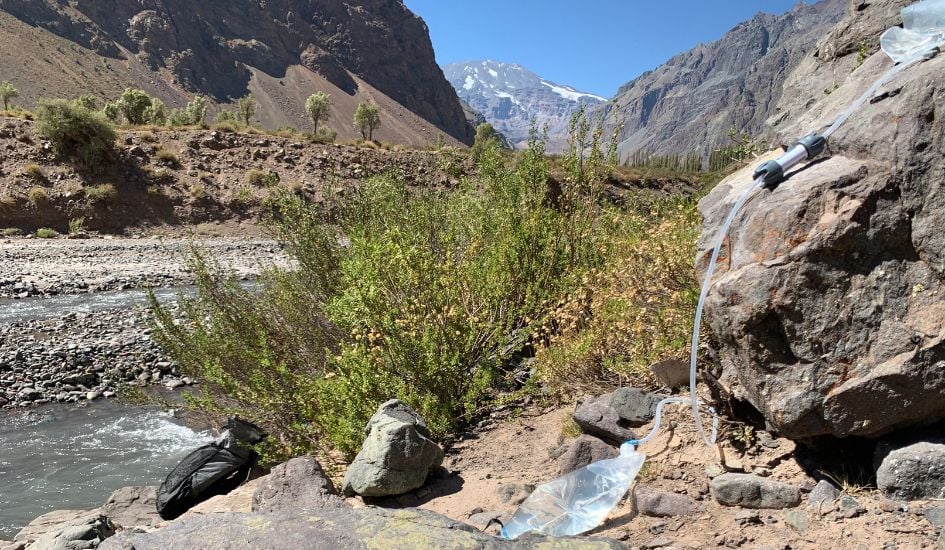
Straw Filters
Straw Filters are small lightweight water filters that are simple to use and only need to be placed into the water and used like a normal drinking straw. The straw filter lacks the functionality of most of the other water filtration devices in this review but they still work great and are very simple. The 0.2 microns filters are good enough to remove all the nasty bugs but not viruses.
They are almost the complete opposite of a gravity filter which is best suited to group hiking trips. The Straw filter is best suited to solo backpacking and as an emergency water filter.
Squeeze Filters
Squeeze filters are the best choice for ultralight hikers and solo hikers. They are lightweight, simple, and do a great job. These filters can be attached to an inline hydration bladder or to a drinking bottle such as a smart water bottle. They can be easily cleaned by back-flushing while out in the field. These 0.2 microns filters are my choice for ultralight thru-hikers but they cannot remove viruses.
Compared to pump and gravity filters they are much lighter and usually quite a lot cheaper but will block up quicker and require back flushing which is very easy to do. They also have a lower flow rate than other filters.

Filtered Water Bottles
Filtered Water Bottles are the best choice for travelers and not really the best for taking into the backcountry. Some water filters and purifiers can filter not only bacteria and protozoa but also plastics.
Some have carbon filters which is the preferred treatment method to reduce the smell and chemicals in the water for the total water purification systems. The bottled filters usually last a long time and can be replaced when they have reached their end of life.
UV Light Filters
Using an Ultraviolet Light Filter is great as a water purifier for backpacking trips. They use UV light purifiers to kill the protozoa and bacteria and viruses present in the water. This water purification method is great for traveling and great in the backcountry when the water is not too dirty.
Unlike other filters and purifiers that use a filter the treated water may still have dirt or sediment which some people may not like. If hiking in areas with sediment in the water the ability to filter water to remove sediment is preferred.
The best ones use a rechargeable battery and can treat 1 liter of water in 90 seconds. When it comes to killing protozoa, bacteria, and viruses, the Ultraviolet Light Water Filter works best.
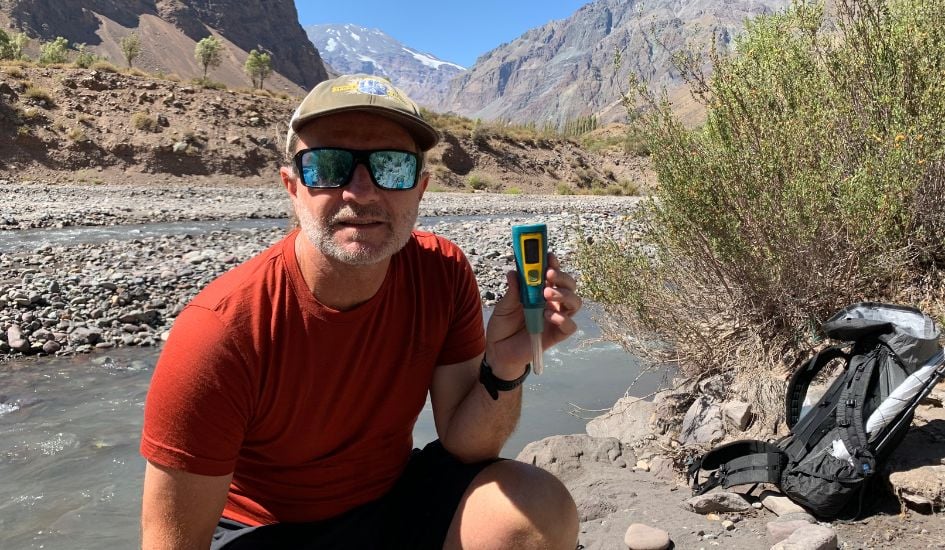
Boiling Water
The age-old method of boiling water never fails to kill all the nasty bugs in the water. It is a water purification method that works. Just be sure to make sure the water is on a rolling boil for at least 2 minutes. Also, take into account altitude. If at a high altitude the water will boil at a lower temperature which limits how well it can kill all the bugs.
Filtering Bacteria, Protozoa, Viruses, and Parasites
The most important factor to consider is what kind of filtration your chosen water filter is able to offer you.
There is all manner of harmful viruses, bacteria, protozoa, and parasites lurking in natural water. I found this out the hard way. I have picked up both Giardia and Cryptosporidium while in the backcountry on hiking trips. Cryptosporidium and Giardia are both unpleasant and preventable with a good filter.
It is worth noting that not all filters will kill all bacteria, protozoa, and viruses. Viruses usually are so small they are not filtered from the water by most filters.
Good water filters for backpacking can also remove harmful chemicals. This will of course depend on where exactly you go hiking, as there may be no need to worry about human interference if you’re out in the wild.
The best backpacking water filters can remove microplastics. These are known to slip through water treatment plants and get released into water systems around the globe.

Removing Taste and Chemicals
An activated carbon filter attached to the main filter is best to remove chemicals and the bad smell of polluted water sources. They are a great addition to water filters and purifiers to remove the taste. But carbon filters need to be replaced regularly, often after as little as 100 liters of filtering.
I have used activated carbon filters many times over the years. In my opinion, they work best when traveling overseas and filtering water from sketchy hotel rooms. Overall, activated carbon does a great job of reducing chemicals and the taste of water.
Pre Filtering
In really bad areas you will need to pre-filter the water. Many years ago I was backpacking trip in the remote sections of Denali National Park and my only water source was from a heavily silted glacier. The dark grey water for so silty I had to put the water into my pot and allow it to sit for at least an hour before I could filter it. Glacial silt is no joke and will clog any filter very quickly.
If I had something like a pre-filter I could have filtered the water much easier. Pre-filtering with something such as a clean cloth or pantyhose can be used to great effect when on backpacking trips where the water is disgusting.
Flow Rate
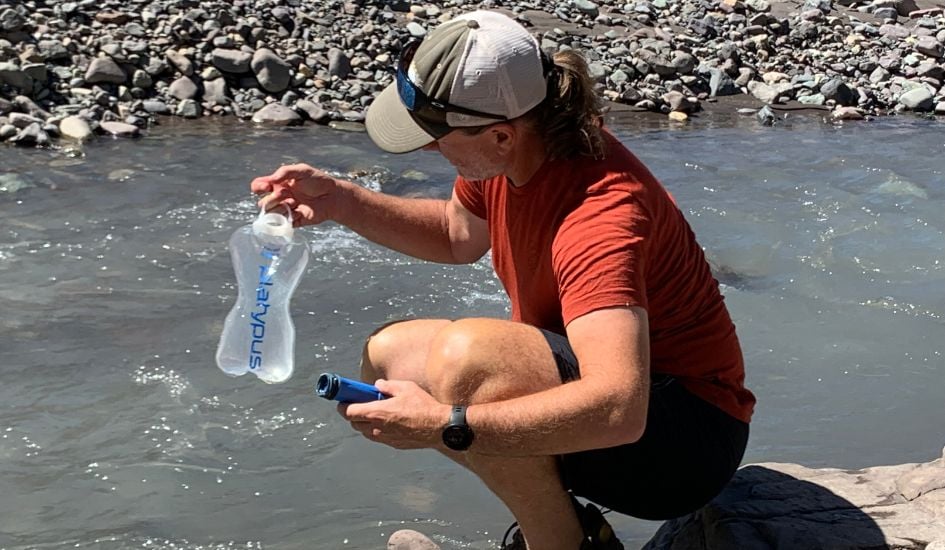
The flow rate refers to the amount of water that can be filtered in a given period of time, usually measured in liters per minute. Most of the units in this review had a flow rate of between 0.5 L/min to 2.5 L/min. Gravity filters do well with this metric and units such as the straw style filters are the slowest.
Filter Life
Most of the filters in this review have a filter life of at least 1000 liters. To put that in context, that is a lot of water and is enough for most people to use for 100 days and nights of use or more.
Weight
You will of course want a water filtration system that’s lightweight. This makes it easier to carry around while you go hiking.
Take a look at how much the backpacking water filters weigh. A compact filter will also be easier to stash away in your backpack when it’s not in use.
When hiking in a group it is possible to share the weight of the larger bulkier filters. A gravity filter may be heavier than an inline filter that attaches to a water bottle but when the weight is shared between 4 people or more they work out to be lighter.

Easy of use
There are so many different types of water filters available. You should opt for a water filter or purifier that’s easy for you to use.
The last thing you’ll want while you’re out hiking is a water filter that’s too complicated to use in a pinch! Take a look at the style of water filter that you would prefer.

Thread Compatibility
28 mm fits Smart Water and soda bottles (Sawyer Squeeze, Platypus QuickDraw); 42 mm fits HydraPak-style soft flasks (Katadyn BeFree). The LifeStraw Peak Squeeze fits both. This decides which vessels you can pair.
Price and Value
From only a couple of dollars all the way up to around $100 for the most expensive items in this review. When purchasing one of the best backpacking water filters, the cost often means it will last a lot longer. Some of the cheaper ones will not last forever and will need to be replaced. In most cases, the filter can be replaced.
Conclusion
Overall, here is the best backpacking water filter for thru-hiking and camping on the market in 2026:
- Best Overall: Sawyer Squeeze
- Best Ultralight: Platypus Quickdraw 1L System
- Best Lightweight All-Rounder: Lifestraw Peak
- Best for Taste / Activated Carbon: Katadyn BeFree AC
- Best Gravity Filter for Groups: Platypus GravityWorks
- Best Pump Filter: Katadyn Hiker Pro Transparent
- Best Pump for Expeditions: Katadyn Vario
- Best for the Worst Water: MSR Guardian
- Best Straw Filter: LifeStraw Personal
- Best Bottle Filter for Travel: GRAYL Ultrapress
- Best Purification Tablets: Katadyn Micropur MP1 Purification Tablets
- Best UV Filter for Backpacking: Katadyn Steripen Ultra UV Filter
- Best Budget Filter: Sawyer Mini
Follow along on Social Media
Frequently Asked Questions
What is the best backpacking water filter?
For most thru-hikers and backpackers, the Sawyer Squeeze is the best all-round filter. It is light, bombproof, has an effectively unlimited filter life, and screws straight onto a Smart Water bottle. If you want the lightest setup, the Platypus QuickDraw is the best ultralight choice.
Do backpacking water filters remove viruses?
Most do not. Standard 0.1 and 0.2 micron filters remove bacteria and protozoa but viruses are too small to be caught. To remove viruses you need a purifier, such as chemical tablets, a UV pen, or a 0.02 micron mechanical purifier like the MSR Guardian or GRAYL. In North American wilderness viruses are rarely a concern, but they matter for international travel.
What is the best ultralight water filter for thru-hiking?
The Platypus QuickDraw and Katadyn BeFree are the lightest reliable options, both with excellent flow rates. If you want maximum filter life and durability over the lowest weight, the Sawyer Squeeze is still the thru-hiker favourite.
Will my water filter break if it freezes?
Yes. Hollow-fiber filters (Sawyer, Platypus, LifeStraw, Katadyn BeFree) crack internally if the water inside them freezes, and the damage is invisible. In cold conditions sleep with the filter in your bag and carry chemical tablets as a backup.
How often should I clean my water filter?
Backflush or swish your filter before the flow rate drops noticeably, not after. Swish or shake it every time you fill up in the field, and give it a proper backflush or clean when you get home. Pre-filter silty water through a bandana or coffee filter to slow clogging.
Do I need a backup water treatment method?
Yes. Any filter can fail, freeze, clog, or lose an O-ring. I always carry chlorine-dioxide tablets such as Katadyn Micropur as a backup; they weigh almost nothing and have a five-year shelf life.
Squeeze, gravity, or pump filter, which is best?
Squeeze filters are best for solo and ultralight hikers. Gravity filters are best for groups and base camps because the weight is shared and they filter hands-free. Pumps are best for shallow or difficult water sources and expeditions where you want a rebuildable unit.


BikeHikeSafari Gear Review Process
The author, Brad McCartney from BikeHikeSafari is a small independent adventurer and outdoor gear tester who owns and runs BikeHikeSafari.com.
BikeHikeSafari is not part of a large blog network and is proudly independent. All reviews on this site are independent and honest gear reviews of outdoor products by the author.
The author, Brad McCartney is a very experienced triple crown thru-hiker, adventurer, and bike tourer having spent 1000s of nights sleeping in a tent and sleeping bag (Read more). He was a manager of an outdoor retail store and is very experienced in what is important when using and testing gear for reviews like this.
BikeHikeSafari will never receive any money for reviews and they do not accept sponsored reviews on this website. All the comments about the gear reviews are from the author based on his years of experience. Hope this independent review was helpful for you.

