

I’ve worn hiking pants for thousands of miles across the Triple Crown trails (PCT, AT, CDT), the Te Araroa, multi-week backpacking trips and what feels like thousands of day hikes. A quality pair of hiking pants that I trust matters more than almost any other piece of clothing on a long hike. This guide is for backpackers and thru-hikers looking for lightweight hiking pants that breathe in heat, hold up to off-track scrub, and double as travel pants on a rest day in town.
As a former outdoor retail store manager and an independent gear tester, I judge hiking pants on weight, stretch, durability, weather resistance, and real-world pockets, not catalogue copy. My current top pick for most hikers is the Prana Stretch Zion Pants, with the Kuhl Deceptr as the lightest pair I would trust on a thru-hike. Also included are some of the best zip-off convertible pants which also work well as backpacking pants.
The core trade-off in this category is simple: the lighter and more breathable a pant gets, the more you usually give up in durability and weather resistance. For how I research and field-test gear, see the the Review Policy for further details.
Quick Picks – Best Hiking Pants 2026
- Best Overall: Prana Stretch Zion Pants – My default hiking pant for thousands of trail miles; stretchy, durable, and the integrated belt actually works after you drop a pant size on a long hike.
- Best Lightweight: Kuhl Silencr Pants – One of the lightest pants in this review with a clean stretchy softshell feel and a relaxed fit option I prefer for backpacking.
- Best Ultralight: Kuhl Deceptr – Sub-12 oz with surprisingly good stretch and weather resistance; the unusual fabric feels rough at first but disappears after a few hours on trail.
- Most Comfortable: Kuhl Radikl – Heavy by thru-hiking standards but the most comfortable pant on the list; great as a town / travel pant on rest days. Not for wet weather.
- Best Eco-Friendly: Patagonia Quandary Pants – Lightweight, heavily recycled material, with a slim straight cut. Best for lean-to-medium builds.
- Best Technical / Alpine: Arc’teryx Gamma Hiking Pants – Premium softshell with the best fit on the list and useful zip pockets; only ding is the price.
- Best Breathable: Outdoor Research Ferrosi Pants – Stretchier than almost everything else here, breathes well in the heat, and stays a go-to of mine in hot dry country.
- Best Mobility / Stretch: Patagonia Terravia Trail – Newer Patagonia stretch hiker that is worth a look if you want more stretch than the Quandary.
- Best Budget Hiking Pants: REI Co-op Activator – Solid windproof softshell for the price; a sensible pick if you want all-rounder hiking pants without spending Arc’teryx money.
- Best Convertible: Kuhl Renegade Cargo Convertible Pants – Cargo pockets, DWR, and the best feeling on-trail of any zip-off I’ve worn.
- Best for Australia and New Zealand: Macpac Trekker Pants – Three plus years of testing; double-weave Pertex Equilibrium stretch fabric, integrated belt, UPF 50+. Only available in AUS / NZ.
Backpacking Pants Comparison Table
| Brand | Material | Weight | Waist | UPF Rating |
|---|---|---|---|---|
| Prana Stretch Zion Pants | 97% nylon, 3% elastane | Not Specified | Integrated belt | 50 |
| Kuhl Silencr Pants | 100% polyester with stretch | 12 oz | Belt Loops only | 50 |
| Kuhl Deceptr Pants | 76% nylon, 15% spandex, 9% polyester | 11 oz | Belt Loops only | 50 |
| Kuhl Radikl Pants | 68% cotton, 29% nylon, 3% spandex | 15 oz | Belt Loops only | 50 |
| Patagonia Quandary Pants | 95% nylon, 5% spandex | 10 oz | Belt Loops only | 50 |
| Arc’teryx Gamma Hiking Pants | 88% nylon, 12% elastane | 12.5 oz | Integrated belt | 50 |
| Outdoor Research Ferrosi Pants | 87% nylon, 14% spandex | 12.7 oz | Belt Loops only | 50 |
| Patagonia Terravia Trail | 85% polyester,15% spandex | 9.9 oz | Belt Loops only | Unknown |
| REI Co-op Activator | 63% nylon, 26% polyester, 11% spandex | 15.1 oz | Belt Loops only | 50 |
| Kuhl Renegade Cargo Convertible | 95% nylon, 5% spandex | Not Specified | Belt Loops only | 50 |
| Macpac Trekker Pants | 89% nylon, 11% polyurethane | 11.6 oz | Integrated belt | 50 |
How We Tested
The hiking pants in this guide are researched and, where possible, field-tested by an experienced long-distance hiker and former outdoor retail store manager. Across the Triple Crown trails (PCT, AT, CDT), the Te Araroa, multi-week backpacking trips and day hikes, I judge hiking pants on weight, stretch and mobility, durability, breathability, weather resistance, pocket layout, and value for serious backpacking. Some of the pants in this review were supplied by the manufacturer and some were purchased by the author for this review. For more on how we research and review gear, see the Review Policy for further details.
Follow along on Social Media
Best Hiking Pants – Detailed Reviews
Best Hiking Pants 2026
Prana Stretch Zion Pants Review

Weight: Unknown
Material: 97% nylon, 3% elastane
Stretch: Yes
Weather Resistant: DWR finish
UPF: 50+
Waist: Integrated webbing belt
Pockets: One-zip cargo, hand pockets, rear pockets
Fit: Standard / straight
Pros:
> Stretch fabric
> Ventilated inseam gusset and mesh pockets
> Integrated belt
Cons:
> Warmer than most other pants
> Slightly thicker fabric than the other pants
The Prana Stretch Zion is my default hiking pant. I’ve used the older version for thousands of miles of the PCT and they hold up better than almost anything else in this price range. The updated version is slightly lighter than the original, with recycled nylon and the same DWR finish that sheds light rain and dries quickly.
What keeps the Zion on my list is the integrated webbing belt. On a long hike you genuinely lose a pant size in the first week and put it back on after town stops, and the Zion belt adjusts without fuss. The ventilated inseam gusset takes some of the heat out of the thicker fabric, and the cargo pocket is one of the few I actually use.
The Women’s Hiking Pants version is called the PrAna Stretch Zion Halle Pant.
Trade-off: warmer than the Ferrosi or Kuhl Silencr and a touch thicker, so not the first pick if you’re hiking in genuine desert heat. The fabric is also stiffer than newer stretch pants like the Patagonia Terravia Trail. For most backpackers though, durability and the working belt outweigh those points.
Best for: backpackers and thru-hikers who want one pair of pants that handles 3-season trails, town days and travel.
Compare Prices:
Best Lightweight Hiking Pants
Kuhl Silencr Pants Review

Weight: 12 oz / 340 grams
Material: 100% softshell ripstop polyester
Stretch: Yes
Weather resistance: DWR finish
UPF: 50+
Waist: No integrated belt (belt loops only)
Pockets: Small cargo phone pocket, hand pockets, rear pockets
Fit: Two options, relaxed and tapered
Pros:
> Nice fit
> Good weather resistance
> Lightweight
> UPF 50+ UV protection
> Two fit options – whether you prefer a tapered fit or relaxed fit. I like the relaxed fit
Cons:
> No Belt
> Not much stretch around the waist area.
I have been long term testing the Kuhl Silencr for several years on everything from day hikes, multi day hikes and travel. The first thing you notice with the Kuhl Silencr is the weight. At around 12 oz these are one of the lightest pants in this review and a sensible choice if you want to drop grams without going fully ultralight. The softshell ripstop polyester wicks well, dries fast, and has more stretch than the spec sheet suggests.
Pick the relaxed fit if you actually hike in your pants, the slim Silencr Rogue looks nicer in town but is more restrictive on uphills. The DWR sheds light rain, and the UV protection is genuinely useful on exposed ridge walking.
Trade-off: no integrated belt, and there isn’t much stretch around the waistband itself, so if you’re between sizes the Stretch Zion or Macpac Trekker is the better call.
Best for: lightweight backpackers who want a clean-looking pant that also doubles as a travel pant.
Compare Prices:
Read the full review of the Kuhl Silencr Pants
Best Ultralight Hiking Pants
Kuhl Deceptr Pants Review

Weight: 11oz / 312 grams
Material: ripstop nylon / polyester / spandex blend
Stretch: Yes, one of the most stretchy
Weather Resistant: DWR finish
UPF: 50+
Waist: No integrated belt (belt loops only)
Pockets: Two small cargo phone pocket, hand pockets, rear pockets
Fit: Standard
Pros:
> Ultralight
> Very Stretchy
> Tough
> Good water resistance
Cons:
> The first impression is the pants have a rough feel, but over time they feel much better
The Kuhl Deceptr is the lightest pant I’ll actually take on a thru-hike. First impression is the strange rough hand of the fabric, it feels almost canvas-like out of the bag, and I didn’t think I’d like them. A few hours on trail and that feeling disappears, and after a couple of years of long term testing I love how comfortable and light they are.
For under 11 oz you get a pant that is genuinely stretchy, breathes well, and has solid weather resistance for the weight. Articulated knees do their job on the steep stuff.
Trade-off: the rough fabric hand is a love-it-or-hate-it thing, and these aren’t the best looking pant in this review for town use.
Best for: ultralight backpackers and thru-hikers who want one pair of pants under 12 oz that doesn’t fall apart.
Compare Prices:
Read the full review of the Kuhl Deceptr Pants
Most Comfortable Hiking Pants
Kuhl Radikl Pants Review
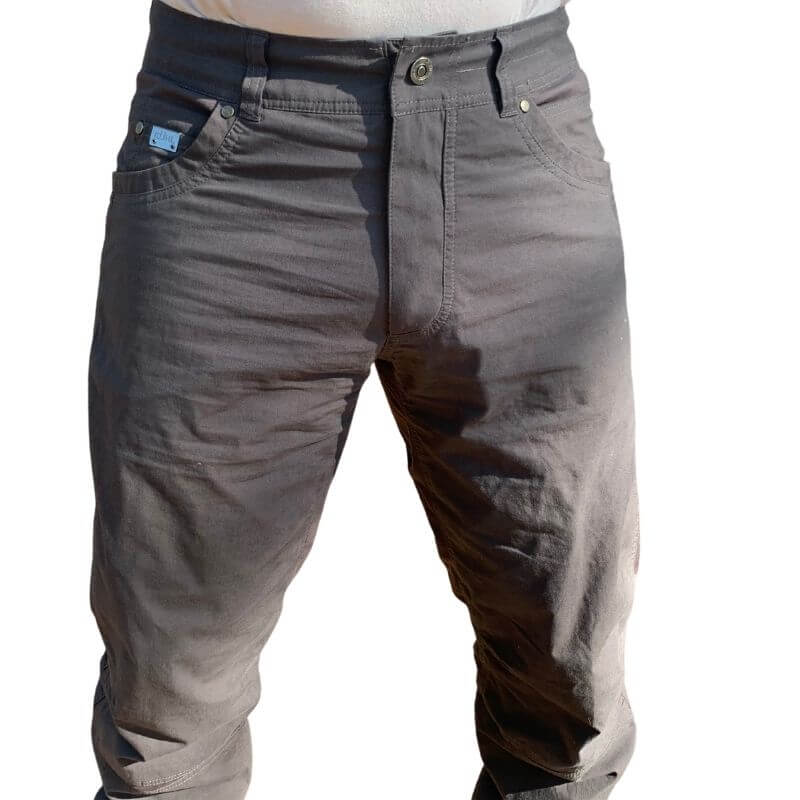
Weight: 15 oz / 425 grams
Material: 68% cotton, 29% nylon, 3% spandex
Stretch: Yes
Weather Resistant: No
UPF: 50+
Pockets: One small cargo phone pocket, hand pockets, rear pockets
Waist: No integrated belt (belt loops only)
Fit: Klassic Fit (preferred) and Tapered
Pros:
> Super tough
> Very Comfortable
> Good fit
> Available in two styles, Klassic Fit, and Tapered. I like the Klassic Fit.
Cons:
> Not weather resistant so not good in wet weather
> Heavy
The Kuhl Radikl is the most comfortable pant on this list. I’ve been long term testing these pants and they have now replaced my jeans for day to day wear, day hikes, travel and any hiking in good weather. The cotton blend is warmer than nylon-heavy alternatives and feels far closer to a pair of pants you’d actually want to live in than a technical hiker.
That comfort is also the trade-off. With cotton in the blend, the Radikl is not weather resistant and is heavy by thru-hiking standards.
Trade-off: heavy, no DWR, slow to dry once wet.
Best for: weekenders, travel days, and hikers in dry climates who prioritize comfort over weight.
Compare Prices:
Read the full review of the Kuhl Radikl Pants
best environmentally friendly hiking pants
Patagonia Quandary Pants Review

Weight: 10 oz / 284 grams
Material: 95% nylon (high recycled content), 5% spandex
Stretch: Yes, light stretch
Weather Resistant: DWR finish
Pockets: Zip thigh, hand, rear
Waist: No integrated belt (belt loops only)
Fit: Classic straight, slim
Pros:
> High amount of Recycled fabric used
> Zip-closure hip pocket
> Classic straight cut
> UPF 50+ UV protection
Cons:
> Best for lean-to-medium builds due to the slim fit/classic cut of the pants
The Patagonia Quandary is the lightest non-ultralight pant on this list and the easy pick if recycled content and supply-chain ethics matter to you. Patagonia uses heavily recycled nylon for the main fabric, and the DWR finish handles light rain.
A gusseted crotch and articulated knees keep the fit honest, and the zip thigh pocket is sized for a phone. The Quandary is also one of the better town-and-travel pants on the list because of the clean cut.
Trade-off: the slim classic cut suits lean to medium builds and feels restrictive for stockier hikers; not as stretchy as the Ferrosi, Stretch Zion or Terravia Trail.
Best for: weight-conscious 3-season backpackers who want a more sustainable pant and a clean cut for town.
Compare Prices:
Best Technical Alpine Pants
Arc’teryx Gamma Hiking Pants Review

Weight: 12.5 oz / 355 grams
Material: 88% nylon, 12% elastane (softshell)
Stretch: Yes
Weather Resistant: DWR finish
Waist: Integrated Belt
Pockets: Three zip
Pros:
> Lightweight
> Breathable
> Three zip pockets
Cons:
> Extremely expensive
The Arc’teryx Gamma is the most expensive pant on this list and the one best suited to more technical or alpine hikes. The update a couple of years ago kept the lightweight, stretchy softshell feel and refined the fabric.
In use the Gamma is genuinely good at what it’s built for, three-season backpacking, alpine starts, scrambling, and shoulder-season trips where you want some weather resistance without going to a hardshell. The three zip pockets are useful and the fit is the best on the list.
Trade-off: not warm enough for winter, not waterproof for sustained rain, and very expensive.
Best for: hikers and alpine backpackers who want a premium softshell and don’t mind the price.
Compare Prices:
Best Breathable Hiking Pants
Outdoor Research Ferrosi Pants Review

Weight: 12.7 oz / 360 grams
Material: 86% nylon (46% recycled), 14% spandex
Stretch: Yes
UPF: 50+
Weather Resistant: DWR finish
Waist: Belt Loops only
Pros:
> Lightweight
> Comfortable
> Durable
> UPF 50+ UV protection
Cons:
> No belt
The Outdoor Research Ferrosi has been around for years and still earns its place. The Ferrosi fabric is the headline, they are light, stretchy, breathable and tougher than it looks. It cuts wind, sheds light rain, and dries fast.
For a 12.7 oz pant the Ferrosi is more durable than I expected. The fit is honest. The recycled content is a bonus.
Trade-off: no integrated belt, just an internal drawcord that is harder to tighten quickly under a hipbelt. The pocket layout is basic.
Best for: hot-weather backpackers and thru-hikers who want a breathable, stretchy pant that disappears on trail.
Compare Prices:
Best Stretch Hiking Pants
Patagonia Terravia Trail Review
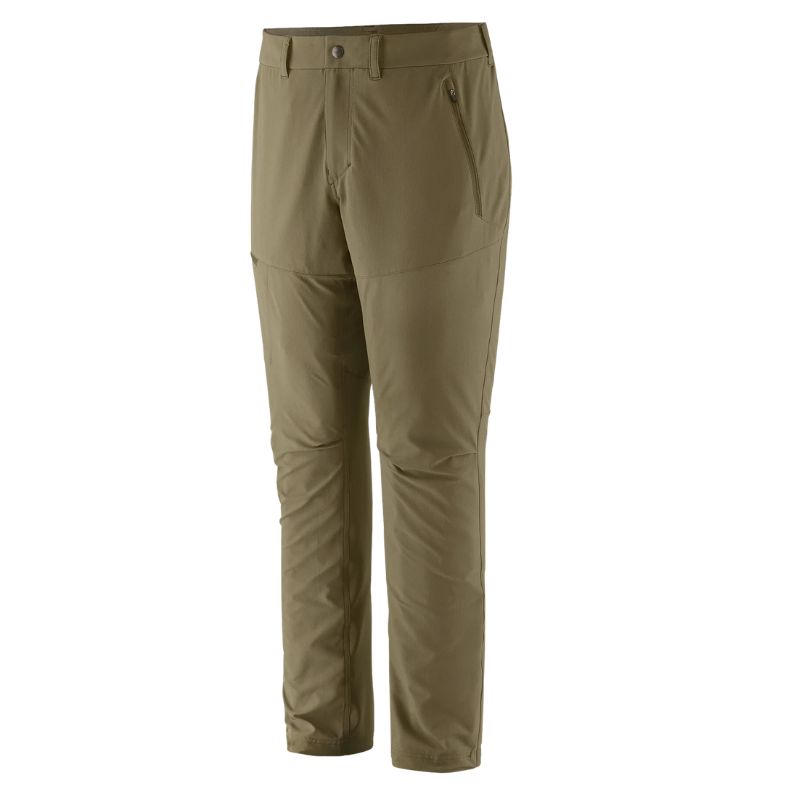
Weight: 9.9 oz / 280 grams
Material: 85% recycled polyester, 15% spandex
Stretch: High
Weather resistance: DWR
Pockets: One thigh pocket, one back pocket and hand pockets
Pros:
> Very stretchy material
> Recycled fabric
> Durable considering how thin it is
Cons:
> No belt
> Price
The Patagonia Terravia Trail is Patagonia’s newer stretch hiking pant. It is essentially what the Quandary isn’t, more stretch, more freedom of movement, less of the stiff straight-cut feel.
In use the Terravia Trail behaves like the Ferrosi or Stretch Zion: stretchy, light, breathable, with a DWR finish that sheds light rain. The pocket layout is simple and tidy.
Trade-off: lighter and less rugged than the Quandary, so not the first pick for off-track bushwhacking.
Best for: backpackers who liked the idea of the Quandary but want more stretch.
Compare Prices:
Best Budget Hiking Pants
REI Co-op Activator Review

Weight: 15.1 oz
Material: 63% nylon, 26% polyester, 11% spandex (softshell)
Stretch: Yes
Weather Resistant: DWR finish
UPF: 50+
Pockets: One thigh pocket, hand pocket and back pockets
Waist: No integrated belt (belt loops only)
Pros:
> Windproof
> Great Zippered pockets
> Adjustable waistband with belt loops
> Ethical materials and manufacture
Cons:
> Not so good in bad weather
The REI Co-op Activator is a softshell that punches above its price. The headline is the windproofing, these block real gusts in a way most lightweight hiking pants don’t, which makes them a solid pick for shoulder-season trips and exposed ridge walking.
Drawcord cuffs are useful for keeping debris out and for fording. Bluesign-certified materials are a real plus if you care about supply chain. Articulated knees and a center gusset make them more mobile than the weight suggests.
Trade-off: heavier than the Silencr, Deceptr or Ferrosi, and the softshell feel isn’t ideal in genuine heat or sustained rain. Use rain pants over the top if it really opens up.
Best for: hikers who want a windproof softshell at a reasonable price and don’t mind a bit more weight.
Compare Prices:
Best Convertible Pants
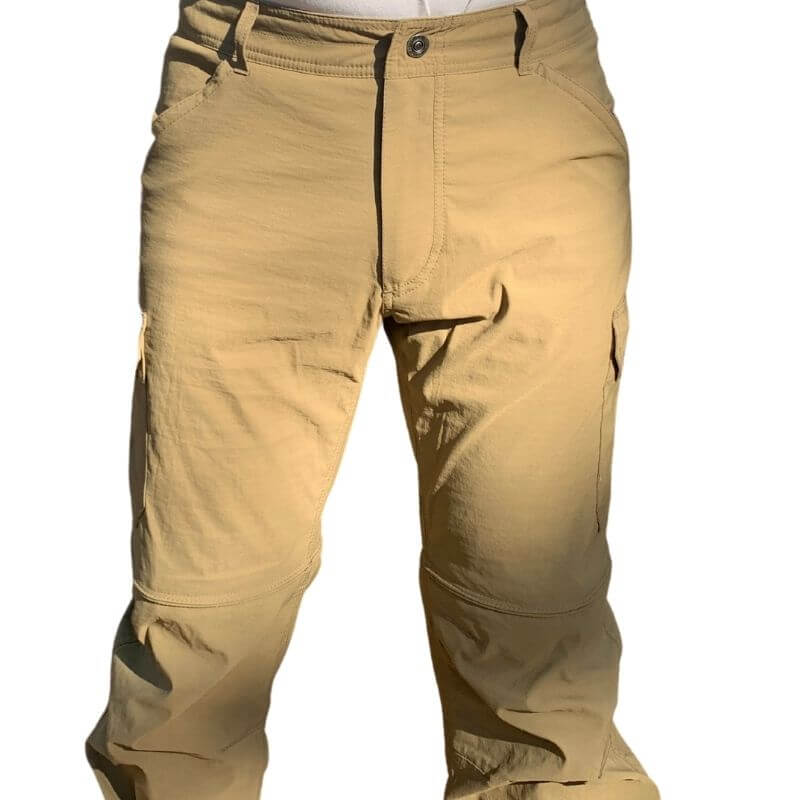
Kuhl Renegade Cargo Convertible Pants Review
Weight: Unknown
Material: 95% nylon, 5% spandex
Stretch: Yes but not much
Weather Resistant: DWR finish
Pockets: Hand, rear, cargo
Waist: No integrated belt (belt loops only)
Convertible: Yes, zip-off legs
Pros:
> Baggy Cargo Pant fit
> Weather resistant DWR coating on pants
> Good fit
Cons:
> Not very much stretch
> Front button can pop open if your pants are too tight. Could be a tighter fit to prevent this
The Kuhl Renegade Cargo Convertible are the best convertible pants for backpacking and the zip off pants I reach for first. The zip-off legs work cleanly, the cargo pocket layout is genuinely useful when you want to stash small items out of your pack, and the DWR shrugs off light drizzle.
The cut is more relaxed than the standard Renegade, which suits backpacking. Construction is the typical Kuhl level, overbuilt for what most hikers will throw at it.
Trade-off: not very stretchy, heavier than the Sahara or Silver Ridge, and the front button can pop on a tight fit.
Best for: backpackers and travelers who want convertible pants with serious pocket capacity and don’t mind the weight.
Compare Prices:
Read the full review of the Kuhl Renegade Cargo Convertible Pants
Best Hiking Pants Australia and New Zealand
Macpac Trekker Pants Review

Weight: 11.6 oz / 330 grams
Material: 89% nylon, 11% polyurethane (Pertex Equilibrium double-weave)
Stretch: Yes
Weather Resistant: DWR finish
UPF: 50+
Waist: Integrated belt
Pockets: Two hand, one zip thigh
Pros:
> Durable
> Good Stretch fabric
> Integrated Belt
> UPF 50+ protection
> Weather resistant
Cons:
> Only one zip pocket
> Only available in Australia and New Zealand
The Macpac Trekker is a quietly excellent pant that almost no American review covers, which is a shame. The Pertex Equilibrium double-weave is the headline, an open inner weave that wicks against the skin and a tighter outer weave that handles weather. The result is a pant that genuinely breathes and still copes with NZ scrub and shoulder-season drizzle.
I’ve worn these for over two years across day hikes and multi day hikes and they’ve held up. The gusseted seat reads as a small detail until you’ve worn through a non-gusseted pant in the seat on a long trip. Integrated belt, UPF 50+, abrasion-resistant.
Trade-off: only one zip pocket and only available in Australia and New Zealand.
Best for: backpackers and thru-hikers in Australia and New Zealand. If you can buy them, they are the best regional pick on this list.
Compare Prices:
Read the full review of the Macpac Trekker Pants

Yet to be tested
- Fjallraven Keb Agile – Not yet tested but they are reinforced where you actually wear through pants; they look like a good choice if your trips involve scree, talus and bushwhacking.
Hiking Pants Buyers Guide
Hiking Pants Buyers Guide
Material
Almost every pant in this review uses a nylon or nylon-blend face fabric.
Nylon is strong, light, dries quickly and shrugs off light rain when treated with DWR.
Polyester appears on softshell pants like the Kuhl Silencr. Slightly more water resistant than pure nylon, slightly less abrasion resistant.
Spandex / elastane is the stretch component; aim for around 3–15% spandex for real on-trail mobility.
Cotton (in the Kuhl Radikl, for example) is comfortable in dry desert heat but a poor choice for wet or tropical hiking, it absorbs water and dries slowly. Never hike in jeans.
Weight and Packability
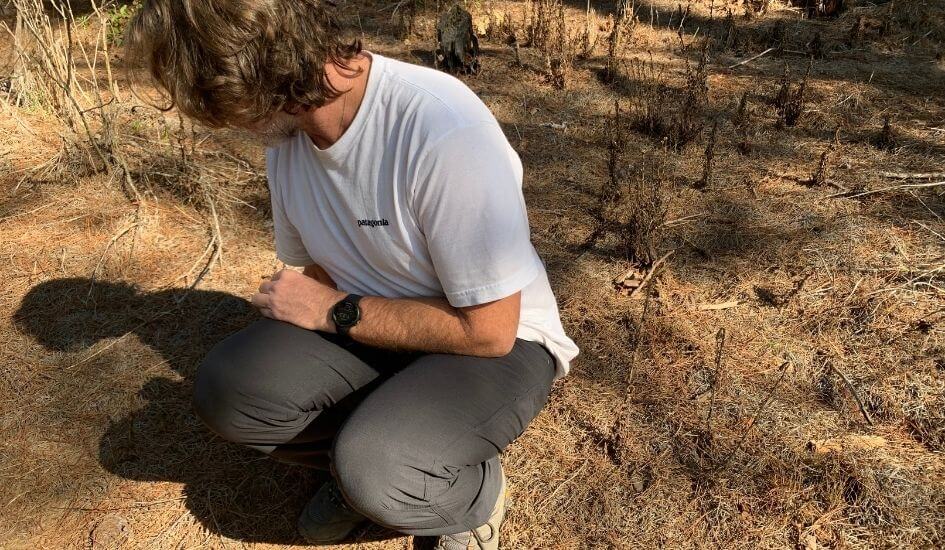
Anything under 11 oz is genuinely lightweight; anything under 9 oz is moving into trail-running pant territory. Heavier pants (14 oz+) buy you durability and warmth. For a multi-day backpacking trip, I’d target 10–12 oz unless you’re hiking in cold or technical terrain.
Comfort
A comfortable pair of hiking pants are the best. Usually, they are breathable, have a least some degree of stretch, are lightweight, durable, have good pockets, and have some form of mild water resistance.
All the items that make for comfortable hiking pants are covered in more details below, keep reading. Part of having comfortable pants involves the design that includes articulated knees which allow a good amount of movement in the knee region of the pants. Not all pants have articulated knees but those that do make for a good room in the knee area.
Articulated Knee and Gussets
Articulated knees and gussets are features that are appreciated in hiking pant design. The articulated knees allow for a full range of movement in the leg and knee area as the knee bends. Usually, it is simply more material added to this section of the pants. Gussets are extra room in the crotch area that replaces the normal way pants are made. Overall, the hiking pants fit your body better as a result of these features.
Stretch and Mobility
Look for a gusseted crotch and articulated knees, plus a fabric with some spandex (4–14%). Stretch matters most on steep ground, when crouching for camp, or scrambling. The Outdoor Research Ferrosi, Kuhl Deceptr, Patagonia Terravia Trail and Arc’teryx Gamma are the stretchiest pants in this review.

Water Resistance and DWR
Most hiking pants have some degree of water resistance. A general rule of thumb is that water resistance has an inverse relationship with breathability, which makes sense.
You’ll often see the letters DWR in the features of weather-resistant pants, which stand for durable water repellant. This means that they have a DWR coating, which enables them to shed water more easily in light rain.
Choosing synthetic fabrics over cotton also helps them be more water resistant, as nylon is far less absorbent than its organic counterparts.
When things get wet it can be annoying. When hiking and backpacking you should always carry a good pair of lightweight rain pants to keep your hiking pants dry.
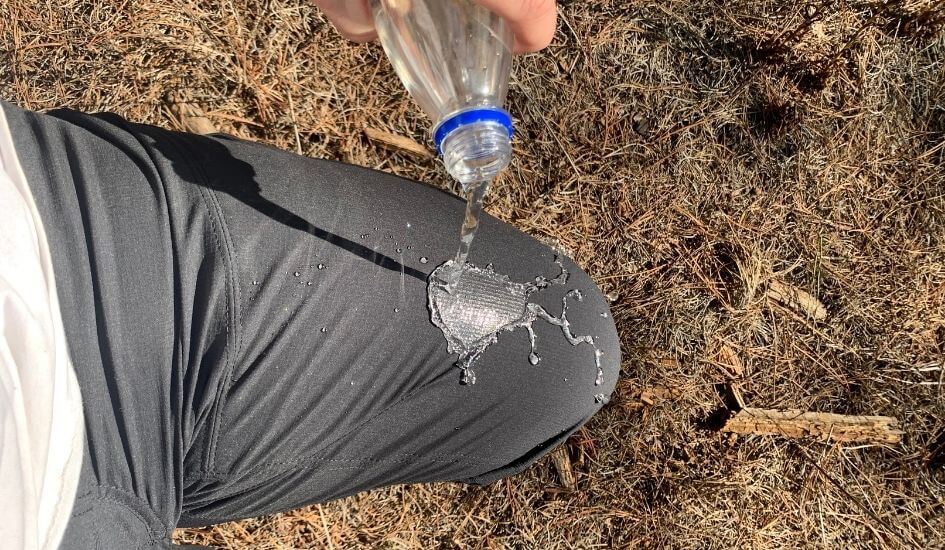
Breathability and Ventilation
You put in a lot of effort when you’re hiking, and you know what effort means; that’s right, sweat! You need to make sure that the hiking pants you choose are breathable. Sweat not being able to evaporate keeps you from cooling down when you need to the most.
Breathability and water resistance are inversely related. A pure softshell breathes less than a thin stretch nylon, and a rain pant breathes less again. Look for mesh pocket liners and inseam gussets that double as venting.
As well as the material itself, look for ventilation. Thick pants like the Prana Stretch Zion may not be that breathable in fabric terms, but they have built-in vents to keep air flowing and help body heat disperse. The Ferrosi, Silencr and Deceptr are the most breathable in this review.
Durability
Durability comes from fabric weight, weave (ripstop helps), and reinforcement in the seat, knees and ankles. You want to be confident that your pair of pants is going to be sturdy, and resistant to snags, tears, and abrasion. This is why it’s important to think about durability when you’re picking out a pair.
Different weaves and coatings can increase the durability of hiking pants and feature a gusseted crotch making for more robust construction. A thicker pair of pants tend to be more durable but carries a cost in terms of weight in comparison to lightweight fabric used in lightweight pants. The Fjallraven Keb Agile and Arc’teryx Gamma lead this review on durability.
Thinner synthetic pants are resistant to most forms of trail damage and still keep you cool. Light pants like the Ferrosi and Deceptr last longer than their weight suggests, but expect a couple of small ankle tears across a full thru-hike.
When hiking in wet weather and rough areas and you need extra protection it might be a wise idea to invest in a good pair of hiking gaiters to stop abrasion and mud from damaging the lower legs of the pants. I’ve been using gaiters to protect my pants and hiking boots for most of my hiking life but only in areas with lots of mud or snow.
Warmth and Cold-Weather Layering
All of the lightweight pants provide good sun protection and warmth when needed. The lightweight softshell fabric and lightweight stretchy materials provide a good level of protection from the cold when needed. But when things get cold and the temperature drops below freezing it is time to layer up.
When it gets cold you can add a warm base layer underneath your hiking pants. I regularly do this to stay toasty warm when the temperatures drop. If you need another layer to stop the cold wind then a pair of rain pants work great. But when it gets really cold with temperatures well below freezing, you may need to take a look at a pair of Winter Hiking Pants which are thicker pants with good wind resistance and insulation. You may also need to upgrade to a pair of Winter Hiking Boots for better insulation. And when it gets cold you may need some down pants which are a great option for when you are in camp.
Belts, Drawcords and Waist Adjustment
After a few days on a long hike you genuinely lose a pant size, then put it back on after a town stop. A pant with an integrated belt (Prana Stretch Zion, Macpac Trekker) handles that without fuss.
Internal drawcords (Ferrosi, Quandary) work but are slower to adjust under a hipbelt. Some hikers prefer to skip integrated belts entirely and use a separate webbing belt.

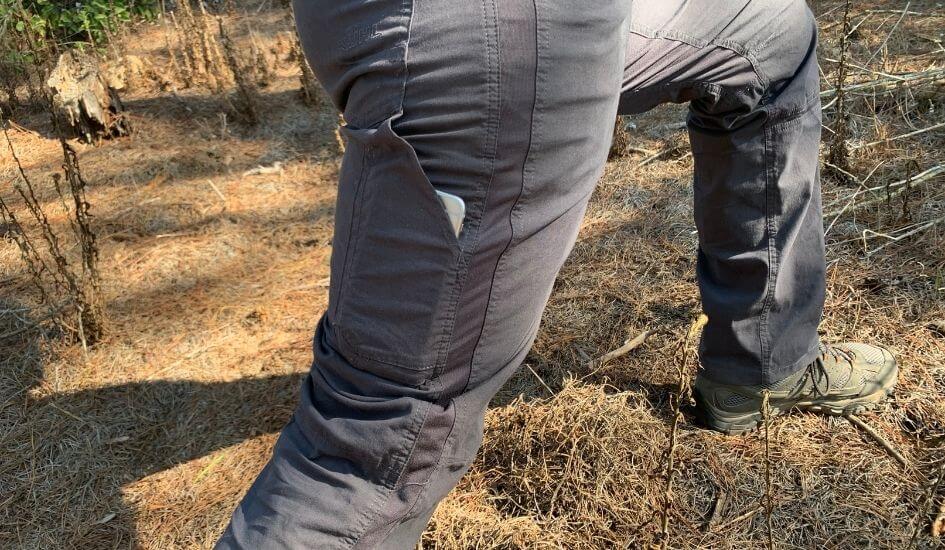
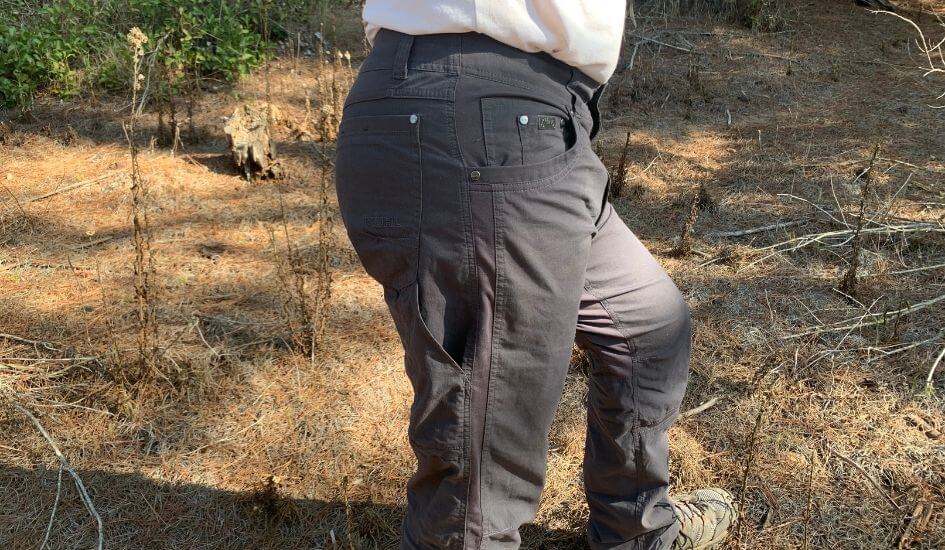
Pockets
You probably don’t want to carry too much extra weight in your pants, but everyone knows that there are some things you’d rather have at hand than on your back.
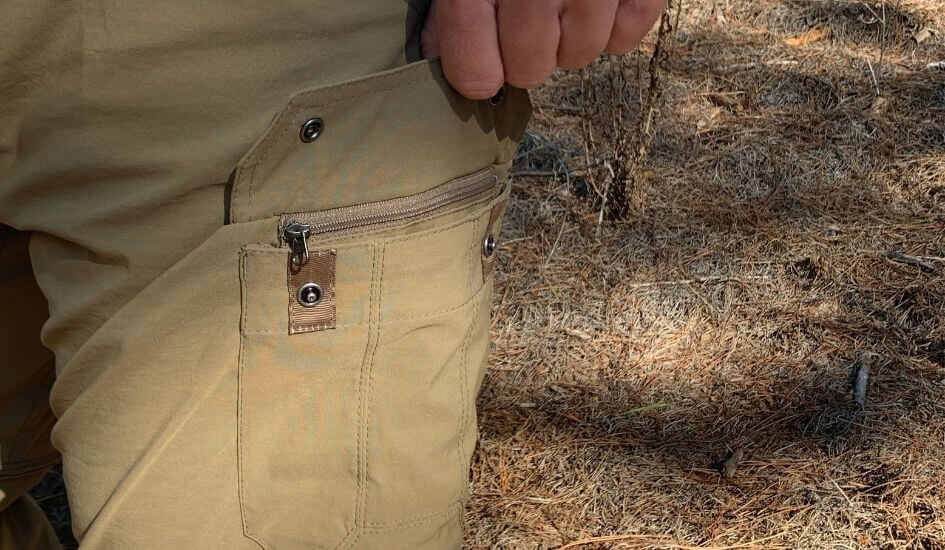
If you’re someone who prefers to carry more in your pockets, make sure you’re looking for options like zip closures for security, and cargo pockets for capacity. Also, consider the lining of your pockets.
Mesh lining helps to ventilate internal pockets and facilitates drainage, perfect for any fording. Just take your phone out before you go wading!
Thigh pockets (also known as cargo pockets) and hand pockets are the most important, with rear pockets being a bit useless. I don’t know too many people who would consider hiking with anything in their back pockets.
Fit and Style – Slim vs Relaxed
Slim Fit
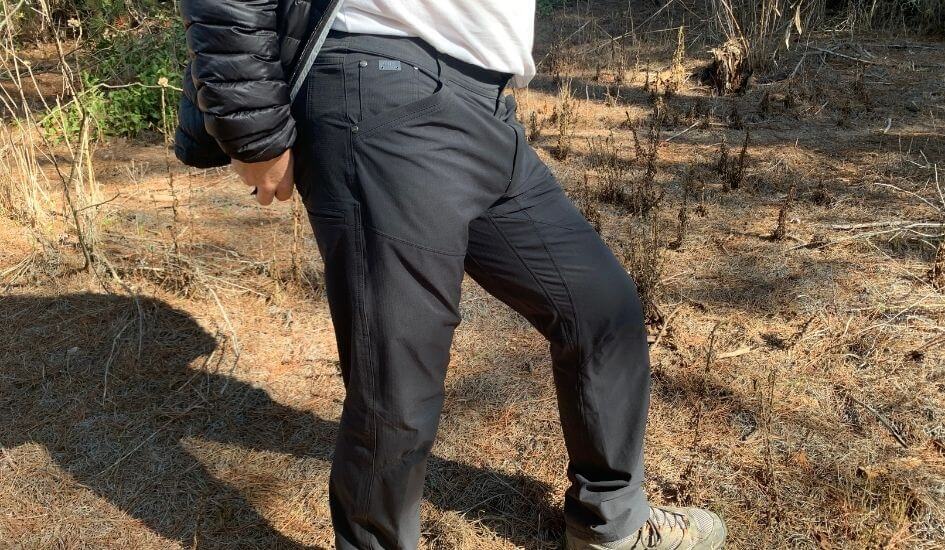
Slim-fit pants are usually lighter than regular fit and also well suited to the outdoors. They usually look nicer and also work well as travel pants that can be used for hiking. Pants with a slim fit usually offer a lot of stretch.
Relaxed / Regular Fit
A relaxed fit is my preferred style of hiking pants. They offer a little more room than a slim fit and are better suited to the outdoors. But there is a limit. Some relaxed-fit pants can look very baggy, especially if you have a thin build.
Women’s Hiking Pants
Almost every pant in this review has a women’s-specific version, usually under a slightly different model name (e.g., prAna Halle Pant II for the Stretch Zion). The construction, materials and features carry across. We plan to publish a BikeHikeSafari women’s hiking pants guide soon.
Convertible Hiking Pants
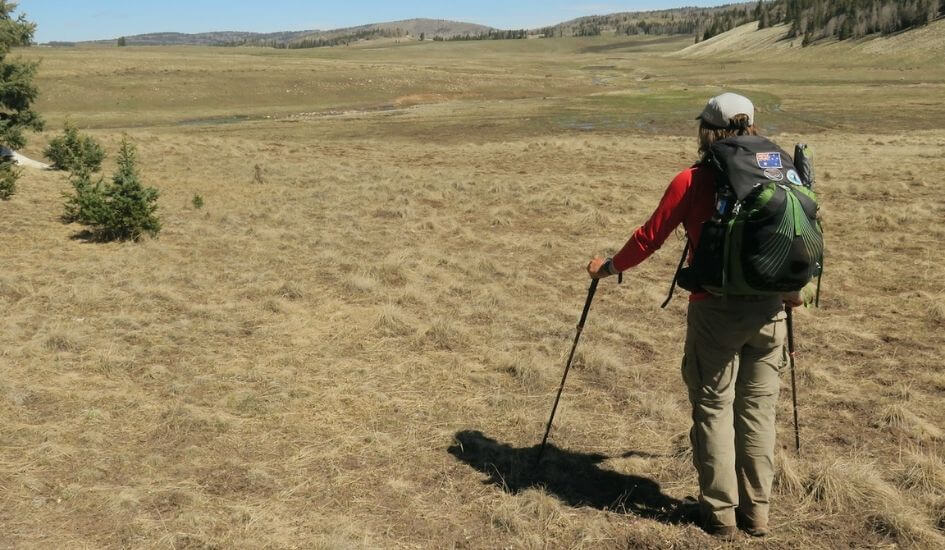
Convertible pants are an option that appeals to hikers and backpackers who like to wear shorts during warm weather and hiking pants in colder weather.
Over the years I find that I have had a love-hate relationship with convertible pants. My main dislike is wearing a pair of shorts with a great big zip running around my thighs or knee area. This feeling is shared by many who are turned off for the same reason. But the positives are very good.
Like most people, I love the flexibility of having shorts and pants all in one option. When it comes to lightweight traveling they are perfect, when it comes to lightweight backpacking and hiking they are often better than taking a separate pair of hiking shorts and hiking pants. The lower legs zip off easily and you can store the pant leg in the backpack until needed.
Overall, I like zip-off convertible pants, they are versatile pants. They are here to stay and are always a part of most of my gear lists when I go hiking and backpacking. And the best convertible pants mentioned in the review above are all awesome.
Pants Vs Shorts
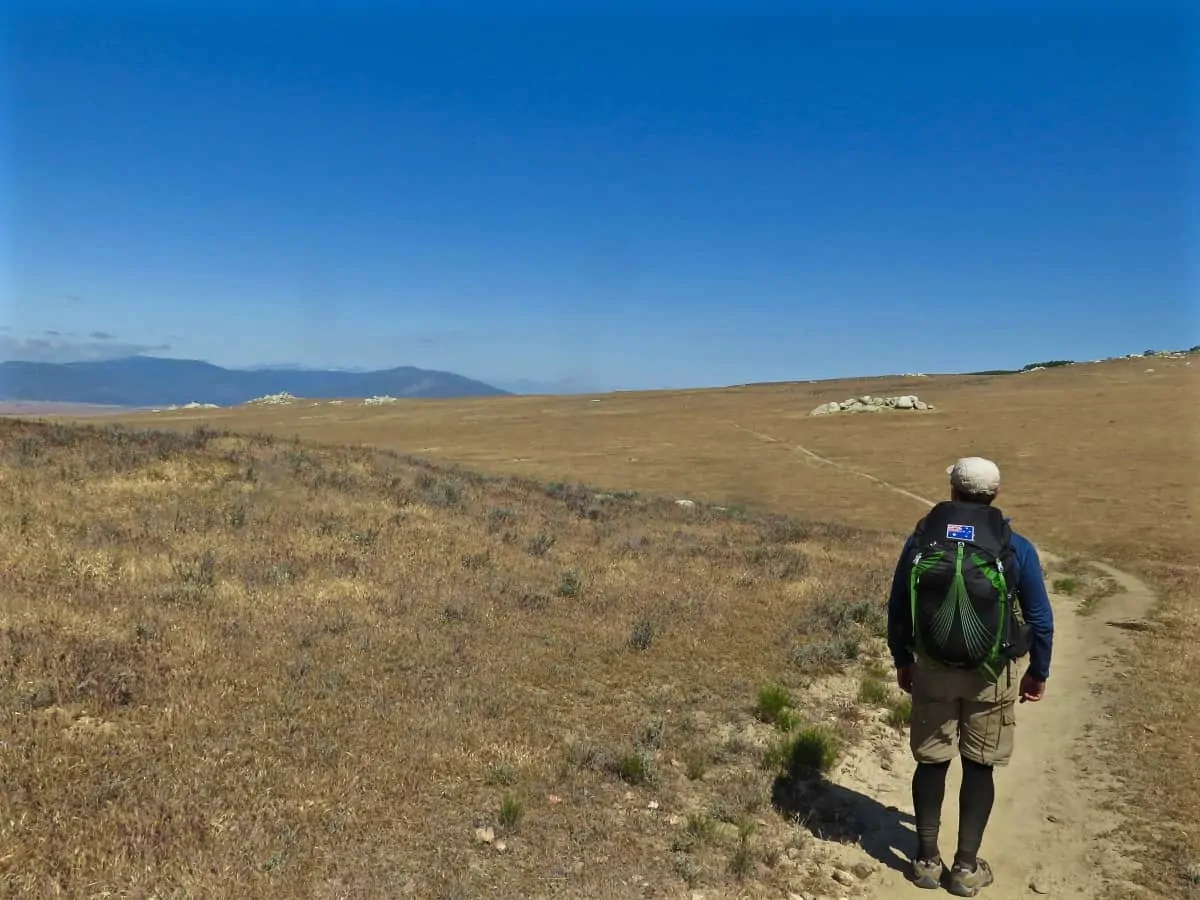
Hiking Shorts are lighter, and more breathable, but don’t provide the same level of protection as Hiking Pants. In the summer months, shorts are a good option. Many ultralight hikers don’t wear hiking pants but prefer to wear shorts only.
When it gets cold they wear a pair of hiking base layers underneath the shorts. I’ve tried this method in temperatures well below freezing and it works well. Especially when you add a pair of Rain Pants to stop the cold wind.
Value
There is a huge divide between the pricing of the most expensive and the most economical pants in this review. In many ways, you get what you pay for but sometimes things are just too prohibitively expensive. Check the prices to see whether they fit your budget.
Conclusion
Here are the best pants for backpacking and hiking on the market in 2026:
- Best Overall: Prana Stretch Zion Pants
- Best Lightweight: Kuhl Silencr Pants
- Best Ultralight: Kuhl Deceptr
- Most Comfortable: Kuhl Radikl
- Best Eco-Friendly: Patagonia Quandary Pants
- Best Technical / Alpine: Arc’teryx Gamma Hiking Pants
- Best Breathable: Outdoor Research Ferrosi Pants
- Best Mobility / Stretch: Patagonia Terravia Trail
- Best Budget Hiking Pants: REI Co-op Activator
- Best Convertible: Kuhl Renegade Cargo Convertible Pants
- Best for Australia and New Zealand: Macpac Trekker Pants
Follow along on Social Media
Frequently Asked Questions
What is the best hiking pant for backpacking?
For most backpackers I’d start with the Prana Stretch Zion. Durable, stretchy, with an integrated belt that actually works on a long hike. If you want a lighter pant, look at the Outdoor Research Ferrosi or Kuhl Silencr. If you want a true ultralight pant, the Kuhl Deceptr is the lightest pair on this list I trust on a thru-hike.
What is the lightest hiking pant?
In this review, the Kuhl Deceptr at around 11 oz / 312 g and the Patagonia Quandary at around 10 oz / 284 g are the lightest pants I’d use for actual backpacking. Below that, you’re into trail-running pants like the Path Projects Killam PX or Janji Atlas Multi, which give up cargo pockets and some durability.
Are nylon or polyester hiking pants better?
Both work. Nylon is stronger and more abrasion resistant. Most pants in this review use nylon-heavy blends. Polyester (used in the Kuhl Silencr) is slightly more water resistant and dries a touch faster. Spandex / elastane is the stretch component in either fabric.
Do I really need DWR hiking pants?
DWR sheds light rain and drizzle and keeps the fabric breathable. For sustained rain or genuine wet weather, DWR isn’t enough, layer a pair of waterproof rain pants over the top. PFAS-free DWRs are now the standard.
Should hiking pants be tight or loose?
I prefer a relaxed fit for hiking and a slim fit for travel. Modern stretch fabrics make tight fits more workable than they used to be, but baggy pants can catch on scrub and slim pants can restrict steep movement. Try both in store if you can.
Are convertible hiking pants worth it?
Yes for thru-hiking and bikepacking, where you want one garment that handles cold mornings and hot afternoons. No for purists who don’t want a zip line around the thigh. Of the convertibles in this review, the Kuhl Renegade Cargo Convertible and REI Co-op Sahara Convertible are the two I’d actually pack.
Can you wear hiking pants in summer?
Yes. Light hiking pants like the Ferrosi, Quandary, Silencr or Deceptr are breathable enough for summer trails and protect against sun, bugs and scratches in a way shorts don’t. Many thru-hikers wear long pants year-round.


BikeHikeSafari Gear Review Process
The author, Brad McCartney from BikeHikeSafari is a small independent adventurer and outdoor gear tester who owns and runs BikeHikeSafari.com.
BikeHikeSafari is not part of a large blog network and is proudly independent. All reviews on this site are independent and honest gear reviews of outdoor products by the author.
The author, Brad McCartney is a very experienced triple crown thru-hiker, adventurer, and bike tourer having spent 1000s of nights sleeping in a tent and sleeping bag (Read more). He was a manager of an outdoor retail store and is very experienced in what is important when using and testing gear for reviews like this.
BikeHikeSafari will never receive any money for reviews and they do not accept sponsored reviews on this website. All the comments about the gear reviews are from the author based on his years of experience. Hope this independent review was helpful for you.

