

I have slipped and slid across enough icy trail to know that the right pair of microspikes is the difference between a confident winter hike and a slow, nervous shuffle. Microspikes are the lightest winter traction devices and a great addition to your winter backpacking setup. Just add some Lightweight Hiking Boots or Winter Hiking Boots, and an Ice Axe and you are ready to walk safely and comfortably on snow and ice terrain. Some ultralight thru-hikers even use Trail Running Shoes with Microspikes for all-year running and thru-hiking.
This guide is written for thru-hikers, winter backpackers, and trail runners who want reliable traction on snow and ice without carrying crampon weight. I used the Kahtoola Microspikes through the snowy, icy sections of the Continental Divide Trail in Colorado, and they remain my top pick, with the Kahtoola MICROspikes Ghost as the best ultralight option when every gram counts. If you want the shortlist fast, jump to the Quick Picks below. For how I research and field-test gear, see the Gear Review Policy.
Quick Picks: Best Winter Traction Devices
- Best overall: Kahtoola Microspikes – 12 heat-treated stainless steel spikes per foot, 11.9 oz (size medium), and the pair I relied on through the ice and snow of the Continental Divide Trail in Colorado; the default winter traction device for thru-hikers.
- Best ultralight: Kahtoola MICROspikes Ghost – 6.8 oz (size medium) with a 12-spike layout, the pick for gram-counting thru-hikers who still want real grip on hard ice.
- Best for trail running: Kahtoola Nanospikes – 10 low-profile tungsten-carbide studs that stay comfortable at running pace on icy roads and packed trails.
- Best technical traction: Black Diamond Distance Spike – 14 stainless steel spikes and a toe cover; my choice when the trail turns to steep, mixed ice.
- Best premium build: Black Diamond Access Spike – 14 dual-density spikes and reinforced eyelets built to shrug off season after season of abuse.
- Best trail crampons: Hillsound Trail Crampon – 11 carbon-steel spikes with a strap-over harness and a beefier bite for alpine starts and loaded packs.
- Best for mixed winter running & hiking: Kahtoola Exo Spikes – 12 tungsten-carbide tips at 7.3 oz, the versatile middle ground between Microspikes and Nanospikes.
- Best budget: Yaktrax Walk Traction System – 1.2 mm zinc-coated steel coils at $25 that get the job done on town ice and packed snow when you don’t need real spikes.
How We Tested
The microspikes in this guide are researched and, where possible, field-tested by an experienced long-distance hiker and former outdoor store manager. Across thru-hikes and shoulder-season trips, I judge microspikes on grip per gram, spike and stud layout, harness durability, fit over boots and trail runners, ease of getting them on with cold hands, packability, and value for serious backpacking. Some items were supplied by the manufacturer and some were purchased by the author for this review. For more on how we research and review gear, see the BikeHikeSafari Gear Review Policy.
Follow along on Social Media
Hiking Microspikes Comparison Table
| Brand | Weight | Spikes | Type |
|---|---|---|---|
| Kahtoola Microspikes | 11.9 oz | 12 | Spike |
| Kahtoola MICROspikes Ghost | 6.8 oz | 12 | Spike |
| Kahtoola Nanospikes | 7.4 oz | 10 | Stud |
| Black Diamond Distance Spike | 7 oz | 14 | Spike |
| Black Diamond Access Spike | 8.8 oz | 14 | Spike |
| Hillsound Trail Crampon | 15.7 oz | 11 | Spike |
| Kahtoola Exo Spikes | 7.3 oz | 12 | Stud |
| Yaktrax Walk Traction System | 3.5 oz | N/A | Coil |
Best Ice Cleats for Backpacking 2026
Best Microspikes 2026 – Overall
Kahtoola Microspikes
Pros:
> These winter traction devices can be used for thru-hiking, backpacking, trail running, or generally walking around on icy surfaces
> These products are easy to take on and off
> 2-year warranty
Cons:
> Check the sizing chart when purchasing this product to make sure you get the right size.
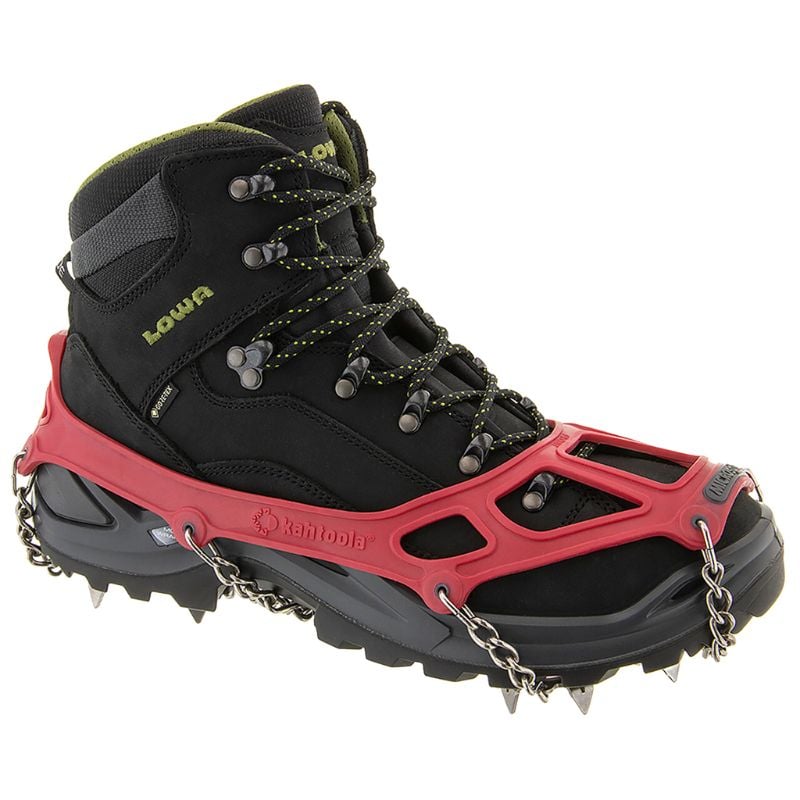
The Kahtoola Microspikes are the most popular traction device on the long trails, and for good reason. I tested and used them when I thru-hiked the Continental Divide Trail on the very snowy and icy sections in Colorado, and after several weeks I found them reliable and durable enough to handle mixed rock, shallow snow, deeper snow, and ice. They are genuinely the set I reach for first.
At about 12 ounces for a size medium they are not the lightest option, but the pay-off is the grip. The 12-spike layout uses heat-treated stainless steel points that bite into hard ice far better than lighter stud-style devices. Ultralight hikers who mostly walk easy, packed trails might save weight elsewhere with the Kahtoola MICROspikes Ghost, but if your route has real ice and loose scree, these earn their weight.
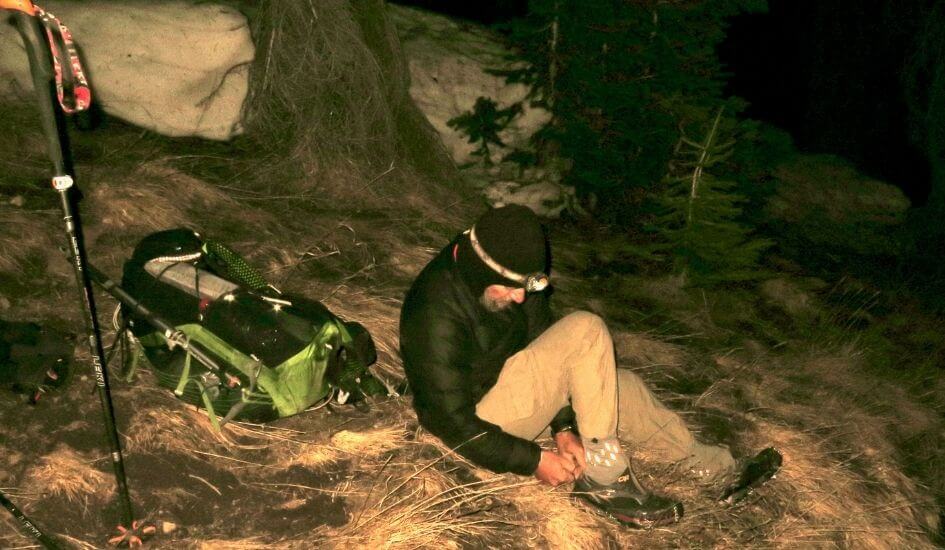
They are easy to take on and off which matters at 3 am in a below-freezing start. The elastomer harness stretches over nearly any hiking boot or trail runner, and the reinforced eyelets hold up to repeated stretching.
The trade-off is comfort on hard rock. On exposed, dry trail the spikes feel slightly high and clicky underfoot, and you won’t want to wear them the whole day. Carry them and put them on when the ice starts.
Best for: thru-hikers and winter backpackers who need dependable grip on icy and mixed terrain.
Compare Prices:
Best Ultralight Microspikes for Thru-Hiking
Kahtoola MICROspikes Ghost
Pros:
> Perfect for thru-hikers
> Ultralight
> Easy to take on and off
> Good warranty
Cons:
> Not as durable for sharp rocky scree slopes
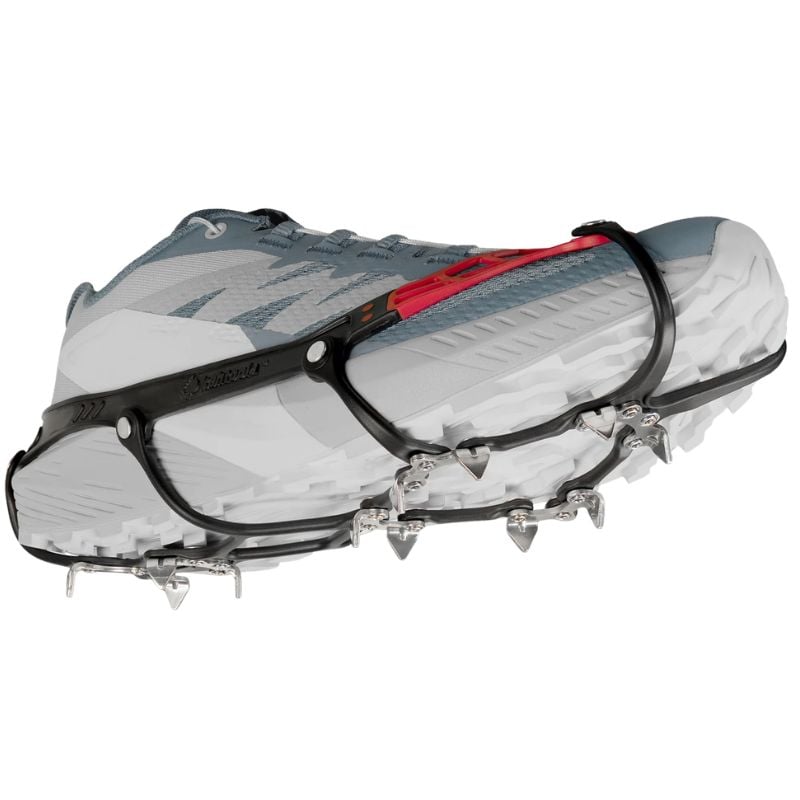
The MICROspikes Ghost is the answer for thru-hikers who want real spike traction without the Microspikes weight. At around 6.8 ounces it trims almost 40% off the standard model while keeping a genuine 12-spike-per-foot layout, so you are not giving up punch on hard ice the way you would with a stud device.
The trade-off is durability and comfort. To save the weight Kahtoola slimmed the harness and links, which means the Ghost does not shrug off rock abrasion as readily as the full Microspikes. I would reserve it for gram-critical thru hikes such as the PCT, CDT, JMT, GDT or a shoulder season where traction is important and you ensure you limit how much you use them on non-icey scree slopes.
For a long-distance hiker carrying the spikes more than they wear them, this is the sweet spot. You get the bite when you need it and almost forget they are in the pack the rest of the time.
Best for: ultralight thru-hikers and fastpackers who want full spikes at the lightest realistic weight.
Compare Prices:
Best Microspikes for Trail Running
Kahtoola Nanospikes

Pros:
> Perfect for runners or thru-hikers
> Also great for around town on icy streets
> Easy to take on and off
> Not as sharp as other microspikes so less likely to rip holes in your backpack when not in use
Cons:
> Consult the sizing chart when purchasing this product as some people seem to get the sizing wrong
The Nanospike is the running shoe of the traction world. They are low profile, light, and unobtrusive. Ten tungsten carbide studs sit close to the outsole, giving real grip on packed snow and thin ice without the high, clunky feel of full spikes. If you run through winter, or walk icy town streets before sunrise, this is the pair.
They have been recently updated with an improved harness, better studs, and more durable connections between the base and the foot harness. Around town and on sidewalks they are in their element, and they are my pick to leave in the car through winter as a backup when boots aren’t quite enough. When using these for backpacking they pack easier than other microspikes and less likely to rip holes in your backpack due to the studs not having sharp points like many other traction devices.
The trade-off is that studs will not save you on blue ice or deep snow. They are a packed-surface specialist, not a backcountry tool. For steep, hard, or technical ice I would step up to full spikes.
Best for: winter runners and town use on packed snow and thin ice.
Compare Prices:
Best Technical Microspikes
Black Diamond Distance Spike Traction Device

Pros:
> Durable
> Great traction in any uneven terrain
> Fabric on the front of the shoe adds another layer of warmth, even if it is very small
> Easy to use
Cons:
> Not the cheapest traction devices
The Black Diamond Distance Spike is the most aggressive and most durable device in this guide. Fourteen stainless steel spikes per foot spread grip across the whole sole, and a small fabric cover over the toe adds a touch of warmth and protection on the front of the shoe.
That toe cover is the differentiator. It keeps slush and spindrift off your forefoot and helps the device track straight under load, which matters on steep, mixed ice. These are very well made and durable enough to last several seasons without falling apart in the backcountry.
The trade-off is cost and slightly fiddlier fit than a plain harness. They are not the cheapest, and the cover means you must nail the sizing. But if you want the hardest-wearing traction device for tough winter conditions, this is the one.
Best for: hikers and backpackers tackling steep, icy, mixed terrain where durability is the priority.
Compare Prices:
Best Premium Ice Cleats
Black Diamond Access Spike
Pros:
> 14 spikes per foot, all that is around 8 mm in length.
> Great traction in any uneven terrain
> The eyelets on the harness have been designed with dual density so that they are durable to last.
> Easy to put on and remove
Cons:
> Quite expensive, and on the upper end of the market
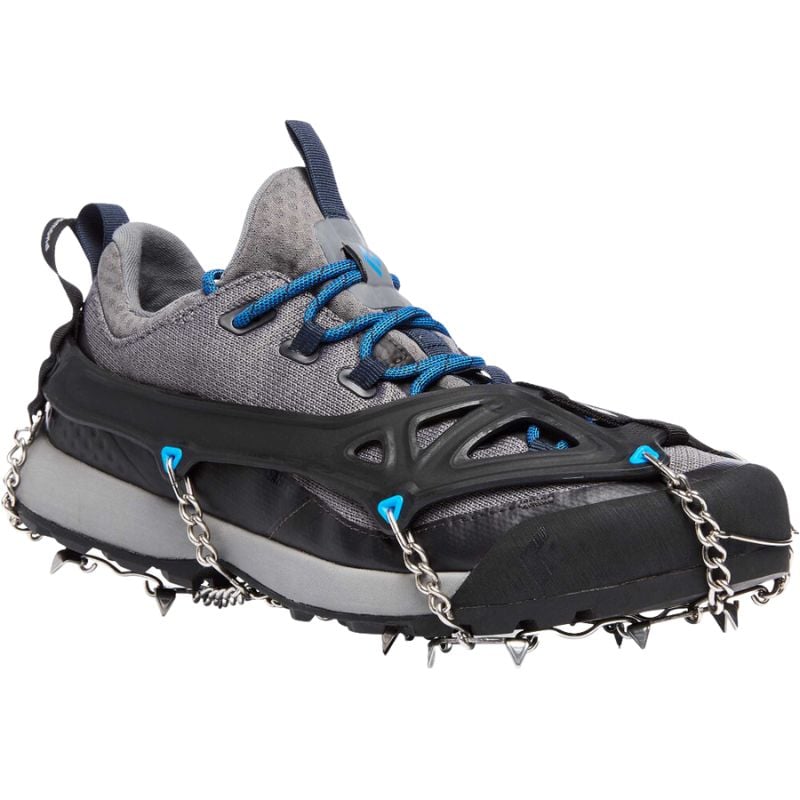
The Access Spike takes the same 14-spike geometry as the Distance Spike and wraps it in a smart, heel-friendly harness. Fourteen stainless steel spikes give excellent traction across rock, ice, and snow, while a front spike is positioned for toe engagement and a heel webbing loop makes getting them on and off easy in the cold.
Durability is the theme. The dual-density eyelets are built to resist the stretching and tearing that eventually kills cheap elastomer harnesses, and the harness adapts to almost any boot or shoe you wear. It is a premium build, and it is priced like one.
The trade-off is that you pay top dollar for toughness that a thru-hiker often does not need. If you hike hundreds of miles a season across mixed terrain, it returns the investment; if you want light insurance for a single shoulder season, a lighter pick does the job for less.
Best for: frequent winter hikers who want maximum durability and are happy to pay for it.
Compare Prices:
Best Trail Crampons
Hillsound Trail Crampon
Pros:
> 2-year warranty
> The harness will fit around almost any shoe or boot
> A plate system is used to disturb weight, provide the best traction, and reduce fatigue.
Cons:
> They are around 15.7 ounces and that extra weight may not weigh you down.
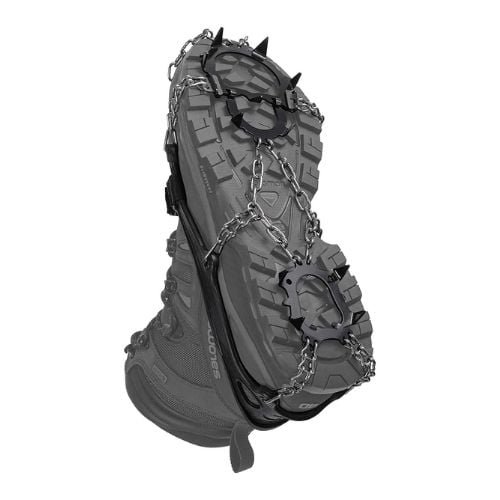
If the Kahtoola Microspikes are the thru-hiker’s default, the Hillsound Trail Crampon is the step up for loaded packs and steeper, icier ground. Eleven carbon steel spikes around two-thirds of an inch long dig in noticeably harder than shorter spikes, and an extra strap over the foot keeps everything locked down when you carry real weight. Think of these more like full on crampons minus the front spikes for ice climbing.
That grip comes at a cost of weight with these traction devices weighing in at 15.7 ounces, the heaviest in the main list. The elastomer harness spreads the load and a plate system disperses weight and reduces fatigue on long days. If your winter route includes alpine starts or icy descents with a full backpacking load, this is the traction device I would trust.
The trade-off, as always, is grams versus bite. Thru-hikers on maintained trail won’t need this much traction or weight on the climb but if your backpack is heavy and you are wearing bigger Winter Hiking Boots they make more sense. Buy it for the hard days, not the average ones.
Best for: winter backpacking and shoulder-season alpine routes where maximum grip matters more than weight.
Compare Prices:
Best Microspikes for mixed Trail Running and Winter Hiking
Kahtoola Exo Spikes

Pros:
> Great for hiking and trail running in winter
> The harness is lightweight and flexible no matter the weather or the temperature.
> The spikes and harness have been reinforced to provide maximum strength and durability.
Cons:
> Some people find the harness is a little tricky to remove from your shoes.
The EXOspike is Kahtoola’s middle ground when it comes to winter traction, and for many people it is the one they actually want. Twelve tungsten carbide tips mounted on aluminum steps give strong bite on packed snow and ice while staying light and flexible enough for running. At 7.3 ounces it splits the difference between the Microspikes and the Nanospikes.
The harness is lightweight and flexible in any temperature, and the spikes and harness have been reinforced for strength and durability. It is happiest on terrain that is not too technical — winter trails, icy fire roads, and mixed running.
The trade-off is that it is neither fish nor fowl: slight less grip than the Microspikes, very slightly heavier than the Nanospikes. Some people also find the harness a little tricky to pull off a wet shoe. But as a single device that covers winter hiking and trail running, it is hard to beat.
Best for: runners and hikers who want one versatile device for both packed-snow running and moderate winter trails.
Compare Prices:
Best Budget Microspikes
Yaktrax Walk Traction System

Pros:
> Spike-free design.
> The harness is made of rubber that is secured to your feet with thick rubber straps.
> Easy To Use
> Ultralight
Cons:
> The rubber can break easily. It happened to me on the first day I used them and I’m not the only one.
The Yaktrax Walk is the budget pick, and it knows exactly what it is. Instead of spikes it uses zinc-coated steel coils wrapped under a rubber footbed, which gives enough grip for thin ice, packed snow, and icy pavement at a price and weight that are hard to argue with — around $25 and only a couple of ounces per pair.
Because there are no sharp spikes, these pack down into a pocket without shredding your pack, and you can walk indoors or drive without fear of wrecking a floor or a pedal. They are the pair to keep for the iced-over driveway, the school run, or a gentle winter walk.
The trade-off is the coils will not help you much in deep snow or on blue ice, and coil-style devices are not built for hard backcountry use. I have broken rubber coil housings on real trails before — on a Mt Whitney climb a pair of coil traction devices gave out on me within the first hour, and they are not suited to steep terrain.
Best for: budget-minded walkers and light day hikes on packed snow and town ice.
Compare Prices:

Microspikes Buyers Guide
Microspikes Buyers Guide
The core trade-off: grip vs weight
Every traction decision comes down to how much bite you are willing to carry. Full spikes with long, hardened points dig into hard ice and hold on steep ground, but they weigh 11 to 16 ounces and feel clunky on rock. Studs and coils weigh far less and vanish in a pack, but they slip on blue ice and hard snow. A thru-hiker who rarely needs traction carries the lightest thing that will still save a fall; a winter backpacker on steep, icy trail carries full spikes and accepts the grams. Decide on your worst realistic conditions, not your average ones, and buy for those.
Spike type: spikes vs studs vs coils
- Spikes are short, sharp metal points (often tungsten carbide or hardened stainless steel) that bite into ice and firm snow. They give the best grip of the three and suit backcountry use. Downside: weight and a slightly high feel on rock.
- Studs are shorter, blunter points that sit closer to the outsole. They are lighter and more comfortable at running pace, but grip less on hard ice. Best for runners and packed-surface walking.
- Coils are steel springs or beads wrapped around a rubber footbed. They are light, cheap, and pack flat, but grip poorly in deep snow or blue ice and are the least durable of the three.

How many spikes, and how long?
More and longer spikes generally mean more bite, but also more weight and a rougher ride. Around 12 spikes of roughly 3/8 in is the sweet spot for general winter trail. Short studs under 1/4 in are a running and town choice. Long 2/3-in to 3/4-in spikes are for steep, hard, or loaded conditions — verging on crampon territory. Match the spike length to the steepness and hardness of your terrain.
Harness and fit
The harness is what fails first on cheap devices, and it is what keeps a good device on your foot all day. Look for elastomer harnesses with reinforced eyelets, and, for loaded packs or big winter boots, a strap over the instep. Always size against the manufacturer’s chart wearing the socks, insoles, and boots you will actually use, and test at home before the trailhead. Between sizes, go tighter rather than looser — a microspike that walks off your heel is worse than none.
Microspikes vs crampons
Microspikes are lightweight, flexible slip-on grips for icy trail and packed snow. Crampons have longer, more robust spikes on a rigid or semi-rigid frame, built for steep ice, glaciers, and technical mountaineering — and for ice climbing, where no microspike belongs. If your route includes serious steep ice or glacier travel, you need crampons and the skills to use them. For everything short of that, microspikes are lighter, cheaper, and far easier to live with. For the deeper, softer stuff remember microspikes are not snowshoes: fresh powder needs flotation, not edges.
Durability and the cold
Cold kills rubber. A harness that is supple at home can stiffen and crack at minus temperatures, and elastomer loses elasticity below a certain point — some devices are rated down to around -22°F. Hardened or tungsten carbide points resist dulling on ice and rock far longer than cheap steel. Coil-style housings are the weakest link, and I have broken rubber coil devices within an hour on steep ground at Mt Whitney. If durability matters to you, buy spike and harness quality over a low price.

Weather and conditions: what to buy for your trail
- Best for icy, packed trail and hard snow — full spikes (Kahtoola Microspikes, Black Diamond Access/Distance). Maximum bite where it counts.
- Best for winter trail and road running — studs (Kahtoola Nanospikes, EXOspikes). Light and comfortable at pace.
- Best for town ice and light day hikes on a budget — coils (Yaktrax Walk). Cheap, packable, and enough for packed surfaces.
- Best for steep, loaded backpacking — longer-spike devices (Hillsound Trail Crampon). Security on descents with a full pack.
- Best for the gram-counter who still wants real spikes — the ultralight spike option (Kahtoola Microspikes Ghost).

Price and value
Microspikes are the cheapest serious winter traction you can buy, and cheaper than crampons and snowshoes on almost any comparison. Budget coils run under $30; quality spikes run $65 to $100 and last multiple seasons if you store them dry and rinse the road salt off. The real value question is not the sticker price but the cost per fall: a sprained ankle or a broken wrist in the backcountry costs far more than a good pair of spikes. Buy the cheapest device that still matches your worst conditions — and no cheaper.
Conclusion
The Best Microspikes for Winter Hiking in 2026 are:
- Best overall: Kahtoola Microspikes
- Best ultralight: Kahtoola MICROspikes Ghost
- Best for trail running: Kahtoola Nanospikes
- Best technical traction: Black Diamond Distance Spike
- Best premium build: Black Diamond Access Spike
- Best trail crampons: Hillsound Trail Crampon
- Best for mixed winter running & hiking: Kahtoola Exo Spikes
- Best budget: Yaktrax Walk Traction System
Follow along on Social Media
Frequently Asked Questions
What is the best microspike for hiking and backpacking?
For most hikers and thru-hikers it is the Kahtoola Microspikes — 12 tungsten carbide spikes per foot at 11 ounces, with the durability and fit that make them the default on long trails. If weight is your first concern, the Kahtoola Microspikes Ghost gives full-spike grip at around 6.8 ounces.
Are microspikes worth it, and are they necessary?
Yes, once trails freeze. On snow- and ice-covered ground they add enough grip to walk confidently and dramatically cut the chance of a fall. They are cheap, light insurance relative to the cost of an injury deep in the backcountry — for any winter or shoulder-season hike on ice, they are the first piece of winter kit I would add.
What is the difference between microspikes and crampons?
Microspikes are light, flexible slip-on grips with short spikes for icy trail and packed snow. Crampons have longer, more robust spikes on a rigid frame and are built for steep ice, glaciers, and technical mountaineering. For hiking trails short of real mountaineering, microspikes are lighter, cheaper, and easier to use.
What is the lightest microspike that still has real spikes?
The Kahtoola Microspikes Ghost at around 6.8 ounces keeps a genuine 12-spike layout while trimming weight, making it the best full-spike option for ultralight and thru-hikers. For running you can go lighter still with stud-style devices like the Nanospikes.
What size microspikes do I need?
Size to the manufacturer’s chart using the boots or shoes (with the socks and insoles) you will actually wear. A microspike should fit snugly over toe and heel and not slip side to side. Between sizes, go tighter — a slightly firm fit is better than one that walks off your heel mid-trip.
Are microspikes any good on deep snow or soft trails?
No. Microspikes grip ice and packed snow, not soft powder. In fresh or deep snow you need snowshoes for flotation. Microspikes also aren’t built for steep technical ice — that is crampon territory.
BikeHikeSafari Gear Review Process
The author, Brad McCartney from BikeHikeSafari is a small independent adventurer and outdoor gear tester who owns and runs BikeHikeSafari.com.
BikeHikeSafari is not part of a large blog network and is proudly independent. All reviews on this site are independent and honest gear reviews of outdoor products by the author.
The author, Brad McCartney is a very experienced triple crown thru-hiker, adventurer, and bike tourer having spent 1000s of nights sleeping in a tent and sleeping bag (Read more). He was a manager of an outdoor retail store and is very experienced in what is important when using and testing gear for reviews like this.
BikeHikeSafari will never receive any money for reviews and they do not accept sponsored reviews on this website. All the comments about the gear reviews are from the author based on his years of experience. Hope this independent review was helpful for you.

