
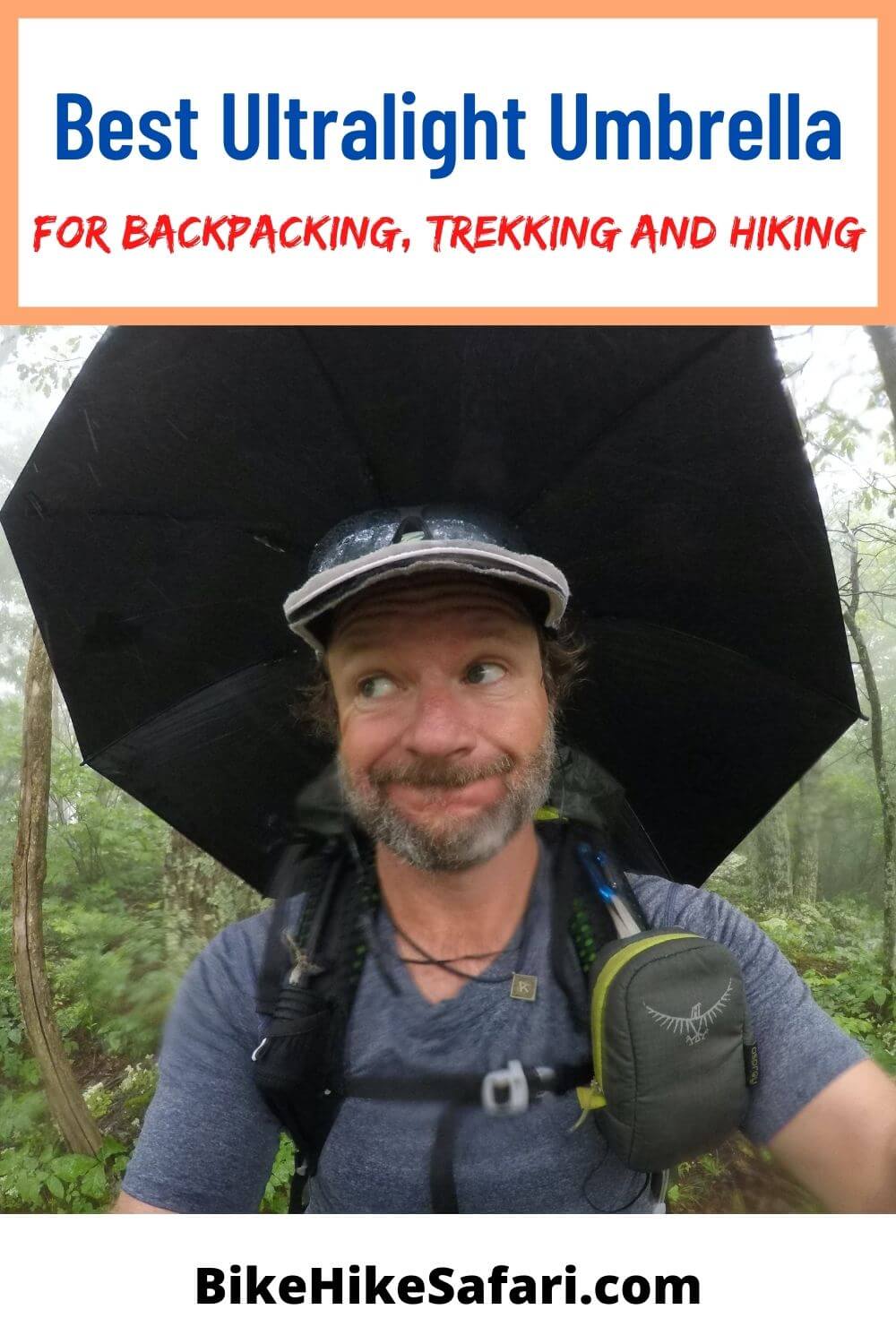
I have hiked with an umbrella through Te Araroa rain in New Zealand, on the Appalachian Trail in summer storms, the intense sun of the Andes Mountains in South America, and across hot semi-desert sections where the sun was a bigger problem than the rain. A lightweight umbrella, combined with an ultralight rain jacket and waterproof rain pants make hiking in the rain more comfortable. This guide is for ultralight backpackers and thru-hikers who want one piece of gear that handles both, strong sun and torrential rain, without adding much weight to the pack.
I am a Triple Crown thru-hiker, long-distance bike tourer, and former outdoor retail store manager, and I have tested hiking umbrellas in this guide on real trips, not just on my front porch. My current top pick for 2026 is the the Six Moon Designs Silver Shadow Carbon as the best overall sun umbrella for thru-hiking, with the Six Moon Designs Rain Walker as the best ultralight choice.
The core trade-off to understand is canopy size and wind resistance versus weight, a 38 inch reflective canopy keeps you and your pack dry, but the lightest umbrellas give up some durability in strong wind. For how I research and field-test gear, see the Review Policy for further details.
Quick Picks – Best Hiking Umbrellas
- Best Overall Sun Umbrella: Six Moon Designs Silver Shadow Carbon – 6.8 oz with UPF 50+ reflective canopy. The one I reach for on hot, exposed sections like the PCT or the Te Araroa river valleys.
- Best Ultralight Hiking Umbrella: Six Moon Designs Rain Walker – full 37 inch canopy at 5.5 oz, carbon fibre frame, silnylon canopy. My pick if I could only carry one umbrella on a thru-hike.
- Best Thru-Hiking Umbrella: ZPacks Lotus UL – 38 inch canopy, 6.8 oz, pairs cleanly with the Zpacks hands-free holster. Bombproof choice for the Triple Crown.
- Best Lightweight Pick: Gossamer Gear Litetrek – 5.8 oz with a textured foam grip and reflective wrist strap. Strong value if you don’t need carbon fibre.
- Most Durable Lightweight Umbrella: Euroschirm Swing Liteflex – 8 oz, simple construction, the umbrella you still see most often on long European trails like the GR routes.
- Best Collapsible Hiking Umbrella: Six Moon Designs Silver Shadow Mini – 6.8 oz, folds to 10 inches, fits inside a water bottle pocket. The one to take if you bushwhack a lot.
- Best Wind-Resistant Hiking Umbrella: Hyperlite Mountain Gear Essential Umbrella – dual canopy with venting and fibreglass ribs. One of the most stable options in gusty conditions.
- Best Travel Umbrella: Snowpeak Ultralight – 4.7 oz and only 8.5 inches packed. Great for trips that mix hiking with travel, not the pick for long days in real weather.
- Best Sun-Only Umbrella: Montbell Sun Block – UPF 50+, 75D canopy, 7.1 oz. Built for desert sun and rainy thru-hikes.
- Also Worth Considering: Sea to Summit Ultra-SIL Trekking Umbrella – 8.2 oz, very compact, but it struggles in the wind on long trails like the Te Araroa.
Backpacking Umbrella Comparison Table
| Brand | Weight | Canopy Width | Handle Length | Foldable | Shaft Material |
|---|---|---|---|---|---|
| Six Moon Designs Silver Shadow Carbon | 6.8 oz | 36 inches | 25 inches | No | Carbon Fiber |
| Six Moon Designs Rain Walker | 5.5 oz | 37 inches | 25 inches | No | Carbon Fiber |
| ZPacks Lotus UL | 6.8 oz | 38 inches | 25 inches | No | Fiberglass |
| Gossamer Gear Litetrek | 5.8 oz | 37.5 inches | 25 inches | No | Aluminum |
| Euroschirm Swing Liteflex | 8 oz | 38 inches | 25 inches | No | Fiberglass |
| Six Moon Designs Silver Shadow Mini | 6.8 oz | 38 inches | 10 inches | Yes | Aluminum |
| Hyperlite Mountain Gear Essential Umbrella | 6.8 oz | 38 inches | 24 inches | No | Carbon Fiber |
| Snowpeak Ultralight | 4.7 oz | 33 inches | 8.5 inches (folded) | Yes | Carbon Fiber |
| Sea to Summit Ultra-SIL Trekking Umbrella | 8.2 oz | 38 inches | 9.5 inches (folded) | Yes | Aluminum |
| Montbell Sunblock | 7.1 oz | 38.6 inches | 9.8 inches (folded) | Yes | Metal |
How We Tested
The hiking umbrellas in this guide are researched and where possible field-tested by an experienced long-distance hiker and former outdoor retail store manager. Across thru-hikes including the Te Araroa, the Appalachian Trail, the Andes Mountains, and the Pacific Crest Trail, plus shoulder-season backpacking and bikepacking trips, I judge hiking umbrellas on weather protection per gram, canopy size, wind resistance, UPF rating, hands-free compatibility, durability, and value for serious backpacking. Some of the items where supplied by the manufacturer and some items were purchased by the author for this review. For more on how we research and review gear, see the Review Policy for further details.
Best Backpacking Umbrella 2026 – Detailed Reviews
Best Overall Sun Umbrella
Six Moon Designs Silver Shadow Carbon Ultralight Hiking Umbrella

Weight: 6.8 oz / 193 grams
Canopy Size: 36 inches
Closed Length: 25 inches
Canopy fabric: Reflective polyester, UPF 50+
Frame / shaft: Carbon fibre
Handle: Ergonomic foam, trekking-pole style
Hands-free compatible: Yes
Pros:
> UPF 50+
> Reflects heat from the sun
> Carbon Fibre in the shaft and frame
> Comfortable grip
Cons:
> Take care in the wind
I used the Silver Shadow Carbon for several months on the Appalachian Trail and it is the umbrella I now default to whenever sun is more of a concern than rain. The reflective silver canopy is rated UPF 50+ and noticeably reduces the heat you feel underneath compared with a plain rain umbrella, on hot, exposed days that difference is real, not marketing. It is a must-have item to add to your Pacific Crest Trail Gear List.
The all-carbon construction in shaft, spreader, and ribs is the other reason this umbrella is on the page. There is no metal in it, which gives a small but real safety benefit in lightning country, and the steeper canopy shape sheds gusts better than flatter, lower-slope umbrellas.
The deluxe ergonomic foam grip is the most comfortable handle in this guide, it feels like a trekking pole handle and is what I want to be holding after seven or eight hours on trail. The trade-off is price; this is one of the more expensive picks, and there are still lighter umbrellas (the Rain Walker, the LightTrek) if you don’t need the reflective canopy.
Trade off: premium price for the carbon construction and reflective canopy, but worth it if you hike in sun.
Best for: ultralight thru-hikers on sun-heavy trails like the PCT, AZT, and rainy stretches of the Te Araroa.
Compare Prices:
Best Ultralight Hiking Umbrella
Six Moon Designs Rain Walker Umbrella

Weight: 5.5 oz / 155 grams
Canopy Size: 37 inches wide
Overall Closed Length: 25 Inches
Canopy fabric: 10 Denier Silnylon
Frame / shaft: Carbon fibre
Handle: EVA foam, trekking-pole style
UPF: not known
Hands-free compatible: Yes (Six Moon Designs holster, sold separately)
Pros:
> Good quality
> 2 color options
> Best Ultralight Umbrella on the market
Cons:
> Not cheap
Six Moon Designs makes the best ultralight hiking umbrellas on the market in my opinion, and the Rain Walker is the lightest full-size option I would actually carry on a thru-hike. At 5.5 oz with a 37 inch canopy, it gives you the kind of coverage that keeps both you and the top of your pack dry without feeling like dead weight in your side pocket.
The carbon fibre frame is the reason it stays this light without giving up the full canopy size. The 10D silnylon canopy is the same kind of fabric I trust on my shelter, and the EVA foam grip is shaped like a trekking pole handle, which makes it comfortable on long days. Like most Six Moon Designs umbrellas, it opens and closes with a simple manual push, no buttons, no locks, fewer parts that can fail.
Where the Rain Walker is less suited is as a dedicated sun umbrella. The silnylon canopy is built more for backpacking in the rain than for reflecting UV, so on hot desert sections I would reach for the Silver Shadow Carbon instead. It also isn’t the cheapest option in this guide.
Trade off: lightest full-size canopy in the guide, but rain-oriented rather than UV-optimised.
Best for: thru-hikers and ultralight backpackers who want one umbrella for mixed conditions and prioritise weight above all else.
Compare Prices:
Best Thru-Hiking Umbrella
Zpacks Lotus UL Umbrella

Weight: 6.8 oz / 193 grams
Canopy Size: 38 inches
Closed Length: 25 Inches
Canopy fabric: Polyester with water repellent treatment, UPF 40
Frame / shaft: Fibreglass
Hands-free compatible: Yes (Zpacks holster sold separately)
Pros:
> Ultralight
> Good Quality
> 38-inch canopy
> Can be used hands-free by using the optional hands-free holster
Cons:
> Not Much
Zpacks is one of the leaders in ultralight backpacking gear and the Lotus UL is the umbrella you see most often on the Triple Crown trails for good reason. I tested it in hot semi-desert conditions and it shrugged off both intense sun and the storm bursts that come with that terrain. The 38 inch canopy is on the wider end of this guide, which is what you want if your pack rides high.
It is fibreglass rather than carbon, hence the cheaper price. This makes it slightly less premium on paper, but fibreglass ribs flex and snap back rather than bending, and that is what actually matters in wind.
Zpacks sell their own holster and stuff sack as add-ons. The Zpacks hands-free holster is what I personally use with this umbrella, it integrates cleanly with Zpacks packs and is a no brainer purchase with this or any thru-hiking umbrella.
Trade off: UPF 40 instead of 50+ on a few of the dedicated sun umbrellas, but a slightly larger 38 inch canopy and the cleanest hands-free ecosystem in the ultralight world.
Best for: Triple Crown thru-hikers and anyone already in the Zpacks gear system.
Compare Prices:
Best Lightweight Hiking Umbrella
Gossamer Gear Litetrek Hiking Umbrella

Weight: 5.8 oz / 164 grams
Canopy Size: 37.5 inches
Overall Length: 25 inches
Canopy fabric: 100% polyester, UPF 50+
Frame / shaft: Aluminum
Handle: Textured high-density foam with reflective wrist strap
Hands-free compatible: Yes (Gossamer Gear hands-free clamp)
Pros:
> Ultralight aluminum frame
> Good Price
Cons:
> Not much
Gossamer Gear reworked the Liteflex into the LightTrek several years ago and shaved real weight in the process to an ultralight 5.8 oz, which makes it the lightest aluminum-frame full-size hiking umbrella. It is several ounces lighter than the Euroschirm Swing Liteflex and only narrowly heavier than the Rain Walker. With so many great hiking umbrellas there is no reason this couldn’t be in the top position.
The new version drops the toggle cord lock and adds a reflective wrist strap, which I like at night and in early starts. Fewer parts also means fewer things to break. The canopy fabric is reflective polyester with UPF 50+, so it handles both sun and rain duty.
The catch is the shallower canopy slope, which is less wind-resistant than the steeper Silver Shadow Carbon, and the aluminum shaft, which I would think twice about as a lightning rod on exposed alpine ridges. For most backpackers, in most conditions, none of that is a problem.
Trade off: aluminum shaft and a shallower canopy in exchange for some of the lightest weight and strongest value in the guide.
Best for: thru-hikers and ultralight backpackers who want a sub-6 oz sun and rain umbrella without paying full carbon prices.
Compare Prices:
Most Durable Hiking Umbrella
EuroSCHIRM Swing Liteflex Trekking Umbrella

Weight: 8 oz / 227 grams
Canopy Size: 38 inches wide
Overall Length: 25 Inches
Frame: Fibreglass ribs, fibreglass shaft
Handle: Firm foam, wrist strap, mesh case included
Hands-free compatible: Yes, with third-party hands-free cord systems
Pros:
> Well-built with quality components
> Ultralight
> Great Sun Protection
> Ergonomic firm foam handle
Cons:
> Not much, if this was lighter it would be the best umbrella in this review
> Not the cheapest
If you trek through the Alps, the Pyrenees, or any of the GR routes, this is the hiking umbrella you will see most often on other hikers’ packs. The Swing Liteflex has a reputation for being almost indestructible relative to its weight, and that matches what I have seen in use.
At 8 oz, it isn’t the lightest in this guide, but the construction is genuinely durable: a fibreglass shaft, fibreglass ribs, a 38 inch canopy, and a firm foam grip that holds up to wet hands. The included mesh case is fine for storage but not waterproof, so most thru-hikers I know skip it and just clip the umbrella to the pack.
There is no fancy button or lock, you push it open. That is what you want on a trail umbrella.
Trade off: heavier than the carbon options, but the most reliable umbrella here for hikers who are rough on gear.
Best for: European long-distance hikers and anyone who values durability and a simple mechanism over the absolute lightest weight.
Compare Prices:
Best Collapsible Hiking Umbrella
Six Moon Designs Silver Shadow Mini Review
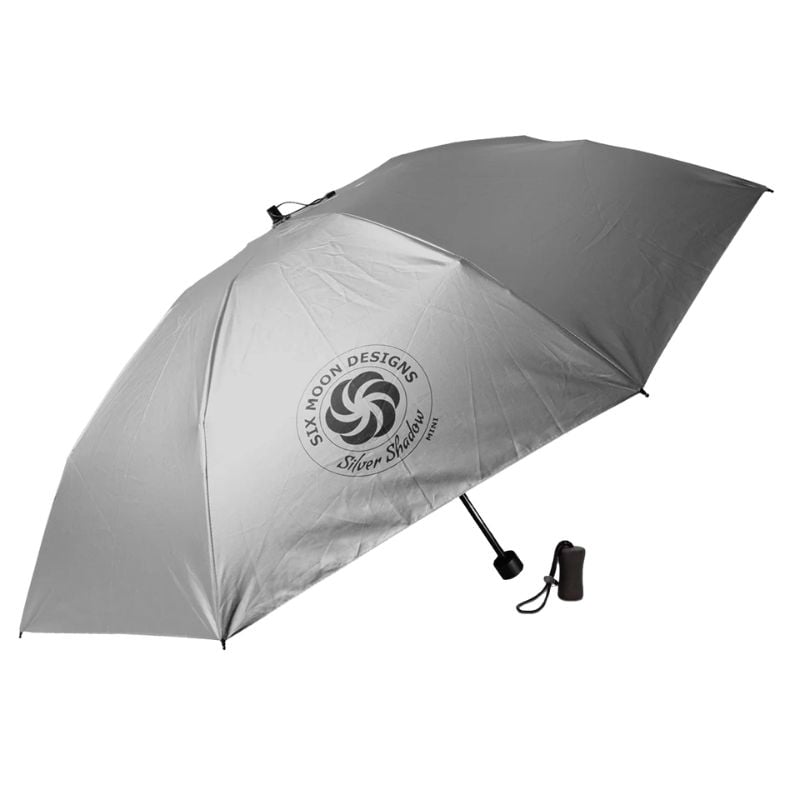
Weight: 6.8 oz / 193 grams
Canopy width: 38 inches
Length closed: 10 inches
Frame: Aluminum shaft, carbon fibre / aluminum ribs
Canopy fabric: Reflective polyester, UPF 50+
Hands-free compatible: Yes
Pros:
> Lightweight
> Very compact size
> Good sun and wind protection
Cons:
> Not as strong as some other umbrellas
The Silver Shadow Mini is the version of the Silver Shadow to take if your trail throws constant bushwhacking at you, or if you want an umbrella that lives inside the pack rather than strapped to the outside. It folds down to about 10 inches, which is short enough to slide into a water bottle pocket or the back mesh of a frameless pack.
The trade-offs are real and worth being honest about. The shaft is also shorter, so coverage over a high-riding pack isn’t quite as good as the full-length Silver Shadow Carbon, there is a longer handle that is also supplied with umbrella making it able to be clipped to your pack using the hands free set up.
For most thru-hikers I would still pick the full-length option, but for desert traverses with catclaw and dense scrub, or for travel-plus-hike trips, the Mini is a good call.
Trade off: packs down dramatically smaller, in exchange for slightly less wind stability and durability.
Best for: bushwhack-heavy desert routes, backpackers who want the umbrella inside the pack, and travel hybrids.
Compare Prices:
Best Wind-Resistant Hiking Umbrella
Hyperlite Mountain Gear Essential Umbrella
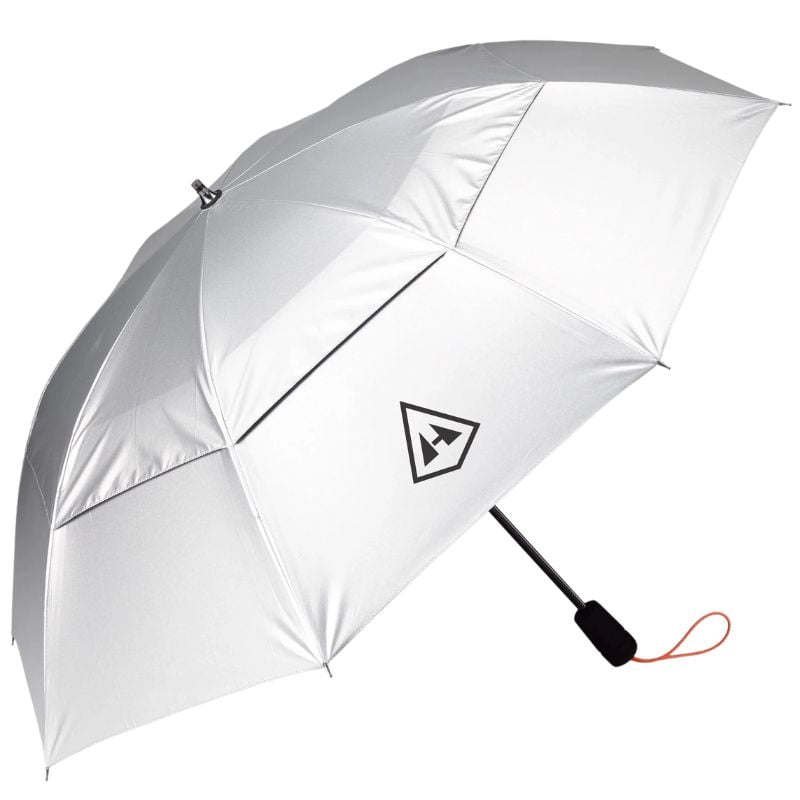
Weight: 6.8 oz / 193 grams
Canopy width: 38 inches
Canopy fabric: Pongee black with silver coating, UPF 50+
Frame: carbon fibre shaft, fibreglass ribs
Length closed: 24 inches
Hands-free compatible: Yes, with third-party cords
Pros:
> Lightweight
> Good in strong sun or heavy rain
> Durable in strong wind
Cons:
> Not much
The HMG Essential is the most wind-resistant ultralight umbrella I would consider on this page. The reason is the dual canopy: it has a vented upper panel reinforced with fibreglass ribs, which lets gusts pass through instead of catching and flipping the umbrella inside out. For exposed ridge walking or desert wind, that design works.
It is also one of the only umbrellas on the market with a reflective leash (the LightTrek now has one too), which I like for finding the handle in low light. The pongee canopy with silver coating gives sun protection, although the UPF number is lower than the Silver Shadow Carbon.
There are not many downsides but the price could be cheaper. Other than that there is little reason why this couldn’t be higher up on the list. A great product.
Trade off: slight premium price for the best dual-canopy wind performance available in an ultralight package.
Best for: wind-heavy thru-hikes (think CDT alpine sections, exposed desert ridges) and HMG gear-system users.
Compare Prices:
Best Lightweight Travel Umbrella
Snow Peak Ultra-Light Umbrella
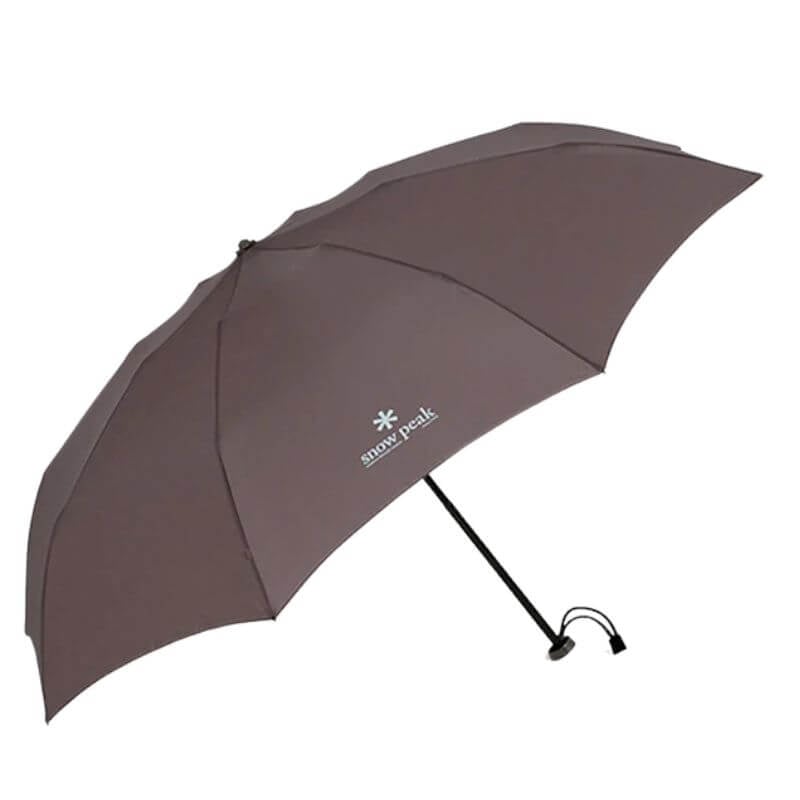
Weight: 4.7 oz / 133 grams
Canopy Size: 33 inches
Overall Length: 8.5 Inches (folded)
Frame / shaft: Aluminum and carbon, one-piece with handle
Wind feature: Canopy collapses inwards under heavy gusts to prevent damage
Pros:
> Ultralight
> Compact size
> Great for travel
Cons:
> Expensive
> Not good in the wind
> Not the best choice for hiking
The Snow Peak Ultra-Light is the lightest umbrella in this guide at 4.7 oz and folds down to a remarkable 8.5 inches. The construction is genuinely premium, aluminum and carbon throughout, with the frame and handle built as one piece so the handle can never come loose.
What it is not is a thru-hiking workhorse. The 33 inch canopy is the smallest in this guide, which means less coverage for you and almost none for your pack. The intentional collapse-under-gusts behaviour is a clever protection feature but it also means the umbrella spends more time closed than open in real wind.
Where this umbrella does shine is on trips that mix hiking with travel, when you want something that disappears into a daypack but is still there if a downpour hits or extremely intense sun.
Trade off: lightest and most compact umbrella here, but the smallest canopy and the weakest pure-hiking performance.
Best for: travel-plus-hike trips and city-hike hybrids; sun protection on desert sections of long-distance trail.
Compare Prices:
Also Worth Considering
Sea to Summit Ultra-SIL Trekking Umbrella

Weight: 8.2 oz / 232 grams
Canopy Size: 38 inches
Overall Length: 9.5 inches (Folded)
Frame / shaft: Aircraft-grade aluminum
Handle: Rubberised
Pros:
> Lightweight
> Very compact when folded down
> Good Size canopy
Cons:
> Not good in wind, even light wind.
> Not cheap
The Sea to Summit Ultra-Sil pulls off a useful trick: a 38 inch canopy that folds down to 9.5 inches when closed, so it actually fits inside a backpack rather than living strapped to the outside.
I used this umbrella when thru-hiking the 3000 km Te Araroa in New Zealand. The compactness was a real plus on packing days, but it struggled in wind, even light gusts gave it trouble. After that trip I went back to the Six Moon Designs and Zpacks options for serious thru-hiking. The aluminum-grade shaft and brass rivets are well-made, just less stable in a real blow than steeper-canopy umbrellas.
I still use this for travel, around town and as a day-hike umbrella rather than a long-trail one.
Trade off: very compact and well-built, but weakest wind performance of the full-canopy umbrellas in this guide.
Best for: travel, day hikes, and light backpacking in calm conditions.
Compare Prices:
Also Worth Considering
Montbell Sun Block Umbrella
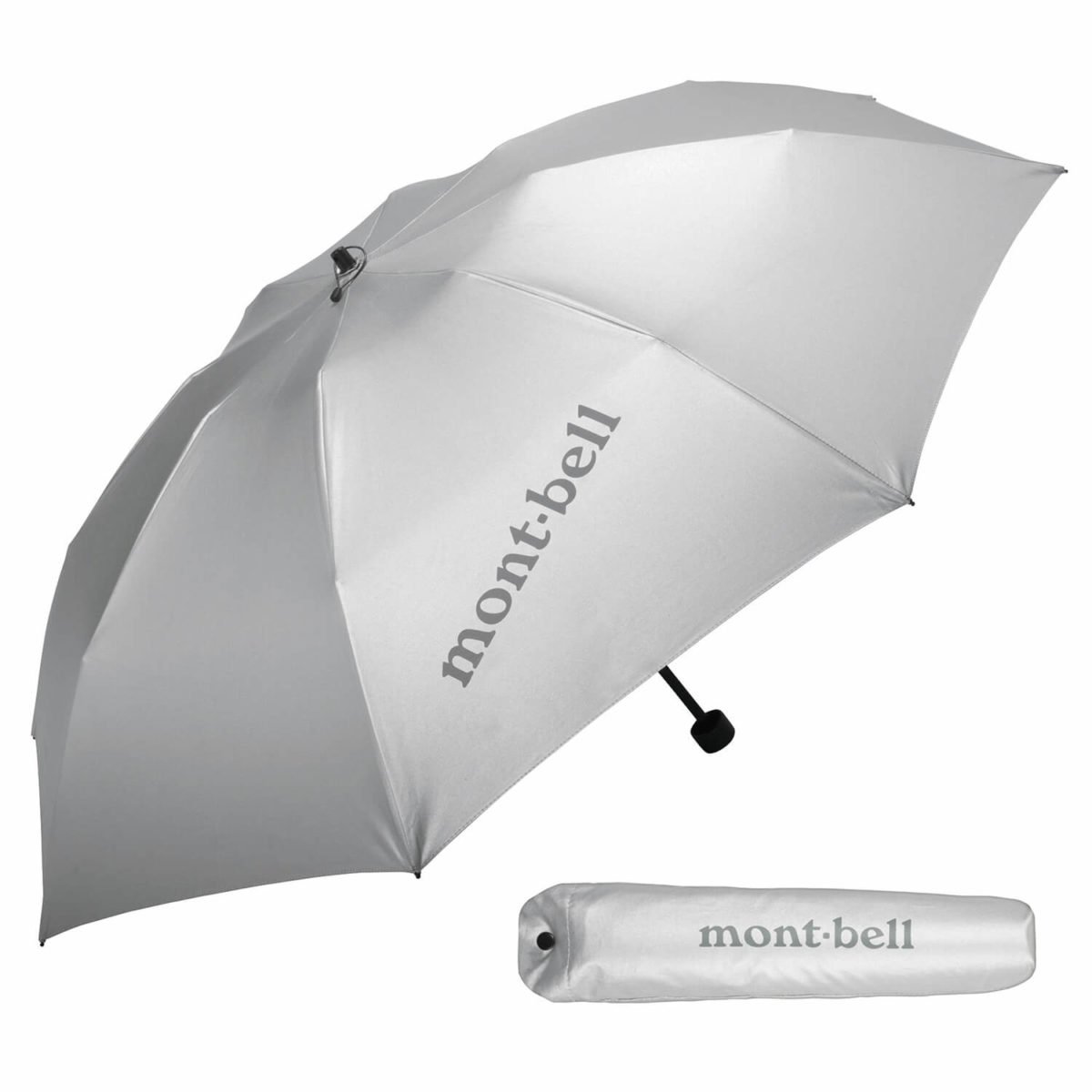
Weight: 7.1 oz / 201 grams
Canopy Size: 38.6 inches
Overall Length: 9.8 inches (folded)
Canopy fabric: 75 Denier polyester with polyurethane silver coating
UPF: 50+
Frame: Metal with carbon fiber
Pros:
> Protects you from 99.7% of harmful UV rays
> Top Quality
> Small folded size
> Ultralight
Cons:
> Could be lighter
The Montbell Sun Block is built around one job: protecting you from desert sun. The 75D canopy is thicker than most ultralight options, the silver PU coating reflects heat well, and Montbell rate it at UPF 50+ blocking 99.7% of UV. It also has the widest canopy in the guide at 38.6 inches, which is enough to shade you and most of your pack.
It folds down to under 10 inches, which is a real advantage for desert thru-hikes where you want easy access without a long handle sticking out of a side pocket.
The trade-offs are weight (7.1 oz is on the heavier side here) and the fact that it is built more for sun than for storm-grade wind. Use it for what it was designed for and it is excellent.
Trade off: built for sun rather than wet weather, and heavier than the carbon options.
Best for: desert thru-hikes, PCT desert section, AZT, Grand Enchantment Trail, where sun protection is the dominant problem.
Compare Prices:
Hiking Umbrella Buyers Guide
Hiking Umbrella Buyers Guide
Weight vs Canopy Size
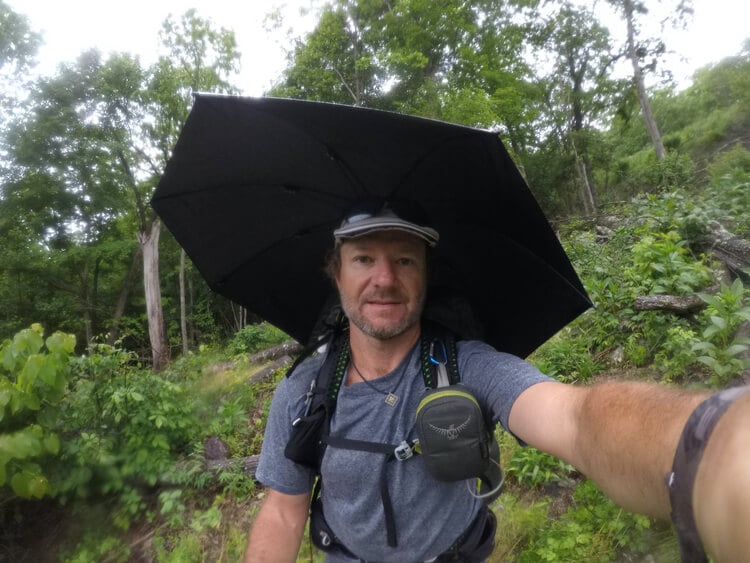
The lightest hiking umbrellas come in around 5 oz, the heaviest in this guide are around 8 oz. The 3 oz difference is real on a thousand-mile trail, but so is the 5 inch difference in canopy width between a 33 inch travel umbrella and a 38 inch full-size one. For a thru-hike I would pay the weight penalty for a 37–38 inch canopy every time — it is the difference between keeping your pack dry and not.
Shaft and Rib Material
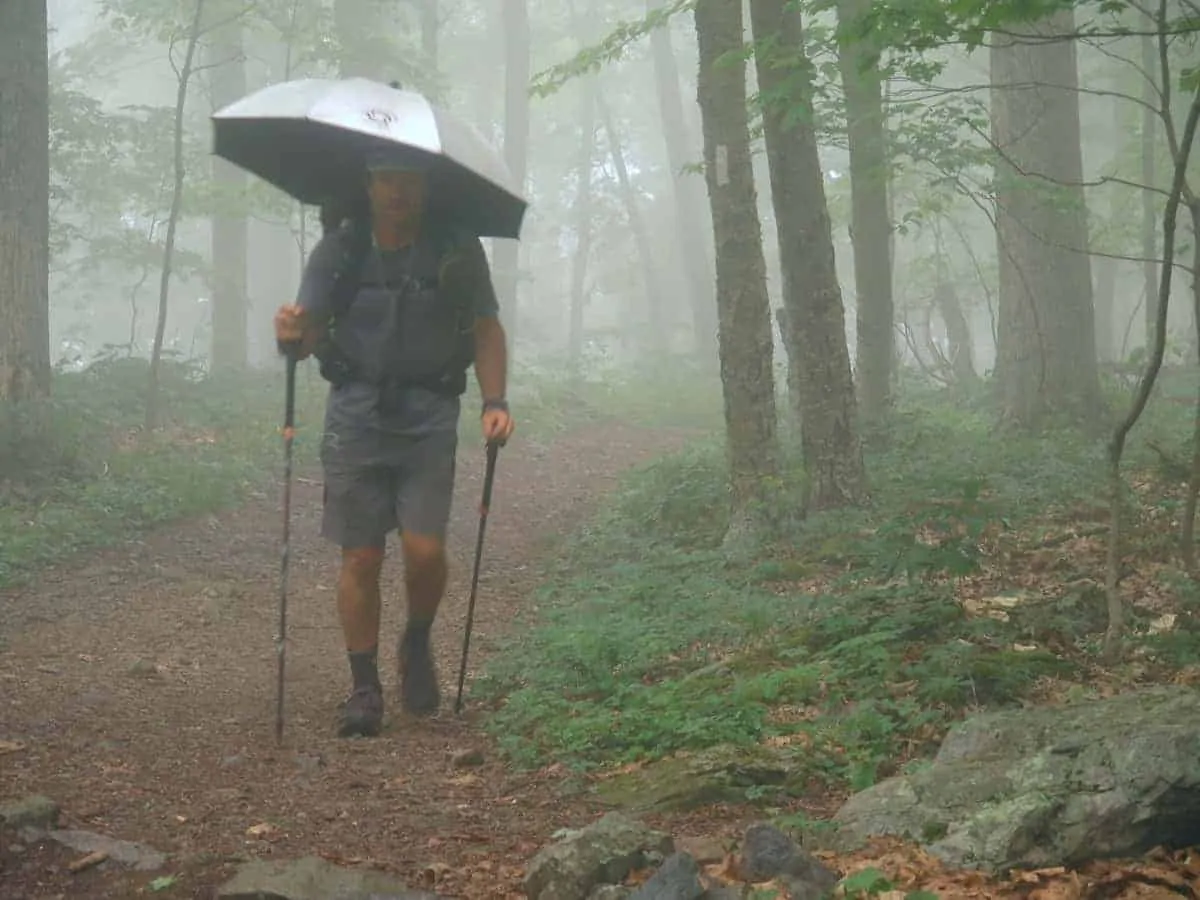
Shafts and ribs are made from carbon fibre, fibreglass, or aluminum. Carbon fibre is the lightest and doesn’t conduct electricity, which is the safer choice on exposed ridges. Fibreglass ribs flex and snap back, which is what you actually want in wind. Aluminum is the cheapest and a bit heavier, and it can conduct electricity, so it isn’t the first choice for alpine work — but for normal three-season backpacking it is perfectly fine.
Sun Protection – UPF and Reflective Coatings
For desert and exposed thru-hiking, look for UPF 50+ and a reflective silver canopy with a black underside. The Silver Shadow Carbon, Zpacks, LightTrek, and Montbell Sun Block all hit this spec. Lower UPF ratings are fine if your main use is rain.
Wind Resistance and Canopy Shape
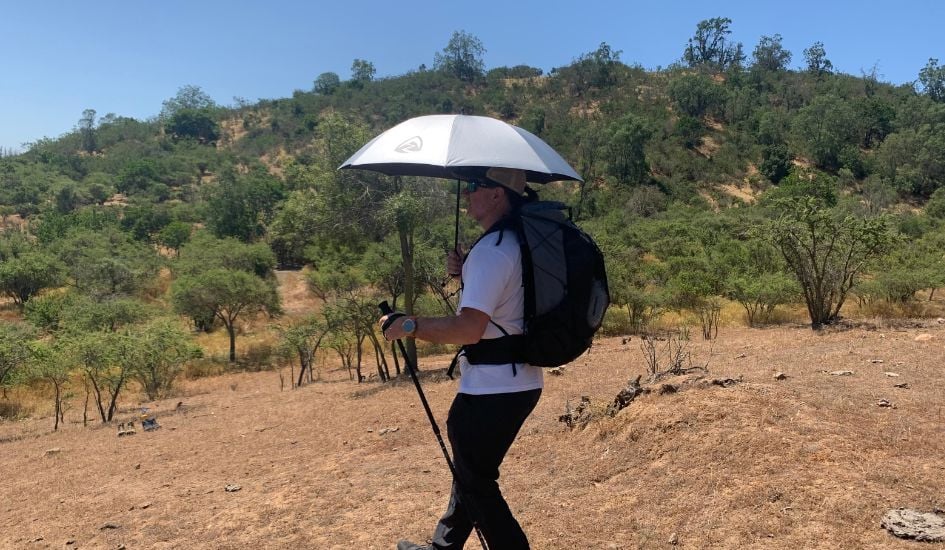
Steeper canopies shed wind better than flatter ones — the same reason a pyramid tent handles gusts better than a low-angle dome. Dual-vented canopies, like the Hyperlite Mountain Gear Essential, take this further by letting wind pass through instead of catching. Above about 15 mph sustained, no hiking umbrella is going to be enjoyable to use, regardless of design.
Full-Size vs Collapsible Mini Umbrellas
Full-size umbrellas are more durable, cover more of you and your pack, and have fewer moving parts. Collapsible minis (the Silver Shadow Mini) pack down to 10 inches and can live inside the pack, great for bushwhacking-heavy trails or travel hybrids, but with more joints to fail and slightly less wind stability.

Hands-Free Attachment Systems
A hiking umbrella really earns its weight when it is hands-free. Six Moon Designs, Gossamer Gear, and Zpacks all sell dedicated cord-and-toggle systems that clip the umbrella to one shoulder strap with two points of contact about 6 inches apart. That two-point attachment is the trick, it keeps the umbrella stable so you can keep using trekking poles. Most umbrellas on this page are cross-compatible with any of these cord kits.

Lightning and Safety
Do not use a hiking umbrella on an exposed ridge or pass in a thunderstorm, and the same goes for trekking poles. Carbon fibre and fibreglass don’t conduct electricity, which is a real safety advantage over aluminum or steel shafts, but it does not make umbrella use safe in a lightning storm. If a storm builds, drop off the ridge before you worry about staying dry.
Hiking Umbrellas vs Rain Jackets
A hiking umbrella does not replace a rain jacket, it works with one. The umbrella keeps cold rain off your jacket so it doesn’t wet out as fast, keeps water off your face and out of your hood, and gives you the option to vent properly underneath. They also work really well when the weather is very hot such as June and July in some sections of the humid Appalachian Trail. For full coverage, pair the umbrella with an ultralight rain jacket and ultralight rain pants for backpacking.
Care and Maintenance
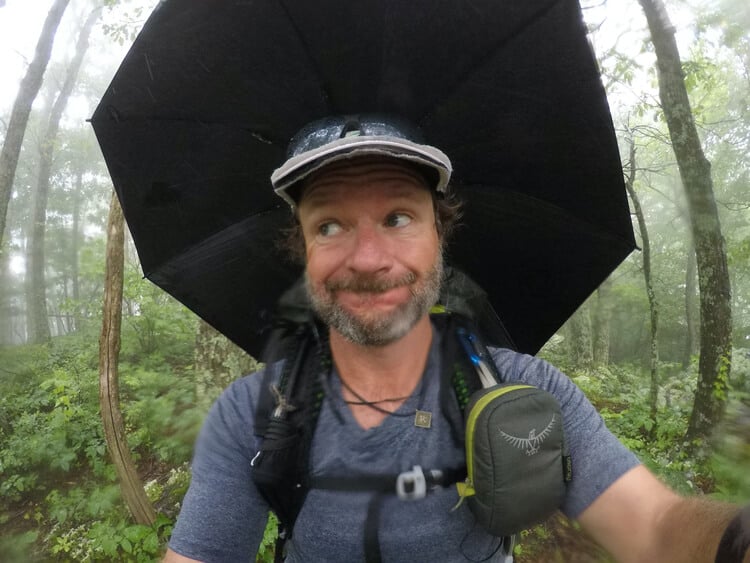
Always dry the umbrella before putting it away or it will grow mould inside the stuff sack. Canopy holes are easily fixed with a Gear Aid patch. One thing worth knowing on long trails: the salt from sweat soaks into the foam grip, and rodents will absolutely chew the handle in camp to get at it. Bring the umbrella inside the tent at night.
Value for Money
A cheap umbrella is not necessarily good value for money. Cheap umbrellas are not good quality and are not built to last like the best brands are. In this review of hiking umbrellas, all the best ultralight umbrellas for backpacking are quite expensive. The quality is very much reflected in the price.
Unfortunately, the prices of the umbrellas shown here are liable to change, so please ensure that you check the prices as you go along.
Conclusion
Here are the Best Hiking Umbrellas for 2026:
- Best Overall Sun Umbrella: Six Moon Designs Silver Shadow Carbon
- Best Ultralight Hiking Umbrella: Six Moon Designs Rain Walker
- Best Thru-Hiking Umbrella: ZPacks Lotus UL
- Best Lightweight Pick: Gossamer Gear Litetrek
- Most Durable Lightweight Umbrella: Euroschirm Swing Liteflex
- Best Collapsible Hiking Umbrella: Six Moon Designs Silver Shadow Mini
- Best Wind-Resistant Hiking Umbrella: Hyperlite Mountain Gear Essential Umbrella
- Best Travel Umbrella: Snowpeak Ultralight
- Best Sun-Only Umbrella: Montbell Sun Block
- Also Worth Considering: Sea to Summit Ultra-SIL Trekking Umbrella
Frequently Asked Questions
Are hiking umbrellas worth it for backpacking?
For most thru-hikers and ultralight backpackers, yes. A 5-8 oz umbrella lowers the temperature under it by 5-15°F in direct sun, keeps cold rain off your rain jacket so it wets out slower, and is one of the few pieces of ultralight gear that does two completely different jobs equally well. The exception is hikers who spend most of their time in heavily forested or consistently windy terrain.
What is the lightest ultralight hiking umbrella?
The Six Moon Designs Rain Walker is the lightest full-size option I would actually carry on a thru-hike at 5.5 oz with a 37 inch canopy. The Gossamer Gear LightTrek is close behind at 5.8 oz. The Snow Peak Ultra-Light is technically lighter at 4.7 oz but has a smaller 33 inch canopy and is better suited to travel than long-trail use.
What is the best hiking umbrella for sun protection?
The Six Moon Designs Silver Shadow Carbon, the Gossamer Gear LightTrek, Zpacks Lotus, and the Montbell Sun Block all use UPF 50+ reflective canopies designed to bounce UV away. The Silver Shadow Carbon is my pick for thru-hikers because of the steeper, more wind-stable canopy and all-carbon construction
Can you hike hands-free with an umbrella?
Yes, and this is the upgrade that makes umbrellas actually work on trail. Six Moon Designs, Gossamer Gear, and Zpacks all sell hands-free cord kits, around 1 oz, that clip the umbrella to one shoulder strap at two points roughly 6 inches apart. With it set up properly, you can use trekking poles, eat, or check the map while still under shade.
Full-size vs collapsible hiking umbrella – which should I get?
Full-size umbrellas (Rain Walker, Silver Shadow Carbon, LightTrek, Lotus UL) are more durable, more wind-stable, and cover more of your pack. Collapsible minis like the Silver Shadow Mini pack down to 10 inches and fit inside a pack, which is useful for bushwhack-heavy routes and travel hybrids. For most thru-hikes, full-size wins but I think collapsible umbrellas are getting almost as good full size.
How well do hiking umbrellas perform in wind?
Up to about 5-10 mph you can leave the umbrella in the hands-free position. Between 10-15 mph you generally need to hold it and angle into gusts. Above 15 mph sustained, no hiking umbrella is enjoyable to use. Steeper canopies (Silver Shadow Carbon) and dual-canopy vented designs (Hyperlite Mountain Gear Essential) handle gusts best.
Is it safe to use a hiking umbrella in a thunderstorm?
No. An umbrella, like a trekking pole, is a tall, pointy object you are holding above your head on an exposed ridge, and that is exactly what you do not want in a lightning storm. Carbon fibre and fibreglass shafts don’t conduct electricity, which is safer than aluminum or steel, but if lightening hits any material you are in serious trouble. The right move in a storm is to drop off the ridge, not to keep hiking under any kind of umbrella.


BikeHikeSafari Gear Review Process
The author, Brad McCartney from BikeHikeSafari is a small independent adventurer and outdoor gear tester who owns and runs BikeHikeSafari.com.
BikeHikeSafari is not part of a large blog network and is proudly independent. All reviews on this site are independent and honest gear reviews of outdoor products by the author.
The author, Brad McCartney is a very experienced triple crown thru-hiker, adventurer, and bike tourer having spent 1000s of nights sleeping in a tent and sleeping bag (Read more). He was a manager of an outdoor retail store and is very experienced in what is important when using and testing gear for reviews like this.
BikeHikeSafari will never receive any money for reviews and they do not accept sponsored reviews on this website. All the comments about the gear reviews are from the author based on his years of experience. Hope this independent review was helpful for you.

