

I have spent thousands of nights in a sleeping bag across all the Triple Crown thru hikes, the Te Araroa, and a long list of backpacking and bikepacking trips, and an ultralight sleeping bag is the one piece of gear I am hardest on.
This guide is for thru-hikers and ultralight backpackers who want a bag that is genuinely light, warm enough for shoulder-season trail life, and built to last more than a single season.
My current top pick is the Zpacks 20F Mummy, with the Sea To Summit Spark 15F as the best all-round thru-hiking option, and the Feathered Friends Hummingbird UL if you want the highest-quality down on the market.
The trade-off you have to understand for this category is warmth-to-weight: chasing the lightest gram count almost always costs you fill weight, fit, or fabric durability, and I weight my picks accordingly. If you are looking for an even lighter option, look at the Best Ultralight Backpacking Quilts or if you are heading into extreme winter conditions are a look at the Best Winter Sleeping Bags.
Quick Picks – Best Ultralight Sleeping Bags for 2026
- Best Sleeping Bag Overall: Zpacks 20F Mummy – my long-running top pick, ultralight at 23.2 oz, 900 fill water-resistant down, and overstuffed by 30%. Unzips into a quilt for warm nights.
- Best Sleeping Bag Overall — Runner Up: Sea To Summit Spark 15F – EN-rated, roomy enough to wear a down jacket inside, and one of the most comfortable bags I have used on long trails.
- Best Premium Sleeping Bag: Feathered Friends Hummingbird UL – the benchmark every competitor rates highly. 950+ fill, untreated premium down, built to last 20 years.
- Best Ultralight Sleeping Bag for Thru-Hiking: Therm-a-Rest Hyperion 20F – The Hyperion is certainly ultralight but is a tight fit best suited to smaller body types.
- Best Lightweight Sleeping Bag: Rab Mythic 20F – 24.7 oz with 900 fill hydrophobic down and an EN rating. Expensive but exceptional warmth-to-weight.
- Best Ultralight Hoodless Sleeping Bag: ZPacks 20F Classic Hoodless Sleeping Bag – 18.8 oz, pair it with a down hood or jacket and it is genuinely the lightest serious bag here.
- Best Sleeping Bag / Quilt Hybrid: Zpacks 20F Zip Around Sleeping Bag – full perimeter zip, opens flat as a quilt for warm nights, cinches as a hoodless bag in cold.
- Best Sleeping Bag for Australia and New Zealand: Macpac Dragonfly 400 – 800 fill HyperDry, generous internal dimensions, the bag I keep coming back to in NZ and Tasmania.
- Best Budget Ultralight Sleeping Bag: REI Magma 15F – 850 fill, EN-rated, available in regular and women’s, and consistently the best value on the market.
- Best Handmade Sleeping Bag: Western Mountaineering Ultralite 20F – around 16 oz of hooded mummy bag for warm-weather thru-hikes and fastpacking.
How We Tested
The sleeping bags in this guide are researched and field-tested by an experienced long-distance hiker and former outdoor store manager. Across thru-hikes of the Triple Crown, the Te Araroa, backpacking and bikepacking trips, I have spent more than 1000 nights in the sleeping bags. I judge them on warmth-to-weight, packed size, weather resistance, durability, fit, and value for serious backpacking. Some bags were purchased and some were supplied by the manufacturer, neither path changes how I review them. For more on how I research and test gear, see the Review Policy.
Ultralight Sleeping Bags Comparison Table
| Brand | Weight | Shell Weight | Down | Down Weight | Packed Size |
|---|---|---|---|---|---|
| Zpacks Mummy 20F | 23.2 oz | 7.6 oz | 900 loft | 15.6 oz | not specified |
| Sea to Summit Spark 15F | 25.7 oz | 8.8 oz | 850 loft | 16.9 oz | 6.8 L |
| Feathered Friends Hummingbird | 24 oz | 10 oz | 950 loft | 14 oz | 9 L |
| Rab Mythic 20F | 24.7 oz | 12.2 oz | 900 loft | 12.5 oz | not specified |
| Therm-a-Rest Hyperion 20F | 20 oz | 8.5 oz | 900 loft | 11.5 oz | 3.5 L |
| Zpacks 20F Hoodless Classic | 18.8 oz | 5.1 oz | 900 loft | 13.7 oz | not specified |
| Zpacks Zip Around | 21.6 oz | 7.1 oz | 900 loft | 14.5 oz | not specified |
| Macpac Dragonfly 400 | 25.8 oz | 11.7 oz | 800 loft | 14.1 oz | not specified |
| REI Magma 15F | 35.6 oz | 12.3 oz | 850 loft | 23.3 oz | 5.2 L |
| Western Mountaineering Ultralite | 29 oz | 13 oz | 850 loft | 16 oz | 9 L |
Follow along on Social Media
Best Ultralight Sleeping Bags – Detailed Reviews
Best Sleeping Bag 2026 – Overall
Zpacks 20F Mummy Sleeping Bag Review

Overall Weight: 23.2 oz / 659 grams
Shell Weight: 7.6 oz / 217 grams
Down Fill Power: 900
Down Fill Weight: 15.6 oz / 442 grams
EN / ISO Rated: No
Packsize: Unknown
Pros:
> Ultralight
> Can be unzipped and used as a quilt
> High-quality 900 Fill Power Goose Down
> Overstuffed baffle with 30% more down
> Come with a large waterproof stuff sack
Cons:
> No Lofting Bag
I tested this sleeping bag on many trips and found the standard width to be the perfect. There is enough room to move around without the cramped feeling of more aggressive mummy bags. The 30% overstuffed baffles are the detail that matters most: even after multiple long trips and a few washes, it has held its loft.
For three-season thru-hiking I rate this as the best overall pick on the market for one reason, the ability to fully unzip it and use it as a quilt on warm nights. On the Te Araroa and the PCT that single feature has made the difference between a comfortable night and overheating in a 20-degree bag.
Trade-offs: there is no lofting bag included, and at 900 fill down the price reflects the spec. If you need an EN/ISO rating for peace of mind, look at the Sea to Summit Spark Pro 15F instead.
Best for: ultralight thru-hiking and backpacking, three-season.
Compare Prices:
Best Sleeping Bag – Runner Up
Sea To Summit Spark 15F Review

Weight: 25.7 oz / 730 grams
Shell Weight: 8.8 oz / 250 grams
Down Fill Power: Hyperdry 850
Fill Weight: 16.9 oz / 480 grams
EN / ISO Rated: Yes
Packsize: 6.8L
Pros:
> Price
> Small pack size
> Generous internal dimensions
> Large amount of down fill
Cons:
> Not much
The Sea to Summit Spark 15F is the bag I recommend most often to thru-hikers who want one bag that does everything well without paying Feathered Friends or Zpacks money. The combination of a real EN/ISO rating, 16.9 oz / 480 grams of 850 fill hydrophobic down, and a roomy cut is hard to beat in this price tier.
When I used this sleeping bag on several trips I found the Sea to Summit Spark 15F is one of the roomiest ultralight bags in this review. There is enough room to wear a down jacket while sleeping in the bag for those times when it is very cold outside. And the hood has a good amount of room and insulation. In fact, overall I found this to be the most comfortable sleeping bag due to the slightly larger internal dimensions of the bag.
This bag suits 3-season thru-hiking on the PCT, Te Araroa, AT, and shoulder-season trips where night lows sit around freezing. The hydrophobic down treatment is a real advantage in damp environments.
Trade-offs: at 25.7 oz / 730 grams it is heavier than the Zpacks 20F Mummy or Therm-a-Rest Hyperion, and the 3/4 zip can be limiting if you like to fully open a bag like a quilt on warm nights, for that, look at the Zpacks Zip Around or the Sea to Summit Spark Pro instead.
Best for: thru-hiking, cold sleepers, side sleepers, anyone who wants an EN-rated 15F bag without the premium price.
Compare Prices:
Best Premium Down Sleeping Bag
Feathered Friends Hummingbird UL Review
Weight: 24 oz / 680 grams
Shell Weight: 10 oz / 281 grams
Down Fill Power: 950 fill
Fill Weight: 14 oz / 399 grams
EN Rated: No
Packsize: 9L
Pros:
> Ultra Lightweight
> 950+ down
> Very high quality
Cons:
> Not Cheap
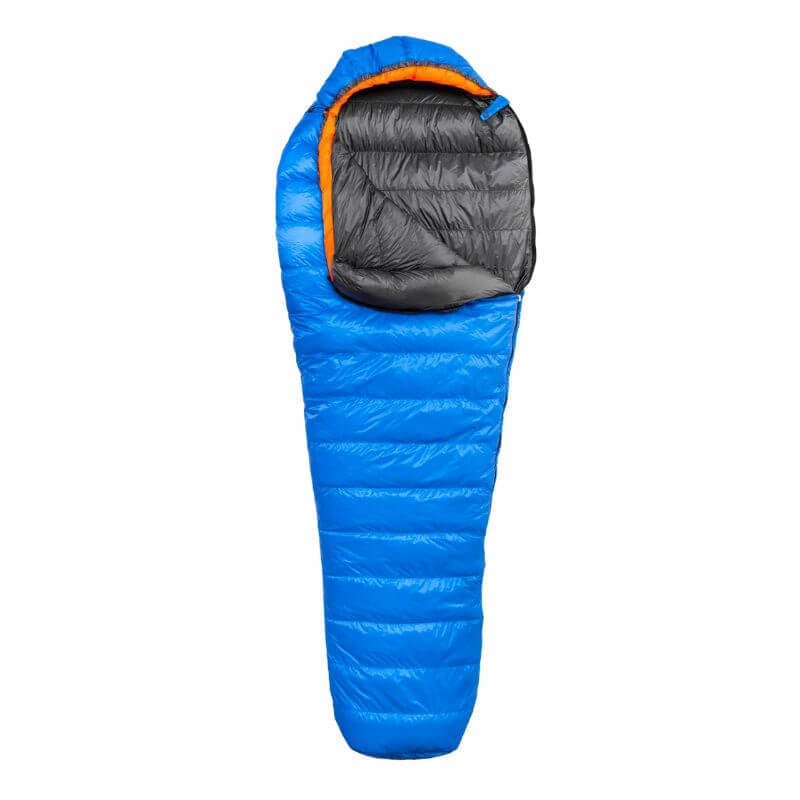
The recently upgraded Feathered Friends Hummingbird UL sits in the top tier of ultralight sleeping bags. The 950+ fill is the highest-grade down currently available, and Feathered Friends do not treat it, which keeps the long-term loft as good as down gets. I love the updated Pertex Quantum Pro shell which adds a layer of water resistance that the other sleeping bags in this review cannot match. This is a bag built to last decades, not seasons.
This bag suits thru-hikers and long-term gear investors who plan to put thousands of miles on it. It is at its best on dry alpine and shoulder-season trips where untreated down can air out properly between nights. For wet long-distance trails where the bag will struggle to dry out such as Te Araroa or the AT in storm season, a hydrophobic down option like the Zpacks or Sea to Summit may serve you better.
Triple Crown Hiker Rob “Stone” Sweeney has used the Feathered Friends Hummingbird on the Continental Divide Trail, Arizona Trail, Hayduke Trail, Finger Lakes Trail, Long Trail, Colorado Trail, John Muir Trail, and The Grand Enchantment Trail. He likes the lightweight, small pack size, high build quality, and has had no issues with the zippers or cords. Despite washing the bag at the end of every hiking season he noted that it is starting to develop some clumping issues. After an amazing 5000+ miles / 8000km of use, it is starting to develop cold spots. The down is getting pushed to the sides when he turns in it, leading to cold spots overnight.
That is the honest long-term picture on this bag. 5000+ miles of trail life before cold spots start developing, after careful washing each season. Very few sleeping bags can claim that kind of return on the purchase price.
If you want more room inside the bag, look at the wider Feathered Friends Swallow or Swift down bags, or even take a look at the Feathered Friends Flicker which is a hybrid sleeping bag and quilt. They have the same high-quality materials with slightly larger internal dimensions and weight.
Trade-offs: expensive at the top of the market.
Best for: serious thru-hikers and long-term gear investors who want the highest-grade down sleeping bag on the market.
Compare Prices:
Best Ultralight Sleeping Bag
Therm-a-Rest Hyperion 20F Review
Weight: 20 oz / 567 grams
Shell Weight: 8.5 oz / 237 grams
Down Fill Power: Hyperdry 900 fill
Fill Weight: 11.5 oz / 330 grams
EN / ISO Rated: Yes
Packsize: 3.5L
Pros:
> Ultralight
> Very compact
> High-quality down
> Great for back sleepers
Cons:
> Very small internal dimensions can make for a tight fit
> Not the best for side sleepers
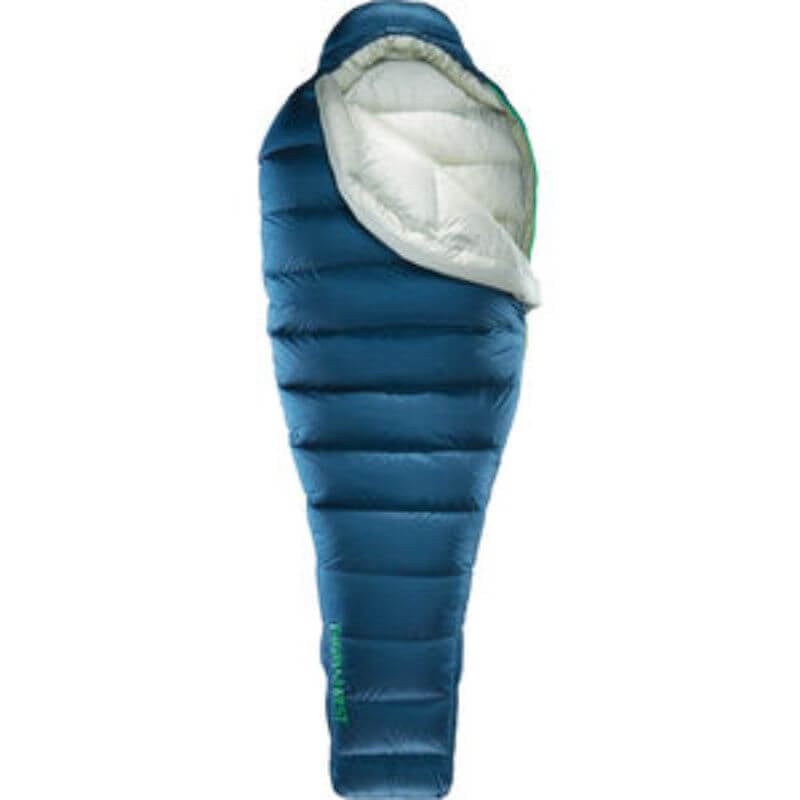
The Therm-a-Rest Hyperion 20F is one of the most compact ultralight bags I have used. At 3.5 L packed it disappears into the bottom of an UL pack, and the 900 fill Nikwax down keeps the warmth-to-weight competitive with bags that weigh more on paper.
I used this bag on a couple of trips when the temperature dropped to near freezing and found these temperature ratings to be accurate. The EN/ISO Limit of 20F holds up in real conditions provided you are sleeping on a properly rated pad. When I used this sleeping bag I found it to be one of the narrowest mummy bags in this review therefore not suited to hikers with a large build.
This bag suits back sleepers and fastpackers who do not need a lot of internal space and want one of the lightest hooded mummy bags with an EN/ISO rating. For side sleepers and anyone who wears a puffy inside the bag on cold nights, the narrow internal dimensions become a real limitation.
Trade-offs: at 11.5 oz of fill the warmth at the rated temperature is genuinely there, but only just. Cold sleepers should consider a 15F bag like the Sea to Summit Spark, Zpacks 20F Mummy, or step up to a Feathered Friends Hummingbird with more fill. The narrow cut is also the wrong choice if you toss and turn a lot.
Best for: ultralight back sleepers, fastpacking, summer alpine, hikers who prioritise pack volume.
Compare Prices:
Best Lightweight Sleeping Bag
Rab Mythic 20F Review

Weight: 24.7 oz / 700 grams
Shell Weight: 12.2 oz / 345 grams
Down Fill Power: Hydrophobic 900 fill
Fill Weight: 12.5 oz / 355 grams
EN / ISO Rated: Yes
Packsize: Unknown
Pros:
> Ultra Lightweight
> ISO rated
> High quality
Cons:
> Not cheap
> Half zip is considered a negative by some people but I like it
The new Rab Mythic 20F is one of the few bags on the market that combines 900 fill hydrophobic down, an ISO temperature rating, and a sub-25 oz total weight. That is a rare combination with most bags at this weight class are self-rated, and most ISO-rated bags weigh more.
For thru-hikers who want the warmth-to-weight benefit of premium down without giving up the reassurance of a standardised lab rating, this bag is hard to argue with. The new 10D Pertex Quantum shell and hydrophobic down will suit damp hiking conditions, shoulder-season thru-hikes, alpine starts, and anyone who plans long trips where every gram matters and the bag has to be reliably warm at the rating on the label.
Trade-offs: the price is at the top of the market, and the half zip is shorter than some hikers will want for venting on warmer nights. The half zip is considered a negative by some people but I like it, it saves weight and removes a common failure point on long trails.
Best for: ultralight thru-hikers wanting top-tier warmth-to-weight with the security of an ISO rating, backpacking in damp climates.
Compare Prices:
Best Ultralight Hoodless Sleeping Bag
ZPacks 20F Classic Hoodless Sleeping Bag Review
Weight: 18.8 oz / 533 grams
Shell Weight: 5.1 oz / 146 grams
Down Fill Power: 900 fill
Fill Weight: 13.7 oz / 387 grams
Packsize: unknown
EN / ISO Rated: No
Pros:
> Ultralight
> Good warmth-to-weight ratio
> Good choice of sizes and colors
Cons:
> No Hood
> Needs a down hood or similar in colder weather
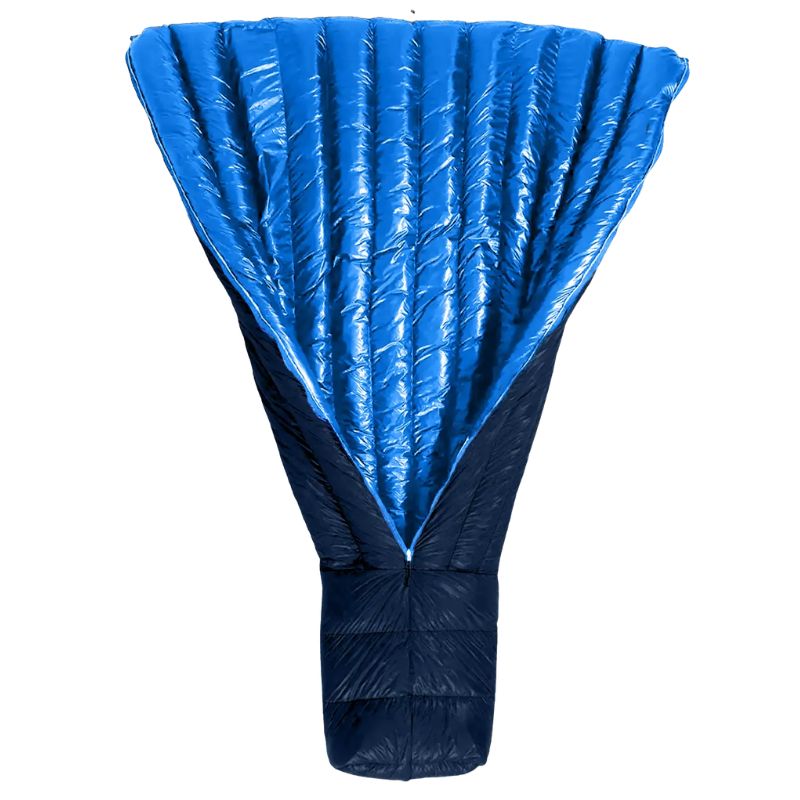
The Zpacks 20F Classic is one of the lightest serious 20-degree bags I have come across. By dropping the hood it saves around 3 oz over the equivalent hooded Zpacks Mummy, and at 18.8 oz with 13.7 oz of 900 fill the warmth-to-weight ratio is exceptional for a hooded-equivalent setup.
The catch is in the name, there is no hood. This bag only works as a system if you are already carrying a hooded down jacket or a separate down hood, because your head is the largest single source of heat loss at night. For most ultralight thru-hikers this is a feature rather than a bug, you stop paying the weight of insulation around your head twice. For anyone whose camp insulation layer is a beanie and a vest, the Sea to Summit Spark 15F or the hooded Zpacks Mummy is the better option.
This bag suits committed ultralight thru-hikers on the PCT, AT, CDT, and Te Araroa who already carry a hooded puffy and want to shave weight from their sleep system. The choice of widths and colours from Zpacks is also genuinely useful for getting the fit right.
Trade-offs: needs a down hood or a hooded jacket in colder weather, and like all Zpacks bags it is self-rated, which means you need to trust the brand on the temperature claim. In my experience with Zpacks bags that trust is well placed, but if you need a lab-tested number, look at the Rab Mythic or Sea to Summit Spark instead.
Best for: ultralight thru-hikers who already carry a hooded down jacket and want the lightest serious 20F option
Compare Prices:
Best Full Zip Sleeping Bag Quilt
Zpacks 20F Zip Around Sleeping Bag Review
Overall Weight: 21.6 oz / 612 grams
Shell Weight: 7.1 oz / 200 grams
Down fill power: 900 fill
Down Fill Weight: 14.5 oz / 412 grams
Packsize: unknown
EN / ISO Rated: No
Pros:
> Ultralight
> Can be unzipped and used as a quilt
> Small pack size
> High-quality 900 Fill Power Water Resistant Goose Down
> Overstuffed baffle with 30% more down
> Come with a waterproof stuff sack
Cons:
> No Hood
> No Lofting Bag
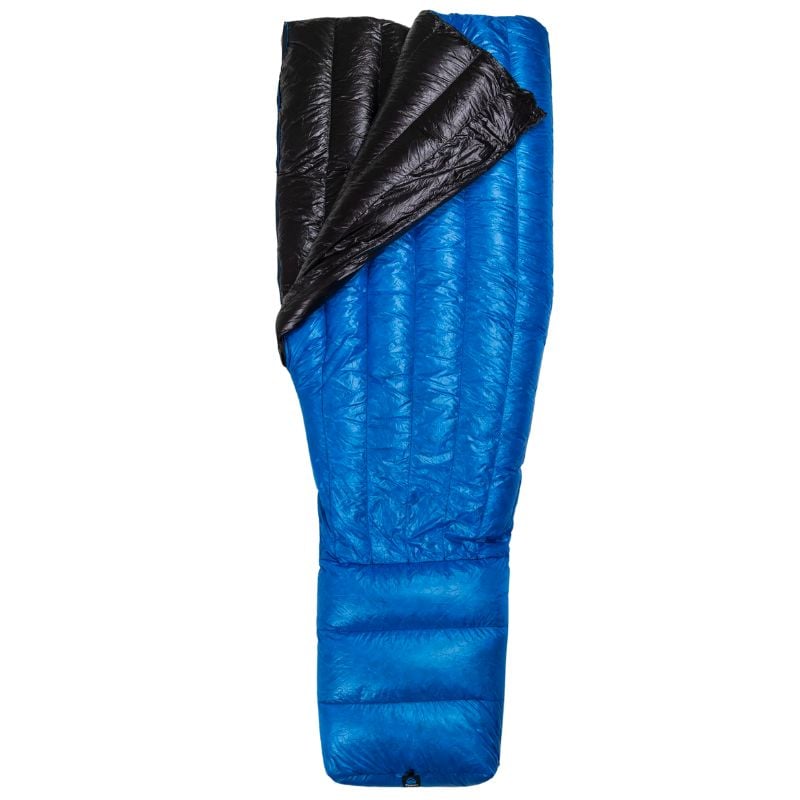
The Zpacks 20F Zip Around is the bag I would point hikers towards when they cannot decide between a sleeping bag and a quilt. The full perimeter zipper lets it open out completely flat as a quilt for warm nights, then close up as a hoodless bag when temperatures drop.
I tested the Zpacks Full Zip Sleeping Bag in warmer weather. It was great to be able to fully unzip the bag and use it as a backpacking quilt. I am yet to test the bag in temps around freezing but my experience with this bag and others would lead me to believe that it will be fine. When I tested the bag I found the anti-snag zip worked well and as promised. That is a bigger deal than it sounds, because zipper snags on ultralight shell fabric are how a lot of bags develop their first holes.
This bag suits thru-hikers on long trails where night temperatures swing from warm summer lows to near-freezing alpine passes. The 30% overstuffed baffles mean the warmth-to-weight is closer to the hooded Zpacks Mummy than the lower fill weight suggests. Pair it with a hooded down jacket in cold conditions and you have a flexible, ultralight system for almost any 3-season trip.
Trade-offs: no hood and no lofting bag included. The full zip adds a small amount of weight over the hoodless Classic — that is the price you pay for the quilt-mode versatility.
Best for: thru-hikers who want quilt versatility with the option to cinch up like a hoodless bag in cold weather.
Compare Prices:
Best Sleeping Bag for Australia and New Zealand
Macpac Dragonfly 400 Review

Weight: 25.8 oz / 731 grams
Shell Weight: 11.7 oz / 331 grams
Down fill power: 800 fill
Down Fill: 14.1 oz / 400 grams
EN / ISO Rated: Yes
Packsize: Unknown
Pros:
> Lightweight
> Best rated hood in this review
> 800+ HyperDry Down
> Good stuff sack and compressibility
Cons:
> Not Cheap
> Only available in Australia and New Zealand
The Macpac Dragonfly 400 is the bag I keep coming back to for thru-hiking and tramping in Australia and New Zealand. Macpac’s HyperDry down handles damp NZ conditions well, the bag is EN/ISO rated, and being able to walk into a Macpac store anywhere in NZ or Australia for service or warranty work is a real practical advantage that international brands cannot match.
I have both the Dragonfly 400 and Dragonfly 600 from Macpac which I have extensively. When I used and tested this bag I found it had generous internal dimensions that worked well when side sleeping, sleeping on my back, or sleeping on my stomach. I rate the hood as the best in class which combined to keep me warm inside the bag. I also tested the outer fabric for water resistance and it was able to keep water from entering the bag.
This bag suits thru-hikers and trampers on the Te Araroa, Great Walks, and longer Tasmanian and Victorian routes where the climate is damp and changeable. The roomy cut also makes it a sensible choice for side sleepers and anyone who finds the Therm-a-Rest Hyperion or Zpacks Mummy too narrow.
Trade-offs: not cheap by any standard, and only available in Australia and New Zealand. At 25.8 oz it is also heavier than the lightest cottage UL bags, which is the price you pay for an EN-rated 800 fill bag with serviceable in-country support.
Best for: Australian and New Zealand thru-hikers and trampers, side sleepers, hikers who want a serviceable bag in country
Compare Prices:
Best Budget Sleeping Bag
REI Magma 15F Review

Weight: 35.6 oz / 1006 grams
Shell Weight: 12.3 oz / 346 grams
Down fill power: 850 fill
Down Fill: 23.3 oz / 660 grams
EN / ISO Rated: Yes
Packsize: 8L
Pros:
> Lightweight
> 850+ HyperDry Down
> Good price
Cons:
> A little heavier than other ultralight bags
> Only available at REI
The REI Co-Op Magma 15F is a good lightweight sleeping bag for backpacking at a reasonable price.
The REI Co-Op Magma 15 uses a good quality 15D Pertex shell with high-quality 850+ loft goose down that has been treated to resist water. Add to that the small pack size and good warmth-to-weight ratio and this makes a good backpacking sleeping bag for someone wanting good quality but not top dollar.
This is one of the heavier backpacking sleeping bags in this review but at 35.6 oz it is still a warm sleeping bag. This helps justify the slightly lower price in comparison to higher-priced bags. It will be well suited to someone on 3-season backpacking trips wanting a good quality sleeping bag that will not cost too much.
Overall, the REI Magma is the best budget sleeping bag that still is lightweight, has a small pack size, and good warmth-to-weight ratio.
Compare Prices:
Best Handmade Sleeping Bag
Western Mountaineering Ultralite 20F Review
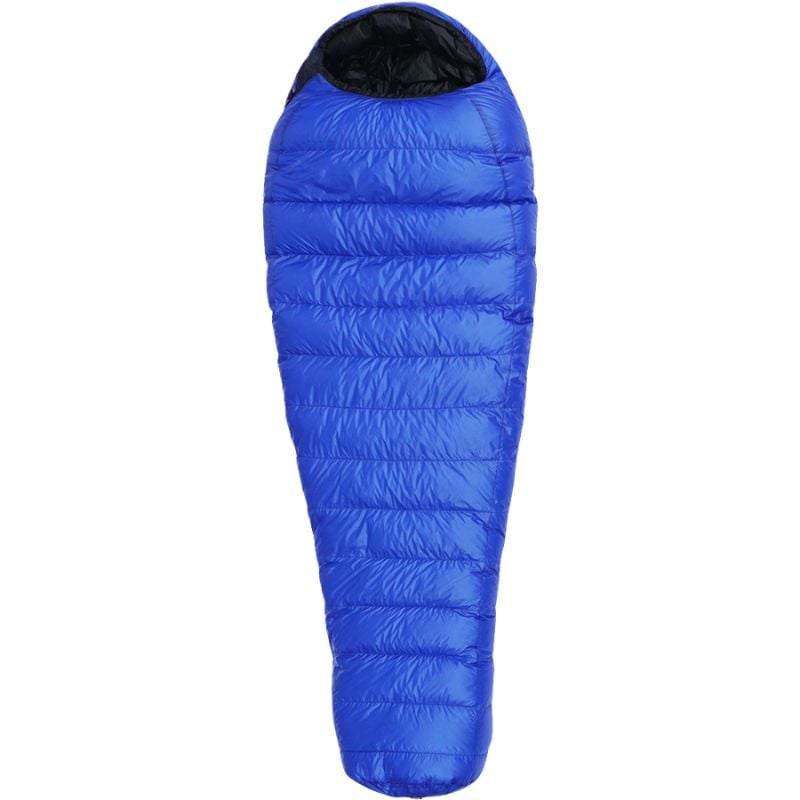
Weight: 29 oz / 820 grams
Shell Weight: 13 oz / 370 grams
Down Fill Power: 850 fill
Fill Weight: 16 oz / 450 grams
EN Rated: No
Packsize: 9L
Pros:
> Lightweight
> High Quality
Cons:
> Not cheap
The Western Mountaineering UltraLite 20F is a bag with a long-standing reputation among thru-hikers — it has been on the market for years, is hand-built in California. Western Mountaineering’s temperature ratings are also famously honest, often warmer in real use than the rating on the label suggests.
This bag suits long-distance hikers who want a bag they will not have to replace, who run cold or hike shoulder seasons, and who are willing to pay for build quality. 16 oz of 850+ fill at a 20F rating is genuinely warm — most 20F bags in this guide carry less down than that.
Trade-offs: at 29 oz it is heavier than the Zpacks Mummy, Therm-a-Rest Hyperion, and Rab Mythic. That weight buys you durability and a hand-built quality that cottage UL bags cannot match, but it is a real penalty if you are counting grams.
Best for: thru-hikers who want a hand-built bag that will outlast almost everything else in the category.
Compare Prices:

Ultralight Sleeping Bag Buyers Guide
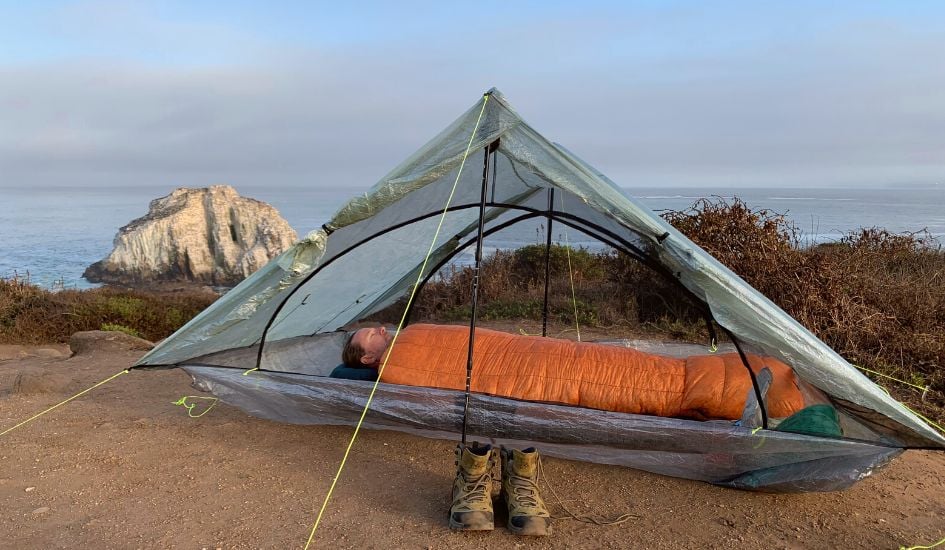
Ultralight Sleeping Bag Buyers Guide
After more than 1000 nights in a sleeping bag across all the Triple Crown thru hikes, the Te Araroa, and a long list of bikepacking trips, I have a strong view on what actually matters when choosing a sleeping bag and what marketing copy will try to sell you that does not. This guide walks through the real decisions in the order I would make them.
Warmth vs Weight: The Trade-Off That Decides Everything
A sleeping bag has one job, to keep you warm enough to sleep through the night. Warmth to Weight is the determining factor when it comes to ultralight sleeping bags.
In practice that means looking at three numbers together: the temperature rating, the total bag weight, and the down fill weight. A 20F bag at 22 oz with 14 oz of 900 fill down is a serious thru-hiking bag. A 20F bag at 22 oz with 9 oz of 650 fill down is marketing. The second one will not keep you warm at 20F no matter what the marketing company says.
My rule of thumb after years of testing: for a hooded mummy bag, expect at least 12–13 oz of high fill-power down (850+) for an honest 20F rating. Less than that and the bag is either using lower fill power (which means more loft for less warmth), under-rated, or both.
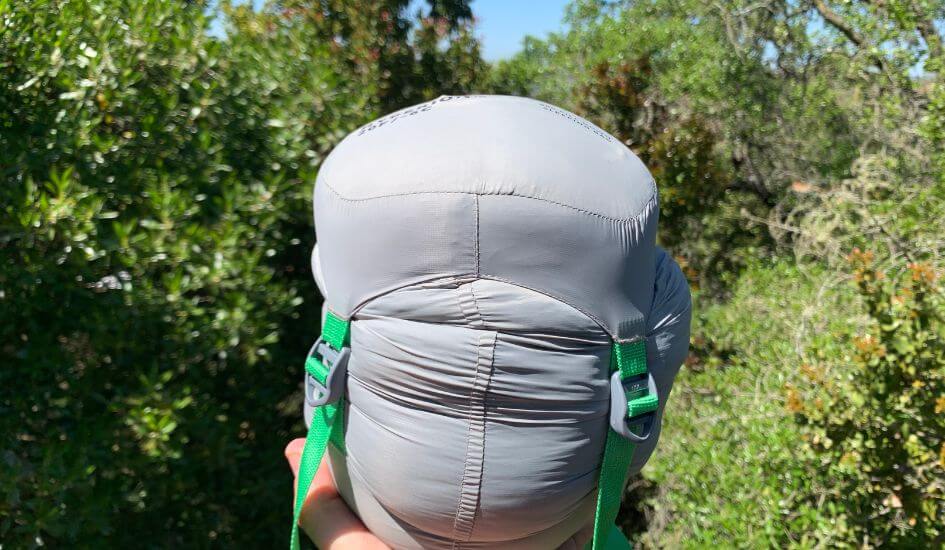
Down vs Synthetic for Thru-Hiking
For 95% of thru-hikers, down is the right choice. Down packs smaller, weighs less for the same warmth, and lasts as long as synthetic. A quality down bag will see you through 20 years of backpacking.
Synthetic only makes sense in two scenarios. First, if you are hiking somewhere wet for weeks at a stretch where keeping a sleeping bag dry is genuinely impossible, or you avoid animal products on principle. Just keep in mind synthetics are made from the petrochemical industry.
Even in wet climates, most experienced thru-hikers I know still take a quality down bag and protect it carefully. A dry bag for the bag inside the pack, careful tent pitching, and drying it during lunch stops on sunny days. Down with a hydrophobic treatment makes this approach more forgiving but does not change the fundamentals.
Fill Power vs Fill Weight: Why Both Numbers Matter
Fill power measures the loft of the down — how many cubic inches one ounce of it fills. An example is 900 loft means 1 oz of down expands to 900 cubic inches. Fill weight is the actual amount of down inside the bag in ounces or grams. The mistake people make is shopping on fill power alone.
Higher fill power down (850, 900, 950) is lighter for the same warmth and lasts longer, because the better-quality plumes hold their loft for more years. But a 950 fill bag with very little down inside it will still be a cold bag. The Therm-a-Rest Hyperion 20F uses 900 fill but only around 11.5 oz. The Zpacks 20F Mummy uses 15.6 oz of 900 fill. The Both are 20F bags. The Zpacks 20F Mummy is genuinely warmer; the Hyperion is lighter and tighter.
Practical take: 850–900 fill is the sweet spot for thru-hiking. 950+ is the premium tier and worth it if you plan to put a decade of trail life on the bag. Anything below 800 fill, I would not buy for serious thru-hiking, the lifespan and warmth-to-weight do not stack up.
Hydrophobic and Water-Resistant Down
Hydrophobic down is treated with a durable water-repellent (DWR) coating at the down-cluster level. It does help. Third-party tests show treated down absorbs water more slowly and dries faster. The Sea to Summit Spark, Rab Mythic, and Macpac Dragonfly all use hydrophobic down and I have noticed the difference on damp trails such as Te Araroa, PNW and Tasmanian nights.
What hydrophobic down does not do is make the bag waterproof. If your tent floods, your bag is wet. The treatment buys you time and forgiveness in damp conditions, not protection from rain.
The other consideration is that some of the very best down brands such Feathered Friends and Western Mountaineering in particular, choose not to treat their down. They do use some of the best shell material which protects the sleeping bag from moisture. They also use the argument that the long-term effect of DWR on loft and lifespan is not well understood, and that protecting the bag is the user’s job. After years of using both treated and untreated bags, I can see both sides. For wet trails I lean toward treated; for dry alpine and desert use untreated is fine.
Sustainable Down: RDS and Traceability
The Responsible Down Standard (RDS) certifies that down is sourced from birds that have not been live-plucked or force-fed. Almost every reputable bag in this guide uses RDS-certified down or an equivalent traceable supply chain (Allied’s Track My Down, Patagonia’s 100% Traceable Down).
If sourcing matters to you, and it should, buy from brands that publish their certification. All the bags I recommend in the main picks meet this bar.
Shell Fabric and DWR: What Survives a Thru-Hike
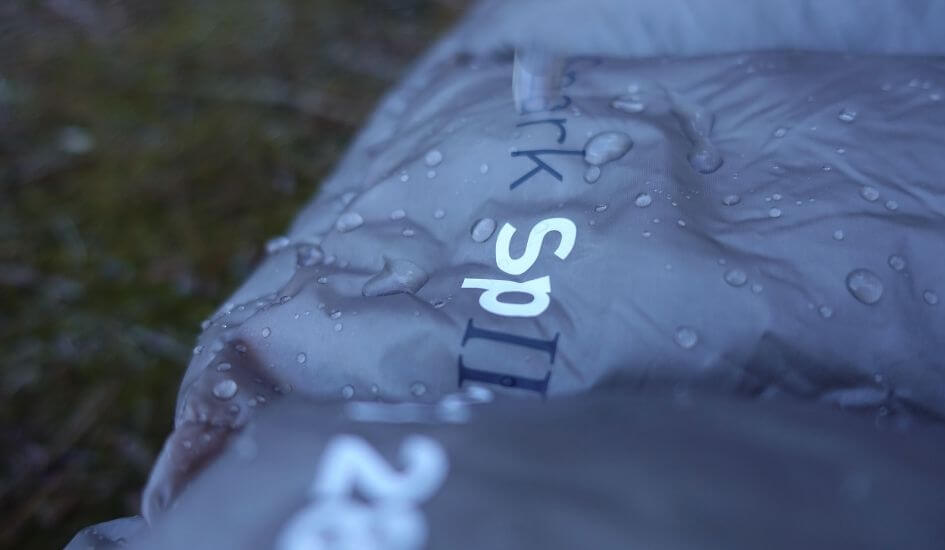
Shell fabrics on ultralight bags are measured in denier (D). Lower numbers are lighter and more fragile. Most current UL bags sit between 7D and 20D for the inner and outer shells.
What I have learned the hard way: 7D shells (some Zpacks and cottage UL bags) are noticeably more fragile and will pick up small holes easier. 10D is the practical shell for a bag I plan to use on a six-month thru-hike. 15–20D is barely heavier and lasts much longer.
The shell DWR helps with condensation inside a single-wall tent or bivy and with light contact with damp tent walls. It will wear off with use and washing. Refreshing it every season or two with a wash-in or spray on DWR extends the life of the bag significantly.
Baffles: Why They Matter Below Freezing
Baffles are the internal pockets that hold down in place inside the bag. Three main constructions:
- Sewn-through baffles — lightest and cheapest, but cold seams where the down gets compressed. Fine for warm-weather bags, not for shoulder-season thru-hiking. No sleeping bags in this review use this method.
- Box baffles — small fabric walls between the inner and outer shells, with the down free to loft fully. The standard for a serious 3-season bag.
- Continuous baffles — box baffles that wrap all the way around the bag with no horizontal stitching, letting you shake the down to the top in cold weather or to the sides in warm weather.
For thru-hiking, box or continuous baffles are what you want. Look at the Zpacks Mummy and Feathered Friends Swallow as good examples. Both use proper baffle construction and the difference is obvious when temperatures drop.
Temperature Ratings: How to Read Them Honestly
This is the area where buyers get burned most often. Two systems are in use:
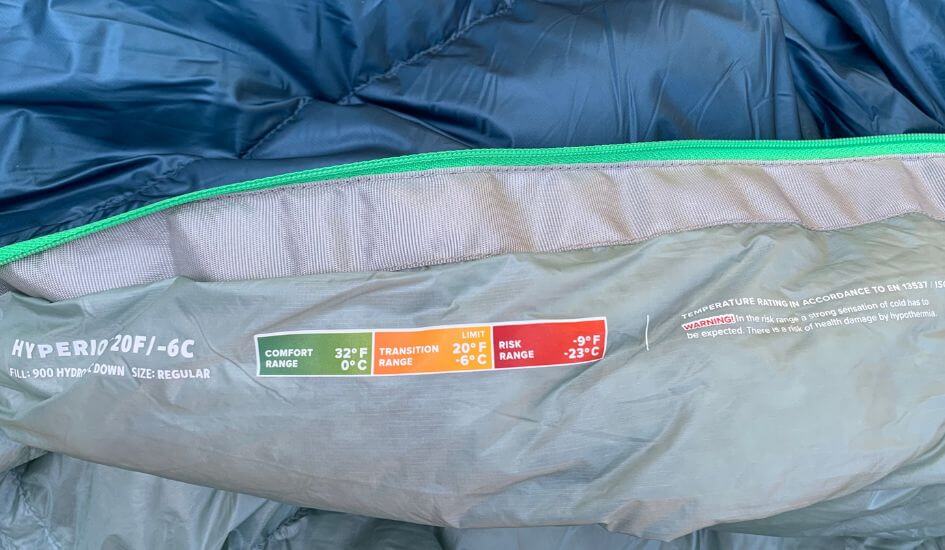
- EN 13537 / ISO 23537 is a standardised laboratory test using a heated mannequin. It produces three numbers: Comfort (a “standard” cold sleeper sleeps comfortably), Lower Limit (a “standard” warm sleeper sleeps comfortably), and Extreme (a survival rating you should never plan around). Sea to Summit, Rab, REI, and Macpac use EN/ISO ratings on the bags in this guide.
- Manufacturer self-rated ratings are not standardised. Feathered Friends, Western Mountaineering and Zpacks do not pay for EN testing. Instead they rate their own bags conservatively, and on the whole their numbers are accurate. The downside is that you have to trust the brand. I trust all the brands in this review.
When in doubt, I plan against the Comfort rating, not the Lower Limit. If you are a cold sleeper, treat the Comfort rating as the warmest temperature you can sleep at and shop for a bag with a Comfort rating at or below your expected lows. The marketing temperature on the front of the box is almost always the Lower Limit, which is optimistic for most people.
Sleeping Bag vs Quilt: Which to Pick
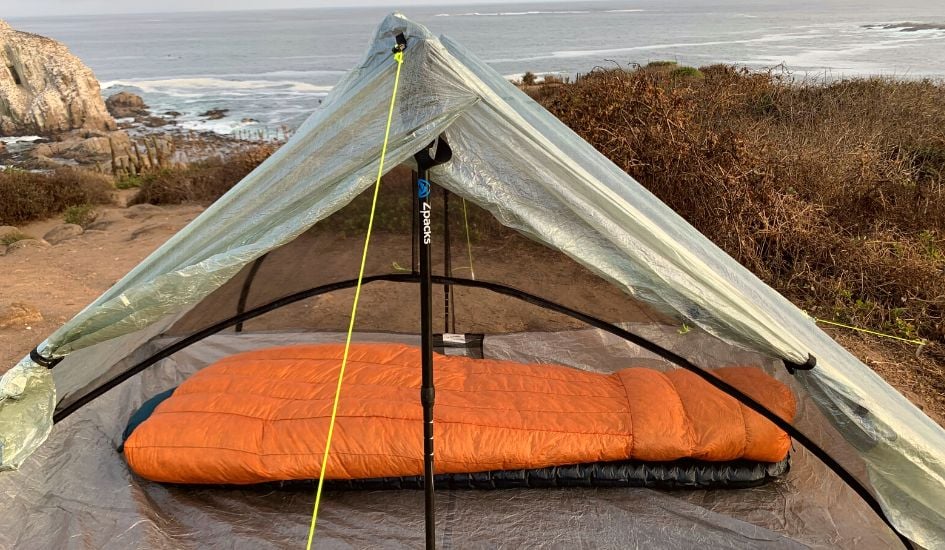
A sleeping bag fully encloses you. A quilt is open underneath, attaches to your sleeping pad with straps or clips, and uses your pad as the insulation under your body.
Quilts save 4–8 oz over an equivalent bag, are more adjustable in shoulder girth and venting, and are cheaper for the same warmth. The trade-offs are real though: quilts are draftier in wind and on broken sleep, the pad-attachment system has a learning curve, and if you toss and turn you move inside the quilt rather than with it.
After years of using both, my honest take is:
- Choose an Ultralight Backpacking Quilt if you are committed to ultralight, sleep on your back or stomach, and are willing to spend a few trips dialling in your setup.
- Choose a sleeping bag (Zpacks Mummy, Feathered Friends Hummingbird, Sea to Summit Spark) if you toss and turn, sleep cold, hike in windy or alpine terrain, or just want to get into bed without thinking about it.
- Choose a hybrid (Zpacks Zip Around, Feathered Friends Flicker UL) if you cannot decide. They open flat as a quilt and cinch as a hoodless bag. I rate the Zpacks Zip Around as the best of both worlds for thru-hikers who do not know yet which system they prefer.
Hood vs Hoodless
A hood is the warmest single piece of insulation on a bag. Your head loses heat fast and a good hood is a real warmth multiplier. For shoulder-season and cold-weather thru-hiking, take a hooded bag.
A hoodless bag (Zpacks Classic, Feathered Friends Tanager, Feathered Friends Vireo) saves 1–3 oz and asks you to bring a separate insulated hood — almost always your hooded down jacket. This is the smart move if you already carry a hooded puffy, because you stop paying the weight twice. It is the wrong move if your camp insulation layer is a beanie and a vest.
For most thru-hikers carrying a hooded down jacket anyway, hoodless is the lighter and more sensible choice. For bikepacking or warm-weather trips where I am not carrying a heavy puffy, I bring the hood.
Sleeping Bag Fit and Dimensions
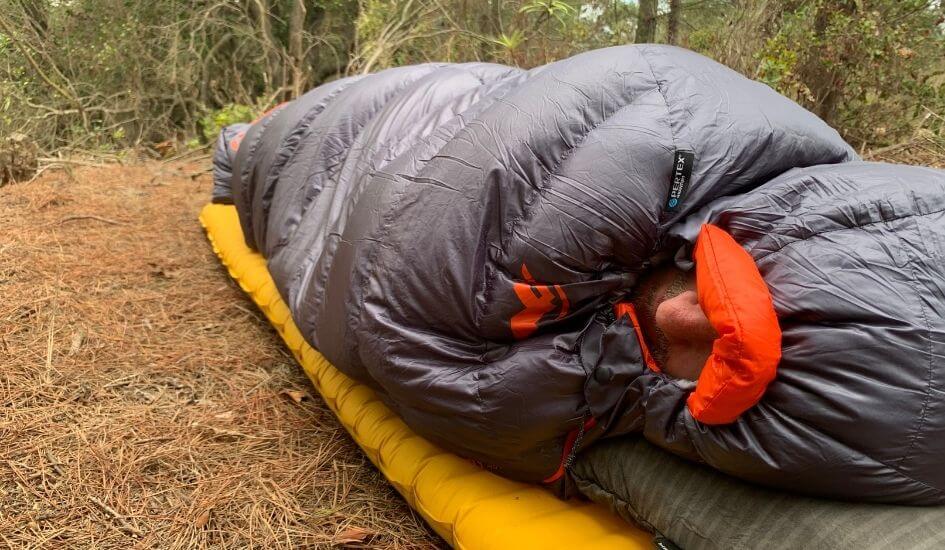
Bag fit is about three things: shoulder girth, hip girth, and length.
A narrower bag is lighter and warmer for the weight, there is less dead air to heat. A wider bag is more comfortable, especially for side sleepers and broader shoulders, but at a real warmth-to-weight cost.
The Therm-a-Rest Hyperion is on the narrow end and I found it tight to side-sleep in. The Sea to Summit Spark is on the roomier end and I have been able to wear a down jacket inside it on cold nights. The Macpac Dragonfly sits in between and works well for most body shapes.
Length matters more than people realise. A bag too long for you wastes 5–10% of its insulation warming the dead air at the foot end. Buy the right length. Most brands offer regular and long, some offer short.
Women’s Specific Sleeping Bags
Women’s specific bags are not just “pink bags.” A proper women’s bag has three real differences:
- More fill in the footbox and torso, where women tend to lose heat fastest.
- Shorter, narrower cut at the shoulders and wider at the hips.
- Higher Comfort temperature rating for the same Lower Limit, reflecting the fact that the EN/ISO Comfort number is calibrated to a “standard” woman.
If you are a woman who sleeps cold, a women’s specific bag is almost always the right call — you get more usable warmth without the weight of stepping up to a heavier unisex bag. The Sea to Summit Spark Women’s 15F and Feathered Friends Egret UL 20 are the two I would point you at first.
A note for cold-sleeping men: there is no rule against buying a women’s bag if the cut works for you. The extra fill is real warmth, and the size charts will tell you whether the dimensions fit.
Stuff Sacks, Compression, and Storage
Most ultralight bags ship with a basic stuff sack that is adequate for daily packing, not waterproof. I always pack mine inside a separate dry bag (an Sea to Summit Ultra-Sil or similar at 1–2 oz) inside my pack. This is the single most important piece of damage protection for a down bag on a long trail.
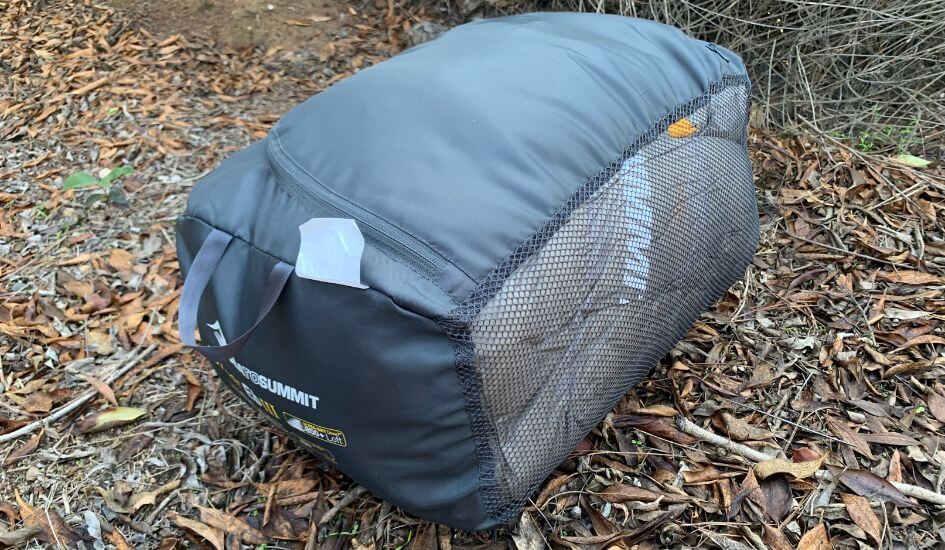
Compression sacks are useful for fitting a bag into a small pack but should not be used for storage between trips. Long-term compression damages down loft permanently. Store your bag at home hung in a closet or in the large breathable cotton sack most quality bags now ship with.
Recent years have seen many ultralight hikers make the switch to Dyneema stuff sacks such as those from Hyperlite Mountain Gear and Zpacks. These super lightweight, strong, and waterproof stuff sacks come in multiple sizes and shapes to fit any sleeping bag and are a good investment to keep your down bag dry.

The Sleeping Pad Pairs With the Bag
Half the warmth in a sleep system comes from the sleeping pad, not the bag. A 20F bag on a 1.5 R-value pad will be cold below freezing because the cold ground is conducting heat out of you faster than the bag can replace it.
Pair your bag with a pad rated for the same conditions:
- 3-season thru-hiking: R-value 4.0 or higher (Therm-a-Rest NeoAir XLite NXT at R 4.5 is the benchmark).
- Shoulder season and early-season thru-hikes: R-value 4.5–5.5.
- Winter and snow camping: R-value 6.0+, often by stacking a foam pad under an inflatable.
If you are buying a bag and pad at the same time, do not skimp on the pad. For more on this, see my best ultralight sleeping pads guide.
Don’t forget a Backpacking Pillow. They used to be a luxury item but things have changed in the last couple of years. They are now lightweight and comfortable. There is no longer any excuse not to take one with you.
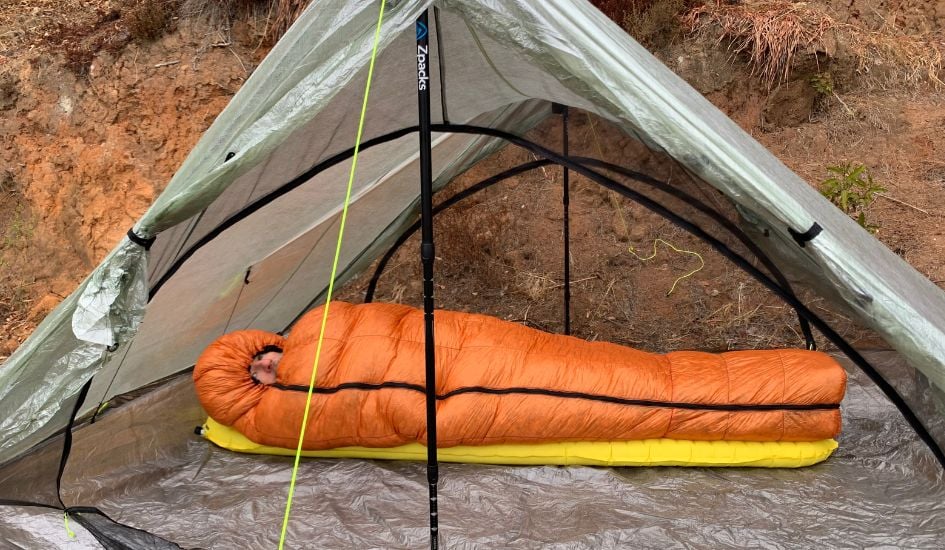
Price, Warranty, and Return Policy
Quality ultralight sleeping bags are not cheap and are not getting cheaper. Expect to pay USD 350–450 for a serious budget pick (REI Magma), USD 450–600 for a sweet-spot 850–900 fill bag (Sea to Summit Spark, Therm-a-Rest Hyperion, Zpacks Mummy), and USD 600–750+ for a top-tier 950 fill bag (Feathered Friends Hummingbird, Rab Mythic).
Run the maths over the lifespan, not the purchase price. A USD 600 Feathered Friends bag that lasts 20 years of trail life is USD 30 a year. A USD 250 budget bag that loses its loft in five years is USD 50 a year, and you spend an extra weekend shopping for the next one.
On warranty: REI’s one-year satisfaction guarantee is the most generous in the category. Feathered Friends, Western Mountaineering, and Rab all stand behind their bags for manufacturing defects across the lifetime of the product. Cottage brands (Zpacks, Katabatic, Enlightened Equipment) are generally excellent at servicing and repairing their own gear but be aware that lead times can be long.
How to Wash and Store a Sleeping Bag
A down bag will lose loft slowly over time from skin oils, sweat, and dirt. The fix is sensible care, not constant washing.
- Sleep in base layers or a sleeping bag liner. This is the single biggest thing you can do to extend bag life on a thru-hike.
- Wash sparingly — once or twice a year is enough for most thru-hikers, more often if your bag is visibly dirty or starting to smell. See my guide on How to Was a Down Sleeping Bag.
- Use down-specific soap — Nikwax Down Wash Direct or Granger’s Down Wash. Never normal laundry detergent.
- Front-loading washer on gentle cycle. Top-loaders with central agitators can damage baffles.
- Rinse twice to make sure all soap is out.
- Tumble dry on low with three clean tennis balls until fully dry. This can take several hours — a bag that feels dry but is still slightly damp inside will mildew.
- Store lofted in the large cotton or mesh sack the bag came with. Never store compressed.
For a damaged bag, most brands will repair small issues. For field repairs on trail, carry a small piece of Tear Aid Type A or Tenacious Tape Patches — both will hold a small hole closed for the rest of your trip.
When to Replace a Sleeping Bag
A high-quality down bag should last 10–20 years. The signs it is getting tired:
- Loft is visibly less than it was new even after a wash and a long loft session.
- Cold spots appear during the night where down has clumped or migrated or internal baffles are torn.
- Shell fabric is showing through in patches, with down leaking through small holes faster than you can patch them.
Rob “Stone” Sweeney’s Feathered Friends Hummingbird in this guide is a good example. After 5000+ miles across the Triple Crown and a long list of other trails, the bag is finally starting to develop cold spots.
Conclusion
Which is the best ultralight Sleeping Bag for thru-hiking and Backpacking? Any of the backpacking sleeping bags listed in this review would make a great option for anyone wanting to lighten up the weight they carry.
The following Ultralight Backpacking Sleeping Bags are highly recommended:
- Best Sleeping Bag Overall: Zpacks 20F Mummy
- Best Sleeping Bag Overall — Runner Up: Sea To Summit Spark 15F
- Best Premium Sleeping Bag: Feathered Friends Hummingbird UL
- Best Ultralight Sleeping Bag for Thru-Hiking: Therm-a-Rest Hyperion 20F
- Best Lightweight Sleeping Bag: Rab Mythic 20F
- Best Ultralight Hoodless Sleeping Bag: ZPacks 20F Classic Hoodless Sleeping Bag
- Best Sleeping Bag / Quilt Hybrid: Zpacks 20F Zip Around Sleeping Bag
- Best Sleeping Bag for Australia and New Zealand: Macpac Dragonfly 400
- Best Budget Ultralight Sleeping Bag: REI Magma 15F
- Best Handmade Sleeping Bag: Western Mountaineering Ultralite 20F
Follow along on Social Media
Frequently Asked Questions
What is the best sleeping bag for thru-hiking the PCT, AT, or CDT?
For most three-season thru-hikes I recommend a 15F to 20F down bag in the 20–25 oz range. The Zpacks 20F Mummy, Feathered Friends Hummingbird UL, and Sea to Summit Spark 15F all fit that brief. Choose 15F if you sleep cold or are starting early-season; 20F if you are happy layering inside the bag on the coldest nights
Down vs synthetic for thru-hiking — which is better?
Down wins on almost every metric that matters on a thru-hike: warmth-to-weight, packed size, and lifespan. Synthetic only makes sense if you know you will be in extended wet conditions for weeks (a soggy AT thaw or a NZ winter section). For 95% of thru-hikers, high fill-power down is the right call.
What fill power do I actually need?
800 fill is the practical floor for serious thru-hiking. 850–900 fill is the sweet spot for value and performance. 950+ fill (Feathered Friends, Rab Mythic) is the premium tier — lighter for the same warmth, and lasts longer, but you pay for it
Are 30F and 40F sleeping bags warm enough for thru-hiking?
Only on summer thru-hikes in mild climates, and only if you are willing to wear all your layers inside the bag on the coldest nights. For shoulder-season thru-hikes you want a 15F or 20F bag.
Sleeping bag or quilt for a thru-hike?
Quilts save 4–8 oz and cost less for similar warmth, but have a learning curve and can be drafty in wind. Bags are simpler and warmer in cold conditions. If you toss and turn or run cold, take a bag. If you want lightness and adjustability, take a quilt — and learn the pad-strap setup before your first big trip.
What is the lightest serious sleeping bag for backpacking?
The Western Mountaineering HighLite at around 16 oz for warm-weather use, and the Zpacks 20F Classic Hoodless at 18.8 oz for shoulder-season use are the two lightest options here that I would actually trust on a long trail.
How do I sleep warm in a borderline-rated sleeping bag?
Eat well, hydrate, wear dry base layers and a puffy inside the bag, choose sheltered campsites away from rivers and depressions, and pair the bag with a sleeping pad with the right R-value. Half the warmth in a sleep system comes from the pad.
How long does a high-end down sleeping bag last?
Twenty years is realistic if you store it lofted (not compressed), wash it sparingly with down-specific soap, and protect it from skin oils with base layers or a liner. Around 1000-2000 nights is also a good range.


BikeHikeSafari Gear Review Process
The author, Brad McCartney from BikeHikeSafari is a small independent adventurer and outdoor gear tester who owns and runs BikeHikeSafari.com.
BikeHikeSafari is not part of a large blog network and is proudly independent. All reviews on this site are independent and honest gear reviews of outdoor products by the author.
The author, Brad McCartney is a very experienced triple crown thru-hiker, adventurer, and bike tourer having spent 1000s of nights sleeping in a tent and sleeping bag (Read more). He was a manager of an outdoor retail store and is very experienced in what is important when using and testing gear for reviews like this.
BikeHikeSafari will never receive any money for reviews and they do not accept sponsored reviews on this website. All the comments about the gear reviews are from the author based on his years of experience. Hope this independent review was helpful for you.

