

Nothing wrecks a long day on trail faster than cold, wet feet, and after thousands of kilometres of thru-hiking I have learned that waterproof socks are an interesting alternative to normal Hiking Socks and waterproof boots that can make the difference between a miserable afternoon and a dry one.
This guide is for hikers, backpackers, thru-hikers and bikepackers who deal with wet trails, cold river crossings and shoulder-season snow, not casual town use. I have tested waterproof socks for several weeks hiking through very cold, wet snow in Colorado where I crossed icy rivers and still finished the day with dry feet.
My current top pick is the Sealskinz Starston Cold Weather Mid-Length Socks, with the RANDY SUN Ultra Thin as the best ultralight option for warm-weather backpacking. The trade-off to understand before buying is simple: waterproofing always costs you some breathability, so the right sock depends on your conditions. See the Quick Picks below, and for how I research and field-test gear, see the Gear Review Policy.
Quick Picks: Waterproof Socks
- Best overall: Sealskinz Starston Cold Weather Mid-Length Socks – three-layer merino-lined sock that are the best all-round balance of warmth, waterproofing and comfort.
- Best ultralight: RANDY SUN Ultra Thin Mid Length – at roughly 60 g it is the thinnest waterproof sock I would trust on a warm-weather thru-hike where every gram counts.
- Best lightweight all-rounder: Showers Pass Crosspoint Lightweight – seamless and breathable, and it works equally well hiking, cycling or rafting.
- Most durable: Sealskinz Raynham All Weather Mid Length Socks – flat seams and a merino lining that shrug off repeated wet abrasion, at a premium price.
- Best for hiking: DexShell Trekking Waterproof Trekking Socks – thin, near-seamless and feels like a normal sock underfoot with a fast-transferring Porelle membrane.
- Warmest: DexShell Waterproof Hytherm Pro Socks – merino inner layer and a cushioned footbed for cold, wet shoulder-season days that I used to keep my feet dry through icy Colorado rivers and cold snow melt.
How We Tested
The waterproof socks in this guide are researched and, where possible, field-tested by an experienced long-distance hiker and former outdoor store manager. Across thru-hikes, shoulder-season trips and bikepacking trips, I judge waterproof socks on weather protection per gram, breathability, packability, durability, comfort and value for serious backpacking. I have tested pairs thru-hiking in cold, wet snow with many icy river crossings, including two weeks in Colorado. Some items were supplied by the manufacturer and some were purchased by the author for this review. For more on how we research and review gear, see the BikeHikeSafari Gear Review Policy.
Follow along on Social Media
Waterproof Socks Comparison Table
| Brand | Length | Layers | Waterproof |
|---|---|---|---|
| Sealskinz Starston Cold Weather Mid-Length Socks | Mid | 3 Layer | Yes |
| RANDY SUN Ultra Thin Mid Length | Mid | 3 Layer | Yes |
| Showers Pass Crosspoint Lightweight Waterproof Socks | Mid | 3 Layer | Yes |
| Sealskinz Raynham All Weather Mid Length Socks | Mid | 3 Layer | Yes |
| DexShell Trekking Waterproof Trekking Socks | Mid | 3 Layer | Yes |
| DexShell Waterproof Hytherm Pro Socks | Mid | 3 Layer | Yes |
Best Waterproof Hiking Socks 2026: Detailed Reviews
Best Waterproof Socks 2026 – Overall
Sealskinz Starston Cold Weather Mid-Length Socks

Pros:
> Keep the feet dry thanks to the hydrophilic membrane.
> Flat seams to reduce friction or blisters forming.
> The three-layer construction keeps your feet dry and warm in wet weather conditions.
Cons:
> The size chart is a bit off. They are slightly bigger for people.
This is the sock I reach for when conditions turn genuinely cold and wet, and it is my current overall pick. The three-layer construction, with a merino-blend inner against the skin and a hydrophilic membrane in the middle, is what kept my feet dry through repeated icy river crossings in Colorado. Merino brings natural warmth and odour resistance that synthetic liners cannot match on multi-day trips.
Flat seams matter more than most people realise on a thru-hike, and the Starston keeps friction low enough that I did not develop the hot spots you get from bulkier waterproof socks. It suits shoulder-season and winter backpacking, snowshoeing and any hike where you expect cold water rather than warm rain.
The honest trade-off is fit. Several users, myself included, find the sizing runs large, so if you are between sizes consider sizing down, the only exception is if you are heading into very cold weather or snow and want to use liner socks or cold weather socks underneath these socks. Just keep in mind that they are warm, which is exactly what you want in the cold but too much for summer.
Trade-off: warmth and waterproofing over breathability and warm-weather comfort.
Best for: cold, wet thru-hiking, snowshoeing and river crossings.
Compare Prices:
Best Ultralight Waterproof Sock
RANDY SUN Ultra Thin Mid Length
Pros:
> Lightest waterproof socks in this review
> Good breathable membrane
> Good for all outdoor activities including hiking, backpacking, cycling, rafting, or snow sports
Cons:
> Not as warm as some other waterproof socks
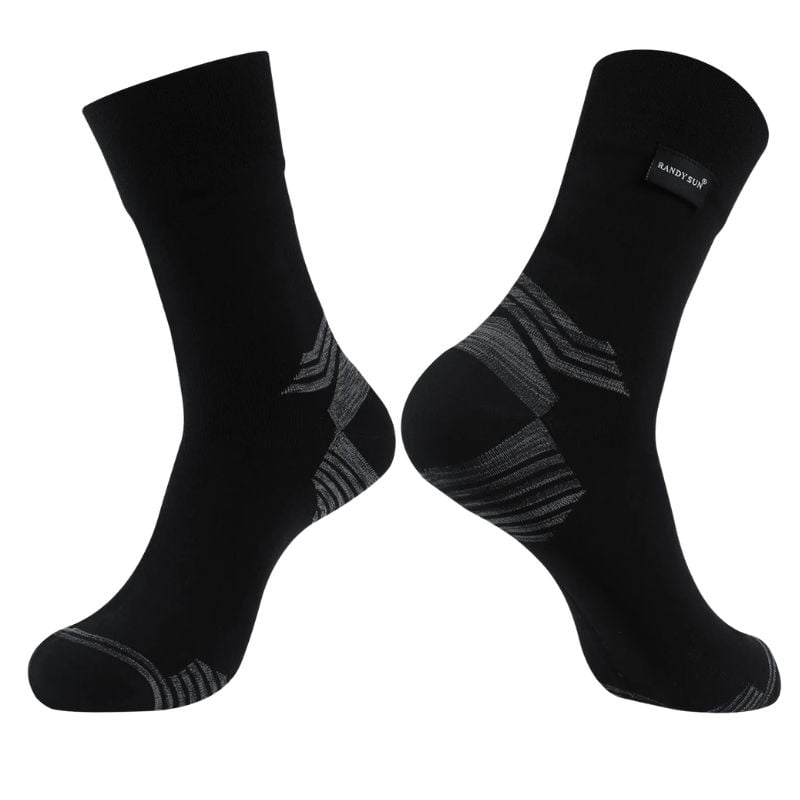
When the goal is to carry a waterproof sock without paying a weight penalty, this is the one. At around 60 g it is roughly half the weight of a typical waterproof sock, which makes it the pair I would throw in the pack for a summer thru-hike where I only expect occasional wet days rather than constant cold.
The thin profile is the whole point. It breathes better than heavier socks and feels close to a normal sock underfoot, so it works for warm-season hiking, biking and even running. It is comfortable without a liner in mild conditions.
The trade-offs are real. It is not a cold-weather sock, it does not dry as fast as some heavier options, and the polypropylene construction means it prioritises weight over long-term durability. One note for the ingredient-conscious: some ultra-thin waterproof membranes may contain PFAS.
Trade-off: minimal weight and breathability over warmth and durability.
Best for: warm-season and long-distance backpacking where grams matter.
Compare Prices:
Lightweight Waterproof Sock
Showers Pass Crosspoint Lightweight Waterproof Socks

Pros:
> Seamless design reduces the risk of blisters forming and is comfortable
> The membrane on these socks will keep your feet dry, yet it is also breathable.
> Good for all outdoor activities including hiking, backpacking, cycling, rafting, or snow sports.
Cons:
> Some sock colors may run a bit small to the actual sizing according to some people.
This is my pick when I want one waterproof sock that does a bit of everything. The seamless build keeps blisters at bay, and the membrane manages to stay breathable while still shutting out water, which is a harder balance to strike than the marketing suggests.
I like it precisely because it is not specialised. It performs across hiking, backpacking, cycling and rafting, so it is a sensible choice if you do more than one sport and do not want a drawer full of activity-specific socks.
The honest note is fit: some crosspoint run slightly small, so check the size chart before ordering. It is also a warm-weather-to-shoulder-season sock rather than a deep-winter one.
Trade-off: versatility over specialised warmth or ultralight weight.
Best for: hikers, cyclists and paddlers who want one all-round pair.
Compare Prices:
Most Durable Waterproof Sock
Sealskinz All Weather Mid Length Socks

Pros:
> Flat seams and wool lining make these socks very comfortable to wear.
> The merino wool lining helps keep your feet warm and dry.
> You will find elastic in the heel and at the top of the socks. This is to provide your feet with more support while you are hiking or walking.
> Lightweight
Cons:
> Sealskinz is a well-known brand, therefore their products have a high price tag.
If durability is your priority, this is the Sealskinz I would spend up on. The merino lining keeps feet warm and manages moisture, and the flat seams make it one of the more comfortable waterproof socks I have worn for full days.
The elastic at the heel and cuff gives useful support and keeps the sock in place, which matters over long descents where a slipping sock turns into a blister. It holds up well to repeated wet use and abrasion.
The obvious trade-off is price. Sealskinz commands a premium, and this sits at the top of the range. If you hike hard in wet conditions often enough to wear socks out, it earns the cost. If you only need waterproof socks a few days a year, a cheaper pair may serve you better.
Trade-off: durability and comfort over price.
Best for: frequent wet-weather hikers who want a sock that lasts.
Compare Prices:
Best Waterproof Socks For Hiking
DexShell Trekking Waterproof Trekking Socks
Pros:
> Quite thin and give you the feeling that they are like a normal pair of everyday socks.
> The design of these socks is seamless or very minor seams that you barely notice.
> These socks use a Porelle Membrane that absorbs and transfers moisture from your feet quickly and easily.
Cons:
> You need to be careful how you wash and dry these socks, otherwise, it could damage the lining.
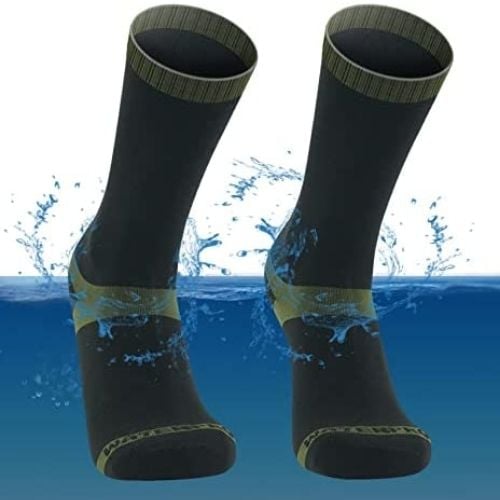
For pure hiking comfort, this is the one that surprised me most. It is thin enough that it feels like an everyday sock, and the near-seamless construction means there is almost nothing to rub against your skin over a long day.
The Porelle membrane absorbs and transfers moisture quickly, which helps keep the clammy feeling down compared with bulkier waterproof socks. That makes it a strong choice for three-season hiking where you want protection without the bulk of a winter sock.
The catch is care. You need to be careful how you wash and dry these or you risk damaging the lining, so follow the care guidance rather than tossing them in with the rest of your laundry.
Trade-off: thin comfort over cold-weather warmth.
Best for: three-season hikers who dislike bulky socks.
Compare Prices:
Warmest Waterproof Sock
DexShell Waterproof Hytherm Pro Socks
Pros:
> Merino Wool inner layer is great
> Seamless construction for an enjoyable wearing experience.
> The footbed of these socks are cushioned, which makes walking in these socks feel soft and protected.
Cons:
> Whilst these socks are very waterproof to stop water from getting in some people find them sweaty.
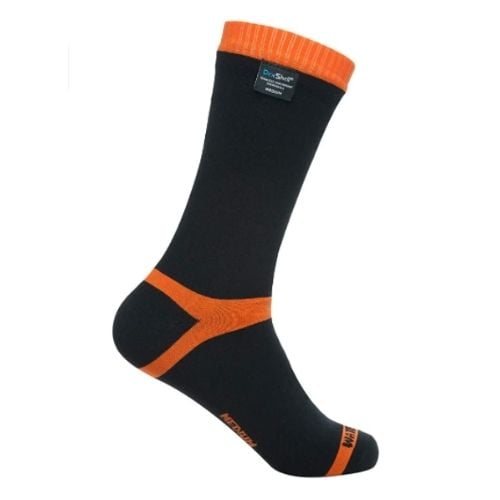
When it is genuinely cold, this is my warmest pick. The merino inner layer adds real warmth over synthetic-lined socks, and the cushioned footbed makes long days on hard trail more forgiving.
The seamless construction is comfortable, and the extra thickness is exactly what you want for winter hiking and snowshoeing, or for layering over a thin liner when temperatures drop below freezing.
I used these waterproof socks for 2 weeks of hiking in Colorado. For 10 hours per day, I hiked through cold wet snow and crossed icy-cold rivers. During that time, the sweatproof socks were always sweaty by the end of the day but that wasn’t necessarily due to the lack of moisture-wicking properties. As there were cold conditions I also used an extra layer of regular socks underneath for extra protection from the cold temperatures. I also crossed cold water rivers with these socks and didn’t get my feet wet!
Through my tests and research, I discovered that I like the feel of these socks, as they feel like an everyday pair of normal socks, just a bit thicker. These high-quality waterproof socks do give you a snug fit, but they are comfortable to wear.
The trade-off is the one that comes with all warm waterproof socks: some people find them sweaty. The membrane keeps water out well, but a thick, warm sock in an enclosed boot will not breathe like a summer sock. That is the price of warmth.
Trade-off: warmth over breathability.
Best for: cold-weather and winter hiking where warmth beats ventilation.
Compare Prices:

More Socks
More socks that I have yet to test and may make the list shortly.
- Dexshell Waterproof Ultra Lite Bamboo Socks – With a soft bamboo lining, these lightweight low-cut socks should be good for hiking in all but the coldest temperatures.
Waterproof Socks Buyers Guide
Waterproof Socks Buyers Guide
Weight vs warmth
The central trade-off. Thicker socks insulate and protect better but breathe worse and add pack weight; thin socks breathe and pack better but give little warmth. Match the sock to expected conditions rather than buying one pair for everything.
Materials
Every quality waterproof sock is three bonded layers: an inner (often merino or a merino blend) that wicks and regulates temperature, a waterproof-breathable membrane in the middle, and a tough nylon-blend outer that resists abrasion. Explain what each layer does and why merino inners are worth paying for on multi-day trips.
Inner Layer
The Inner layer is closest to your skin and responsible for wicking the moisture away from the skin and regulating your temperature. They are usually wool socks or similar with merino wool being very good and having natural anti-bacterial properties.
It is also possible and even encouraged when hiking in cold weather to add a pair of regular socks underneath your waterproof socks when using your hiking boots in cold temperatures. Especially if you think you will encounter cold water and wet conditions.
When hiking in warmer weather the waterproof sock can be worn by itself and will be super comfortable and do the job very well.
Waterproof Mid Layer
The Mid layer section of the socks is usually the water-resistant and breathable membrane that keeps the water out while allowing moisture vapor to transfer outside. Their job is to prevent feet wet and keep your feet dry.
This middle layer is sandwiched between the insulating inner layer and the tough protective outer layer. When wearing footwear, especially when hiking or traveling through very wet environments, the socks will not breathe as well as a waterproof rain jacket. When purchasing waterproof socks just keep that in mind.

Outer Layer
The nylon-blend outer protects the membrane from rocks and abrasion — the membrane is the part that fails first, so protect it. Careful washing and drying extends life.
Sock Thickness
It may seem obvious, but you want these socks to have great waterproofing abilities. However, some socks do a better job of this than others.
The thicker the sock, the better the insulation and protection from the harsh environment.
When trail running or hiking in warmer weather it will be important to choose a waterproof sock that is lightweight, thin, and with the most amount of breathability. There are several thin, lightweight waterproof socks on the market and they might be the best choice for you.
Conversely, if you are hiking, backpacking, or snowshoeing in very cold temperatures you will want a pair of waterproof socks that are thick, well-insulated, and able to fit another pair of socks underneath them if needed. Like many people, I have used a pair of thin socks underneath thick waterproof socks when the temperatures drop well below freezing.
Therefore, you may be best served by purchasing both thick and thin socks to serve you the best in all conditions. Use whichever one is best depending on the temperature and conditions.
If you are going on short hikes you could probably get by with a good pair of waterproof boots which might be all you need, even if you might end up with wet socks by the end of the short hike.
Breathability
Let me make one thing quite clear. If you wear Waterproof socks be aware that they are not as breathable as you might think. During testing, my feet started to look and feel like shriveled-up prunes. My skin was wet and smelly from the lack of breathability of waterproof socks when being used in wet weather and crossing rivers.
Your feet are one of the most sweaty parts of the body and if covered in mud, water, and dirt the socks will not breathe very well. Add to that the fact that they are covered with boots, shoes, trail runners, or mountaineering boots. So don’t set your expectations so high that your feet will be perfectly dry at the end of the day. Some sweat will not be able to get out and your feet will be a bit wet.
So with the bad stuff out of the way let’s talk about waterproof and breathable socks. When your feet get hot and sweaty, the socks let your feet breathe by transferring the moisture into the atmosphere. No one wants to be hiking with sweaty feet, otherwise, you could have simply worn everyday socks and for some people, normal Hiking Socks will be a good option.
The Moisture Vapor Transmission Rate, MVT, is how breathability is measured. The higher the MVT the more breathable the socks will be and the better they are at transferring sweat from your feet to the atmosphere.
You will notice most waterproof socks have a waterproof and breathable membrane mid-layer. This layer is what helps your waterproof sock become breathable. You want a good membrane that will help keep your feet warm and dry and cool your feet down when they get too hot.
The thickness of your waterproof socks is important. Thicker socks will quickly make your feet hotter. If you are facing cold conditions, this means your feet will remain warm but not wet.
Sock height
Ankle, mid and crew each have a place: ankle for low shoes and warm weather, mid/crew for boots, crossings and coverage under gaiters or bike tights. From my experience mid/crew length socks are best at keeping your feet both warm and dry.
Layering with a liner sock
In cold conditions, I have tested waterproof socks with a thin liner sock underneath for warmth and to manage sweat, and liner sock and thick warm sock and with no liner socks at all,
The temperature you are hiking in will determine your needs. Just know that wearing socks underneath your waterproof socks is needed when the cold icy water and snow melt try to give you cold feet,
Waterproof socks vs waterproof boots
For short hikes, good waterproof boots may be all you need even if socks end up damp. For long trips, wet shoes and repeated crossings, waterproof socks let you keep hiking in non-waterproof trail runners — the ultralight thru-hiker approach.
Care, washing and drying
Hand wash in warm soapy water, turn inside out, air dry or tumble on low, and never dry on radiators or by a fire. Machine washing risks the membrane.
Value
Socks with a built-in waterproof membrane will cost about twice the price of high-quality hiking socks. With most costing between USD $20-60 per pair. For most people, you will only need one pair of these socks and they will only be used on cold and wet days for keeping your feet dry and warm.
Conclusion
I have covered a range of different socks that will fit any activity outdoor enthusiasts have in mind from hiking, trail running, rafting, or any activity. They help keep you safe, dry, and in some cases warm. Just throw on a pair of hiking boots and hit the trail.
The Best Waterproof Socks for Winter Hiking in 2026 are:
- Best overall: Sealskinz Starston Cold Weather Mid-Length Socks
- Best ultralight: RANDY SUN Ultra Thin Mid Length
- Best lightweight all-rounder: Showers Pass Crosspoint Lightweight
- Most durable: Sealskinz Raynham All Weather Mid Length Socks
- Best for hiking: DexShell Trekking Waterproof Trekking Socks
- Warmest: DexShell Waterproof Hytherm Pro Socks
Follow along on Social Media
Frequently Asked Questions
Do Waterproof Socks Work?
Yes, a good pair keeps your feet dry. The membrane blocks liquid water while letting some vapour escape. The caveats are fit and time: water can enter over a loose cuff, and after many hours of full immersion even a good sock can wet through. I have crossed icy rivers and finished with dry feet, so quality matters.
What are the best waterproof socks for thru-hiking?
For cold, wet thru-hiking my pick is the Sealskinz Starston for its warmth and waterproofing. For warm-weather thru-hikes where weight matters more than warmth, the ultra-thin RANDY SUN is a better fit.
Are waterproof socks breathable?
Somewhat, but far less than a rain jacket. Feet sweat a lot and boots trap heat, so expect some dampness from sweat on long days. Thinner socks like the Drymile ACTIVE breathe best; thick warm socks breathe least.
Should I wear a liner sock underneath?
In cold conditions, yes. A thin liner adds warmth and helps manage sweat. Buy waterproof socks roomy enough to allow a liner, and remember Sealskinz tends to run large.
Can you machine wash waterproof socks?
It is better to hand wash them: turn them inside out and soak in warm soapy water. Machine washing can stress the membrane on the spin cycle. Air dry, or tumble on low only.
Waterproof socks or waterproof boots — which should I choose?
For short hikes, waterproof boots may be enough. For long trips and repeated crossings, waterproof socks paired with breathable trail runners are the more reliable ultralight approach.

BikeHikeSafari Gear Review Process
The author, Brad McCartney from BikeHikeSafari is a small independent adventurer and outdoor gear tester who owns and runs BikeHikeSafari.com.
BikeHikeSafari is not part of a large blog network and is proudly independent. All reviews on this site are independent and honest gear reviews of outdoor products by the author.
The author, Brad McCartney is a very experienced triple crown thru-hiker, adventurer, and bike tourer having spent 1000s of nights sleeping in a tent and sleeping bag (Read more). He was a manager of an outdoor retail store and is very experienced in what is important when using and testing gear for reviews like this.
BikeHikeSafari will never receive any money for reviews and they do not accept sponsored reviews on this website. All the comments about the gear reviews are from the author based on his years of experience. Hope this independent review was helpful for you.

