

Standing in deep snow at -20°F with numb toes is a fast way to ruin a hike or snowshoeing trip, and the wrong winter boot is usually why. This guide is for backpackers, hikers, and snowshoers who want warm, dry feet on winter trips without hauling overweight heavy boots.
I’ve logged thousands of nights sleeping outside on the Triple Crown trails, spent a winter in Canada in temperatures down to -40F / -40C, and have run an outdoor store, so I judge these boots on warmth-to-weight, waterproofing, traction, and how they hold up with microspikes and snowshoes. The trade-off to understand before you buy is warmth versus weight: a 400-gram boot keeps you toasty when you’re standing around but feels like an anchor on long miles, while a 200-gram boot is pleasant on the move and cold the moment you stop.
My current overall pick for the best winter hiking boot in 2026 is the Keen Revel IV High Polar, with the The North Face Vectiv Fastpack Insulated as the most comfortable, and the Xero Shoes Alpine Snow Boot as the lightest ultralight option, jump straight to them in our Quick Picks. For how I research and field-test gear, see the Gear Review Policy.
Quick Picks: Best Winter Hiking Boots
- Best Overall: Keen Revel IV High Polar – a quality winter snow boots ticks a lot of boxes, reasonably priced, comfortable, roomy toe box, and rated to -40F / -40C.
- Most Comfortable Winter Boots: The North Face Vectiv Fastpack Insulated – a rockered, running-shoe-feel boot that stays comfortable for long winter miles.
- Best Ultralight: Xero Shoes Alpine Snow Boot – the lightest option here, with a zero-drop, wide-toe-box fit for minimalist hikers.
- Best Winter Boots for Wide Feet: Oboz Bridger 8″ Insulated – roomy toe box, serious warmth, and good snowshoe support.
- Best Warmth-to-Weight / Lightweight: Merrell Thermo Chill 2 Mid – only 200g of insulation, so it breathes on the move and barely weighs more than a summer boot.
- Best Premium: The North Face Chilkat V 400 – 400g of Heatseeker Eco in a full-grain leather and TPU shell that sheds slush.
- Best for Extreme Cold: Baffin Snow Monster Boots – rated to -94°F with a thermo-set sole that handles true arctic conditions.
- Best Budget: Columbia Bugaboot III – reliable waterproof warmth for less, and the easiest boot to find on sale.
- Best Light Hike and Around Town: Sorel Caribou – these are the snow boots for light hiking and walking around town.
How We Tested
The winter hiking boots in this guide are researched and, where possible, field-tested by an experienced long-distance hiker and former outdoor store manager. Across day hikes, winter trips, and snowshoeing outings, I judge winter boots on warmth-to-weight, waterproofing, traction on snow and ice, durability, comfort, and value for serious backpacking. I pay close attention to how each boot pairs with microspikes, crampons, and snowshoes. Some of the items were supplied by the manufacturer and some items were purchased by the author for this review. For more on how we research and review gear, see the BikeHikeSafari Gear Review Policy.
Follow along on Social Media
Winter Hiking Boots Comparison Table
| Brand | Insulation | Weight (pair) | Temp Rating |
|---|---|---|---|
| Keen Revel IV High Polar | Synthetic | 3 lb. 2.7 oz | -40F / -40C |
| The North Face Vectiv Fastpack Insulated | Synthetic | 2 lb. 2 oz | Not Specified |
| Xero Shoes Alpine Snow Boot | Synthetic | 1 lb. 13.8 oz | -25F / |
| Oboz Bridger 8″ Insulated | Synthetic | 3 lb. 1 oz | Not Specified |
| Merrell Thermo Chill 2 Mid | Synthetic | 2 lbs. 2 oz | Not Specified |
| The North Face Chilkat V 400 | Synthetic | 3 lb. 2 oz | -40F / -40C |
| Baffin Snow Monster Boots | Synthetic | 6 lbs. 2.9 oz | -94F |
| Columbia Bugaboot III | Synthetic | 3 lb. 2 oz | Not Specified |
| Salomon Toundra Pro CSWP Snow Boots | Aerotherm | 3 lb. 15.4 oz | -22F |
| Sorel Caribou | Synthetic | 5 lbs | Not Specified |
Best Winter Boots for Hiking 2026
Best Snow Boots for Winter Hiking
Keen Revel IV High Polar
Pros:
> They’re 100% waterproof
> Insulated for -40º degrees
> Has anti-odor technology
> Has LWG-certified leather
Cons:
> -40F rating is too much for shoulder season cold weather travel.
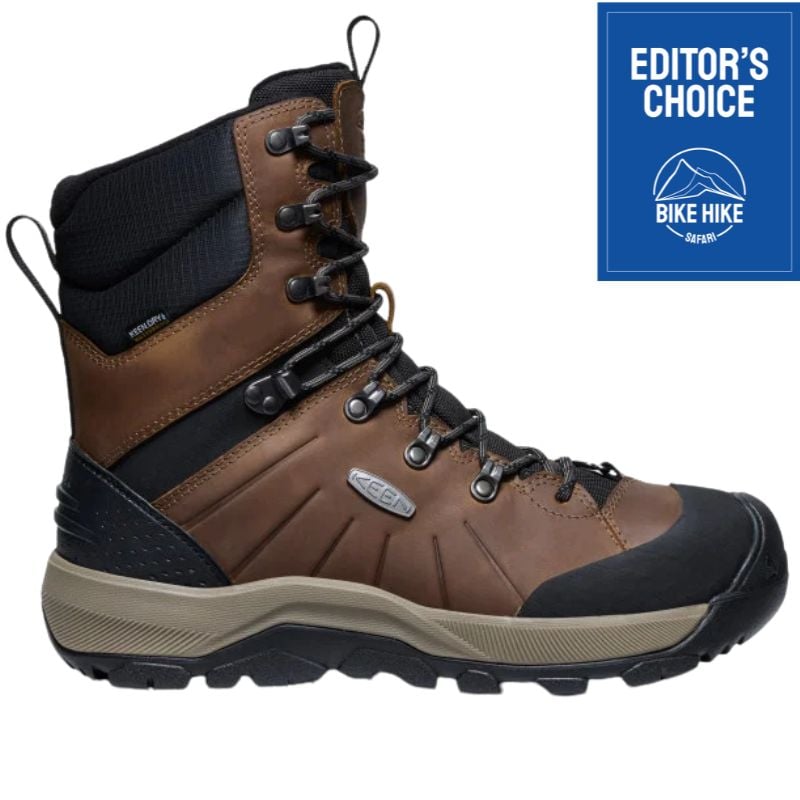
My overall pick is the Keen Revel IV High Polar, and it earns the spot because it is the rare winter boot that ticks nearly every box without being the best in any one area. It pairs a 100% waterproof full-grain leather upper with a breathable membrane, so your feet stay dry without turning into an oven, and 400g of insulation carries a -40°F / -40C rating that is more than enough for anything short of a full arctic expedition.
The standout for me is the fit. Like most Keens it has a genuinely wide toe box, which a surprising number of insulated boots don’t, and that extra room is where the warmth and all-day comfort come from. There’s space for a thick wool sock and blood keeps flowing to your toes. It runs true to size and comes in half sizes from 7 through 15.
Keen uses LWG-certified leather tanned with PFC-free chemicals, plus an Eco Anti-Odor treatment, which are quietly nice touches on a boot you’ll live in all season. The EVA midsole takes some of the sting out of hard-packed snow, and the boot handles microspikes and snowshoes without complaint.
Trade-off: it wants a little break-in, and the tall, warm build is heavier than the ultralight options here. If you want ultralight, the Xero Alpine or Thermo Chill are lighter; if you want one warm, wide, waterproof boot that does most things well, this is it.
Best for: most winter hikers and snowshoers who want a warm, wide, dependable boot for cold hikes.
Compare Prices:
Most Comfortable Winter Hiking Boots
The North Face Vectiv Fastpack Insulated
Pros:
> Comfortable
> 100% waterproof
> Warm lining
> Plenty of cushioning
> All-terrain outsole
Cons:
> Not enough insulation for very cold temps below -20F
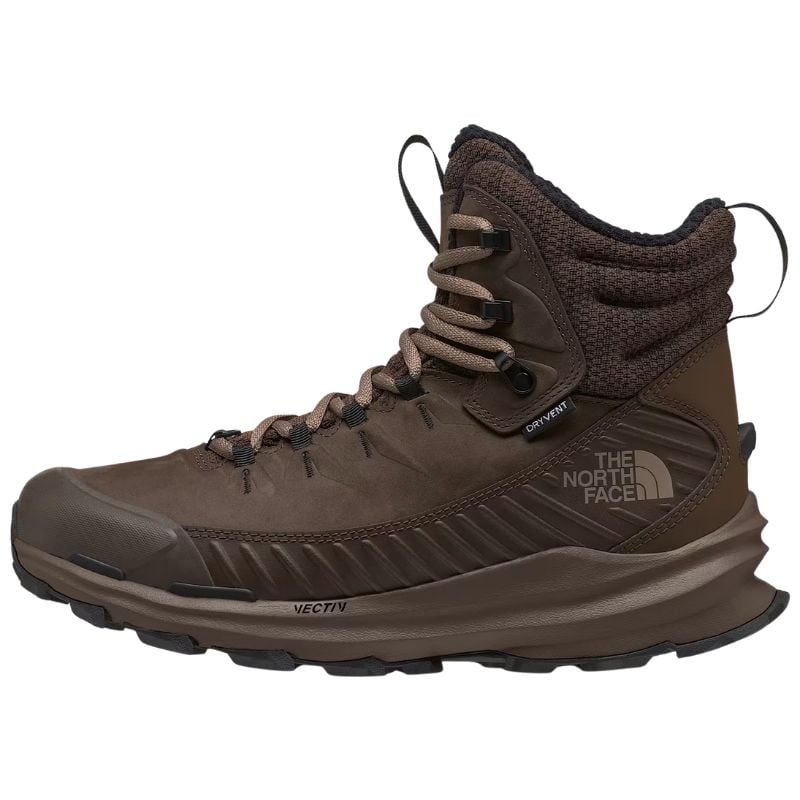
The most comfortable winter boot here is the Vectiv Fastpack Insulated. It borrows its rockered sole and high-rebound EVA midsole from The North Face’s trail-runner line, so it rolls through each stride instead of clomping like a traditional winter boot. That running-shoe DNA, paired with just 200g of insulation, gives it one of the best warmth-to-weight ratios here.
This is a boot built for hikers who keep moving. On long, steady winter days it is warm enough into the single digits while you’re working, but it is the wrong choice for standing still in deep cold or for slow group hikes, the lighter insulation simply can’t hold heat at rest. If your winters involve a lot of sitting or glassing, look at the Oboz Bridger or Baffin instead.
The DryVent membrane and leather upper do a solid job shedding snow and slush, and the 4mm lugs handle packed trails and mixed surfaces well, though they are not as aggressive in loose, sugary snow. The low-mid shaft is the one real limitation: in deep post-holing it can let snow in at the ankle, so add gaiters or go taller.
Trade-off: speed, comfort, and low weight versus warmth when stationary and deep-snow protection.
Best for: backpackers and day hikers who cover ground and want a boot that feels like a shoe.
Compare Prices:
Best Ultralight Winter Boots
Xero Shoes Alpine Snow Boot
Pros:
> Ultralight
> 100% waterproof
> Warm insulation lining
> Great warranty
> All-terrain outsole
Cons:
> The minimalist feel is not for everyone, they can take some ime to get used to
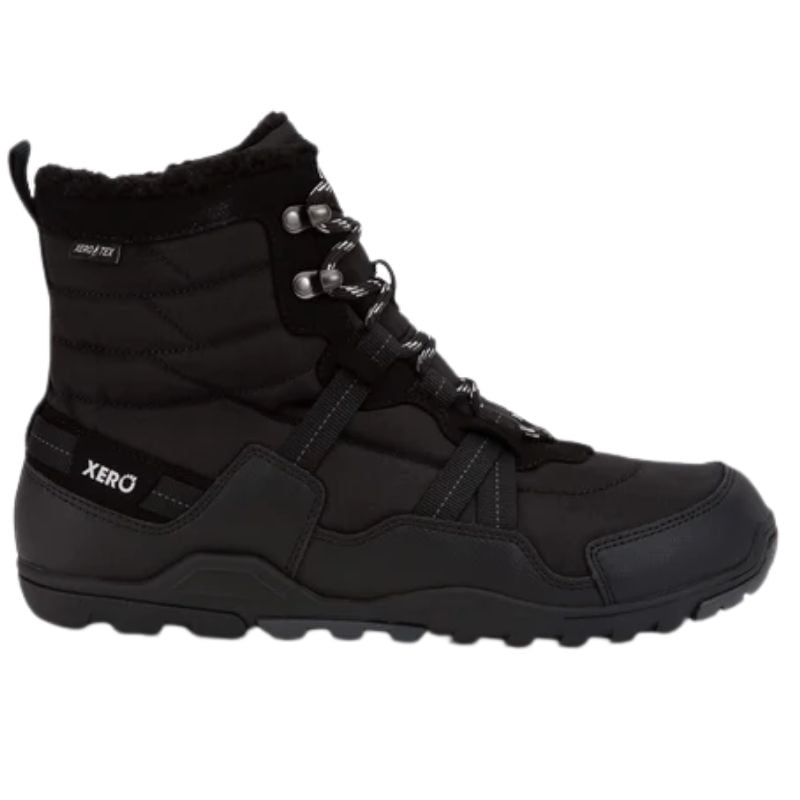
For ultralight and minimalist hikers, the Xero Shoes Alpine Snow Boot is the winter boot that finally doesn’t feel like a punishment. It is the lightest option on this page at well under two pounds for the pair, built on Xero’s zero-drop, wide-toe-box last, so it wears like a sturdy winter version of your trail runners rather than a traditional clunky boot.
That minimalist design is the whole point of these boots but also the issue. You get a thinner, more flexible sole that lets you feel the ground, a removable insole so you can tune the fit and stack, and 200g of insulation plus a seam-sealed inner bootie that keeps you warm and dry into the low 20s°F while you’re moving. The wide fit also leaves an easy home for thick socks.
The downside is real: less structure and less cushion means sore, tired feet if you jump straight from a burly boot, and they aren’t as stiff as a Sorel or Chilkat. Build your mileage up gradually and treat it as a specialist winter shoe rather than a deep-snow workhorse. If you wear minimalist shoes the rest of the year, though, this is the winter boot for you.
Xero’s warranty is worth a mention too: 24 months for defects and a discounted sole replacement if you wear them down — more generous than almost anyone else here.
Trade-off: featherweight, zero-drop comfort versus less structure, cushion, and deep-snow protection.
Best for: thru-hikers, fastpackers, and minimalist runners who want a winter boot that feels like their trail shoes.
Compare Prices:
Best Winter Boots for Wide Feet
Oboz Bridger 8″ Insulated
Pros:
> Reasonably priced
> 100% waterproof
> Comfortable
> Plenty of cushioning
Cons:
> If you don’t have wide feet they can feel a bit slopy for some people
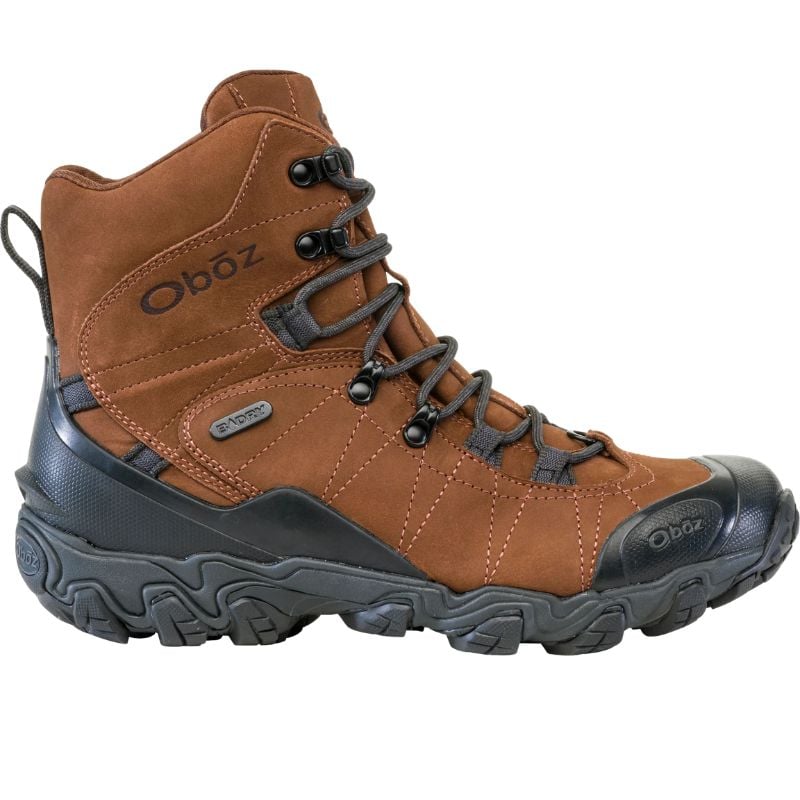
If Keen’s toe box still feels snug or you consistently size up for thick winter socks, the Oboz Bridger 8″ Insulated is the boot to try. It has one of the widest, most accommodating fits of any insulated winter hiker, and it is genuinely warm, the kind of warm that keeps your toes moving in sub-zero conditions rather than just taking the edge off.
The Bridger earns its keep on snowshoes. The stiff-ish platform and B-DRY waterproof leather stand up to the compression of snowshoe straps and traction devices without pinching, which is where lighter, softer boots fall apart. Traction on packed snow and ice is reliable, and the built-in heel tab helps keep snowshoe straps seated.
The cost of all that warmth and support is weight and a break-in period. The stiff leather around the ankle takes a few outings to soften, and the boot is heavier than the Vectiv or Thermo Chill. It is overkill for mild shoulder-season walks.
Trade-off: warmth, width, and snowshoe support versus weight and break-in.
Best for: wide-footed hikers, snowshoers, and anyone who runs cold in real winter conditions.
Compare Prices:
Best Warmth-to-Weight / Lightweight
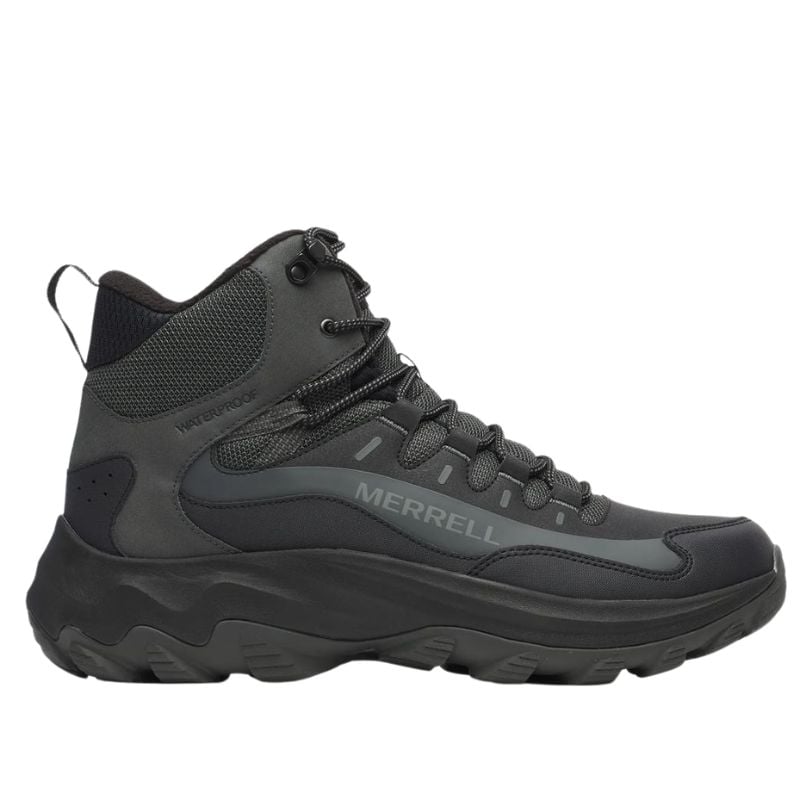
Merrell Thermo Chill 2 Mid
Pros:
> Reasonably priced
> 100% waterproof
> Breathable
> Lightweight
Cons:
> Not as much insulation and warmth as some other boots in this review
The Thermo Chill has always been the budget lightweight of the winter category, and the current “2 Mid” version keeps that formula. It is essentially a standard hiking boot with 200g of insulation bolted on, which is exactly why it works: it breathes better than the 400g boots and barely weighs more than a three-season hiker, so your legs don’t tire out.
That light insulation is good when move a few degrees below freezing, that is where the Thermo Chill 2 Mid is comfortable and surprisingly warm. Stop for long or drop toward zero and your toes will feel it, this is an active-use boot, not a standing-around boot. The mid-height shaft also means deep snow can get in without gaiters.
The roomy toe box is a genuine plus, leaving space for a heavyweight sock, and the lower half of the boot sheds moisture well. For the price, it is one of the best value winter boots you can buy, provided you understand its limits.
Trade-off: low weight and breathability versus warmth at rest and deep-snow protection.
Best for: fast-and-light hikers and snowshoers on a budget who keep moving.
Compare Prices:
Premium Winter Hiking Boots
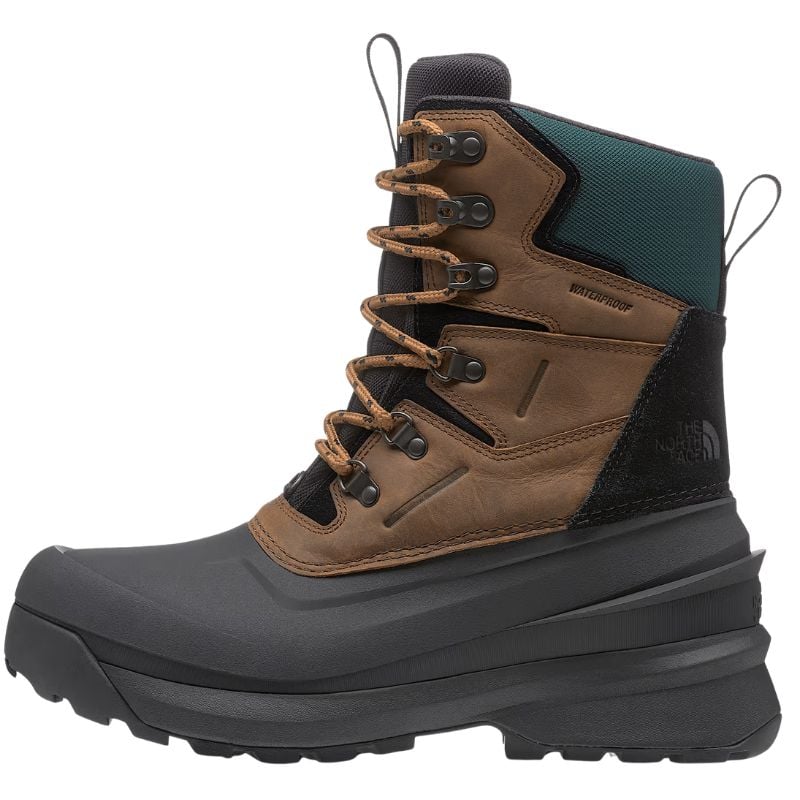
The North Face Chilkat V 400 Boots
Pros:
> Comes from a top brand
> Water-repellent surface
> Breathable textile fabric
> Recycled insulated lining
> Winterized rubber outsole
> There are half sizes available
Cons:
> Premium product at a premium price
The Chilkat V 400 is the dependable all-rounder of the winter category. It pairs a full-grain leather upper with a molded TPU shell and 400g of recycled Heatseeker Eco insulation, which adds up to a boot that is waterproof, warm, and tough in a way the lighter options are not.
That 400g of insulation is the headline. It is genuinely warm in sustained cold and comfortable for shoveling, short hikes, and standing around in ways a 200g boot never is, but it is also overkill on mild days and can feel too warm if you’re active. The TPU shell and the boot’s overall bulk make it stiffer and less nimble than the Vectiv or Thermo Chill, so it is not my first choice for fast, long trail days.
D-ring gaiter attachments and a heel clip for snowshoe or traction-device straps are nice practical touches, and the multi-directional tread grips well on packed snow and ice. For a premium, everything-in-one boot that can go from the driveway to the trail, it is hard to fault.
Trade-off: premium warmth, protection, and durability versus bulk, weight, and breathability.
Best for: short-to-medium winter hikes and all-around cold-weather use where warmth matters more than speed.
Compare Prices:
Best Winter Expedition Hiking Boot
Baffin Snow Monster Boots

Pros:
> Excellent customer ratings
> Advanced & effective insulation
> They’re a full 11 inches from the arch
> Bungee-cord speed lacing system
Cons:
> No half sizes available
> Premium product at a premium price.
For true arctic cold, nothing else on this page comes close to the Baffin Snow Monster. Rated to -94°F, it uses a sole made with advanced thermo-set polymers that balance warmth, grip, and protection, and the insulation runs the full 11-inch height of the boot. This is the boot you take on expedition trips or into deep, frigid snow where a 400g hiker would leave you limping.
The molded sole-and-midsole construction is a durability win, and the bungee-cord speed lacing is easy to use with heavy gloves on. It is, predictably, heavy and bulky at over six pounds for the pair. With no half sizes, so fit is less forgiving but an extra layer of winter hiking socks can fix that. It is also a premium-priced specialist.
This is not a boot for covering long miles. It is a boot for staying warm when the cold is the thing trying to kill you.
Trade-off: extreme warmth and protection versus weight, bulk, and breathability.
Best for: arctic expeditions, standing around in deep cold, and below-zero conditions.
Compare Prices:
Best Budget Winter Hiking Boot
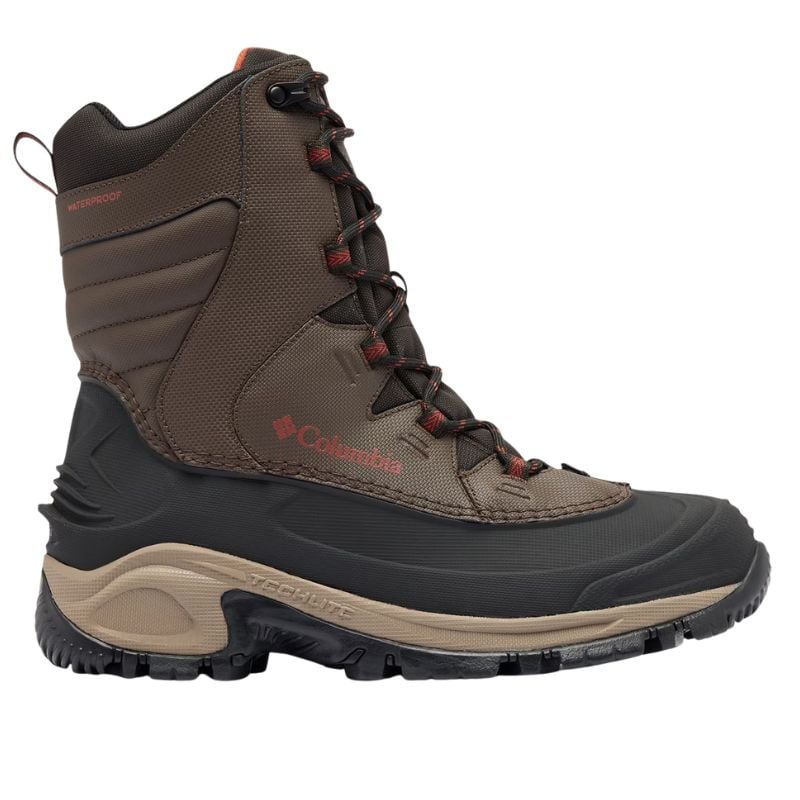
Columbia Bugaboot III
Pros:
> Reasonably priced at under $130
> Looks particularly smart & sleek
> Good traction
> 200 grams of insulation
Cons:
> Not as warm or premium quality as some of the other snow boots in this review
The Bugaboot has been the default “first winter boot” for budget-minded hikers for years, and the third version carries that on. For less than most of the boots here, you get 200g of insulation, an Omni-Tech waterproof build, and a sturdy Omni-Grip outsole that handles slushy trails and snow-covered sidewalks without complaint.
That 200g of insulation hits a sweet spot for milder winters and for people who want a boot they can wear inside without roasting. But it is not a deep-cold boot for sustained sub-zero use or a lot of standing around will leave your feet cold. The boot is also heavier than a dedicated hiker like the Thermo Chill, which cuts into its appeal for long trail days.
The leather upper is comfortable out of the box but benefits from a short break-in, and the higher collar can feel tight on the lower leg for some. Still, as a capable, affordable all-rounder that you can often find on sale, the Bugaboot III is an easy recommendation for casual winter hikes and everyday snow duty.
Trade-off: low price and solid waterproofing versus weight and limited deep-cold performance.
Best for: budget hikers, mild-to-moderate winters, and everyday snow use.
Compare Prices:
Best Winter Boot for Deep Cold
Salomon Toundra Pro CSWP Snow Boots

Pros:
> Well loved by owners
> Has a very reasonable price tag
> Looks particularly smart & sleek
> Waterproof and keeps moisture out
> Features deep lugs on for traction
> They have 200 grams of insulation
Cons:
> Only available in black (but they look stunning)
If your winter involves genuinely deep cold and you want more warmth than a 400g hiker without stepping up to a bulky arctic boot, the Salomon Toundra Pro CSWP is the boot to look at. Its party trick is the insulation: it uses Aerotherm, an aerogel material developed from NASA technology that traps heat while staying thinner and lighter than traditional insulation, which is why this is the warmest boot in the Toundra range.
The warmth is the headline, but it is not the only thing going on. The polyurethane-coated leather upper is fully waterproof thanks to Salomon’s ClimaSalomon membrane, and the aggressive Winter Contagrip outsole bites into snow and ice where ordinary lugs slip. A two-year warranty is a welcome sign that Salomon stands behind this one.
When I tried them on I found them to be true to size, and I was very impressed with their performance when I used them in snow.
The trade-off is the build and the use case. This is not a light or fast boot, it is built for warmth first. It is happiest in dry, very cold conditions rather than slushy, above-freezing slop, where the thick insulation can start to feel swampy. If your winters hover around freezing, you are better served by a 200g boot like the Thermo Chill 2 Mid; if you are out in sustained sub-zero cold, this is where it earns its keep.
Trade-off: excellent warmth for the weight from aerogel versus a heavier, cold-weather-specific build that is overkill in mild winters.
Best for: hikers and winter photographers who spend long, slow hours in very cold, dry conditions and want serious warmth without an arctic expedition boot.
Compare Prices:
Best Winter Boots for town
Sorel Caribou

Pros:
> Removeable felt liner
> Reasonable price
> Waterproof
Cons:
> Not the best for extreme temperatures
The Sorel Caribou is a winter classic that has hardly changed in decades, and for good reason. The thick 9mm felt liner and waterproof nubuck-and-rubber build make it one of the warmest boots here for standing or slow walking in genuine cold, and the removable liner means it dries overnight and can be replaced when it eventually packs out.
That warmth comes with real heft and bulk, though. At around five pounds a pair and with a loose, casual fit, the Caribou is not built for long trail miles or technical hiking, it feels clunky the moment the terrain gets demanding. It also is not the boot for extreme sub-arctic cold, where the Baffin takes over.
What it is, and always has been, is a dependable boot for deep snow, shoveling, dog walks, and around-town winter use that will last many seasons. If you want one warm boot to live in all winter around town, this is it.
Trade-off: timeless warmth and durability versus weight and a loose, non-technical fit.
Best for: deep cold around town, outdoor chores, and short winter walks.
Compare Prices:

Winter Hiking Boots Buyers Guide
Winter Hiking Boots Buyers Guide
Winter boots are more specialized than three-season hiking boots, so getting this choice right matters. Below is everything I look at when picking the best boot for a given trip.
Warmth vs. Weight
The single most important decision is how much insulation you actually need, because warmth and weight are always trading against each other. A 200-gram (200g) worth of insulation boot is comfortable down to roughly 10°F to 20°F while you’re moving, and it feels close to a normal hiking boot underfoot. A 400-gram boot pushes comfortable use down toward -10°F to -20°F but weighs noticeably more and will feel like an anchor on long days. My rule of thumb: if you’re moving most of the day on a thru-hike, 200g of insulation is plenty; if you’ll be standing around, hiking slowly with a group, or out in genuine sub-zero cold, step up to 400g. Remember that a warm boot you never want to put on because it’s heavy is worse than a slightly lighter boot that trades a little warmth for a lot of miles.
Insulation
Modern boots mostly use synthetic insulation like Primaloft, Thinsulate, Heatseeker, or Freeze Guard, which all perform similarly in real terms. Pay less attention to the brand name and more to the gram weight. Synthetic insulation has one big advantage for winter: it keeps insulating even when wet, which down does not. A few boots use removable felt or wool liners instead (the Sorel Caribou is the classic example), and these stay warm even when damp and can be pulled out to dry overnight — a real benefit on multi-day winter trips.
Waterproofing and Water Resistance
In winter, a waterproof membrane is not optional. Wet feet are cold feet, and cold feet end trips. Look for a boot with a membrane or seam-sealed construction (Gore-Tex, DryVent, B-DRY, Omni-Tech, and similar all work). But a membrane only helps if snow and slush can’t come in over the top, so pay attention to shaft height and whether the tongue is gusseted. For deep snow, a taller boot or a pair of waterproof gaiters makes more difference to keeping your feet dry than any membrane. Keep in mind that winter boots are also used in conditions where sweat freezes before it can escape through the membrane, so breathability claims should be taken with a grain of salt — a dedicated winter boot will never breathe as well as a regular summer hiker.
Shaft Height and Deep Snow
Boot height is quietly one of the most important choices. Mid-height boots (5–7 inches) are lighter and more flexible but let snow in when you post-hole; tall boots (8–15 inches) keep snow out but restrict ankle movement and add weight. As a general rule, your boot should be taller than the snow you expect to walk through. If most of your winter is on packed trails, a mid boot with gaiters is fine; if you’re breaking trail in deep powder, go tall.
Traction and Traction Devices
Winter outsoles use softer rubber compounds that stay flexible in the cold, plus deeper, more widely spaced lugs to shed snow. Vibram’s Arctic Grip is the standout compound for wet ice that you’ll see it on several boots here. But no sole grips a sheet of glare ice reliably, which is why a pair of microspikes is the most important winter traction accessory you can own. Check that your boot’s sole actually fits inside your microspikes and snowshoes before you buy — chunky, wide soles (especially on maximally cushioned boots) often don’t. This is a common, expensive mistake.
Fit, Sizing, and Socks
Winter boots need more room than your summer boots. You’ll be wearing thicker wool hiking socks, and a boot that’s too snug restricts blood flow, which is exactly how you get cold toes. My own rule from years on the trail: I wear a full size up from my normal hiking boot in winter, and sometimes a size and a half when I’m layering a liner sock under a thick midweight wool sock. If you know you’ll wear heavyweight socks, size up at least half to a full size. Try boots on with the socks you’ll actually use, and wear them around the house for a couple of days before committing — most winter boots need little break-in, but fit problems are the number-one cause of blisters and cold feet.
Weight vs. Warmth, One Last Time
It is worth restating because it drives everything else: a heavier boot tires your legs exactly like ankle weights, and tired legs are dangerous in winter when daylight is short and energy is precious. Buy the lightest boot that is warm enough for your conditions, not the warmest boot you can find. The Vectiv Fastpack and Thermo Chill 2 exist precisely because most winter hikers don’t need 400g of insulation — they need to keep moving.
Price and Value
Good insulated winter boots start around $100–$150 and run up past $250 for premium and expedition models ($300+ for specialist arctic boots like the Baffin). The good news is that winter boots last for many seasons — snow doesn’t wear soles the way rock does — so this is a place where spending a little more upfront pays off over years of use. The best value is usually a 200g boot in the $150 range (the Thermo Chill 2 Mid and Bugaboot III), not the cheapest thing on the shelf, which will leak or fall apart within a season.
Conclusion
Best Winter Boots for Hiking in 2026 are:
- Best Overall: Keen Revel IV High Polar
- Most Comfortable Winter Boots: The North Face Vectiv Fastpack Insulated
- Best Ultralight: Xero Shoes Alpine Snow Boot
- Best Winter Boots for Wide Feet: Oboz Bridger 8″ Insulated
- Best Warmth-to-Weight / Lightweight: Merrell Thermo Chill 2 Mid
- Best Premium: The North Face Chilkat V 400
- Best for Extreme Cold: Baffin Snow Monster Boots
- Best Budget: Columbia Bugaboot III
- Best Traction on Ice & Slush: Salomon Crosstrak Powder
- Best Light Hike and Around Town: Sorel Caribou
Follow along on Social Media
Frequently Asked Questions
What are the best boots for hiking in the winter?
For most winter hiking, my overall pick is the Keen Revel IV High Polar — warm, 100% waterproof, and wide enough for thick socks — while The North Face Vectiv Fastpack Insulated is the most comfortable for long miles and the Merrell Thermo Chill 2 Mid is the lightest insulated option. If you want a truly ultralight minimalist boot, the Xero Shoes Alpine Snow Boot is the pick, and for genuine arctic conditions the Baffin Snow Monster is in a class of its own. Match the insulation weight to whether you’ll be moving or standing still.
How Tall Should Winter Hiking Boots Be?
Your boots should be taller than the snow you expect to walk through, plus a little extra. On packed trails a mid-height (5–7 inch) boot is fine, but for deep powder or post-holing you want a tall boot (8–15 inches) or a mid boot paired with waterproof gaiters.
How much insulation do I actually need in winter boots?
As a general guideline, 200g of insulation in a boot is comfortable down to about 10°F–20°F while you’re active, and 400g of insulation is good to about -10°F to -20°F. If you run cold, hike slowly, or stand around a lot, step up a weight class; if you move fast and stay active, 200g is usually plenty.
Are insulated winter boots worth it, or can I use regular hiking boots?
Insulated boots are worth it the moment temperatures drop below freezing for extended periods. Regular waterproof hiking boots with thick wool socks can work for short, active winter jaunts, but they lack the insulation to protect your toes when you slow down or stop, which is when frostbite happens. For serious winter trips, buy a dedicated insulated boot.
Do I need microspikes or other traction devices with winter boots?
Yes, in some cases. Even the best winter outsole (including Vibram Arctic Grip) won’t grip a sheet of ice, so a pair of microspikes is the single most important winter traction upgrade. Just confirm your boot’s sole fits inside your microspikes and snowshoes before you buy.
How should winter boots fit compared to normal boots?
Size up. Winter boots need room for thicker wool socks and to avoid restricting blood flow, which causes cold feet. A half to a full size larger than your normal hiking boot is a good starting point, and always try them on with the socks you’ll actually wear.

BikeHikeSafari Gear Review Process
The author, Brad McCartney from BikeHikeSafari is a small independent adventurer and outdoor gear tester who owns and runs BikeHikeSafari.com.
BikeHikeSafari is not part of a large blog network and is proudly independent. All reviews on this site are independent and honest gear reviews of outdoor products by the author.
The author, Brad McCartney is a very experienced triple crown thru-hiker, adventurer, and bike tourer having spent 1000s of nights sleeping in a tent and sleeping bag (Read more). He was a manager of an outdoor retail store and is very experienced in what is important when using and testing gear for reviews like this.
BikeHikeSafari will never receive any money for reviews and they do not accept sponsored reviews on this website. All the comments about the gear reviews are from the author based on his years of experience. Hope this independent review was helpful for you.

