
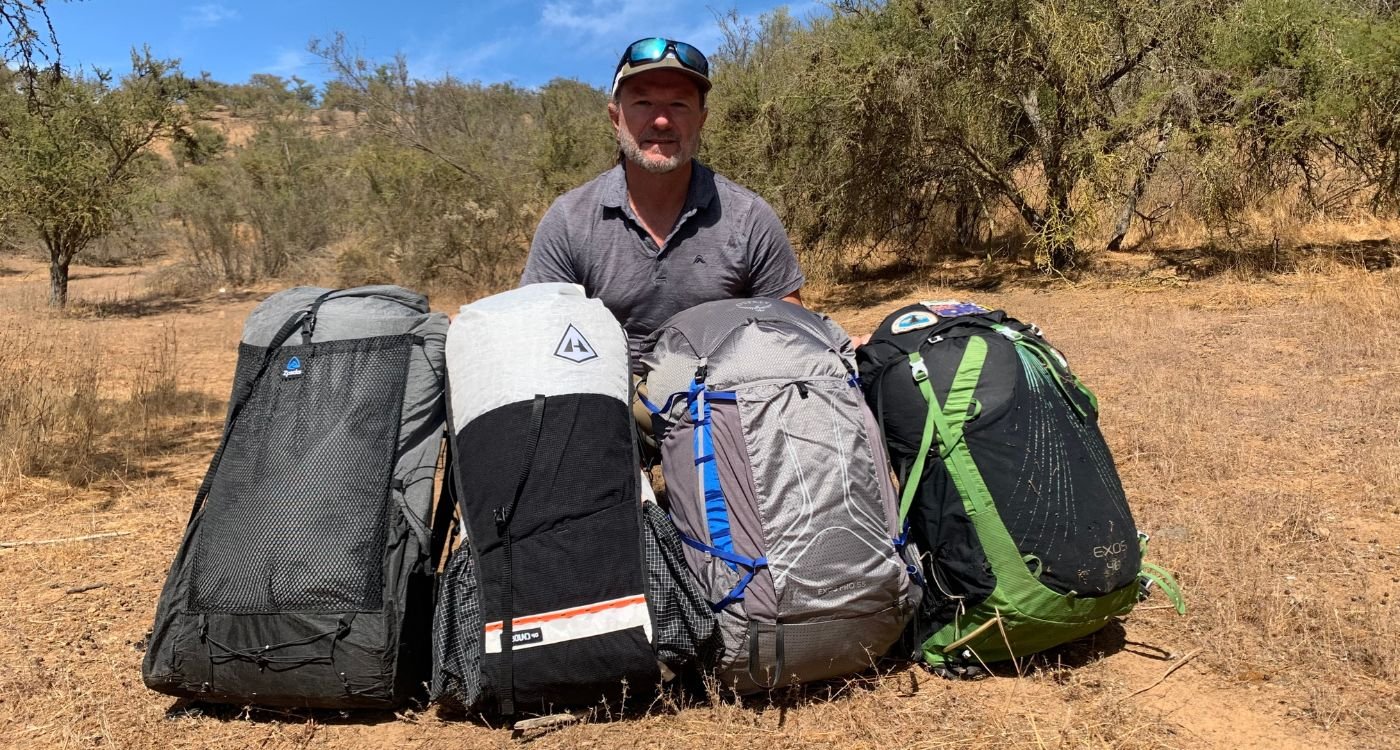
On long water carries in the desert and bear canister sections in the Sierra, a backpack that saves weight but carries badly will punish you by lunchtime. This guide is for thru-hikers and ultralight backpackers looking for the best ultralight backpacks for backpacking and long trails in 2026, with enough comfort for real food and water carries rather than just weekend base weights. The main trade-off is simple: the lighter the pack, the more disciplined you need to be with total pack weight, capacity, and durability.
I’ve used and tested lightweight packs across thousands of miles, including Triple Crown hikes on the PCT, CDT, and Appalachian Trail, and I’ve also tested newer models in heat, rain, and local conditions. My current top pick is the Zpacks Arc Haul Ultra, with the Hyperlite Mountain Gear Unbound 40L as the best waterproof minimalist option. See the Quick Picks if you want the short version.
Quick Picks: Best Ultralight Backpacks
Best overall: Zpacks Arc Haul Ultra – This is the lightest full-featured pick that still has a frame, waterproof Ultra fabric, good side pockets, and long-term BikeHikeSafari testing behind it. I’d choose it for experienced thru-hikers who want low weight without going fully frameless.
Best waterproof ultralight backpack: Hyperlite Mountain Gear Unbound 40L – The Unbound 40L keeps the simple waterproof Dyneema setup of classic HMG packs but adds better external storage and more thru-hiker friendly pockets. It is best once your sleep system and shelter are already compact.
Most comfortable lightweight backpack: Osprey Exos Pro 55L – The Exos Pro carries better than most true ultralight packs when food and water weight climbs, and the ventilated frame is a real advantage in hot conditions. It is not waterproof, so use a liner or pack cover.
Best proven thru-hiking backpack: Hyperlite Mountain Gear Southwest – The Southwest is still a strong option for hikers who want a simple, durable, weather-resistant pack with solid external pockets. I prefer it over the Windrider where snagging mesh is a concern.
Best large capacity ultralight backpack: Gossamer Gear Mariposa 60 – The Mariposa is not the lightest, but it remains comfortable with heavy loads and has excellent pocket organization and enough volume for longer food carries.
Best Backpack for Desert Thru Hiking: Hyperlite Mountain Gear Windrider – The HMG Windrider is the ultralight backpack you pick if hiking the Arizona Trail or other dry weather trail. The mesh pockets are a good option for storing gear to ventilate or stay dry.
Best budget ultralight backpack: Durston Kakwa 55 Review – The Kakwa is a full featured ultralight backpack with a choice of pro fabrics like Ultra 200X or the better budget option of Ultragrid. Either choice makes choice.
How We Tested
The ultralight backpacks in this guide are researched and, where possible, field-tested by an experienced long-distance hiker and former outdoor store manager. Across thru-hikes, shoulder-season trips, desert water carries, bear canister sections, and backpacking expeditions, I judge ultralight backpacks on comfort per gram, load transfer, usable capacity, weather resistance, pocket access, durability, fit, and value for serious backpacking.
Some of the Backpacks were purchased by the author, and some were supplied by the manufacturer. For more on how we research and review gear, see the Review Policy for further details.
Ultralight Backpack Comparison Table
| Brand | Weight | Material | Capacity |
|---|---|---|---|
| Zpacks Arc Haul Ultra | 1 lb. 5.4 oz | Ultra 100X | 40L, 50L, 60L, 70L |
| Hyperlite Mountain Gear Unbound | 1 lb. 14.1 oz | Dyneema Composite Hybrid | 40L, 55L |
| Osprey Exos Pro | 2 lb. 1.2 oz | 100 Denier Nylon Ripstop | 55L |
| Hyperlite Mountain Gear Southwest | 1 lb. 14 oz | Dyneema Composite Hybrid | 40L, 55L, 70L |
| Gossamer Gear Mariposa | 2 lb. 2.2 oz | Robic Nylon | 60L |
| Hyperlite Mountain Gear Windrider | 1 lb. 14 oz | Dyneema Composite Hybrid | 40L, 55L, 70L |
| Durston Kakwa 55 Review | 1 lb. 13.8 oz | Ultra 200X or Ultragrid | 40L, 55L |
| Osprey Exos | 2 lb. 12 oz | 100 Denier Nylon Ripstop | 48L, 58L |
| Gossamer Gear Kumo | 1 lb. 2 oz | Robic Nylon | 36L |
| ULA Circuit | 2 lb. 6.5 oz | Robic Nylon, or Ultra 200X | 68L |
| ULA CDT | 1 lb. 11.1 oz | Robic Nylon, or Ultra 200X | 54L |
| Mountain Laurel Designs Burn | 1 lb | Ultra 100X | 38L |
| Pa’lante V2 | 1 lb. 1.6 oz | Ultra 200 | 40L |
Follow along on Social Media
Best Ultralight Backpack – Overall
Zpacks Arc Haul Ultra

Weight: 1 lb. 5.4 oz / 606 grams (50L Medium)
Frame: Carbon fiber frame with tensioned mesh back panel
Material: Ultra 100X fabric
Capacity: 40L, 50L, 60L, 70L
Pros:
> Ultralight
> Good weight carrying capacity of up to 40 lb
> Waterproof and seam sealed
> More durable than other ultralight packs
> Good range of sizes from 40L to 70L and in unisex and women’s sizes
Cons:
> Not Cheap
> Not so comfortable when loaded with more than 40 lbs
After more than 2 years of long-term testing, the Zpacks Arc Haul Ultra remains my top pick for ultralight thru-hiking and backpacking. It weighs just 1 lb. 5.4 oz for the 50L version and uses Ultra 100X fabric, which gives it a strong weight, durability, and weather protection balance for long-distance hiking
The frame transfers weight well to the hips, and I find it comfortable up to about 30 lb / 13 kg. Beyond 40 lb / 18 kg, the carbon frame starts to flex and the comfort drops, so the Osprey Exos Pro, Osprey Exos, and Gossamer Gear Mariposa are better choices if you often carry heavy food or water loads.
In rain testing, my gear stayed dry, and the seam sealing is visible inside the pack. The main compartment is large and waterproof with visible seam sealing to prevent water ingress. It will fit a bear canister when hiking in bear country, and the larger 70L version will fit the canister horizontally to ensure plenty of room for other gear. I was able to fit 3L water bottles in the side pockets at a squeeze, but they do fit 2 x 2L bottles in each pocket. The generous stretch mesh rear pocket is perfect for airing out wet rain jackets or hiking socks, and for storing items you want quick access to.
The main trade-off is price and modularity. Hip belt and shoulder strap pockets cost extra, and the rear mesh still needs care, but this is still the pack to beat for experienced hikers who want a framed, waterproof, genuinely ultralight backpack
Best for: Best overall ultralight backpack for experienced thru-hikers
Compare Prices:
Best Waterproof Ultralight Backpack
Hyperlite Mountain Gear Unbound 40L Review

Weight: 1 lb. 14.1 oz / 853.3 grams
Frame: Internal frame with hip belt
Material: Dyneema Composite Hybrid fabric
Capacity: 40L , 55L
Pros:
> Lightweight
> Waterproof
> Good access to side pockets
> Multiple external storage options
> Very Durable
Cons:
> Not the best for anyone who wants to carry a lot of gear
For more than 2 years I have been using and testing the Hyperlite Mountain Gear Unbound 40L on multiple local trails in everything from extreme heat to heavy rain. The main pack is seam-sealed, and I’ve found it keeps gear dry even after extended hikes in heavy rain.
The Unbound 40L is best for hikers who have already trimmed their sleep system, shelter, and spare clothing. The 40L capacity is not forgiving if you still carry bulky gear, but the side pockets, rear mesh pocket, and waterproof hip belt zippered pockets make better use of external storage than many older minimalist packs.
Comfort is best around 25 to 30 lb, and beyond that the lack of load lifters becomes noticeable. The mesh has held up better than expected in my long-term testing, but the Zpacks Arc Haul Ultra has better ventilation and the Osprey packs handle heavier loads more comfortably.
Choose the Unbound 40L if your gear is already compact and you want a simple waterproof pack without unnecessary extras. If you want more room, the 55L version deserves a look.
Best for: Waterproof minimalist backpacking and dialed ultralight kits
Compare Prices:
Most Comfortable Lightweight Backpack
Osprey Exos Pro 55L Review
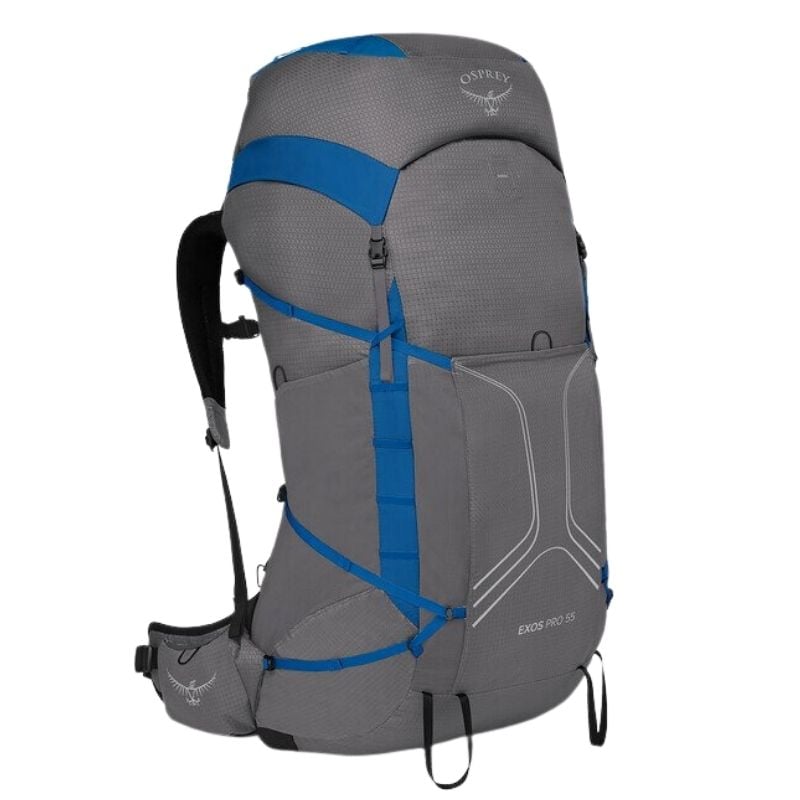
Weight: 2 lb. 1.2 oz / 942 g (S/M size)
Frame: Lightweight ventilated frame
Material: 100 denier nylon ripstop
Capacity: 55L
Pros:
> Lightweight
> Large capacity 55L
> Great for thru-hiking
> Large side pockets
> Bearvault 500 fits horizontally which makes this perfectly suited to places such as the JMT and PCT.
Cons:
> Not waterproof, it needs a pack cover or internal pack liner
> The removable lid is only extra weight and not that functional for most ultralight hikers
For almost 2 years, I’ve been using and testing the Osprey Exos Pro 55L on a range of trails in all kinds of weather, from hot summer days to drizzly rainy days. The Osprey Exos Pro 55L is the most comfortable lightweight backpack on the page for hikers who still need real load-carrying ability. The frame, harness, hip belt, adjustable torso, load lifters, and ventilated back panel work together better than most cottage ultralight packs when the load gets heavier.
The side pockets are among the best I’ve used, with room for large water storage. The BearVault 500 fits in the main compartment which makes it useful for the JMT and PCT. The main drawback is weather protection, because this pack is only water resistant and needs a waterproof backpack cover or internal pack liner in sustained rain.
This is the pack for hikers who are moving lighter but still prioritize comfort, airflow, and mainstream fit adjustment. True gram counters will choose the Zpacks Arc Haul Ultra, HMG Unbound, or MLD Burn instead.
Best for: Comfort, ventilation, and heavier carries.
Compare Prices:
Best Proven Thru Hiking Backpack
Hyperlite Mountain Gear Southwest Review

Weight:
2400 40 liter – 1 lb. 14 oz / 850 grams
Frame: Two aluminum stays with foam back panel
Material: Dyneema Composite Hybrid fabric
Capacity: 40L, 55L, 70L
Pros:
> Very lightweight & waterproof backpack
> Strong and durable. Able to last multiple long-distance thru-hikes
> Comfortable
> Popular with ultralight backpackers
> Great external pockets, and storage for water bottles
Cons:
> Not Cheap
The Hyperlite Mountain Gear Southwest remains one of the most proven ultralight thru-hiking packs because the design is simple, durable, and weather resistant. It uses Dyneema Composite Hybrid fabric and comes in 40L, 55L, and 70L sizes, with the 55L version being the most popular.
I prefer the Southwest over the Windrider for rougher hiking because the rear fabric pocket is less likely to snag than mesh. The solid external pockets are useful for water bottles, wet rain gear, snacks, and quick-access items without adding too much fuss.
The pack is comfortable thanks to two aluminum stays and a foam back panel, but it lacks ventilation in hot weather. Compared with newer packs like the HMG Unbound and Zpacks Arc Haul Ultra, the Southwest is less airy and less modern, but often feels tougher and more proven.
Choose the Southwest if you value a no-fuss, durable, weather-resistant pack that has already earned its place on long trails. If you want better airflow or more modular features, look at the Zpacks Arc Haul Ultra, Osprey Exos Pro, or ULA options instead.
Best for: Proven, durable, weather-resistant thru-hiking.
Compare Prices:
Best Large Capacity Lightweight Backpack
Gossamer Gear Mariposa Review

Weight: 2 lb. 2.2 oz / 970 grams
Frame: Internal frame with removable foam back panel
Material: Robic nylon
Capacity: 60L
Pros:
> Great for heavy loads
> Lightweight
> Large Capacity 60L Backpack
> Great Side Pockets
> Reasonably Priced
Cons:
> Not as comfortable as some of the other packs in this review
> Heavier than many other lightweight packs
The Gossamer Gear Mariposa is a high-value large capacity ultralight backpack with excellent organization. It is not as light or weatherproof as the Zpacks Arc Haul Ultra or HMG packs, but the 60L capacity and pocket layout make it much easier to live out of on long food carries.
When I tried the Gossamer Gear Mariposa, I found it wasn’t quite as comfortable as the Osprey Exos. Even so, the padded shoulder straps, hip belt, internal frame, and removable foam back panel make it comfortable enough for typical thru-hiking loads.
The Mariposa is best for experienced backpackers and thru-hikers who want capacity, comfort, and smart storage more than the lowest possible weight. Use a pack liner in wet weather and choose a more waterproof pack if rain protection is the main priority.
Best for: Large capacity ultralight backpacking and long food carries.
Compare Prices:
Best Backpack for Desert Thru Hiking
Hyperlite Mountain Gear Windrider Review

Weight: 2400 40 liters 1 lb. 14 oz / 850 grams
Frame: Two aluminum stays with foam back panel
Material: Dyneema Composite Hybrid fabric
Capacity: 40L, 55L, 70L
Pros:
> Lightweight & waterproof
> Strong enough to last multiple long-distance thru-hikes
> Comfortable
> Popular with ultralight backpackers
> Great mesh pockets, external pocket, and storage for water bottles
Cons:
> Not Cheap
The Hyperlite Mountain Gear Windrider is very close to the Southwest, but the big difference is the mesh pocket layout. I prefer the Southwest for durability because its rear fabric pocket is less snag-prone, but the Windrider is better if you want open mesh to air out wet gear.
The Windrider comes in 40L, 55L, and 70L versions, and the 55L version remains the sweet spot for most thru-hikers. The Dyneema Composite Hybrid fabric, roll-top closure, and simple back panel make it a proven long-distance hiking pack.
The shoulder harness is comfortable, but the foam back panel can get sweaty in hot conditions. The mesh pockets are excellent for wet rain jackets, socks, or tents, but they can snag or tear when bushwhacking or scrambling.
Best for: Wet trails where drying gear in mesh pockets matters.
Compare Prices:
Best Budget Ultralight Backpack
Durston Kakwa 55 Review
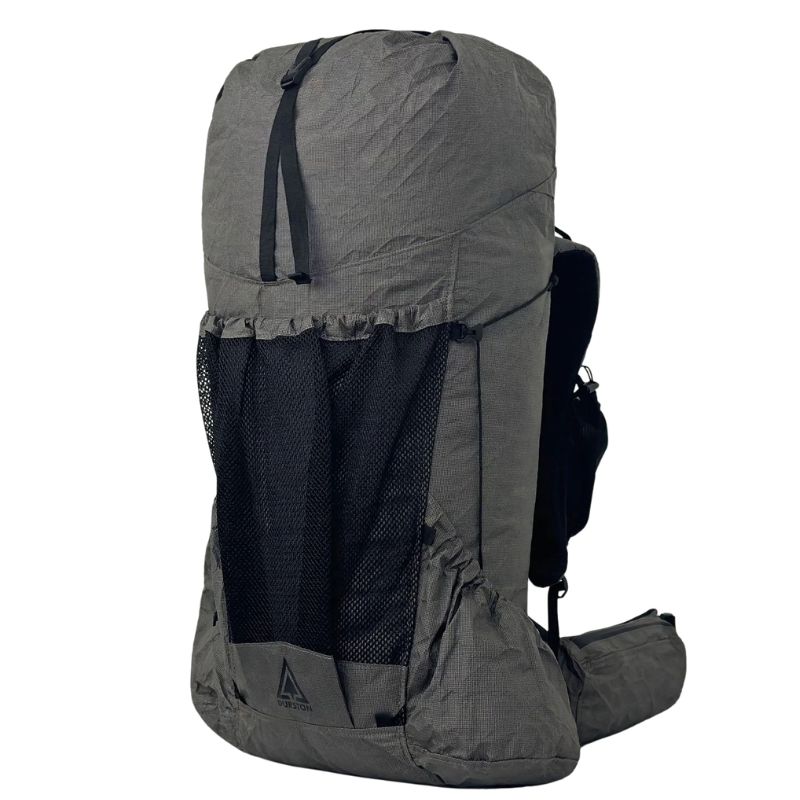
Weight: 1 lb. 13.8 oz / 844 grams
Frame: Framed ultralight pack
Material: Ultra 200X or UltraGrid
Capacity: 40L, 55L
Pros:
> Lightweight
> Reasonable Price
> Durable
Cons:
> Price
> Not as light as some other ultralight packs
On paper, the Kakwa sits in the sweet spot for many hikers: light enough to count as ultralight, structured enough to carry more than a frameless pack, and priced lower than many DCF or Ultra cottage packs. That makes it especially useful for readers who want to go lighter without paying Zpacks or Hyperlite prices.
It is offered with a choice of Ultra 200X fabric or Ultragrid which is the budget option and reason this is rated as the best budget ultralight backpack. The Ultra 200X is better quality and more durable but comes at a higher price which makes other higher priced option like Zpacks or HMG a better option with lighter weight.
The Durston Kakwa has some great features like the zippered hip belt pockets and room for a hydration pack and a great option for lightweight backpackers.
Best for: Budget ultralight backpacking and value-focused thru-hikers.
Compare Prices:
Best No Frills Lightweight Backpack
Osprey Exos Review

Weight:
48 liters – 2 lb. 12 oz / 1255 grams
58 liters – 2 lb. 14 oz / 1288 grams
Frame: Ventilated tensioned mesh frame
Material: 100 denier nylon ripstop
Capacity: 48L, 58L
Pros:
> Lifetime guarantee – if the pack breaks, they fix or replace it
> The mesh harness allows air circulation around the back.
> One of the most comfortable backpacks for carrying heavier loads
Cons:
> Heaviest of all the packs listed.
> Mesh pockets on the side and rear of the packs are prone to rips and tears.
I’ve used the Osprey Exos and Exos Pro on all of my Triple Crown hikes, logging thousands of miles on the PCT, CDT, and Appalachian Trail. That single sentence should stay close to the top of this review because it is stronger than most competitor credibility signals for this model.
The Exos is heavier than true ultralight cottage packs, but it is much more comfortable and ventilated for moderate to heavy loads. The hip belt, shoulder straps, adjustable torso, load lifters, and tensioned mesh back panel make it a good long-distance option for hikers who still want comfort and airflow.
The 58L version works well with a bear canister in the Sierra, and the 48L version suits more compact setups. I usually leave the removable top lid behind to save weight, and I prefer strapping trekking poles to the side with compression straps rather than using the dedicated trekking pole attachment.
The main drawbacks are weight, weather protection, and mesh durability. I did rip the mesh during thru-hikes, so hikers who bushwhack or scramble should be realistic, but the Osprey warranty remains a major advantage.
Best for: Comfort, ventilation, value, and hikers moving lighter.
Compare Prices:
Best Small Capacity Ultralight Backpack
Gossamer Gear Kumo Review

Weight: 1 lb. 2 oz / 525 grams
Frame: Frameless with removable pad support
Material: Robic nylon
Capacity: 36L
Pros:
> Extremely lightweight packs
> Great value for money
> Long wear life
Cons:
> Not comfortable with heavy loads
> 36 liters is small for most hikers
> Only for ultra-light hikers who have their lightweight gear dialed in
The Gossamer Gear Kumo is for hikers who already have a compact shelter, quilt, and sleep system. At 36L, it is too small for most backpackers, but it makes sense for experienced ultralight hikers who do not need extra volume.
Onna “Onnamove” Voellmer used the Kumo 36L on the Pacific Crest Trail, Continental Divide Trail, and Arizona Trail. She regards it as a lightweight backpack for thru-hiking and peak bagging, and she reports that the shoulder straps are comfortable around 20 lb / 9 kg and sometimes loaded to 25 lb / 11 kg after a large resupply.
The side pockets and rear stretch pocket add useful volume, and the supplied pad can be swapped with a sleeping pad for extra back padding. The trade-off is simple: this pack is only for hikers who have already committed to an ultralight kit.
Onna ‘Onnamove’ Voellmer used the Kumo 36 and shares her hiking and Bikepacking adventures on https://www.instagram.com/theredheadednomad/
This lightweight rucksack is for backpackers who have already dialed in their gear and should only be used in conjunction with an Ultralight Backpacking Quilt and an Ultralight Backpacking Tent.
Best for: Minimalist thru-hikers, peak bagging, and bikepacking-style light loads.
Compare Prices:
Best Load Carrying Lightweight Backpack
ULA Circuit Review

Weight: 2 lb. 6.5 oz / 1038 grams
Frame: Internal frame
Material: Robic nylon or Ultra 200X
Capacity: 68L
Pros:
> The Circuit is a nice lightweight backpack.
> Comfortable with heavier loads.
> The ULA backpacks offer optional colors, pockets, and personalized embroidery.
Cons:
> The ULA Circuit is a bit heavy but the newer Ultra Fabric is a good choice.
The ULA Circuit is one of the most proven packs on long-distance hiking trails. It is heavier than the lightest packs in this guide, but the 68L capacity, strong fabrics, and comfortable load carry make it a safe recommendation for hikers who need more volume or durability.
ULA offers customization is part of the appeal, including optional pockets, colors, shoulder pockets, and embroidery. The newer Ultra fabric is an option which is lighter, more water-resistant upgrade and very durable.
This is the pack for hikers who want a thru-hiking workhorse rather than the lightest pack on the list. If you consistently carry less than 25 lb / 11 kg then there are better options for those ultralight loads. But if you want a pack that will outlast you this is a good option.
Best for: Load carrying, long resupplies, and durable thru-hiking.
Compare Prices:
Best No Frills Lightweight Backpack
ULA CDT Review
Weight: 1 lb. 11.1 oz / 768 grams
Frame: Frameless
Material: Robic nylon and Ultragrid
Capacity: 50L
Pros:
> The CDT is a nice lightweight backpack.
> Comfortable with heavier loads.
> Built tough to survive multiple thru hikes.
Cons:
> The ULA Circuit is a bit heavy but the newer Ultra Fabric is a good choice.
The ULA CDT is the lighter, simpler sibling to the Circuit. While the Circuit is the more popular pack, I prefer the ULA CDT for its lighter weight and no-frills features when the rest of the gear list is already dialed in.
The CDT keeps the strong ULA build and customization options but drops the structure and load-carrying comfort of the Circuit. That makes it a better choice for experienced hikers than beginners.
At 50L, it has more room than many frameless ultralight packs, which helps on longer resupplies. The trade-off is that the hiker must keep total pack weight under control or the frameless carry will become uncomfortable.
Best for: Experienced hikers who want ULA durability without the Circuit weight.
Compare Prices:
Best Minimalist Ultralight Backpack
Mountain Laurel Designs Burn Review

Weight: 1 lb / 453 grams
Frame: Frameless
Material: Ultra 100X
Capacity: 38L
Pros:
> Extremely lightweight packs
> Great value for money
> Long wear life
> One of the best thru-hiking packs
Cons:
> Not comfortable with heavy loads
> Only for ultra-light hikers
The Mountain Laurel Designs Burn is one of the lightest high-quality backpacks on this page, and it should stay clearly labeled as an expert-only ultralight pick. It is only for hikers with a very light base weight around 10 lb / 4.5 kg or less.
Fellow Aussie thru-hiker Cam “Swami” Honan has used the MLD Burn for thousands of miles of hiking around the world. He reported that the pack is comfortable with light loads under 22 lb / 10 kg and durable enough to last at least 8000 miles / 13000 km.
The Burn has small exterior pockets, two side pockets, a front mesh pocket, and a roll-top lid. Those features are enough for a disciplined ultralight kit, but they are not forgiving if the hiker packs too much food, water, or bulky gear.
This lightweight rucksack should only be used in conjunction with an Ultralight Backpacking Quilt and an Ultralight Backpacking Tent.
Cam ‘Swami’ Honan uses the MLD Burn and writes about all things hiking on his website https://www.thehikinglife.com/
Best for: Highly experienced ultralight thru-hikers with very low base weights.
Compare Prices:
Best Basic Ultralight Backpack
Pa’lante V2 Ultralight Backpack Review

Weight: 1 lb. 1.6 oz / 499 grams
Frame: Frameless
Material: Ultra 200
Capacity: 40L
Pros:
> Best light hiking backpack for ultralight hikers
> Great simple design with shoulder pockets and a bottom pocket under
> Good value for money
Cons:
> Not comfortable with heavy loads above 25lb (11kg)
> Only for ultra-light hikers with a very low base weight
> Potentially long wait times for delivery
The Pa’lante V2 is for hikers who have already stripped their kit down and are comfortable carrying most of the weight on their shoulders. It is frameless, hip belts are optional, and it should not be sold to readers who still carry heavy or bulky gear.
Experienced thru-hiker Micheal “Grizzly” Ivey uses this pack with a base weight around 8 to 9 lb / 4 kg. Grizzly hiked the Pacific Crest Trail with me in 2015 and again in 2019, and he also hiked the Continental Divide Trail, Colorado Trail twice, and Superior Trail.
He reported that the Pa’lante V2 is the best ultralight backpack and the perfect size for him as he is an ultralight hiker. It is comfortable as long as the contents of the pack weight are kept below 25lb (11kg).
He reported that the Pa’lante V2 is comfortable as long as total pack weight stays below 25 lb / 11 kg. The pack is not waterproof, so he uses a pack liner.
Micheal ‘Grizzly’ Ivey uses the Pa’lante V2, you can follow him on Instagram https://www.instagram.com/michael_j_ivey/
Best for: Low base weight hikers who like a shoulder-carry frameless pack
Compare Prices:

Other Packs to consider
Other Great Packs:
- Mountain Laurel Designs Prophet: Like the MLD Burn in the review above, the Prophet is a super lightweight backpack best suited to experienced ultralight backpackers.
- Ultimate Designs Fastpack 40: The Ultimate Designs backpack is a cross between a trail running vest and a backpack. This pack has not been tested yet and may be added to the review in the future.
- Six Moon Designs Swift X: The Six Moons Designs Swift X is a quality backpack that I am yet to review.
- Granite Gear: They also make some great backpacking backpacks but most of them are not ultralight. Granite Gear packs are comfortable and better at carrying heavier loads.
Ultralight Backpacks Buyers Guide
Buyers Guide
Weight vs Comfort
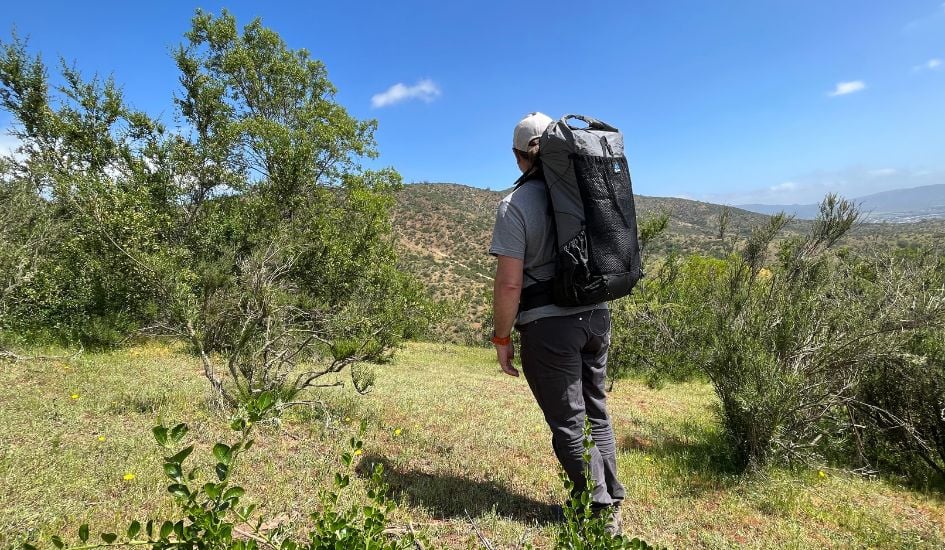
The lightest backpack is not always the best backpack for a thru-hike. A 1 lb frameless pack can feel awful with six days of food and a dry desert water carry, while a 2 lb framed pack may let you hike farther with less shoulder pain. Start with your total pack weight, not just your base weight, because food, water, and bear canisters often decide which pack is comfortable.
Base Weight and Total Pack Weight
A true ultralight backpack works best when the rest of your gear is already light. As a rough guide, frameless packs such as the MLD Burn, Pa’lante V2, Gossamer Gear Kumo, and Nashville Cutaway suit hikers with very low base weights, while framed packs such as the Zpacks Arc Haul Ultra, Hyperlite Unbound, Durston Kakwa, Gossamer Gear Mariposa, and ULA Circuit are more forgiving. If your total pack weight regularly goes above 30 to 35 lb, choose comfort and frame support before chasing the lightest number on a spreadsheet.

Framed vs Frameless Backpacks
Framed packs transfer more weight to the hips and are better for long resupplies, bear canister carries, and hikers still refining their gear. Frameless packs save weight and can feel great when packed carefully, but they punish poor packing and heavy food carries. If you are new to ultralight backpacking, start with a light framed pack before moving to a frameless model.

Capacity for Thru Hiking
Most thru-hikers are best served by 40L to 60L of usable capacity. A 40L pack works if your quilt, tent, clothes, and food bag are compact, but a 55L or 60L pack is easier to live with on colder trails, long food carries, and bear canister routes. Do not buy extra volume so you can carry unnecessary gear, but do not go so small that every resupply becomes a wrestling match.

Materials: Ultra, Dyneema, Robic Nylon, and Ripstop Nylon
Ultra and Dyneema Composite Hybrid fabrics are popular in high-end ultralight backpacks because they offer strong weather resistance and excellent strength for the weight. Robic nylon and ripstop nylon are usually more affordable and can be very durable, but they normally need a pack liner in wet weather. Fabric choice matters, but so does the design of the pockets, stitching, seams, and high-wear areas.

Waterproofing and Pack Liners
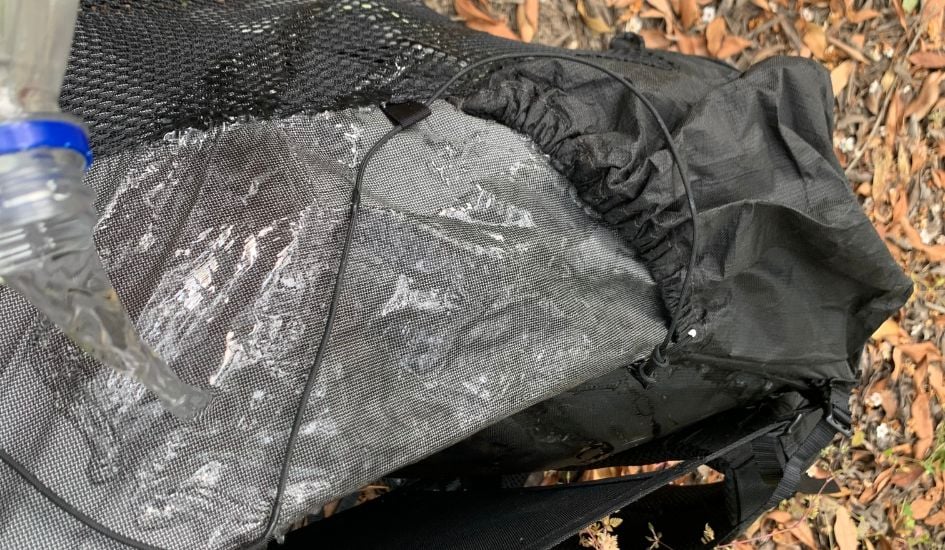
No matter how waterproof the fabric looks, protect your sleep system with a pack liner or dry bag in sustained rain. Packs such as the Zpacks Arc Haul Ultra and Hyperlite Mountain Gear Unbound have a clear advantage in wet weather, while Osprey, Gossamer Gear, and ULA packs need more careful internal waterproofing. A trash compactor bag or purpose-made pack liner is lighter and more reliable than most external rain covers in windy conditions.
Shoulder Straps, Hip Belts, and Load Lifters
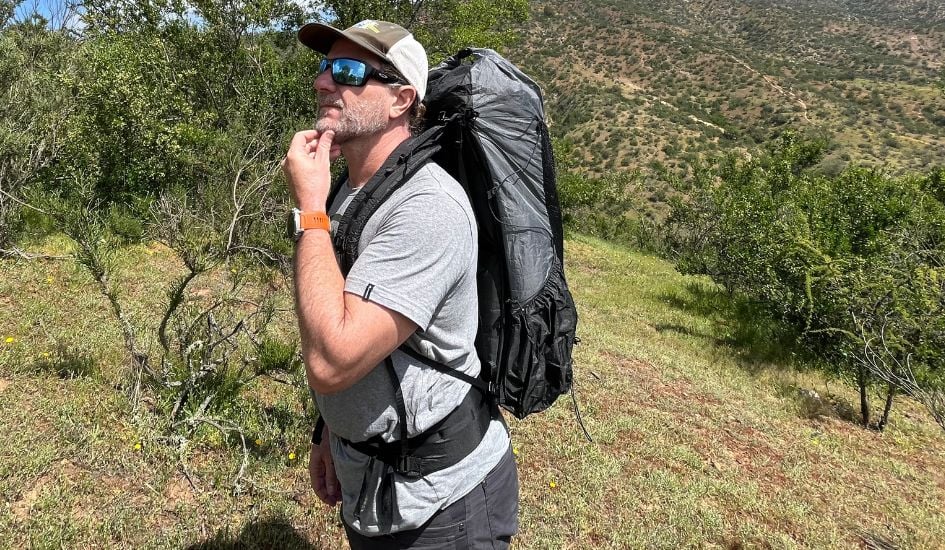
Shoulder straps and hip belts decide whether a pack feels good at mile 5 and mile 25. Wide, well-shaped straps help with frameless packs, while a supportive hip belt and load lifters matter more when total pack weight climbs above 25 to 30 lb. Hip belt pockets, shoulder pockets, and bottom pockets are worth considering if you like to eat, navigate, filter water, and take photos without stopping.
Side Pockets, Shoulder Pockets, and Bottom Pockets
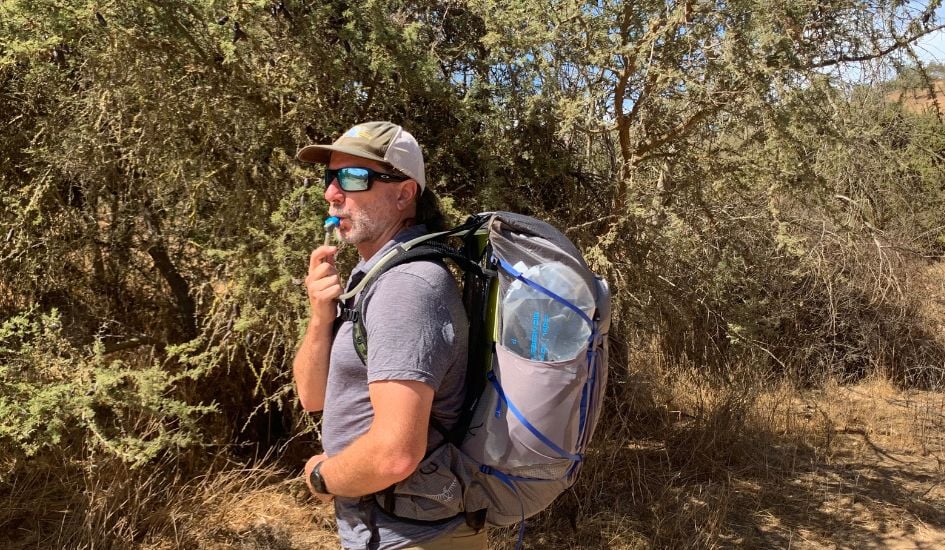
Good side pockets should hold water bottles securely and let you reach them while walking. Rear mesh pockets are useful for wet rain jackets, shelters, socks, and snacks, but mesh can snag in scrub and on rock. Solid fabric pockets are usually tougher, while mesh pockets are better for drying wet gear and seeing what is inside.
Bear Canister Fit
If you hike the JMT, PCT Sierra, or other bear canister routes, check canister fit before buying a pack. A 55L to 60L framed pack usually handles a canister better than a small frameless pack. Horizontal fit is useful because it leaves more vertical packing space, but it depends on the exact pack size and canister model.
How to Pack an Ultralight Backpack
Packing an ultralight backpack is all about balance, comfort, ease of accessibility, and protecting your gear from the elements.
1. Start With a Liner:
A lightweight pack liner or a trash compactor bag inside your main compartment can be used to keep things dry. This keeps your sleeping bag, clothes, and other essentials dry in wet weather.
2. Pack Heavy Items Close to Your Back:
Place your heaviest items, usually your food bag and tent, vertically and as close to your back as possible. This helps keep your center of gravity stable and makes the pack feel lighter. But keep in mind that sharp items may stick into your back so try to minimize this.
3. Sleeping Bag and Clothing:
Stuff your ultralight sleeping bag or backpacking quilt at the very bottom of your liner. Next, add your clothing and any soft items you won’t need during the day. These act as a cushion for your back and help fill out the pack’s shape.
4. Middle Layer – Shelter and Food:
Pack your tent, food bag, and cook kit in the middle of the pack, close to your back. Use your sleeping pad (if it’s a foam pad) as a “frame” against the back panel if your pack is frameless or has minimal structure.
5. Top Layer – Quick Access Items:
Near the top, place items you’ll want during the day: rain gear, warm layers, a first aid kit, or snacks. This way, you don’t have to dig through your whole pack every time you need something.
6. Use External Pockets Wisely:
Store water bottles, a filter, and wet gear (like a rain jacket or tent fly) in the side or rear mesh pockets. Keep your phone, sunscreen, and snacks in hip belt or shoulder strap pockets for easy access on the go.
7. Distribute Weight Evenly:
Avoid overloading one side or the top of your pack. A well-balanced load will reduce shoulder fatigue and keep your pack from swaying.
8. Compress and Cinch:
Roll down the top of your pack tightly and use compression straps to stabilize the load. A compact, stable pack is more comfortable and easier to carry over long distances.
Tips:
- Avoid carrying unnecessary extras—every ounce counts.
- Practice packing at home to find the most efficient setup for your gear.
- Adjust your packing strategy based on the season, trip length, and terrain.
With a little planning and practice, you’ll find that a well-packed ultralight backpack feels lighter, more stable, and more enjoyable to carry, no matter how many miles you plan to hike.

Sustainability in Ultralight Backpacks
Sustainability is becoming increasingly important for both backpackers and brands. Many ultralight backpack companies now use recycled materials, such as Osprey’s recycled nylon or PFAS-free water-repellent coatings, to reduce environmental impact. When shopping, look for terms like “recycled,” “bluesign-approved,” or “PFAS-free,” which signal more eco-friendly production.
Durability is another key factor. Packs made from robust Dyneema, Ultra, or high-denier Robic nylon are built to last, meaning fewer replacements and less waste in the long run. Choosing a long-lasting pack is one of the most sustainable moves you can make.
Repairability also matters. Brands like Osprey offer lifetime warranties and repair services, while many cottage companies sell replacement parts or offer repairs. Opting for a pack that can be fixed rather than replaced extends its useful life and keeps gear out of landfills.
Small-batch and local manufacturing, common among cottage ultralight brands, can reduce the carbon footprint associated with mass production and long-distance shipping. Supporting these brands often means supporting higher labor and environmental standards as well.
Finally, the most sustainable approach is to buy only what you need and use your gear for as long as possible. Repair when you can, and avoid unnecessary upgrades.
Price and Value
Ultralight backpacks often cost more because the fabrics, frames, and small-batch construction are expensive. The best value is not always the cheapest pack, but the pack that fits your gear, survives your trail, and carries comfortably for the weight you actually carry. If budget matters, compare Durston Kakwa, Gossamer Gear, and ULA CDT before spending more on Zpacks or Hyperlite.
Conclusion
Here are the Best Ultralight Backpacks for 2026:
- Best overall: Zpacks Arc Haul Ultra
- Best waterproof ultralight backpack: Hyperlite Mountain Gear Unbound 40L
- Most comfortable lightweight backpack: Osprey Exos Pro 55L
- Best proven thru-hiking backpack: Hyperlite Mountain Gear Southwest
- Best large capacity ultralight backpack: Gossamer Gear Mariposa 60
- Best Backpack for Desert Thru Hiking: Hyperlite Mountain Gear Windrider
- Best budget ultralight backpack: Durston Kakwa 55 Review
- Osprey Exos
- Gossamer Gear Kumo
- ULA Circuit – 68 liters
- ULA CDT – 50 liters
- Mountain Laurel Designs Burn
- Pa’lante V2 – 40 Liters
Frequently Asked Questions
What is the best ultralight backpack for thru-hiking?
The Zpacks Arc Haul Ultra is the best overall pick for most experienced ultralight thru-hikers on the updated BikeHikeSafari page because it combines low weight, a real frame, waterproof Ultra fabric, and long-term testing. Hikers who carry heavier loads may prefer the Osprey Exos Pro, Gossamer Gear Mariposa, or ULA Circuit.
What size backpack is best for ultralight backpacking?
Most ultralight backpackers are best served by 40L to 60L. A 40L pack works for a dialed summer kit, while 55L to 60L is more forgiving for colder weather, longer food carries, or bear canisters.
Are frameless backpacks good for thru-hiking?
Frameless backpacks are good for thru-hiking only if your base weight is low and you know how to pack carefully. MLD Burn, Pa’lante V2, and Gossamer Gear Kumo can work well for experienced hikers, but they are not ideal if you regularly carry more than 25 lb total.
What is the most comfortable ultralight backpack?
The Osprey Exos Pro is the most comfortable lightweight pack in this roundup for heavier carries and hot weather ventilation. The Gossamer Gear Mariposa is also a strong comfort pick with better pocket organization and large capacity.
Do I need a waterproof ultralight backpack?
You do not need a waterproof backpack, but you do need waterproof protection for your sleep system and warm layers. A waterproof or highly water-resistant pack such as the Zpacks Arc Haul Ultra or Hyperlite Mountain Gear Unbound helps, but a pack liner is still smart in sustained rain.
How heavy should an ultralight backpack be?
Most packs in this category fall between about 1 lb and 3 lb, but comfort matters more than the scale weight alone. A slightly heavier framed pack can be the better choice if you carry long food resupplies, desert water, or a bear canister.


BikeHikeSafari Gear Review Process
The author, Brad McCartney from BikeHikeSafari is a small independent adventurer and outdoor gear tester who owns and runs BikeHikeSafari.com.
BikeHikeSafari is not part of a large blog network and is proudly independent. All reviews on this site are independent and honest gear reviews of outdoor products by the author.
The author, Brad McCartney is a very experienced triple crown thru-hiker, adventurer, and bike tourer having spent 1000s of nights sleeping in a tent and sleeping bag (Read more). He was a manager of an outdoor retail store and is very experienced in what is important when using and testing gear for reviews like this.
BikeHikeSafari will never receive any money for reviews and they do not accept sponsored reviews on this website. All the comments about the gear reviews are from the author based on his years of experience. Hope this independent review was helpful for you.

