

I’ve cooked on alcohol stoves on long-distance hikes for more than 20 years, the CDT, the AT, Bike Touring from Alaska to South America, and plenty of shoulder-season trips in between, and I still pack one when weight matters more than speed. This guide is for solo lightweight and ultralight backpackers and thru-hikers who want a simple, quiet, almost unbreakable stove for above-freezing trips, not a winter expedition cooker or a four-person base-camp setup.
Alcohol stoves are a great alternative to Ultralight backpacking stoves and multifuel stoves like the MSR Whisperlite. Many of these backpacking alcohol stoves will need you to purchase a separate, windshield, pot support, backpacking cookset and a spork and you will be good to go.
My current top pick is the Trangia Spirit Burner for its bombproof brass build and simmer ring, with the TOAKS Titanium Siphon Alcohol Stove as the best ultralight option at 0.7 oz and the Evernew Ti Stove DX as the stove and pot support I carry on most thru-hikes. The core trade-off you need to understand: alcohol stoves are the lightest, cheapest, most reliable way to boil water on a long trail, but they are slow, wind-sensitive, and a poor choice once temps drop below freezing.
Quick Picks – Best Alcohol Stoves for Backpacking 2026
- Best Overall: Trangia Spirit Burner – Bombproof brass burner with a real simmer ring and a screw-top cap, so I can store unused fuel between cooks. I first started using this 20+ years.
- Best Ultralight: TOAKS Titanium Siphon Alcohol Stove – At 0.7 oz / 20 g it’s basically free weight in the pack, and it boils a cup of water fast once the jets prime. Needs a separate pot stand and windscreen.
- Best for Thru-Hiking: Evernew Ti Stove DX – The stove I used on the CDT, AT and Bike Touring. Titanium, 35 g for the burner, integrated pot supports, and reliable enough to last the multiple thru-hikes.
- Best Multi-Fuel: Vargo Triad Multi-Fuel Stove – 1.0 oz / 30 g titanium with foldable legs, burns alcohol, fuel tabs, or gels, useful when alcohol resupply is patchy and another real contender for best ultralight alcohol stove for thru-hiking.
- Best Cookset: Esbit Brass Alcohol Burner Camping Stove Set – Heavier but a complete kit (burner, pot, stand) for cooks who want one set of gear.
Alcohol Stove Comparison Table
| Brand | Weight | Pot Stand Included | Material |
|---|---|---|---|
| Trangia Spirit Burner | 3.9 oz | No – purchase separately | Brass |
| TOAKS Titanium Siphon Alcohol Stove | 0.7 oz | No – purchase separately | Titanium |
| Evernew Ti Stove DX | 3 oz | Yes | Titanium |
| Vargo Triad Multi-Fuel Stove | 1 oz | Yes | Titanium |
| Esbit Brass Alcohol Burner Camping Stove Set | 14.7 oz | Yes | Aluminum, Brass |
How We Tested
The alcohol stoves in this guide are researched and, where possible, field-tested by an experienced long-distance hiker and former outdoor-store manager. Across thru-hikes, shoulder-season trips, and bikepacking expeditions, I judge alcohol stoves on weight, boil time, fuel efficiency, wind resistance, durability, ease of use, and value for serious backpacking.
Some of the stoves were supplied by the manufacturer and some were purchased by the author for this review. For more on how I research and review gear, see the Review Policy for further details.
Follow along on Social Media
Best Backpacking Alcohol Stoves 2026 – Detailed Reviews
Best Backpacking Alcohol Stove – Overall
Trangia Spirit Burner Review

Weight: 4.0 oz / 112 grams (burner + lid + simmer ring)
Material: Brass
Fuel capacity: 80 ml / 2.7 oz
Boil time: 8 minutes for 1 L
Simmer ring: Yes
Screw-top cap: Yes
Pros:
> Lightweight construction
> Simmer control
> Twist on cap to prevent draining the stove after each use.
> You can purchase optional pots, stands, and windbreaks which is a great option.
Cons:
> Adjusting the ring while the stove is on is difficult.
The Trangia Spirit Burner is the alcohol stove I first purchased more than 20 years ago. It’s made in Sweden out of solid brass, has no moving parts beyond a simmer ring, and after more than two decades of use mine still works exactly the way it did the day I bought it.
It suits 3-season backpacking, shoulder-season trips, and any time I want a stove that I can light, ignore for eight minutes, and trust to bring a litre of water to the boil without drama. It is not the stove I’d take above the snowline or on a fast-and-light fastpack where every gram matters.
In real-world use the simmer ring is the killer feature, I can actually cook pasta and rice instead of just rehydrating freeze-dried meals, which most ultralight backpacking stoves can’t do at all. The trade-off is that the simmer ring is fiddly to adjust once the stove is hot, the brass is heavier than titanium, and the open flame is wind-sensitive without a screen.
Trade-off: Heavier than titanium UL options (around 4 oz vs 0.7–1 oz), in exchange for a real simmer ring, screw-top fuel storage, and a near-indestructible build.
Best for: Solo or duo backpackers who want one stove for life and value simmer control and durability over saving the last 50 g.
Compare Prices:
Best Ultralight Alcohol Stove
TOAKS Titanium Siphon Alcohol Stove

Weight: 0.7 oz / 20 grams (stove only)
Material: Titanium
Fuel capacity: 2.7 oz / 80 g
Pot stand: Not included (sold separately)
Windscreen: Not included
Pros:
> Durable.
> Fuel efficient.
> Lightweight.
Cons:
> Additional pot support is required.
The TOAKS Siphon is the lightest serious alcohol stove I’d actually carry on a thru-hike. At 0.7 oz / 20 g it’s hardly noticeable in your pack, and the vertical jets around the rim do a genuinely good job of moving heat into a small titanium pot.
It suits solo ultralight backpacking, fastpacking, and anyone running a sub-10-pound base weight where a 4 oz Trangia is a non-starter. It is not the stove for groups, for simmering, or for anyone who hates fiddling, you need to fuel it carefully, prime it, and run it with a windscreen and a separate pot stand which are purchased separately.
In use it boils a cup or two of water fast once the jets light up, and because the stove starts boiling before the jets even prime properly, fuel efficiency is good for a non-pressurised UL stove. The catch is that you have to buy or build a windscreen and a pot stand to make it usable, which adds weight back in.
Trade-off: Lightest commercial titanium UL option I’d actually trust on a long trail, in exchange for needing a separate windscreen and pot stand.
Best for: Solo ultralight thru-hikers above freezing, boil-in-bag style cooking, sub-1 L pots.
Compare Prices:
Best Ultralight Thru Hiking Alcohol Stove
Evernew Ti Stove DX Review
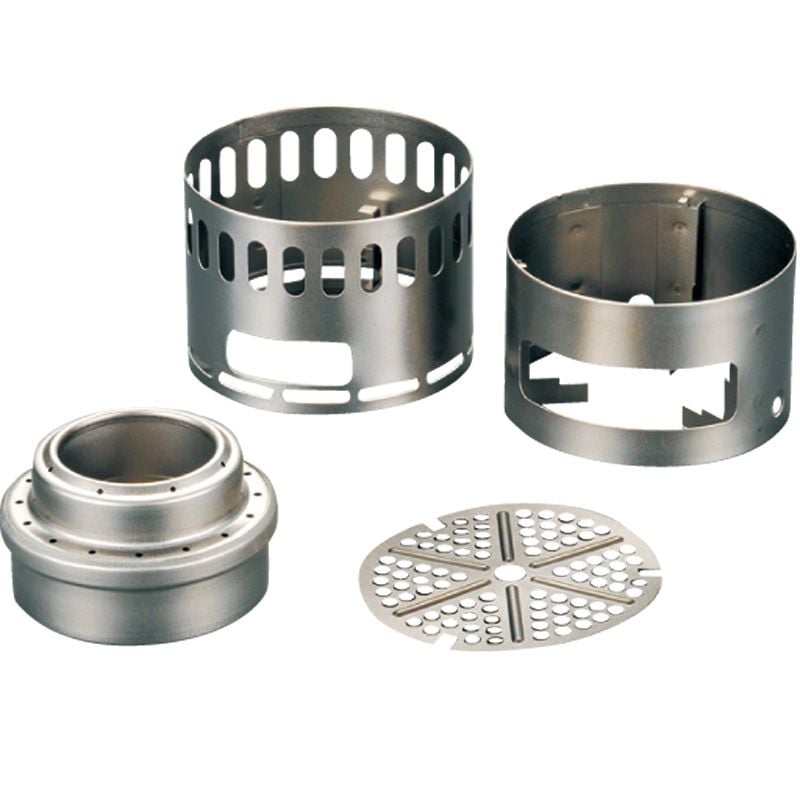
Weight: 1.25 oz / 35 grams (burner only); 3.25 oz / 91 grams (with DX stand and turbo plate)
Material: Titanium
Fuel capacity: 70 ml
Pot stand: Included with DX stand
Windshield: Not included
Pros:
> Lightweight.
> Wide burning flames.
> No additional burner is necessary.
Cons:
> No flame cover.
The Evernew Ti DX is the alcohol stove I have used on several long-distance hikes including the CDT and AT. The titanium build means it will outlast almost any other piece of gear in your kit, and the internal volume markings (in both ml and fl oz, embossed into the metal) mean you never over or underfill it.
It suits long thru-hikes where weight matters and where alcohol fuel resupply is reliable. It is not the right pick for cold-weather trips (you’ll need to warm the stove and fuel in your hands first below freezing) or for anyone who wants to cook real meals.
In real-world use the wide-burning flames let me use a reasonably large pot on stable ground, and the side-burner design means the pot sits straight on top of the stove, no extra pot stand needed for some setups. The DX stand and turbo plate are worth the extra weight if you use a wider pot. It also allows you to burn solid fuel or wood. I’ve used it as a wood stove but found it not worth the effort, alcohol works best.
Trade-off: Slightly heavier than a TOAKS Siphon, in exchange for better build, better fuel markings, complete unit with stand and a more usable burner profile.
Best for: Thru-hikers and long-distance bikepackers who want a one-stove-forever titanium UL option and don’t mind boil-only cooking.
Compare Prices:
Best Multi-use Alcohol and Solid Fuel Stove
Vargo Triad Multi-Fuel Stove
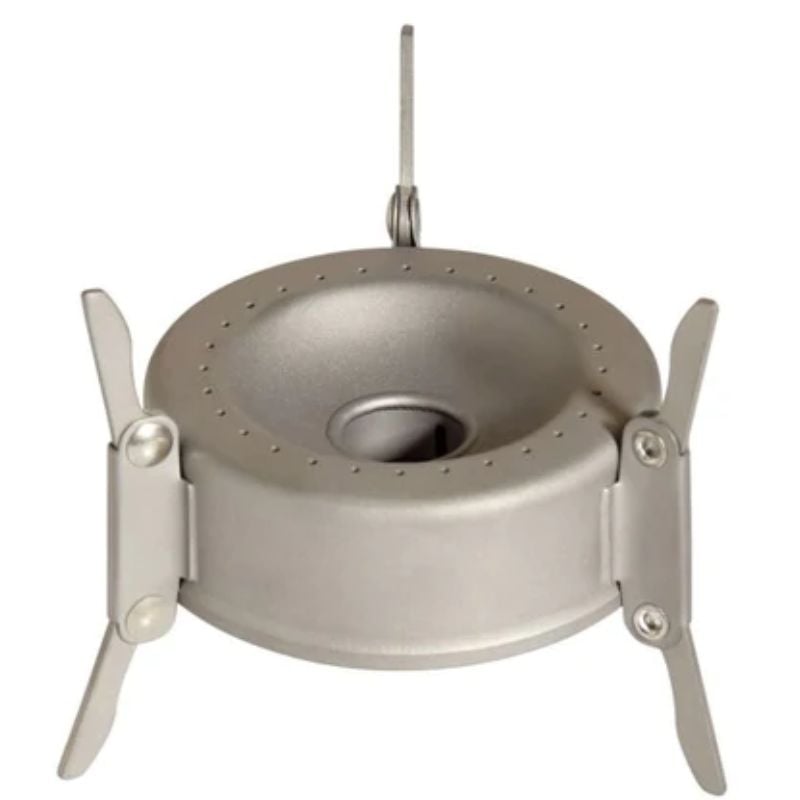
Weight: 1 oz / 30 grams
Material: Titanium
Fuel capacity: 1.5 oz / 44 ml
Pot supports: Integrated, foldable
Pros:
> Foldable legs.
> Compact.
> Lightweight.
Cons:
> Long boil time.
The Vargo Triad is one of the most versatile stove on this list. It’s a 1 oz / 30 g titanium burner with foldable legs that doubles as a pot stand. It will burn alcohol, Esbit fuel tabs, or fuel gels, which makes it the stove I’d carry on a trip with patchy resupply.
It suits backpackers who want flexibility, sections of trail where alcohol is hard to find but fuel tabs are easy, or shoulder-season trips where you want a backup fuel option.
In real-world use the integrated pot supports are a great feature, no separate stand, no fiddling on uneven ground, and the legs fold up and packed away. Be aware that you need to be careful with the pot stands as they are not as sturdy as many other pot stands. Boil time on alcohol is in the 5-8 minute range for a cup or two of water. Does not include a windshield but there are great titanium windshields available.
Trade-off: Needs 1.5 oz of alcohol to start properly, in exchange for multi-fuel flexibility and integrated pot supports in a 30 g package.
Best for: Backpackers who want one stove that can burn alcohol, tabs, or gel, especially handy on international trips where alcohol naming and availability changes border to border.
Compare Prices:
Best Alcohol Stove Cookset
Esbit Brass Alcohol Burner Camping Stove Set
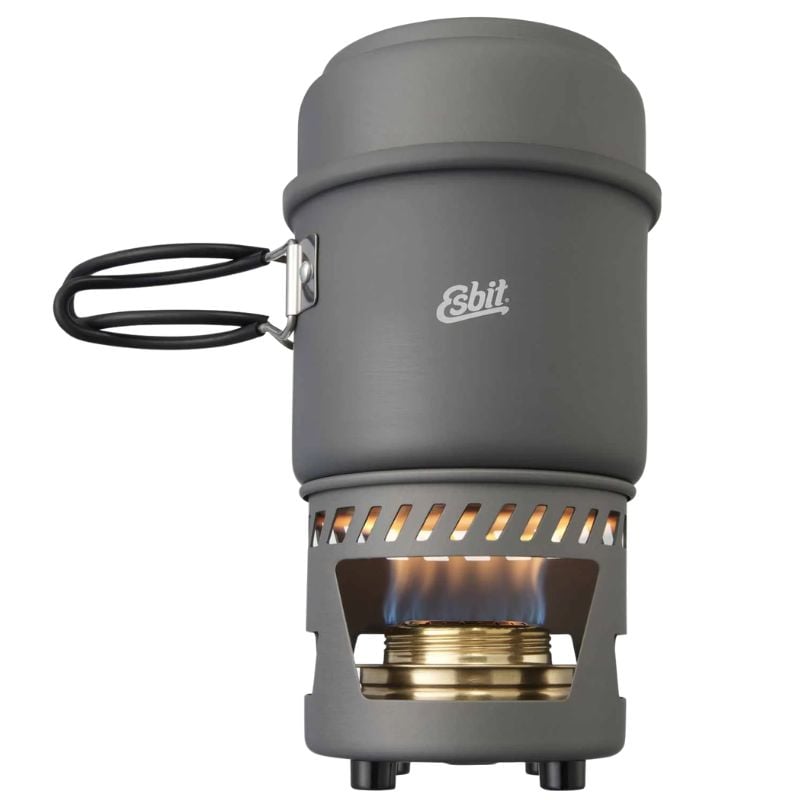
Weight: 14.7 oz / 415 grams (burner + pot + windscreen + stand)
Material: Brass (burner), aluminium (pot)
Fuel storage: Twist-top with rubber seal
Pot stand: Included
Windshield: Not included
Pros:
> Foldable handle.
> Small.
> Twist top and rubber seal.
Cons:
> Handles are difficult to move when hot.
The Esbit Brass Alcohol Burner Camping Stove Set is the easy answer for hikers who want one boxed kit instead of building a stove, pot, stand, and windscreen from separate parts. The brass burner is durable, the twist-top with rubber seal stops fuel leaking into the pack, and the kit nests into itself for transport.
It suits solo and duo backpackers who value simplicity over saving every last gram, weekend trippers, and people getting into alcohol cooking for the first time. It is not the right pick for ultralight thru-hikers, the full kit is around 14.7 oz / 415 g, which is heavy alongside a 0.7 oz TOAKS plus a homemade windscreen.
In real-world use the fold-away handle gives me proper control of the pot, the brass burner heats up faster than I expected, and having the windscreen and stand built into the kit means setup takes under a minute.
Trade-off: Total weight is high for UL standards, in exchange for an out-of-the-box cookset with stand, and sealed fuel storage included.
Best for: Solo and duo backpackers who want a complete stove + pot + stand system without sourcing parts separately.
Compare Prices:
Backpacking Alcohol Stove Buyers Guide
Backpacking Alcohol Stove Buyers Guide

Weight
Alcohol stoves are popular with ultralight backpackers for one reason: the burner itself can weigh under an ounce. A TOAKS Siphon is 0.7 oz / 20 g; a Vargo Triad is 1 oz / 30 g; a Trangia Spirit Burner is around 4 oz once you include the lid and simmer ring. For thru-hiking, look at the total system weight which includes the stove + pot stand + windscreen + fuel for one resupply leg, not just the burner. A 0.7 oz burner with a 2 oz titanium pot stand is heavier than a 1 oz integrated jet stove with no stand.
Boil Time and Fuel Efficiency
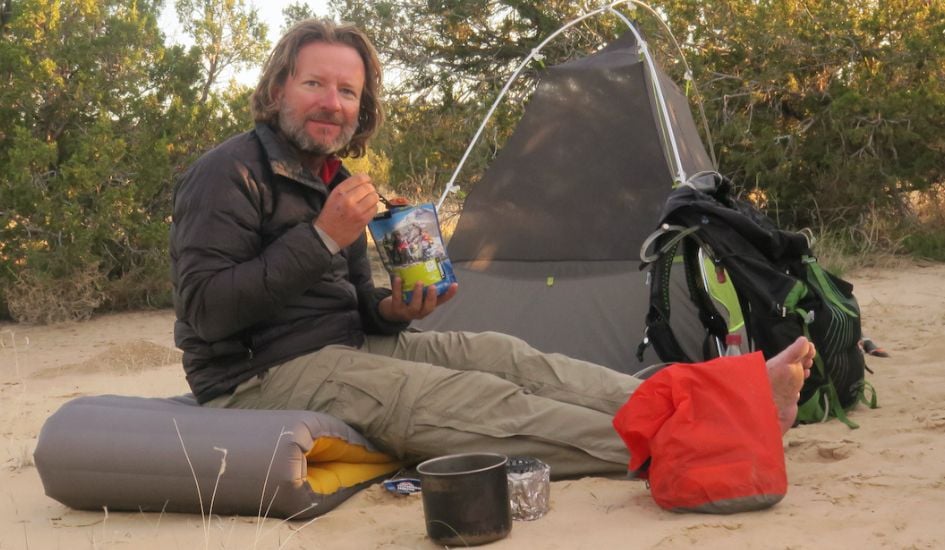
A typical alcohol stove boils a cup of water in 5-8 minutes and a litre in 8-12 minutes, depending on the stove, the wind, the air temperature, and the fuel. Pressurised jet stoves (TOAKS Siphon) are more efficient than open-flame designs. If you’re carrying alcohol for a 5-day resupply leg, fuel efficiency matters far more than the burner weight itself. A titanium wind shield or home made aluminum shield will reduce boil time and increase fuel efficiency.
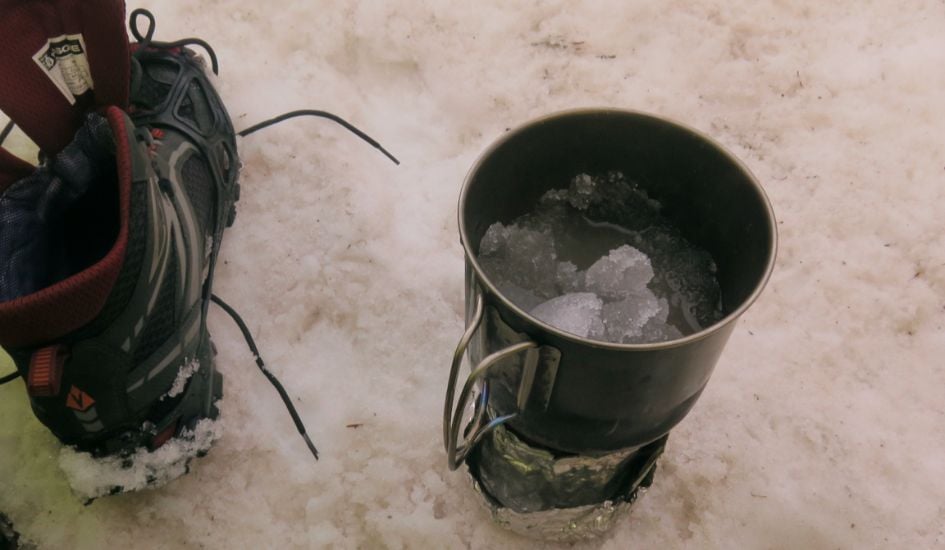
Using an alcohol stove in winter or for snow camping is not recommended, boil times stretch out badly and the fuel itself needs to warm up before it burns properly.
Wind Protection
Every alcohol stove needs some form of windscreen. Some kits include one (Esbit cookset, Caldera Cone); most don’t. A cheap option I’ve used on long trails is to cut a piece of aluminium oven tray to fit around the stove and re-use the offcuts as a pot lid. It costs almost nothing and saves a lot of fuel. The best ultralight wind shield are made from titanium.

Pot Stand and Surface Area
Some stoves include an integrated pot stand (Vargo Triad’s folding legs, Evernew Ti DX with its DX stand). Others need a separate stand (TOAKS Siphon, Trangia Spirit Burner on its own). Match the stove’s flame width to your pot, narrow stoves are efficient under a 400-500 ml mug, wider stoves work better under a 700-900 ml pot.
Simmer Control and On/Off
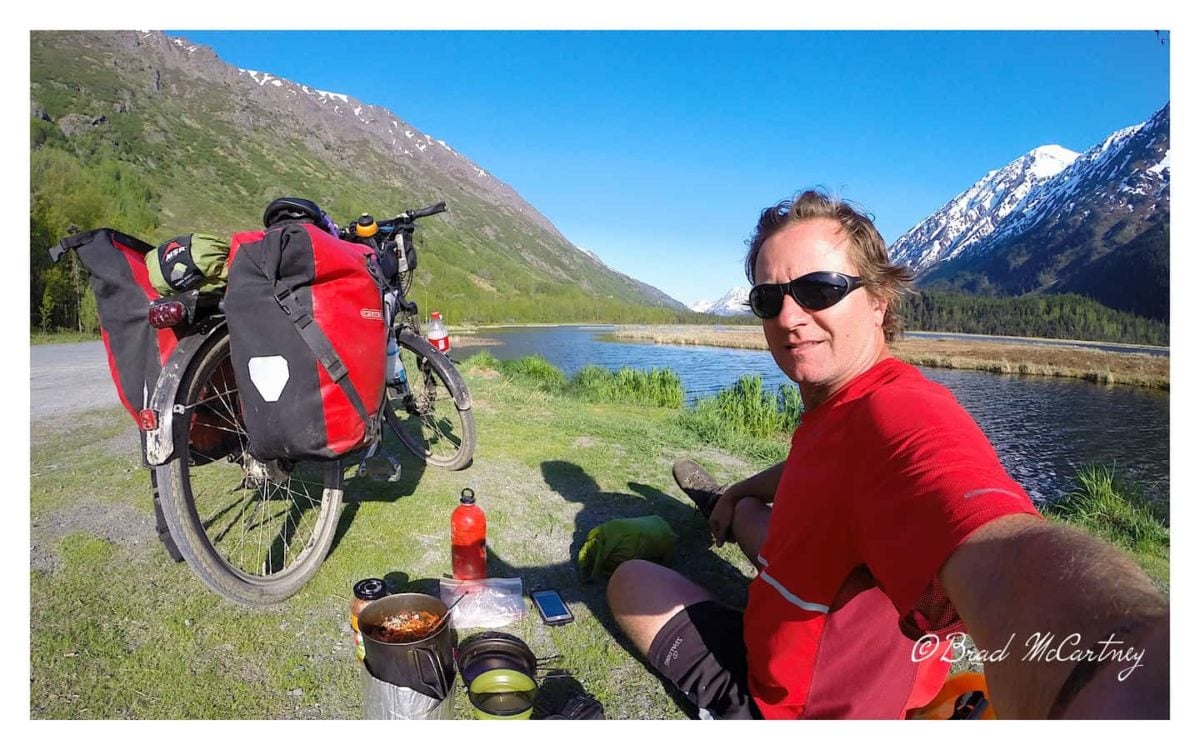
Most UL alcohol stoves are boil-only, you fuel them, light them, and burn off whatever alcohol you put in. The Trangia Spirit Burner and Esbit Brass Burner are the rare exceptions with a real simmer ring and a screw-top cap that lets you save unused fuel. If you actually cook (pasta, rice, real meals) rather than rehydrate, that simmer feature is worth the extra ounces.
Fuel Type and Availability
Every alcohol stove burns liquid alcohol. The names change by country:
- North America: denatured alcohol (hardware stores), HEET (yellow bottle, gas stations).
- UK / Europe / NZ / Australia: methylated spirits (“meths”), bioethanol.
- France / Spain: alcool à brûler.
- Avoid: Iso-HEET (red bottle, isopropyl alcohol) – burns dirty and sooty.
Some multi-fuel stoves (Vargo Triad, Evernew DX) also burn Esbit solid fuel tabs or gels, which is genuinely useful when alcohol resupply is patchy.
Alcohol vs Canister vs Wood for Thru-Hiking
Alcohol stoves win on weight, simplicity, silence, and cost. Backpacking Canister Stove win on boil speed, cold weather performance, and ease of use. Wood stoves rarely win but there is zero fuel weight if there’s wood, but lose hard if it’s wet. For a typical 3-season thru-hike where I’m boiling water once or twice a day and not cooking real meals, an alcohol stove is the right pick. For winter trips, group cooking, or trips above the snowline, I switch to a canister stove.
Where Alcohol Stoves Are Banned
Alcohol stoves are banned outright across the State of California because of fire risk (this could change, confirm with the local land manager before you go). Some other US National Parks restrict them during high-fire-danger periods. International rules vary widely; in New Zealand, for example, fire restrictions in summer can ban any open-flame stove. Always check current rules with the land manager before you rely on an alcohol stove.
DIY Options
If you don’t mind building your own stove, the Fancy Feast (cat-food can) and Super Cat designs cost almost nothing and weigh under half an ounce. Plans are everywhere online. The downside is reliability, a thin aluminium can won’t survive a hard fall the way a Vargo or TOAKS will.
Price
When it comes to anything, price is a huge consideration. You must find the right balance between price and quality. Alcohol stoves are a cheap piece of equipment because of their straightforward construction. Most models cost less than $35, more if made with titanium.
Additional amenities, such as windscreens and pot stands, are included with more pricey models. They are also more adaptable, letting you burn other fuels like solid fuel or wood.
Thus, you need to weigh up these features and what you require, to see how much you are willing to pay. It is always good to have some kind of budget in mind. However, most alcohol stoves are usually quite affordable.
Conclusion
The best alcohol stoves for backpacking that you can find in 2026 are:
- Best Overall: Trangia Spirit Burner
- Best Ultralight: TOAKS Titanium Siphon Alcohol Stove
- Best for Thru-Hiking: Evernew Ti Stove DX
- Best Multi-Fuel: Vargo Triad Multi-Fuel Stove
- Best Cookset: Esbit Brass Alcohol Burner Camping Stove Set
Frequently Asked Questions
What is the best alcohol stove for backpacking?
My pick is the Trangia Spirit Burner for most backpackers, it’s bombproof, it has a real simmer ring, and the screw-top cap means I can store unused fuel. For ultralight thru-hiking I’d carry the TOAKS Titanium Siphon (0.7 oz / 20 g) or the Evernew Ti DX.
What is the best ultralight alcohol stove?
The TOAKS Titanium Siphon at 0.7 oz / 20 g is the lightest serious commercial option, but the Vargo Triad at 1 oz / 30 g comes with integrated pot supports, so total system weight can be lower with the Triad once you add a stand. The Evernew Ti DX is also super lightweight and highly recommended.
Alcohol vs canister stove for thru-hiking – which is better?
For 3-season thru-hikes where you’re mostly boiling water, alcohol wins on weight, cost, silence, and simplicity. For cold weather, group cooking, or fast boil times, a canister stove is better. I carried an alcohol for the CDT and AT and a canister stove for shoulder-season alpine trips, and areas with fire restrictions.
Can You Make Your Own Alcohol Stove?
It is possible for you to create your own alcohol stove using a aluminum can. However, you need to ensure that you follow a reliable design to ensure that you create a safe and well working stove. Since alcohol stoves aren’t that expensive, it is a lot easier to just purchase a stove, instead.
How much alcohol fuel do I need per day?
A rough rule is 1 oz / 30 ml per cup of water, or about 2-3 oz / 60–90 ml per day for solo cooking (one hot drink in the morning, one freeze-dried meal at night). This goes up in wind and cold. For a 5-day resupply leg, plan for around 10-15 oz / 300-450 ml, and pack a little extra.
Can you use an alcohol stove in cold weather or in winter?
Not really. I’ve used alcohol stoves at temperatures well below freezing and the fuel takes a long time to vaporise, boil times stretch out badly, and you’ll need to warm both the stove and the fuel in your hands before lighting. For sub-freezing trips, switch to a canister stove (with a remote canister and inverted canister option for very cold conditions) or a liquid-fuel stove.
Are alcohol stoves banned anywhere?
Yes, many placed have banned alcohol stoves including, across California for fire-risk reasons, and they can be restricted in other US National Parks during fire bans. Australia and New Zealand also impose total fire bans in summer that include alcohol stoves. Always check with the local land manager before relying on one.
Can you fly with an alcohol stove?
You can fly with the stove itself (checked baggage, after airing it out), but you cannot fly with the fuel. Buy denatured alcohol, meths, or HEET at your destination. Some airline staff will still ask questions about a used burner, a clean, unused stove draws fewer questions than one that smells of fuel.
Follow along on Social Media
BikeHikeSafari Gear Review Process
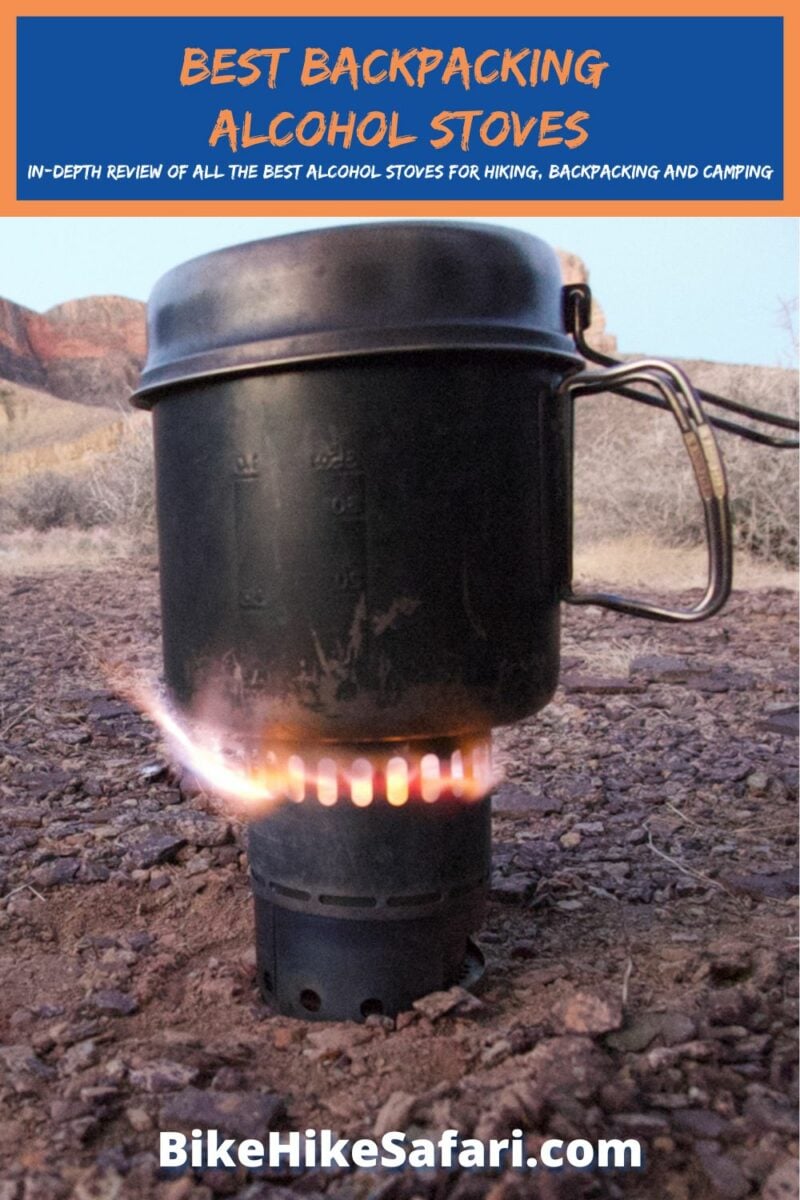
The author, Brad McCartney from BikeHikeSafari is a small independent adventurer and outdoor gear tester who owns and runs BikeHikeSafari.com.
BikeHikeSafari is not part of a large blog network and is proudly independent. All reviews on this site are independent and honest gear reviews of outdoor products by the author.
The author, Brad McCartney is a very experienced triple crown thru-hiker, adventurer, and bike tourer having spent 1000s of nights sleeping in a tent and sleeping bag (Read more). He was a manager of an outdoor retail store and is very experienced in what is important when using and testing gear for reviews like this.
BikeHikeSafari will never receive any money for reviews and they do not accept sponsored reviews on this website. All the comments about the gear reviews are from the author based on his years of experience. Hope this independent review was helpful for you.

