

This is my guide to the best first aid kits for hiking and backpacking in 2026, written for thru-hikers, backpackers, and day hikers who want a kit that actually earns its place in the pack.
I have carried a first aid kit across all three Triple Crown trails and thousands of nights in the backcountry, and I spent eleven years as a first responder with the Police plus several years managing an outdoor retail store, so I judge these kits on what genuinely matters when you are hours from help.
My current top pick for a first aid kit is the Adventure Medical Kits Mountain Series Explorer while for most backpackers it will be the Adventure Medical Kits Mountain Series Backpacker, with the Adventure Medical Kits Ultralight Waterproof Kit .7 as the best ultralight option. The core trade-off is always weight versus completeness: too little and you are exposed, too much and it stays home.
Jump to my Quick Picks below, and when things go badly wrong, carry a PLB or Satellite Messenger too. For how I research and field-test gear, see the Gear Review Policy.
Quick Picks: Best Hiking First Aid Kits
- Best overall: Adventure Medical Kits Mountain Series Explorer – the deepest kit I would still carry backpacking, with enough supplies for longer trips and bigger groups without going full expedition-heavy.
- Best for backpacking: Adventure Medical Kits Mountain Series Backpacker – the sweet spot of weight and coverage for multi-day trips, and the kit I recommend to most thru-hikers as a starting point.
- Best ultralight: Adventure Medical Kits Ultralight Waterproof Kit .7 – around 8 oz, genuinely waterproof, and holds surprising variety for the weight. My pick when grams matter.
- Best for extended day hikes: Adventure Medical Kits Hiker – compact, cheap, includes basic meds, and covers the common day-hike injuries without bulk.
- Best budget day hike kit: HART Outdoor Day Hike – the lightest, cheapest option that still covers blisters and cuts for short outings.
- Best comprehensive day hiking kit: Surviveware Comprehensive Premium – most things you need and little you don’t.
- Most customizable: Surviveware Waterproof Premium – well-labelled compartments and a tough case that make it easy to tailor to your own trips.
How We Tested
The first aid kits in this guide are researched and, where possible, field-tested by an experienced long-distance hiker, former outdoor store manager, and former first responder. Across thru-hikes on the Triple Crown trails, shoulder-season trips, and bikepacking trips, I judge first aid kits on weight-to-coverage, packability, waterproofing, case durability, organisation, and value for serious backpacking. Some items were supplied by the manufacturer and some were purchased by the author for this review. BikeHikeSafari does not accept paid or sponsored reviews. For more on how we research and review gear, see the BikeHikeSafari Gear Review Policy.
Follow along on Social Media
Hiking First Aid Kit Comparison Table
| Brand | Weight | Waterproof |
|---|---|---|
| Adventure Medical Kits Mountain Series Explorer | 1 lb 6.4 oz | No |
| Adventure Medical Kits Mountain Series Backpacker | 15.2 oz | No |
| Adventure Medical Kits Ultralight Waterproof Kit .7 | 5.8 oz | Yes |
| Adventure Medical Kits Hiker | 7.2 oz | No |
| HART Outdoor Day Hike | 3.5 oz | No |
| Surviveware Comprehensive Premium | 16 oz | Resistant |
| Surviveware Waterproof Premium | 2.3 lb | Yes |
Best First Aid Kit For Backpacking: Detailed Reviews
Best Outdoors First Aid Kit – Overall
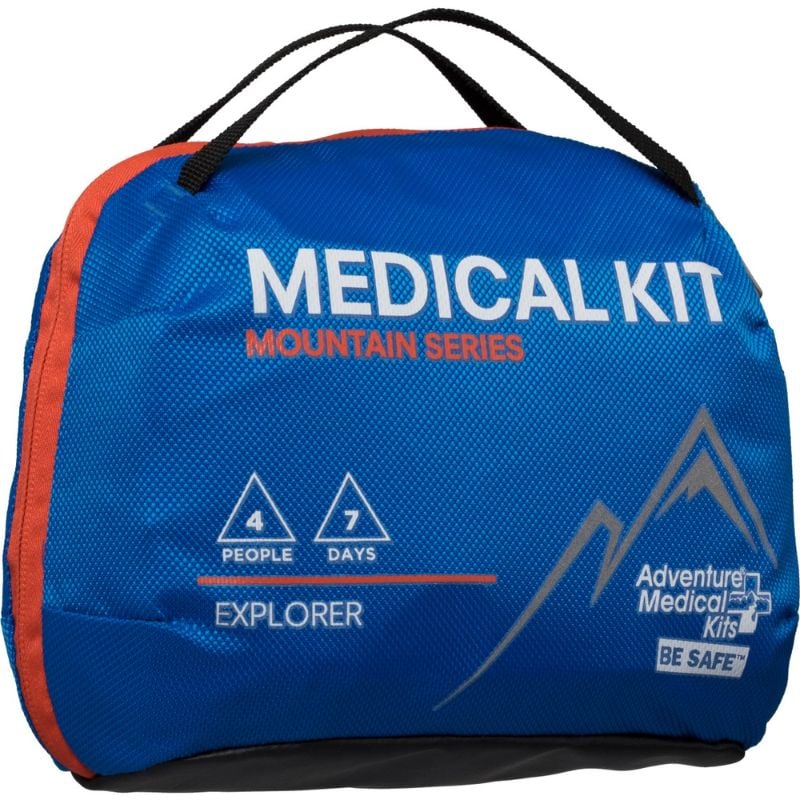
Adventure Medical Kits Mountain Series Explorer Medical Kit
Pros:
> Large Quantities of items included
> Useful Guides included
> Compact
> Lots of Compartments to keep things organized
Cons:
> Only one pair of gloves included
This is the kit I reach for when I am leading a group or heading out for a longer stretch where resupply on medical gear is not an option. It carries the deepest assortment of any Adventure Medical Kits option I would still call packable, and the labelled internal organisation means you are not digging blind when someone is bleeding and the light is fading.
It suits multi-day backpacking, base camp trips, and any outing where two to four people are relying on one kit. On a solo fastpack it is more than you need, but for a trail crew or a family on a hut trip it hits the right depth.
In real use the trade-off is bulk. The case is water-resistant rather than fully waterproof, so on wet trails I line it with a freezer bag, the same trick I use on the Backpacker. The wound-care and blister supplies are generous, which is what you actually burn through on a thru-hike.
Trade-off: weight and size versus a truly complete kit for a group.
Best for: group backpacking, longer trips, and anyone who wants one comprehensive kit to cover several people.
Compare Prices:
Best Backpacking First Aid Kit
Adventure Medical Kits Mountain Series Backpacker

Pros:
> Well organized
> 160-page instruction booklet included
> Durable
> Foot Care supplies included
Cons:
> Water resistant, not waterproof
For most backpackers this is the kit I point to first. It sits in the sweet spot between the featherweight .7 and the group-sized Explorer, carrying enough to handle the injuries you actually see on trail — blisters, cuts, sprains, headaches — without dominating your pack.
It is built for multi-day hiking and thru-hiking for one or two people. I have found the wilderness medicine booklet genuinely useful for less experienced partners, though many long-distance hikers pull it out to save weight, which is a fair call once you know your kit.
The honest downside is water protection. The case is only water-resistant, so on the wet sections of a trail like the Te Araroa I slip it inside a zip-lock bag. Do that and it is a dependable, well-organised kit that has earned its spot in my pack over many trips.
Trade-off: not waterproof out of the box; you will want a liner bag for wet climates.
Best for: thru-hikers and multi-day backpackers who want proven coverage at a reasonable weight.
Compare Prices:
Best Ultralight Hiking First Aid Kit
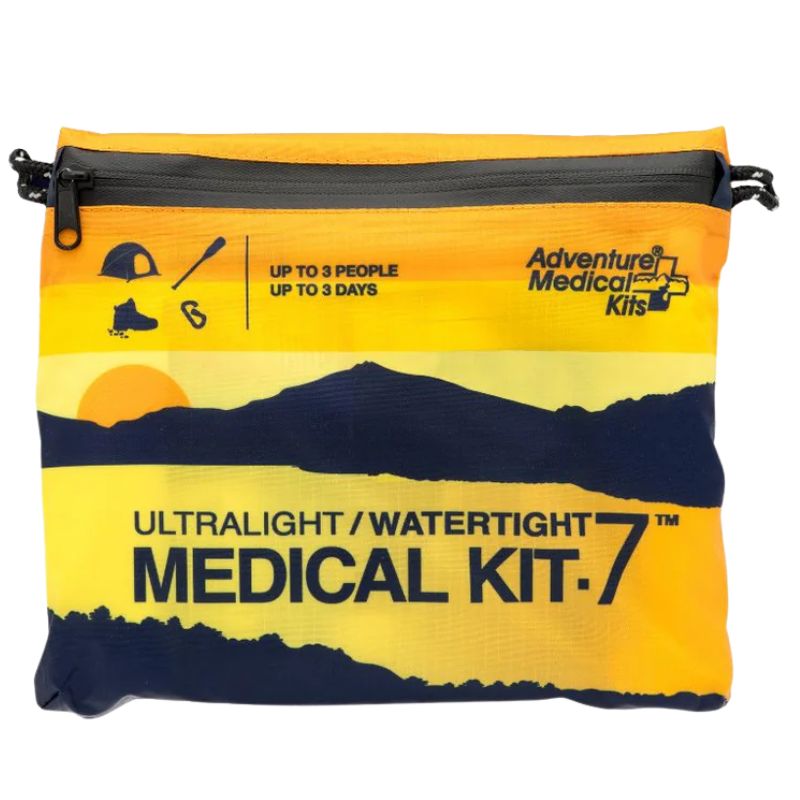
Adventure Medical Kits Ultralight Waterproof Kit .7
Pros:
> Ultralight
> Waterproof
> Compact
> Has everything you will need for short trips
Cons:
> Small and basic
When grams matter this is my pick. At around 8 oz it holds a genuinely useful spread of supplies for the weight, and unlike most ultralight kits it is properly waterproof thanks to the two-stage DryFlex and siliconised nylon system.
It is made for ultralight backpacking, fast trips, and any hike where exposure to rain or a stream crossing is likely. For one or two people on trips up to about four days it covers the essentials — wound care, blisters, basic meds — without the bulk of the Mountain Series kits.
The trade-off is depth. This is not the kit for a group of four or a two-week remote stretch; the quantities are lean and you will restock often on a long thru-hike. But as a solo ultralight kit that shrugs off wet weather, it is hard to beat.
Trade-off: limited quantities; not suited to large groups or very long remote trips.
Best for: ultralight and fast-and-light hikers who need waterproof protection at minimum weight.
Compare Prices:
Best Day Hike First Aid Kit
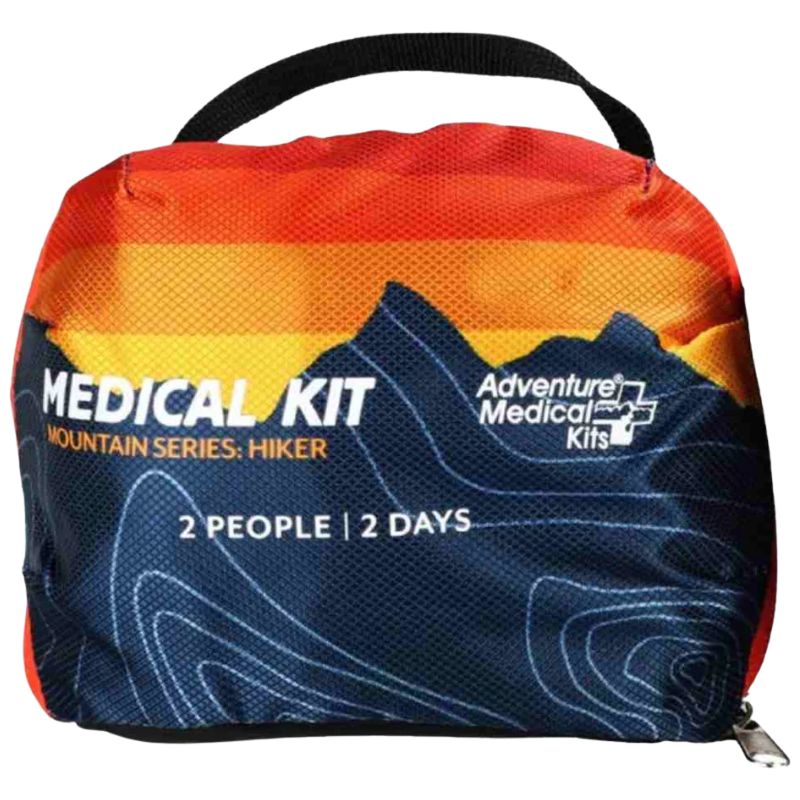
Adventure Medical Kits Hiker
Pros:
> Ultralight
> Enough room to add a small amount of personal meds to the kit
> Compact
> Has everything you will need for short day trips
Cons:
> Small and basic
For big day hikes and short overnighters, the Hiker is the value pick for the outdoors and it is easy to see why. It is compact, cheap, and unlike many small kits it actually includes a sensible spread of over-the-counter meds.
It is aimed at day hikers and light-and-fast overnighters for one or two people. You get the common-injury coverage — blisters, cuts, headaches, allergies — in a package that disappears in a daypack.
The honest limits are quantity and waterproofing: supplies are minimal and the case is only water-resistant. For a day hike that is fine; for a long thru-hike I would size up to the Backpacker.
Trade-off: minimal quantities and no CPR mask; best kept for shorter outings.
Best for: day hikers and weekend hikers who want meds included at a low price and weight.
Compare Prices:
Best Budget Day Hiking First Aid Kit
HART Outdoor Day Hike First Aid Kit

Pros:
> Ultralight
> Includes medications such as Ibuprofen, Antacid, and more
> Compact
> Reasonably Priced
> Has everything you will need for short day trip and beyond
Cons:
> Small and basic
This is the budget, minimalist option for easy day hikes. It is the kit I would hand a friend heading out for a few hours who has nothing at all, because something light and cheap beats leaving the trailhead unprepared.
It is built for short solo day hikes where the realistic risks are blisters and small cuts. It is not a backcountry or multi-day kit and does not pretend to be.
The trade-off is obvious: minimal supplies and no depth for anything serious. For its price and weight it does exactly one job well, and it does it cheaply.
Trade-off: bare-bones; not for backpacking or remote trips.
Best for: casual and budget day hikers who want basic coverage at the lowest cost.
Compare Prices:
Best Comprehensive Day Hiking First Aid Kit
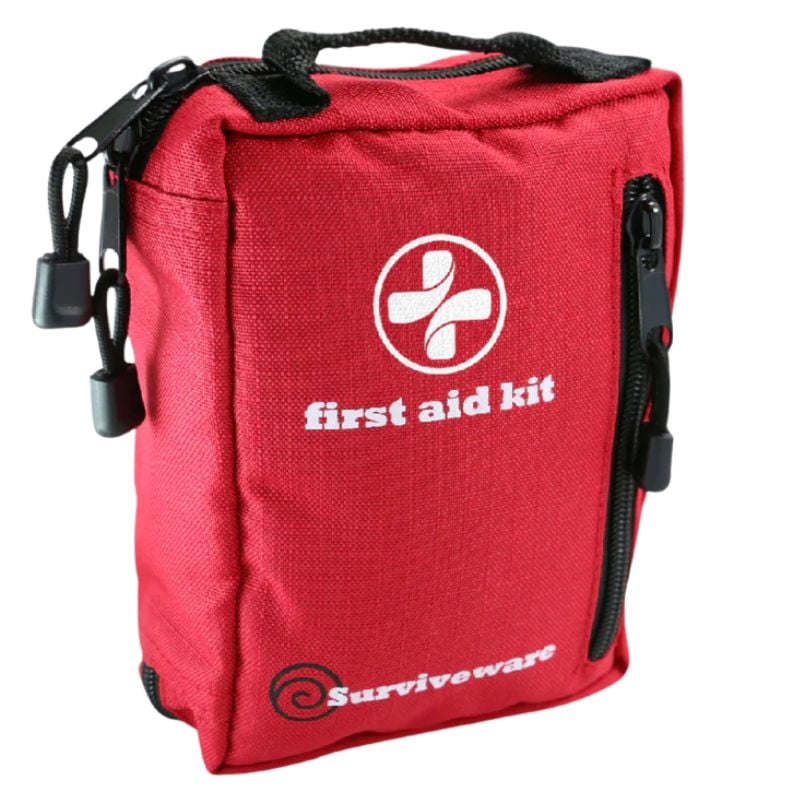
Surviveware Comprehensive Premium First Aid Kit
Pros:
> Durable
> Medical Tools included
> Everything inside the kit is clearly labeled and stored separately
Cons:
> You must provide your own medication which is not really a negative.
The Surviveware Small Kit is a well-organized first aid kit that makes it simple and quick to locate everything you need in an emergency.
All the typical first aid supplies, such bandages and gauze, are included in the kit, along with some uncommon additions like medical shears, elastic wrap, and a CPR mask. No actual medication is supplied, but little bags are offered for you to put your own medication into.
This kit is quite bulky, but by removing items you don’t anticipate using, you might easily slim it down to reduce weight. It’s a fantastic standalone kit with enough supplies in it to last a small group several days.
Hence, if you are planning a longer backpack trip, you should consider the Surviveware Comprehensive Premium First Aid Kit.
Trade-off: heavy and bulky; so much stuff you may need to remove some.
Best for: hikers who want a strong carry case and enough supplies for short trips
Compare Prices:
Most Customizable First Aid Kit
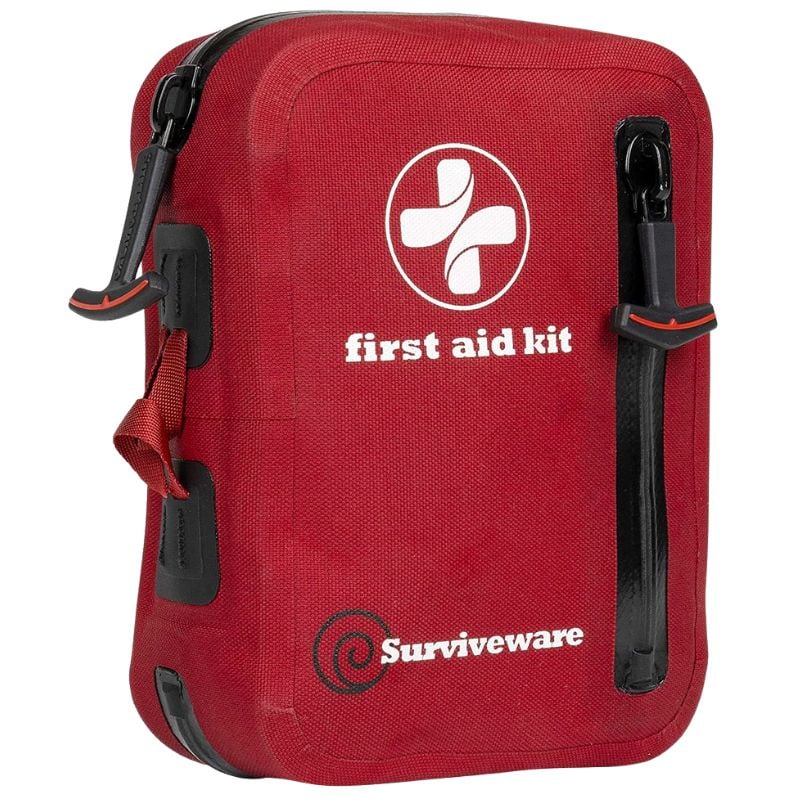
Surviveware Waterproof Premium First Aid Kit
Pros:
> Comprehensive supply of around 200 items
> Attachment straps
> Labeled Compartments
Cons:
> Water resistant, not waterproof
Surviveware is the pick for hikers who like to tinker. It is one of the best kits overall largely for its durable, well-labelled case and quality components, and the waterproof version adds real weather protection for wet trails.
It suits backpackers and trip leaders who want a solid base kit to customise, adding their own meds and trip-specific items into clearly labelled compartments. The removable inner pouches make it easy to tailor to the trip.
The trade-off is that it runs heavy for its size and the standard version ships without over the counter medications, so you will be adding your own. Buy it for the case and organisation, then build it out to suit your hiking.
Trade-off: heavy for its capacity; plan to add your own medications.
Best for: hikers who want a durable, customizable kit and are happy to stock it themselves.
Compare Prices:
First Aid Kit Buyers Guide
Hiking First Aid Kit Buyers Guide
Pre-made Kit vs Build Your Own
A pre-made kit is the fastest way to a sensible baseline, and for most hikers it is the right call. The manufacturers have already thought through the common trail injuries, and a good kit gives you organisation and a case that survives being crushed at the bottom of a pack.
Building your own makes sense once you know exactly what you use and what you never touch. After a few thru-hikes most people end up doing both: they buy a quality kit like the Surviveware Small or an Adventure Medical Kits Mountain Series option, strip out what they will not use, and top it up with their own medications and extra blister supplies.
The advantage of starting from a pre-made kit is the case and the labelled compartments; the advantage of building your own is that every gram earns its place. If you are new to this, start with a pre-made kit and refine it over your first season.
How Much Should a Backcountry Kit Weigh?
For solo ultralight hiking, a kit in the 4–8 oz range like the Adventure Medical Kits Ultralight/Watertight .7 is plenty for trips of a few days.
For standard multi-day backpacking, expect 10–16 oz once you include a booklet and your own meds — the Mountain Series Backpacker sits here.
For group or wet-weather trips, 15–22 oz is reasonable, which is where the Mountain Series Explorer land.
The mistake I see most often is carrying a one-pound home kit stuffed with duplicate bandages on a solo overnighter. Weigh your kit, then ask of every item whether it treats something likely, treats something serious, or both. If it does neither, it stays home.
The goal is not the lightest possible kit — it is the lightest kit that still covers a real emergency hours from the trailhead.
Group Size and Trip Length
Match the kit to the number of people relying on it and how far you are from help. A solo day hiker needs blister and wound-care basics; a party of four on a week-long remote route needs depth in every category because you cannot resupply gauze on trail.
Most kits state a group size and trip length on the packaging — the AMK .7 is rated 1–2 people for 1–4 days, while the Explorer scales to 1–4 people for longer trips. Use those ratings as a starting point, then adjust for how remote and how long your trips actually are.
Longer and more remote always means more of the consumables you burn through: blister dressings, tape, gauze, and any prescription meds you depend on.
Waterproofing and Case Durability
A first aid kit that gets soaked is close to useless, and this is where a lot of cheap kits fall down. Look for either a genuinely waterproof case, like the roll-top DryFlex system on the AMK Ultralight/Watertight .7, or plan to line a water-resistant kit with a freezer bag.
On wet trails such as the Te Araroa or Pacific Northwest sections of the PCT, I always double-bag a water-resistant kit. Case durability matters just as much: a kit lives at the bottom of your pack under everything else, so a tough, well-labelled case that survives compression and opens fast in the dark is worth the extra grams.
Medications: What to Add
Many trail kits ship with a token amount of over-the-counter medication, and some ship with none. At a minimum I carry ibuprofen, an antihistamine, and something for stomach upset, plus any personal prescriptions.
If someone in your party has severe allergies, carry their prescribed epinephrine and know how to use it. Do not assume a pre-made kit has enough of anything — count the tablets.
Meds also expire faster than the bandages around them, so check them before every big trip. Adding your own labelled medication pouch to a customizable kit like the Surviveware is often smarter than relying on the sachets a kit ships with.
Wound Care, Blisters and Trauma Basics
The injuries you will actually treat on trail are, in order: blisters, small cuts and grazes, and sprains. Prioritise a kit that is strong on how to treat and prevent blisters — moleskin or blister-specific dressings — and wound cleaning, because those are what you use almost every trip.
Trauma capability (a tourniquet, haemostatic gauze, a proper trauma dressing) matters more the further you get from help and the larger your group; kits like the MyMedic MyFAK Mini step into that territory.
For most hikers, a solid blister-and-wound kit plus the knowledge to improvise a splint or pressure dressing covers the realistic risks.
Skills beat supplies: a Wilderness First Aid course will do more for your safety than any kit on this page.
Restocking, Expiry and Maintenance
A first aid kit is not buy-it-and-forget-it. Adhesives dry out, medications expire, and you deplete consumables mid-season without noticing. After every trip, top up what you used, and before every major hike open the kit and check expiry dates on meds and the stickiness of your bandages and tape.
Sealed kits that advertise no expiration are usually referring to the non-medicated contents — the bandages and gauze — not any included meds. Keeping a small restock stash at home of your most-used items makes this a two-minute job rather than a reason to head out under-supplied.
Price and Value
Expect to pay roughly $15–35 for a day-hike kit, $35–85 for a solid backpacking or waterproof kit, and $100+ for group or trauma-focused kits. The best value is rarely the cheapest or the most expensive — it is the kit whose contents and case you will actually keep using for years. A $45 AMK .7 that you carry on every trip is better value than a $15 kit you leave at home because it fell apart, or a $180 trauma kit that lives in a drawer. Buy for the trips you actually do, then maintain it so it lasts several seasons.
Conclusion
The best hiking first aid kits for backpacking in 2026 are:
- Adventure Medical Kits Mountain Series Explorer Medical Kit
- Adventure Medical Kits Mountain Series Backpacker
- Adventure Medical Kits Ultralight Waterproof
- HART Outdoor Day Hike First Aid Kit
- Surviveware Comprehensive Premium First Aid Kit
- Surviveware Waterproof Premium First Aid Kit
Frequently Asked Questions
What is the best ultralight first aid kit for hiking and backpacking?
For most ultralight hikers the Adventure Medical Kits Ultralight/Watertight .7 is the pick — around 8 oz, genuinely waterproof, and carrying a useful spread of supplies for one to two people on trips up to about four days. It is CleverHiker’s overall winner and my choice when weight is the priority.
How much should a hiking first aid kit weigh?
For solo ultralight trips, 4–8 oz is plenty. Standard multi-day backpacking kits land around 10–16 oz once you add a booklet and your own meds, and group or wet-weather kits run 15–22 oz. Anything over a pound for a solo hiker usually means you are carrying a home kit into the backcountry.
What are the most essential things to have in a first aid kit?
Blister care (moleskin or blister dressings), wound cleaning and closure (gauze, antiseptic, adhesive bandages, tape), a few over-the-counter meds (pain relief, antihistamine, anti-diarrhoeal), and any personal prescriptions. Add a tourniquet and trauma dressing if you go remote or lead groups.
Can a first aid kit expire?
The medications and some adhesives expire, even if the bandages and gauze do not. Check expiry dates and bandage stickiness before every major trip, and restock consumables after each hike. Kits advertised as no-expiration are usually referring only to the non-medicated contents.
Do I need medications in my first aid kit?
Yes, and often more than a pre-made kit includes. At a minimum carry pain relief, an antihistamine, and something for stomach upset, plus your own prescriptions. Count what is in the kit rather than assuming — many trail kits ship with only a tablet or two of each.
Is a first aid kit worth carrying on every hike?
Yes. Blisters, cuts, and minor injuries happen on short hikes as often as long ones, and hours from a trailhead even a small problem can escalate. A sub-8 oz day-hike kit weighs almost nothing and covers the common issues — there is no good reason to leave it behind.

BikeHikeSafari Gear Review Process
The author, Brad McCartney from BikeHikeSafari is a small independent adventurer and outdoor gear tester who owns and runs BikeHikeSafari.com.
BikeHikeSafari is not part of a large blog network and is proudly independent. All reviews on this site are independent and honest gear reviews of outdoor products by the author.
The author, Brad McCartney is a very experienced triple crown thru-hiker, adventurer, and bike tourer having spent 1000s of nights sleeping in a tent and sleeping bag (Read more). He was a manager of an outdoor retail store and is very experienced in what is important when using and testing gear for reviews like this.
BikeHikeSafari will never receive any money for reviews and they do not accept sponsored reviews on this website. All the comments about the gear reviews are from the author based on his years of experience. Hope this independent review was helpful for you.

