

I have hiked in cheap cotton tees that left me chafed and shivering, and in technical shirts that carried me across the Triple Crown without complaint, so I know exactly what separates a good hiking shirt from a bad one. I have learned that the right hiking shirt does more for your comfort than almost any other piece of clothing you carry. Get it wrong and you spend the day clammy, chafed, and sunburnt. Get it right and you barely think about it.
This guide is for backpackers and thru-hikers who care about weight, sun protection, and a shirt that still performs on day five without stinking more than a skunk. As a former outdoor store manager and a hiker who has spent thousands of nights in a tent across the PCT, AT, CDT, Te Araroa, and dusty trails in Africa and around the world, I have researched and where possible field-tested these shirts in both real heat and cold, humidity, and grime. My current top pick is the Colombia Silver Ridge Utility II, with the Patagonia Self Guide as the best long-sleeve runner-up. The core trade-off to understand is sun coverage and durability versus breathability and weight.
Quick Picks – Best Sun Protection Hiking Shirts
- Best Overall: Colombia Silver Ridge Utility II – my go-to long-sleeve for hot, exposed trails; light, vented, and tough enough for daily thru-hike abuse without breaking the bank.
- Best Long-Sleeve Runner-Up: Patagonia Self Guide LS Shirt – stretchy, breathable, and excellent sun coverage when you want a touch more comfort and a cleaner cut.
- Best Hiking T-Shirt: Patagonia Capilene Cool Daily Shirt – soft, quick-drying synthetic tee that handles heat and humidity better than most.
- Best Sun Hoody: Free Fly Lightweight Hoodie – full neck, ear, and hand coverage for long days above treeline.
- Best Merino Wool: Icebreaker Merino 125 Cool-Lite Sphere III – natural odor resistance for multi-day trips between washes.
- Best Thru-Hiking Shirt: Jolly Gear Triple Crown Button Down Sun Hoodie – a sun hood, lightweight breathable materials and lots of extreme color choices, perfect for the thru-hiker.
- Best Short-Sleeve Shirt: Patagonia Go To Shirt – a smart-looking snap shirt that hikes well and doubles as a travel shirt in town.
- Best Button-Up: Columbia PFG Tamiami II Long-Sleeve Shirt – vented, roll-up sleeves, and a collar for sun and bug protection on humid trails.
- Best Lightweight: Arc’teryx Cormac SS Shirt – minimal grams for fast-and-light summer backpacking.
- Best Budget Long-Sleeve: REI Sahara Long Sleeve Solid Shirt – honest sun protection and durability for well under premium prices.
- Best Budget T-Shirt: REI Co-op Sahara Shade LS T-Shirt – reliable everyday trail tee from a brand that backs its gear.
- Best for Australia & New Zealand: Macpac Eclipse Shirt – a regional standout that the big US sites never cover, built for Southern Hemisphere sun.
How We Tested
The hiking shirts in this guide are researched and, where possible, field-tested by an experienced long-distance hiker and former outdoor store manager. Across thru-hikes, shoulder-season trips, and bikepacking trips, I judge hiking shirts on sun protection per gram, breathability, moisture management, odor resistance over multiple days, durability under a loaded pack, and value for serious backpacking.
Some of the items were supplied by the manufacturer and some items were purchased by the author for this review. BikeHikeSafari is proudly independent and never accepts sponsored reviews. For more on how we research and review gear, see the BikeHikeSafari Gear Review Policy.
Hiking Shirts Comparison Table
| Brand | Weight | Material | Chest Pockets | UPF |
|---|---|---|---|---|
| Colombia Silver Ridge Utility II LS | N/A | 100% Recycled Polyester | 3 | 100 |
| Patagonia Self Guide LS Shirt | 8.6 oz | 100% Recycled Polyester | 4 | 40 |
| Patagonia Capilene Cool Daily Shirt | 4.5 oz | Polyester 100% (50%+ recycled) | No | N/A |
| Free Fly Lightweight Hoodie | 9.6 oz | 70% bamboo, 30% polyester | 1 | 20 |
| Icebreaker Merino 125 Cool-Lite Sphere III | 5.3 oz | 60% lyocell 40% merino wool | No | N/A |
| Jolly Gear Triple Crown Button Down Sun Hoodie | 8.5 oz | 86% polyester, 14% spandex | 2 | 30 |
| Patagonia Go To Shirt | 5.6 oz | 60% Organic Cotton and 40% Recycled Polyester | 1 | N/A |
| Columbia PFG Tamiami II Long-Sleeve Shirt | 9.6 oz | 100% polyester | 6 | 40 |
| Arc’teryx Cormac SS Shirt | 3.9 oz | 100% polyester | No | 50 |
| REI Sahara LS Solid Shirt | 8.5 oz | 94% nylon, 6% spandex | 3 | 50 |
| REI Co-op Sahara Shade LS T-Shirt | 7.4 oz | 91% polyester/9% spandex | no | 50 |
| Macpac Eclipse Shirt | 5.6 oz | 86% Nylon, 14% Elastane | 1 | 50 |
Follow along on Social Media
Best Hiking Shirts for Backpacking 2026 – Detailed Reviews
Best Long-Sleeved Hiking Shirt – Overall
Colombia Silver Ridge Utility II LS Shirt Review
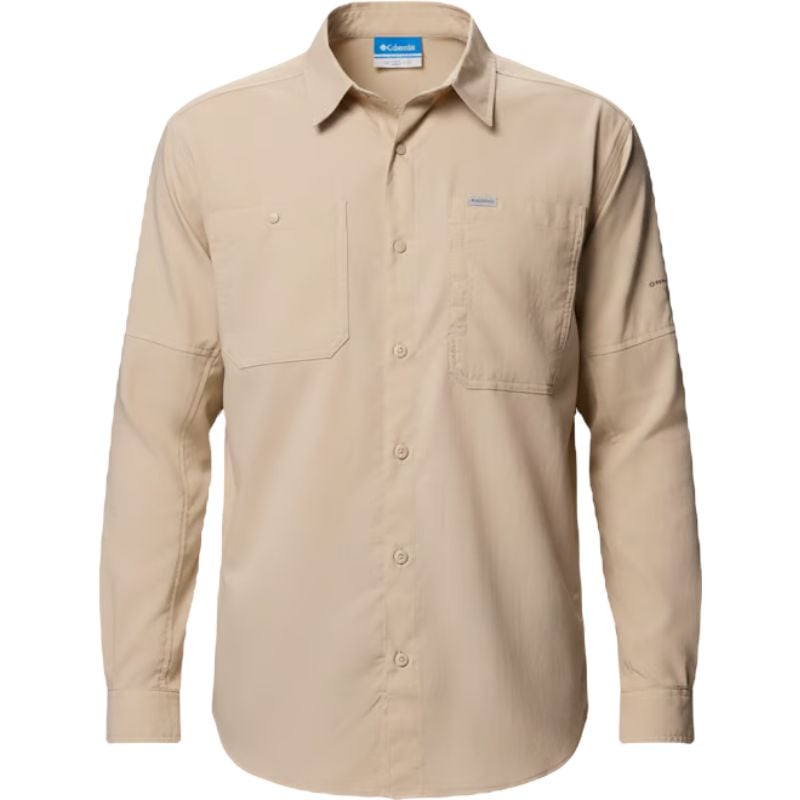
Weight: N/A
Fabric: 100% recycled polyester, UPF 100
Style: Long-sleeve button-up with vented back
Pockets: Two chest pockets, one internal
Pros:
> Moisture wicking
> Mesh back for ventilation
> UPF 100+ protection
> Good choice of colors
> Reasonably priced
Cons:
> Synthetic materials only
This is the shirt I keep coming back to on hot, exposed trails, and it earns the top spot because it does the unglamorous things well. The nylon shell shrugs off scrub making it great for a tough trail such as the Hayduke thru-hike. It dries fast after a sweaty climb, and the vented back keeps air moving when the sun is overhead.
It suits long summer backpacking days, desert sections, and any trail where sun coverage and durability matter more than a few grams. The shirt looks respectable and would make a great shirt to hike the Camino de Santiago where regular trips into town makes up part of the hike. The roll-up sleeves and collar protect your neck and forearms, which saves on sunscreen over a long thru-hike or choose the short sleeved version if that is more your style.
In real use the trade-off is weight: it is not the lightest shirt here, and the nylon can feel less soft next to skin than a merino or a brushed polyester tee. But for the price which is one of the cheapest in this review, it is hard to beat, and it lasts.
Trade-off: a little extra weight and a crisper hand-feel in exchange for durability, venting, and sun coverage.
Best for: hot, exposed, multi-day backpacking on a budget.
Compare Prices:
Best LS Hiking Shirt – Runner Up
Patagonia Self Guide LS Shirt

Weight: 8.6 oz / 244 grams
Fabric: 100% recycled polyester, UPF 40+
Style: Long-sleeve button up sun shirt
Pockets: Two chest with two hidden zippered
Pros:
> 2 chest pockets with 2 hidden zippered pockets
> Lightweight
> Breathable
> Looks stylish
Cons:
> Not cheap
The Self Guide is a capable long-sleeve sun shirt that earns the runner up spot. The fabric is light, quick drying, and breathable with strong UPF coverage.
It works for hot, exposed backpacking where you want full arm coverage in a slim, technical cut. It also looks great and would not be out of place in a cafe on the Camino de Santiago or while in town on a thru-hike or traveling.
The trade-off is fit, while it is stretchy, it runs more athletic than the roomier button-ups here, so size with your layering in mind.
Trade-off: a technical slim cut that some hikers will find less roomy.
Best for: hikers who want a slim, high-UPF long-sleeve.
Compare Prices:
Best Short Sleeved Hiking T-Shirt
Patagonia Capilene Cool Daily Shirt
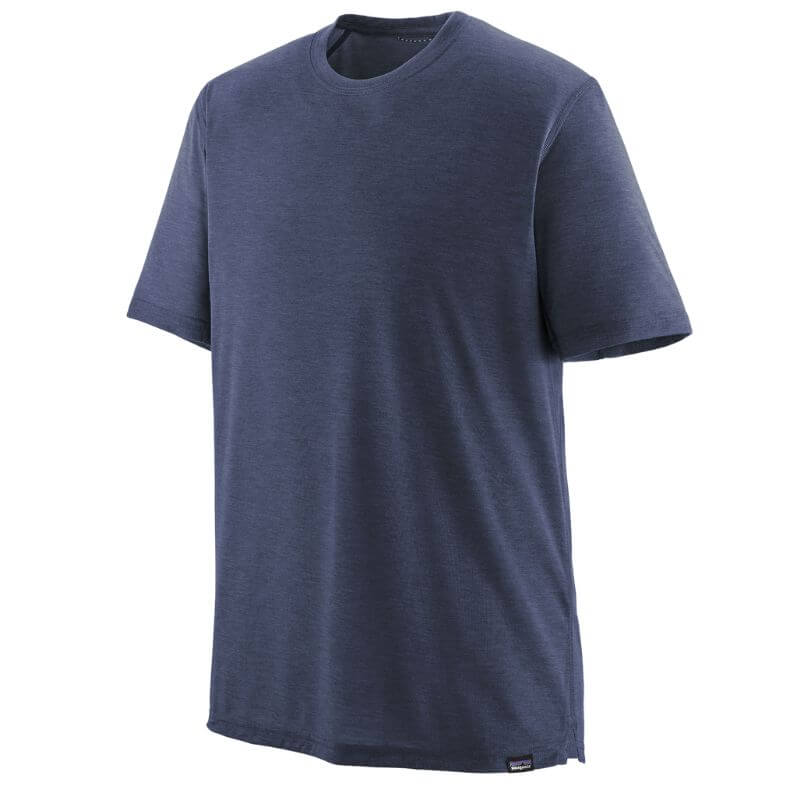
Weight: 4.5 oz
Fabric: Recycled polyester
Style: Short-sleeve crew tee
Pockets: None
Pros:
> Made from recycled materials
> Fair Trade
> Odor control
> Lightweight and breathable
Cons:
> Only a couple of color choices
This is my pick for a hard-working lightweight hiking t-shirt. The light recycled polyester moves sweat fast and dries quickly, which is exactly what you want on humid climbs. There are so many options for this shirt including long sleeve, short sleeve, hooded sun shirt and tank top, short sleeve is my preferred option.
It is ideal for hot-weather backpacking and as a base tee in a layering system on cooler mornings. The fabric handles heat better than most cotton-feel synthetics.
The trade-off is odor over multiple days; even with the treatment, a synthetic will not match merino for multi-day freshness. But for breathability and weight, it is one of the best tees here.
Trade-off: top-tier breathability and weight versus weaker multi-day odor control.
Best for: hot, humid hiking and as a quick-drying base layer.
Compare Prices:
Best Sun Hoody
Free Fly Lightweight Hoodie Review
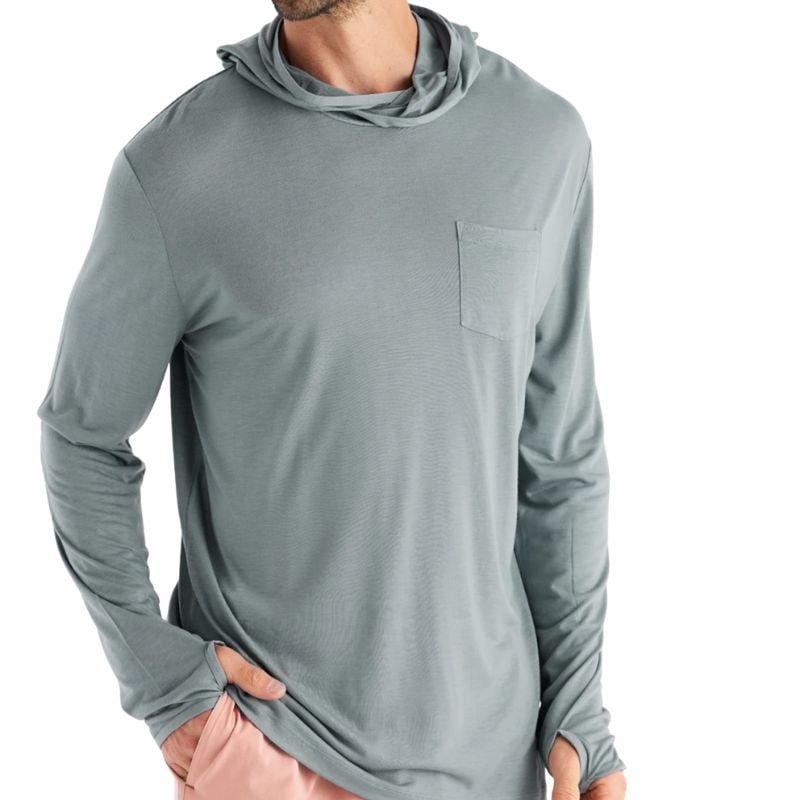
Weight: 9.6 oz / 272 grams
Fabric: 70% bamboo, 30% polyester
Style: Long Sleeve hooded sun shirt
Pockets: one chest
Pros:
> Feels soft and light
> Quick drying
> Breathable
> Nice Stretchy material
Cons:
> Not as good in cold weather
This is my pick for the best sun hoody, and it earns the spot because almost nothing else feels this good against the skin after a long, sweaty day. The bamboo viscose blend is silky and cool rather than plasticky, which is exactly what you want when the air is hot and still.
It suits hot, humid hiking and travel where comfort and airflow matter more than maximum UV blocking. The crossover hood gives genuine coverage on the back of the neck and ears, and the thumbholes keep the cuffs over the backs of your hands without gloves.
The honest trade-off is sun protection. At UPF 20+ it sits below the UPF 50 you get from a dedicated technical sun shirt, but in reality you will not get burned through this shirt. The bamboo also dries slower than a pure synthetic and can shrink on the first wash, so wash cold and size with that in mind.
Trade-off: unbeatable next-to-skin comfort in exchange for lower UPF and slower drying.
Best for: hot, humid trails and travel where comfort and airflow come first.
Compare Prices:
Best Merino Hiking Shirt
Icebreaker Merino 125 Cool-Lite Sphere III
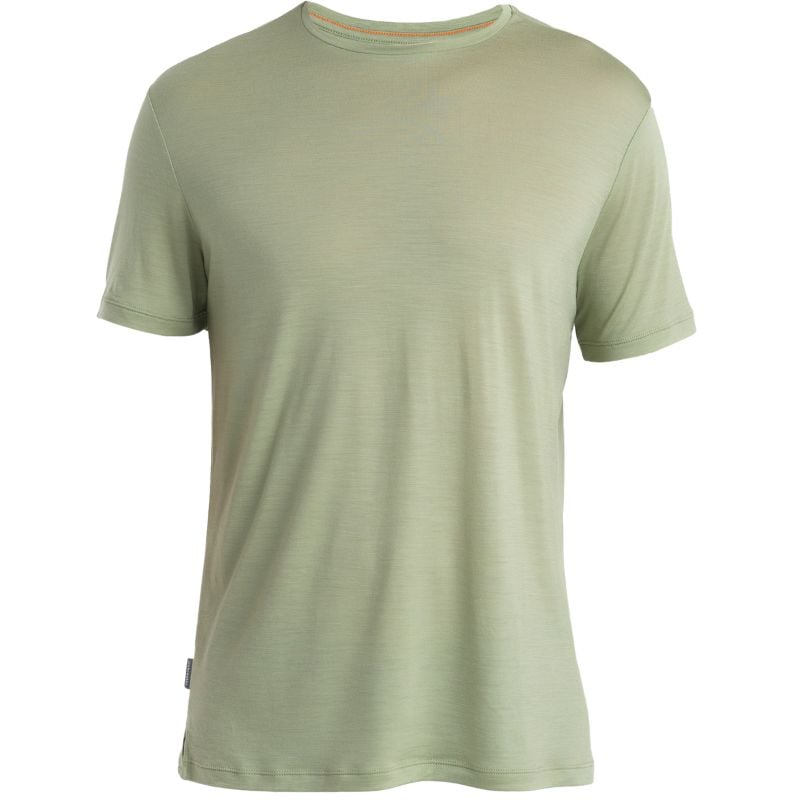
Weight: 5.3 oz / 150 grams
Fabric: 60% lyocell 40% merino wool
Style: Hiking T-shirt
Pockets: None
Pros:
> Very soft fabric
> Quick drying
> Available in S/S, L/S and Tank top
> Good odor control
Cons:
> Not cheap for what is essentially a t-shirt
> Not 100% merino, look for the 150 Tech Lite range if that is your preference
This is my best merino pick, and it is the shirt I pack when I know I will be days from a wash and want to stay reasonably civilised. The Cool-Lite blend pairs merino with TENCEL Lyocell, which keeps the natural odor resistance I love about wool while drying faster and feeling cooler than a heavier all-merino tee.
It suits shoulder-season backpacking, cooler thru-hike sections, and any multi-day trip where odor control matters more than raw sun protection. Merino’s wide comfort range means it works across a surprising spread of temperatures, and I have managed several days in a shirt like this without clearing the hut.
The trade-offs are the usual merino ones. It is less durable than a synthetic and pricier for the weight, and like all merino it clings and feels clammy in real tropical heat, so it is not my first choice near the equator. But for breathable, low-odor performance in temperate and alpine conditions, the Cool-Lite Sphere III is one of the best lightweight merino blends going. If you prefer 100% merino then look for the Icebreaker 150 Tech Lite as another option.
Trade-off: natural odor resistance and comfort range in exchange for durability and cost.
Best for: cooler, multi-day backpacking where staying fresh between washes matters.
Compare Prices:
Best Thru-Hiking Shirt
Jolly Gear Triple Crown Button Down Sun Hoodie Review
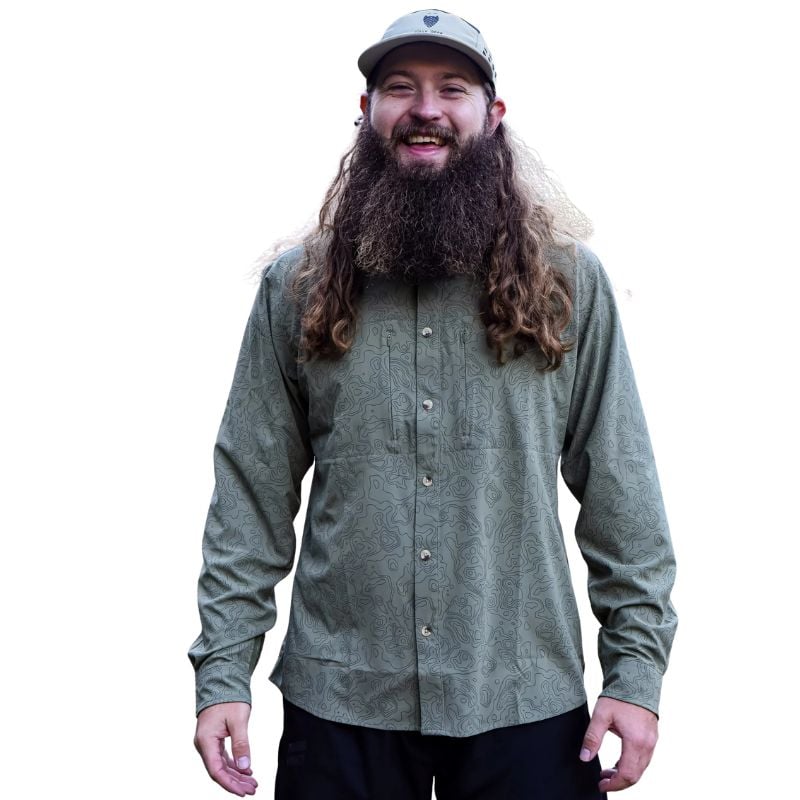
Weight: 8.5 oz / 241 grams
Fabric: 86% polyester, 14% spandex
Style: Long-sleeve button up sun shirt
Pockets: Two zippered pockets
Pros:
> Comfortable stretchy material
> Quick drying
> Sun hood for the extreme sun
> Good choice of print and colors
Cons:
> Some of the loud colors are not for everyone
This is my pick for the best thru-hiking shirt, and it is a cult favourite among long-distance hikers for good reason. It is the rare shirt that combines a full button front for ventilation, an attached sun hood, roll-up cuffs, and thumbholes, so it covers nearly every sun and temperature situation you hit on a long trail in a single layer.
It suits exactly the trips it is named for: the PCT, AT, CDT, and any big-mileage route where you wear one shirt for weeks. The button front lets you dump heat on a climb and seal up when the wind turns, the hood protects your neck and ears, and the zip pockets actually secure small items. The stretchy fabric moves with you, and the antimicrobial treatment keeps it tolerable over multi-day stretches between washes.
The honest trade-off is colors and price. It is also expensive at around 95 USD, and the loud patterns are not for everyone, though most thru-hikers wear them with pride. For a do-everything trail shirt, though, nothing else I have used is quite this versatile.
Trade-off: a slightly lower UPF and a high price in exchange for unmatched versatility on long trails.
Best for: thru-hikers and big-mileage backpackers who want one shirt to do everything.
Compare Prices:
Best Short Sleeved Hiking Shirt
Patagonia Go To Shirt

Weight: 5.6 oz / 159 grams
Fabric: 60% organic cotton, 40% recycled polyester
Style: Short sleeve button up shirt
Pockets: one chest
Pros:
> Lightweight
> Breathable
> Made with recycled polyester and organic cotton
> Stylish enough for hiking, travel, or around town
Cons:
> Sizes run a bit small so you may need a bigger size than with other brands
The Go-To is the shirt I pack when I want something that hikes acceptably and still looks sharp in town. The snap front and clean cut make it a genuine travel shirt as much as a trail one.
It works best for shorter day hikes, travel-and-trek trips, and warm-weather use where you are not relying on it for high UPF or fast drying.
The trade-off is real: the cotton-hemp blend is not as quick-drying as a synthetic, so I would not choose it for sustained sweaty thru-hike days. For travel and casual trails and summer hiking, though, it is a comfortable, good-looking pick.
Trade-off: style and comfort in exchange for slower drying than a pure synthetic.
Best for: travel and hiking trails that involve trips to town such as Camino de Santiago where looks matter as much as performance.
Compare Prices:
Best Button Up Hiking Shirt
Columbia PFG Tamiami II Long-Sleeve Shirt

Weight: 9.6 oz / 270 grams
Fabric: 100% polyester
Style: Long-sleeve button-up with vented back
Pockets: Two main chest pockets and four smaller chest pockets
Pros:
> Very good price
> Mesh back for ventilation
> UPF 40+ protection
> Good choice of colors
Cons:
> Synthetic materials only
The Tamiami II is my pick for the best button-up, and it shows up on competitor lists for good reason. The mesh-lined vents move a lot of air, and the roll-up sleeves and collar give real sun and bug protection.
It is well-suited to humid, buggy trails and warm-weather travel where you want a collar and pockets you can actually use.
The trade-off is that it looks more “fishing shirt” than minimalist trail tee, and the polyester can hold odor. But for venting and functionality on hot, humid trails, it is excellent value.
Trade-off: a utilitarian look in exchange for top-tier venting and sun/bug coverage.
Best for: humid, buggy, hot-weather hiking and travel.
Compare Prices:
Best Lightweight Hiking T-Shirt
Arc’teryx Cormac SS Shirt
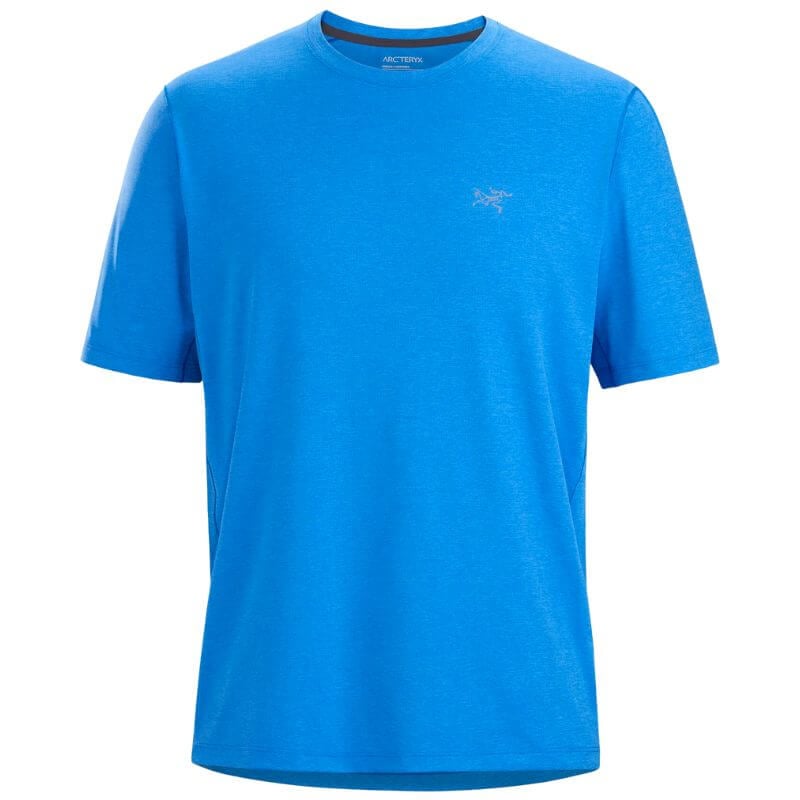
Weight: 3.9 oz / 110 grams
Fabric: 100% polyester
Style: Hiking t-shirt
Pockets: None
Pros:
> Odor Resistant polyester
> Lightweight
> Breathable
Cons:
> Expensive
The Cormac is the premium lightweight short-sleeve tee on this list, and it earns the slot for its light, breathable fabric and clean fit.
It suits fast-and-light summer hiking and anyone who wants a refined synthetic tee that drys quickly and packs to nothing.
The trade-off is price and odor: it is expensive for a tee, and like most synthetics it is not the freshest after several days. But the fabric quality and breathability are genuinely top-tier.
Trade-off: premium price and average odor control for excellent fabric and weight.
Best for: hikers who want a high-end, lightweight short-sleeve tee.
Compare Prices:
Best Budget Long-Sleeved Hiking Shirt
REI Sahara Long Sleeve Solid Shirt

Weight: 8.5 oz / 240 grams
Fabric: 94% nylon, 6% spandex
Style: Long sleeve button up
Pockets: two chest one waist
Pros:
> Quick drying
> Lightweight
> Reasonably priced
> 2 chest pockets
Cons:
> The zippered waist pocket is not the best option
The Sahara Long-Sleeve is my budget long-sleeve pick because it delivers most of what a premium sun shirt does for a lot less money. Sun coverage, roll-up sleeves, and a vented back are all here.
It suits hikers on a budget who still want a durable, sun-protective long-sleeve for hot trails and travel.
The trade-off is refinement: the fabric and fit are a notch below the Columbia and Patagonia options. For the price, it punches well above its weight.
Trade-off: a slightly less refined fit and fabric for a much friendlier price.
Best for: budget-conscious backpackers who want sun coverage and durability.
Compare Prices:
Best Long-Sleeved Hiking T-Shirt
REI Co-op Sahara Shade LS T-Shirt

Weight: 7.4 oz / 209 grams
Fabric: 91% polyester, 9% spandex
Style: LS t-shirt
Pockets: None
Pros:
> Soft fabric
> Quick drying
> Adjusted shoulder seams
> Choice of six colors
Cons:
> Not much
This is the affordable long-sleeve tee I recommend to hikers who want sun coverage without the structure of a button-up. It is soft, flexible, and easy to live in.
It works well for warm-weather hiking, layering, and everyday trail use where you want arm coverage but a relaxed feel.
The honest trade-off is that it is not as breathable or odor-resistant as pricier options, and the UPF protection depends on the weave staying close. For the money, though, it is a dependable everyday trail layer.
Trade-off: slightly less breathability and odor resistance for low cost and soft comfort.
Best for: budget hikers who prefer a long-sleeve tee over a button-up.
Compare Prices:
Best Hiking Shirt – Australia & New Zealand
Macpac Eclipse Shirt

Weight: 5.6 oz / 160 grams
Fabric: 86% nylon, 14% elastane
Style: Button up long sleeve sun shirt
Pockets: One chest
Pros:
> Lightweight and flexible
> Moisture control
> Polygiene odor control
> UPF 50 sun protection
Cons:
> No thermoregulation
> Only available in Australia and New Zealand
This is my regional standout for Australia and New Zealand, and it is the kind of pick the big US sites never cover. Macpac builds for Southern Hemisphere sun, and the Eclipse delivers serious UPF coverage where it counts.
It suits hot, high-UV trails across Australia and New Zealand, including the kind of exposed Te Araroa sections where sun management is a daily job.
The trade-off is availability: it is harder to find outside Australia and New Zealand. But if you hike in that part of the world, it deserves a spot on your shortlist.
Trade-off: limited global availability in exchange for excellent regional sun performance.
Best for: hikers in Australia and New Zealand who need strong UPF coverage.
Compare Prices:
Hiking Shirt Buyers Guide
Hiking Shirt Buyers Guide
Which Hiking Shirt Is Right for You
Before the detail, here is the short version based on how and where you hike:
- Hot and exposed, desert or alpine: a long-sleeve sun shirt or sun hoody with UPF 50+ for full arm and neck coverage.
- Humid and buggy: a vented button-up with roll-up sleeves and a collar to protect your neck while still letting air move.
- Shoulder season or multi-day trips between washes: merino wool for its natural odor resistance and wide comfort range.
- Fast and light summer hiking: a lightweight synthetic tee that breathes and dries in minutes.
- On a budget: a solid synthetic long-sleeve or tee from a brand that backs its gear.
The rest of this guide explains why.
Types of Hiking Shirts
There are three main types of hiking shirts in this review: hiking t-shirts, button-up collared hiking shirts, and the sun shirt or sun hoody.
Hiking T-Shirts
Hiking t-shirts are popular and mainly use merino wool or high UPF-rated polyester. Most people prefer a t-shirt style with no buttons at all. Think about whether you want a relaxed fit, an active fit, or a tight fit, and remember that a looser cut breathes better and gives you more freedom to scramble, use poles, and duck under blowdowns.
Button-Up Hiking Shirts
Button-down shirts can be useful, especially if you want to roll up the sleeves to vent on a climb. Snap buttons are easier to use than traditional buttons, particularly if you have sweaty hands. Most button-ups look smart and have a collar, which protects the back of your neck from the sun and makes them versatile enough to use as a travel shirt when you want something durable that still looks good in town.
Hiking Sun Shirts and Sun Hoody
The sun hoody or sun shirt is usually very light and uses a breathable material that protects you from the sun while still managing moisture well. Sun shirts are becoming more popular for hiking and backpacking. I first started using them as running shirts and transitioned into using sun shirts from time to time. Most offer some form of built-in odor control such as Polygiene.
When combined with a hood they offer premium sun protection, especially on the back of the neck and ears, which saves you constantly reapplying sunscreen on exposed terrain. That said, many people, myself included, often prefer to wear a sun hat for backpacking rather than a sun hoody.
Fabric and Materials
The material your shirt is made from affects nearly everything: warmth, weight, odor, drying speed, and durability.
Merino Wool
Merino wool is a magical material. It has genuinely useful properties like thermoregulation, odor resistance, and moisture control, which makes it well-suited for hiking and backpacking. I have managed several days of hiking in a merino tee without being too offensive to others. The trade-off is that it is not so good in the tropics: when wet it clings to your skin and feels less comfortable, and it is generally less durable and slower to dry than synthetics. Overall, its natural odor resistance still makes it one of the best material choices for cooler conditions and multi-day trips.
Polyester
Polyester is a man-made fiber commonly used in hiking shirts and base layers. It provides a level of thermal control, wicks well, dries fast, and is generally cheap. It is not very strong on its own, so it is often blended with other materials or treated with an odor-control finish like Polygiene to keep it fresh.
Nylon
Nylon is a synthetic material that is quite strong. Almost all stitching is nylon, and when you need a shirt for bush-bashing through overgrown trails, nylon is the best choice for abrasion resistance. Because of its strength it is often blended with other fabrics to get the best balance of durability and comfort.
Bamboo, Hemp, and Cotton Blends
You will also see bamboo and hemp blends, which feel soft, breathe well, and carry some natural odor resistance. They are pleasant for travel and shorter hikes but dry slightly slower than a pure synthetic, so I would not rely on them for sustained sweaty thru-hike days. Pure cotton has no place in a serious hiking kit: it soaks up sweat, dries slowly, and chills you when the temperature drops.
Fit and Comfort
You will be wearing this shirt for hours at a time, so make sure it feels good against your skin and fits properly. Use the size guides and take into account any layers you might wear underneath. If you plan to wear a vest or t-shirt under your hiking shirt, you may need to size up to avoid it being too tight.
Fit Under a Pack
This matters more than most people realise. If the shoulder seams sit further forward than on a standard shirt, they keep the seam off the top of your shoulder and prevent chafing under a loaded rucksack strap. Check the hem is long enough to stay put under a hipbelt, and that any chest pockets are still reachable with the pack straps on. If you are carrying a pack all day, a shirt with adjusted seams is worth seeking out.
Moisture Control
Choose a shirt with moisture-wicking fabric, and ideally one that dries quickly. While hiking you will sweat, or find yourself in humid air, and the ability to move moisture from your skin to the outer face of the fabric helps it evaporate. Wicking does not work quite as magically as the marketing suggests, but some fabrics are clearly better than others. Light synthetics generally do a very good job; merino is good too, but only up to a point.

Quick Drying
Drying speed is the partner to wicking, and it is what makes a one-shirt setup practical on a long trail. A light synthetic can dry on your back, or hanging off your pack, in well under an hour on a warm day. Merino and heavier blends take longer. On a thru-hike I will pick the faster-drying shirt nearly every time, because a wet shirt overnight in cold conditions is miserable.
Breathability
Features like mesh side or back panels help airflow, and a button-up worn open vents far better than a crew tee. How much ventilation you need depends largely on the climate you expect to hike in. In hot, still air, prioritise breathability above almost everything else.
Sun Protection and UPF Rating
Most of the sun shirts in this review carry a UPF 50+ rating, which blocks about 98% of the sun’s harmful UV, both UVA and UVB. Because most of the harmful radiation is absorbed or reflected by the fabric, you can hike all day in the sun with far less sunscreen and far less risk of burning. A shirt with no UPF rating offers only minimal, inconsistent protection regardless of its colour. On exposed trails above treeline or in the desert, a rated long-sleeve is the single best sun defence you can carry.
Odor Resistance
Merino wool is the obvious choice here for its natural odor resistance, and as I said I have managed several days in a merino tee without clearing the hut. Cotton, bamboo, and hemp also resist odor to a degree. Plain synthetics can get rank quickly, but those treated with Polygiene or similar do a good job of suppressing body smell over several days of wear.

Bug Resistance
If you are heading somewhere with a lot of biting insects, consider a shirt you can treat against bugs. Pyrethrum (permethrin) can be sprayed or washed into any of the shirts in this review, and it will stop mosquitoes, ticks, and flies biting through the fabric. Some companies that factory-treat their fabrics claim the protection lasts around 50 washes, but in my experience it is quite a bit less than that. Some of my trips to Africa proved exactly that. When you wash pyrethrum in yourself it does not last long, so reapply as needed.
Pockets, Zips, and Buttons
Pockets matter if you want easy access to small items without digging into your pack. A zip pocket is easier to use and more secure than a button pocket, and some chest pockets are large enough to hold a passport or documents, which is handy when you are travelling between trails.
Environmental Friendliness
If you are conscious of your impact, look for shirts made from recycled synthetics or renewable natural fibers, and keep an eye out for Fair Trade certification. One word of warning: organic cotton sounds good but is generally grown in regions that already suffer water shortages, and it needs a lot of water to produce. So be wary of the organic label and do your research before buying.
Washing and Care
It sounds obvious, but read the label before washing. Most performance fabrics dislike a hot wash and will almost certainly shrink in a tumble dryer on high heat. Check whether you can use normal detergent or need a wool wash or tech wash, and avoid fabric softener, which coats the fibers and kills their wicking ability. To save water and washing, you can wear a shirt for several days until it is genuinely dirty, especially with merino.
Value
Over the years I have hiked in cheap shirts and very expensive shirts, and both offer value. Generally the pricier shirts last longer, are made from better materials, and come from companies taking a stronger stand on environmentally friendly materials, manufacture, and design. A budget shirt can still serve you well; just expect to replace it sooner. The best value is the shirt that suits your trail and that you actually want to put back on at the start of each day.
Conclusion
The Best Hiking Shirts for Sun Protection for 2026:
- Best Overall: Colombia Silver Ridge Utility II.
- Best Long-Sleeve Runner-Up: Patagonia Self Guide LS Shirt
- Best Hiking T-Shirt: Patagonia Capilene Cool Daily Shirt
- Best Sun Hoody: Free Fly Lightweight Hoodie
- Best Merino Wool: Icebreaker Merino 125 Cool-Lite Sphere III
- Best Thru-Hiking Shirt: Jolly Gear Triple Crown Button Down Sun Hoodie
- Best Short-Sleeve Shirt: Patagonia Go To Shirt
- Best Button-Up: Columbia PFG Tamiami II Long-Sleeve Shirt
- Best Lightweight: Arc’teryx Cormac SS Shirt
- Best Budget Long-Sleeve: REI Sahara Long Sleeve Solid Shirt
- Best Budget T-Shirt: REI Co-op Sahara Shade LS T-Shirt
- Best for Australia & New Zealand: Macpac Eclipse Shirt
Frequently Asked Questions
What is the best hiking shirt for backpacking?
For most backpackers I recommend a light long-sleeve sun shirt or a quick-drying synthetic tee. My current top overall pick is the Columbia Silver Ridge Utility Lite for hot, exposed trails, with the Patagonia Sun Stretch as a more comfortable long-sleeve runner-up.
Is a Hiking Shirt better than a sunshirt?
Both perform a similar function of keeping you covered when hiking in hot weather. However, a Hiking Shirt will generally perform better in a higher range of temperatures both hot and cold.
Why is moisture-wicking fabric so important?
When you take part in outdoor activities like hiking, your body will release sweat. If this sweat gets trapped by the fabric of your clothing it won’t evaporate and will remain close to your skin. This puts you at risk of developing a chill or getting a skin rash. It also allows bacteria to grow which could lead to bad body odor or even a skin infection. Moisture-wicking fabric prevents all of that by drawing the moisture away from your skin and towards the outer layer of the fabric. From here it can evaporate.
Are natural materials better than synthetic materials?
Outdoor clothing manufacturers use different blends of synthetic and natural materials to create their products.
Some natural fibers like Merino wool have some really useful features, but they can be less durable and harder to care for than synthetic materials.
You also need to check whether the wool has been sustainably sourced and is cruelty-free. Synthetic materials are designed and made for purpose, which means they will last a long time and perform well.
However, you might want to use recycled synthetic materials to avoid harming the environment.
Merino wool or synthetic for thru-hiking?
Synthetics dry faster, cost less, and breathe well in heat, which suits hot summer hiking. Merino resists odor naturally over several days and stays comfortable across a wider temperature range, which is better for shoulder seasons and multi-day trips between washes. Many thru-hikers carry synthetic for summer and merino when it cools down.
Do I need a UPF-rated hiking shirt?
On exposed trails, yes. UPF 50+ blocks about 98% of UV, which means far less sunscreen and far less risk of burning on long days above treeline or in the desert. A non-rated shirt offers only minimal, inconsistent protection.
How many hiking shirts should I bring on a thru-hike?
Most hikers carry one shirt and rely on its quick-drying fabric and town laundry, with some carrying a light spare for cold, wet stretches. A quick-drying shirt makes one-shirt setups practical.
Follow along on Social Media
BikeHikeSafari Gear Review Process
The author, Brad McCartney from BikeHikeSafari is a small independent adventurer and outdoor gear tester who owns and runs BikeHikeSafari.com.
BikeHikeSafari is not part of a large blog network and is proudly independent. All reviews on this site are independent and honest gear reviews of outdoor products by the author.
The author, Brad McCartney is a very experienced triple crown thru-hiker, adventurer, and bike tourer having spent 1000s of nights sleeping in a tent and sleeping bag (Read more). He was a manager of an outdoor retail store and is very experienced in what is important when using and testing gear for reviews like this.
BikeHikeSafari will never receive any money for reviews and they do not accept sponsored reviews on this website. All the comments about the gear reviews are from the author based on his years of experience. Hope this independent review was helpful for you.

