

I have carried a Mid Layer jacket on every hiking trails I ever hiked, from the Te Araroa to the Triple Crown ThruHikes. A quality lightweight Mid Layer will keep you warm without too much bulk. This guide is for thru-hikers and ultralight backpackers who want an ultralight Mid Layer that keeps you warm at camp and on the trail. I have kept the focus on lightweight Mid Layers rather than the sort of layers you might wear around town.
Ultralight Mid Layers can be breathable ultralight fleece jackets, that should be worn on top of your Base Layers. When it gets super cold or around camp, just add an Ultralight Down Jackets. When the wind picks up, use your Ultralight Rain Jacket as a windbreaker. And there you have mastered the layering system needed for ultralight backpacking.
As a Triple Crown thru-hiker and former outdoor retail store manager, I have spent thousands of nights in the backcountry learning what actually matters in a Mid Layers: warmth-to-weight, breathability while moving, and how quickly it dries. My current top pick is the Patagonia R1 Ultralight Hoody, with the Feathered Friends Eos as the best top quality down mid-layer and the FarPointe Outdoor Gear Alpha Cruiser and Macpac Nitro as the best true ultralight option. The core trade-off here is simple: the lightest, most breathable fleeces give up some warmth to the wind proof down jackets, keep reading to find out which ones are best for you. For how I research and field-test gear, see the Review Policy for further details.
Best Mid Layer – Quick Picks
- Best Overall: Patagonia R1 Ultralight Hoody – Lightweight, breathable and more durable than most other ultralight fabrics.
- Best Premium Down Mid Layer: Feathered Friends Eos – High‑quality 900+ fill down, great warmth, and a trail‑friendly design for hikers who want a top‑tier ultralight puffy.
- Best Ultralight Down Mid Layer: Zpacks Goose Down Jacket – Incredible warmth‑to‑weight, ultralight build, and hydrophobic 950+ fill down make this the stand‑out choice for serious backpackers and thru‑hikers
- Best Lightweight Mid Layer: Patagonia R1 Air – the gridded R1 Air hits the sweet spot of warmth, breathability, and weight, and it is the fleece I reach for most on three-season thru-hikes.
- Best Ultralight Mid Layer (sub-5oz): FarPointe Outdoor Gear Alpha Cruiser – cottage-made Polartec Alpha Direct that disappears in the pack; unbeatable warmth-to-weight if you accept the fragility.
- Best Lightweight Fleece Mid Layer: Macpac Nitro – my long-time ultralight pick using Polartec Alpha Direct fibres with no backing fabric; an AUS/NZ standout I have been long term testing in cool weather for years.
- Best Budget Mid Layer: REI Trailmade Fleece Jacket – the cheapest pick that still layers well; a sensible entry point if you are not ready to spend on Alpha Direct.
- Most Popular Mid Layer: Patagonia Down Sweater – Not the absolute lightest, but a reliable, comfortable, and environmentally conscious jacket that has proven itself on long trails.
How We Tested
The lightweight mid layer jackets in this guide are researched and, where possible, field-tested by an experienced long-distance hiker and former outdoor store manager. Across thru-hikes, shoulder-season trips, and bikepacking trips, I judge Mid Layers on warmth-to-weight, breathability while moving, packability, weather resistance, durability, comfort, and value for serious backpacking. Some of the items were supplied by the manufacturer and some items were purchased by the author for this review. For more on how we research and review gear, see the BikeHikeSafari Gear Review Policy.
Ultralight Mid Layer Comparison Table
| Brand | Weight | Insulation Type |
|---|---|---|
| Patagonia R1 Ultralight Hoody | 9.8 oz | Grid Fleece |
| Feathered Friends Eos | 11.8 oz | Down |
| Zpacks Goose Down Jacket | 7.4 oz | Down |
| Patagonia R1 Air | 10.2 oz | Grid Fleece |
| FarPointe Outdoor Gear Alpha Cruiser | 4 oz | Alpha Direct Fleece |
| Macpac Nitro | 4.9 oz | Alpha Direct Fleece |
| REI Trailmade Fleece Jacket | 12.7 oz | Fleece |
| Patagonia Down Sweater | 13 oz | Down |
Follow along on Social Media
Best Mid Layers for Hiking and Backpacking – Detailed Reviews
Best Mid Layer Jacket – Overall
Patagonia R1 Ultralight Hoody
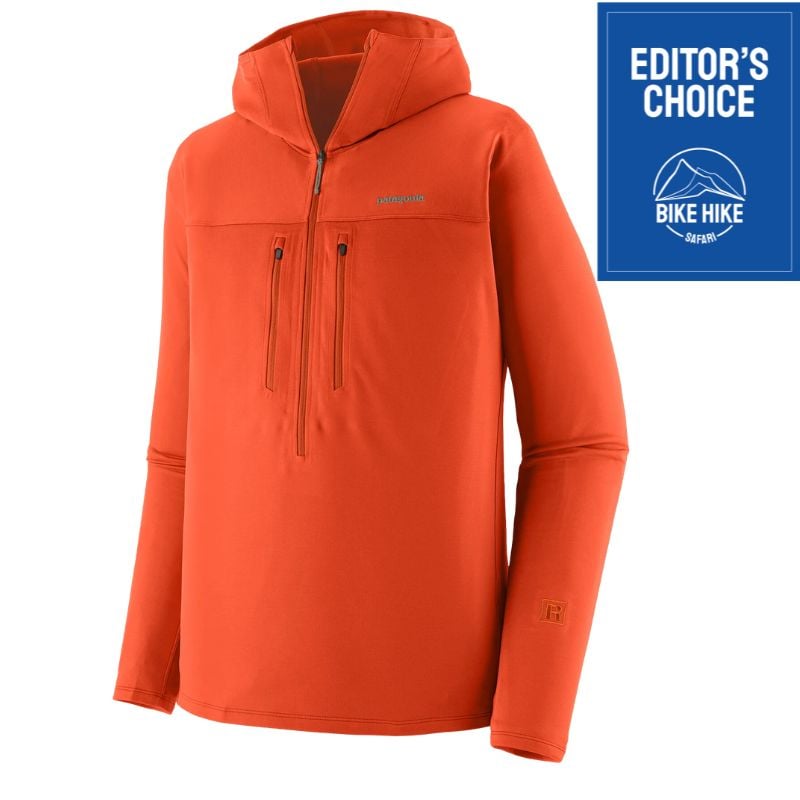
Weight: 9.87 oz / 280 grams
Fabric: 4.6-oz recycled polyester
Hood: Yes (low-profile, helmet-compatible)
Pockets: 2 chest
Pros:
> Ultralight
> More durable fabric than Alpha Direct
> Comfortable
Cons:
> Not windproof
> Not Cheap
The R1 Ultralight is the fleece I now point most thru-hikers toward as the best overall pick, because it solves the problem the standard R1 and the R1 Air can’t: real fleece warmth and breathability in a layer that weighs barely more than a base layer. At under 10 oz it earns its place in an ultralight pack without making you choose between warmth and grams.
It suits three-season thru-hikes, alpine starts, and cool shoulder-season mornings where you want a layer you can hike in and not just wear at camp. The flat-faced double-knit fabric is the key difference from the cottage Alpha hoodies here. It has a smooth, abrasion-resistant face, so unlike bare Alpha Direct it is more durable for most hikers. Patagonia built it as a big-wall climbing layer, and that durability carries straight over to long-trail use.
Honestly, the trade-off is that it is not the lightest or the warmest fleece on this list. A 4 oz Alpha Direct hoody beats it on the scale, and a heavy grid fleece beats it on standalone warmth. What the R1 Ultralight does better than anything else is balance: light enough for ultralight backpacking, breathable enough to move in, and tough enough to actually survive a thru-hike. That is exactly why it is my overall pick rather than a niche one.
Trade-off: Not the lightest or the warmest, you pay a small weight and financial penalty over bare Alpha for much better durability.
Best for: Thru-hikers who want one do-it-all ultralight fleece that will last the whole trail.
Compare Prices:
Best Premium Down Mid Layer
Feathered Friends Eos

Weight – 11.8 oz / 336 grams
Down Fill weight – 4 oz / 104 grams
Down Fill Power – 900+ Fill loft down
Total Loft – 3600 cubic inches
Shell fabric – Pertex fabric 37g/m2 with DWR
Pros:
> Pertex shield shell fabric.
> High quality 900+ down.
> Great warmth to weight.
Cons:
> No Hydrophobic down
The Feathered Friends Eos has been recently updated with a better‑fitting hood and a useful chest pocket, but it remains one of the best warmth‑to‑weight jackets in this review. The combination of 900+‑fill down and around 4 oz of fill weight makes the Eos noticeably warmer than many jackets in the same weight range.
The Pertex outer fabric is light but feels reassuringly solid, and the DWR coating adds a decent level of weather resistance for an ultralight puffy. On trail the Eos feels like a proper camp jacket: warm enough for cold mornings and evenings, and easy to throw on over your hiking clothes when the temperature drops.
The main downside is the lack of hydrophobic down, which means it will not cope with prolonged damp conditions as well as some competitors. In typical three‑season backpacking conditions that is not a deal‑breaker, but if you spend a lot of time in very wet climates it is something to keep in mind.
Overall, the Feathered Friends Eos is one of the best lightweight down jackets on the market. It feels warmer than its weight suggests, is well made, and is an excellent choice for thru‑hikers who want a serious camp jacket without carrying too much extra weight.
Compare Prices:
Best Ultralight Down Mid Layer
Zpacks Goose Down Jacket

Weight – 7.4 oz / 211 grams
Down Fill Weight – 3.8 oz / 108 grams
Total Loft – 3610 cubic inches
Down Fill Power – 950+ loft down
Outer fabric – 7D fabric with DWR
Hood – Yes
Pockets – Yes
Stuff sack – stuffs into the chest pocket
Pros:
> Ultralight and best warmth-to-weight
> 950+ Hydrophobic Down
> Very warm
> Good weather-resistant material and DWR
Cons:
> No zips on the pockets
> 7D fabric is not designed for any off-trail hiking
> Not the cheapest
The Zpacks Goose Down Jacket is one of the lightest down jackets on the market and has an outstanding warmth‑to‑weight ratio. The generous baffles are filled with 950+‑fill hydrophobic down, which lofts up quickly and makes this jacket much warmer than most jackets in the same weight class.
To keep the weight so low, Zpacks uses very thin 7‑denier fabric. It does a great job of cutting weight and still provides decent wind and weather resistance when combined with the DWR coating, but it is delicate and best suited to trail use and camp wear rather than pushing through rough scrub or rock chimneys.
On trail I found the fit to be good, with enough room to layer a fleece underneath when needed. The two hand‑warmer pockets are comfortable but do not have zips, which saves weight but makes them less secure for storing small items. The hood and hem both have simple adjustments, and the jacket stuffs neatly into the chest pocket when you are not wearing it.
The main downsides are durability, price, and the lack of pocket zips. This is not the jacket to wear for serious off‑trail bushwhacking, and it is not cheap, but if you are chasing the best warmth‑to‑weight for ultralight backpacking or thru‑hiking it is one of the best options available.
Overall, the Zpacks Goose Down Jacket is my pick for the best ultralight down jacket in 2026. It is incredibly light, impressively warm for the weight, and ideal for hikers who count every gram.
Compare Prices:
Best Lightweight Mid Layer
Patagonia R1 Air Jacket
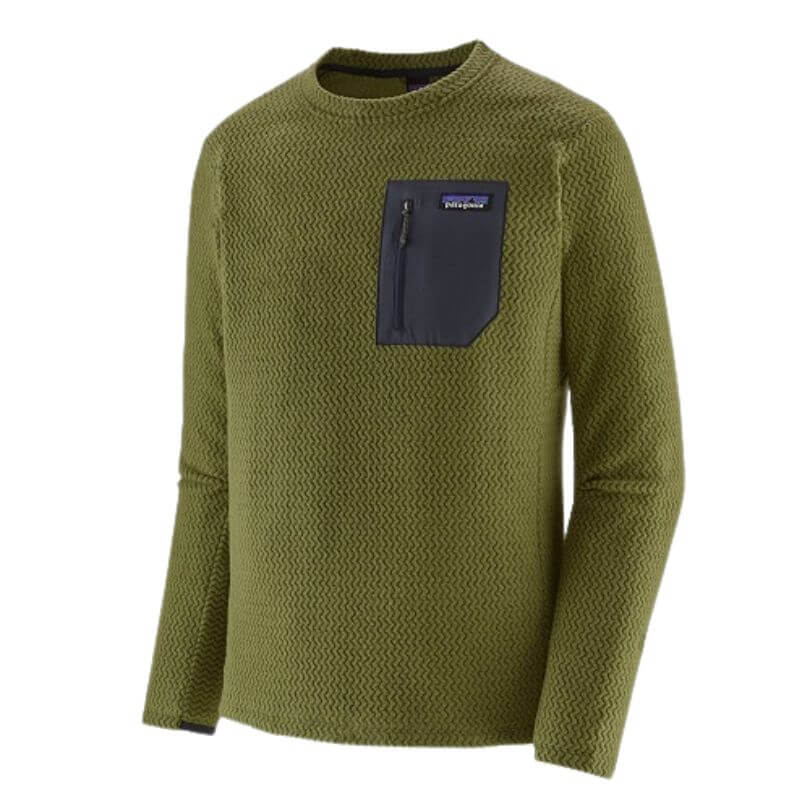
Weight: 10.5 oz / 298 grams
Fabric: Polartec gridded fleece
Hood: Optional
Pockets: Chest Pocket
Pros:
> Large range choice with full zip, half zip, no zip, hood, no hood, vest.
> 100% recycled polyester fleece.
> Lightweight
Cons:
> No pockets for hands, just a very small chest pocket
The R1 Air is Patagonias answer to Polartec Alpha direct fabric. This fleece is popular on three-season thru-hikes, and it makes sense as a top pick on an ultralight fleece page. The gridded, hollow-core fabric traps warm air while still dumping heat fast when you start climbing, so it does the one thing a thru-hiking fleece must do, work while you are moving, not just at camp. The R1 Air offers the most choice of all the fleece in this range. They have a vest version, hood, no hood, full zip, half zip and no zip.
It suits cool mornings, alpine starts, and shoulder-season trips where you are layering over a base layer and under a wind shell or rain jacket. It is breathable enough that I rarely need to stop and strip it off on a climb.
Honestly, the grid fabric is less durable than a heavy polar fleece but more durable than Polartec Alpha Direct, and it will pill with pack-strap abrasion over time. For the warmth-to-weight, I accept that trade-off. If you want one technical fleece for long trails, this is it.
Trade-off: Grid fabric pills and is less abrasion-resistant than heavy fleece.
Best for: Three-season thru-hiking and fast-and-light alpine days.
Compare Prices:
Best Ultralight Fleece Mid Layer
FarPointe Outdoor Gear Alpha Cruiser
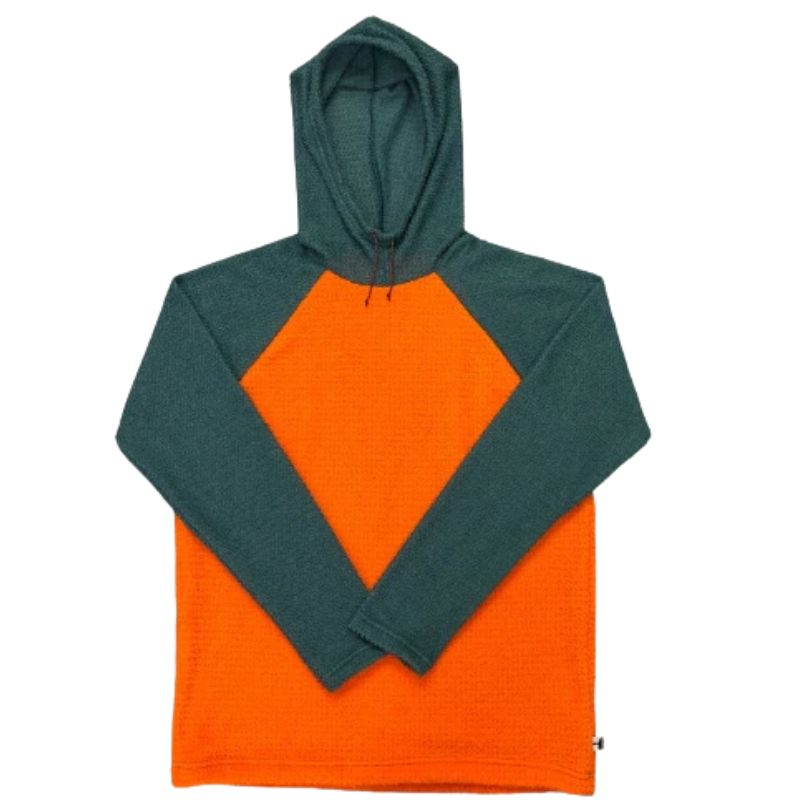
Weight: 4 oz / 113 grams (60gsm)
Material: Polartec Alpha Direct Fleece (available in ultralight 60 gsm or 90gsm)
Hood: Yes
Pockets: No
Pros:
> Ultralight
> Basic warmth with no extras like pockets
> Available in ultralight 60 gsm (preferred) or slightly heavier 90 gsm fabric
> Best in class warmth to weight and breathability
Cons:
> Delicate Polartec Alpha Direct fabric
If your single goal is the lowest possible weight, the FarPointe Alpha Cruiser is my best ultralight pick. In the 60gsm build it comes in around 4 oz, lighter than most long-sleeve shirts. For gram-counting thru-hikers this is the kind of layer that makes a cottage brand worth the wait.
It shines as a moving and camp layer on long trails where every ounce is scrutinised, and the open Alpha Direct mesh breathes and dries faster than any gridded or polar fleece here. You pick the fabric weight to match your trip: 60gsm for fast-and-light three-season use, 90gsm if you want more warmth for colder shoulder-season nights.
The honest trade-offs are the ones that come with all bare Alpha Direct, and the Cruiser is at the extreme end of them. There is no wind resistance at all, so wear it under a wind shirt or rain jacket or the wind cuts straight through. The fabric also snags and pills easily, so this is not the fleece for bushwhacking or rough scrambling. And being a cottage maker, the colours, sizes and wait times may not suit anyone who wants the jacket in a hurry. Check prices and availability below.
Accept those trade-offs and nothing on this list touches it on warmth-to-weight. Pair it with a light wind shell or rain jacket and you have one of the most efficient warmth-per-gram layering setups in ultralight backpacking.
Trade-off: No wind resistance, fragile, snag-prone fabric, the price of being this light.
Best for: Gram-counting ultralight thru-hikers who already carry a wind shirt or rain jacket.
Compare Prices:
Best Alpha Direct Fleece Mid Layer
Macpac Nitro Fleece Hoody Pullover
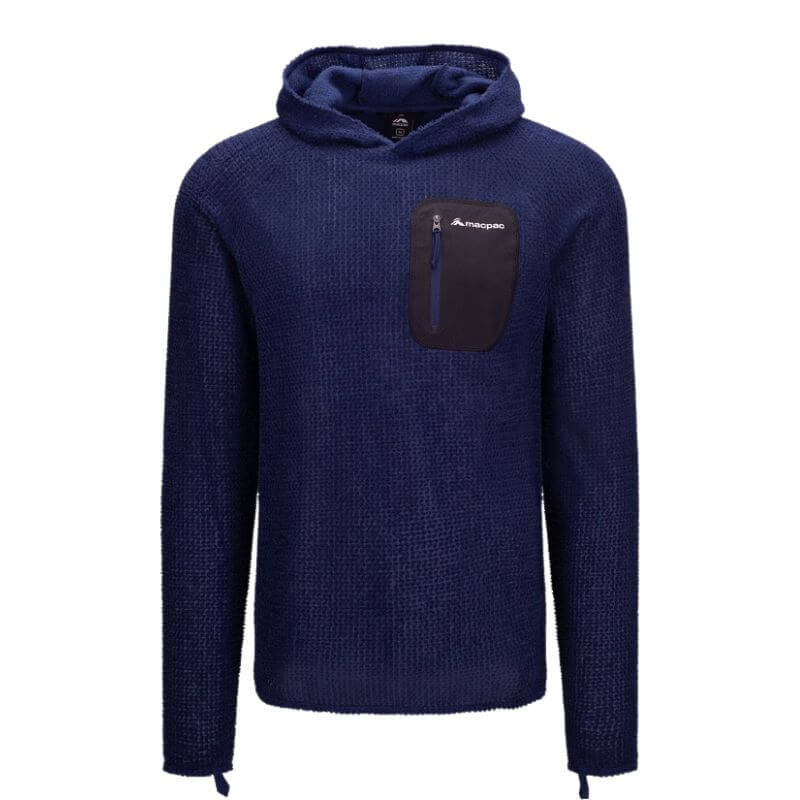
Weight: 4.9 oz / 140 grams
Material: Polartec Alpha Direct Fleece
Hood: Yes
Pockets: Chest only
Pros:
> Ultralight
> Fast wicking material will transfer moisture away from the skin
> The lightweight fabric is machine washable and fast drying
> Best in class warmth to weight ratio
Cons:
> Only available in Australia and New Zealand
> Not durable, but is stronger than it looks
This is a long-standing favourite of mine and the one of the lightest fleece on the list. I have been using and testing this jacket in cool weather for several years now and it is always my first choice when looking for an ultralight fleece jacket. That kind of multi-year use is exactly why it stays in the guide.
I’m a big fan of the Polartec Alpha Direct fibers which have no backing fabric and can be directly against the skin if you choose. That construction is what gives it the warmth-to-weight that mainstream fleeces can’t match, and it dries almost instantly. When used with a Lightweight Base Layers underneath it provide exceptional warmth and breathability.
The trade-off with Alpha Direct is fragility, the open fibres snag and forms little cluster balls known as pilling, so it is not the jacket for bushwhacking. Only available in Australia and New Zealand and the best choice for hikers in that region for North America the FarPointe Outdoor Gear Alpha Cruiser is a similar option.
Trade-off: Delicate Alpha Direct fibres snags and forms little cluster balls.
Best for: Ultralight thru-hikers, especially in Australia and New Zealand.
Compare Prices:
Best Budget Mid Layer
REI Trailmade Fleece Jacket
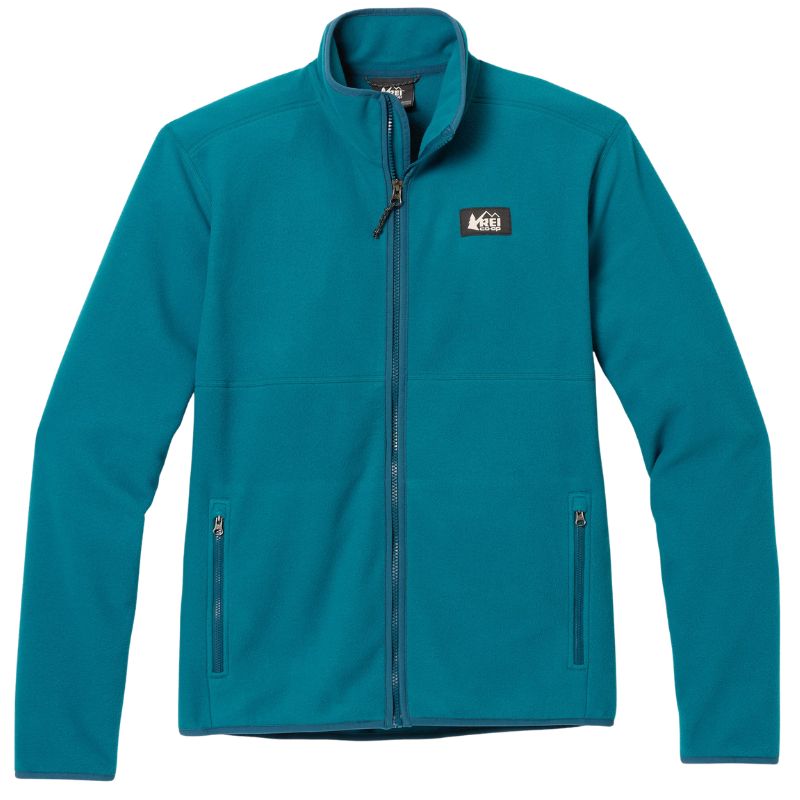
Weight: 12.7 oz / 360 grams
Material: Midweight Fleece
Hood: No
Pockets: 2 Hand, 1 internal
Pros:
> Comfortable
> Durable and well made
> Affordable
Cons:
> It is a relaxed fit which means it can feel a bit oversized for some people
The Trailmade stays as the budget mid layer because it does the layering job for a fraction of the cost of an Alpha Direct hoody. For under $70 it is the sensible choice for hikers who want a reliable mid-layer without spending big on cottage gear, and for shoulder-season trips where you might thrash the jacket.
It is heavier and less breathable than the technical picks, so it is not the one for sub-10oz goals, but it punches above its price.
Trade-off: Heavier and less breathable than technical fleeces.
Best for: Budget-conscious hikers and abuse-prone trips.
Compare Prices:
Most Popular Mid Layer
Patagonia Down Sweater Hoody

Weight – 15.1 oz / 428 grams
Down Fill Weight – 5 oz / 142 grams
Total Loft – 4000 cubic inches
Down Fill Power – 800 loft down
Outer fabric – 100% recycled ripstop nylon fabric with DWR
Hood – Yes
Pockets – Yes
Stuff sack – No, jacket stuffs into chest pocket
Pros:
> Reasonably priced, considering it is Patagonia
> Warm
> Environmentally friendly
Cons:
> Not the lightest down jacket
> Bulky pack size
The Patagonia Down Sweater Hoody is one of the most popular down jackets in the world. It is not the lightest option here, but it delivers honest warmth, a comfortable fit, and strong environmental credentials at a reasonable weight for most backpackers.
I used this jacket on the Pacific Crest Trail and the Continental Divide Trail and found that, while it does not win any ultralight awards, it just works. The 800‑fill down, recycled nylon face fabric with DWR, and simple, functional design make it a solid choice for hikers who value reliability over shaving every last gram.
The Down Sweater Hoody has good hand pockets, a useful chest pocket, and a relaxed fit that is easy to layer over other clothing. The pack size is bulkier than more aggressive ultralight options, but still manageable for backpacking and travel.
Overall, the Patagonia Down Sweater Hoody is a good, honest backpacking down jacket with no gimmicks. If you want one jacket that will work for hiking, travel, and everyday use, this is one of the best choices in 2026.
Compare Prices:
Mid Layer Buyers Guide
Lightweight Mid Layer Buyers Guide
Hiking Mid Layer
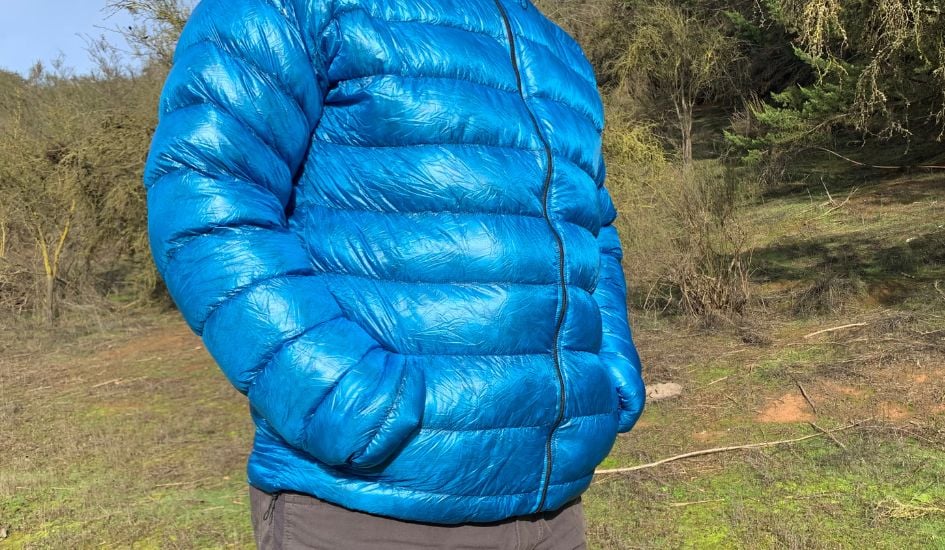
Mid layers are worn between the base layer and outer layer and are the layer that provides any actual warmth. The warmth provided by your hiking mid-layer depends on the ‘loft’ which is an indication of the layer’s ability to trap warm air.
As such, the importance of picking a good mid-layer cannot be overstated. Preferences will vary depending on the activity and buyer, making finding your perfect layer a daunting task, but there are some key things to bear in mind.
Types of Fabrics
One of the most important factors to consider is the material that your mid layer is made of as not all materials are suitable for all conditions.
Down
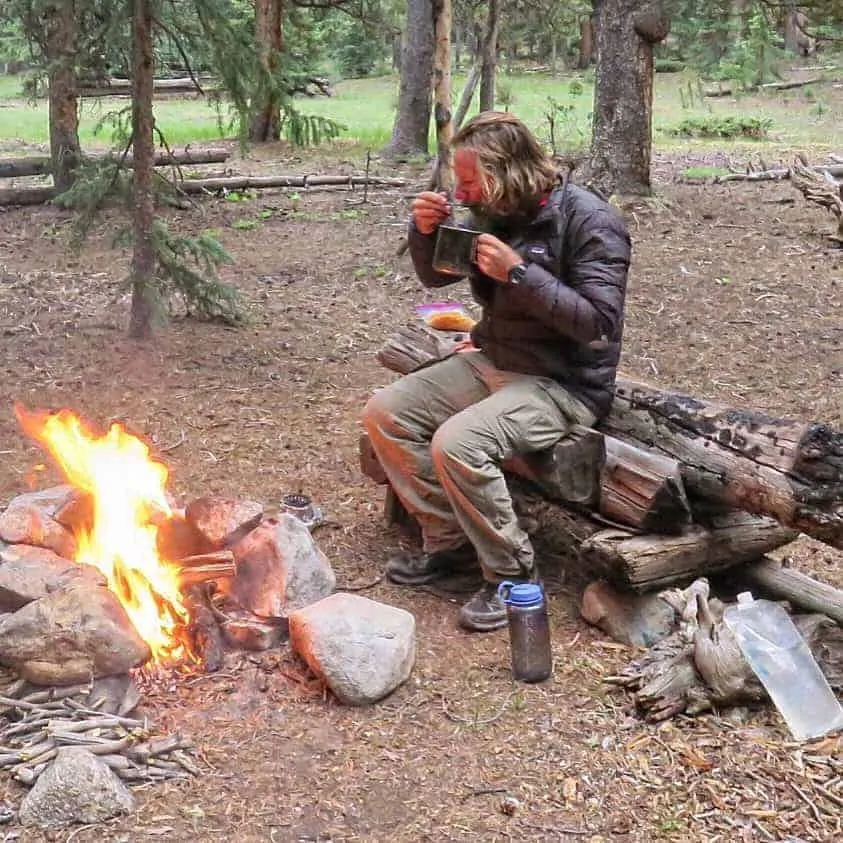
Goose and duck down, for example, is the best insulating material by weight available for mid layers but only works when dry so is unsuitable for any wet conditions. Unless you are going into extremely cold areas I don’t recommend down mid-layer. It works best as the layer to use over the top of the mid layer or as the outer layer unless it is raining.
Fleece
Fleece is a common choice as it is incredibly soft, comfortable, lightweight, and insulating. Fleece is a unique fabric in that it keeps its insulating properties even when wet but is also unable to absorb moisture.
It is machine washable for easy care and is breathable for all-day comfort. The only possible downside is that fleece can clump together in unattractive pills which eventually affects insulation.
Fleece and all its latest upgrades such as Polartec Alpha are leading the way in lightweight insulating layers. I believe these are the best mid-layer materials.
And fleece is generally made from recycled plastic water bottles, it’s good to recycle and reuse.
Merino Wool
Merino wool is another popular option for mid-layering pieces and can be used for good base layers too.
Merino wool has antimicrobial properties which will limit unpleasant odors, as will its breathability, and is considered to be more sustainable as it is a natural fiber. But the downside is that it is quite heavy for the weight and can be fragile unless used as a blend.
If you are purchasing your mid-layer pieces for more intense activities involving unpredictable weather, a softshell jacket may be for you.
Softshell
A softshell is usually woven from polyester and is worn between a waterproof outer layer and a fleece on an inner layer.
When worn as part of a layering system, a softshell will prevent any moisture that is penetrating waterproof outer layers from hitting your skin and lowering your temperature.
They are more durable and offer better protection from the elements than just fleece or merino wool alone, hence their popularity amongst those partaking in intense outdoor activities.
Softshells generally are not the best materials for mid-layers but they can be used as an outer layer in winter.
Synthetic Insulation
Synthetic Insulation is generally a little warmer than many fleece jackets and performs better in damp weather than down. As yet synthetic insulation is unable to provide the warmth weight of down, nor is it as packable as down. But it is only a matter of time before technology will produce something to rival down insulation. They are also very breathable which is great when hiking and backpacking.
Feature of The Best Mid Layers
There are several features of mid layers that you should take into consideration.
Hoods
Almost all the jackets in this review come in several versions and almost all offer a hooded version.
Pockets
Chest pockets, hand pockets, or no pockets. Those are the usual choices.
Chest pockets are usually quite small and not that practical. Most are small and not even big enough for a smartphone, but they will fit keys or small things.
Hand pockets are good on these middle layers but if your goal is to be an ultralight hiker then you will look for something without pockets.
Zippers
Some of the ultralight layers have no zips to reduce weight but most have either a full zip or half zip. If opting for a zippered jacket it is usually better to have a full zip for more versatility when it comes to venting heat when needed.
Mid Layer for Cold
If you’re purchasing mid-layers for extremely cold days, opt for an insulated jacket. They are the warmest and most insulating mid layers available and work by trapping air between fibers.
These fibers are either down or synthetic, with synthetic being the better option for wet environments or if you intend on wearing your mid layer during intense activity due to the fibers’ moisture resistance.
Fit
The fit of your jacket is important as improper sizing will not give you the benefits of wearing the piece. Ideally, mid layers are worn tight enough that body heat is retained but are loose enough that you are still able to wear base layers underneath.
Weight
As part of a layering system, mid layers need to be light enough that they do not add unnecessary bulk as this will limit your freedom of movement.
Mid layers that have polyester, Lycra, or Spandex as part of their composition for additional flexibility.
Breathability
Breathability is also important to consider here as mid layers with low breathability will make you feel uncomfortable throughout the day and keep any perspiration close to the skin which should be avoided.
At the opposite end, mid layers with low absorption will block any water penetrating the outer layer from hitting your body.

Durability
While most of the gear in this review will last you a very long time it should be noted that some will last longer than others. Fleece will slowly shed its fibers over time until eventually there is not much left. If you manage to look after your fleece jacket and get 10-15 years out of it you will see there is not much left. And they are prone to getting holes as the fabric is not the strongest.
Polartec Alpha is a delicate fabric and for those who are tough on their clothing, you may want to choose something else. If you are wearing this as an outer layer and hiking off trail Polartec Alpha will get holes quite easily.
Down jackets and Synthetic insulation jackets tend to have a delicate outer fabric that is not the most durable if hiking off-trail.
Overall, when hiking on trails all the fabrics are quite durable but when off the trail and exposed to sharp rocks or tree branches your gear might suffer.
Price
One of the good things about using a middle layer for hiking is the price. They are certainly not the most expensive clothing item. But the price comes with value as most of these layers will not only serve the purpose of layering when backpacking and hiking but can be used skiing, traveling, or around town.
Conclusion
The best hiking mid layers for 2026 are:
- Best Overall: Patagonia R1 Ultralight Hoody
- Best Premium Down Mid Layer: Feathered Friends Eos
- Best Ultralight Down Mid Layer: Zpacks Goose Down Jacket
- Best Lightweight Mid Layer: Patagonia R1 Air
- Best Ultralight Mid Layer (sub-5oz): FarPointe Outdoor Gear Alpha Cruiser
- Best Lightweight Fleece Mid Layer: Macpac Nitro
- Best Budget Mid Layer: REI Trailmade Fleece Jacket
- Most Popular Mid Layer: Patagonia Down Sweater
Follow along on Social Media
Frequently Asked Questions
How should my mid-layer fit?
Mid layers are generally not designed to fit in the same as the standard, everyday wear which can make sizing difficult.
For the best fit, make use of the brand’s sizing guidelines to find the perfect piece to give complete coverage and protection from the elements.
It is important to find mid-layering pieces that do not bulk up, particularly for the bottoms, to ensure comfort and movement.
Do I need a mid-layer?
If you are going out into a high temperature or will be engaging in intense sustained exercise, you may not need a mid-layer.
It is, however, a good idea to pack a lightweight layer with you in case you stop or the weather changes to prevent yourself from getting too cold.
As legs stay warm due to exertion, especially with skiing, a mid-layer on the bottom half can be skipped even in colder conditions as long as the weather is not too extreme.
For extremely cold or glacial conditions you absolutely need a mid-layer. This can be a tricky balancing act as you need to find a layer that will insulate enough that you do not get cold, but not so much that you get too hot and begin to sweat.
When wet, some of the insulating properties of a mid-layer are lost and you will quickly feel the cold.

BikeHikeSafari Gear Review Process
The author, Brad McCartney from BikeHikeSafari is a small independent adventurer and outdoor gear tester who owns and runs BikeHikeSafari.com.
BikeHikeSafari is not part of a large blog network and is proudly independent. All reviews on this site are independent and honest gear reviews of outdoor products by the author.
The author, Brad McCartney is a very experienced triple crown thru-hiker, adventurer, and bike tourer having spent 1000s of nights sleeping in a tent and sleeping bag (Read more). He was a manager of an outdoor retail store and is very experienced in what is important when using and testing gear for reviews like this.
BikeHikeSafari will never receive any money for reviews and they do not accept sponsored reviews on this website. All the comments about the gear reviews are from the author based on his years of experience. Hope this independent review was helpful for you.

