

I’ve slept in ultralight tents for thousands of nights across the PCT, the AT, the CDT, Te Araroa, and a long stretch of bikepacking through North and South America. I’m picky about what I trust to keep me dry on a long trail. This guide is for thru-hikers, ultralight backpackers, and bikepackers who care about every gram and still want a tent that holds up in a real storm.
My current top pick for a two person tent is the Zpacks Duplex Pro, with the Six Moon Designs Lunar Solo as the budget tent I recommend more than any other, and the Hyperlite Mountain Gear CrossPeak 2 as the best freestanding option. The core trade-off in this category is weight versus weather resistance and durability. Dyneema saves grams but costs more and is more delicate; silpoly and silnylon are heavier and cheaper but a bit more forgiving when you push them. Some ultralight hikers might even prefer an Ultralight Tarp to keep their base weight as low as possible.
I’m a Triple Crown thru-hiker and former outdoor store manager, and every tent in this guide has either been used and slept in by me or researched and studied in detail.
Quick Picks: Best Ultralight Tents 2026
- Best Ultralight 1P Tent (overall): ZPacks Plex Solo – 12.3 oz / 348 g. The lightest fully enclosed solo tent I trust on a thru-hike. Dyneema, single-wall, trekking-pole pitched.
- Best Ultralight 2P Tent (overall): Zpacks Duplex Pro – 1 lb. 3.2 oz / 544 g. Still the benchmark thru-hiker tent for two. Two doors, two vestibules, Dyneema, and a real zip on the latest version.
- Best Ultralight 3P Tent: Zpacks Triplex Pro – 1 lb. 5.7 oz / 616 g. Roomy enough for a couple plus a dog or a couple plus thru-hiker gear, at a weight most 2P tents can’t match.
- Best Ultralight Tent for Thru-Hiking: Durston X-Mid Pro 2+ – 1 lb. 3.2 oz / 509 g. I’d send a budget first-time PCT hiker to this tent for the best balance of price, weight, and weather resistance.
- Best Freestanding Ultralight Tent: Hyperlite Mountain Gear CrossPeak 2 – 2 lb. 2 oz / 964 g. Real Dyneema fly with a real freestanding pole set. Worth the price if you camp on slick rock or sand. Sure to be a favorite for ultralight bikepacking.
- Best Lightweight 1P Tent: Hyperlite Mountain Gear Mid 1P – 1 lb. / 454 g. Single-wall pyramid with bug protection. Bombproof in storms once it’s pitched well.
- Best Lightweight 2P Tent: Hyperlite Mountain Gear Unbound 2P – 1 lb 6 oz / 624 g. The Dyneema double-door alternative to the Duplex.
- Most Spacious Ultralight Tent: Hyperlite Mountain Gear Ultramid 2 – 1 lb. 3.1 oz / 541 g (fly only). A floorless pyramid that handles serious wind and snow. Add an inner for bug season.
- Best Cheap Ultralight Tent: Six Moon Designs Lunar Solo – 1 lb 10 oz / 740 g. Still one of the cheapest single skin solo tent worth thru hiking with.
- Best 1P Backpacking Tent (semi-freestanding): Nemo Hornet OSMO 1P – 1 lb 13 oz / 822 g. The non-trekking-pole option that actually earns its weight.
- Best 2P Backpacking Tent (semi-freestanding): Nemo Hornet OSMO 2P – 2 lb 1 oz / 935 g. My current pick for hikers who want two doors and don’t use trekking poles.
- Best 3P Backpacking Tent: Big Agnes Copper Spur UL3 – 3 lb. 6 oz / 1.53 kg. The 3P I used on parts of the PCT and a Mexico bikepacking trip.
How We Tested
The ultralight tents in this guide are researched and, where possible, field-tested by an experienced long-distance hiker, Triple Crown thru-hiker, and former outdoor store manager. Across thru-hikes, shoulder-season trips, and bikepacking expeditions, I judge ultralight tents on weight-to-weather-protection ratio, packed size, livability, durability, ease of pitch, ventilation, and value for serious backpacking. Some of the items where supplied by the manufacturer and some items were purchased by the author for this review. For more on how we research and review gear, see the Review Policy for further details.
Ultralight Tent Comparison Table
| Brand | Weight | Pitch | Material | Capacity |
|---|---|---|---|---|
| ZPacks Plex Solo | 12.3 oz | Single trekking pole | Dyneema | 1P |
| ZPacks Duplex Pro | 1 lb. 3.2 oz | Two trekking poles | Dyneema | 2P |
| Zpacks Triplex Pro | 1 lb. 5.7 oz | Two trekking poles | Dyneema | 3P |
| Durston X-Mid Pro 2+ | 1 lb. 3.2 oz | Two trekking poles | Dyneema | 2P |
| Hyperlite Mountain Gear CrossPeak 2 | 2 lb. 2 oz | Freestanding | Dyneema | 2P |
| Hyperlite Mountain Gear Mid 1P | 1 lb | Single trekking pole | Dyneema | 1P |
| Hyperlite Mountain Gear Unbound 2P | 1 lb. 6 oz | Two trekking poles | Dyneema | 2P |
| Hyperlite Mountain Gear Ultramid 2 | 1 lb. 3.1 oz | Single trekking pole | Dyneema | 2P |
| Six Moon Designs Lunar Solo | 1 lb. 10 oz | Single trekking pole | Silicone Coated Polyester | 1 P |
| Nemo Hornet OSMO 1P | 1 lb. 13 oz | Semi Freestanding | Nylon | 1P |
| Nemo Hornet Osmo 2P | 2 lb. 1 oz | Semi Freestanding | Nylon | 2P |
| Big Agnes Copper Spur UL3 | 3 lb. 6 oz | Freestanding | Nylon | 3P |
Follow along on Social Media
Best Ultralight Tents 2026 – Top Picks
Best Ultralight 1P Tent – Overall
ZPacks Plex Solo Review
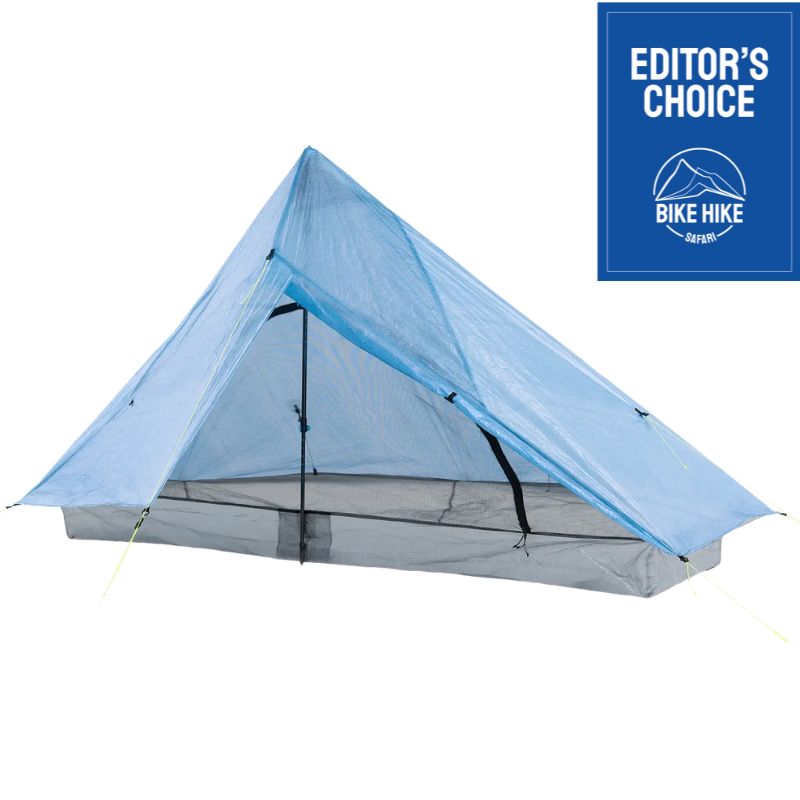
Weight: 12.3 oz / 348 grams
Fabric: Dyneema
Wall: Single
Pitch: Single trekking Pole
Doors: 1
Vestibule: 1
Pros:
> Ultralight
> Very small pack size
> Only needs 1 trekking pole and 6 tent stakes to set up
Cons:
> Not the cheapest
> You need to purchase tent stakes and a trekking pole separately
The Plex Solo is the lightest enclosed solo tent I’m willing to trust on a thru-hike. When I used and tested this tent I liked the very small pack size and ultralight weight. It pitches with a single trekking pole, which keeps the pack volume tiny.
It suits classic 3-season thru-hiking on trails where you can drive a stake. Overall, this tent is for the very niche ultralight thru-hiker who understands that this tent must be cared for and only really used by experienced people. Add an ultralight backpack and sleeping bag and you have one of the lightest setups on trail.
The trade-off with the Plex Solo is space and durability. There’s enough room for a tall hiker and a pack at the foot end, no more. Dyneema needs careful handling.
Trade off: ultralight weight vs interior space and ruggedness.
Best for: experienced ultralight thru-hikers on the PCT, AT, CDT, Te Araroa or other long distance hiking trail.
Compare Prices:
Best Ultralight 2P Tent – Overall
Zpacks Duplex Pro Review
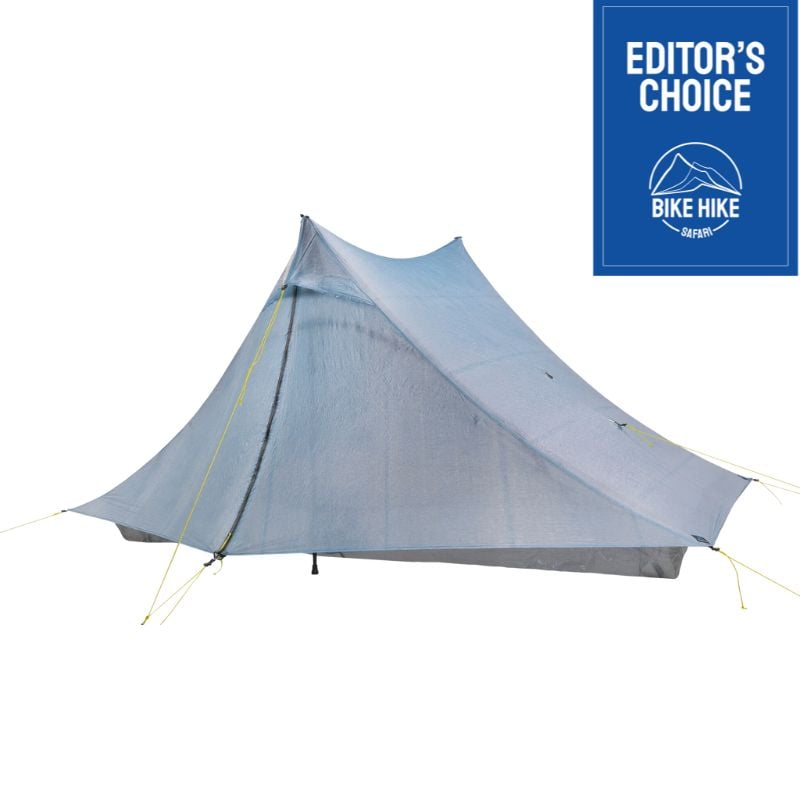
Weight: 1lb. 3.2 oz / 544 grams
Fabric: Dyneema
Wall: Single
Pitch: Two trekking Pole
Doors: 2
Vestibule: 2
Pros:
> Ultralight
> Waterproof and seam-sealed
> Good in bad weather
> Small pack size
> Good internal dimensions for 2 people
Cons:
> Not cheap
The Duplex Zip is the tent I keep coming back to for fast, light, two-person thru-hike trips, and after years of Dyneema tents, it’s still the benchmark. When I tested this tent I liked the way the bottom of the zips on the vestibule are attached to the tent pegs via a cord and hooks system. It’s a small thing, but it solves the slack-fly problem that plagues many other tent.
It suits classic thru-hikes (PCT, CDT, Te Araroa) more than alpine missions. With Dyneema you get virtually zero sag in the rain, low pack weight, and a tent that dries in quickly. It is not the tent for granite slabs and slick rock where you can’t get a stake in.
In real-world use, two thru-hikers fit, just. Two doors and two vestibules are non negotiable for me on a long trail. The trade off is durability. Dyneema is light, strong against tears, and brittle around stress points. Treat the corners and zipper carefully and it lasts hundreds of stress free nights.
If you want to save 4.3 oz / 121 grams the Zpacks Duplex Lite is essentially the same tent with the zips on the vestibule removed and replaced by lightweight toggles. I’ve also used and tested this version which is better suited to trails that don’t see too much rain.
Trade off: weight and packability vs price and long-term durability of stress points.
Best for: PCT / CDT / AT thru-hikers and any hiking couple counting grams.
Compare Prices:
Best Ultralight 3P Tent – Overall
Zpacks Triplex Pro Review

Weight: 1lb. 5.7 oz / 616 grams
Fabric: Dyneema
Wall: Single
Pitch: Two trekking Pole
Doors: 2
Vestibule: 2
Pros:
> Ultralight
> Waterproof and seam sealed
> Good in bad weather
> Small pack size
Cons:
> A bit tight for 3 people, but perfect for 2 people
> Not cheap
I have extensively used and tested the non-zip version and find it to be very roomy as a two-person tent and sufficient as a 3 person tent. This is the tent I recommend for couples who want to actually be comfortable on a long trail without paying the weight penalty of a heavier 3P tent.
It works best for thru-hiking couples, hikers with dogs, or solo hikers who want palace like space at a still sub-1.5 lb weight. Overall it is the highest quality Dyneema, single wall, two trekking poles to pitch.
The trade-off is the same as every Dyneema tent: cost and stress-point durability. The zip version solves the older Duplex/Triplex slack-fly problem when it is windy.
Trade off: real 3P space vs Dyneema price.
Best for: thru-hiking couples, couples with a dog, or solo hikers who want lots of room.
Compare Prices:
Best Ultralight Tent for Thru-Hiking
Durston X-Mid Pro 2+ Review
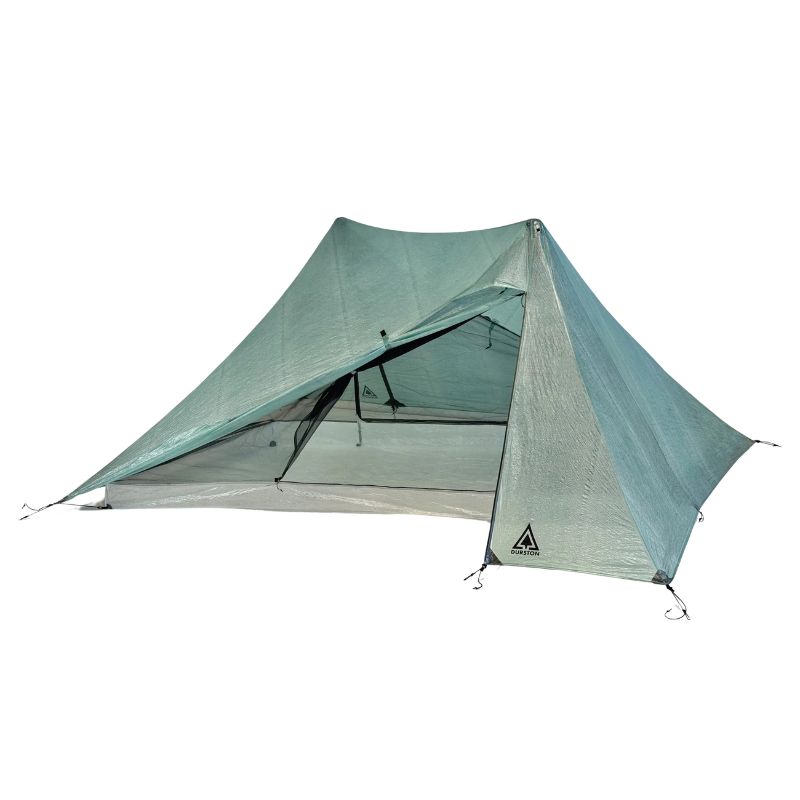
Weight: 1lb. 3.2 oz / 545 grams
Fabric: Dyneema
Wall: Single
Pitch: Two trekking Pole
Doors: 2
Vestibule: 2
Pros:
> Ultralight
> Good internal volume
> Durable
Cons:
> Not cheap
> You need to purchase tent stakes and trekking poles separately
The X-Mid Pro 2+ is what I recommend right now to a couple weighing the Duplex Zip against everything else. While I prefer the Zpacks Duplex Zip for its proven track record there is no doubting the slightly more liveable interior of the X-Mid Pro 2+thanks to the offset pitch. It weighs the same and is also a Dyneema, two-door, two-vestibule, trekking-pole tent.
It suits PCT / CDT / AT / Te Araroa couples who want every gram of Dyneema’s benefit but also want to actually sit up and live in the tent at the end of a long day. The offset rectangle pitches in tighter sites than a parallelogram tent.
In real-world use, the trade-off versus the Duplex Zip is design philosophy: the Duplex is a known quantity with a decade of trail testing; the X-Mid Pro 2+ is the newer, more livable option.
Trade off: newer design and slightly better liveability vs Duplex’s longer track record.
Best for: thru-hiking couples who want Dyneema and a better interior layout than the Duplex.
Compare Prices:
Best Freestanding Ultralight Tent
Hyperlite Mountain Gear CrossPeak 2 Review
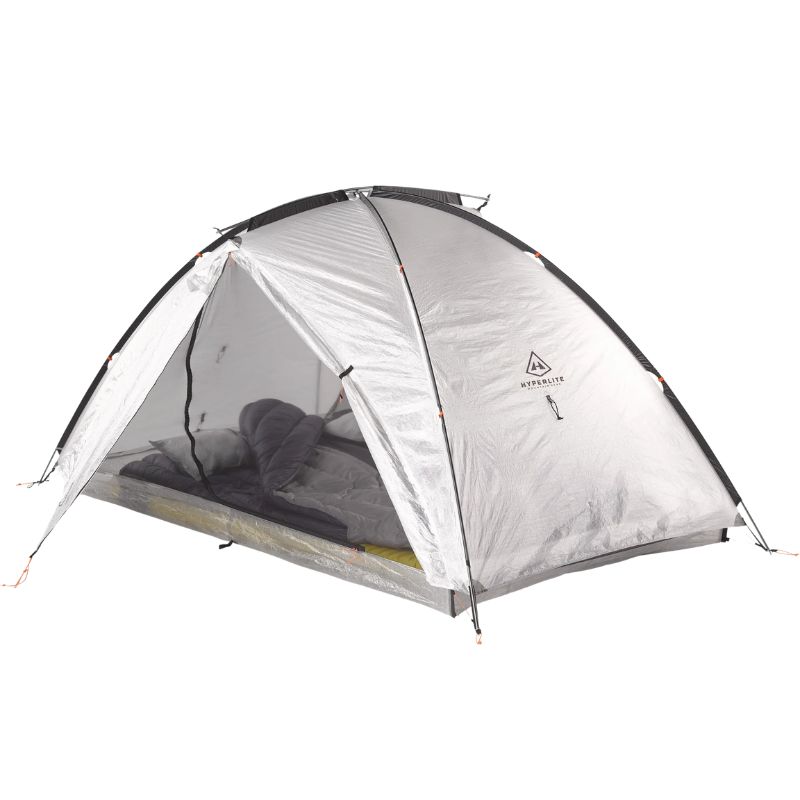
Weight: 2lb. 2oz / 964 grams
Fabric: Dyneema
Wall: Single
Pitch: Freestanding
Doors: 2
Vestibule: 2
Pros:
> free standing
> Lightweight
> Best for bikepacking and thru-hiking in areas without tent stakes
Cons:
> Not cheap
The CrossPeak 2 is the freestanding ultralight tent I’d actually carry. Most ultralight freestanding tents land at 2.5 to 3 lbs, which isn’t really ultralight. The CrossPeak 2 hits 2 lb. 2 oz with a real DCF fly and a proper top tier pole set.
It suits hikers who can’t always rely on stakes such as desert slick rock, sandy beaches, alpine granite and bikepackers who want a tent they can pitch fast and free of trekking poles. It’s also the right choice for anyone who simply doesn’t carry trekking poles.
There are a couple of trade offs. The Dyneema tent with a freestanding pole set are not cheap. Compared to ultralight trekking pole tents its a pound heavier.
Trade off: price, and about a pound heavier vs the convenience of a true freestanding pitch.
Best for: desert / slick-rock hikers, bikepackers, and hikers who don’t use trekking poles or camp on tent platforms.
Compare Prices:
Best Lightweight 1P Tent
Hyperlite Mountain Gear Mid 1P Review

Weight: 1 lb / 454 grams
Fabric: Dyneema
Wall: Single
Pitch: One trekking pole
Doors: 1
Vestibule: 1
Pros:
> Very Lightweight Tent
> Stormproof
> Small pack size
> Good warranty and after sales service from HMG
Cons:
> Not the cheapest tent
The HMG Mid 1 is a Dyneema pyramid that punches above its weight for storms. I am not the tallest person, but I am able to sleep in the tent and still have enough room to store my backpack at my feet. Pitched well, the pyramid shape sheds wind better than most rectangular UL solos.
It suits 3-season trips with the chance of real weather: shoulder-season alpine, exposed ridges, wet coastal hiking. Single wall, so condensation is the main thing to manage with door / vent placement.
In real-world use, the trade-off is interior shape. The pyramid taper means less foot-end room than a Plex Solo or X-Mid 1. The upside is storm performance.
Trade off: storm-worthiness vs interior length.
Best for: solo hikers in exposed terrain who want a single-wall storm shelter.
Compare Prices:
Best Lightweight 2P Tent
Hyperlite Mountain Gear Unbound 2P Tent

Weight: 1 lb. 6 oz / 624 grams
Fabric: Dyneema
Wall: Single
Pitch: Two trekking poles
Doors: 2
Vestibule: 2
Pros:
> Ultralight
> Very Waterproof
> Great Waterproof Zips
> Perfect for Thru-Hiking
> 2 vestibules
Cons:
> Not the Cheapest
The Unbound 2P is HMG’s Dyneema double door, double vestibule answer to the Duplex. I tested and used these tents together. I was impressed with the interior space inside the tent, and attention to detail. Small things like the magnetic clips for the door are a quality touch. The double trekking pole/tent pole middle created an easy marker as to whose side was which and were able to sleep comfortably with our gear lining the edge of the tent.
It suits hikers who want HMG build quality in a Duplex-class tent, and couples with broader shoulders who want the interior shape the Unbound offers.
The trade-off is price. HMG Dyneema sits at the top end of the market and the centre-pole arrangement, which is either useful or awkward depending on your taste.
Trade off: HMG durability and pole layout vs Duplex Zip familiarity.
Best for: thru-hiking couples who prefer HMG over Zpacks.
Compare Prices:
Best Spacious Ultralight Tent
Hyperlite Mountain Gear Ultramid 2 Review

Weight: 1 lb. 3.1 oz / 541 grams
Fabric: Dyneema
Wall: Single
Pitch: One trekking poles
Doors: 1
Vestibule: 1
Pros:
> Lightweight backpacking tent
> Is a true 4 season tent
> Spacious
> Sturdy and Resilient
> Large Vestibule
> Good warranty and service
Cons:
> Premium Product which is not cheap
> Zippers Require Care
The UltaMid 2 is the Dyneema pyramid I trust most when the forecast is bad and the trip is long. Floorless means it dries the interior fast and handles cooking in the doorway better than any double-wall UL tent.
It suits expeditions, alpine, ski touring, and anyone who wants one shelter that scales from summer pyramid to winter snow shelter with the right insert. Although not as good as some 4 Season Winter Tents it will be the best out of all the tents in this review.
In real-world use, the trade-off is interior management, without an insert you’re sleeping on dirt or a ground sheet, and condensation on the underside of the fly is a fact of life.
Bethany ‘Fidget’ Hughes and Lauren ‘Neon’ Reed used this backpacking tent in Patagonia on their epic journey thru-hiking the whole length of South America.
This is what they had to say, “We were impressed with the interior space inside the tent, as we both have tall torsos and prefer a fair amount of personal space. We opted for the floorless mesh insert which provided protection from the biting flies.The Dyneema fabric was durable, and extremely light, and the vents at the top as well as controlling the amount of space between the base of the tent and the ground allowed for good ventilation and could be adjusted to prioritize warmth. It was quick to set up and has good weather resistance, being able to withstand gale force winds, hail, snow, and driving rain. All in all, the best ultralight tent I have ever used.“
Trade off: floorless flexibility vs the comfort of an integrated bathtub floor.
Best for: stormy / cold trips, ski touring, and anyone who already runs a bivy.
Compare Prices:
Best Budget Ultralight Tent
Six Moon Designs Lunar Review

Weight: 1 lb. 10 oz / 740 grams
Fabric: Sil coated polyester
Wall: Single
Pitch: One trekking poles
Doors: 1
Vestibule: 1
Pros:
> Ultralight
> Nice sized vestibule which is big enough for a backpack
> Only needs 1 trekking pole to set up
> Great Price
Cons:
> 1P only but there is a 2P Duo is a great budget option for 2 people.
The Lunar Solo is still the cheap UL solo tent I recommend more than any other under $300. Single wall silnylon, single trekking pole, decent interior for the weight.
It suits first-time UL hikers, weekenders looking to drop weight without going DCF, and anyone testing whether single-wall UL works for them before stepping up to Dyneema.
The trade-off is silnylon sag in the rain, it stretches when wet, so you’ll re-tension during a long storm. That’s the price you pay for this budget option.
Trade off: affordability vs rain sag and lower-spec zip.
Best for: first UL solo tent buyers and weekenders.
Compare Prices:
Best 1P Backpacking Tent
Nemo Hornet OSMO 1P Review
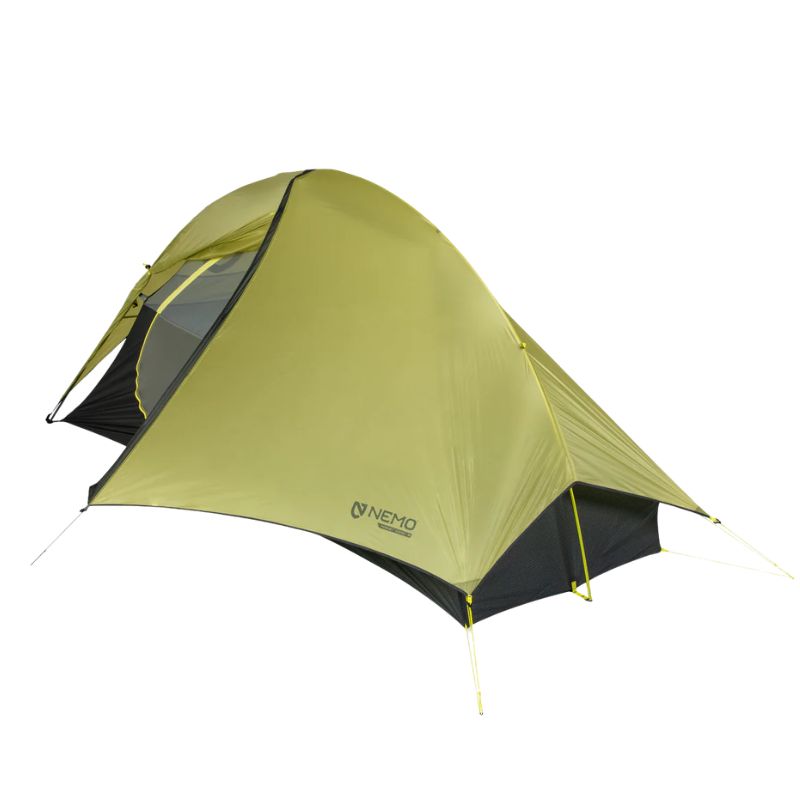
Weight: 1 lb. 13 oz / 822 grams
Fabric: Nylon polyester
Wall: Double
Pitch: Semi Freestanding
Doors: 1
Vestibule: 1
Pros:
> One of the best lightweight semi-freestanding tent
> Solid in bad weather
> Lightweight Tent
> Great warranty and after-sales service
Cons:
> Not Cheap
> In very heavy rain water can splash through the mesh
I’ve used the Nemo Hornet 1P and 2P while they hiking. Most of the time I prefer the extra room of a 2P tent when solo hiking but saving a couple of ounces makes sense with this tent. The Osmo fabric is the best update Nemo has made in years, much better wet-weather behaviour than the old fabric.
The Hornet Osmo 1P will suit a hiker who don’t use trekking poles, wants a real semi-freestanding pitch, and wants a tent that goes up the same way every time without the learning curve of a trekking pole pitch.
The trade-off is weight: a Hornet Elite Osmo 1P is heavier than any of the trekking pole tents in this review. You’re paying for the pole set and for double walls.
Trade off: semi-freestanding convenience vs trekking-pole UL minimums.
Best for: non-trekking-pole users and hikers who want a semi freestanding tent that is durable.
Compare Prices:
Best 2P Backpacking Tent
Nemo Hornet OSMO 2P Review
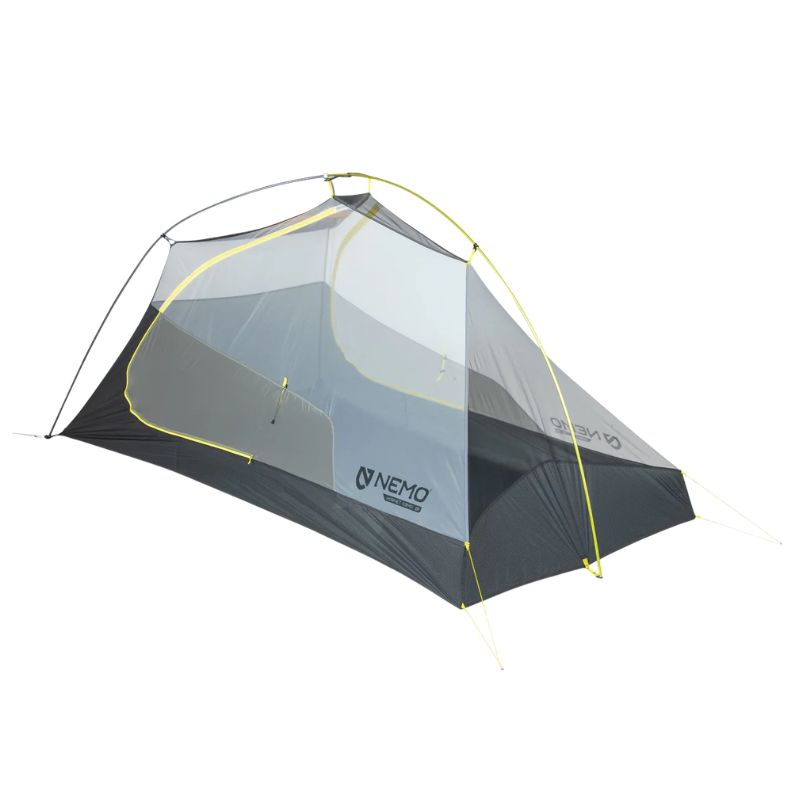
Weight: 2 lb. 1 oz / 948 grams
Fabric: Nylon polyester
Wall: Double
Pitch: Semi Freestanding
Doors: 2
Vestibule: 2
Pros:
> Good value for money
> Lightweight semi-freestanding tent
> Solid in bad weather
> Great warranty and after-sales service
Cons:
> The tent pegs bend easily if you use a rock on hard ground
> The inside mesh is prone to tearing near the pole connection loop
I used the previous model of the Nemo Hornet for well over 500 nights. I must admit I prefer the Nemo Hornet OSMO 2P version with the two doors and two vestibules, even when hiking solo. The Osmo fabric is the best update Nemo has made in years, much better wet-weather behaviour than the old fabric.
These suit hikers who don’t use trekking poles, want a real semi-freestanding pitch, and want a tent that goes up the same way every time without the learning curve of a trekking pole pitch.
The trade-off is weight: a Hornet Elite Osmo 2P is heavier than any of the trekking pole tents in this review. You’re paying for the pole set and for double walls.
Trade off: semi-freestanding convenience vs trekking-pole UL minimums.
Best for: non-trekking-pole users and hikers who want a familiar pitch.
Compare Prices:
Best 3P Backpacking Tent
Big Agnes Copper Spur UL3 Review
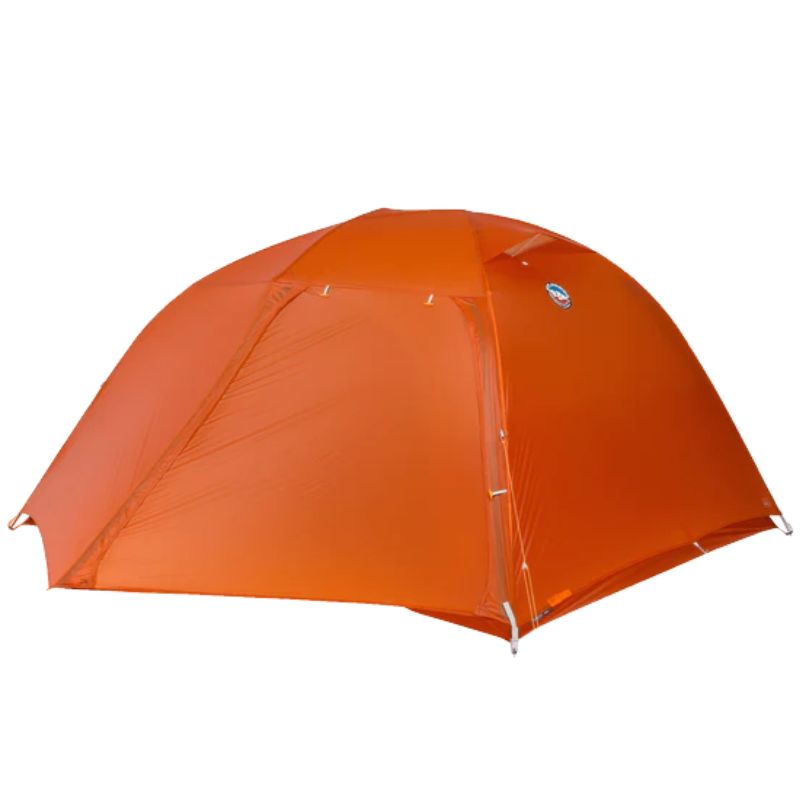
Weight: 3P 3 lb. 6 oz / 1530 grams
Fabric: Nylon
Wall: Double
Pitch: Freestanding
Doors: 2
Vestibule: 2
Pros:
> Good value for money for the UL version
one of the best lightweight freestanding tent
> Solid in bad weather
> Lightweight for a roomy 3P tent.
Cons:
> Heavier than other tents in this review
 I used the older model of the Big Agnes Copper Spur 2 while hiking parts of the Pacific Crest Trail and Bikepacking through Mexico. I thru-hiked half the Pacific Crest Trail with that tent. The newly updated Copper Spur UL3 is a bigger version of that tent with upgraded and improved fabric and a better vestibule system. It is the lightweight freestanding family / couple tent I keep coming back to for non-Dyneema budgets.
It suits couples, friends sharing a tent, families with a small child on overnighters, and anyone who wants real interior space at a freestanding 3 something pound backpacking tent.
The trade-off is weight against the Triplex (the Triplex is much lighter) and durability against UL Dyneema (the Copper Spur lasts for many hundred nights with reasonable care).
Trade off: comfort and freestanding convenience vs weight.
Best for: couples, dog hikers, and small families on overnight backpacking trips.
Compare Prices:
Read More:
- Best Tent Stakes
- Best 4 Season Tents
- Best Backpacking Sleeping Bags
- Best Backpacking Quilts
- Best Ultralight Sleeping Pads
- Best Ultralight Backpacks
- Best Trekking Poles
- Best Ultralight Backpacking Pillows
- Nemo Hornet Tent Review
- Zpacks Triplex Tent Review
- Zpacks Duplex Zip Tent Review
- Hyperlite Mountain Gear Unbound 2P Tent Review
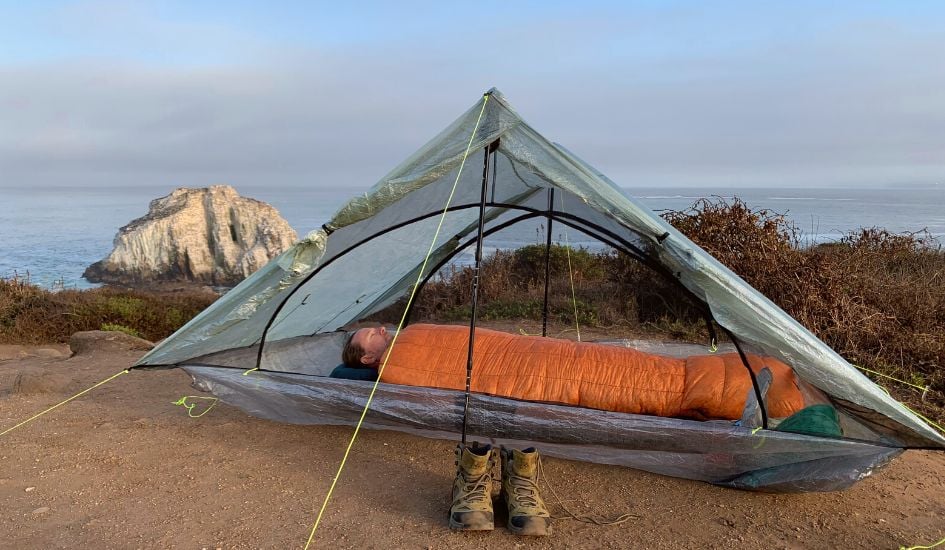
Best of the Rest
The following tents are not on the main list but not because they were not good enough but because the ones above are awesome and some of them I have not had a chance to test personally yet.
- Tarptent Aeon Li
- Tarptent Double Rainbow Li
- Gossamer Gear The One / The Two
- MSR FreeLite 2
- 3F UL Gear Lanshan 2 Pro
- Big Agnes Tiger Wall UL2
- Macpac Duolight

Ultralight Tent Buyers Guide
Ultralight Tent Buyers Guide
Trekking Pole vs Freestanding vs Semi-Freestanding
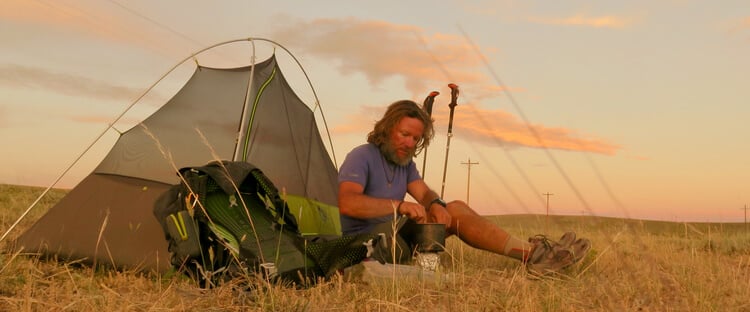
Most ultralight tents are trekking-pole tents because skipping a dedicated pole set saves a half pound or more. If you already hike with trekking poles, this is the right call almost every time. Freestanding ultralight tents only make sense if you camp on slick rock, sand, or hard alpine ground where stakes won’t hold, or if you don’t use trekking poles. Semi-freestanding tents are the middle ground and the most popular UL category for weekenders.
Single Wall vs Double Wall
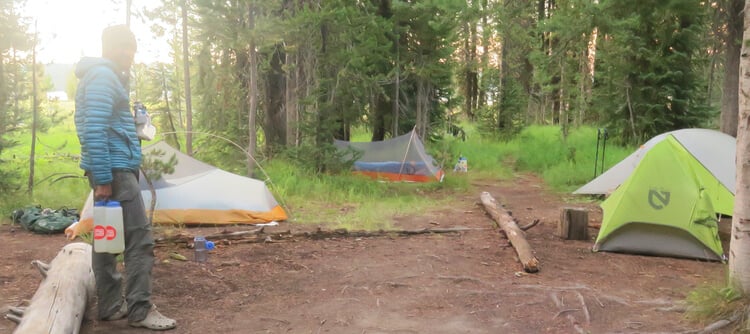
Single wall tents are usually much lighter and are usually non-freestanding tents that require the use of trekking poles to set up. When combined with fabrics such as Dyneema they make for a very lightweight backpacking tent.
Double wall tents usually have an interior tent with lots of mesh for ventilation and can often be set up without the outer tent fly making this a great option for hot weather travel in the tropics or on those warm summer nights. These tents are better at dealing with internal condensation as the inner tent has the ability to protect against drips.
Modern single-wall tents have closed most of the condensation gap, but in cold valleys and humid coastal nights, a double wall like the Nemo Hornet Osmo will still wake up drier than a Plex Solo or Lunar Solo.
Dyneema vs Silnylon vs Silpoly
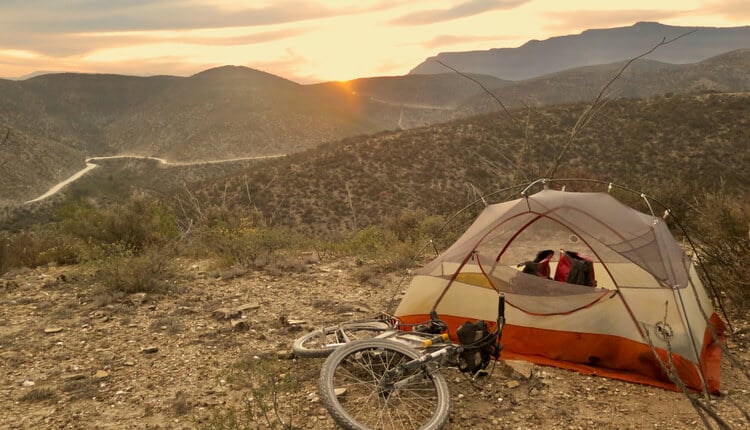
- Dyneema (DCF / Cuben Fiber): Lightest, strongest tear strength, doesn’t sag when wet, very expensive, more brittle around stress points and zippers. Best for thru-hikers who count grams.
- Silpoly: Doesn’t absorb water, doesn’t sag when wet, dries fast, cheaper than Dyneema. The smart middle ground — used on the Durston X-Mid line and most modern Tarptent tents.
- Silnylon: Cheapest, soft hand, sags when wet (re-tension overnight), heavier when saturated. Still common on Six Moon Designs and Gossamer Gear.
Packaged Weight vs Trail Weight
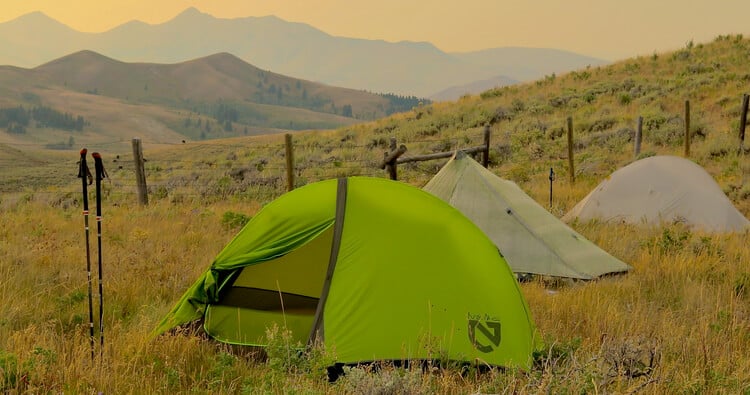
Packaged Weight refers to the weight of the tent including all the tent pegs and tent bags, Tent poles and pole bags, guy ropes, tent bags, and repair kit.
Trail Weight is sometimes called the minimum trail weight and usually refers to the weight of the tent body, fly, and poles only. It rarely includes things such as stuff sacks or tent pegs.

1P vs 2P vs 3P
A 2-person backpacking tent is more popular than a 1-person ultralight tent. A solo hiker can benefit from the additional space and ability to hike with another person from time to time.
3P Tents – 3 Person tents are the favorites of couples and friends who go backpacking together due to the extra interior room. Some couples go hiking with their dogs and love the extra room of the 3 P tents. Often the 2 doors and vestibules are not needed to store too much gear as there is enough inside. The 3-person tent is also enjoyed by young families wanting to take a young child on short overnight backpacking trips.
1P Tent – A 1 person tent is usually ultralight but is a tight squeeze for the backpacker and their gear. With most of these small tents, the gear needs to be stored outside the inner tent in the vestibule. They should be long enough and tall enough so even big hikers can fit inside without touching the walls of the tent. Most 1 person tents come with only one vestibule and one door.
2P Tent – 2-person tents are the most popular as both solo hikers and couples can fit inside. But let’s be honest most 2-person tents are a tight squeeze and there is little room inside for two people and certainly not their gear which must be stored outside. Most two-person tents come with two doors and two vestibules.
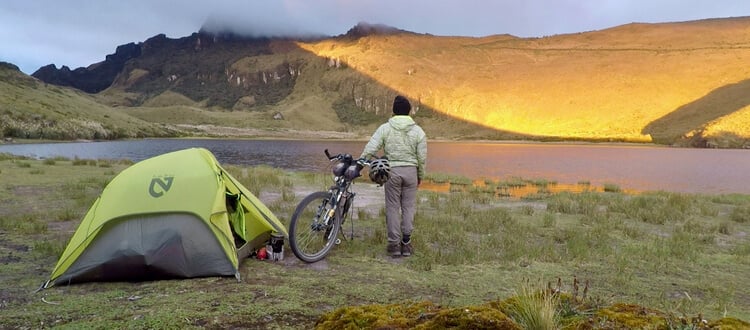
Interior Space
Interior space is divided into 3 sections, the interior floor dimensions, the height of the tent also known as the peak height, and the slope of the tent.
- Interior Floor Dimensions are a compromise between having the largest amount of space for the minimum amount of weight yet making the design strong enough to withstand bad weather. The tent should be large enough for tall hikers and if it is a 2-person backpacking tent there should be enough room for both hikers inside the tent. But it is a compromise, more interior floor area equals more weight and for a tent to be ultralight it will be a tight squeeze for most couples. Often couples prefer a 3-person tent for the sole purpose of having more interior floor area.
- Peak Height is essentially how tall the tent is. Most people want to be able to sit up inside the tent without their heads hitting the roof. Lower tents offer better weather resistance at the cost of comfort. Like most people, I prefer a tent I can sit in.
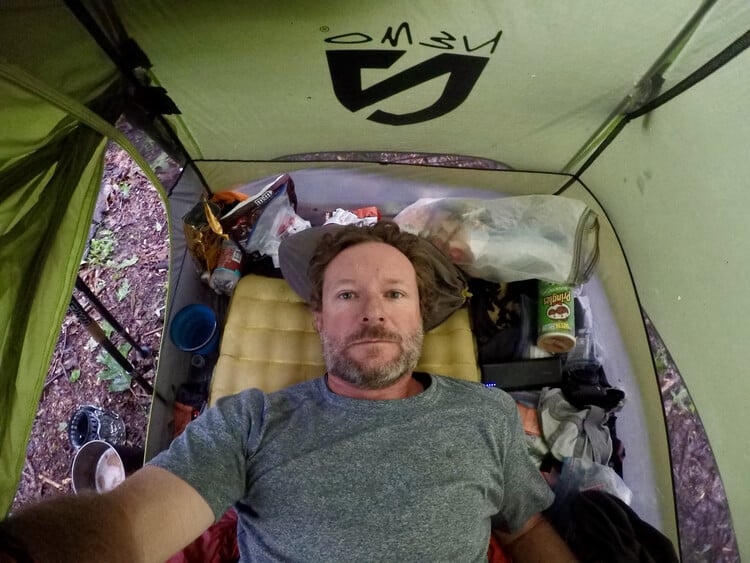
Doors and Vestibules
The doors and vestibules of tents are almost as important as other interior floor space. Having 2 doors and 2 vestibules makes the living arrangements for people sharing a tent so much better. Solo hikers only need a single door and vestibule for all their gear and need it to be big enough to live comfortably in even the worst weather.
Like most people, I prefer 2 doors and vestibules but not for the same reason as most people. An added benefit of having two vestibules and two doors has more to do with the weather. When you set up a tent at night perfectly to have protection from the wind and rain only to have it change direction overnight. The ability to use the other door and vestibule for cooking or getting in and out of the tent when it is raining or very windy is an added benefit.

Footprint and Bathtub Floor
Footprint
A footprint is a small layer of material that goes in between the ground and the floor of the tent. The purpose is to give additional protection to the floor of the tent. In most cases, this is not needed and is a waste of money, and only adds extra weight.
There are times when a footprint can be a good idea such as when camping in deserts or areas with sharp thorns or muddy conditions when the extra layer of protection can assist.
Most manufacturers make their own custom footprints but most are heavy and expensive. A cheaper option is to get a hold of some Tyvek which is used in buildings for control of moisture. Ultralight ground sheets can be made by using Polycryo which is used by painters as a drop sheet.
Overall, the use of a footprint will be up to you. I have used them on numerous occasions and personally, I don’t like them. But when hiking through areas with sharp thorns and appreciate the added protection for a inflatable sleeping mat.
Bathtub Floor
A bathtub floor refers to the heavy-duty floor that lines the underneath side of the inner tent. It is waterproof and usually covers enough of the floor before it rises up to the mesh section of the doors. The bathtub floor is super important in keeping the rain and moisture from entering from under the floor of the tent.
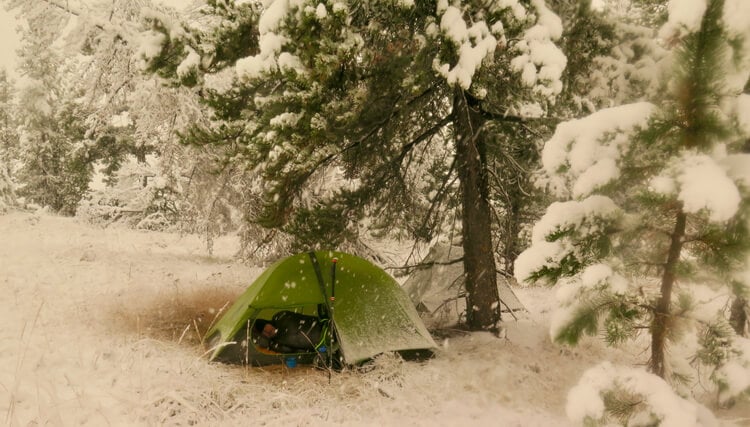
Tent Pegs and Poles
Tent pegs come in all shapes, sizes, and weights.
Tent Pegs
The ultralight hiker will prefer to pay for some super lightweight pegs made from titanium. These are strong, light, and expensive but for the gram-counting thru-hiker, they are worth the money. Most of us will be satisfied with the aluminum tent pegs provided by the manufacturer. If you want to upgrade, take a look at The Best Tent Stakes Review.
Tent Poles
Tents poles are so much better now than they were 20 years ago. The light aluminum poles withstand strong wind before they break. All manufacturers can send out sections of poles if they break. The most common way of breaking a pole is not having the male and female sections of the pole seated together correctly. Some tents require the use of Trekking Poles to hold the tent up.
Carbon Fiber Tent Poles
Carbon Fiber tent poles seem to be a passing fad. They appeared on several tents a few years ago but the durability didn’t live up to the hype. They are the latest development in the effort to save weight. These poles are still in their early years of use and will certainly get better with time. Just note that carbon poles have a horrible side effect of shattering when they break. So is the extra weight saving worth it just yet!

Tent Care and Repairing Zips
Tents need to be washed regularly and zips need to be clean and regularly maintained. With a little bit of regular maintenance, your tent will last for 100s if not 1000s of nights before needing to be replaced.
Cleaning a Tent
A tent should be washed in mild soap when needed and only ever stored when it is completely dry. Failure to store a tent when it is dry will cause mold and other nasties to destroy the tent fabric.
Looking after Zips
Zips are a part that will eventually wear out. Keep the teeth of the zipper clean and lubricate from time to time with a dry lubricant only. My preference is to run a candle along the teeth to allow the wax to sit on the teeth and act as a dry lubricant.
How to Fix Zipper Slides
Zipper slides will eventually wear out and need to be replaced. Usually, the whole tent has been used and abused by then and is completely worn out and needs to be replaced.
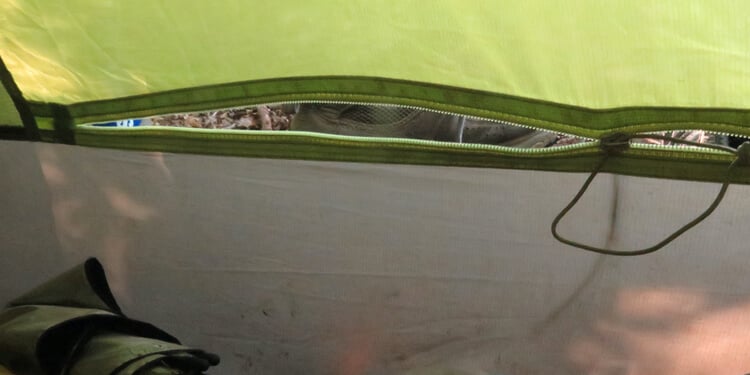
If a zipper slide fails to close the tent as in the photo above it can be easily solved by using pliers to crimp the edges of the slider ever so slightly so the slide grips the teeth better. Don’t overdo this or you will not be able to open or close the tent. If you are out in the field, you could use a rock to bang it into the zipper slides to assist in closing the gap. Just be careful to do this lightly to make sure you don’t overdo it.
Price
When it comes to Backpacking Tents price is important and you don’t need to spend a fortune on a tent. Most of the tents in this review are not cheap, they are all the best lightweight tents available at the moment. With that high price comes good quality, a good warranty, and many nights of use in the backcountry.
Overall, when it comes to value for money and a lightweight backpacking tent the money is well spent and a tent will be considered one of the biggest purchases you will make.

Conclusion
Here are the best ultra-lightweight tents for thru-hiking and backpacking in 2026.
- Best Ultralight 1P Tent (overall): ZPacks Plex Solo
- Best Ultralight 2P Tent (overall): Zpacks Duplex Pro
- Best Ultralight 3P Tent: Zpacks Triplex Pro
- Best Ultralight Tent for Thru-Hiking: Durston X-Mid Pro 2+
- Best Freestanding Ultralight Tent: Hyperlite Mountain Gear CrossPeak 2
- Best Lightweight 1P Tent: Hyperlite Mountain Gear Mid 1P
- Best Lightweight 2P Tent: Hyperlite Mountain Gear Unbound 2P
- Most Spacious Ultralight Tent: Hyperlite Mountain Gear Ultramid 2
- Best Cheap Ultralight Tent: Six Moon Designs Lunar Solo
- Best 1P Backpacking Tent (semi-freestanding): Nemo Hornet OSMO 1P
- Best 2P Backpacking Tent (semi-freestanding): Nemo Hornet OSMO 2P
- Best 3P Backpacking Tent: Big Agnes Copper Spur UL3
Read More:
- Best Tent Stakes
- Best 4 Season Tents
- Best Backpacking Sleeping Bags
- Best Backpacking Quilts
- Best Ultralight Sleeping Pads
- Best Ultralight Backpacks
- Best Trekking Poles
- Best Ultralight Backpacking Pillows
- Nemo Hornet Tent Review
- Zpacks Triplex Tent Review
- Zpacks Duplex Zip Tent Review
- Hyperlite Mountain Gear Unbound 2P Tent Review
Follow along on Social Media
Frequently Asked Questions
What is the best ultralight tent for thru-hiking?
For most thru-hikers, the Zpacks Duplex Zip is still the benchmark for two and the Zpacks Plex Solo is the benchmark for one. If budget matters, the Nemo and Six Moon Designs are the tents I’d send a first-time PCT or AT thru-hiker to.
Are Ultralight tents worth it?
Ultralight tents will usually be a bit more expensive than lightweight hiking and backpacking tent. Usually, the material is lighter, not as strong, and not as waterproof as heavier tents. In some cases, ultralight tents use materials such as Dyneema which is not only strong and light but also expensive.
How long do ultralight tents last?
Ultralight tents are not as durable as most other tents thus usually will last between 300-600 nights of use. For most people, durable ultralight tents will be many years of use.
How much does an ultralight tent weigh?
An ultralight backpacking tent will weigh less than 2 lb / 900 g for a 1P or 2P, and the lightest sit under 1 lb / 450 g for solos like the Plex Solo. For 2P thru-hike use, the sweet spot is 17–22 oz / 480–620 g.
Dyneema vs silpoly – which is better for a thru-hike?
Dyneema is lighter and doesn’t sag, but costs 3–4× more and is more delicate around zippers and stress points. Silpoly doesn’t absorb water either and is far more affordable. For a single thru-hike where you’ll resell the tent, Dyneema makes sense. For a hiker who’ll use the tent for years across many trips, silpoly is often the smarter buy.
Do I need a footprint with my ultralight tent?
For most ultralight tents on durable surfaces, no. A small piece of Polycro or Tyvek under the floor is enough on rocky or thorny ground and weighs almost nothing. Manufacturer footprints are usually heavier and more expensive than the alternatives.
Single wall or double wall for thru-hiking?
Single wall (Plex Solo, Duplex, Lunar Solo) saves the most weight and is the standard on long trails. Double wall (X-Mid 1, Hornet Osmo) handles condensation better in cold or humid valleys and is more forgiving for first-time UL users. I use both depending on the trail.
Are ultralight tents waterproof in heavy rain?
Yes. The fabrics on every tent in this guide pass standard hydrostatic head tests, and I’ve used several through multi-day storms. The variable is sag, silnylon sags when wet and needs re-tensioning during a long storm. Dyneema and silpoly do not. Pitch tight, bury your stakes, and orient the door away from the wind.
Read More:
- Best Tent Stakes
- Best 4 Season Tents
- Best Backpacking Sleeping Bags
- Best Backpacking Quilts
- Best Ultralight Sleeping Pads
- Best Ultralight Backpacks
- Best Trekking Poles
- Best Ultralight Backpacking Pillows
- Nemo Hornet Tent Review
- Zpacks Triplex Tent Review
- Zpacks Duplex Zip Tent Review
- Hyperlite Mountain Gear Unbound 2P Tent Review


BikeHikeSafari Gear Review Process
The author, Brad McCartney from BikeHikeSafari is a small independent adventurer and outdoor gear tester who owns and runs BikeHikeSafari.com.
BikeHikeSafari is not part of a large blog network and is proudly independent. All reviews on this site are independent and honest gear reviews of outdoor products by the author.
The author, Brad McCartney is a very experienced triple crown thru-hiker, adventurer, and bike tourer having spent 1000s of nights sleeping in a tent and sleeping bag (Read more). He was a manager of an outdoor retail store and is very experienced in what is important when using and testing gear for reviews like this.
BikeHikeSafari will never receive any money for reviews and they do not accept sponsored reviews on this website. All the comments about the gear reviews are from the author based on his years of experience. Hope this independent review was helpful for you.

