

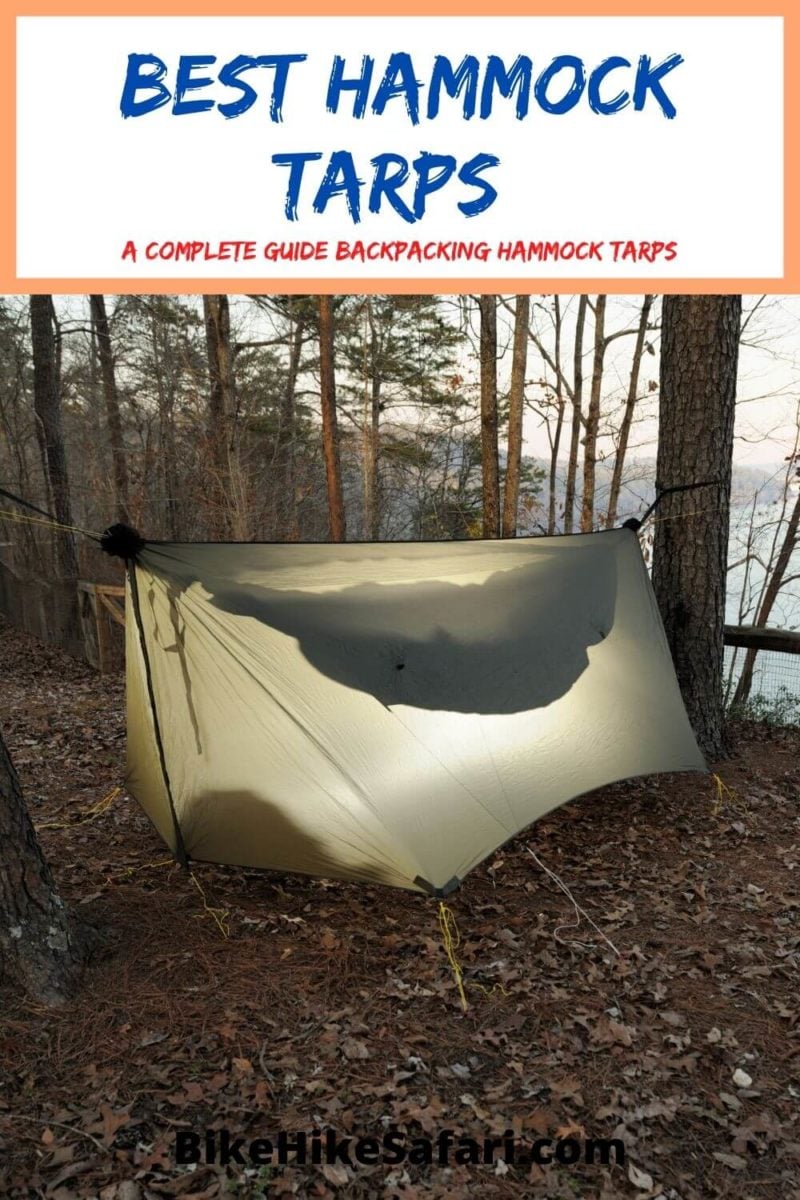
I have spent thousands of nights sleeping outside on the PCT, the AT, the CDT, the Te Araroa and on long bikepacking trips, and a properly chosen hammock tarp is the single piece of gear that decides if you sleep dry in your backpacking hammock. This guide is for backpackers, thru-hikers and hammock campers who want a serious hammock rain fly to pair with their hammock for real backcountry use, not a backyard cover.
My current top pick for most hikers is the Kammok Kuhli Shelter for full coverage with doors, with the Hammock Gear Dyneema Fiber Hex Tarp as the best ultralight option for thru-hikers counting grams. The core trade-off you are making with every hammock tarp is coverage versus weight, and the right answer depends on the weather you actually hike in. For how I research and field-test gear, see the Review Policy for further details.
Quick Picks – Best Hammock Tarps 2026
- Best Overall Hammock Tarp: Kammok Kuhli Shelter – 12′ × 9′ Sil/PU nylon, 10 tie-outs, knotless line locks. A workhorse in changeable weather.
- Best Ultralight Hammock Tarp: Hammock Gear Dyneema Fiber Hex Tarp – Around 5 oz of Dyneema for an 11′ hex tarp that does not sag when wet. The ultralight thru-hiker’s tarp.
- Best Lightweight Hammock Tarp Under 1 lb: Kammok Kuhli Ultralight – Same shelter pedigree as the Kuhli, around 14 oz packed.
- Best Classic Hex Hammock Tarp: Hennessy Hammock Hex Rainfly/Tarp – 12′ × 10′ of straightforward hex coverage that pairs naturally with Hennessy hammocks.
- Best Versatile Hammock Tarp: ENO ProFly Hammock Rain Tarp – Easy no-knot pitch, holds up to abuse, doubles as a cooking shelter.
- Best Hammock Tarp for Wet Weather (Mid-Weight): ENO DryFly Rain Tarp – Batwing extensions push rain out at the sides, easy pitch, durable PU nylon.
- Best Budget Hammock Tarp: Wise Owl Outfitters Rain Tarp – Heaviest tarp here, but the price is hard to argue with for a starter setup.
How We Tested
The hammock tarps in this guide are researched and, where possible, field-tested by an experienced long-distance hiker and former outdoor retail manager. Across triple-crown thru-hikes, the Te Araroa, shoulder-season trips and bikepacking expeditions, I judge hammock rain tarps on weather protection per gram, coverage, pitch options, fabric durability, ease of set-up in real wind and rain, and value for serious backpacking. Some items were supplied by the manufacturer and some were purchased by the author for review. For more on how we research and review gear, see the Review Policy for further details.
Hammock Rain Tarp Comparison Table
| Brand | Weight | Material | Size (feet) |
|---|---|---|---|
| Kammok Kuhli Shelter | 1lb. 4.5oz | Sil Nylon | 12×9 |
| Hammock Gear Dyneema Fiber Hex Tarp | 5.1 oz | Dyneema Composite Fabric | 8×6 |
| Kammok Kuhli Ultralight | 14 oz | Sil Nylon | 11×7.4 |
| Hennessy Hammock Hex Rainfly/Tarp | 1lb. 2oz | PU Polyester | 12×10 |
| ENO ProFly Hammock Rain Tarp | 1lb. 6oz | Sil Nylon | 10.6×6.4 |
| ENO DryFly Rain Tarp | 1lb. 6oz | Sil Nylon | 10.6×5.2 |
| Wise Owl Outfitters Rain Tarp | 1lb. 12oz | Sil Nylon | 11×9 |
Follow along on Social Media
Best Hammock Rain Fly – Detailed Review
Best Hammock Rain Tarp – Overall
Kammok Kuhli Shelter
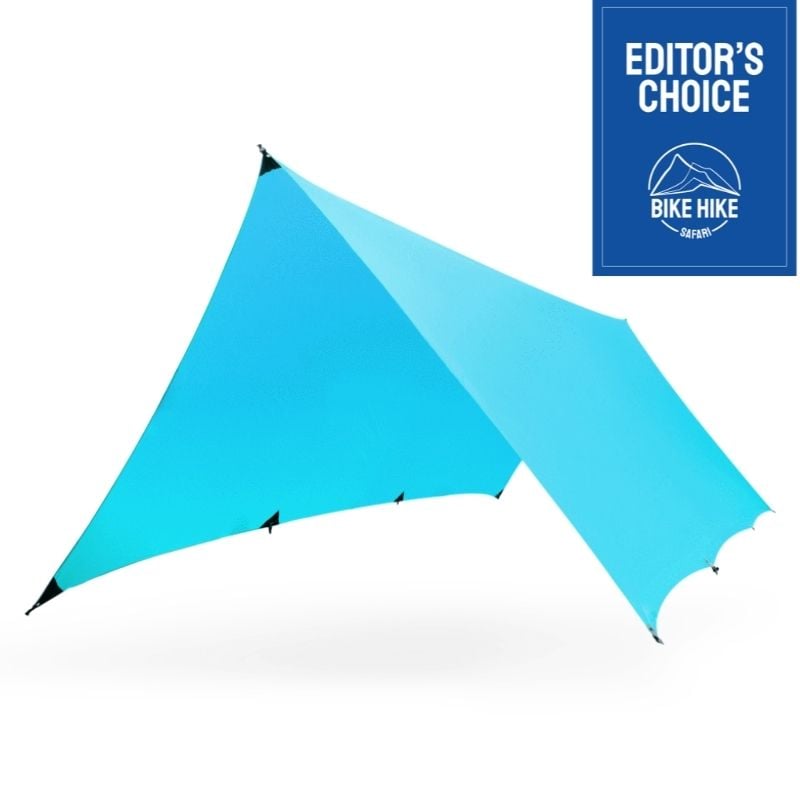
Weight: 20.5 oz / 581 grams
Material: Diamond ripstop nylon with Sil/PU coating, DWR finish
Size: 12′ × 9′
Shape: Rectangular, multi-configurable
Tie-outs: 10
Pros:
> Tough construction
> Knotless set-up
> Lightweight and compact
Cons:
> Only comes with four stakes, might want to get a couple more
The Kammok Kuhli Shelter is an all-weather workhorse. Made from diamond ripstop nylon with a Sil/PU coating, with sealed seams, a DWR finish and 10 reinforced guy points with line locks and tensioners, this is a tarp you can pitch as a tight A-frame for a real storm or open it up wide for shade and airflow on a hot afternoon.
The knotless set-up is genuinely useful when your hands are cold or wet. The 12′ × 9′ footprint gives you generous coverage for a single hammock with plenty of room left over for a cooking porch.
If you are not anchoring to trees, the reinforced anchor points happily take hiking poles for a ground-pitched A-frame. The tarp comes with four stakes, but I would carry a couple of extras for the side tie-outs in real wind.
Trade-off: Heavier than the cottage Sil-Poly options, but with more pitch versatility and a much more bombproof feel for changeable conditions.
Best for: All-weather hammock campers who want one tarp that does everything from sunshade to storm.
Compare Prices:
Best Ultralight Hammock Tarp
Hammock Gear Dyneema Fiber Hex Tarp
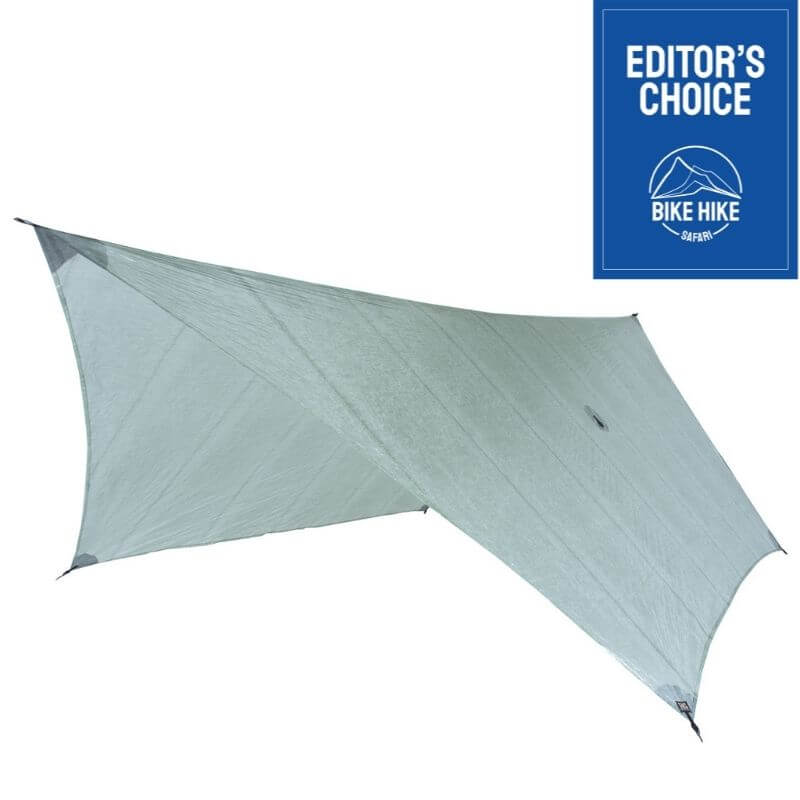
Weight: 5.14oz / 145 grams
Material: Dyneema Composite Fabric
Size: 11′ ridgeline (also 10′ and 12′ available)
Shape: Catenary-cut hex
Tie-outs: 6
Pros:
> Ultralight
> Very waterproof
> Does not sag when it gets wet
Cons:
> Expensive
> Can take a couple of weeks to ship
If you are an ultralight thru-hiker on the Appalachian Trail, this is the hammock tarp to carry. Around 5 oz of Dyneema for full hex coverage is a weight-to-protection ratio nothing in sil-nylon or sil-poly can match. Dyneema does not stretch when it is wet, which means the tarp you pitched at dusk is still pitched tight at 3 a.m. when the rain hits.
Dyneema rain tarps disappear in the pack, it shrugs off water, and it lasts longer than sil-nylon if you treat it well. The catch is price. Dyneema is genuinely expensive, ships slowly from cottage builders, and rewards careful handling, no dragging it across granite if you can avoid it.
With a tarp this light it is worth pairing it with lightweight guylines and ultralight tent pegs, and a lightweight backpacking quilt underneath the hammock.
Trade-off: The lightest serious hammock tarp on the market, but the most expensive, and no built-in doors at this base spec.
Best for: Ultralight thru-hikers looking for lightweight Appalachian Trail Gear or Superior Hiking Trail hikers who count grams.
Compare Prices:
Best Lightweight Hammock Rain Fly
Kammok Kuhli Ultralight

Weight: 14 oz / 397 grams
Material: Sil/PU-coated ripstop nylon
Size: 11′ × 7.3′
Shape: Rectangular, multi-configurable
Tie-outs: 8
Pros:
> Ultralight
> Durable
> Speedy set-up
Cons:
> Smaller area than the Kuhli Shelter
The Kuhli Ultralight is the lighter sibling of the Kuhli Shelter. You keep the coated ripstop nylon, the reinforced guy points and the knot-free set-up, and you give up some footprint – 11′ × 7.3′ instead of 12′ × 9′.
For a single hammock in fair-to-moderate conditions, the smaller footprint is fine and the weight saving is meaningful. In real storms, the bigger Kuhli Shelter or a Sil-Poly tarp with doors is the safer call.
Eight guy points still give you a good range of pitches, including A-frame with hiking poles when there are no trees handy.
Trade-off: Smaller coverage area than the full Kuhli, but a useful 6 oz lighter.
Best for: Hammockers who want the Kammok build quality at sub-1 lb weight.
Compare Prices:
Best Hammock Rain Fly
Hennessy Hammock Hex Rainfly/Tarp

Weight: 18.4 oz / 530 grams
Material: PU-coated ripstop polyester
Size: 12′ × 10′
Shape: Classic hex
Tie-outs: 6
Pros:
> Spacious
> Integrated line pockets
> Durable
Cons:
> High wind loading
The Hennessy Hex Rainfly is a classic for a reason. The hexagonal shape gives you a generous 12′ × 10′ footprint with the simple pitch geometry that most hammock campers learn first. There is no separate ridgeline to attach, a seam runs along the ridge, so set-up is fast even in pouring rain: spread, stake from underneath, raise.
The PU-coated ripstop polyester handles weather well, and the six tie-outs give you enough adaptability for porch-mode pitches and a sunshade rig.
The downside is wind. The geometry catches wind more than a catenary-cut hex with doors, so in exposed sites I would either pitch it low and tight or move to a Superfly or a Kuhli.
Trade-off: Spacious and easy to pitch, but more wind-affected than tarps with doors or catenary cut.
Best for: Hennessy hammock owners and hex-tarp traditionalists in moderate weather.
Compare Prices:
Best Versatile Hammock Tarp
ENO ProFly Hammock Rain Tarp

Weight: 22 oz / 624 grams
Material: PU-coated ripstop nylon
Size: 10.6′ × 6.4′
Shape: Rectangular
Tie-outs: 6
Pros:
> Adaptable shape
> No-knot set-up
> Good water resistance
Cons:
> On the heavier side
The ENO ProFly is the easy, durable, available-everywhere hammock tarp. A 10.6′ × 6.4′ rectangle covers a single hammock for sleeping, cooking and lounging, and the no-knot set-up with the supplied DAC aluminium stakes is genuinely quick.
PU-coated ripstop nylon and double-stitched seams keep weather out. The footprint is narrower than the DryFly or a hex tarp, so in heavy rain at an exposed site you will get more spray off the sides – for that, step up to the DryFly or a Superfly.
Trade-off: Heavier and narrower than the dedicated wet-weather tarps, but bombproof and very widely available.
Best for: Three-season hammockers who want a hassle-free, mainstream-retail tarp.
Compare Prices:
Best Hammock Tarp for Wet Weather
ENO DryFly Rain Tarp

Weight: 22 oz / 624 grams
Material: PU-coated ripstop nylon
Size: 10.6′ × 9.2′
Shape: Rectangular with batwing extensions
Tie-outs: 8
Pros:
> Extended shape
> Built to keep you dry
> Rugged construction
Cons:
> Heavy
The ENO DryFly is the ProFly’s wetter-climate sibling. The batwing extensions add two extra guy-out points and drop the side panels closer to the ground, which keeps rain blowing in from the side out of your hammock.
Same PU-coated ripstop nylon as the ProFly, same easy knot-free pitch, same aluminium stakes. Pitched fully extended on a sunny day, the DryFly also makes a generous shaded marquee.
At 22 oz it is on the heavier side, but if you do most of your hammocking in genuinely wet country it earns its weight.
Trade-off: Heavier than cottage Sil-Poly options, but easier to find at outdoor stores and very forgiving to pitch.
Best for: Wet-climate hammock campers who buy from mainstream outdoor retailers.
Compare Prices:
Best Budget Hammock Rain Fly
Wise Owl Outfitters Rain Tarp

Weight: 28 oz / 794 grams
Material: Waterproof ripstop nylon, taped seams
Size: 11′ × 9′
Shape: Hex
Tie-outs: 6
Pros:
> Strong construction
> Easy set-up
> Waterproof carrying bag included
Cons:
> Very Heavy
The Wise Owl Outfitters Rain Tarp is the budget pick on this list. It is the heaviest tarp here at 28 oz, and it is not the one I would carry on a long thru-hike, but the price point and the included waterproof stuff sack make it a solid first hammock tarp for hammock-camping weekenders.
Construction is honest: waterproof ripstop nylon with taped seams, aluminium stakes, decent guy lines and tensioners that keep the pitch taut so water does not pool.
Trade-off: Heavy and bulky compared with everything else here, but a fraction of the price of the cottage options.
Best for: New hammock campers, car-camping weekenders, and anyone building their first setup on a budget.
Compare Prices:
Hammock Rain Fly Buyers Guide
Follow along on Social Media
Buyers Guide – Hammock Rain Tarp
Tarp Size and Coverage
The most important number on a hammock tarp spec sheet is the ridgeline length, because that is what determines whether your tarp covers the full length of your hammock with room to spare on each end. For a standard 11′ hammock, an 11′ or 12′ ridgeline is the sweet spot. Anything shorter and you will get rain blown onto the ends of your hammock; anything much longer and you are carrying weight you do not need.
Width controls how low you can pitch the tarp before it touches your hammock. A single-hammock tarp is typically 7′–8′ wide. For two hammocks side-by-side, add another 4′–6′ — look for 11′–14′ wide tarps in that case.
Tarp Shape – Hex, Rectangular, Catenary, Asym, with Doors
- Rectangular tarps are the simplest and cheapest. Easy to pitch, lots of coverage, but heavier per square foot.
- Square tarps are the same idea, easy to pitch in any orientation.
- Hex tarps trim the corners of a rectangle to save weight while keeping the ridgeline coverage. This is the standard hammock tarp shape.
- Catenary-cut tarps (most cottage hex tarps) use curved edges so the tarp pitches tighter and does not flap in wind. Worth the small premium.
- Batwing tarps like the ENO DryFly add side extensions for extra rain protection.
- Asym and diamond tarps are lightweight and easier to pitch on uneven sites, but offer less weather protection.
- Tarps with doors (Warbonnet Superfly, Hammock Gear Standard Hex with Doors) are the right answer in real storms and shoulder-season trips. They add a small weight penalty for a large weather upgrade.
Material – Dyneema vs Sil-Poly vs Sil-Nylon vs PU Nylon
- Dyneema Composite Fabric (DCF) is the lightest, strongest and least stretchy option. Does not sag when wet. Most expensive.
- Sil-Poly (silicone-coated polyester) is the modern sweet spot: light, does not stretch much when wet, more UV-stable than sil-nylon. The best mid-tier choice for hammock tarps.
- Sil-Nylon (silicone-impregnated nylon) is light and waterproof but stretches when wet, so you may need to re-tension the tarp overnight in heavy rain.
- PU-coated nylon or polyester is the most affordable and durable to rough handling, but typically the heaviest.
Weight vs Weather Protection
You can save weight by going smaller, by going to Dyneema, or by skipping doors. Pick at most one of those compromises if you actually hike in wet weather. An ultralight Dyneema hex with no doors makes sense on a fair-weather PCT desert section; the same tarp in a Smokies thunderstorm is not what I want overhead.
Ridgeline, Tie-Outs, and Pitch Options
Look for at least six tie-outs (one at each corner, one at each side, two at the ridgeline ends). Eight or ten is better. A continuous ridgeline cord makes it easy to slide the tarp along the line between trees and adjust pitch height without re-tying everything.
Doors – When You Actually Need Them
If you only hammock in summer in dry country, you can skip doors. If you hammock in shoulder seasons, in the mountains, or anywhere with sideways rain, doors transform the experience. They are the single biggest upgrade most hammock campers can make.
Hanging Your Hammock Tarp
The days of fiddling with knots and trying to obtain the correct tension in your guy lines manually are long gone. Hammock tarps nowadays come with knot-free lines to enable you to set up quickly and easily, and most have tensioners at the guy points to get your tarp taut in no time.
It’s worth looking at the mechanisms for these ahead of buying your tarp to ensure that they make sense for you and how you like to set up your hammock and tarp, but there is a solution out there for everyone.
The tarps in our list all come with stakes supplied, but you would be advised to bring extras to ensure a solid ground connection.
Conclusion
The Best Hammock Rain Fly for 2026 is:
- Kammok Kuhli Shelter
- Hammock Gear Dyneema Fiber Hex Tarp
- Kammok Kuhli Ultralight
- Hennessy Hammock Hex Rainfly/Tarp
- ENO ProFly Hammock Rain Tarp
- ENO DryFly Rain Tarp
- Wise Owl Outfitters Rain Tarp
Follow along on Social Media
Frequently Asked Questions
What is the best hammock tarp for backpacking?
For most hammock backpackers, the Kammok Kuhli Shelter is the best all-round hammock tarp because it pairs hex coverage with proper storm doors at a reasonable weight in Sil-Poly. If you are counting grams, switch to the Hammock Gear Dyneema Hex.
What is the best ultralight hammock tarp?
The Hammock Gear Dyneema Fiber Hex Tarp at around 5 oz is the benchmark ultralight hammock tarp. Dyneema does not stretch when wet, so your pitch stays tight all night.
Do I need a hammock tarp with doors?
If you only hammock in fair weather, no. If you hammock in shoulder seasons, in the mountains, or anywhere with horizontal rain or cold wind, doors are the single biggest comfort upgrade you can make.
What size hammock Rain tarp do I need?
For a single 11′ hammock, an 11′ or 12′ ridgeline tarp is the sweet spot. For two hammocks side-by-side, look at 11′–14′ wide tarps.
Sil-Poly vs Sil-Nylon vs Dyneema for hammock tarps – which is best?
Dyneema is lightest and does not sag when wet, but is the most expensive. Sil-Poly is the modern mid-tier sweet spot – light, does not stretch much when wet, and reasonably priced. Sil-Nylon is cheaper but stretches in rain and needs overnight re-tensioning. For thru-hiking, I would pick Dyneema if budget allows and Sil-Poly if not.
Is a hammock tarp and a hammock rain fly the same thing?
Yes, different brands use different names for the same piece of gear. “Hammock tarp,” “hammock rain fly,” and “hammock rainfly” all refer to the same product.
How heavy is a hammock rain tarp?
A serious backpacking hammock tarp typically weighs between 5 oz (Dyneema hex) and 22 oz (mid-weight PU nylon). Budget tarps and four-season tarps with doors can push to 28 oz or more.

BikeHikeSafari Gear Review Process
The author, Brad McCartney from BikeHikeSafari is a small independent adventurer and outdoor gear tester who owns and runs BikeHikeSafari.com.
BikeHikeSafari is not part of a large blog network and is proudly independent. All reviews on this site are independent and honest gear reviews of outdoor products by the author.
The author, Brad McCartney is a very experienced triple crown thru-hiker, adventurer, and bike tourer having spent 1000s of nights sleeping in a tent and sleeping bag (Read more). He was a manager of an outdoor retail store and is very experienced in what is important when using and testing gear for reviews like this.
BikeHikeSafari will never receive any money for reviews and they do not accept sponsored reviews on this website. All the comments about the gear reviews are from the author based on his years of experience. Hope this independent review was helpful for you.

