

After 30 years of thru-hiking, backpacking, and hiking, and several years fitting child carriers in an outdoor store, I know the two thing that decides whether a hike with a baby works. If the child is uncomfortable, and if you are uncomfortable carrying the child, the hike is over.
The difference between a good carrier and a bad one comes down to comfort for both of you, real safety, and whether the pack actually fits your body. My top pick is the Osprey Poco Premium, with the Deuter Kid Comfort as the best all-around alternative.
This guide covers the best baby carrier backpacks for hiking in 2026, from framed packs built for full-day hikes to lighter options for quick trails. For how I research and field-test gear, see the Gear Review Policy.
Quick Picks: Best Baby Carrier Backpack
- Best Overall: Osprey Poco Premium – the most complete carrier on the market, with generous storage, a UPF 50+ sun shade, and comfort for both caregiver and child.
- Best All-Around Runner-Up: Deuter Kid Comfort – a bestseller with a ventilated back panel and a side opening that makes loading and unloading easy.
- Best Budget Baby Carrier: Kelty Journey PerfectFit – the PerfectFIT suspension adjusts while you are wearing it, and the storage beats every other pack here.
- Best Lightweight: Osprey Poco LT – the lightest full-feature framed carrier, ideal for short day hikes and travel.
- Best Women’s-Specific Fit: Deuter Kid Comfort Active SL – a shorter back length and narrower straps built for petite wearers.
- Best for Australia and New Zealand: Macpac Vamoose – a 28L carrier with a detachable daypack, sunshade, and rain cover, only available in AUS/NZ.
How We Tested
The baby carrier backpacks in this guide are researched and, where possible, field-tested by an experienced long-distance hiker and former outdoor store manager who fitted baby carrier backpacks to parents. Across many day hiking trips, I judge baby carriers on comfort for both parent and child, safety, adjustability, ventilation, storage, durability, and value for serious hiking families. Some of the items were supplied by the manufacturer and some items were purchased by the author for this review. For more on how we research and review gear, see the BikeHikeSafari Gear Review Policy.
Follow along on Social Media
Hiking Baby Carrier Backpack Comparison Table
| Brand | Weight | Storage Capacity | Sunshade |
|---|---|---|---|
| Osprey Poco Premium | 8 lb. 5.4 oz | 36L | Yes |
| Deuter Kid Comfort | 7 lb. 2 oz | 14L | Yes |
| Kelty Journey PerfectFit | 6 lb. 6 oz | 26L | Yes |
| Osprey Poco LT | 5 lb. 8 oz | 25L | Yes |
| Deuter Kid Comfort Active SL | 5 lb. 9 oz | 12L | No |
| Macpac Vamoose | 8lb. 9 oz | 28L | Yes |
Best Baby Carrier Backpack for Hiking 2026
Best Child Carrier Backpack
Osprey Poco Premium Child Carrier
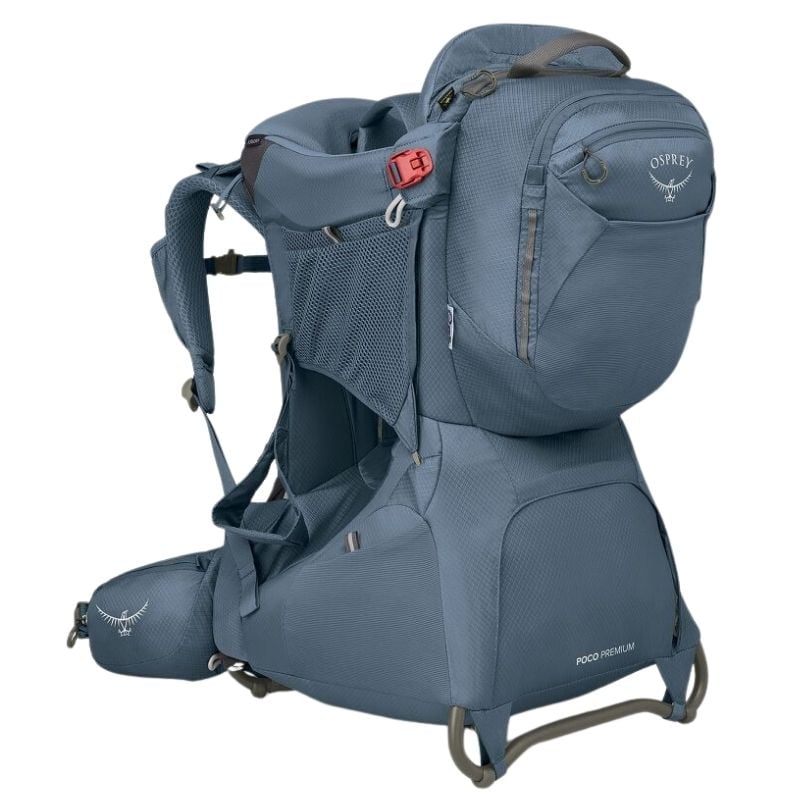
Weight: 8 lb. 5.4 oz / 3.78 kilograms
Pros:
> Phenomenal customer ratings and reviews
> Built-in sun shade has UPF 50+ protection
> Lots and lots of handy storage
> Space for a 1.5-liter hydration bladder
> Long warranty
Cons:
> This is such a popular item, retailers occasionally run out of stock
The Osprey Poco Premium is the current top of the Osprey child-carrier line and the best all-round hiking baby carrier I have found. It replaced the older Poco Plus, and it carries over everything that made that pack great while refining the comfort and storage.
The standout feature is how comfortable it is for both of you. The deluxe child cockpit has plenty of padding, a removable drool pad, mesh side panels for breathability, and a double-halo harness that keeps the child secure while making loading easy. For the parent, the padded shoulder straps and ventilated mesh back panel spread the load well, and the seat height adjusts up to 6 inches as the child grows.
Storage is where this pack pulls ahead. There is a large compartment under the seat that fits diapers, snacks, and a layer or two, plus zippered hip-belt pockets for the small stuff you want to reach without taking the pack off. There is also a dedicated sleeve for a 1.5-liter hydration bladder, which matters on a long hot hike.
The built-in sun shade offers UPF 50+ protection and stores away cleanly when you do not need it. Osprey backs the whole thing with their All Mighty Guarantee, which covers repairs free for the life of the pack.
The trade-off is weight and price. At over 8 lb this is not a lightweight pack, and it is the most expensive option here. But if you want one carrier that handles full-day hikes and even a short overnight hike, this is the one.
Best for: parents who want the most complete, comfortable carrier for full-day hikes and don’t mind carrying a little extra weight.
Compare Prices:
Best Hiking Child Carrier – Runner Up
Deuter Kid Comfort
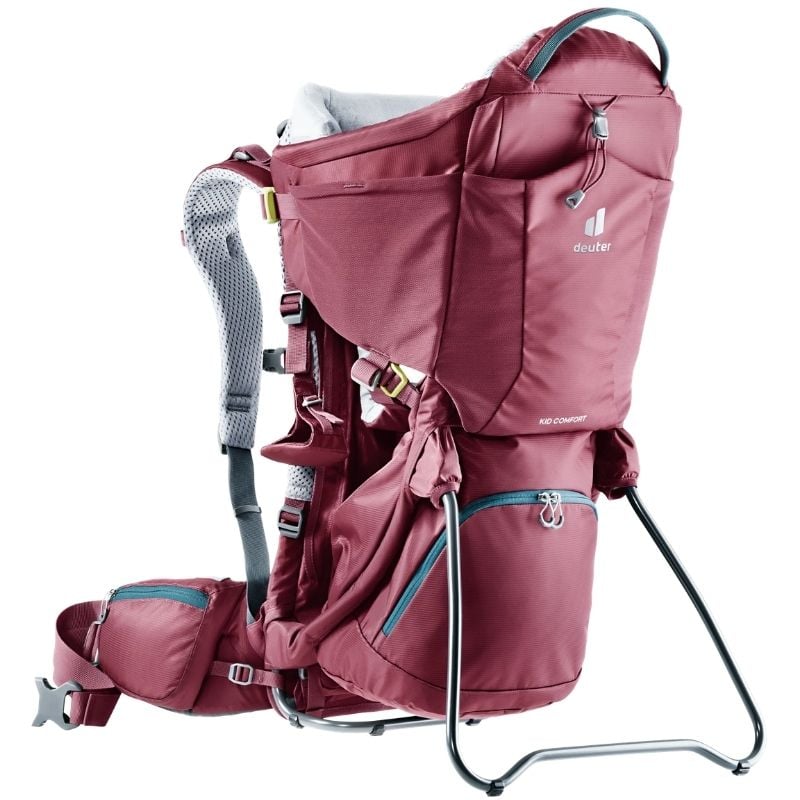
Weight: 7 lb. 2 oz / 3.23 kilograms
Pros:
> Bestseller with phenomenal ratings
> Very comfortable for baby AND parent
> Ventilation space for breathability
> Side opening
Cons:
> The sun visor can be tricky to position
The Deuter Kid Comfort is the bestseller in this category for good reason. It has been a top pick for years and remains one of the most comfortable framed carriers for both parent and child.
The signature feature is the ventilation space between the child and the wearer’s back. A mesh-lined gap lets air through, which keeps both of you from overheating on a warm climb. The child’s seat has generous padding, a large head cushion, and is comfortable enough for the little one to fall asleep in.
Fit is handled by the Deuter VariSlide back-length system, which adjusts as the child grows, plus adjustable footrests. A side opening lets a second adult lift the child out without setting the pack down, which is genuinely handy on the trail.
Build quality is strong. The frame is break-proof spring steel and the 210D polyamide fabric is abrasion resistant with ripstop threads and a water-repellent PU coating, so light rain beads off.
The trade-off is the sun visor, which can be fiddly to position, and the storage is modest compared to the Poco Premium. But for comfort and durability it is hard to beat.
Best for: parents who want a proven, comfortable all-rounder and value ventilation on warm hikes.
Compare Prices:
Best Budget Baby Backpack Carrier
Kelty Journey PerfectFit

Weight: 6 lb. 6 oz / 2.9 kilograms
Pros:
> Lightweight child carrier
> Effectively “grows” with baby
> Large amount of storage space
> Comes with Perfectfit suspension
> It is excellent value for money
Cons:
> This is such a popular item, retailers occasionally run out of stock
> It doesn’t come with a sunshade, but you can buy a compatible one separately
The Kelty Journey PerfectFit is another great baby carrier that ticks all the boxes. Hiking parents love the budget price of this framed backpack child carrier.
It’s a very lightweight baby carrier backpack. Coming in at 6 lb. 6 oz / 2.9 kilograms, the Kelty is a perfect hiking carrier for babies on long hikes on the trails.
The Kelty Journey PerfectFit meets the current safety standards, and it’s really comfortable for both baby and parent. Its adjustable design means that it can hold infants from 16 pounds up to 40 pounds, so it effectively “grows” with your baby.
There’s a plush child cockpit, to keep your little one comfy, complete with a security harness and removable foot stirrups. And there’s a handy drool pad that can be removed for easy washing.
It comes with Perfectfit suspension, and you can adjust the fit of the baby carrier on your torso with the baby inside, just by pulling the straps until they are sufficiently snug.
This hiking baby carrier also comes with a large amount of onboard storage space, in fact, it’s like there’s an entire backpack on the back of the baby carrier backpack. And there are also easy-access mesh pockets on the side, too.
The trade-off is that it is not a great fit for shorter torsos. But if you want to carry everything for a full day without a second bag, this is the one.
Best for: parents who want maximum storage and easy adjustment, and who carry a lot of gear on day hikes.
Compare Prices:
Best Lightweight Baby Carrier Backpack
Osprey Poco LT
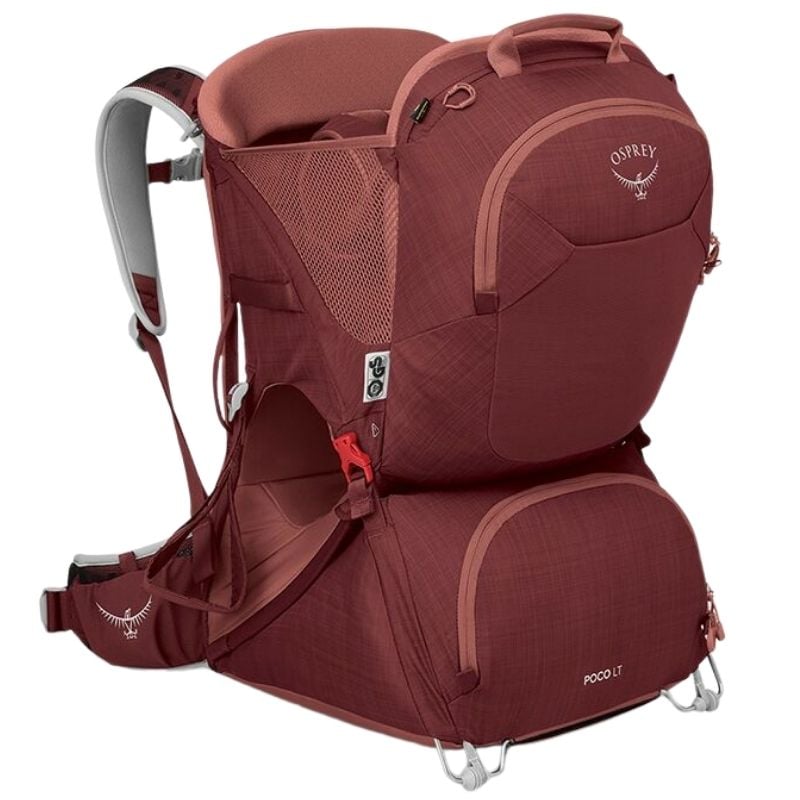
Weight: 5 lb. 8 oz / 2.52 kilograms
Pros:
> Lightweight
> Good amount of pockets and storage
> Great warranty
Cons:
> Best for short day hikes
> Supply issues can sometimes make this product difficult to find
The Osprey Poco LT is the lightest full-feature framed carrier here, and it is the pick for short day hikes and travel where every pound counts.
The weight saving is real, but it comes with trade-offs. There are no foot stirrups, and the harness is not as plush as the Poco Premium, so the child will notice the difference on a long day. For most people on a short hike, though, that reduced comfort is a fair price for a pack that weighs a bit over 5 lb.
It still carries a useful amount of gear, with a built-in sun shade and room for a hydration bladder (sold separately). The total load limit is up to 48 lb including the child and gear.
The trade-off is comfort and durability versus weight. If you plan full-day hikes or overnights, step up to the Poco Premium. If you want the lightest framed option for a couple of hours on the trail or a flight, this is it.
Best for: parents who want the lightest framed carrier for short day hikes and travel.
Compare Prices:
Best Womens Specific Baby Carrier Backpack
Deuter Kid Comfort Active SL
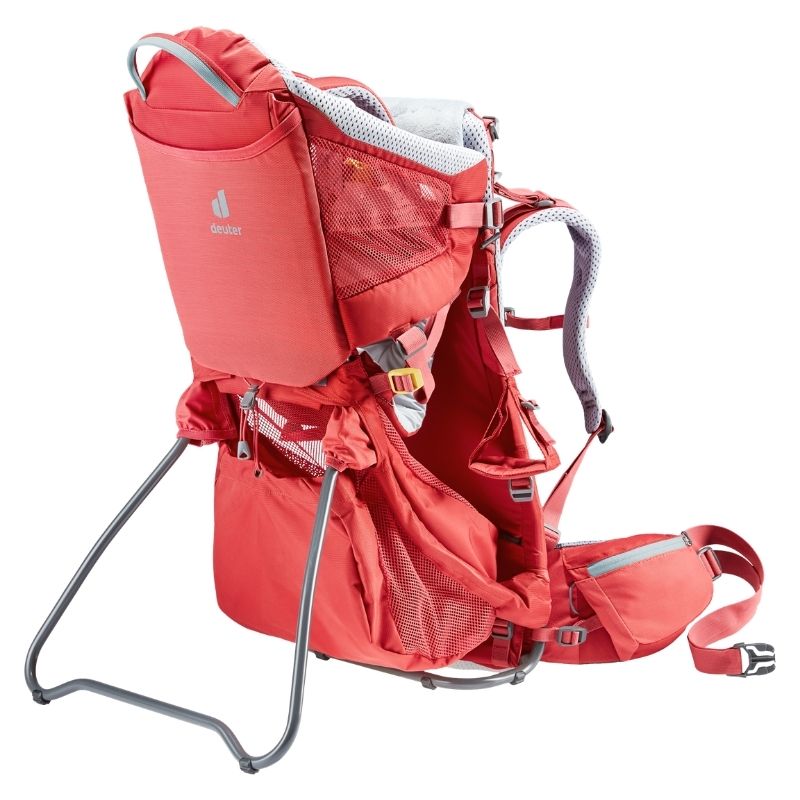
Weight: 5 lb. 9 oz / 2.65 kilograms
Pros:
> Women specific shorter length back
> Lightweight
> Multiple pockets for storing your gear
> Comfortable harness
Cons:
> 12L storage which is not much
> Sunshade sold separately
The Deuter Kid Comfort Active SL is the women’s-specific option in the Kid Comfort line, and it is one of the best-fitting carriers for smaller and narrower builds.
The “SL” means a shorter back length and narrower shoulder straps, which makes a real difference if the standard Kid Comfort sits too wide or too long on your torso. Female testers consistently rate this one of the best-fitting options, and the contoured seat that is wide under the child and narrow between the legs keeps the little one comfortable too.
It is also lighter than the standard Kid Comfort, at under 6 lb, and the close-fitting cockpit keeps the child closer to your center of gravity, which helps on steeper trails.
The trade-off is storage and the missing sun shade. It has less storage than the full Kid Comfort, and the canopy and hydration bladder are sold separately. But for a lighter, better-fitting carrier at a lower price, it is a strong pick.
Best for: smaller-framed parents, especially women, who want a lighter, closer-fitting carrier.
Compare Prices:
Best Baby Carrier for Australia and New Zealand
Macpac Vamoose Child Carrier Backpack

Weight: 8 lb. 9 oz / 3.9 kilograms
Pros:
> 3-stage harness system to grow with the baby
> 28L storage capacity
> Comes with a sunshade and rain cover
> Multiple pockets for storing your gear
> Has the breathable Explorer harness
Cons:
> This is such a popular item that Macpac often runs out of stock, best to check online.
The Macpac Vamoose is the best baby carrier for Australia and New Zealand, and it deserves its spot for one simple reason: it is built for all weather.
The included sunshade and rain cover mean you are covered no matter what the day throws at you, which matters on New Zealand and Australian trails where the weather turns fast. The child seat uses a three-stage hook-and-clip harness that grows with the child, and the adjustable foot stirrups keep them secure and comfortable.
Storage is excellent. There is a 28L capacity split between a 19L main pack and a detachable 9L daypack, which is a genuinely useful addition when most other carriers have limited space. A stretch mesh pocket underneath is handy for soiled nappies or wet gear.
Build quality is top-tier, with a 1260D ballistic nylon base and 420D ripstop nylon elsewhere. The child’s shoulder straps and head pad are removable for washing, which you will appreciate after a sweaty summer hike.
The trade-off is availability and weight. It is only sold in Australia and New Zealand, and at 8 lb 9 oz it is one of the heavier packs here. But if you can get it, it is one of the most comfortable and weather-ready carriers on the market.
Best for: Australian and New Zealand hikers who want an all-weather carrier with a detachable daypack.
Compare Prices:

Baby Carrier Buyers Guide
Baby Carrier Buyers Guide
Safety and Security Features
The safety of your child is the first thing to get right, and every carrier in this guide meets current safety standards for baby carriers. But the responsibility for a secure fit still falls to you. Make sure the harness is snug against the child’s body, adjust the straps to their build, and never exceed the maximum weight rating.
Most of the packs here hold around 48–50 lb total, which includes the child plus any gear in the pockets. Check the child’s minimum weight too — most framed carriers are rated from 16 lb, which matters more than age. Many parents take Trekking Poles to assist with balance when hiking with these backpacks. It is another layer of safety and security when hiking with a child on your back.
Weight vs Comfort
This is the core trade-off of the whole category, and it works in both directions. A lighter carrier is easier on your legs over a long day, but a heavier framed pack is almost always more comfortable for both you and the child, with more padding, better suspension, and more storage. The Osprey Poco LT weighs about 5 lb but trades away foot stirrups and some harness padding; the Poco Premium weighs over 8 lb but is far more comfortable on a full-day hike. Match the weight to how you actually hike. Short trails and travel favor light; full days and overnights favor comfort.
Frame and Load Limit
Framed carriers use a rigid frame, usually made with aluminum or steel to transfer the child’s weight to your hips instead of your shoulders. That frame is also why these packs weigh more than a regular hiking backpack. The frame is worth it: it keeps the load stable on uneven ground and lets you carry a child plus gear without wrecking your back. Pay attention to the total load limit, not just the child weight. A 48 lb limit includes diapers, water, snacks, and layers, so a 40 lb child plus a full load can approach the ceiling faster than you think.
Storage and Organization
Storage is where carriers separate themselves. You need room for diapers, wipes, a spare outfit, water, snacks, sunscreen, and rain gear, and you want the small stuff reachable without taking the pack off. The Kelty Journey PerfectFIT Elite is the benchmark here, with two main compartments, zippered waistband pockets, and a waterproof pocket for wet or dirty gear. Look for a hydration bladder sleeve if you hike in warm weather, and hip-belt pockets for the phone, keys, and snacks you want within reach.
Sun Shade and Weather Protection
A sun shade is not optional for hiking with a baby, even on a cloudy day, because UV still gets through. Most carriers either have a built-in shade or offer one as an accessory, and the better ones stow away cleanly when you don’t need them. The Osprey packs use a UPF 50+ shade, and the Macpac Vamoose goes further with an included rain cover. If you hike in changeable weather, a rain cover is worth checking for — some packs include it, and some charge extra.
Ventilation
Ventilation is the difference between a comfortable summer hike and a sweaty, miserable one. A mesh-lined gap between the child and your back, like the one on the Deuter Kid Comfort, lets air circulate and keeps both of you cooler. Look for a ventilated back panel and breathable mesh in the child’s cockpit. This matters more in warm climates and on long climbs where you are both generating heat.
Fit and Adjustability
A carrier that fits well is safer and more comfortable, and adjustability is what makes it fit. Look for an adjustable torso length, adjustable shoulder straps, and an adjustable hip belt, ideally one that both parents can set to their own size so you can swap mid-hike. The Kelty PerfectFIT system is the standout here because you can adjust it while wearing the pack with the child inside. A carrier that “grows” with the child via an adjustable seat height which gives you more years of use for your money.
Women’s-Specific Fit
Most carriers are built around a unisex torso, which can sit too wide or too long on a smaller frame. A women’s-specific fit, like the Deuter Kid Comfort Active SL, uses a shorter back length and narrower shoulder straps, which keeps the load closer to your center of gravity and makes a real difference on steeper trails. If the standard pack feels like it is pulling you backward or the straps sit too wide, try an SL or women’s-specific model before giving up on framed carriers.
Soft Carrier vs Framed Pack
A soft carrier which is a structured wrap or buckle carrier without a rigid frame is lighter, cheaper, and packs down small, and it has a place for short errands and front-carrying a smaller baby. But it cannot carry a child plus gear comfortably over miles the way a framed pack can, and it offers far less storage and ventilation. For actual hiking, a framed pack is the better tool. If you only hike occasionally and keep trips short, a soft carrier like the Osprey Poco Soft is worth a look; otherwise, go framed.
Price and Value
Baby carriers range from around $200 to over $450, and the price generally tracks comfort, storage, and build quality. A budget pack like the Luvdbaby includes a sunshade, rain cover, and changing pad for around $220, which is excellent value for occasional use. At the top end, the Osprey Poco Premium and Kelty PerfectFIT Elite justify their price with better suspension, more storage, and longer warranties. My advice is to buy the best carrier you can afford, because this is a piece of gear you will use for years and possibly across multiple children — and because your child’s safety and comfort are not the place to cut corners.
Conclusion
The Best Baby Carrier Backpacks for Hiking in 2026 are:
- Best Overall: Osprey Poco Premium
- Best All-Around Runner-Up: Deuter Kid Comfort
- Best Budget Baby Carrier: Kelty Journey PerfectFit
- Best Lightweight: Osprey Poco LT
- Best Women’s-Specific Fit: Deuter Kid Comfort Active SL
- Best for Australia and New Zealand: Macpac Vamoose
Follow along on Social Media
Frequently Asked Questions
What is the best baby carrier backpack for hiking?
For most hiking parents, the Osprey Poco Premium is the best all-round choice, with generous storage, a UPF 50+ sun shade, and comfort for both parent and child. The Deuter Kid Comfort is the best all-around alternative, and the Kelty Journey PerfectFIT Elite is the pick if you want the most storage.
At What Age Can A Baby Go In A Backpack Carrier?
It is not really about age — it is about weight and neck strength. Most framed carriers are rated from a minimum of 16 lb, and you should wait until the baby can hold their head up on their own, which usually rules out the first few months. Check the specific minimum weight on the carrier you choose.
Can you wear a baby carrier and a backpack at the same time?
No, not comfortably or safely. But you can wear a framed carrier that has its own storage, like the Kelty Journey PerfectFIT Elite, which carries your gear in the pack itself so you don’t need a second bag.
What is the weight limit on a hiking baby carrier?
Most framed carriers hold around 48–50 lb total, which includes the child plus any gear in the pockets. The child weight range is usually 16–40 lb or up to 48 lb depending on the model, so check both the child minimum and the total load limit before you buy.
Do I need a sun shade on a baby carrier?
Yes. Even on a cloudy day, UV rays get through, and a baby’s skin is far more sensitive than yours. Look for a built-in UPF 50+ shade, or budget for the accessory if the pack doesn’t include one.
What is the lightest baby carrier backpack for hiking?
The Osprey Poco LT is the lightest full-feature framed carrier at about 5 lb, and it is ideal for short day hikes and travel. The trade-off is less padding and no foot stirrups, so it is less comfortable on a full day than a heavier pack like the Poco Premium.
Are framed carriers worth the extra weight?
For hiking, yes. The rigid frame transfers the child’s weight to your hips, keeps the load stable on uneven ground, and lets you carry a child plus gear without wrecking your back. The extra weight is the price of that comfort and safety.
BikeHikeSafari Gear Review Process
The author, Brad McCartney from BikeHikeSafari is a small independent adventurer and outdoor gear tester who owns and runs BikeHikeSafari.com.
BikeHikeSafari is not part of a large blog network and is proudly independent. All reviews on this site are independent and honest gear reviews of outdoor products by the author.
The author, Brad McCartney is a very experienced triple crown thru-hiker, adventurer, and bike tourer having spent 1000s of nights sleeping in a tent and sleeping bag (Read more). He was a manager of an outdoor retail store and is very experienced in what is important when using and testing gear for reviews like this.
BikeHikeSafari will never receive any money for reviews and they do not accept sponsored reviews on this website. All the comments about the gear reviews are from the author based on his years of experience. Hope this independent review was helpful for you.

