

I have fitted hundreds of daypacks to customers across a retail counter and carried them on day hikes and summit pushes everywhere from North and South America, Asia, Europe, Africa and Australia, and the pattern is always the same. Most hikers buy a pack that is too big, too heavy and too complicated for a day on trail.
This guide is for hikers and backpackers who want a daypack that carries water, layers, lunch and a first aid kit comfortably for a full day without turning into a small backpacking pack.
My current top pick is the Osprey Talon 22 for its balance of comfort and carry, with the Black Diamond Distance 15 as the best ultralight daypack option. The trade off you have to make is capacity and suspension against weight, because every ounce of frame, padding and ventilation you add is an ounce you carry all day.
Jump to the Quick Picks or read on for the full best hiking day pack line up for 2026. For how I research and field test gear, see the Gear Review Policy.
Quick Picks: Best Backpacks for Day Hiking
- Best Hiking Daypack Overall: Osprey Talon 22 – the pack I hand to most hikers. Comfortable framed carry, useful pockets and a fit range that works on almost every torso.
- Best Daypack for Travel: Deuter Speed Lite 21 – compresses into other luggage, refreshed for 2025 and still one of the best light framed daypacks going.
- Best Lightweight Daypack: REI Co-op Flash 22 – 14 oz, cheap, strips down further and still carries a full day of gear.
- Best Ultralight Daypack: Black Diamond Distance 15 – vest style carry that disappears on your back on fast days and summit pushes.
- Best Waterproof Daypack: Hyperlite Mountain Gear Daybreak 22 – Dyneema shell and a water resistant zip, the pack I take when rain is a certainty rather than a risk.
- Best Hydration Daypack: CamelBak Rim Runner X22 – reservoir included, tube management that works, and a hip belt that actually transfers weight.
- Most Comfortable Daypack: Osprey Stratos 24 – super comfortable but heavy, the ventilated suspension and included rain cover earn their weight in winter and in the wet.
- Best Packable Daypack: Sea to Summit Ultra-Sil Daypack – stuffs to nothing, and the current version is properly waterproof rather than just water resistant.
- Best Commuter and Day Hike Crossover: Osprey Daylite – the pack I reach for when the same bag has to do town and trail.
How We Tested
The daypacks in this guide are researched and, where possible, field tested by me, an experienced long distance hiker and former outdoor retail store manager. Across short day hikes, full day hikes, shoulder season trips and overseas trips, I judge daypacks on carry comfort under load, weight for the capacity you get, weather resistance, pocket layout and access, durability and value for serious hiking. Years of fitting packs to customers across a retail counter also shape how I assess torso range, hip belt fit and load transfer. Some of the items were supplied by the manufacturer and some items were purchased by the author for this review. For more on how we research and review gear, see the BikeHikeSafari Gear Review Policy.
Daypack Comparison Table
| Daypack | Weight | Capacity | Hipbelt | Frame | Pockets |
|---|---|---|---|---|---|
| Osprey Talon 22 | 2 lb. 6 oz / 1077 grams | 22L | Yes | No | 7 |
| Deuter Speed Lite 21 | 1 lb. 0.6 oz / 470 grams | 21L | Yes | No | 7 |
| Osprey Stratos 24 | 2 lbs. 15.2 oz / 1337 grams | 24L | Yes | Yes | 7 |
| REI Co-op Flash 22 | 14 oz / 397 grams | 22L | Yes | No | 3 |
| Black Diamond Distance 15 | 11.6 oz / 330 grams | 15L | No | No | 6 |
| Hyperlite Mountain Gear Daybreak 22 | 1 lb. 3.2 oz / 544 grams | 22L | Yes | No | 3 |
| CamelBak Rim Runner X22 | 1 lb. 8 oz / 680 grams | 20L | Yes | Yes | 6 |
| Sea to Summit Ultra-Sil Daypack | 2.5 oz / 71 g | 20L | No | No | 0 |
| Osprey Daylite 13L | 1 lb. 1 oz / 481 g | 13L | No | No | 5 |
Follow along on Social Media
Best Day Hiking Backpack 2026
Best Daypack for Hiking 2026 – Overall
Osprey Talon 22
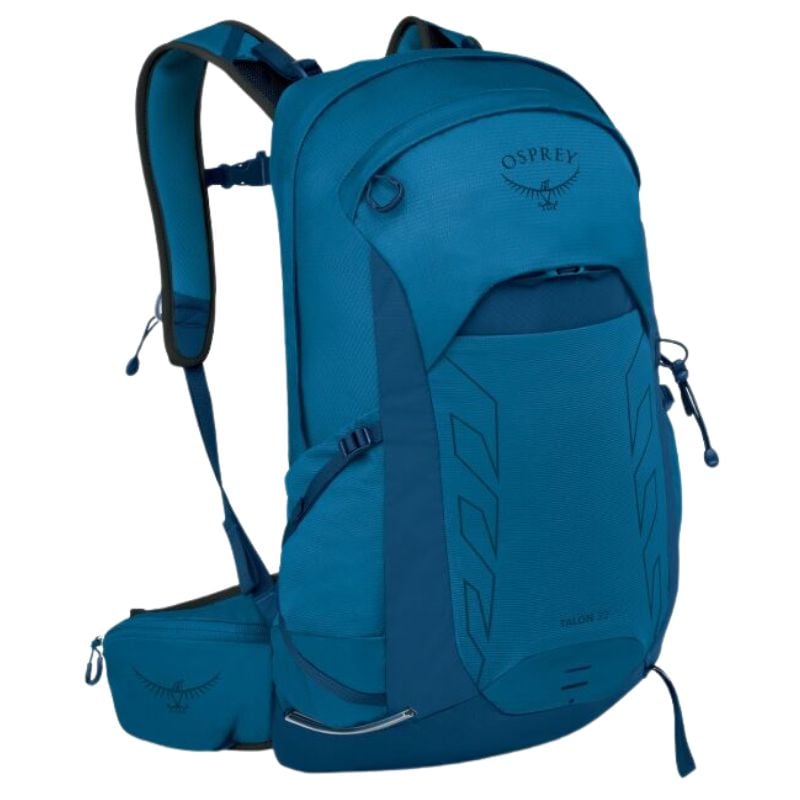
Weight: 2 lb. 6 oz / 1077 grams
Pros:
> Hydration Compatible
> The adjustable strap on the sternum has an attached safety whistle.
> Very Comfortable
> Flexible internal pack frame
Cons:
> Fabric isn’t waterproof and you will need to buy rain pack covers separately.
The Talon is the pack I hand to most hikers who want one daypack to cover everything, and it has been the benchmark in this size class for a long time. The current generation is a genuine redesign rather than a colour change. Osprey added a framesheet and perimeter wire, which is why the weight has climbed well past the older model, and the hydration sleeve for a Hydration Bladder moved inside the main compartment instead of sitting in its own external pocket.
What you get for that weight is carry quality. The continuous wrap hip belt moves with you, the load lifters actually pull the load in, and the shoulder straps carry trekking pole holders that work without stopping. The stretch front pocket swallows a wet rain jacket, and there are enough size options in the Talon range that fitting yourself is straightforward.
It suits full day hikes, alpine starts where you want layers accessible, and long days with three litres of water on board. It is not waterproof, so budget for a backpack rain cover or line it with a dry bag.
Trade off: you are carrying a framed pack with real suspension, and it weighs like one.
Best for: hikers who want one daypack that does long days, technical terrain and everything in between.
Compare Prices:
Best DayPack for travel 2026
Deuter Speed Lite 21
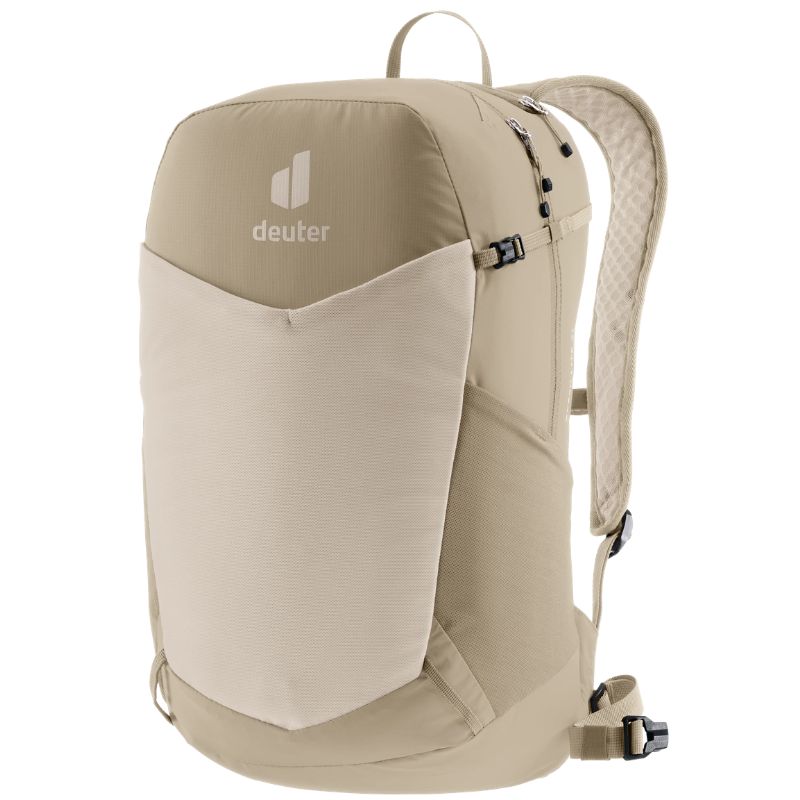
Weight: 1 lb. 0.6 oz / 470 grams
Pros:
> Comfortable cushioned back panel and shoulder straps.
> Great for all-sized torsos
> Lightweight
> Packs up to a small size making it perfect for traveling
Cons:
> Hip Belt is thin and not comfortable when carrying a lot of weight
The Speed Lite 21 has been refreshed since this guide last covered it, moving to a 140 denier fully recycled fabric and gaining an open top shove it pocket. The weight is now 470 g rather than the 430 g figure that has been floating around, so update your expectations slightly. It is still one of the best light framed daypacks you can buy, and at eighty five dollars it undercuts most of the competition.
The reason it earns the travel pick is compression. It packs down small enough to sit inside other luggage or a backpacking pack, the Delrin hoop keeps enough structure to stop the pack collapsing without adding a framesheet, and the padded back panel and shoulder straps are far more comfortable than the weight suggests. It also handles a mix of activities well, from long day hikes to easy scrambling.
The hip belt is the weak point. It is thin webbing rather than a padded belt, so it stabilises the load rather than carrying it. Above roughly fifteen pounds you will feel that on your shoulders.
Trade off: light and packable, but the thin hip belt limits how much you should load into it.
Best for: travellers, hikers who want a light framed pack, and anyone who needs a daypack that compresses into other luggage.
Compare Prices:
Most Comfortable Daypack 2026
Osprey Stratos 24
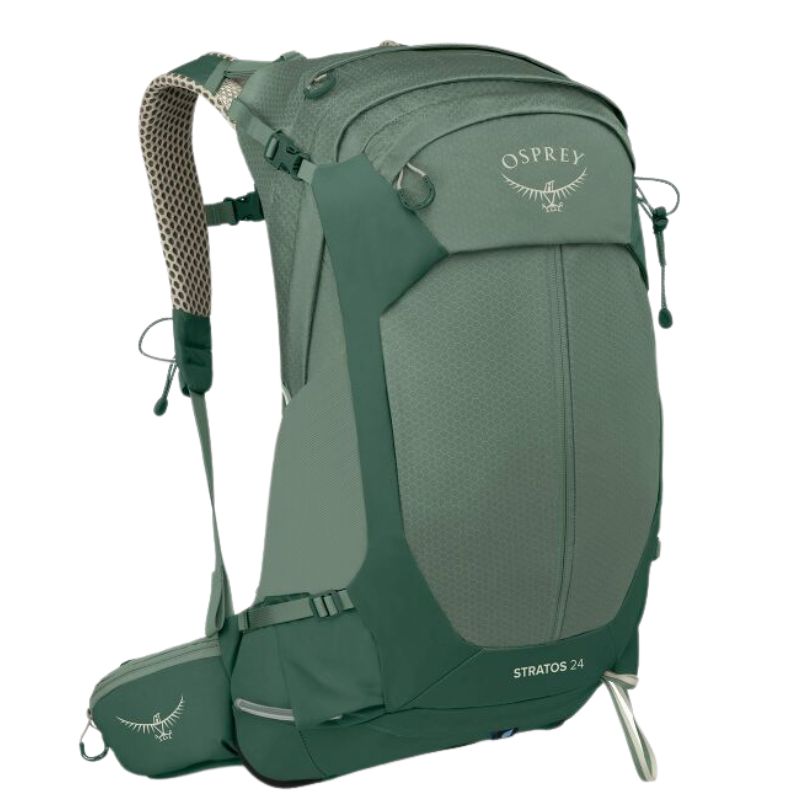
Weight: 2 lbs. 15.2 oz / 1337 grams
Pros:
> Great for panel-loading organization and convenience.
> Comfortable and Adjustable
> Airspeed Suspension
> Ventilated mesh back panel with added adjustability to suit different torso lengths.
> Included rain cover.
Cons:
> Heavy
This is the heaviest pack in the main picks and it still earns its place, because there are conditions where suspension and weather protection beat grams. The AirSpeed trampoline back panel keeps the pack off your back entirely, the torso length adjusts, and the harness has enough padding and adjustment to dial in a fit that holds for a full day under load.
The reason I keep it in the guide is the comfort and how it performs in winter and the wet. The integrated rain cover means you are not improvising when the weather turns, the pack holds its shape with crampons, an ice axe and a mid layer on board, and the panel loading main compartment means you can find the thing at the bottom without unpacking everything.
The cost is weight. Close to three pounds empty is a lot for a 24L pack, and the frame and ventilation structure mean it will never compress into anything. If you hike mostly in dry, warm conditions with light loads, this is not the best daypack for you.
Trade off: the most comfortable and weather ready carry here, at nearly double the weight of a light framed pack.
Best for: four season day hiking, winter days, camera gear and anyone who prioritises comfort over weight.
Compare Prices:
Best Lightweight Daypack 2026
REI Co-op Flash 22
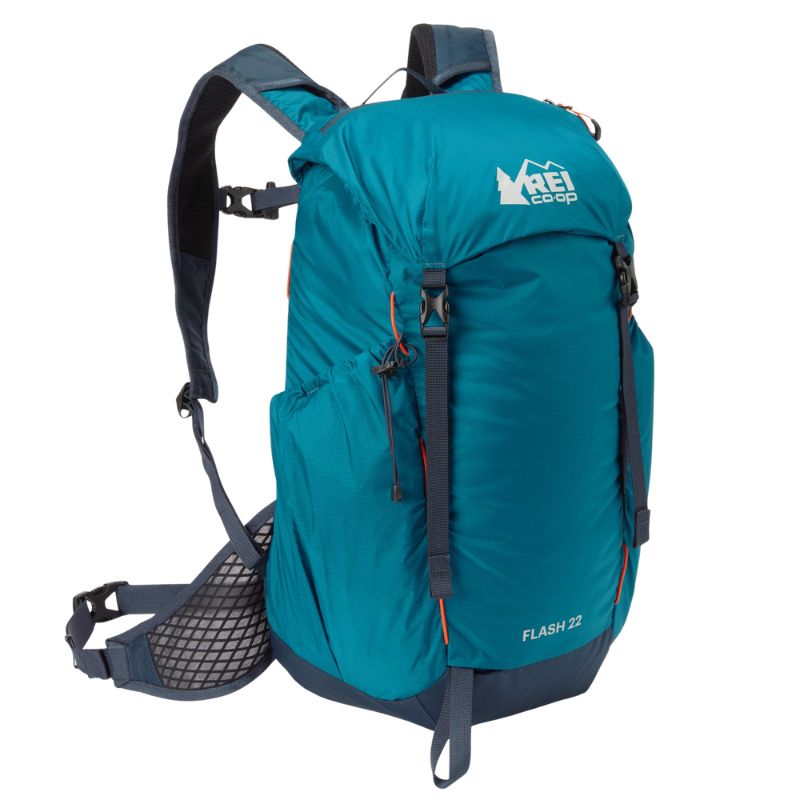
Weight: 14 oz / 397 grams
Pros:
> Ultralight
> Comfortable
> Draw cord closure and lid with zippered pocket
Cons:
> Not Weather Resistant
> You will need to buy a separate hydration system
The Flash 22 has been the value benchmark in this category for years and nothing has knocked it off. Fourteen ounces, sixty dollars, and it carries a full day of gear. You can strip the hip belt, sternum strap and back panel to shave more weight, and the removable panel doubles as a sit pad, which is a genuinely useful feature on a wet log at lunch.
It is also the pack I would put in a backpacking pack as a summit pack. It compresses flat, weighs nothing next to your base weight, and does not care about being stuffed. That versatility is why it appears on every competitor list in this category.
The limits are the ones you would expect at this weight and price. It is frameless, so above roughly fifteen pounds the load starts sitting on your shoulders. The drawcord and lid closure is fast but not secure in the way a zip is. It is not weather resistant beyond a light shower, and there is no reservoir included.
Trade off: you give up load carry and weather protection to get a 14 oz pack for sixty dollars.
Best for: light day loads, hikers wanting a summit or town pack, and anyone who wants the most capable cheap daypack on the market.
Compare Prices:
Best Ultralight Daypack 2026
Black Diamond Equipment Distance 15
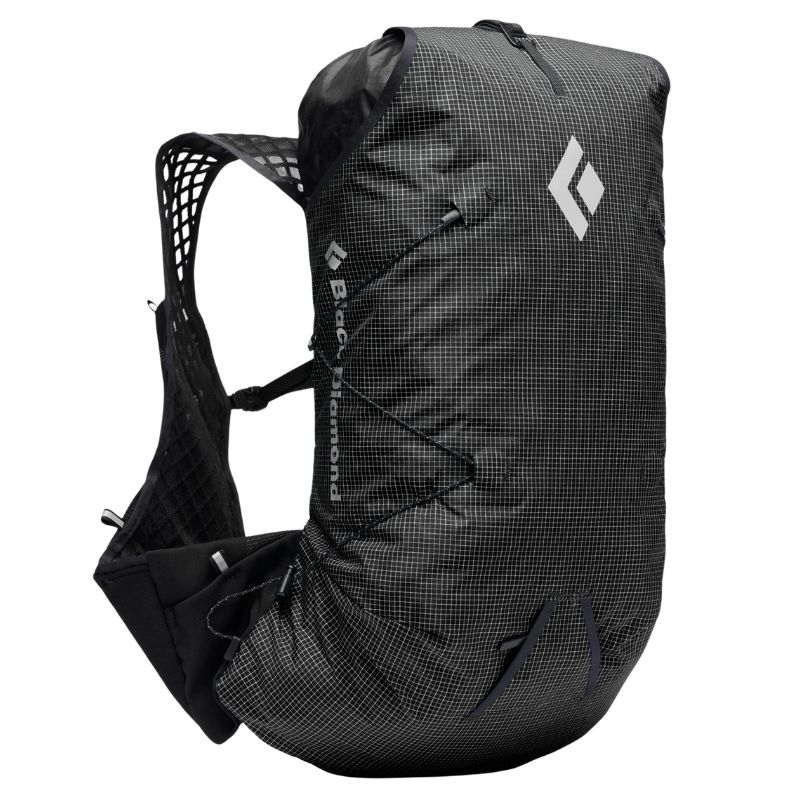
Weight: 11.6 oz / 330 grams
Pros:
> Ultralight but Sturdy
> The harness system is adjustable and the shoulder has padding.
> Reflective tick and secure ice tool holder.
Cons:
> Not cheap.
This is the pack for the days when you want to move. Black Diamond borrowed the harness from its running vests and married it to alpine pack construction, and the result carries like clothing rather than luggage. There is no hip belt because the vest style shoulder harness spreads the load across your chest instead, and for loads under about ten pounds that works better than a belt does.
The fabric is the other reason to buy it. The ripstop fabric is far tougher than the weight suggests, which matters when you are dragging a pack across granite on a scramble or pushing through scrub.
The compromises are real. There are no useful external pockets on the back, so anything you want mid hike has to live on the harness or come off your back. Fifteen litres is tight once you add three litres of water and a full layer set, and there is no reservoir included.
Trade off: outstanding carry for light and fast days, not enough capacity or storage for a big day with a full kit.
Best for: fast day hikes, summit pushes, scrambling and anyone who hates the feel of a hip belt.
Compare Prices:
Best Waterproof Daypack 2026
Hyperlite Mountain Gear Daybreak
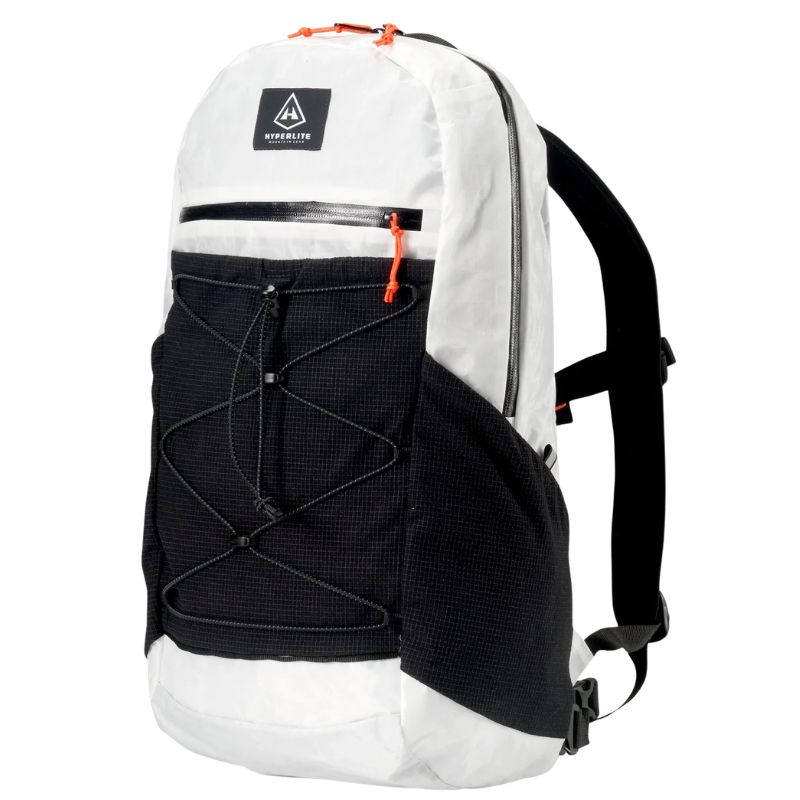
Weight: 1 lb. 3.2 oz / 544 grams
Pros:
> Large External Front Pocket
> Lightweight
> Hip belts can be removed
> Buckles to compress the pack
> Waterproof material.
> Waterproof YKK Zip
Cons:
> Hip belt not padded enough.
The newly redesigned Daybreak 22, with a clamshell opening and a slightly different volume split to the version this guide previous model. What has not changed is why it is here: when rain is a certainty rather than a possibility, a Dyneema shell and a water resistant zip beat a nylon pack and a rain cover every time.
The layout suits hiking in all weather. The huge external front pocket takes a wet rain jacket or a shell you keep swapping, the shock cord holds a foam pad or extra layers, and the side bottle pockets are angled so you can reach a bottle without unclipping. The Dyneema fabric also does not soak up water and gain weight the way coated nylon does, which is the part most hikers underestimate on a multi day wet spell.
It is expensive and the hip belt is minimal, which is fine at day hike loads but limits how much you should put in it. Dyneema also creases and looks used quickly. That is cosmetic.
Trade off: the best wet weather performance here, at the highest price and with a minimal hip belt.
Best for: wet climates, temperate rainforest, Fiordland and Scotland style hiking, and anyone who has given up on rain covers.
Compare Prices:
Best Hydration Daypack 2026
CamelBak Rim Runner X22
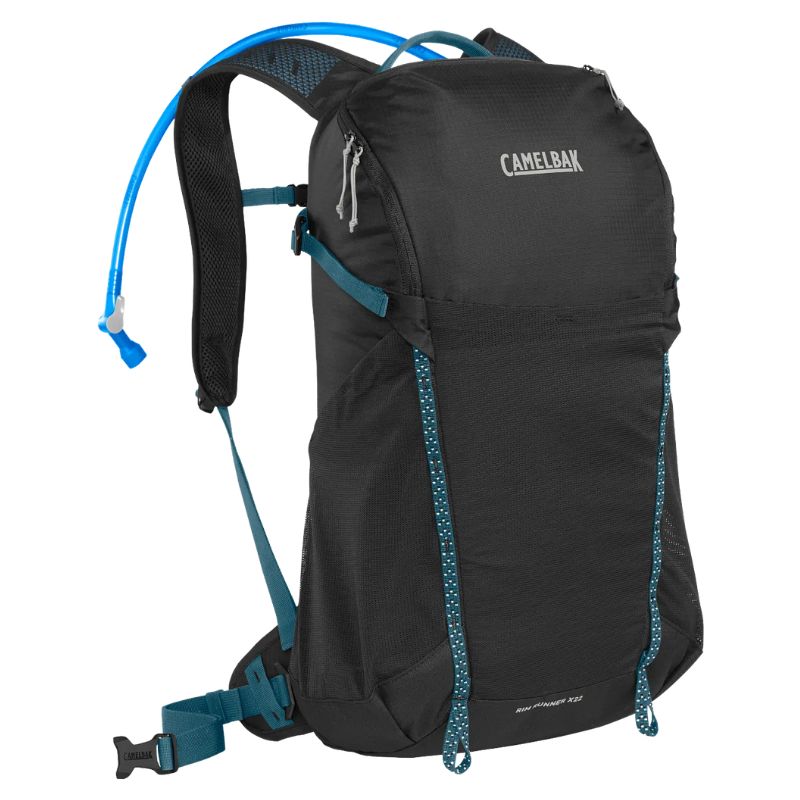
Weight: 1 lb. 8 oz / 680 grams
Pros:
> Ventilated- Breathable air mesh.
> Comfortable and Adjustable- Removable chest strap and adjustable features.
> Included 1.5L Hydration Pack.
Cons:
> Could be lighter but includes the hydration bladder so not that bad
If you want a hydration pack rather than a daypack you add a bladder to, this is still the straightforward answer. The 1.5L reservoir is included, the Crux bite valve and Quicklink system work properly, and the tube trap on the shoulder strap actually keeps the hose where you put it, which is more than most packs manage.
The pack around the reservoir is sensible rather than exciting. The Air Support back panel breathes reasonably, the removable stability belt has zipped pockets for the things you want without stopping, and the shoulder straps carry daisy chains for clipping a camera or a GPS. Compression straps keep a light load stable when the pack is half empty, which is where most hydration packs go floppy.
Two things to know. The listed weight includes the reservoir, so it is not as heavy relative to the competition as the number suggests, and the real gear capacity is closer to twenty litres than twenty two once the bladder is in. Refilling a bladder on trail is also more hassle than filling bottles, which is a personal preference call.
Trade off: you carry the weight of a full hydration system, and you accept bladder maintenance in exchange for hands free drinking.
Best for: hikers and trail runners who want a working hydration system out of the box.
Compare Prices:
Best Packable daypack 2026
Sea to Summit Ultra-Sil Daypack

Weight: 2.5 oz / 71 grams
Pros:
> Packs down to the size of a tennis ball.
> Durable- Made with siliconized Cordura Nylon.
> Two-way zipper closure with webbing loops so you can attach a bike light.
> Ultralight
Cons:
> Material is not Waterproof.
The Ultra-Sil Dry Daypack is a compact 20L zip close pack that weighs only 2.5 oz / 71 grams, which is still nothing.
I used the older Sea to Summit Ultra-Sil Daypack for several years as an ultralight daypack for short day hikes, grocery shopping and more while bikepacking, bike touring and traveling. While it is light and packable it has no padding on the back and requires careful packing to prevent sharp objects from sticking into your back from the main compartment. That is still true of the current version, and it is the main thing to understand before buying one. This is a stuff sack with straps, not a hiking pack.
Used within its limits it is excellent. It stuffs down to about the size of a tennis ball, so it lives in a jacket pocket or clips to a pack, and the waterproof version doubles as a dry bag for a river crossing or a packraft day.
Trade off: nothing carries lighter or packs smaller, and nothing here carries a load worse.
Best for: a stash pack on a thru-hike, travel, short walks and loads under roughly fifteen pounds.
Compare Prices:
Best Commuter daypack 2026
Osprey Daylite 13L
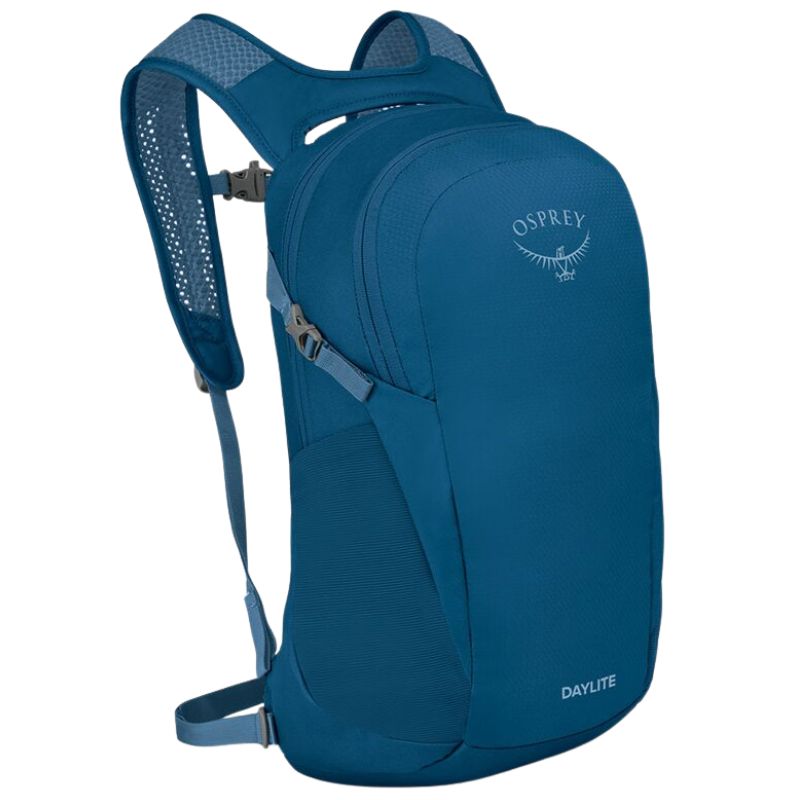
Weight: 1 lb. 1 oz / 481 grams
Pros:
> Multi-functional sleeve to hold a hydration reservoir or tablet.
> Comfortable and Ventilated
> Can attach other Osprey bags.
> Built with sustainable materials.
Cons:
> Can be too long for smaller people.
Some people like myself like to use a hiking backpack as a commuter bag when in town, and the Daylite is the pack that does that job best in this guide. Thirteen litres, a padded laptop sleeve that also takes a reservoir, a front shove it pocket and a zipped organiser pocket, and it still looks fine walking into an office.
The Daylite 13L is a fine everyday bag but tight for a real day hike once you add water and layers. It has enough capacity for a full day out, side stretch pockets for bottles, and it can clip onto larger Osprey packs as an add on, which is a genuinely useful trick if you want a summit pack on a longer trip.
It is not a hiking pack in the way the Talon or the Zulu is. There is no frame and no real hip belt, so loads sit on your shoulders and the carry gets tiring beyond about twelve pounds. On hot climbs the back panel is warmer than a suspended mesh panel.
Trade off: excellent town and trail crossover value, limited load carry and ventilation.
Best for: hikers who want one bag for commuting, travel and weekend day hikes.
Compare Prices:

More Hiking Pack Options
Here are a couple more hiking day packs that you could consider:
- Osprey Scarab 30L
- REI Co-Op Trail 25L
- Gregory Zulu 24 LT / Jade 24 LT
- Osprey Sportlite 20
- Black Diamond Distance 22
- Rab Syclon XP 30
- Arc’teryx Aerios 35
- HMG Elevate 22
Hiking Daypack Buyers Guide
Hiking Daypack Buyers Guide
How Much Capacity Do You Actually Need
Most hikers buy too much pack. After years of fitting daypacks to customers, the size that suits the largest number of people for a full day on trail is 20 to 24 litres. That carries two to three litres of water, lunch and snacks, a rain jacket, an insulated layer, a first aid kit, a headlamp, sun protection and a phone or camera, with room left over for a shed layer at midday.
Below that, 13 to 18 litres works for short walks, fast days and summit pushes where you are carrying water, a shell and food and nothing else. A REI Flash 18 at 9.5 oz or a Black Diamond Distance 15 fits that job perfectly. Above 24 litres you are into big day and light overnight territory, and 30 to 35 litres only makes sense if you are genuinely carrying more: winter layers, crampons and an axe, camera gear and a tripod, shared group kit, or a minimalist overnight setup.
The trap with a larger pack is that empty space gets filled. A 35 litre pack on a normal day hike will leave you carrying a heavier empty pack and more gear than you need. Buy for your typical day, not your worst case day, and accept that twice a year you will strap something to the outside.
Weight and Why It Matters More Than the Spec Sheet
A daypack between 14 oz and 3 lb 8 oz covers everything in this guide, which is a spread of nearly three pounds. That is more than a litre of water. On a long day it is noticeable, and on a hike where the daypack doubles as a summit pack it is decisive.
What you are paying for with weight is suspension. A framesheet, a perimeter wire, a suspended mesh back panel and a padded hip belt all add ounces and all improve how a loaded pack feels. The honest way to think about it is to work out how much weight you actually carry. If your typical day load is under about ten pounds, a frameless pack under a pound will feel better than a framed pack because you are not carrying suspension you do not use. If your typical load is twelve to eighteen pounds, the frame pays for itself within the first hour.
Also be sceptical of listed weights. Manufacturers list minimum weights with removable parts taken off, and the same pack can differ by several ounces between torso sizes. Where a pack includes a reservoir, like the CamelBak Rim Runner X22, the listed weight includes it, which makes the pack look heavier than its competitors on paper.
Frame or Frameless
A frame does two things. It holds the pack’s shape so the load does not sag into your back, and it transfers weight from your shoulders down to your hips through the hip belt. Without a frame, a hip belt is mostly a stabiliser.
Frameless packs like the REI Flash 22, the Sea to Summit Ultra-Sil Dry Daypack and the Black Diamond Distance packs are lighter, cheaper and compressible, which makes them the right answer for light loads and for a stash pack inside a backpacking pack. Their ceiling is roughly fifteen pounds, and how well they carry up to that ceiling depends almost entirely on how you pack them. Soft gear against your back, heavy items centred and high, nothing sharp against your spine.
Shoulder Straps and Fit
Shoulder straps tell you within thirty seconds whether a pack will work for you. They should sit flush against your shoulders and the top of your back with no gap and no pressure point at the front of the shoulder, and the load lifters, where fitted, should rise from the top of the strap towards the pack at roughly forty five degrees.
Strap shape matters more than padding thickness. S curved straps suit broader chests and most women, while straight H shaped straps suit narrower and flatter chests. Vest style harnesses, as on the Black Diamond Distance packs, spread the load across the chest and remove the need for a hip belt at light weights, and they are the most comfortable option when carrying lighter loads if you can live with the limited capacity.
The sternum strap keeps the straps from sliding outwards on technical ground and pulls the load in slightly. Set it just below the collarbones, not across your throat, and slacken it on climbs when you want to breathe deeply.
Hip Belts and Load Transfer
There are three tiers. Webbing belts stabilise the pack and nothing more, which is what you get on the Deuter Speed Lite 21 and most travel packs. Lightly padded belts, as on the HMG Daybreak 22, take some weight at day hike loads. Properly padded belts on a framed pack, as on the Gregory Zulu 24 LT and the REI Traverse 35, will carry the majority of a fifteen to twenty five pound load.
Fit the belt on the top of the iliac crest, the bony ridge of your hip, not around your waist. Hip belt pockets are worth having for sunscreen, snacks, a phone and lip balm, since anything you have to stop and take the pack off for is something you will not use.
Back Panels, Ventilation and Sweat
There are three approaches. A suspended mesh trampoline panel holds the pack off your back entirely and moves the most air. Foam padding with channels and open weave fabric, which is what most packs use, sits against your back and moves air through the padding. Frameless packs often have no panel beyond a removable foam pad.
Be realistic. A suspended panel is cooler than a foam one, but no daypack keeps your back dry on a hot climb, and the marketing overstates the difference. Suspended panels also add weight, add bulk, prevent the pack compressing and push the load slightly further from your back, which makes a heavy pack feel less stable on technical ground.
If you hike in hot and humid conditions and sweat heavily, a suspended panel is worth the weight. If you hike in cool conditions or want a packable pack, foam padding is the better trade.
Water Storage: Bottles or a Bladder
Both work and the right answer is the one you will actually drink from. A reservoir in the pack’s internal sleeve with the hose on your shoulder strap means you sip constantly without stopping, and on hot days that measurably improves how much you drink. The cost is refilling, cleaning and not being able to see how much water you have left.
Bottles in side pockets are simpler, easier to fill at a stream or tap and easy to monitor, but on many packs you cannot reach them without taking the pack off, which means you drink less. Angled side pockets, like those on the HMG Daybreak, solve that.
Most packs in this guide take either. A hydration sleeve is a universal fit, so you do not need to buy the manufacturer’s own bladder. See my guide to the best hydration bladders for what actually lasts. Packs that include a reservoir, like the CamelBak Rim Runner X22, save you fifty dollars and a decision.
Waterproofing, Rain Covers and Pack Liners
Almost no daypack is waterproof. Coated nylon fabric resists water well but the zips, seams and stitching leak, so a standard daypack in sustained rain will let water in within an hour or two.
There are three fixes. A backpack rain cover is cheap and effective until wind gets under it or a branch pulls it off, and it does nothing for water running down your back into the top of the pack. A pack liner, which can be a dry bag or a heavy duty rubbish bag, is lighter, cheaper and more reliable, and it is what I have used on every long trail I have hiked. A genuinely waterproof pack, like the Hyperlite Daybreak 22 with its Dyneema shell and water resistant zip removes the problem entirely at a much higher price.
For most hikers, a nylon pack plus a liner for the things that must stay dry is the sensible answer. If you live somewhere that rains for days, buy the waterproof pack.
Pockets, Access and Organisation
How you get into a pack shapes how you use it all day. A top loading pack with a drawcord is light and simple but means digging. A panel loader with a full zip, like the Osprey Stratos 24, lets you reach the bottom without unpacking. A clamshell, like the HMG Daybreak 22, opens flat and is the fastest to pack and repack. A roll top is the most weatherproof and the slowest.
The pockets that actually matter on a day hike are a large stretch front pocket for a wet or shed layer, side pockets you can reach with the pack on, hip belt pockets for the small essentials, and one small zipped pocket for keys, a card and a headlamp. Everything beyond that is weight.
Also look at external attachment. Trekking pole holders on the shoulder straps, as on the Osprey Talon, let you stow poles without stopping, which is the sort of feature you only appreciate on a day of repeated scrambles. Ice axe loops matter if you hike in winter or on snow.
Fabrics, Durability and Sustainability
Denier tells you thread thickness, not toughness. A 100D high tenacity nylon can outlast a 400D polyester, and Dyneema and UHMWPE fabrics like those on the Hyperlite Daybreak 22 and Black Diamond Distance packs are far stronger per gram than either. What kills daypacks in practice is abrasion on the base panel and rock, so look for a heavier fabric on the bottom, usually 400D or higher, and reinforced stitching at the strap anchors.
DWR coatings shed light rain and wear off. Most brands have now moved to PFAS free DWR, which is better environmentally and slightly less durable, so expect to reproof eventually. Recycled fabrics and bluesign certification are now standard across most brands.
The most sustainable pack is the one you do not replace. Buy the right size, buy from a brand with a real repair and warranty programme, and repair the pack rather than replacing it.
Women’s Specific Daypacks and Sizing
Most daypacks in this guide are unisex and adjust enough to fit most people. Where a women’s specific version exists, and the Osprey Tempest 22, Osprey Sirrus 24 and Gregory Jade 24 LT are the ones to know, it is a genuinely different pack, not a colourway. Expect a shorter torso range, narrower and more S curved shoulder straps, a differently angled hip belt, and often a litre or two less capacity.
The main thing that determines fit is torso length, measured from the C7 vertebra at the base of your neck to the top of your iliac crest. Measure it once and write it down. Hip circumference matters second, and the REI Traverse 35 stands out for offering hip belt sizes up to 4XL, which most brands ignore.
Fit is not gendered in practice. Plenty of men with short torsos or narrow shoulders fit a women’s pack better, and plenty of women fit a unisex pack fine. Try both.
Price and Value
Sixty to two hundred and fifty dollars covers everything worth buying. Around sixty dollars gets you the best value pack in the category and there is no reason to spend more if you carry light loads. Around ninety to a hundred dollars give you real hiking features and a framesheet.
At a hundred and seventy to two hundred dollars you are buying suspension: the Osprey Talon 22 and Osprey Stratos 24 all carry meaningfully better under load, and that is where the money goes. Past two hundred and thirty dollars you are buying materials rather than comfort, mostly Dyneema for weather resistance and strength per gram.
The honest advice is to work out your typical load first. Under ten pounds, spend sixty to ninety dollars and put the difference into a good hydration bladder and trekking poles. Over fifteen pounds regularly, spend up to a framed pack and you will notice it on the first climb.
Conclusion
Overall, there are a lot of great daypacks for hiking and short trips. It is safe to say that you should be happy with any of the day backpacks from the list below.
Here are the best daypacks for hiking in 2026:
- Best Hiking Daypack Overall: Osprey Talon 22
- Best Lightweight Daypack: REI Co-op Flash 22
- Best Ultralight Daypack: Black Diamond Distance 15
- Best Daypack for Travel: Deuter Speed Lite 21
- Best Waterproof Daypack: Hyperlite Mountain Gear Daybreak 22
- Best Hydration Daypack: CamelBak Rim Runner X22
- Most Comfortable Daypack: Osprey Stratos 24
- Best Packable Daypack: Sea to Summit Ultra-Sil Daypack
- Best Commuter and Day Hike Crossover: Osprey Daylite
Follow along on Social Media
Frequently Asked Questions
What is the best hiking day pack?
For most hikers the Osprey Talon 22, or the Tempest 22 in the women’s fit, is the best all round hiking day pack. It carries a full day load comfortably thanks to a framesheet and a wrap around hip belt, the pocket layout works on the move, and the size range fits almost every torso. If you carry heavier day loads, the Gregory Zulu 24 LT carries better again. If you want the best value, the REI Co-op Flash 22 at 14 oz and sixty dollars is hard to beat.
What size daypack do I need for hiking?
Twenty to twenty four litres suits most hikers for a full day. That fits two to three litres of water, food, a rain jacket, an insulated layer, a first aid kit and sun protection with room for a shed layer. Drop to 13 to 18 litres for short or fast days, and only go to 30 litres or more if you are carrying winter gear, camera gear, shared group kit or a minimalist overnight setup.
How much weight can a daypack carry?
Frameless packs like the REI Flash 22 and Deuter Speed Lite 21 top out around fifteen pounds before the load starts sitting uncomfortably on your shoulders. Framed packs with a padded hip belt, like the Gregory Zulu 24 LT or the REI Traverse 35, will carry twenty five to thirty pounds. Past that you want a proper backpacking pack.
Are hiking daypacks waterproof?
Almost none of them are. The fabrics resist water but the zips, seams and stitching let it through in sustained rain. Use a pack liner or a dry bag inside the pack for anything that must stay dry, or buy a genuinely waterproof pack such as the Hyperlite Mountain Gear Daybreak 22 in Dyneema or the roll top Rab Syclon XP 30. Rain covers help but they blow off in wind and do not stop water running down your back into the pack.
Do I need a hip belt on a daypack?
Only if you carry weight. Under about ten pounds a hip belt does little beyond stopping the pack swaying, and vest style packs like the Black Diamond Distance 15 skip it entirely and carry well. Above twelve to fifteen pounds a padded hip belt on a framed pack moves most of the load onto your hips, which is the single biggest comfort upgrade available.
Hydration bladder or water bottles for day hiking?
A bladder gets you drinking more because you sip without stopping, which matters on hot days. Bottles are easier to fill, easier to clean and let you see how much water you have left. Most packs in this guide take either, and hydration sleeves are a universal fit so you do not need the manufacturer’s own bladder. The CamelBak Rim Runner X22 and Osprey Skarab 30 include a reservoir if you would rather not buy one separately.
Can I use a daypack for backpacking or an overnight trip?
Only with a light, disciplined kit. A 30 to 35 litre framed pack such as the REI Traverse 35 will handle a fast overnight if your sleep system and shelter are genuinely lightweight. See the ultralight backpacking gear list for what that looks like in practice. For anything longer, use a lightweight backpacking pack.


BikeHikeSafari Gear Review Process
The author, Brad McCartney from BikeHikeSafari is a small independent adventurer and outdoor gear tester who owns and runs BikeHikeSafari.com.
BikeHikeSafari is not part of a large blog network and is proudly independent. All reviews on this site are independent and honest gear reviews of outdoor products by the author.
The author, Brad McCartney is a very experienced triple crown thru-hiker, adventurer, and bike tourer having spent 1000s of nights sleeping in a tent and sleeping bag (Read more). He was a manager of an outdoor retail store and is very experienced in what is important when using and testing gear for reviews like this.
BikeHikeSafari will never receive any money for reviews and they do not accept sponsored reviews on this website. All the comments about the gear reviews are from the author based on his years of experience. Hope this independent review was helpful for you.

