

I’ve been using and testing hiking gaiters since the early 1990s, from postholing through knee-deep snow on high-altitude climbs to crossing hot deserts and slogging through the mud on long thru-hikes.
This guide is for backpackers, thru-hikers, and trail runners who want gaiters that actually stay put and earn their weight, not lifestyle gear. As a triple crown thru-hiker and former outdoor store manager, I’ve tested these across trails like the PCT, the AT and the Te Araroa in the conditions that break cheaper pairs.
My current pick for the best gaiters overall in 2026 is the Outdoor Research Crocodile Gore-Tex, with the Altra Trail Gaiters as the best ultralight option. The trade-off you need to understand is simple: durability versus waterproofing versus breathability, since the more waterproof a gaiter is the hotter your feet get. See my Quick Picks below for the fast answer. For how I research and field-test gear, see the Gear Review Policy.
Quick Picks: Best Gaiters for Hiking
- Best Overall: Outdoor Research Crocodile Gore-Tex – the tough full-length pair I reach for when protection matters more than grams. Bombproof and genuinely waterproof.
- Best Mid-Height: Kahtoola RENAgaiter Mid – the mid-cut sweet spot that works with both trail shoes and boots.
- Best Ultralight / Trail Running: Altra Trail Gaiters – ultralight, simple, and the easiest to attach if your shoes have a gaiter trap.
- Best Lightweight Hiking: Outdoor Research Helium UL Gaiters – minimal weight with more coverage than a running gaiter.
- Best Budget Full-Length: Outdoor Research Rocky Mountain II High Gaiters – full-length coverage and solid waterproofing without the top-tier price.
- Best for Thru-Hiking: Dirty Girl Gaiters – the long-trail staple. Barely-there weight, endless patterns, and enough to keep grit out of your shoes.
- Best Snow / Winter: RAB Latok GTX Waterproof Gore-Tex Gaiters – a burly Gore-Tex full-length gaiter built for deep snow and alpine slog.
- Best Waterproof: Black Diamond GTX FrontPoint Gaiters – the most waterproof full-length pair I’ve tested, built for wet, snowy ground.
- Simplest Attachment: Kahtoola INSTAgaiter Mid – clever instant-on attachment for quick trail use.
How We Tested
All the Hiking Gaiters in this review have been extensively evaluated and researched by the expert author who has many years of experience in Thru-Hiking, Backpacking, and Hiking. Some of the Backpacking Gaiters were purchased by the author for this review. They have been rigorously tested by the author in all kinds of weather. The research, testing, and experience of the author have combined to come up with the best hiking gaiters for 2026. Read the Review Policy for further details.
Follow along on Social Media
Gaiters Comparison Table
| Brand | Material | Weight | Height |
|---|---|---|---|
| Outdoor Research Crocodile Gore-Tex Gaiters | Gore-Tex | 11.1 oz | Knee |
| Kahtoola RENAgaiter Mid | Nylon / Polyurethane | 3.7 oz | Mid-Calf |
| Altra Trail Gaiters | Nylon | 2.6 oz | Ankle |
| Outdoor Research Helium UL Gaiters | Pertex Shield (waterproof) | 3.8 oz | Knee |
| Outdoor Research Rocky Mountain II High Gaiters | Nylon | 7.8 oz | Knee |
| Dirty Girl Gaiters | Not Specified | 2 oz | Ankle |
| RAB Latok GTX Waterproof Gore-Tex Gaiters | Gore-Tex | 6.5 oz | Knee |
| Black Diamond GTX FrontPoint Gaiters | Gore-Tex | 8.9 oz | Knee |
| Kahtoola INSTAgaiter Mid | Nylon / Polyurethane | 2.4 oz | Mid-Calf |
Best Hiking Gaiters 2026: Detailed Reviews
Best Gaiters – Overall
Outdoor Research Crocodile Gore-Tex Gaiters
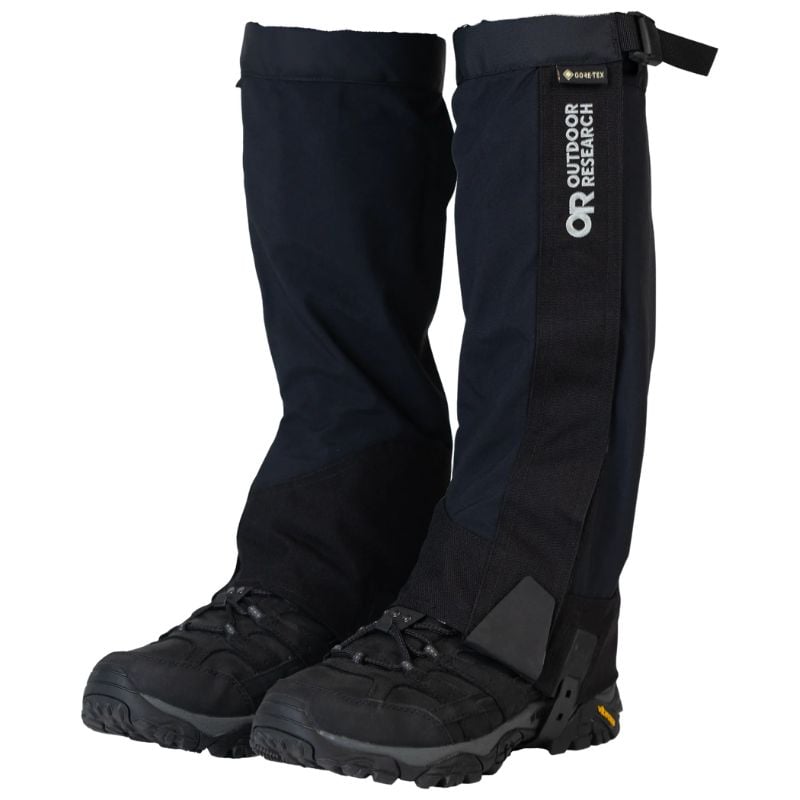
Weight: 11.1 oz / 315 grams
Pros:
> Waterproof Gore-Tex Fabric
> They secure in two places
> Abrasion-resistant
> Usually true to size
Cons:
> Not as breathable as they should be
The Crocodile is the pair I keep coming back to when I know the ground is going to be genuinely bad. It is a full-length, three-layer Gore-Tex gaiter that shrugs off deep snow, mud, and scree in a way lighter gaiters simply can’t, and the burly lower packcloth takes a beating from rocks and off-trail scrub without complaint.
This suits winter hiking, snowshoeing, shoulder-season slog, and any trip where you’re postholing or bushwhacking. It is overkill for a dry summer day hike, and you’ll feel the weight and warmth if you wear it in the heat. Would be a great fit for muddy trails like the West Coast Trail in Canada or other notoriously muddy trails.
In real use the instep strap and top drawcord keep it locked down over stiff boots, and the front closure is easy enough with gloves on. Breathability could be better, on warm climbs your lower legs will sweat, which is the price you pay for heavy duty waterproof gaiters.
Trade-off: heavy and warm for the protection it delivers.
Best for: winter, snow, mud, and rough off-trail terrain.
Compare Prices:
Best Mid Height Gaiters
Kahtoola RENAgaiter Mid Review
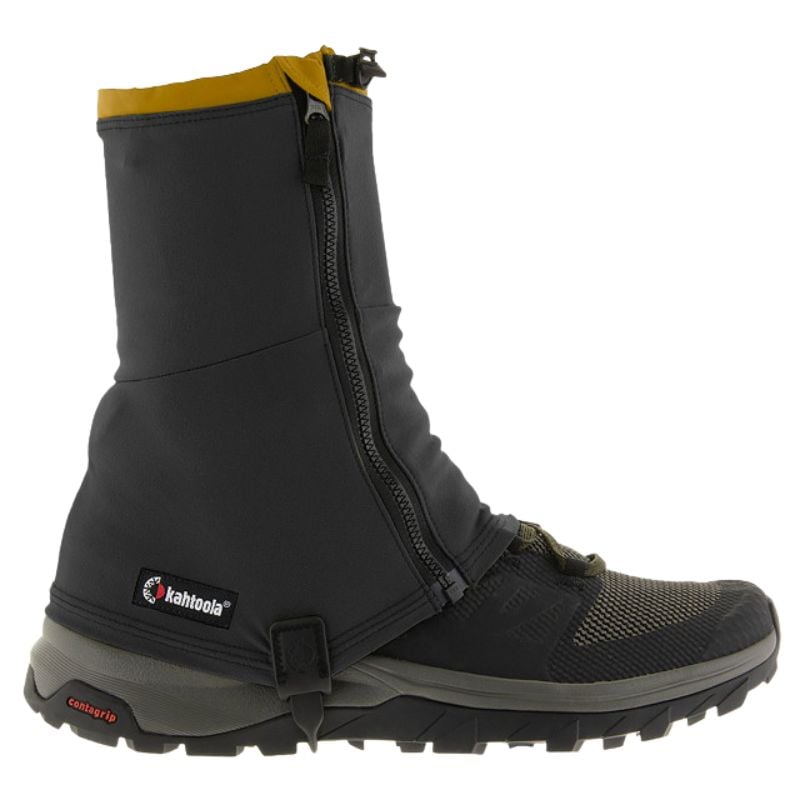
Weight: 3.7 oz / 104 grams
Pros:
> Works with both shoes and boots
> Lightweight
> Good stretch material
> Great mid height length
Cons:
> Not as waterproof as they should be
The RENAgaiter Mid sits in the mid-height sweet spot that works with both trail shoes and mid-cut boots, so it’s the one pair that covers the widest range of three-season hiking without committing you to a heavier full-length design.
It suits day hikers, backpackers, and anyone who wants one gaiter for mixed terrain — mud, brush, scree, and light snow. It is not a deep-winter or crampon gaiter, and the water-resistant nylon will wet out in sustained rain.
On trail the mid-length cut and DWR nylon shed spray and block underbrush well, and the zip closure is quicker to manage than full Velcro. The trade-off is that it stops short of true waterproofing, so for genuine snow travel you’ll still want the Crocodile or Latok.
Trade-off: water-resistant, not waterproof.
Best for: three-season mixed-terrain hiking with shoes or mid boots.
Compare Prices:
Best Ultralight Trail Running Gaiters
Altra Trail Gaiters
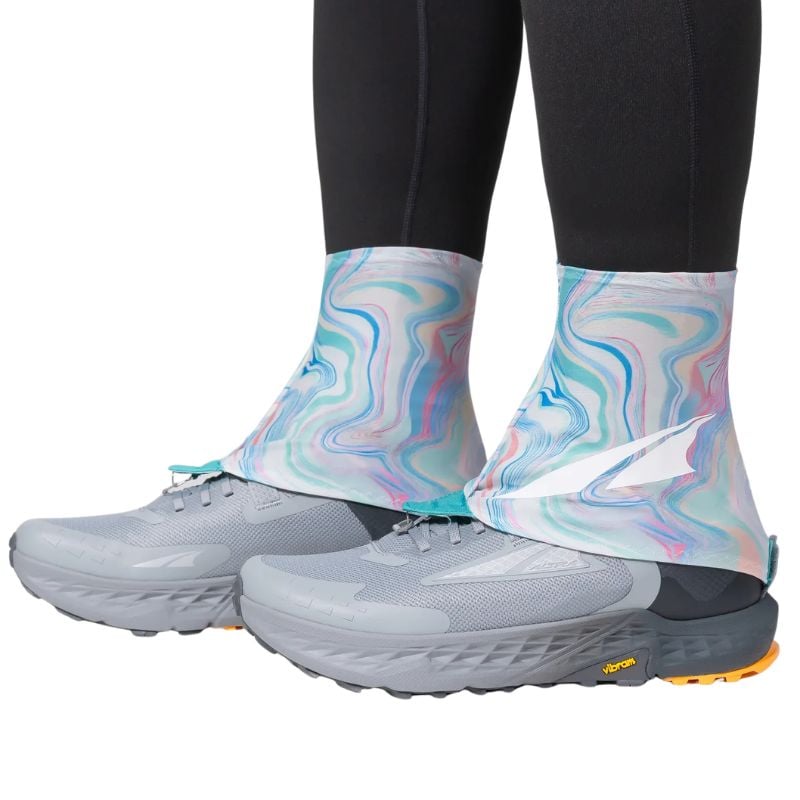
Weight: 2.6 oz / 73 grams
Pros:
> Perfect for ultralight thru-hikers
> Easy to pull on and they fit securely
> Excellent at keeping out debris & sand.
> Nice, sporty gender-neutral aesthetic.
Cons:
> Only recommended to keep out sand and light debris, not mud or snow
These are the minimalist ankle gaiters I use when the only enemy is grit. They weigh almost nothing, breathe completely, and if you’re running Altra shoes with the built-in GaiterTrap tab, they’re the fastest gaiters to attach of anything here.
They suit trail runners, fastpackers, and thru-hikers moving quickly in summer who just want to keep sand and small stones out of their shoes. They do nothing for mud, snow, or water — that’s not their job.
In use they stay put well on compatible shoes and disappear on your feet. On non-Altra shoes you’ll need to add a Velcro tab to the heel, which is worth knowing before you buy.
Trade-off: debris protection only, no weather protection.
Best for: summer trail running and thru-hiking with trail running shoes.
Compare Prices:
Best Lightweight Hiking Gaiters
Outdoor Research Helium UL Gaiters
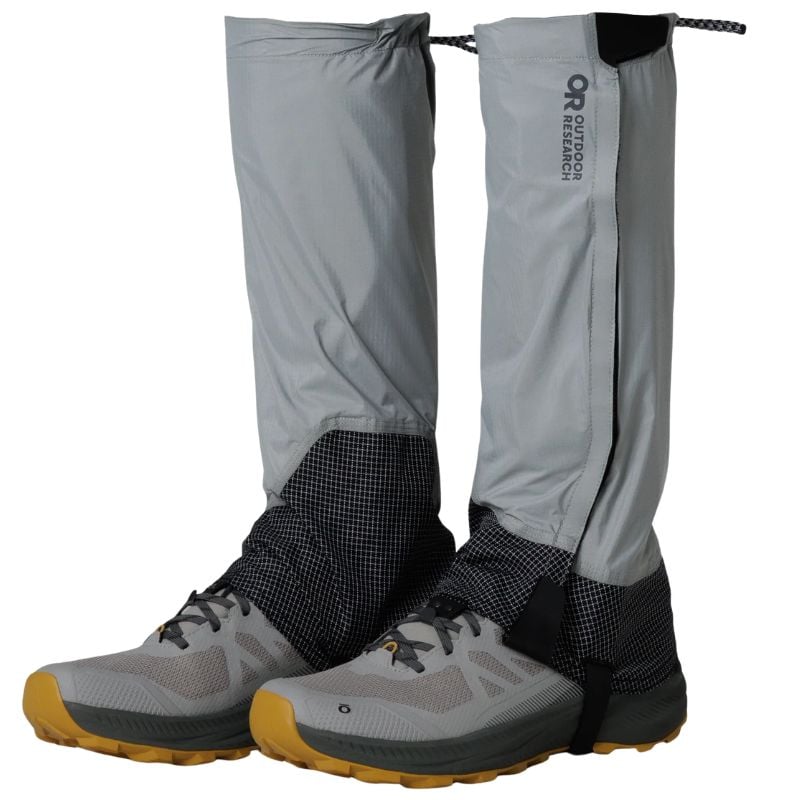
Weight: 3.8 oz / 139 grams
Pros:
> Lightweight fabric.
> 100% waterproof.
> They offer excellent coverage.
> They are easy to pull on.
> They feel very secure.
> Abrasion-resistant fabric.
Cons:
> The lightweight strap underneath the boots can get damaged
The Helium is the lightweight hiking gaiter for people who want more than a running gaiter but nothing like the bulk of a full-length pair. It’s a genuinely light, packable gaiter that still covers more of the ankle and lower shin than a Dirty Girl.
It suits fast-and-light backpackers and three-season hikers on trails with grit, light mud, and the odd stream crossing. It is not a snow or deep-mud gaiter.
On trail it breathes far better than any Gore-Tex option and packs down to nothing but not as durable or waterproof when exposed to sustained wet or rough off-trail use.
Trade-off: light and breathable, not as durable as other gaiters in this review.
Best for: fast-and-light three-season hiking.
Compare Prices:
Best Budget Full-Length Gaiters
Outdoor Research Rocky Mountain II High Gaiters
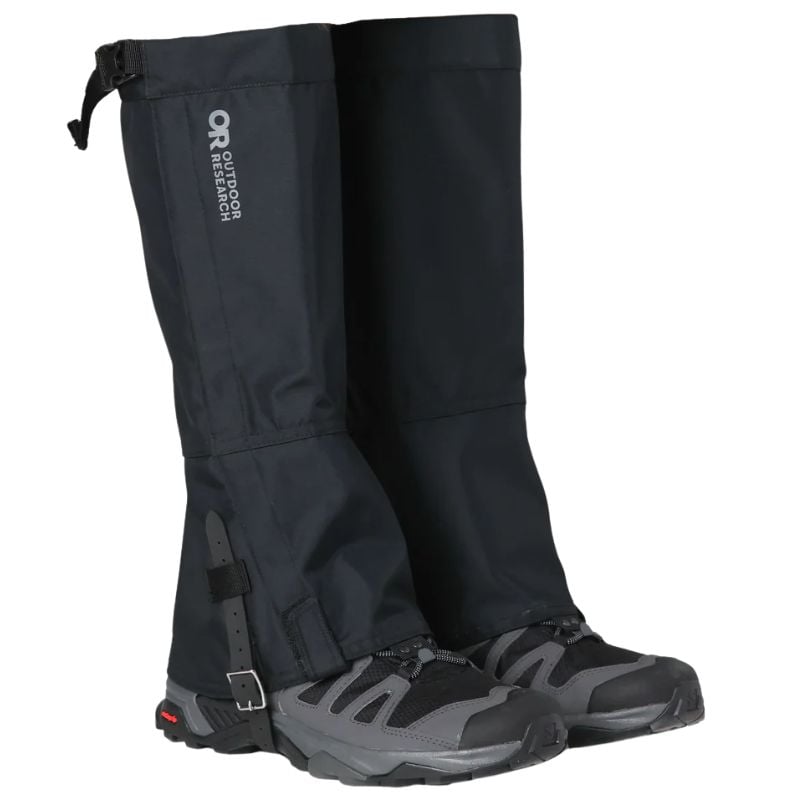
Weight: 7.8 oz / 220 grams
Pros:
> Lightweight
> Knee length
> They offer excellent coverage.
> Moisture does not penetrate.
Cons:
> Not as durable as other gaiters such as the OR Crocodile.
The Rocky Mountain High is the value full-length gaiter I point people to when the Crocodile is more than they need or want to spend. It delivers genuine full-length coverage and solid waterproofing at a noticeably lower price, which is why other reviewers rate it both a best-overall full-length and a best-budget option.
It suits backpackers and hikers who want snow and mud protection without paying for three-layer Gore-Tex. It won’t match the Crocodile’s long-term durability in sustained off-trail abuse, but for most winter hiking and shoulder-season use it’s plenty.
On trail the coated nylon sheds snow and mud well and the closure system is familiar and reliable. The trade-off is a coated waterproof layer that will breathe and last a little less than Gore-Tex over years of hard use.
Trade-off: coated waterproofing rather than a membrane.
Best for: budget-conscious winter and mud protection.
Compare Prices:
Best Thru Hiking Gaiters
Dirty Girl Gaiters

Weight: 2 oz / 57 grams
Pros:
> Bargain, affordable price point.
> Very popular for thru-hikers
> Ultra lightweight at just 2 ounces
> Keeps debris out of your shoes.
> They’re stretchy, comfy & secure.
Cons:
> They don’t protect your lower legs from scratches.
Dirty Girl Gaiters are the long-trail staple, and they’ve earned that status honestly. They’re one of the cheapest and lightest option here, come in an endless range of patterns, and are the pair you’ll see on more thru-hikers’ feet than anything else on the PCT or CDT.
They suit thru-hikers and trail runners who want the absolute minimum — dust, sand, and small debris kept out of low shoes. Like the Altra, they offer no waterproofing and no snow protection.
In real use the stretch fabric and included glue-on Velcro tab make them work with almost any trail shoe, and they hold up over surprising mileage for the weight. The trade-off is durability under heavy off-trail abuse, where a nylon gaiter would last longer.
Trade-off: ultralight and cheap, but not for rough or wet terrain.
Best for: thru-hiking and summer trail running.
Compare Prices:
Best Winter Gaiters
RAB Latok GTX Waterproof Gore-Tex Gaiters
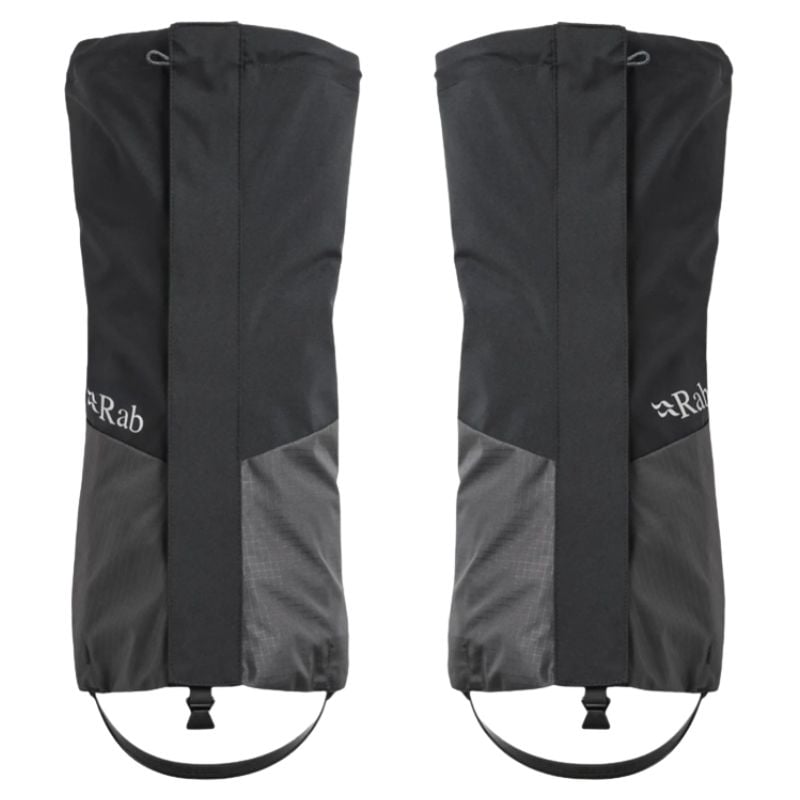
Weight: 6.5 oz / 186 grams
Pros:
> Gore-Tex’s most hard-wearing fabric.
> Long, and cover most of your lower leg.
> Big enough to fit over most hiking boots.
> Reinforced ankle made with 300 D nylon.
> No moisture comes through in snow.
Cons:
> Premium product at a premium price
The Latok GTX is a burly Gore-Tex full-length gaiter built for the worst winter conditions. When I’m heading into deep snow or a long alpine slog, this is the kind of gaiter that keeps my lower legs dry and protected all day.
It suits winter hiking, mountaineering, and snowshoeing where waterproofing and durability outrank weight. Like all full Gore-Tex gaiters, it runs warm and is unnecessary for summer trails.
In use it’s tough, fully waterproof, and locks down well over boots. The trade-off is the usual full-membrane compromise: weight and reduced breathability.
Trade-off: heavy and warm for maximum protection.
Best for: deep snow, winter, and alpine travel.
Compare Prices:
Best Waterproof Gaiters
Black Diamond GTX FrontPoint Gaiters

Weight: 8.9 oz / 248 grams
Pros:
> Nice fit.
> 100% waterproof Gore-Tex Fabric.
> They have tear-resistant ballistic lowers.
> Front entry hook and loop velcro closure.
Cons:
> They become less wind resistant after a muddy hike.
The FrontPoint is the most waterproof full-length gaiter, and it’s the one I’d grab for genuinely wet, snowy ground where staying dry is non-negotiable.
It suits mountaineering, winter hiking, and wet alpine terrain where crampon compatibility and full waterproofing matter. It is heavy and warm for anything less demanding.
On trail it seals out water and snow completely and the tough lower fabric handles crampon contact and rock. The trade-off is the same as every full Gore-Tex gaiter: weight and heat.
Trade-off: heavy and warm, built purely for protection.
Best for: wettest and snowiest mountaineering conditions.
Compare Prices:
Simplest Attachment Gaiters
Kahtoola INSTAgaiter Mid
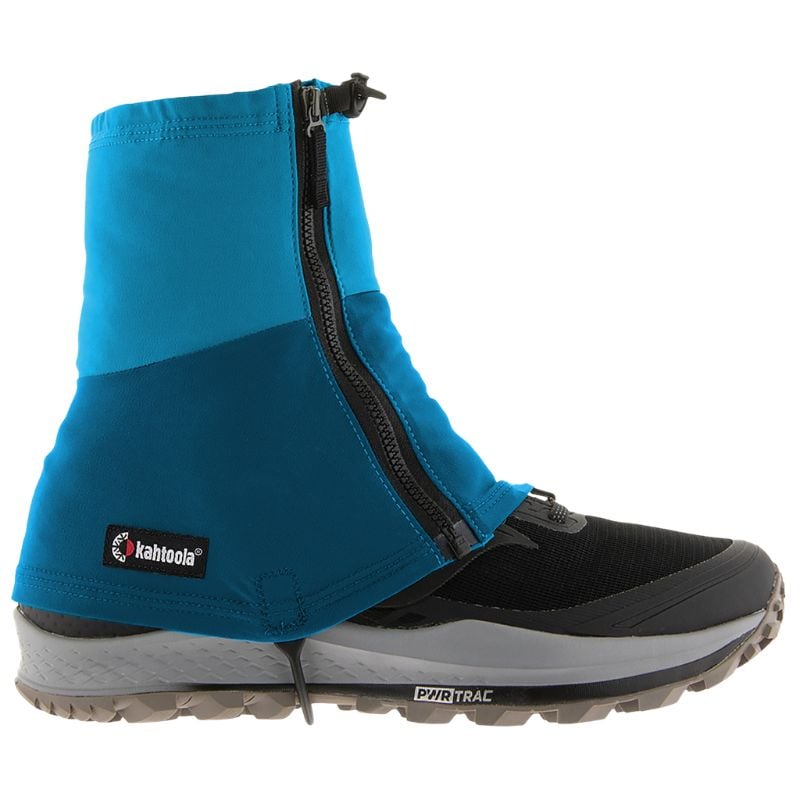
Weight: 2.4 oz / 68 grams
Pros:
> Super lightweight
> Great for thru hiking
> Perfect for preventing dirt, dust and rocks from entering your shoes
> Fast and simple to use
Cons:
> Not waterproof
The INSTAgaiter Mid is Kahtoola’s quick-on trail gaiter, and its calling card is the attachment system whichgoes on and off faster than almost anything here. Despite being down near the bottom of this review it is no reflection on these gaiters being worse than others, in fact it is a very close race for which gaiters are the best ultralight thru-hiking gaiters with these being a creditable contender.
It suits trail runners and fast hikers who want mid-height debris protection without fiddling with Velcro or zips at every stop. It’s not a waterproof or winter gaiter.
In real use the instant attachment genuinely saves time and the mid cut keeps more grit out than a low running gaiter. The trade-off is that it prioritises speed and simplicity over full weather sealing.
Trade-off: convenience over waterproofing.
Best for: fast three-season hiking and trail running.
Compare Prices:
Gaiters not on the List
These are decent gaiters that I left off the main picks because they don’t fit this guide’s focus on hiking, backpacking, and thru-hiking:
- Very cheap generic full-length gaiters sold under rotating brand names — the waterproofing and instep straps rarely survive a season of real use, so I don’t recommend them over the budget Outdoor Research Rocky Mountain High.
- Heavy expedition mountaineering gaiters (e.g. full 8000m-style overboots) — great for high-altitude climbing, but far more gaiter than any hiker or thru-hiker needs.
- Pure fashion or lifestyle “gaiter” leg covers — not built for trail debris, waterproofing, or durability.
Gaiters Buyers Guide
Gaiters Buyers Guide
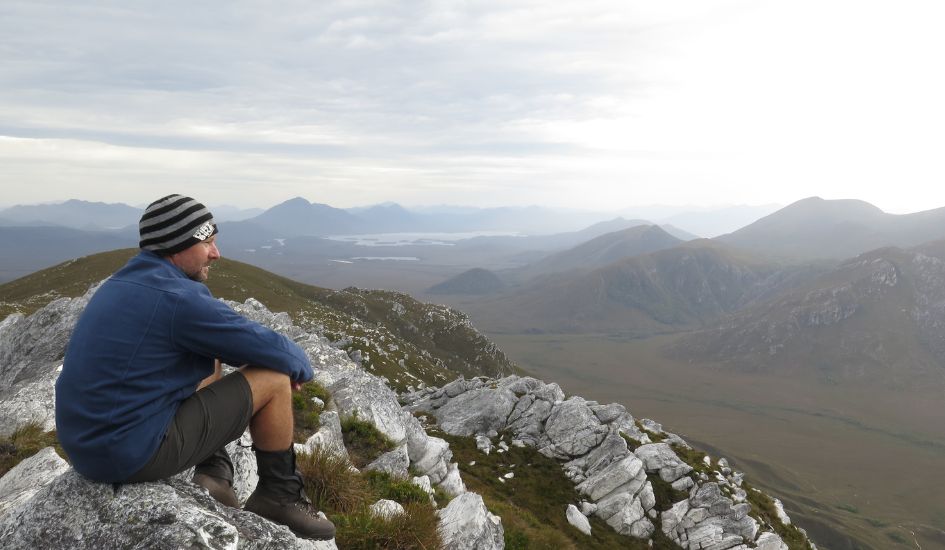
Material and Waterproofing
Almost all gaiters are synthetic. Lightweight running gaiters use stretchy spandex or polyester that breathes freely but offers no waterproofing.
Mid and full gaiters step up to nylon, often with a DWR finish or a waterproof coating, and the toughest full-length gaiters use a three-layer waterproof breathable membrane such as Gore-Tex or eVent sandwiched between fabric layers. Gore-Tex is the most durable and the most waterproof, but also the least breathable and the most expensive.
A coated nylon gaiter like the Outdoor Research Rocky Mountain High gives you most of the waterproofing at a lower price, with a small hit to breathability and long-term durability. If your main enemy is debris rather than water, you don’t need waterproofing at all, and skipping it makes the gaiter cooler and lighter.

Closure and Attachment Systems
There are four main features that make up a modern hiking gaiter, including the Velcro closure, Top Drawcord closure, Lace Strap, and Under Boot instep strap.
Velcro Closure
To facilitate ease of use when putting on and taking off the backpacking gaiters there is a velcro strap to open and close the gaiters. Some go further and add press studs to keep them closed in tough terrain. Ultralight gaiters for trail running and thru-hiking usually are only ankle gaiters and do not use this feature.
Lace Straps
All gaiters will use lace hooks to attach to a section of the shoelace or bootlace to keep the gaiters in place. Most use a metal lace hook or similar.
Top Drawcord Strap
Most gaiters have some form of the top strap to keep the gaiter sinched to your leg. This is most important for full-length gaiters to be used in snow or mud.
Under Boot Instep Strap
Not all gaiters will have an under-boot instep strap. The instep strap is mainly used on gaiters meant for backpacking, hiking, mountaineering, and ski touring. Trail running and thru-hiking gaiters tend not to have this feature. Most straps are durable and made of strong durable material.

Gaiter Height and Length
Height is the single most important choice, because it decides what a gaiter can actually keep out.
Ankle-height (low) gaiters are the lightest, usually 1.5 to 3 oz, and are built for trail runners and thru-hikers who only need to block sand, dust, and small stones from low shoes.
Mid-height (over-calf) gaiters, typically 3 to 6 oz, are the versatile middle ground: they pair with trail shoes, hiking shoes, or mid boots and handle mud, brush, and light snow, which is why the mid-height Kahtoola RENAgaiter has become such a popular all-rounder.
Full-length (knee) gaiters run 6 to 8 oz and assume a stiffer hiking or mountaineering boot; they’re what you want for deep snow, scree, sustained mud, and off-trail bushwhacking.
Match the height to your worst expected conditions, not your average day, because a gaiter that’s too short simply lets debris in over the top.

Matching Gaiters to Your Footwear
Your footwear should drive your gaiter choice as much as the terrain.
Low trail-running gaiters are designed for low, flexible shoes and need a compatible heel tab.
Mid gaiters work across trail shoes, hiking shoes, and mid-cut boots, which makes them the most flexible single purchase.
Full-length gaiters really want a stiffer hiking or mountaineering boot to anchor the instep strap and drawcord properly; put a full gaiter on a soft trail shoe and it tends to slip and bunch.
Confirm the attachment system matches your shoes before you buy.
Weight
As with all backpacking gear, weight matters, but with gaiters it’s directly tied to protection. A 1 oz pair of Dirty Girls keeps grit out and nothing more; a 15 oz pair of Crocodiles keeps out deep snow and survives years of abuse.
There’s no free lunch, so decide what you need the gaiter to do first, then buy the lightest option that genuinely does it. For thru-hikers counting grams, ankle gaiters are an easy call; for winter hikers, the extra weight of a full-length pair is non-negotiable.

Breathable Gaiters
Breathability and waterproofing pull against each other, and this is the core trade-off every buyer needs to understand. The more waterproof a gaiter is, the more it traps heat and sweat around your lower legs.
Spandex running gaiters breathe almost perfectly; nylon sits in the middle; full Gore-Tex breathes the least. On hot climbs in a full waterproof gaiter your legs will sweat regardless of the brand, so only buy the waterproofing you’ll actually use. eVent gaiters like the Sea to Summit Alpine vent slightly better than Gore-Tex, which is worth considering for hard alpine efforts.
Durability
Durability tracks closely with weight and material. Heavier, higher-denier nylon and Gore-Tex gaiters resist abrasion from rock, scree, and crampon points far better than featherweight spandex, which is why full-length gaiters last for years of hard use while ultralight running gaiters are closer to a consumable on rough ground.
Look for reinforced insteps and lower cuffs, which take the most wear, and for replaceable underfoot straps on premium models. If you spend a lot of time off-trail or in talus, buy tougher than you think you need.
Price and Value
Prices run from around US$20 for ultralight running gaiters up to US$110 for full Gore-Tex mountaineering models. The cheapest options, like the Dirty Girl Gaiters, are excellent value for what they do and are the default for thru-hikers. Mid-range coated-nylon full-length gaiters around US$60 offer the best value for most winter and mud protection.
You only need to reach the US$100-plus tier for genuine three-layer Gore-Tex when durability and full waterproofing in serious conditions justify it. Buy for the conditions you actually hike in, not the worst weather you can imagine.
Conclusion
There are some great hiking gaiters out there to choose from, and the main factor influencing your decision about which ones to get will probably be the height they reach. Knee-high waterproof gaiters are great for snow and deep muddy trails. But if you’re trail running or thru-hiking you will be better off with spandex-based gaiters that are pulled down to your ankles.
The Best Backpacking Gaiters on the market in 2026 are:
- Best Overall: Outdoor Research Crocodile Gore-Tex
- Best Mid-Height: Kahtoola RENAgaiter Mid
- Best Ultralight / Trail Running: Altra Trail Gaiters
- Best Lightweight Hiking: Outdoor Research Helium UL Gaiters
- Best Budget Full-Length: Outdoor Research Rocky Mountain II High Gaiters
- Best for Thru-Hiking: Dirty Girl Gaiters
- Best Snow / Winter: RAB Latok GTX Waterproof Gore-Tex Gaiters
- Best Waterproof: Black Diamond GTX FrontPoint Gaiters
- Simplest Attachment: Kahtoola INSTAgaiter Mid
Follow along on Social Media
Frequently Asked Questions
What are hiking gaiters actually for?
Gaiters wrap over your boots and lower legs to block debris, snow, mud, and scree from getting into your footwear. They keep your socks dry, cut down on blisters, and protect your pants and shoes from wear. Even on dry day hikes they’re useful in tall grass, dust, or brush.
Do I need waterproof gaiters?
Only if you’re dealing with snow, sustained mud, or wet off-trail terrain. If your main problem is dust, sand, and small stones, non-waterproof gaiters are lighter, far cooler, and do the job. Waterproofing always costs you breathability, so don’t buy more than your conditions demand.
What are the best gaiters for thru-hiking?
For thru-hiking I recommend ultralight ankle gaiters like the Dirty Girl Gaiters or Altra Trail Gaiters. They weigh next to nothing, breathe completely, and keep grit out of low trail shoes, which is all most long-trail hikers need in summer.
What height gaiter should I buy?
Match it to your worst expected conditions. Ankle gaiters for dust and debris in trail shoes, mid-height gaiters for mud, brush, and light snow with shoes or mid boots, and full-length gaiters for deep snow, scree, and off-trail travel with stiff boots.
Are Gore-Tex gaiters worth it?
For winter, alpine, and genuinely wet conditions, yes, because nothing else keeps your lower legs as dry over a long day. For three-season trail hiking, a coated-nylon or water-resistant gaiter is lighter, cheaper, and breathes better, so save the Gore-Tex money unless you need it.
Will gaiters work with any shoes?
Not automatically. Full-length gaiters need a stiffer boot to anchor properly, and lightweight running gaiters need a heel Velcro tab. Some shoes, like Altra and certain Merrell models, have a built-in gaiter trap; if yours don’t, you’ll glue on the included tab. Always check compatibility before buying.

BikeHikeSafari Gear Review Process
The author, Brad McCartney from BikeHikeSafari is a small independent adventurer and outdoor gear tester who owns and runs BikeHikeSafari.com.
BikeHikeSafari is not part of a large blog network and is proudly independent. All reviews on this site are independent and honest gear reviews of outdoor products by the author.
The author, Brad McCartney is a very experienced triple crown thru-hiker, adventurer, and bike tourer having spent 1000s of nights sleeping in a tent and sleeping bag (Read more). He was a manager of an outdoor retail store and is very experienced in what is important when using and testing gear for reviews like this.
BikeHikeSafari will never receive any money for reviews and they do not accept sponsored reviews on this website. All the comments about the gear reviews are from the author based on his years of experience. Hope this independent review was helpful for you.

